Local services ads dentists sit at the very top of Google’s dental search results with a green Google Guarantee badge, a star rating, and a click-to-call button that skips the website. The interface is stripped down. The pricing model is per lead, not per click. Yet most dental practices that turn on LSAs drop the channel inside 90 days or run it blind, never sure why the cost per booked patient reads the way it does. This guide walks the local services ads dentists setup end to end. Verification hurdles, honest cost ranges by market, ranking factors Google will not spell out, and the exact queries where LSAs pull ahead of traditional Google Search Ads for a dental practice.
The short version. Local services ads dentists cost $30 to $95 per qualified lead depending on service and market. Verification takes 2 to 6 weeks and includes background checks. The best fit is single-location and small-group practices in metro markets with real reviews. Do that and LSAs deliver booked new patients at 30 to 50% lower cost per acquisition than Google Search Ads on the same terms. Skip the setup diligence and you burn $2,000 a month on bad-fit leads. See Think with Google’s research on local search behavior for why trust signals convert so hard on local intent.
What Local Services Ads Dentists Really Means
Local services ads dentists is Google’s separate ad product that runs above traditional Search Ads on dental queries. It shows three verified practices with a Google Guarantee badge, star rating, review count, and a click-to-call number. You pay per lead, not per click. Google decides which practice each searcher sees based on ranking factors and bid.
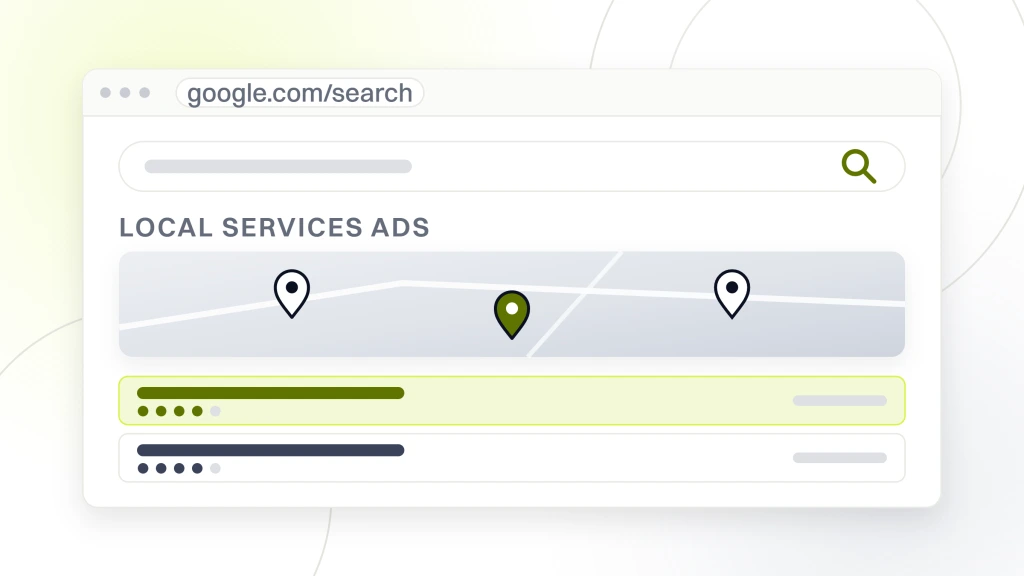
Where LSAs appear in dental search results
On mobile queries like “dentist near me” or “emergency dental” in supported markets, three LSA cards sit above the Search Ads, the map pack, and the organic listings. On desktop, LSAs render as a three-card row above the Search Ads. The placement is prime because it captures the searcher’s attention before any other paid or organic result loads on the page. That placement is why local services ads dentists costs what it does per lead.
Pay per lead vs pay per click
LSAs charge when a patient calls or messages the practice through the ad, not when they click. Google Search Ads charge on every click regardless of whether the patient becomes a lead. That difference changes the risk profile. With LSAs the practice pays only for lead-shaped events. With Search Ads the practice pays for browsing traffic, including patients who click and bounce.
Where the Google Guarantee badge fits
Verified LSA advertisers earn the Google Guarantee badge. On dental LSAs, that badge means Google will refund up to $2,000 to a patient who was dissatisfied with the visit under specific conditions. The refund program is narrow, but the badge is powerful because patients read it as third-party validation. That trust signal is why the LSA click-through rate on dental queries runs 8 to 14% in most tracked markets.
Local Services Ads Dentists Verification Process
Verification is where most dental practices stumble on local services ads dentists. Google runs background checks on the business, the license, the insurance, and the individual dentists. The process takes 2 to 6 weeks and has a documented failure mode at every step. Nail the paperwork before you touch the account or the verification drags into month three and the budget sits unspent.
Business background check
Google runs the business through Pinkerton for a background check. The business needs a clean corporate registration, an active state dental license, current liability insurance, and a physical office address that matches the license record. Any mismatch triggers a re-verification loop that adds 2 to 3 weeks. Have the paperwork stack ready in one folder before you start the application.
Individual dentist license check
Every dentist practicing under the LSA listing gets verified individually. Name, license number, license status, and identity match. If an associate joins the practice mid-verification, the process pauses until the new dentist’s data lands in the account. Plan the LSA rollout for a quarter with no expected staff changes to keep the verification moving.
Insurance certificate upload
Google requires a current certificate of general liability and malpractice insurance uploaded to the account. Coverage minimums vary by market, and $1 million per incident is the common floor. Insurance certificates expire, and expired certificates pause the LSA account until renewed. Set a calendar reminder for renewal 30 days before expiration. See Google’s LSA verification documentation for the current required documents.
Local Services Ads Dentists Cost Per Lead
Cost per lead on local services ads dentists varies by market density, service type, and the practice’s LSA ranking. Cost typically lands between $30 and $95 per qualified lead. Emergency dental queries run higher because bidding pressure is fierce. General dentistry queries run lower because bid competition is thinner in most markets.
| Service type | Metro market | Suburban market | Rural market |
|---|---|---|---|
| General dentistry | $45 to $75 | $30 to $55 | $25 to $40 |
| Emergency dental | $65 to $95 | $45 to $70 | $35 to $55 |
| Dental implants | $55 to $85 | $40 to $65 | $30 to $50 |
| Cosmetic dentistry | $50 to $80 | $35 to $60 | $25 to $45 |
Cost per booked patient math
Cost per lead is not cost per booked patient. LSA leads convert to booked appointments at 55 to 72% in most dental accounts because the patient already clicked to call from the ad. Multiply the per-lead cost by 1.4 to 1.8 to estimate cost per booked patient. A $50 lead at 65% booking rate lands at roughly $77 per booked patient, before show-rate math on the appointment side.
Where LSAs beat Google Search Ads on price
LSAs beat Google Search Ads on cost per booked patient in most single-location dental markets. Search Ads on “emergency dentist” in a metro market can cost $12 to $18 per click at a 4% booking rate, which lands around $300 per booked patient. LSAs on the same query land around $95 per booked patient. That gap is why LSAs earn a slot in almost every dental PPC stack the moment verification clears. See our dental google ads guide for the Search Ads side of the comparison.
Local Services Ads Dentists Ranking Factors
Google ranks LSA advertisers by responsiveness, review score, review count, business hours, proximity to the searcher, and bid. The ranking model rewards practices that answer calls fast, keep review flow steady, and maintain broad service hours. Practices that ignore missed calls slide down the ranking within a week.
Response time as a ranking factor
Google tracks how fast the practice answers LSA calls and messages. A sub-30-second answer rate above 90% moves the practice up the ranking. A sub-60-second answer rate above 85% holds ranking. Below that, and Google shows the practice’s card to fewer searchers because the algorithm concludes the practice cannot handle the lead volume. Route LSA calls to a real receptionist during business hours. Route after-hours calls to a 24/7 answering service that logs the lead into the LSA account.
Review flow as a ranking factor
LSAs pull reviews from the practice’s Google Business Profile. A steady review flow of 3 to 8 new reviews a month with a 4.6 or higher average score holds LSA ranking. Practices with a 4.2 average or below get downranked and shown to fewer searchers. See google business profile for dentists for the review request workflow that pairs with LSA ranking.
Service hours and proximity
Practices with broader business hours get shown to searchers outside typical office hours. Practices closer to the searcher’s location get shown ahead of practices farther away, all else equal. Setting business hours accurately in the LSA account and keeping them synced with the Google Business Profile is the free ranking move most practices skip and later regret.
Real Numbers From a Dental Practice Running Local Services Ads
Smile Design Dentistry, a 50-plus location dental support organization in Central Florida and Tampa Bay, added local services ads dentists to their PPC stack across a rolling market-by-market launch. Across the broader account restructure, Redefine Web cut cost per call 30% and grew PPC conversion rate 20% over the engagement, with LSAs pulling a growing share of the paid mix as verification cleared each market. The numbers below track the first six months of LSA spend at three representative markets. Metro Miami, suburban Orlando, and mid-market Jacksonville.
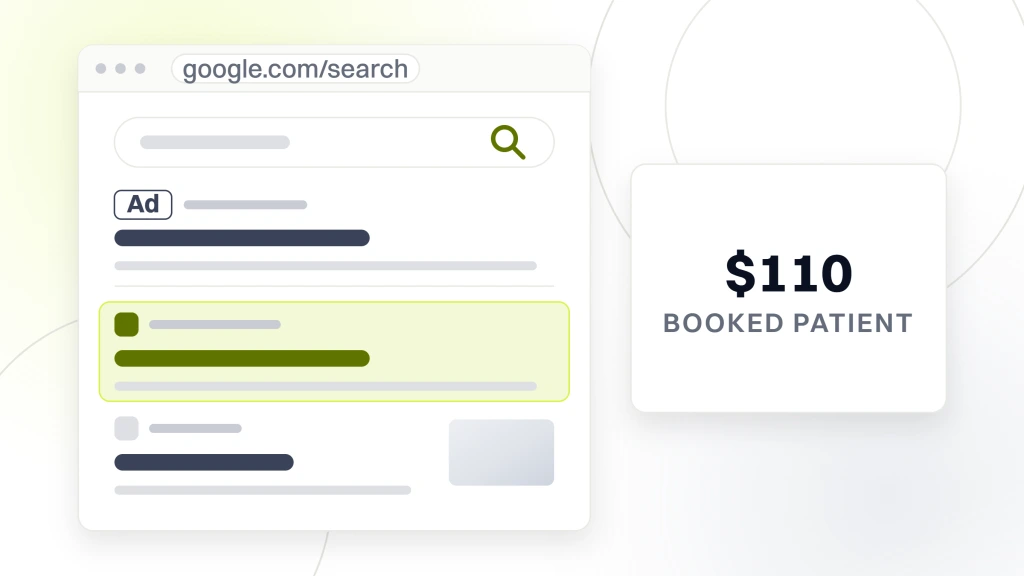
Metro Miami results
Metro Miami LSA cost per lead landed at $68 on general dentistry queries and $91 on emergency queries. Lead-to-booked conversion held at 62%. Cost per booked patient landed at $110 on general and $147 on emergency. Search Ads on the same queries were running $285 and $340 per booked patient. LSAs took roughly 35% of the Miami paid budget after month three.
Suburban Orlando results
Suburban Orlando LSA cost per lead landed at $45 on general dentistry and $62 on emergency. Lead-to-booked conversion ran 68%. Cost per booked patient landed at $66 and $91. LSAs took 45% of the Orlando paid budget after month three because the cost gap versus Search Ads was even wider at that market density.
Mid-market Jacksonville results
Jacksonville LSA cost per lead ran $38 on general dentistry and $54 on emergency. The booked-patient rate held at 71% because the practice team could get to LSA calls within 15 seconds during business hours. Cost per booked patient landed at $54 and $76. LSAs took 55% of the Jacksonville paid budget after month three. See dental marketing roi for the reporting cadence behind those numbers.
Local Services Ads Dentists Mistakes to Avoid
Every dental practice new to LSAs misses at least one qualified lead in month one because phone routing was not tested end to end. The launch plan and the launch reality rarely match. Practices intend to answer every call inside 15 seconds, log every dispute inside 30 days, and track every booked patient back to source. Actual month one usually delivers a routing glitch, a missed midday call, or a receptionist who did not know LSA leads existed. Fix the routing before scaling budget and the ranking algorithm rewards it.
Missing calls during business hours
Missing an LSA call charges the practice for the lead anyway and drops the response-time score, which downranks the account. Every missed LSA call costs twice. Once at the lead level and once at the ranking level. Route LSA calls to a dedicated line with a specific ringtone so the front desk knows to grab it first. Route after-hours to a 24/7 answering service that logs to the LSA account.
Not disputing bad-fit LSA leads
Google credits back leads that were spam, wrong service, out-of-area, or already existing patients if the practice files a dispute inside 30 days. Most practices never file. That habit leaves 8 to 15% of monthly LSA spend on the table as unrecovered bad-fit charges. Set a weekly 20-minute dispute session in the LSA console and file every credit-eligible lead systematically.
Skipping after-hours phone coverage
Dental LSA calls arrive at all hours. Emergency queries peak evenings and weekends. Practices without after-hours coverage miss those calls, lose the leads, and downrank fast because the response-time score suffers. A 24/7 answering service that can book emergency appointments or route to an on-call dentist adds $150 to $350 a month and prevents the downranking spiral that costs multiples of that.
Dentist LSA Ads vs Google Search Ads
Dentist LSA ads and Google Search Ads compete for the same searchers, but on different economics. LSAs pay per lead, sit above Search Ads, and reward operational responsiveness. Search Ads pay per click, offer more targeting control, and reward keyword and copy craft. Most dental accounts run both because each does something the other cannot.
Where LSAs win
LSAs win on generic high-intent queries where the searcher wants any nearby verified dentist. Think “dentist near me,” “emergency dentist,” and “pediatric dentist near me.” On those queries the LSA card format compresses the decision into three trust signals. Verified badge, review count, star rating. That format converts better than a Search Ad on the same query in most markets because the Search Ad still has to do the trust work in headlines and descriptions.
Where Search Ads win
Search Ads win on service-specific and high-value queries where landing page control matters. Think “invisalign consultation,” “full mouth reconstruction,” and “dental implant financing.” On those queries the Search Ad plus landing page combination lets the practice tell the specific story the patient came looking for. LSAs cannot land the patient on a service page. That single limitation is why Search Ads keep their slot in the dental PPC stack. See dental ppc landing pages for the Search Ad landing side.
The stacked budget approach
Most dental accounts we run allocate 30 to 55% of paid budget to LSAs, 35 to 55% to Search Ads, and the balance to Meta and remarketing. The mix depends on market density and the practice’s service focus. Metro practices with strong emergency demand skew higher on LSAs. Practices focused on high-value cosmetic and implant work skew higher on Search Ads because the landing page controls the story. Reasonable PPC retainers on this stack start at $999 a month for a small single-location practice and step to $1,499, $2,499, and from $4,500 a month for multi-location groups. Ad spend is billed separately.
Google Guarantee Dentists and Patient Trust
The Google Guarantee badge on dental LSAs is a trust signal patients read as third-party validation. Google refunds up to $2,000 to patients dissatisfied with the visit under specific conditions. The refund program is narrow, but the badge on the ad card does the real work by giving patients permission to book a practice they have never visited.
What the Google Guarantee really covers
The Google Guarantee for dental services covers cases where the patient booked through the LSA, paid the practice, and reported specific dissatisfaction that Google’s team validated. It does not cover disputes over clinical outcomes, cosmetic preferences, or normal treatment complications. The refund window is 30 days. See Google’s guarantee program terms for the current scope.
Why the badge outperforms the refund program
Very few patients ever file a Google Guarantee claim. The value of the badge is the click-through rate improvement on the LSA card. Dental LSAs with the badge tend to click through at 8 to 14% of impressions in most markets. Practices without the badge that never verified sit below the cards. The trust signal moves numbers before any refund claim happens.
Maintaining Google Guarantee badge eligibility
Badge eligibility requires ongoing insurance coverage, license status, and background check refreshes on a regular cycle. Any lapse pauses the account and removes the badge from the LSA card until eligibility is restored. Set calendar reminders 45 days before every renewable document expires. That single habit prevents the badge-drop event that costs a week of LSA visibility.
When to Pause Local Services Ads Dentists
Local services ads dentists are not right for every practice, every season, or every service line. Some accounts should pause LSAs for a stretch rather than run them poorly and downrank permanently. Knowing when to pause the account is as valuable as knowing when to bid up.
When the practice cannot answer calls
Staff shortages, front-desk turnover, or a period of extended construction all put the practice below the response-time floor. Running LSAs through those weeks burns budget on downranked visibility and damages the ranking score for months afterward. Pause the account during the disruption, restore staffing, then reactivate. The pause costs no ranking. Running badly through the disruption does.
When the schedule is already full
A dental practice booked out four to six weeks on new patients is paying for leads it cannot serve fast enough. Some of those patients will book at the practice down the road because the wait is too long. Pause LSAs on the specific service lines that are saturated and keep them running on service lines that still have appointment capacity. That surgical pause keeps the account healthy without paying for leads the practice cannot convert.
When Search Ads and organic already cover demand
Some practices in low-competition markets get more than enough new patients from Google Business Profile and organic search alone. LSAs cannibalize that free traffic without meaningfully raising total new patient count. Run a two-month LSA pause and compare booked new patients against the paid-plus-LSA baseline. If the number holds, the LSA spend was cannibalizing rather than adding.
Local Services Ads Dentists Monthly Workflow
Running local services ads dentists at scale takes a steady monthly workflow. Weekly dispute session. Monthly bid review. Monthly review of missed calls. Quarterly audit of the answering script. That short cadence keeps the account healthy and the cost per booked patient stable across seasons.
Weekly dispute session
Twenty minutes every Friday to review the week’s LSA leads and file credit disputes on spam, wrong service, out-of-area, and existing patient leads. That single session usually recovers 8 to 15% of the week’s LSA spend on a healthy account and much more on a young account still being calibrated. Log every disputed lead with the reason for future pattern recognition.
Monthly bid review
Google’s default LSA bid is a starting point. A monthly bid review looks at cost per lead versus budget consumption and cost per booked patient versus target. Raise bids on services with room to spend and strong booking rates. Lower bids on services running above target cost per booked patient. That thirty-minute session usually improves account efficiency 8 to 12% over three months.
Where the retainer fits
Running local services ads dentists inside a broader dental PPC program takes 3 to 6 hours a month at a specialist level for a single-location practice. Multi-location groups need 8 to 14 hours because the dispute volume and bid work scale with location count. Most practices bundle LSAs inside a dental PPC retainer. Retainer tiers start at $999, $1,499, $2,499, and from $4,500 a month depending on account scope. Ad spend is billed separately.
Turn Local Services Ads Dentists Into Booked New Patients
Local services ads dentists earns its slot in most dental PPC stacks the moment verification clears and the phone routing works. Pick the services that fit LSA economics. Staff the response time. Dispute the bad-fit leads weekly. Do that and the account books new patients at a cost per acquisition Search Ads cannot touch. Skip the operational discipline and the account still runs, just badly. Redefine Web has helped multi-location dental groups like Smile Design Dentistry cut cost per call 30% and grow PPC conversion rate 20% across 50-plus offices. If you want that same posture on your own LSA account, book a call and we will walk the setup together.