
Best manufacturing website design in 2026 wins on answer speed and spec density above the fold, not on hero video or brand taste. A plant engineer lands on your homepage with a part number in one tab and a competitor site in another. They give you about 30 seconds. What loads first, what the hero says, and how fast the spec sheet opens decides whether an RFQ hits your inbox tonight or a competitor gets the meeting.
According to Nielsen Norman Group usability research, industrial buyers scan for concrete answers in the first fold and leave for a competitor within 10 seconds when the homepage leads with generic marketing copy. Density is what earns the second click.
This guide walks 12 real manufacturing sites section by section. You get the homepage patterns worth stealing, the product-page layout that outperforms brochure copy, the RFQ form structure that grows inquiry volume, the configurator flow that shortens sales cycles, and the case-study framing that closes procurement committees. Read straight through in about 12 minutes and hand your design team a punch list by the end of the day.
The best website design for manufacturing company sites answers three buyer types
The best website design for manufacturing company sites plans for three buyer roles that arrive with different questions. Engineers want tolerances, materials, and CAD files. Buyers want price bands, lead times, and minimum order quantities. Plant managers want case studies, capacity commitments, and quality certs. One site. Three paths. Every path resolves to the right block of information in 3 clicks or less.
The engineer path opens on the product-detail page directly from a Google search. The page loads with a spec table above the fold, downloadable CAD files with a two-field email gate, and a link to the technical documentation library. The buyer path opens on the category page, sorts by industry served, and lands on a pricing-band block that shows starting numbers rather than a request-a-quote wall. The plant manager path lands on the case study library, filters by industry, and reads 3 teardowns before booking a plant tour or an RFQ conversation.
The site that tries to funnel all three buyer types through one contact form loses 2 of them at the form. The site that publishes 3 parallel paths converts each on their own terms. A site that does this well tracks each path in analytics, measures conversion at each step, and improves the weakest step every quarter. That is how a manufacturing site grows RFQ volume 15 to 30% per year without adding paid traffic. The pattern is not about design taste. It is about buyer-path discipline.
Industrial manufacturing website design trends 2025 that carried into 2026
Industrial manufacturing website design trends 2025 that carried into 2026 land on 6 patterns. Dense information hierarchy. Real plant photography over stock. Embedded product video under 30 seconds. A searchable technical library. Per-route performance budgets under 2 seconds Largest Contentful Paint on 3G. A dark-mode toggle that respects a light default. All 6 still doing work in 2026. Manufacturing buyers are technical readers. They reward density and punish fluff.
Density is the pattern that separates strong manufacturing sites from weak ones. Buyers want data above the fold. Not marketing copy. Not stock photography. Real numbers, real dimensions, real lead times, real cert numbers. A dense product page reads slower than a spacious one, yet engineers prefer it since they came to compare specs. Give them specs. Sites that lead with white space and a hero image lose buyers before the product data ever appears. Sites that lead with a spec table plus a spec-sheet download earn the RFQ.
The trends that died in 2025 and stayed dead in 2026: hero autoplay video with sound, chat bubbles popping up in 15 seconds asking how can I help, cursor-tracking micro-animations, and full-page scrolling with parallax layers. All 4 looked cutting-edge in 2023, felt stale in 2024, and now read as dated. Skip them in 2026.
Industrial manufacturing website design trends 2026 worth adopting
Industrial manufacturing website design trends 2026 worth adopting land on 5 moves. Interactive product configurators that build real quotes. AI-powered technical search across CAD files and manuals. Integrated ISO and AS9100 certification strips under the hero. Plant-tour video libraries organized by production process. API-first product data so the marketing site and the ERP stay in sync all week long. Each move earns qualified RFQs. None require a full rebuild if the base site is healthy.
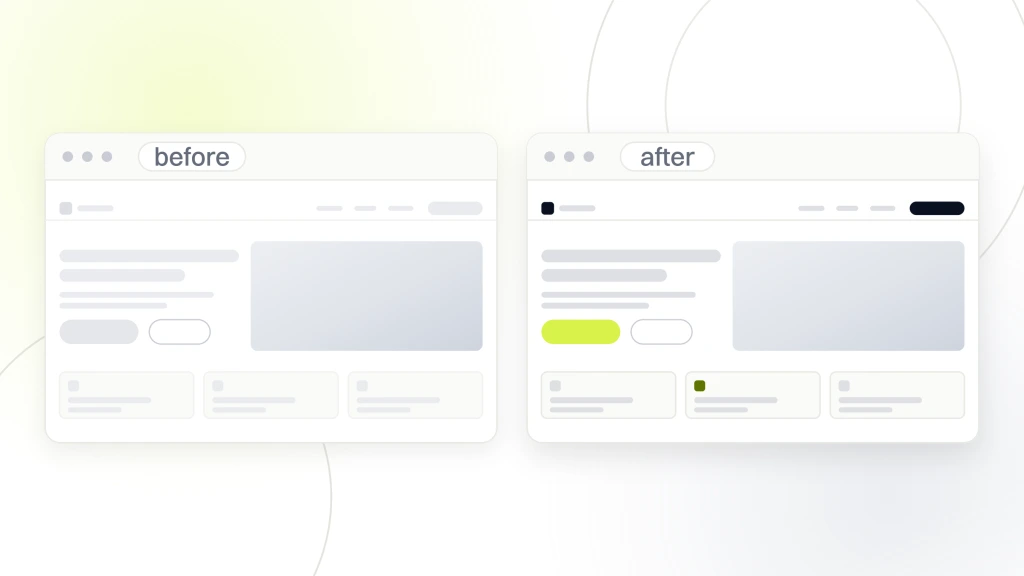
Product configurators are the single trend with the highest conversion impact in 2026. Buyers who use a configurator spend an average of 6 to 9 minutes on the site, download a spec sheet, and file an RFQ at 3 to 5 times the rate of buyers who use a static contact form. The configurator does the qualification work the sales team used to do on a first call. Sales conversations start further down the funnel. Deal cycles compress by 20 to 40% on average.
The other 2026 trend worth adopting is integrated certification display. A strip directly under the hero showing the exact certifications a buyer’s procurement team will ask about. ISO 9001 with the certificate number and expiry. AS9100 for aerospace. ITAR for defense. ASME Section VIII for pressure vessels. Real logos, real numbers, real expiry dates. That strip pre-qualifies the buyer and shortcuts the procurement compliance conversation by 2 to 3 weeks in enterprise deals.
Best equipment manufacturing website design patterns for capital sales
The best equipment manufacturing website design patterns match the reality of capital sales: long deal cycles, technical committees, and buyers who research for months before booking a demo. Your site becomes the always-on technical resource that lives through the full buying journey. Not a brochure. Not a landing page. A working knowledge library plus a demo booking flow plus a spec library that supports every step procurement asks about.
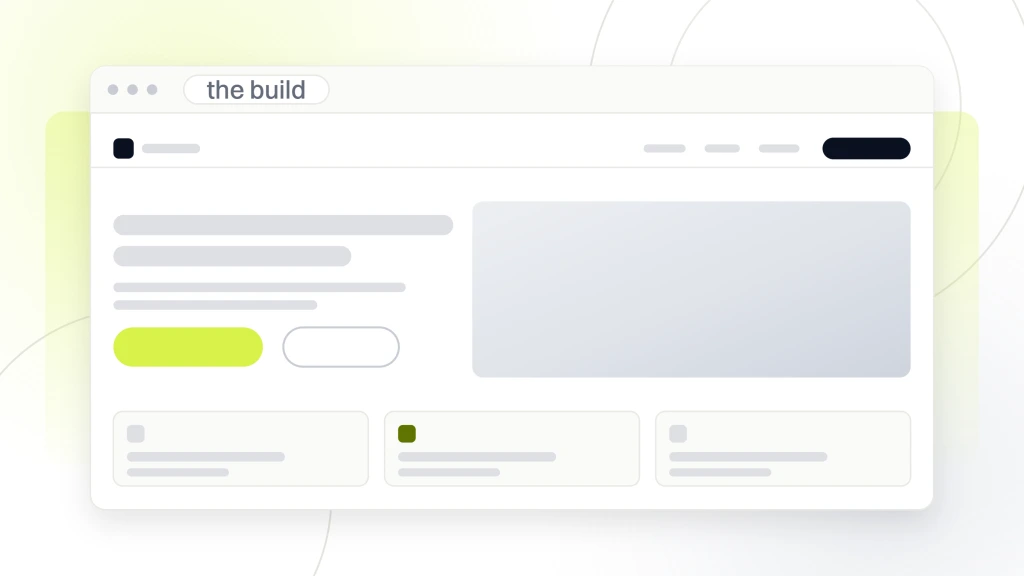
Capital equipment buyers download 3 to 5 spec sheets, watch 2 to 4 product videos, and read 1 or 2 case studies before booking a demo. The site tracks that path through analytics and adjusts. The strongest capital equipment sites publish per-model spec sheets as ungated public URLs indexed by Google, video walkthroughs on YouTube embedded on the product page, and case studies with named clients plus real ROI numbers. Each asset earns backlinks and organic traffic. Each asset also compresses the sales cycle when the buyer finally reaches sales.
The demo booking flow itself matters. Inline Calendly or HubSpot Meetings widget on every product page. Buyer picks a slot in 60 seconds. No callback loop. No sales rep sending manual invites. Firms that switch from contact form to inline demo booking see 40 to 80% more demos booked. The demos skew slightly less qualified since the friction drops, yet the total quality-adjusted volume goes up. Trade some qualification for volume at the top of the funnel and let sales qualify on the demo itself.
Design patterns to adopt versus patterns to skip
Below is the direct comparison of what belongs on a modern manufacturing website design versus what quietly costs you RFQs. Use it as a checklist for your next design review or your next rebuild. Every row on this list came from a real site teardown, not a design theory book.
Read the adopt column as the baseline for 2026. Read the skip column as the pattern that felt cutting-edge in 2022, felt stale in 2024, and now signals a dated site to any buyer under 45. The gap between the 2 columns is the difference between a site that books RFQs and a site that runs as a brochure. Every design decision on a manufacturing site rolls up to one of these 10 categories.
The single biggest win on the list is the RFQ form. Two visible fields on a sticky sidebar widget outperform a 7-field contact page by 40 to 80% on qualified inquiry volume. That change alone is a week of design and dev work with a 12-month payback measured in booked meetings. The second biggest win is the product configurator. That is a longer build, yet the payback compounds since the configurator earns backlinks, indexes for long-tail queries, and pre-qualifies buyers before the sales conversation.
| Design element | Adopt in 2026 | Skip in 2026 |
|---|---|---|
| Hero | Spec-first with certification strip | Autoplay video with hero sound |
| Product page | Dense spec table above the fold | Marketing copy plus stock imagery |
| RFQ form | Two visible fields, sticky sidebar | Seven-field form on a contact page |
| Configurator | Interactive quote builder | Static PDF download only |
| Case studies | Numbers-first cards, real clients | Testimonial paragraphs without data |
| Documentation | Ungated CAD files and spec sheets | Email-gated PDFs behind a full form |
| Video | Under 30 seconds, muted, focused | 90-second hero autoplay with music |
| Navigation | Product-first mega menu | About-us first, then everything else |
| Pricing | Published bands where applicable | Contact us for pricing on every page |
| Performance | LCP under 2 seconds on 3G | Heavy JavaScript and unoptimized images |
How to pick the best website designers for manufacturing work
Pick the best website designers for manufacturing by checking 3 signals. Portfolio depth in real industrial B2B, published case-study numbers with named clients, and a stated point of view on RFQ optimization. Skip agencies that pitch hero video and skip spec tables. Ask for the last 3 Lighthouse reports before signing anything.
Most agencies pitching manufacturing work come from a consumer web design background and treat a machine tool site like a Shopify boutique. That mismatch shows up in the first design review when the agency proposes hero video and skips the spec table. The right agency treats the product page as the sales conversation and the RFQ form as the money moment. The wrong agency treats both as design canvases.
The top website designers for manufacturing publish a portfolio with real manufacturing clients, published case study numbers, and a clear point of view on RFQ optimization. Ask 3 questions on the discovery call. First, what percentage of your portfolio is B2B industrial versus consumer or SaaS. Second, walk through a case study where you rebuilt the RFQ flow and moved the number. Third, how do you integrate product data from ERP or PLM systems into WordPress or the CMS. The right agency answers all 3 with specifics. The wrong agency deflects.
The other filter: technical accessibility posture. Enterprise procurement teams run vendor audits that include WCAG 2.2 AA accessibility checks. A manufacturing website design that fails accessibility gets crossed off enterprise shortlists without a conversation. Website designers for manufacturing who cannot cite WCAG 2.2 AA compliance across every page they build are the wrong hire for any manufacturer selling into aerospace, defense, medical devices, or public sector work. Ask for the accessibility report on their last 3 builds. Real answers come back with real Lighthouse scores.
Case study. Poly Processing rebuilt inbound around a working tank configurator
Poly Processing came to us with a trade-show pipeline and almost no digital inbound. Polyethylene chemical tanks, a deep technical product line, buyers who arrive with capacity requirements, chemical compatibility charts, and code compliance questions. The old site was a brochure with a contact form and no tools. The sales team burned every first call answering the same qualification questions. The site did none of the qualification work.
We rebuilt the site around a working tank configurator. Buyers pick capacity in gallons, base material, fitting configuration, and chemical service. The configurator generates a downloadable spec sheet, routes the RFQ to the named regional sales rep, and posts the record into HubSpot with full attribution. Buyers spend 6 to 9 minutes in the tool on average. Sales conversations start with the spec sheet already in hand.
12 months after launch Poly Processing was seeing 10x return on every marketing dollar spent through inbound, cost per lead down 90% versus the previous channel mix, and hundreds of qualified monthly leads from the configurator plus the supporting technical content. Sales meets with better-fit prospects. Marketing focuses on adding to the configurator library rather than chasing cold outreach. Design decisions and sales-process decisions compound when they run against the same buyer journey.
Case study. Smith-Midland doubled conversions with multi-site consolidation
Smith-Midland Corporation, a leading precast concrete manufacturer serving construction, utilities, transportation, and public safety, arrived with a portfolio of fragmented regional sites that fractured brand perception online. Multiple regional domains presented inconsistent branding and messaging, confusing buyers and creating internal update bottlenecks. Recruitment also struggled since the sites did not reflect an employee-centric culture critical for hiring skilled trades.
We consolidated the regional sites into 2 centralized WordPress platforms with cohesive content, embedded videos, lead-gen forms, bold CTAs, and dynamic imagery. Migration to WordPress empowered the internal team to update content without external bottlenecks. Strategic visual design incorporated brand identity nods that set the manufacturer apart in the industrial space and supported recruitment storytelling alongside the RFQ funnel.
Post-launch numbers moved fast. Bounce rate dropped 65% on streamlined navigation and engaging content flow. Conversions doubled through prioritized CTAs, sticky widgets, and integrated forms. Content management efficiency improved 100% after the WordPress migration since internal teams could update pages without waiting on a dev queue. One design pattern moved 3 numbers. That is the compounding return of a manufacturing website design built around buyer paths and internal workflow at the same time.
Case study. BSH Hausgeräte grew leads 15% with UX and backend optimization
BSH Hausgeräte GmbH, Europe’s largest home appliance manufacturer with Bosch, Siemens, Gaggenau, and Neff under one roof, generated 15.9 billion euros in revenue in 2022. BSH Turkey needed a redesign that could preserve strong SEO rankings during the transition and address weak funnel optimization that left conversions low even at high traffic volume.
We ran a UX-focused redesign plus backend optimization. The approach balanced technical upgrades, usability, and SEO preservation. We developed a more functional backend, streamlined navigation, applied a numbers-first methodology to identify and resolve bottlenecks, and kept the SEO architecture intact so organic rankings held through cutover. Lead-gen forms and interactive elements sat where analytics said the drop-off was worst, not where design theory said they should live.
Post-launch: 15% lead-generation growth, 3% organic traffic gain, and 45 seconds longer average session duration. No lost rankings during transition. A manufacturing website design that touches enterprise-scale traffic without breaking SEO equity is rare. Getting all 3 numbers to move on the same rebuild is what happens when the redesign respects existing search value while fixing the funnel underneath.
What website designers for manufacturing should charge and deliver
Website designers for manufacturing charge $8,000 to $35,000 for a mid-size rebuild without configurator work, $35,000 to $95,000 with configurators and CAD library, and $65,000 to $180,000 for large multi-site consolidations. For fixed-scope SMB manufacturers, our packaged web design tiers land at $2,500, $4,500, and $7,500. Retainer for ongoing SEO, content, and small updates starts at $999 per month.
Pricing correlates with integration complexity. A brochure rebuild with 40 to 120 pages and no ERP integration sits at the low end of the band. A build that pulls product data from Epicor, SAP, or NetSuite into WordPress custom post types and keeps that data live sits at the upper end. Multi-site consolidations for holding companies with distinct plant brands run higher again since content migration itself becomes a 6-week phase.
The deliverable list should include the sitemap, the design system in Figma, the WordPress or headless build, product data integration where applicable, content migration for the existing library, WCAG 2.2 AA accessibility across every page, Core Web Vitals in the green, complete schema markup (Organization, Product, FAQPage, LocalBusiness), and a 60-day post-launch monitoring window. Firms that skip accessibility, schema, or the monitoring window build sites that erode over 12 months. Firms that include all 4 end up with sites that improve for 3 years.
For the full stack on the industry side, our Manufacturing Marketing Agency Built for Industrial RFQs hub covers the parent view. For the design-specific track, our Manufacturing Website Design That Drives Real RFQs page covers deliverables and timelines. For the responsive side, our Responsive Web Design Services that Convert page covers the core offering. For the CMS-heavy builds, our WordPress Website Development Services page covers the platform work.
Where to start on your own best manufacturing website design refresh
Start with a 5-checkpoint audit that runs in about 90 minutes. Open your homepage on mobile. Time Largest Contentful Paint. Read the hero copy out loud and ask whether it answers what you make, who for, and what to click. Try to file an RFQ from the mobile site. Count the fields on the form. Try to find a spec sheet without hitting a contact page. Every friction point you hit is a friction point every buyer hits. Write them down as you go.
Then walk 1 product page desktop and mobile. Note where the spec table sits. Note whether CAD files are gated or public. Note whether the sticky RFQ widget appears on scroll. Note whether case studies open with numbers or narrative. Note whether the RFQ form fires the same day or waits for a callback. Score each checkpoint out of 5. Any category under 3 is a rebuild candidate. Any category between 3 and 4 is a refresh candidate. Any category at 5 is worth studying and stealing across the rest of the site.
Fix the friction points inside a 60-day sprint. Publish the RFQ form as 2 visible fields. Add a sticky RFQ widget to every product page. Ungate the spec sheets. Rewrite the hero to pass the fold-one specificity test. Add 1 certification strip under the hero. Publish price bands where you can. 6 changes. 6 weeks. 12 months of compounding returns. For the underlying research, web.dev covers Core Web Vitals in depth and Smashing Magazine tracks the design patterns behind these calls for teams who want to go deeper.
Turn your best manufacturing website design into an RFQ engine
The bottom line: the best manufacturing website design in 2026 sells specs before it sells brand. Two visible RFQ fields. One certification strip. One working configurator on the flagship product line. Ungated spec sheets. A homepage that answers what you make, who for, and what to click in the first fold. Get those 5 moves live inside 60 days and the RFQ line moves inside the next quarter.
If you want a partner who has done this on real industrial sites (Poly Processing, Smith-Midland, BSH Hausgeräte), book a discovery call and we will walk your product page live on the call. You leave the call with the 3 highest-return changes for your site scoped and priced. No spec, no obligation.