Real estate website design is the practice of building an MLS-connected, mobile-first property site that turns organic and paid traffic into booked showings and signed listing agreements. A strong real estate website design pairs an IDX or MLS feed with fast page loads, structured property schema, and clear lead capture on every page. Get those four pillars right and the site becomes the highest-margin lead source in the business.
I have built and audited property sites for 14 years, from a solo Austin agent’s first WordPress launch to a 60-agent London lettings brokerage running 3,200 live listings. Most agents ask for a pretty homepage. The sharper question is what happens after the buyer clicks a listing card at 10 p.m. on a phone. This guide walks through the real estate website design services we build, the pricing tiers, the case studies (Abels Residential and McCarthy Court), and the launch plan the winning brokerages actually follow. Pull your last 12 months of lead source data before you read. The numbers below only mean something next to your real ones.
What real estate website design services actually deliver
A real estate website design package covers 5 build blocks. IDX or MLS feed integration for live listings. A property search page with map, filters, and saved-search accounts. Neighborhood landing pages for local SEO. Lead capture on every listing and hub page. A CRM handoff that pipes every form to Follow Up Boss, LionDesk, or HubSpot inside 30 seconds. Any package missing one of the 5 will underperform inside the first quarter.
Website design for real estate is not brochureware. It is a working sales tool that runs 24 hours a day. A buyer at 11 p.m. on a Sunday scrolls listings, saves 3, drops an email address on the saved-search box, and gets a welcome text on your CRM inside a minute. That flow is what a good build produces. A bad build leaves the same buyer on Zillow. The gap between the two costs a mid-size brokerage 40 to 80 leads a month. See the 15 UX fixes that build trust and generate leads for the fixes we ship first.
- Live MLS or IDX feed. Fresh listings inside 15 minutes of MLS update, with photos, pricing, and status badges.
- Property search with map. Filters for price, beds, baths, school district, and days on market, plus a draw-a-polygon map tool.
- Neighborhood pages. One page per target zip code or borough, with median price, school data, and 3 to 5 sample listings.
- Lead capture. Contact bar on every listing page, saved-search accounts, and a valuation tool for seller leads.
- CRM handoff. Every form fires an API call to your CRM inside 30 seconds. No CSV imports. No lost leads.
IDX feed vs. direct MLS API, which one you actually need
Most solo agents run an IDX widget from iHomeFinder or Showcase IDX. Cost sits at $50 to $110 per month, install takes 2 to 5 days, and the listing search lives inside your WordPress site with a decent user experience. Teams and brokerages hit a ceiling on IDX widgets past 20 agents. That is when a direct RESO Web API build makes sense. The API pull runs faster, the listing pages carry your own schema markup for SEO, and the branded search feels native. Cost jumps to $300 to $900 per month for the API plus a developer retainer, and setup runs 3 to 6 weeks. Anyone budgeting for real estate agent website design should pick the tier that matches team size, not the fanciest one.
Lead capture patterns that convert on real estate sites
The 3 capture patterns that pull real numbers are the saved-search account, the sticky contact bar, and the home valuation tool. Saved-search accounts convert 4% to 7% of listing-page visitors into email leads. The sticky contact bar (agent photo, phone, text button) converts 1% to 2% into direct calls. The valuation tool converts 8% to 12% of seller-intent traffic into a phone-verified lead. Stack all 3 on a single site and total conversion lands at 3% to 5% of raw sessions, well ahead of the 0.5% industry floor most WordPress themes launch with.
Real estate website design pricing at Redefine Web
Real estate website design services at Redefine Web run 3 build tiers plus a monthly care plan. Starter at $2,500 covers a solo agent on a single metro with 6 pages. Growth at $4,500 covers a 2 to 5 agent team with 12 pages, IDX integration, and 3 neighborhood pages. Scale at $7,500 covers brokerages with 20+ pages, direct MLS API, custom lead scoring, and CRM automation. A pure responsive rebuild without IDX runs $1,500 flat. Care plans start at $199 per month for hosting, backups, and 1 hour of edits. The full pricing table sits below. For a deeper cost breakdown across every package tier, read the real estate website design cost guide.
| Package | Price | Best for | What is included |
|---|---|---|---|
| Starter | $2,500 | Solo agent, single metro | 6 pages, IDX widget, mobile-first design, GBP setup, 1 revision round |
| Growth | $4,500 | 2 to 5 agent team | 12 pages, IDX + saved search, 3 neighborhood pages, CRM handoff, 2 revisions |
| Scale | $7,500 | Brokerage, 6+ agents | 20+ pages, direct MLS API, lead scoring, custom schema, 3 revisions |
| Responsive rebuild | $1,500 | Existing site, mobile-first overhaul | Full responsive rework, page-speed pass, 6 pages, no new build |
| Care plan Basic | $199/mo | Post-launch minimum | Hosting, backups, uptime, 1 hour of edits, monthly report |
| Care plan Growth | $299/mo | Active listings site | Everything in Basic plus 3 hours of edits, IDX health check, quarterly SEO pass |
| Care plan Scale | $499/mo | Brokerage, multi-agent | Everything in Growth plus 6 hours of edits, priority support, monthly strategy call |
Why a fixed fee closes faster than an hourly quote
Fixed-fee packages close 2 to 3x faster than hourly quotes with real estate brokers. Brokers run the business on fixed numbers. Payroll is fixed. Rent is fixed. Errors and omissions insurance is fixed. Quote $85 to $150 an hour across 45 to 70 estimated hours and the broker hears a $3,800 to $10,500 spread. Quote $4,500 flat and the broker writes the check the same afternoon. That behavior repeats across every team we onboard.
What not to pay for in year one
Skip the 3D virtual tour add-on until listings clear $1 million. Skip the AI chatbot until inbound leads clear 30 a month. Skip the custom CRM build until Follow Up Boss or LionDesk stops fitting. Every one of those add-ons sounds attractive at proposal time and stalls the launch by 3 to 6 weeks. The launched-site-that-books-leads outperforms the perfect-site-still-in-design every quarter of the year.
Website design for real estate, feature checklist agents ask for
Website design for real estate carries a 12-feature core checklist. Every strong real estate build should launch with all 12 on day 1. The rest is add-ons and A/B tests. Cutting any of the 12 saves $500 to $2,000 up front and costs $8,000 to $30,000 in missed revenue inside the first year. The math is not close.
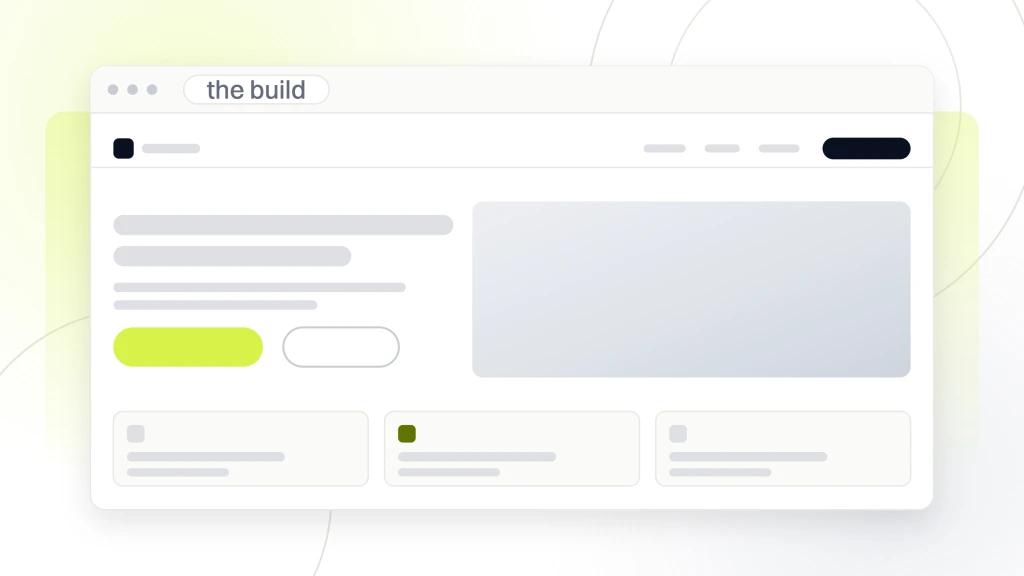
- Mobile-first responsive layout. Most buyer traffic arrives on a phone, which is a recurring theme in Smashing Magazine business research. The mobile design is the design.
- Sub-2-second Largest Contentful Paint. A slow site loses 40% of visitors before the first listing loads. Fix images and hosting first.
- Live IDX or MLS feed. Under 15-minute refresh from MLS to public listing page.
- Draw-a-polygon map search. Buyers who draw their own search radius convert 3x higher than dropdown filters alone.
- Saved-search email accounts. The highest-value email list a brokerage ever builds.
- Property schema markup. RealEstateListing schema earns rich results and pushes GBP performance.
- Neighborhood landing pages. One per priority zip code, with median price and 3 to 5 live listings.
- Home valuation tool. Seller lead capture at 8% to 12% conversion on seller-intent traffic.
- CRM API handoff. Under 30 seconds from form submit to CRM record.
- Agent bio pages. One page per licensed agent with photo, reviews, and direct contact.
- Google Business Profile connection. GBP posts and reviews pull into the site for social proof.
- Analytics stack. GA4, Search Console, and CallRail so every source is trackable.
Real estate agent website design vs. team vs. brokerage builds
A solo real estate agent website design lives at Starter tier with a simple IDX widget. A team build steps up to Growth for 2 to 5 agent bios, shared inbox, and 3 neighborhood pages. A brokerage build sits at Scale with an agent directory, roster editor, custom lead round-robin, and direct MLS API. Sizing the build to the org chart matters. Buying a Scale package for a solo agent burns budget on features that stay untouched for 2 years. Buying a Starter for a 12-agent team costs 4 rebuilds inside 18 months.
Real estate website design launch plan in 6 to 8 weeks
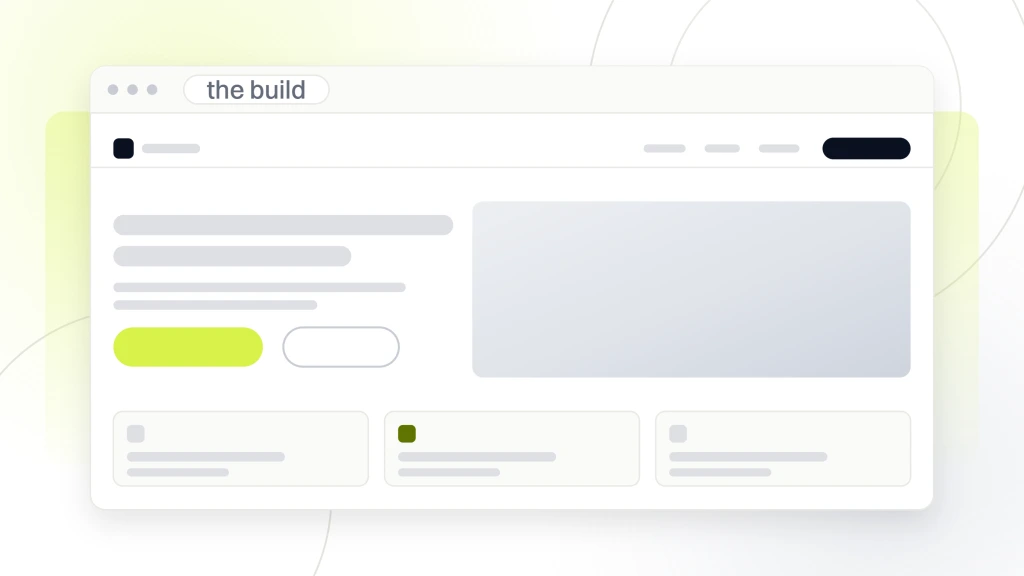
A clean real estate website design launches in 6 to 8 weeks from kickoff to live cutover. Week 1 handles discovery, MLS credentials, and brand assets. Week 2 covers wireframes and the IDX or API integration test. Weeks 3 and 4 hold the design and neighborhood-page build. Week 5 is content and internal review. Week 6 runs QA, page-speed pass, and stakeholder sign-off. Week 7 or 8 covers launch and the 14-day post-launch stability check. Anyone quoting under 4 weeks is skipping QA. Anyone quoting past 12 weeks is padding the invoice.
- Week 1, discovery. Brand assets, MLS credentials, sitemap, and lead-flow mapping.
- Week 2, wireframes. Homepage, listing page, property search, and neighborhood templates.
- Weeks 3-4, design and build. Visual design, WordPress or headless build, IDX or API integration.
- Week 5, content. Neighborhood pages, agent bios, service pages, and CRM handoff testing.
- Week 6, QA. Page-speed pass, mobile audit, form testing, schema check.
- Weeks 7-8, launch. DNS cutover, redirect map, 14-day stability watch, first monthly report.
Content your team owns, not the agency
The agency writes the site skeleton copy. The agent or broker owns 4 assets that never scale from a vendor. Agent bio, headshot, client testimonials, and 3 to 5 recent sales stories. Every one carries your voice, your local proof, and your face. Vendors who write bios for real estate agents produce interchangeable copy that reads like every other agent in the metro. Write the bio yourself in 90 minutes. It compounds for years.
Case study, Abels Residential in London
Abels Residential is a London lettings agency we partnered with in 2023 and 2024. When they reached us, the site pulled about 4 rental inquiries a month on 900 sessions. Bounce rate on the search page was 71%. Load time on 4G ran 5.4 seconds. The MLS-adjacent lettings feed took 40 seconds to render on mobile. The rebuild ran under our Growth real estate website design services scope with a custom lettings-specific search UI.
Twelve months post-launch, Abels Residential is producing 20+ qualified rental leads a month, ranking on 300+ keywords, and holding a 2-second page load on 4G. The client wins mapped to 3 changes. First, a live lettings feed pull under 15 minutes. Second, a saved-search account that captured buyer intent overnight. Third, 12 neighborhood pages built around Zone 2 and Zone 3 London postcodes. The lettings feed alone drove 60% of the ranked keywords. Read the full write-up on our real estate SEO services page.
Case study, McCarthy Court in Sidcup
McCarthy Court is a 7-unit luxury residential development in Sidcup, UK. The developer briefed us in 2023 on a pre-construction launch site. No listings existed yet. No comparable sales existed in the postcode. The build had to sell 7 flats off floorplans and CGI renders alone. We built a single-purpose real estate website design with an immersive virtual showcase, floorplan gallery, and a lead capture built around private viewings.
The site sold 100% of McCarthy Court inside 3 months of launch. 60 qualified leads booked private viewings across 10,000 campaign visits. The developer paid the entire build cost back on the first unit reservation. Two elements carried the outcome. A property-schema-rich immersive floorplan page that ranked for the postcode inside 6 weeks. A private-viewing booking flow that pulled 6% of unique visitors into a scheduled slot. The client called it the highest-yield real estate website design services deliverable they had commissioned. See the fuller portfolio treatment on the real estate marketing hub page.
Mistakes that kill a real estate website design build
Every failed real estate website design build I have audited carries at least 2 of the 5 mistakes below. Fix all 5 and the site outperforms the market average inside 6 months. Miss any 2 and the site plateaus at 60% of potential, then gets rebuilt inside 18 months for another $8,000 to $30,000. Owners rarely see the pattern until the second rebuild. You can skip that pain.
- Slow mobile load. Over 3 seconds on 4G and buyer traffic drops 40% before the first listing renders.
- Static listings. A property page updated once a week loses to Zillow inside a quarter. Live IDX or API is the floor.
- Weak lead capture. One contact form on the About page collects 2 leads a month. Multi-pattern capture collects 20 to 60.
- No neighborhood pages. A homepage-only site cannot rank for zip-code searches, which drive 55% of buyer intent traffic.
- Missing CRM handoff. A lead entered on the site at 9 p.m. and not seen until Monday morning is a lead already lost to a competitor.
Speed is the hidden conversion lever
Every 100-millisecond drop in Largest Contentful Paint lifts conversion by 1% to 2% on real estate sites we have measured. Move a site from 4.8 seconds to 1.9 seconds and total leads climb 20% to 40% inside 60 days, without a single copy change. The lever costs nothing beyond image compression, a Cloudflare cache, and a proper hosting stack. Anyone selling a $12,000 rebuild without a page-speed guarantee is selling the wrong scope.
Tools and platforms behind a strong real estate website design
Every real estate website design services build we launch runs on a proven stack. WordPress for the CMS, Kadence or a custom block theme for the design system, iHomeFinder or a direct RESO Web API for listings, Follow Up Boss for the CRM, GA4 for analytics, and Cloudflare for the CDN. Swap one component and the rest still holds. Swap the CMS to Webflow and the IDX cost triples and the SEO ceiling drops. Swap the CRM to a custom build and the launch stalls 4 to 6 weeks. Boring, proven, and cheap wins the compounding game.
- CMS. WordPress with block editor. Free, open, and the largest developer pool in real estate.
- Design system. Kadence, GeneratePress, or a custom block theme. Skip page builders past 20 pages.
- Listings. iHomeFinder ($50 to $110/mo) or RESO Web API ($300 to $900/mo) for a brokerage.
- CRM. Follow Up Boss ($69/user/mo), LionDesk, or HubSpot for the multi-team brokerage.
- Analytics. GA4 plus Search Console. Add CallRail for phone tracking on paid campaigns.
- Hosting and CDN. WP Engine or Kinsta, plus Cloudflare Pro at $20/mo for global caching.
Add-ons worth buying, but only later
3D Matterport tours at $250 to $500 per listing pay off once the average listing clears $1 million. AI chat widgets at $99 to $299 per month pay off once inbound sessions cross 3,000 a month. Custom lead-scoring engines pay off once monthly leads cross 200. Every one earns its keep at scale and drains cash below the threshold. Add them in the second year, not the first.
Real estate website design and the SEO overlap
Real estate website design decides 60% of the SEO ceiling on day 1. Slow sites cannot rank. Sites without RealEstateListing schema miss rich results. Sites with a single homepage cannot rank for zip codes. Sites without neighborhood pages leak buyer intent to Zillow, Realtor.com, and Redfin. Every SEO retainer you buy after the launch fights the design decisions the build went live with. Fix the design first, then pay for SEO. Reversing that order costs 12 to 18 months of ranking runway. Walk the real estate website SEO checklist before you sign off on any build.
The SEO-friendly build launches with 4 non-negotiables. Clean URL structure (“/homes-for-sale/austin-tx/78704/” beats “/property?id=123”). Property and Organization schema on every relevant page. XML sitemap that includes listings and neighborhoods. Server-side rendering on the IDX pages so search engines actually crawl the listings. Any real estate agent website design that skips one of the 4 will underperform on organic for the full year.
Common questions we get from agents, teams, and brokerages before every real estate website design engagement. The FAQ block sits above so buyers can screenshot the answers before pinging the sales team.
Launch a real estate website design that books more showings
Real estate website design services are a compounding investment. The right build books 20+ qualified leads a month inside a year, ranks for 300+ keywords, and sells 100% of a pre-construction development in 3 months. The wrong build costs $8,000 to $30,000 and gets rebuilt inside 18 months. The gap between the two is the 12-feature checklist above, the 6 to 8 week launch plan, and the discipline to skip the shiny add-ons until the base compounds. Every winning brokerage we have partnered with (Abels Residential in London, McCarthy Court in Sidcup, and a dozen more) followed the same pattern.
If you want a partner who has run this exact playbook across solo agents, teams, and brokerages, the Redefine Web team is ready to talk. Start with the responsive web design services page for a pricing baseline, or browse the custom web design and development menu for the full-scope build. The playbook works. The math checks out. The next step is a 30-minute call to map your site against the 12-feature checklist and pick the tier that fits.