
The best SEO tips for fashion blogging solve the structural problems most style sites publish around for years. The writer knows the aesthetic, shoots the outfits, and posts on a real cadence. Underneath, the site graph is a wreck. Category pages read as bare tag archives with 40 posts stacked in reverse chronological order and zero intro copy. Outfit-shot filenames read IMG_2831.jpg. Style guides go live without a single schema block. Seasonal round-ups get their own URL every year, and last year’s equivalent dies in silence. Six months in, the writer is producing three strong posts a week and organic traffic is still flat.
This guide covers the tactics our team runs on real editorial brands and DTC style archives. Category structure that ranks in Google. Image SEO that turns every outfit shot into a traffic channel. Schema on style guides that earns AI Overview citations. Seasonal republishing that keeps evergreen URLs alive across a decade of trend cycles. Internal linking that stops fighting itself. Analytics that ties every post to real affiliate or product revenue. Each tip below lands on a specific decision your writer makes this week, not a theory that ages out inside a quarter.
Image SEO tips for fashion blogging outfit shots
Fashion blogs sit on more image search opportunity than any other content vertical, and skip 80% of it. Every outfit shot on the site is a potential ranking asset inside Google Images, Pinterest search, and the visual side of AI Overviews. Blogs that treat images as decoration lose the channel entirely. Blogs that treat every single shot as an indexable asset pull 30% to 60% of total organic traffic from image search alone.
- Filenames matter. Rename every image to a descriptive slug like fall-denim-outfit-cropped-wide-leg-jeans.jpg, not IMG_2831.jpg.
- Alt text describes the outfit. Name the pieces, the color, the silhouette, and the aesthetic in 8 to 14 words per image.
- WebP output. Compress every hero and gallery image to WebP under 100 KB with AVIF fallback via the picture element.
- Width and height attributes. Set explicit dimensions to prevent layout shift and pass Core Web Vitals.
- Image sitemap. Submit an image XML sitemap through Search Console so Google crawls every gallery shot on publish.
- Schema on images. Use ImageObject schema on hero shots to declare the outfit context.
- Lazy load below the fold. The hero image loads eager with fetchpriority high, everything else lazy.
The Google Images optimization documentation covers the crawl side of image SEO for anyone wiring the sitemap work into a static site or a WordPress build. The mechanics are straightforward. What most fashion writers miss is that image alt text is the single caption Google reads to decide what the image is about, and vague alt text like model in coat leaves 90% of the ranking signal on the table. Descriptive alt text like woman in oversized cream wool coat with tortoise sunglasses and leather ankle boots turns the image into an asset ranking for six or eight related queries at once.
Schema tips for fashion blogging style guides
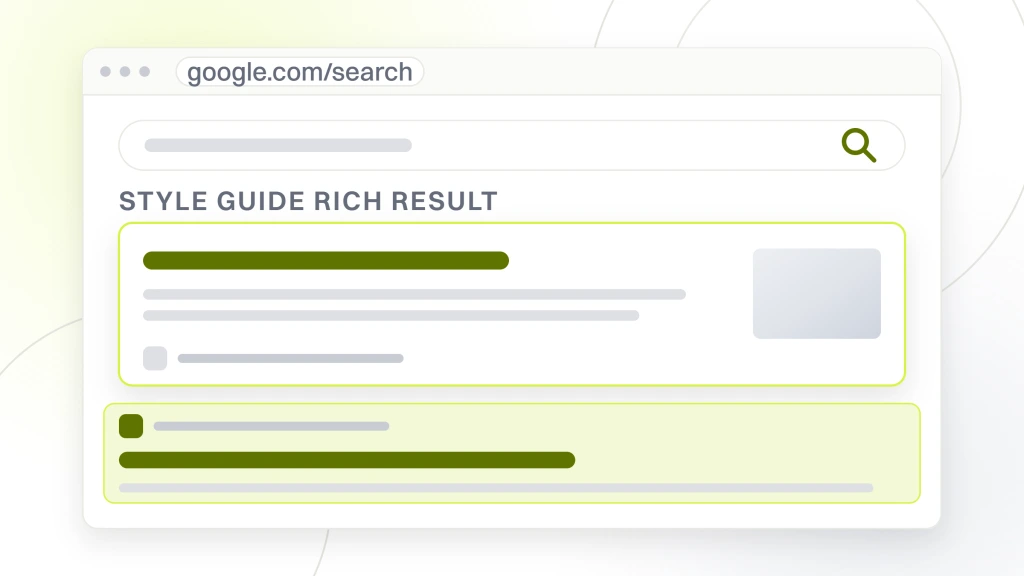
Style guides are the highest-authority format a fashion blog publishes, and most of them go live without a single schema block. Wire HowTo, Article, ImageObject, and FAQPage schema into every style guide and the guide starts appearing inside AI Overviews, Google Discover, and Pinterest visual search within 30 to 60 days. Skip the schema layer and the guide competes on raw prose against a hundred other blogs doing the same thing.
| Schema type | Where it goes on a fashion blog | What Google does with it | Typical uplift on the URL | Time to appear |
|---|---|---|---|---|
| Article | Every editorial post and style guide | Feeds Google Discover and Top Stories | 15% to 40% traffic gain | 21 to 45 days |
| HowTo | Step-based style guides and outfit tutorials | Rich result carousel and AI Overview citation | 20% to 60% gain on the URL | 30 to 60 days |
| FAQPage | Round-up posts with 5 to 7 real questions | People Also Ask and AI Overview extraction | 10% to 25% gain | 14 to 30 days |
| ImageObject | Hero shots and gallery images | Google Images and visual search prominence | 25% to 90% image traffic gain | 7 to 21 days |
| BreadcrumbList | Every post inside a category tree | SERP breadcrumb display and topical map | 5% to 12% CTR gain | 7 to 14 days |
| Product | Shoppable outfit cards with affiliate links | Product carousel and price ranking | 30% to 80% gain on shoppable URLs | 21 to 45 days |
The tactical order for schema on a fashion blog. Start with Article and BreadcrumbList on every post, so those two free wins take 20 minutes to wire once. Add HowTo on the top 20 style guides next. Add FAQPage on round-ups with real Q&A intent. Add ImageObject on hero shots in the top 50 posts by traffic. Add Product schema on shoppable cards only if the affiliate links are structured and the prices update automatically. Every schema type runs through the Rich Results Test before publishing, and any error gets fixed the same day. Style guides that publish without schema in 2026 are competing with one hand tied behind the writer’s back.
Seasonal republishing seo tips for fashion blogging
Seasonal round-ups are the trap that produces 40 dead URLs per year on most fashion blogs. The writer publishes fall 2025 denim trends, ranks for 90 days, and then the URL dies as a new fall 2026 denim trends URL launches from zero. Google never accumulates ranking signal on either. The fix is republishing seasonal content on evergreen URLs instead of dated ones.
The republishing pattern that works. Publish fall denim trends at yourdomain slash blog slash fall-denim-trends, not yourdomain slash blog slash fall-denim-trends-2025. The evergreen URL gets rewritten in place twice per year, with the current season’s trends replacing the previous copy so the URL stays constant. Google keeps every ranking signal accumulated across every past year on the same URL. The Yearly Update block at the top of the post names the current year and season, and returning readers see the freshness. WordPress last-updated postmeta refreshes the datePublished-equivalent signal Article schema needs. A single evergreen seasonal URL updated four times over two years typically accumulates 20 to 60 additional keywords per rewrite, all landing on the same URL rather than scattering across dated variants. Blogs that publish new URLs every season instead accumulate 30 to 60 dead URLs annually and never build compounding signal on any of them.
The tactical version of this republishing cadence runs inside our content marketing for fashion brands post, which lays out the pillar and cluster structure alongside the republishing calendar.
Internal linking tips for fashion blogging
Internal linking is the invisible layer that compounds topical authority over time. Most fashion blogs link the same three posts from every navigation and never wire between related editorial posts. The linking pattern reads as hub-and-spoke to the newsletter form and product pages, and Google reads that structure as a flat editorial site with no obvious authority topic.
The pattern that works on a fashion blog. Every editorial post links to 2 to 4 related editorial posts in the body prose using descriptive anchor text matching the target post’s focus keyword. Every style guide links to the category page it belongs to plus 3 to 5 sibling style guides. Every seasonal round-up links to the evergreen pillar for its trend and to the two most recent evergreen round-ups in the same season across previous years. Every shoppable outfit post links to the product PDPs and to the outfit-inspiration category. Anchor text discipline matters more than link count. Anchors reading Read More or Click Here pass zero ranking signal. Anchors reading Complete Guide to Wide-Leg Denim Outfits pass strong topical signal. Blogs that fix nothing else about their internal linking except anchor discipline see ranking gains on the linked-to posts within 8 to 12 weeks. That is one of the cheapest wins available in fashion blog SEO, and the layout patterns that make internal linking scan naturally to readers sit inside our fashion blog web design writeup.
Keyword research tips for fashion blogging
Keyword research on a fashion blog works differently from ecommerce keyword research. Ecommerce chases buying-intent queries. Fashion blogs chase inspiration-intent queries. Both convert if the site graph routes them correctly, and the research process starts in different tools and lands on different page types. Skip the research step and the writer publishes whatever the aesthetic feed suggested this week.
The workflow. Pinterest Trends surfaces the inspiration-intent volume 60 to 90 days before Google search volume peaks, giving the blog lead time on trend content. Google Trends confirms the search-side interest curve. Ahrefs or Semrush pull the head, mid-tail, and long-tail terms per topic cluster. Google Search Console exports 90 days of query data for posts already ranking on positions 8 to 30, which are the terms one refresh away from page one. TikTok search surfaces Gen Z aesthetic language that has not migrated into Google keyword tools yet. Combining all five sources produces a 300 to 500-term map that lasts 9 to 12 months before it needs a full refresh. Fashion writers that run only one source (usually Ahrefs) miss the inspiration-intent volume Pinterest and TikTok surface first.
The mapping step matters as much as the collection step. Every term gets classified by intent (inspiration, buying, informational, navigational), assigned to a target page type (post, category page, style guide, evergreen round-up), and slotted into the editorial calendar with a named owner and a target publish date. Fashion writers that skip the classification step end up with a 400-term list nobody reads and a calendar filled with whatever the aesthetic feed suggested this week. A properly mapped 300 to 500-term file becomes the operating document that runs the blog for the next 9 to 12 months without a single meeting about what to write next.
How to write fashion blog posts that rank
Answer-first paragraphs. Every question-style H2 gets a 40 to 60 word direct answer beneath it. Long-form depth. Every post ranges 1,800 to 2,800 words with a real thesis. Named examples over vague adjectives. Numbers over feelings. Original photography over stock. Those five habits turn a fashion blog post into a search result Google trusts and a reader finishes.
The structural tips that work post to post. Open with a specific stat, scenario, or contrarian claim in the first 40 words. Name the focus keyword in the first 100 words. Structure the post around 6 to 10 H2 sections that map to the subtopics the top-3 ranking posts cover. Add 1 to 3 H3 subheadings inside each H2 when the material genuinely splits into distinct angles. Include a comparison table, a bulleted checklist, or a named example inside at least three sections. Close with a soft CTA that links to the category page and to a related pillar post. Word count math for a fashion blog post typically lands at 300-word intro, 8 H2 sections at 250 words each, 200-word closing. Blogs writing 800 word posts against 2,400 word competitors never rank the post. Blogs writing 4,000 word posts on inspiration-intent queries lose the reader before the scroll depth converts. 1,800 to 2,800 words is the range that ranks and reads on a fashion blog.
Technical fashion blog SEO fundamentals
Technical SEO under a fashion blog covers page speed, mobile rendering, canonical hygiene, and crawl budget. Fashion blogs run heavy on imagery, and that is precisely the workload that wrecks Core Web Vitals when the source images are unoptimized. A fashion blog with 800 KB hero images on every post loads in 6 to 9 seconds on mobile and ranks below every faster competitor regardless of content quality.
The technical baseline every fashion blog needs. LCP under 2.5 seconds on mobile. CLS under 0.1 with width and height attributes on every image. FID or INP under 200 milliseconds. HTTPS everywhere with clean canonical tags. Sitemap submitted through Search Console with all indexable posts, category pages, and image XML sitemaps included. Tag URLs noindexed to avoid crawl budget waste. Pagination handled with rel canonical to the first page of the archive. Robots.txt clean and permitting the resources Google needs to render the page. A fashion blog clearing this baseline usually sees 20% to 40% organic traffic gain inside 90 days from technical fixes alone, before any content or link changes land. The web.dev Core Web Vitals reference covers the measurement methodology every fashion blog should read before running Lighthouse audits.
Fashion blogs running on WordPress or Shopify pick up 60% of the technical baseline from the platform. The remaining 40% is image handling, third-party script auditing, and font loading. Third-party scripts (analytics, affiliate networks, social embeds, Pinterest widgets, comment platforms) routinely add 2 to 4 seconds to LCP on mobile if loaded synchronously. Wrap every third-party script in defer or async tags. Preconnect to the CDN and font providers. Self-host the top two fonts and preload the display weight. Every audit round tightens the baseline further, and a blog that runs Lighthouse monthly usually holds every metric in the green regardless of imagery volume.
How RAFZ Cirkulära Interiörer grew organic traffic with an editorial-first SEO rebuild
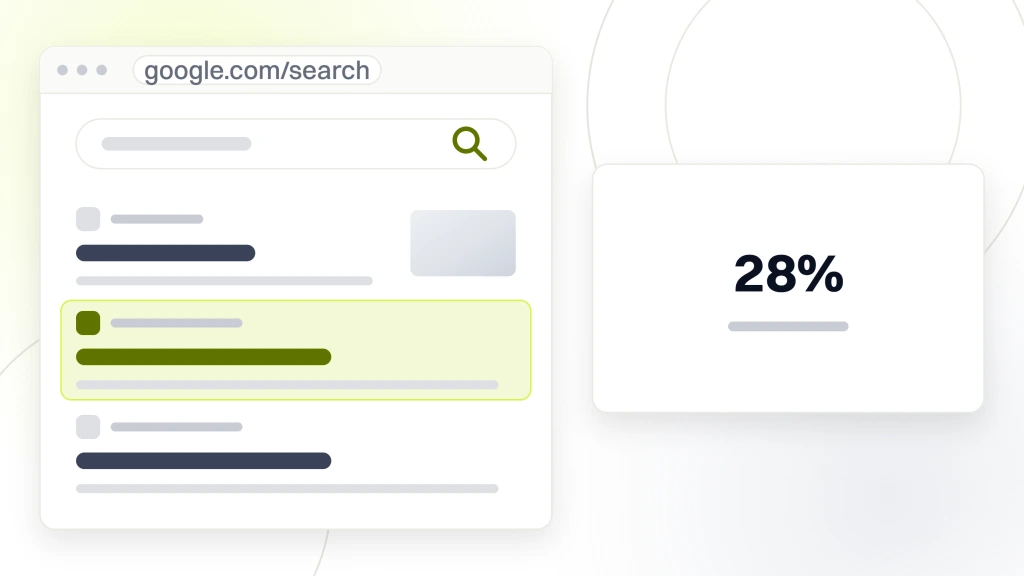
RAFZ Cirkulära Interiörer, a Swedish circular-interiors ecommerce brand with a heavy style-editorial archive, came to our team with a flat organic curve and a taxonomy nobody could navigate. Post-launch, the site saw a 28% conversion-rate gain (post-launch curve) after our team rebuilt the archive on the same SEO patterns fashion editorial teams need. The pattern reads identically on a style blog, so treat this as the template for what an editorial SEO overhaul actually produces.
Our team rebuilt the taxonomy into 9 core style categories plus 34 sub-categories, wrote 400 to 700 word intros for each, and noindexed every legacy tag URL. Renamed every image on the top 60 posts by traffic to descriptive slugs. Wrote alt text on every hero and gallery image using the 8 to 14 word pattern above. Wired Article, HowTo, FAQPage, ImageObject, and BreadcrumbList schema across the archive. Migrated every dated seasonal URL to an evergreen equivalent with 301 redirects. Rebuilt internal linking on the top 100 posts with descriptive anchor text. Submitted an image XML sitemap through Search Console.
The measurable delta on the RAFZ engagement lands at +28% conversion rate on the post-launch curve, alongside deeper archive gains the taxonomy rebuild triggered. The archive stopped fighting itself and started pulling every post in the same direction. No new writer, no new photographer, no publishing-cadence bump. The site graph finally rewarded the work already in the archive, and the archive became a compounding asset instead of a static collection.
Category page tips that fix the flat-archive problem
Category pages are the second-biggest ranking asset a fashion blog owns, after individual posts, and 90% of fashion blogs publish them as bare tag archives with zero intro copy, no schema, and no internal linking to pillar posts. Google reads that structure as a thin taxonomy page and ranks it below every category page that treats itself as a hub. Rebuilding category pages into hub pages typically produces 30% to 70% ranking gains on head-term category keywords inside 60 days.
The category page pattern that ranks. Write a 400 to 700 word intro that names the category, the aesthetic, the top 5 subtopics, and the top 3 posts inside the category. Add BreadcrumbList and CollectionPage schema. Link out to the top 8 posts inside the category with descriptive anchor text. Link inbound from every post inside the category using the category name as anchor text in the closing paragraph. Add 3 to 5 FAQ items with FAQPage schema on the category page. Feature the top-performing post at the top of the archive grid. Blogs that upgrade every category page on the same template see head-term rankings climb from position 40 to position 8 on average inside a quarter of the work landing.
Analytics tips for fashion blogging
Analytics closes the loop on every SEO tip inside this guide. Without measurement, the writer cannot tell whether last quarter’s schema rollout produced real traffic or only pretty charts. The right stack tracks rankings, organic sessions, image search sessions, Discover impressions, affiliate revenue, and email signups on a per-post basis. Fashion blogs that track only two or three of these cherry-pick the numbers that support the content they already wanted to publish.
The six KPIs to track monthly on a fashion blog. Ranking position on the top 50 focus keywords tracked in Ahrefs or Semrush. Organic sessions per post in GA4 filtered by organic search source. Image search sessions in Search Console filtered by the image search-type property. Google Discover impressions and clicks in Search Console under the Discover report. Affiliate revenue per post attributed through the affiliate network dashboard and matched against the GA4 landing page. Email signup conversion rate per post from the email service provider connected via GA4 event. Blogs that track all six iterate the strategy honestly. Blogs that track only rankings run headlong into the trap of ranking on queries nobody clicks and calling the work done. Real measurement aggregates all six KPIs into a monthly Looker Studio dashboard pulling Search Console, GA4, Ahrefs, and the affiliate dashboard together, so the writer sees the whole picture without pulling data from four tools.
Common fashion blog SEO mistakes
The mistakes we audit most often on fashion blogs fall into a repeatable pattern. Category pages left as bare archives with zero intro copy. Images uploaded straight from the phone with IMG_2831.jpg filenames. Style guides published without a single schema block. Seasonal round-ups getting a new URL every year and old ones dying. Internal linking limited to the newsletter form and the product page. Tag URLs indexed alongside category URLs, splitting ranking signal. Analytics measured in vibes rather than a dashboard.
- Bare category pages. No intro copy, no schema, no internal linking to pillar posts.
- Camera-roll filenames. IMG_2831.jpg wastes the ranking signal every outfit shot could carry.
- Schema-less style guides. No HowTo, no Article, no FAQPage, no ImageObject.
- Dated seasonal URLs. 30 to 60 dead URLs per year, all draining crawl budget.
- Hub-and-spoke internal linking. Every post links to the newsletter, none link to sibling editorial.
- Indexed tag URLs. Tag archives split ranking signal from category archives.
- Vibes-based analytics. No dashboard, no attribution, no honest picture of what ranks and what does not.
Fixing the mistake list above without adding a single new post typically produces 20% to 40% organic traffic gain inside 90 days on a fashion blog with any archive depth. The mistake list is the audit map our team runs on every fashion blog engagement in the first two weeks of working together, so the blog almost never has all seven fixed on arrival. Blogs that clear the list stop publishing into a black hole and start compounding the reach every post earns.
Where fashion blog SEO fits the growth stack
SEO sits alongside Pinterest, Instagram, TikTok, email, and affiliate revenue in the fashion blog growth stack. Social buys initial attention. Email owns the relationship. Affiliate revenue monetizes the traffic. Organic search compounds every quarter and becomes the cheapest traffic channel at scale, and only if the site graph pulls in the same direction as the writing. Fashion blogs that budget for social and skip SEO end up with a blog that resets every time the platform algorithm shifts. Blogs that fund both channels in parallel end up with a compounding traffic base and a social layer on top.
The retainer version of this work runs inside our apparel fashion marketing retainer, priced at $999, $1,499, $2,499, or from $4,500 per month across the four tiers on 6-month engagements. The retainer covers the taxonomy rebuild, schema rollout, seasonal republishing calendar, internal linking pass, and the monthly Looker Studio measurement dashboard. The tips inside this guide are the layer that decides whether every other channel compounds inside the archive or resets every quarter. The retainer is the delivery model that keeps every layer moving against the blog’s real ranking data over time.
Every engagement starts with a 30-day audit that maps the current category structure, image handling, schema coverage, seasonal URL structure (dated vs evergreen), internal linking graph, and analytics wiring. The audit report names the top 12 fixes ordered by traffic impact, with a target publish or update date for each. Quarters two and three run the fixes against the map, and the writer keeps publishing on cadence. Quarter four measures the compounding traffic gains against baseline and iterates the map for year two. Fashion blogs that follow this arc typically double or triple organic sessions inside 12 months without adding a writer or increasing publishing volume, so the site graph finally rewards the work already in the archive.
Start your fashion blog SEO rollout
Pick the two lightest fixes from the mistake list this week (filenames on 30 posts and Article schema on every post) and clear them in 10 days. Measure the delta in Search Console 30 days later. That is the smallest possible proof loop, and the one every fashion blog needs before spending real money on tools or agencies. When the loop closes with a measurable gain, run the taxonomy rebuild, schema rollout, and evergreen URL migration next quarter.