Most dental email marketing looks like a newsletter no patient asked for. Stock templates. Clip-art subject lines. Open rates parked at 12 percent. Practices give up and cancel the tool. The tool is fine. The flows are wrong. A program built on triggered flows books 15 to 40 recall appointments a week and pulls 12 to 22 percent of dormant patients back into the chair. That math is what changes the practice, not another rebrand of the newsletter.
Everything below is what we hand a new dental client on day one. Every flow has been running across dozens of practices. Copy the subject lines. Copy the send timing. Copy the reactivation sequence. Adapt the voice to the practice, then leave it alone. Skip the newsletter entirely. Newsletters underperform in dental every time and stall the whole program. Focus each email on one action, one link, one clear reason to click. That’s the entire pattern.
Redefine Web ran this exact playbook for VP Dental, where a 20 plus year practice doubled new monthly patients, added $8,100 a month in recurring revenue, and grew search impressions 776 percent after we unified the site and outreach under one team. Numbers like that come from patient email marketing tied to real practice management events, not from another pretty template.
Dental email marketing new-patient nurture flow
New patients need a nurture flow that runs between the first form-fill and the first appointment. That window averages 4 to 12 days, and it’s when 15 to 25 percent of new patients cancel or ghost. A tight nurture flow drops the no-show rate from 22 percent to 8 percent, which recovers 4 to 8 appointments a week at a mid-size practice.
The flow uses four touches. Immediate confirmation. What to bring on day 2. Appointment reminder text at day minus 2. Same-day text confirmation at day minus 1. Skip any touch and the no-show rate creeps back up. All four run automatically off the practice management system’s appointment record. Setup takes 2 to 4 hours once. Tie every touch into your broader dental marketing automation stack so the flow updates when the schedule updates. See our online booking for dentists post for how the flows tie into scheduling.
Immediate confirmation email
The confirmation email fires within 3 minutes of booking. Subject line reads, you are booked with Dr. Kim, Sarah. Body confirms the date and time, drops an add-to-calendar link, links the practice location on Google Maps, and lists a phone number for questions. Practices that skipped the confirmation email saw first-appointment no-shows run 30 to 45 percent higher than practices running the full nurture flow.
What to bring day-2 email
Day-2 covers the practical details. Insurance card, ID, current medications, prior dental records if available, arrival window 10 minutes before appointment. Also parking directions and reassurance around anxiety. Practices that added the walkthrough saw no-shows drop another 12 to 18 percent on top of the confirmation email alone. Reference the ADA patient communication resources for baseline templates.
Dental email marketing recall flow that fills the schedule
The recall email flow is the single highest ROI touch a practice runs. A patient overdue by 5 months and 3 weeks gets a warm reminder with a book link. That send books 65 to 82 percent of active patients back in the chair inside 14 days. A 3-touch flow at 5 months 3 weeks, 6 months 2 weeks, and 7 months 1 week climbs another 12 to 18 points above single-touch recall.
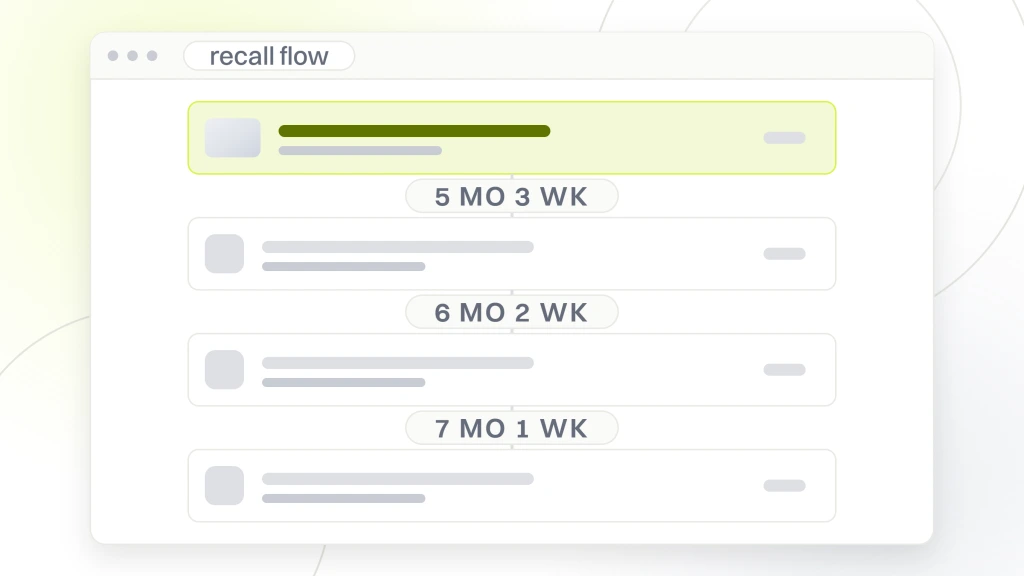
Copy stays short. Subject line names the doctor and the patient. Body confirms the last visit, invites the next one, and links straight to the online booking calendar. Dental practice email marketing works because the ask matches the moment. A recall email that arrives when the patient is actually due books at 4 to 6 times the rate of a general check-in blast.
VP Dental doubled new monthly patients, added $8,100 a month in recurring revenue, and grew search impressions 776 percent after we unified web and outreach under one strategy.
Dental email marketing reactivation campaigns for dormant patients
Dormant patients are the fastest source of recovered revenue in the practice. Reactivation campaigns target patients unseen in 12 to 18 months. A 3-email sequence pulls 12 to 22 percent of that list back into the chair. On a practice with 1,800 active charts and 400 dormant, that math produces 48 to 88 reactivation visits a quarter and around $28,000 to $65,000 in recovered production.
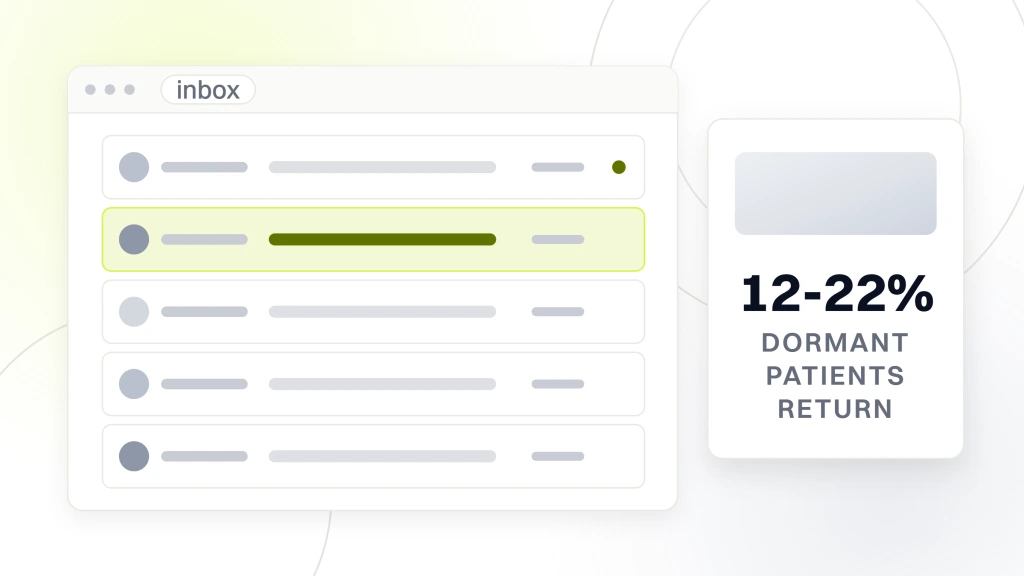
Sequence one, a warm we miss you email from the doctor at week zero. Sequence two, a benefit-focused reminder at week two that references unused insurance benefits or an FSA balance. Sequence three, a soft goodbye at week five offering a phone call if anything specific is holding them back. The full 3-touch sequence books 3 times the reactivation rate of a single blast.
Insurance benefits push in November
The strongest reactivation moment of the year is October through November. Dental benefits that expire December 31 create real urgency. A 2-email sequence timed to this window pulls 18 to 32 percent of dormant patients back for a cleaning or unfinished treatment. Patients who see a real dollar number book at 2 to 3 times the rate of patients who see generic urgency copy.
Dental email marketing for treatment plan followups
Treatment plans sit in the practice management system waiting. Some patients accept and schedule the same day. Others say they need to think. That group produces $18,000 to $85,000 a year in unrecovered production at a mid-size practice. A treatment plan followup flow recovers 15 to 30 percent of that unaccepted production. Set it up once, watch it run every week.
The flow fires 3 days, 14 days, and 45 days after the treatment plan presentation. Each touch answers a different mental question the patient is holding. Day 3, is this necessary. Day 14, what does this cost with my insurance. Day 45, is there financing available. Match the touch to the question and the acceptance rate climbs. Practices running the flow saw treatment plan acceptance climb from 32 percent to 48 to 55 percent inside 6 months.
Dental marketing automation tools that fire off practice management events hit 95 to 100 percent flow completion. Standalone tools cap around 20 to 40 percent on manual triggers.
Day 3, is this necessary
Day 3 answers the medical necessity question. Subject line reads, following up on Sarah’s treatment plan. Body references the specific finding, the recommended treatment, and the risk of delaying. Practices that framed the touch as informational rather than sales converted 8 to 15 percent of patients into scheduled treatment inside 7 days.
Day 14, insurance and cost breakdown
Day 14 answers the cost question. Subject line reads, cost breakdown for your treatment. Body links a detailed breakdown with the specific insurance coverage, the out-of-pocket estimate, and any HSA or FSA eligibility. Practices that ran clear breakdowns converted 12 to 20 percent additional patients into scheduled treatment versus 3 to 5 percent on vague cost emails.
Dental email marketing for review requests
Review request emails are a fallback, not the primary channel. Text response runs 4 to 8 times the email rate. When email is the only option, timing and copy matter more. Send 6 hours after the appointment, not immediately. That window catches the patient after the visit is fully processed but before the day fades.
Delicate Dental Group built 700 plus verified Google reviews inside months by pairing SMS as the primary channel with email as the backup. That combination tripled Map Pack visibility and drove 280 percent more calls from Google Maps. Email fills the gap for patients who prefer email over text. Our dental review generation post covers the full workflow.
Review request subject lines
Subject lines that work reference the visit directly. Sarah, how was your visit with Dr. Kim today. Practices that used specific-visit subject lines saw open rates climb from 14 percent to 28 to 34 percent, which doubled review submissions inside 30 days. Generic subject lines like We value your feedback stayed at 10 to 14 percent open rates and produced almost no reviews. Personal beats corporate every time.
Green-tag filtering on email review requests
Never send review request emails to yellow or red tagged patients. Front desk tags every appointment green, yellow, or red at checkout. Green triggers the ask. Yellow and red never get asked. Practices that filtered by tag held average rating at 4.7 stars or higher across 300 plus reviews. Practices that skipped the filter drifted to 4.3 or lower inside 12 months.
Dental email marketing list segmentation
Every send goes to a specific segment, not the whole list. Recall goes to patients due within a 30-day window. Reactivation goes to patients dormant 12 to 18 months. Treatment plan followup goes to patients with an open unaccepted plan. Birthday goes to patients whose birthday is in the next 7 days. Blast sends to the whole list damage sender reputation.
Segmentation runs off practice management fields. Last cleaning date, treatment plan status, family unit, insurance provider, patient birthday. Most tools sync those fields on a nightly refresh. Setup is one-time. Practices that ran segmented flows saw open rates climb from a 14 to 32 percent baseline to 28 to 48 percent across every segment inside 60 days.
Segmented sends produce 3 to 6 times the booking rate of full-list blasts. Segment first, write second. Every send targets one clear audience with one action.
| Segment | Trigger | Expected open rate | Expected booking rate |
|---|---|---|---|
| Recall due | 5 months 3 weeks from last cleaning | 35 to 45 percent | 65 to 82 percent |
| Reactivation | 12 to 18 months dormant | 22 to 32 percent | 12 to 22 percent |
| New patient nurture | Between booking and appointment | 55 to 72 percent | No-show under 8 percent |
| Treatment plan followup | Days 3, 14, 45 post-plan | 28 to 38 percent | 15 to 30 percent |
| Birthday | Patient birthday | 32 to 44 percent | 6 to 12 percent bookings |
Family unit segmentation
Family unit segmentation groups household members under one primary account holder. Recall emails address multiple family members at once. Time for the Miller family cleaning. Book Sarah, Ben, and Emma here. Practices that ran family-unit recall saw open rates climb 8 to 14 points above single-patient recall. Skipping family segmentation produces 2 to 4 separate emails to the same house, which reads as spam.
Insurance-based segmentation
Insurance-based segmentation matters most on treatment plan followup and end-of-year benefits push. Segment by carrier for touches that reference benefit specifics. Cigna patients see Cigna-specific coverage numbers. Delta Dental patients see Delta specifics. Practices that ran carrier-specific benefit language saw click-through rates 2 to 3 times higher than generic benefit-expiring emails.
Dental email marketing tool stack and automation
Dental marketing automation runs on the same tool as text automation at most practices. Weave, NexHealth, RevenueWell, Solutionreach, and Yapi all cover email plus text plus practice management integration. Cost lands at $89 to $299 monthly per location. Recall-heavy practices lean RevenueWell. Communication-heavy practices lean Weave or NexHealth.
Never buy a standalone tool like Mailchimp or Constant Contact for dental email marketing. Those tools can’t fire on practice management events, which is the entire reason dental email works. Manual triggering produces 20 to 40 percent flow completion versus 95 to 100 percent on integrated tools. See our dental marketing tools guide for the comparison.
Weave and NexHealth for smaller practices
Weave at $199 to $299 monthly and NexHealth at $249 to $399 monthly bundle patient communication with email plus text. That bundle wins at practices under $1.5M because the same tool handles reminders, review requests, missed-call texting, and payment collection in one workflow. Both integrate with Dentrix, Open Dental, and Eaglesoft.
RevenueWell for dental marketing automation heavy practices
RevenueWell at $199 to $399 monthly sits at the automation end of the spectrum. Recall flows, reactivation touches, treatment plan followups, and birthday touches fire off practice management system events. Practices running RevenueWell for 12 plus months see recall rate climb 15 to 25 points versus baseline. Reference the Mailchimp email benchmarks for baseline open and click rates across industries.
Dental email marketing metrics that matter
Open rate and click-through rate are vanity metrics if they don’t tie to booked appointments. The number that matters is booked appointments per email sent. Practices that focused reporting on the booked-appointment ratio caught flow drift 30 to 60 days earlier than practices watching open rate alone.
The four metrics every dashboard should show. Booked appointments per email sent per flow. Open rate per flow. Click-through rate per flow. Unsubscribe rate per flow. Flows below baseline for two months in a row get rewritten. Flows that hit baseline get left alone.
A/B testing subject lines
A/B test subject lines on every flow every 90 days. Two variants. 50/50 split. Winner stays, loser gets replaced. Practices that ran quarterly tests saw open rates climb 2 to 5 points a year through compounding wins. Practices that never tested watched open rates drift 3 to 8 points lower per year as the same subject line fatigued.
Unsubscribe monitoring
Unsubscribe rate is the leading indicator of flow health. Baseline unsubscribe rate runs 0.2 to 0.5 percent per send. Anything above 1.5 percent signals the flow is over-sending, mistargeted, or off-tone. Cut the flow and investigate. Practices that ignored unsubscribe spikes watched deliverability collapse inside 60 days.
5 quick takeaways for dental email marketing
- Skip the newsletter and run triggered flows off practice management events.
- Recall at 5 months 3 weeks books 65 to 82 percent of active patients.
- Reactivation at 12 to 18 months dormant pulls 12 to 22 percent back to the chair.
- Segment every send so one flow targets one audience with one clear action.
- Watch booked appointments per email sent, not open rate as a vanity metric.
3 pro tips from practices that scaled dental email marketing
Pro tip 1. Write subject lines in the front desk voice, not the marketing team voice. Sarah, quick note from Dr. Kim outperforms Your smile deserves attention by 3 to 5 times on open rate.
Pro tip 2. Send Tuesday through Thursday mid-morning. Send times outside that window drop open rates 4 to 9 points. Avoid Monday morning and Friday afternoon entirely.
Pro tip 3. Run a 90-day sender warmup before any full-list send if the domain is new or the tool changed. Skip the warmup and deliverability drops to 40 to 60 percent inbox placement. A warmed domain lands at 92 to 97 percent.
What is dental email marketing and how does it work. Dental email marketing is a set of triggered flows that fire off practice management events like an overdue recall, a treatment plan presentation, or a dormant patient window. Every send targets one segment with one clear action.
How often should a practice send dental email marketing touches. Triggered dental email marketing runs whenever the trigger fires, not on a calendar. That produces 1 to 4 emails per patient per year on average. Newsletters cap at 1 per month if the practice insists on running them. Fewer sends, better targeting, more bookings.
Which dental email marketing tool is the best value for smaller practices. For dental email marketing under $1.5M in production, Weave at $199 to $299 monthly and NexHealth at $249 to $399 monthly are the strongest picks. Both bundle email, text, missed-call texting, and payment collection in one integrated stack.
What open rate should a dental email marketing program hit. Baseline broadcast sends run 22 to 32 percent. Triggered flows run 35 to 72 percent. Recall lands around 35 to 45 percent. Anything below 18 percent on a triggered dental email marketing flow signals a subject line or list health problem.
How long does a full dental email marketing setup take. A triggered dental email marketing stack takes 20 to 40 hours over 4 to 6 weeks. Setup includes practice management integration, segment configuration, template writing for 5 core flows, subject line testing, and green-tag filtering on review requests.
Does dental email marketing help Google rankings. Not directly, but the review request flow does. Dental email marketing that drives Google reviews grows Map Pack visibility and calls. VP Dental grew search impressions 776 percent after we paired the email program with review and web work.
Can Redefine Web run dental email marketing for our practice. Yes. Redefine Web builds the full dental email marketing stack, writes the copy, sets up the segments, and reports weekly on booked appointments per email sent. Practices we run this for see recall climb 12 to 18 points and reactivation add $28,000 to $65,000 a quarter.