Online booking for dentists website is a widget that lets a patient pick a real open slot, confirm it, and land on the practice schedule with no phone call, at 11pm on a Sunday if they want to. The good versions write straight into Dentrix, Eaglesoft, Open Dental, Denticon, or Curve in real time, and the best dental websites show that lift in every conversion breakdown. The bad ones capture a form and still need a callback Monday morning.
The short version. Pick a provider that syncs natively with your practice management system. Put the button above the fold on every page. Keep the flow under 90 seconds. Send 3 reminders. Do that and the widget raises new patient captures 20 to 35 percent and cuts front-desk phone volume by roughly a quarter. Skip any one of these and you get a widget nobody uses.
Dental patients search and book from a phone, and responsive dental websites set the baseline. For the underlying phone-use data, see Pew Research mobile technology data. Every rule below is judged on the phone first, the desktop second.
What Online Booking for Dentists Website Actually Does
A real-time widget lets a patient choose a time, confirm the appointment, and drop straight onto the practice schedule with zero office staff involved. The best versions sync to the practice management system in real time. The worst are request forms dressed up as booking. That single distinction decides whether the widget saves the front desk hours or wastes them.
Real-time schedule sync is the only version worth buying
The version worth having reads open slots directly from Dentrix, Eaglesoft, Open Dental, Denticon, or Dolphin, shows those slots to the patient, and writes the confirmed appointment back to the schedule. No callback. No double-book. No manual re-entry on Monday. That is the version that trims front-desk phone volume and grows show rate at the same time.
Request-only forms are not booking
A form that captures name, phone, and preferred time and then makes the office call back is not booking. It is a lead form dressed up as booking. The patient still has to answer the callback. The front desk still has to make the call. Show rate lands lower, since the patient commitment window closes before the confirmation lands. If the widget says “request appointment” instead of “book appointment,” the patient reads it correctly and expects to wait.
The show-rate difference between the two
A real-time widget runs a 78 to 88 percent show rate on new-patient appointments with a proper reminder stack. Request-only forms with callback confirmations sit around 60 to 68 percent, so the commitment window closes before the confirmation call arrives. That gap is 10 to 20 points on every patient the widget captures. Multiply across a year of new-patient volume and the provider choice pays for itself many times over.
Picking a Dental Online Scheduling Provider
The dental online scheduling provider choice comes down to 3 questions. Does it sync natively with your practice management system? Does it handle new-patient intake, recall, and emergency slots in one flow? Does the flow finish in under 90 seconds on mobile? Miss any one and the widget underperforms.
The native integration shortlist
NexHealth, LocalMed, Zocdoc, Weave, and Adit lead the native integration space for dental practice management systems. NexHealth syncs with Dentrix, Eaglesoft, Open Dental, Denticon, and Curve. LocalMed covers similar ground with a stronger Google Business Profile connection. Zocdoc plays best in metro markets where the marketplace traffic layer is meaningful. Weave and Adit bundle booking with phone and messaging. Pick based on your practice management system first, marketplace strategy second.
Provider pricing ranges you should expect
Standalone dental online scheduling runs $150 to $400 per month for a single-location practice. Bundled products with phone, messaging, and reviews run $400 to $900 per month. Zocdoc runs on a per-new-patient fee starting around $40 per appointment. The right pick depends on monthly new-patient volume and whether you already pay for phone or messaging tools a bundle would replace.
What breaks provider trials
Most 30-day trials fail on one thing. The sync never got finished. The office ordered the widget, the tech team went dark for 2 weeks, and the trial ended before real slot data flowed to the patient side. So insist on a specific integration date inside the first week of the trial. If the provider cannot commit to that date, the sync layer is fragile and the trial will end with the same result. A widget nobody uses.
The Online Booking for Dentists Website Flow That Converts
The flow decides whether the widget books patients or watches them abandon halfway. Every extra step costs 6 to 12 percent of the intent that reached the widget. The 4-step flow below is what works across the dental accounts we run. Anything longer than 4 steps needs a specific reason tied to your schedule structure.
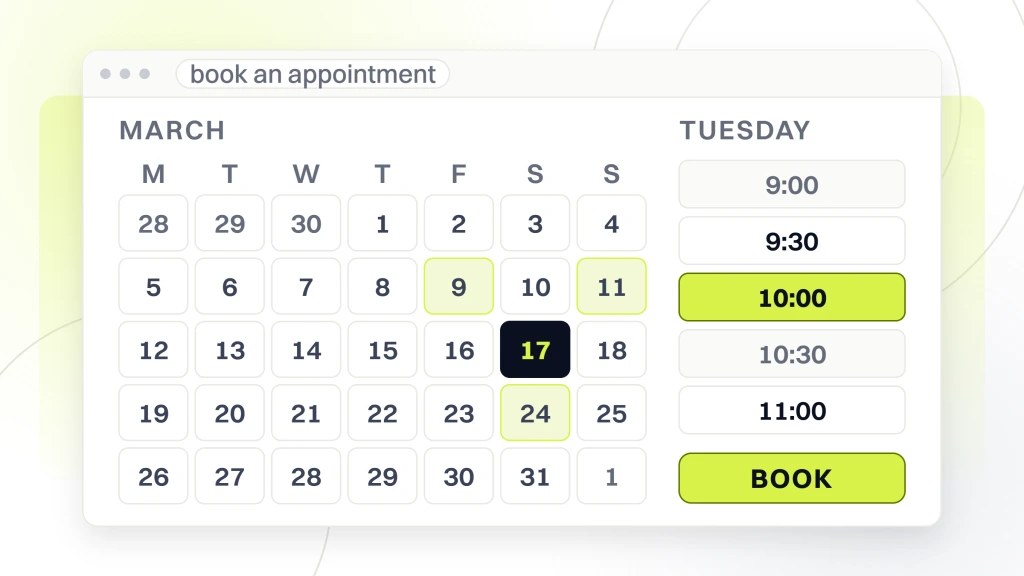
- Step 1. Pick the reason for the visit from a short list of 5 to 8 options.
- Step 2. Pick a provider or take the first available.
- Step 3. Pick a time slot from a real calendar grid.
- Step 4. Enter name, phone, email, and confirm.
Why insurance capture belongs after the confirmation
Insurance capture inside the booking flow drops completion rate 15 to 25 percent. Patients do not have their card in front of them at 10pm on a Tuesday. Move insurance capture to a post-book intake form emailed with the confirmation. Completion rate on that follow-up form runs 70 to 82 percent, since the patient already committed by booking the appointment. Verify insurance the day before the visit using the workflow that was already in place.
The mobile flow is the flow
Most dental booking traffic is mobile. The widget has to work on iPhone Safari and Android Chrome, both major versions, with no pinch-zoom, no mystery keyboard cover, and no time-picker that only shows on click. Test the flow on a real device once a month and after every provider update. That one habit prevents the silent post-update breakage that costs a week of booked appointments before anyone notices.
Placing the Book Appointment Dental Website CTA
Even the best book appointment dental website widget loses conversions if the button is hidden in the footer. Placement decides how many patients see the option. 3 placements do the real work. A sticky header button, a hero above-the-fold button, and page-level buttons at the end of every service page.
The sticky header button
A sticky header button that says “Book Appointment” and stays visible on scroll captures intent that would otherwise abandon around 60 percent scroll depth. Style the button so it visually beats every other header element. Do not use a link. Use a button with a distinct fill color that reads at a glance on both light and dark backgrounds.
The hero button next to the phone number
Above the fold, offer both the book appointment button and the phone number, side by side, roughly equal weight. Some patients still prefer the call. Some prefer the book. Forcing either one forces attrition. Track both actions separately in analytics so you can see the actual split. Most single-location dental practices see a 55 to 45 split favoring booking on new-patient traffic, and a 65 to 35 split favoring phone on emergency traffic.
Page-level buttons at the end of service pages
A patient who reads all the way to the end of the implants service page has bought the story. Give them the book button at the bottom of every service page with copy that names the specific service. “Book Your Implant Consult” beats generic “Book Appointment” by roughly 10 to 15 percent on service-page traffic. For the deeper page structure that pairs with this CTA placement, see our dental website optimization guide.
Reminder Stack That Wins Show Rate
Reminders are where show rate is won or lost. A booked appointment with no reminders shows up at roughly 62 percent. The same appointment with a 3-touch reminder stack shows up at 85 percent or higher. That gap is worth more than the widget itself over a year of new-patient volume.
| Reminder | Timing | Channel | Expected effect |
|---|---|---|---|
| Confirmation | Immediately after book | Email plus SMS | Locks the calendar entry |
| Advance reminder | 48 hours before | SMS | Prompts calendar review |
| Same-day reminder | 4 hours before | SMS | Catches last-minute reschedule |
| Post-appointment | 2 hours after | SMS | Opens the review request |
SMS beats email for reminders
SMS open rates run 95 to 98 percent within 3 minutes. Email opens run 20 to 35 percent within a day. For reminders that need to be seen before the appointment, SMS wins on every dimension except cost. Cost is not a real objection here. SMS reminder services run $0.02 to $0.05 per message, which pencils out to roughly $8 a month for a single-location dental practice at 200 appointments a month. See Pew Research on mobile technology adoption for the underlying reason SMS keeps outperforming.
The two-way reply option
Reminders that accept text replies for reschedule or cancel beat one-way reminders. Patients who cannot make it get to reschedule before the no-show becomes a lost slot. Two-way SMS catches the patient who forgot to add the appointment to their calendar. For what protected health information can and cannot appear in reminder text, see HHS HIPAA covered entities guidance.
When to add a phone reminder to the stack
For high-value appointments like implant consults or full-mouth restorations, add a personal phone reminder 24 hours before the visit on top of the SMS stack. That extra touch pushes show rate on high-value appointments up 6 to 10 points. The personal contact reinforces the commitment. Skip the phone reminder on cleanings and hygiene visits where the SMS stack alone already runs at 85 percent show rate. Match reminder intensity to appointment value and the front-desk time is well spent.
Real Numbers From a Dental Practice Online Booking Rollout
Smile Design Dentistry, a 50-plus location DSO, rolled real-time online booking to the network across a 4-month window. The numbers below track the first year after full rollout across all offices with a standard reminder stack running throughout. The account is one of ours, so the numbers are pulled from live reporting, not vendor collateral.
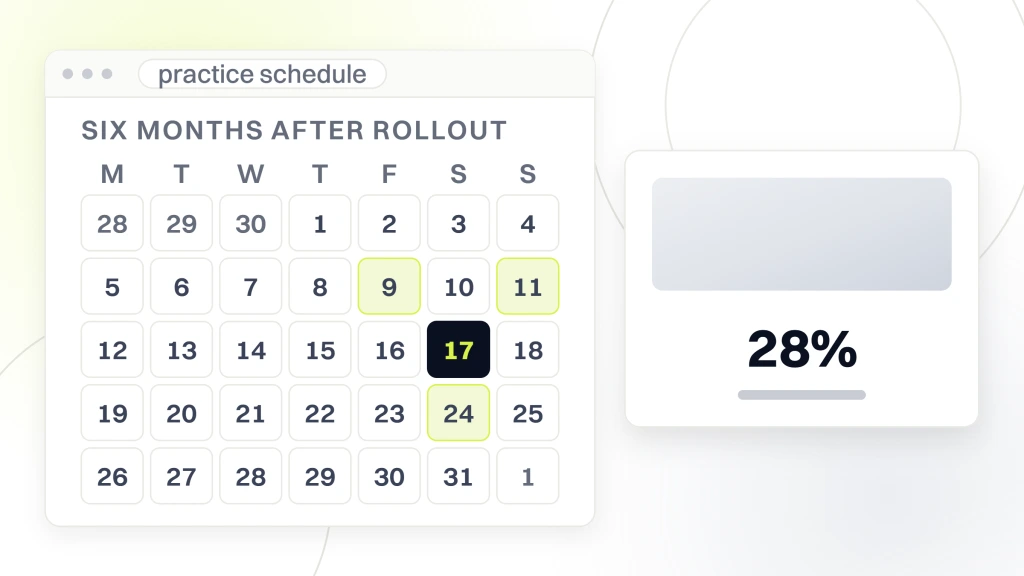
New patient capture rate
New-patient captures from the website rose 28 percent across the network in the 6 months after rollout compared to the 6 months before. The gain concentrated on after-hours traffic, which the phone team could not have captured anyway. About 41 percent of new-patient bookings arrived outside office hours after rollout, versus roughly 4 percent as request-only forms before rollout. In short, the widget did not steal phone bookings. It captured the Sunday-night bookings the phone was never going to answer.
Show rate change
Show rate on online-booked new-patient appointments held at 84 percent across the year with the 3-touch reminder stack. Show rate on phone-booked appointments held at 78 percent with the same reminders. The gap traces to the confirmation-in-the-flow moment, which locks the patient commitment at book time instead of at callback time.
Front-desk workload change
Front-desk phone volume dropped roughly 22 percent in the 6 months after rollout as new-patient booking traffic migrated from phone to widget. That freed the front-desk team for verification, insurance work, and same-day fill-in calls. Nobody was laid off. Everyone reported the phones felt less chaotic. For the recall and reactivation flows that pair with online booking, see dental marketing automation.
Common Dental Booking Widget Mistakes
The plan on Monday. Roll out real-time booking across every location with two-way SMS, custom intake forms, marketplace integrations, and dashboards tracking every touchpoint. The plan on Friday. Add a Calendly link to the contact page and tell the front desk to reply when it dings. Most practices set out for the Monday version and end up with the Friday one. Below are the 3 failure modes we see most often in real dental sites, and the fastest fixes for each.
Hiding the button in the footer
A book-appointment button in the footer captures the patients who scrolled to the footer, which is roughly nobody on mobile. Move the button above the fold and into the sticky header. That single move usually raises booking capture 15 to 30 percent within a month of the change going live.
Asking for insurance inside the flow
Asking for insurance carrier and member ID inside the booking flow drops completion 15 to 25 percent. Move it to a post-book intake email. The patient is already committed by then, and completion on the follow-up form stays high enough that nothing meaningful is lost. Verify insurance the day before the appointment using the front-desk workflow that was already in place.
Trusting the widget after provider updates
Providers push updates. Sometimes the update breaks the mobile flow. Every provider release note is a reason to run one real-device test before Monday traffic hits the widget. The 5-minute test prevents the week of booking loss that happens when nobody notices the picker stopped rendering on Safari.
Dental Online Scheduling and Practice Management Sync
The sync layer is what separates real dental online scheduling from a request form. The best providers write the appointment straight into Dentrix, Eaglesoft, Open Dental, Denticon, or Curve with no manual step. Anything less creates a shadow queue that ends in double-bookings.
Dentrix and Eaglesoft integrations
Dentrix and Eaglesoft together cover roughly 60 percent of the US dental practice management market. NexHealth and LocalMed both sync natively. Sync latency runs under 60 seconds in most tested implementations, so a patient booking at 9:00pm shows up on the front-desk manager screen at 9:01pm the next morning. Weekend bookings sync through to Monday schedule with no staff intervention.
Open Dental integrations
Open Dental has an active third-party ecosystem thanks to its open API. NexHealth and LocalMed sync directly. Independent developers have built plugins that read and write appointments through the same API layer. The sync tends to be faster than Dentrix, since there is less legacy overhead. For the full stack that pairs with Open Dental sites, see dental marketing tools.
What to do if your PMS lacks native sync
If your practice management system has no native sync to any major booking provider, either migrate PMS or accept the request-and-callback pattern. Do not try to script the sync yourself. The maintenance load, HIPAA exposure, and edge cases add up to a full-time role you did not budget for. The migration path is usually cheaper across 3 years.
Marketplace vs Website Dental Booking
Zocdoc-style marketplaces bring patients through their own traffic layer. Website booking runs on your own traffic. Both have a place in a dental practice stack. The mistake is picking one and calling it done. The mix depends on market density and practice growth stage.
When marketplaces earn their fee
Zocdoc runs $35 to $65 per new-patient booking depending on service and market. In dense metro markets with high dental competition, that fee earns out when the marketplace brings patients you would not have reached with SEO or PPC alone. In smaller markets with low competition, marketplace traffic is thin and the fee stops making sense fast. Run the math on marketplace CAC against your average patient lifetime value every quarter.
Why website booking still leads
Website booking captures the patients you already earned with SEO, PPC, referrals, and Google Business Profile. Those patients are yours regardless of the widget. The marketplace layer is additive. Roughly 65 to 80 percent of booked new patients arrive through the practice own website in most single-location markets, with the balance from marketplaces and phone. For the traffic-side moves that feed the widget, see dental website marketing.
The Google Business Profile booking link
Google Business Profile now supports a direct booking link on the map pack listing. Connect the widget to the profile so patients clicking the map result can book with no detour to the website. For the current supported providers and setup steps, see Google business profile booking documentation.
Measuring Dental Booking Widget Performance
Track 4 numbers monthly and the widget stays honest. Booking start rate. Booking completion rate. Show rate. Cancellation rate. Anything else is decoration until those 4 are stable and moving in the right direction.
The 4 core metrics that decide the answer
Booking start rate is the percentage of website sessions that open the booking widget. Booking completion rate is the percentage of started bookings that finish. Show rate is the percentage of completed bookings that arrive. Cancellation rate is the percentage that cancel with more than 24 hours notice, which tells you whether the confirmation moment is doing its job. Track all 4 in a single monthly one-pager.
Where GA4 fits in the reporting layer
Google Analytics 4 handles the booking-start event when the widget opens. The provider own dashboard handles completion, show, and cancellation, since the practice management system is the source of truth. Reconcile GA4 with provider data monthly. Any gap larger than 10 percent means the tracking layer needs an audit. For the reconciliation workflow, see our dental marketing attribution guide.
Where the dental website marketing retainer fits
Running the widget as part of a broader dental website marketing program takes 2 to 4 hours a month at a specialist level for a single-location practice. Multi-location groups need 6 to 10 hours. Most practices bundle it inside a monthly retainer, since the specialist time is hard to hire in-house. Retainer starts at $1,499 a month.
Make Online Booking for Dentists Website Work
Online booking for dentists website works when the sync is real, the flow is short, the button is visible, and the reminders show up. Set the 4 core metrics, review them monthly, and the widget turns into a booked-patient machine that saves the front desk hours a week and grows new-patient captures for years. The bottom line. Pick a provider that syncs natively to your PMS, put the button above the fold, close the flow in under 90 seconds, and send 3 reminders. That is the whole play.