Dental marketing ideas sort into two piles. The ones you can run this quarter with a clear outcome, and the ones that fill trade magazines but never move a number at your practice. This guide stays with the first pile. Every idea below carries a real cost, a real timeline, and a real metric you can hold it to. Some take a weekend. Some take a quarter. All of them work when they match your practice stage. Pick two or three. Skip the rest. Give each one a fair testing window before layering the next.
Here is the short version. A single-location practice under 1,200 active patients wins fastest by pairing a recall automation upgrade with a Google Business Profile posting cadence and a review request timing fix. Those three moves tend to add 5 to 7 booked appointments a week inside 60 days. Every other idea in this guide sits on top of that foundation and compounds slower. If you’d rather have a partner build the program with you, our dental marketing team deploys the exact stack in this post. Everything here still stands on its own if you run it in-house.
Dental Marketing Ideas You Can Run This Week
Most practices send review requests the day after the visit. Move the send window to 90 minutes after checkout. Response rates jump 40% to 60% on the same visit volume because the patient still feels the outcome of the chair time. Cost: 30 minutes to update your automation platform. Timeline: results visible inside two weeks. This one edit alone usually adds 8 to 15 new Google reviews a month for a single-chair practice.
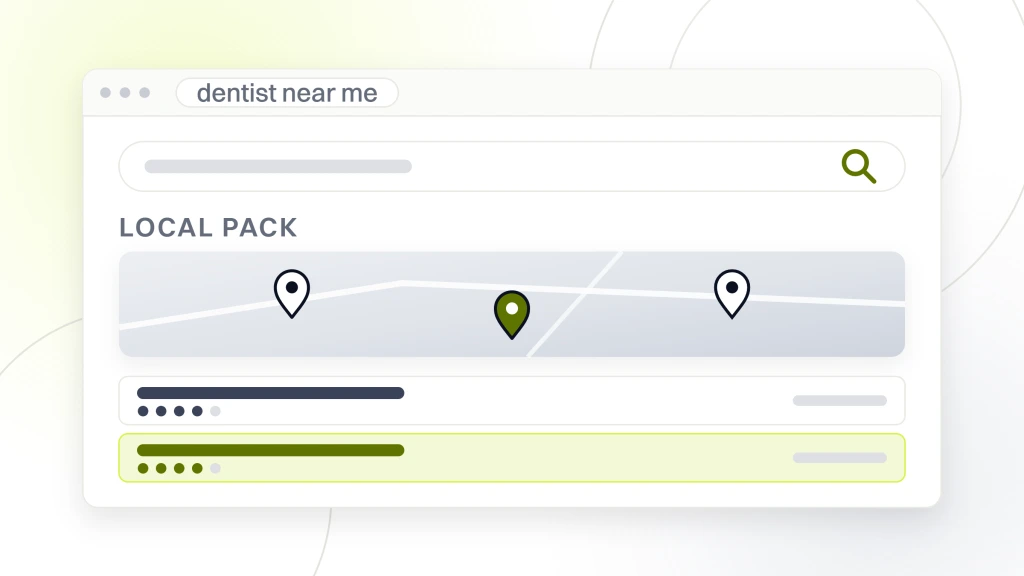
Every post on your Google Business Profile feeds local pack ranking signals. Two posts a week on any topic tied to your practice moves the profile inside 8 to 12 weeks. Topics: a new team member, a same-day appointment slot, a service reminder, a photo from the office. Cost: 20 minutes a week. Timeline: local pack movement in 6 to 8 weeks. Combine posting with a weekly photo upload and the compounding effect doubles.
If your Google Ads campaigns still count clicks instead of booked appointments, the reporting is blind. Install CallRail or a similar tool. Track every call from ads. Score which calls become patients. Every paid dollar now has a real outcome attached to it. Cost: $75 to $150 monthly. Timeline: reporting clarity inside 30 days. Without call tracking, you are guessing which campaigns book patients. With it, the wasted budget line-items surface inside a week.
Dental Office Marketing Ideas for Local Visibility
Local visibility is where dental office marketing ideas produce the highest return per hour of effort. Your patients live within a 20-minute drive of the chair. Every marketing dollar spent outside that radius tends to underperform. The moves below concentrate spend and attention inside the geography that produces bookings. Shrink the map, grow the schedule.
A local youth soccer, basketball, or baseball sponsorship runs $300 to $1,500 and places your practice name in front of 50 to 150 families. The signal is trust. Parents talk to other parents. Add a modest offer for new patients from the team roster and family referral loops start. Cost: $300 to $1,500 per season. Timeline: 3 to 6 months for word-of-mouth to compound. A single season often produces 12 to 20 new-patient family bookings.
Identify two nearby non-competing businesses that share your patient demographic. A pediatrician office. A local gym. A yoga studio. Set up a formal referral relationship with a small incentive on both sides. Print a shared coupon or a mutual mention on each other websites. Cost: $0 to $200 for print materials. Timeline: 2 to 3 months for referral flow to build. The best partnerships write down what “warm referral” means so both sides send qualified patients, not window shoppers.
Show up at the local elementary school health fair once a quarter. Bring toothbrushes, a puppet, and one team member to talk with kids and parents. Every event tends to produce 2 to 6 new families on average. It also builds long-term brand awareness that pays dividends when families move or switch dentists. Cost: $50 to $200 in materials. Timeline: patients from the first event usually book within 60 days.
Dental Clinic Marketing Ideas for Patient Retention
Retention is where most dental clinic marketing ideas quietly under-index. New patient acquisition gets all the attention while the existing base compounds slowly in the background. Retained patients cost less to book, spend more per year, and refer at higher rates than any cold audience. The moves in this section stay pointed at the patients you already have and how to keep them coming back on schedule.
Generic recall emails from “the practice” convert weakly. Recall emails from the hygienist by name, with a photo attached, convert 15% to 25% higher. Patients bond with their hygienist more than with the office name. Use that bond in the reminder. Cost: 45 minutes to update templates. Timeline: performance change measurable inside 30 days. Add a one-click reply-to-book link and the click-through rate climbs another 10 percentage points.
A short birthday text with a small gesture keeps the practice top of mind. Not a discount. A $10 whitening pen or a warm note. Roughly 8% to 12% of the birthday list will book a lapsed appointment inside 60 days of the touch. Cost: $2 to $5 per patient on the gesture. Timeline: quiet compounding over 12 months.
Every patient who leaves without scheduling recommended treatment goes into a three-touch sequence. Two-week recap. Six-week benefits reminder. Three-month final nudge. Treatment plan follow-up sequences recover 15% to 25% of open plan value inside 90 days. Cost: setup only, then automated. Timeline: revenue visible in 60 days. For a mid-size practice, that is $18K to $40K a quarter that was already close to booked.
Creative Dental Marketing Ideas With Real Payback
Creative moves live and die on execution quality. The concept is fine. The follow-through decides whether the work produces booked appointments or a fun conversation at the team meeting. The three moves below carry creative depth and a clear payback path when the follow-through holds.
Short, honest video from the doctor about one specific procedure works everywhere. Instagram, YouTube Shorts, TikTok, the website services page, and the paid social ad set. One good 30-second clip can serve 5 distribution channels for a year. Cost: half a day of filming plus editing. Timeline: paid ad performance in 30 days, organic compound over 12 months. Practices that publish 1 clip a month tend to see cosmetic case volume grow 20% inside the first year.
Before-and-after photos with written patient consent build real trust on service pages and paid social. The consent form matters. So does the photo quality. Both are cheap to fix. Practices that publish 15 to 25 real result photos with consent see conversion rate on cosmetic service pages grow 30% to 60%. Cost: photography equipment plus staff training. Timeline: measurable in 90 days.
A short hand-written note from the doctor to every new patient produces disproportionate retention and referral gains. It costs $2 in materials and 5 minutes of writing per patient. In a world of automated messages, a hand-written note stands out. Practices that adopt this see a 2 to 4 percentage point improvement in new patient 6-month return rate. Cost: $2 per patient. Timeline: retention effect measurable at 12 months.
Dental Marketing Campaign Ideas That Scale Across Locations
Multi-location practices need dental marketing campaign ideas that scale without turning each location into a snowflake. The moves below work at 3 locations and at 30. The trick is picking campaigns with strong per-location personalization sitting on top of a shared brand structure and a shared reporting layer.
Run the same campaign structure across every location. Same ad groups, same landing page template, same conversion actions. Vary the creative and the offer by location based on local competition and chair capacity. Central marketing can report on trends across the network while each location numbers still reflect its own market.
Bid up on the specific neighborhoods where patients convert. Bid down or exclude the neighborhoods that generate clicks without bookings. Neighborhood-level bidding produces cost-per-acquisition drops of 20% to 35% for multi-location groups because it stops the platform from over-serving low-converting geography.
Some locations run at capacity. Others have empty hygiene chairs. Move budget toward the locations that can absorb more patients this month. Update the allocation every two weeks. Practices that follow this cadence see network revenue growth 10% to 20% higher than practices running flat per-location budgets. The discipline is checking capacity data every 2 weeks and reallocating before the empty chairs pile up.
Every location runs the same core offers so the paid media creative can scale cleanly. Local team members can still add a specific value on top for a limited-time event or a school partnership. Standardization at the offer layer keeps the reporting comparable across the network without punishing local flexibility.
Dental Marketing Ideas That Usually Flop
Not every marketing idea deserves a place in your program. Some flop reliably every year. Practices repeat these moves because they sound reasonable in a Facebook group or on a webinar. The list below wastes money and time in almost every market we have seen. Skip them, or run a small structured test before betting a quarter of the marketing budget on them.
- Direct mail to zip codes without a demographic filter. Response rates under 0.3%.
- Radio spots without a matched digital retargeting layer. Attribution invisible.
- Broad billboard placements far from the practice actual patient catchment area.
- Newspaper ads targeting an audience that stopped reading newspapers a decade ago.
- Groupon-style deep discounts that attract deal-hunters who never return for a second visit.
- Monthly newsletters to the whole patient list. Open rates drift under 15% within a year.
- Facebook giveaways with no clear tie to patient acquisition or lifetime value.
These moves persist because they feel like marketing. A billboard is visible. A newspaper ad is tangible. A monthly newsletter feels productive. The visibility masks the poor conversion. Every dollar spent here is a dollar not spent on the moves that book patients. Kill them from your budget on purpose, not by neglect. Then run a three-month structured test on any idea you want to prove out, with call tracking or a unique landing page. If the test produces fewer than 3 new patients across 3 months at a full-scale spend, the idea is dead for your market.
Comparing Dental Marketing Ideas by Cost and Timeline
The cleanest way to choose between these moves is to lay them side by side on cost, timeline, and expected outcome. The table below stacks the ideas in this guide against each other. Use it to build a 90-day plan with 2 or 3 moves that suit your practice stage and budget rather than trying to run everything at once.
| Idea | Cost | Timeline to Result | Expected Outcome |
|---|---|---|---|
| Fix review request timing | Free | 2 weeks | 40% to 60% more reviews |
| GBP posts twice a week | Free | 6 to 8 weeks | Local pack improvement |
| Recall email personalization | Free | 30 days | 15% to 25% recall response gain |
| Treatment plan follow-up | Setup only | 60 days | 15% to 25% open plan closure |
| Call tracking on ads | $75 to $150 per month | 30 days | Reporting clarity |
| Youth sports sponsorship | $300 to $1,500 per season | 3 to 6 months | Word-of-mouth families |
| Doctor video content | Half a day plus editing | 30 days to 12 months | Multi-channel reuse |
| Hand-written new patient note | $2 per patient | 12 months | 2 to 4 point retention improvement |
Pick one free move, one setup-only move, and one low-cost move. Deploy the free move in week one. Deploy the setup-only move in weeks two and three. Deploy the low-cost move by the end of month one. Measure each against the expected outcome in the table. Only add a fourth after month one if the first three are trending as expected. Month two adds one creative-quality move like the doctor video content or the before-and-after photo publishing. Month three layers in one relationship move like the local business partnership or the school event.
Which Dental Marketing Ideas to Skip at Your Stage
Not every dental marketing idea suits every practice. The moves that work for a mature 3,000-patient practice waste time at a startup practice, and the other way around. Filter the list against your current stage before choosing what to deploy this quarter. A properly staged plan tends to outperform a full-menu plan by 30% to 50% inside the first year.
Startup practices under 500 active patients focus everything on new patient acquisition. Google Ads, Meta ads, and Google Business Profile activity. Skip retention work until the active patient list gets big enough to justify the effort. A birthday text program for 200 active patients does not move the needle. Once you clear 800 active patients, retention starts to matter and the retention section of this guide is worth more than the acquisition one.
Growth practices with 800 to 2,500 active patients balance acquisition and retention. Run the full recall and reactivation stack. Layer paid media on top. Publish content that supports the paid campaigns. This is the stage where a proper program produces the strongest year-over-year growth. The typical result is a 25% to 40% jump in booked new patients across 12 months.
Mature practices with 2,500+ active patients shift the emphasis toward retention, referral, and reputation. Acquisition remains, but the biggest gains come from squeezing more value out of the existing base. Add a case acceptance program. Add a formal referral system. Add a reputation program that publishes reviews and result photos consistently across every month.
How to Measure Dental Marketing Ideas Honestly
Every move in this guide has a metric you can measure it against. Measuring honestly means picking the metric before deployment and holding the idea to it. Practices that skip the measurement step run the same ideas forever without knowing which ones book patients and which ones burn budget.
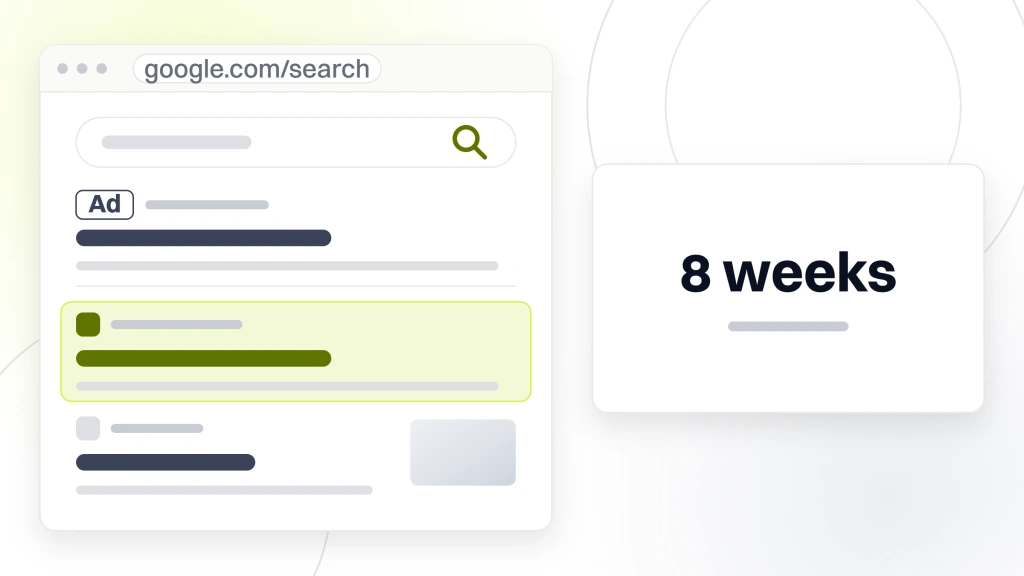
Before an idea goes live, write down what number it should move and by how much. Review request timing should push response rates from your current baseline to 40% to 60% higher. Google Business Profile posting should move at least one target keyword into the local pack within 8 weeks. Naming the outcome up front turns a marketing idea into a testable claim rather than a hope.
Every idea needs at least 60 to 90 days before you decide it worked or failed. Judging local SEO after 4 weeks or a paid campaign after 2 weeks produces false negatives. The number that matters is the trend across a full quarter, not the noise of any given two-week period. Practices that give ideas a fair window book roughly 30% more patients per marketing dollar over a year.
When an idea does not hit its target, kill it on purpose. Write down why. Add it to a list so the next planning round does not repeat it. Reference the ADA marketing guidance and the Google Business Profile guidelines when you write the measurement plan so the metrics you pick are ones the platforms actually reward.
How Smile Design Dentistry Scaled Marketing Ideas Across 50+ Locations
Smile Design Dentistry, a Florida DSO with more than 50 locations, hit the classic multi-location wall. Broad targeting drove leads no local office could convert. Central marketing had ideas. Field execution varied wildly. Our work with Smile Design Dentistry built the shared campaign structure with per-location creative that scaled the moves without turning each office into its own snowflake.
The PPC restructure pushed high-intent leads to the offices with capacity, not the next available phone. Per-location bid logic ran at the neighborhood level rather than the office level, catching patients searching from drivable distance. Landing pages matched ad creative and reinforced local trust cues while keeping the national brand consistent. That structural move drove a 20% gain in PPC conversion rate across the network inside the first two quarters.
CallRail analytics scored every inbound call for patient quality. Optimization ran against booked patients, not raw phone rings. The paid social program layered awareness, consideration, and conversion campaigns on top of a standardized cadence that ran across every location. Ad creative rotated on a formal test schedule. Budget shifted every two weeks toward the offices with open capacity, so no location paid for demand it could not absorb.
Cost per call dropped 30%. PPC conversion rate rose 20%. All 50+ Smile Design Dentistry locations ran on optimized campaigns with a scalable PPC, paid social, and landing-page structure that keeps improving month over month. See more case studies if you want a longer look at how the structure was built.
Dental marketing ideas only produce results when the deployment matches the practice stage and capacity. If you’d like help deploying a focused set of moves from this guide, our team at Redefine Web supports practices through dental marketing for dentists. Related reads: dental marketing plan, dental marketing strategies, dental marketing tips, and dental marketing calendar. External reference: HHS HIPAA covered entity resource.