A dental marketing plan turns a wish list into a working operating document. Every dental practice we audit says the same thing at the intake call. They want more new patients, they want lower cost per acquisition, they want a stronger local presence. Almost none of them can point to a plan that says which channel gets which budget in which month against which KPI. That gap is why marketing spend feels unpredictable. This guide walks through the dental marketing plan template Redefine Web uses across solo practices, groups, and DSOs. Every section maps to a real workbook row you can plug numbers into. You will finish the read with a plan you can run, not a slide deck to file. The one-year outlook shifts from vague ambition to specific weekly action.
The template covers goals, patient personas, budget, channel mix, KPIs, cadence, and quarterly review. Skip any section and the plan turns into a wish list inside 90 days.
Set 3 to 5 goals before you touch a channel in your dental marketing plan
Goals set first. Tactics second. A dental marketing plan without dollar or patient targets is a mood board. Pick 3 to 5 goals for the next 12 months and write them so a bookkeeper could measure them at the end of any month. “Grow new patient volume by 20 percent” beats “improve online presence.” “Cut cost per booked new patient below $180” beats “run more efficient ads.”
Goals map to chair capacity. A dentist with 8 open new-patient slots per week needs a different plan than one running a wait list. Match the target to the seats you can actually fill. Padding wastes budget in month 4 when the schedule saturates.
Growth goals
Growth goals attach a number and a timeframe. New patients per month by channel, revenue per new patient by acquisition source, lifetime value by insurance profile. Write each goal with a start value and a target value so the workbook can plot progress week by week.
Retention goals
Retention goals sit next to acquisition goals in every plan we build. Recall attendance rate above 78 percent, 3-year patient retention above 62 percent, hygiene reactivation from dormant lists at 8 percent per campaign. Practices that skip retention KPIs pay 3 to 5 times more per revenue dollar than practices that treat retention as a marketing job.
Brand and reputation goals
Brand goals are numeric too. Review count above 400 by year end. Star rating held above 4.7 across Google, Yelp, and Healthgrades. Branded search volume up 40 percent. These goals fund the review-generation loop and the local content plan that show up later in the workbook.
Build a patient persona before you split the dental marketing plan budget
A dental marketing plan without a patient persona funds ads that reach the wrong ZIP codes. Persona work takes 2 hours and saves 20 percent of the ad budget every quarter. Pull the last 200 booked new patients out of the PMS. Chart them by ZIP code, insurance status, procedure booked, and lifetime value. Two or three profiles usually account for 70 percent of the revenue.
Primary persona
The primary persona is the patient who books most often and pays the most across a 3-year window. For a family practice that is often a 34 to 44 year old parent with commercial PPO coverage inside a 6-mile radius. For a cosmetic practice it is a 45 to 60 year old professional searching veneers or implants. Write it, then aim 60 percent of ad spend at that persona.
Secondary persona
The secondary persona funds 25 percent of spend. Same insurance mix, different life stage or trigger. New-in-town families, dental emergencies, or bridge and crown replacements. It keeps volume steady when the primary channel gets seasonal.
Exclusion persona
Every plan names one exclusion persona too. High-Medicaid ZIPs the practice cannot serve at target margin, or procedures the office does not perform. Naming the exclusion cuts wasted clicks and stops the ad account from grinding on unprofitable leads.
The budget split inside a typical dental marketing plan
Budget splits inside a typical dental marketing plan look different by practice size and by growth stage. Startup practices weight paid channels heavily. Established practices weight organic and retention. DSOs weight brand and attribution infrastructure. Match the split to the stage of the practice’s growth curve. Our dental marketing cost breakdown carries the current benchmarks by practice type.
Solo practice budget split
Solo practices growing new patient volume typically allocate 45 percent to Google Ads, 15 percent to Meta ads, 15 percent to SEO and content, 10 percent to reviews and reputation, 10 percent to website conversion, and 5 percent to retention automation. Mature practices shift more toward SEO, retention, and content as the paid channels reach diminishing returns.
Group practice budget split
Groups running 2 to 5 locations weight the paid mix at close ratios but add 8 to 12 percent for location page content and 5 percent for consolidated attribution tooling. The website conversion allocation rises since the shared component library pays back across every location. Retention automation runs through a shared PMS integration for the group.
DSO budget split
DSO budgets shift meaningfully toward infrastructure. Attribution, dashboards, PMS integrations, and content operations often account for 20 to 25 percent of the total spend. Google Ads still leads the paid mix at 35 to 45 percent. SEO and content publish across the group at 15 to 20 percent. Meta stays at 10 to 15 percent. See our dso dental marketing for the DSO-specific breakdown.
The KPI dashboard behind every dental marketing plan
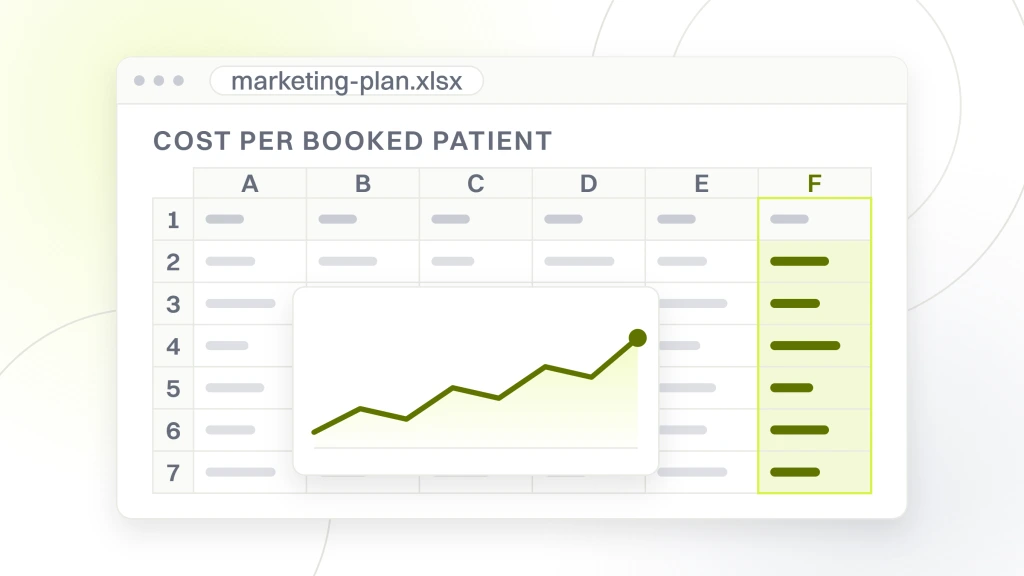
The KPI dashboard is where a dental marketing plan lives or dies. A plan without a working dashboard is a Google doc. A plan with a live dashboard drives budget reallocation weekly and steers the practice toward the year-end goals. The dashboard covers acquisition, cost, quality, and retention on one page. Anything that does not fit on that one page gets its own tab, not more real estate on the main view.
Acquisition KPIs
New patients booked by channel, new patients seen by channel, no-show rate by channel, form fills by source, calls by source, chat conversations by source. Every acquisition KPI ties to a channel so budget reallocation stays honest. Consolidated numbers hide the underperforming channel.
Cost KPIs
Cost per lead by channel. Cost per booked appointment by channel. Cost per new patient seen by channel. Cost per new-patient revenue tier. The tiered view catches the campaigns pulling in low-value leads at seemingly good CPL numbers. A $40 cost per lead that produces $180 in revenue looks worse than an $80 cost per lead that produces $860 in revenue.
Quality and retention KPIs
Case acceptance rate by acquisition channel. Recall attendance rate. 3-year retention. Average lifetime value by acquisition channel. Google review growth. Star rating trend. These KPIs close the loop from marketing spend to real revenue. Practices that skip them mistake activity for outcomes. Our dental marketing attribution covers the attribution stack.
Build the review-generation loop into the dental marketing plan
Reviews are a paid-search multiplier. A 4.7-star Google Business Profile with 400 reviews inside a 6-mile radius drops cost per booked patient 20 to 30 percent versus a 4.3-star profile with 90 reviews. Every dental marketing plan we build has a review-generation loop written into the workbook, not left to the front desk to remember. Google’s own local ranking signals lean on review volume and recency, and we chase both.
Ask at the right moment
Ask for the review when the patient is happiest, usually the walk-out after a hygiene visit. Automate a text at that trigger inside the PMS. Manual asks pull a 6 to 9 percent response rate. Timed automated asks pull 22 to 28 percent.
Route by rating
Route 5-star responses to Google and Yelp. Route 3-star and below into a private feedback loop so the practice can call the patient back before a bad review posts. It is closing the loop so real complaints reach the owner instead of the internet.
Respond to every review
Respond to every review inside 48 hours, positive or negative, in the practice owner’s voice. Google indexes responses. Prospects read them. A calm response to a 2-star review earns more trust than 30 canned 5-star replies.
The monthly cadence a dental marketing plan runs on
Cadence is what turns a dental marketing plan from a document into a system. Practices that pay for beautifully authored plans and then never open them run the same 6-month cycle. Loud kickoff, quiet middle, panic reassessment, new agency. The cadence below prevents that cycle.
Weekly review
Weekly reviews take 30 minutes on Monday morning. Read the KPI dashboard. Flag any 15 percent-plus deltas versus the prior week. Approve budget shifts under 10 percent of the monthly total. Anything larger waits for the monthly full review.
Monthly full review
The monthly full review runs 60 minutes on the first Monday. Cover top and bottom campaigns in each channel. Review creative refreshes for the next 30 days. Reallocate budget across channels based on cost per booked new patient.
Quarterly plan rewrite
Quarterly plan rewrites take half a day off site. Rewrite the next quarter’s goals against the previous quarter’s actual results. Rebalance the channel mix. Approve new campaign tests. Reset the workbook so the plan reflects real runway, not the assumptions the plan started with 12 weeks earlier. Miss one quarterly review and the plan drifts from operating tool to legacy PDF inside a quarter.
Twelve month milestones inside the dental marketing plans we run
A real dental marketing plan projects milestones by month so the practice can spot the plan going off track early. Vague plans hit the year-end review with a shrug. Milestone plans show a clear diagnosis by month 4 and let the practice adjust before the annual budget resets.
Month 3 milestone
Baseline Google Ads campaigns produce a working cost per booked new patient. Meta prospecting campaigns produce their first cohort of $2 leads. SEO fixes are live on the top 20 pages. Reviews trend up by 8 to 12 percent. If any of these are missing at month 3, the plan needs a hard reset, not a soft edit.
Month 6 milestone
75 keywords rank on page 1. Organic sessions rise 30 to 50 percent from baseline. Google Business Profile map-pack views climb 40 percent. Cost per booked new patient drops 12 to 18 percent as landing pages get sharper. Recall attendance rises on the retention automation.
Month 12 milestone
Organic passes paid for booked patient volume for the first time. Reviews clear the 4.7-star, 400-count threshold. Video content drives qualified consult requests. Patient volume runs 60 to 120 percent above baseline for solo and group practices. Multi-location groups hit the 30 percent growth threshold on marketing-attributed revenue.
Benchmarks that tell you if the plan is on track
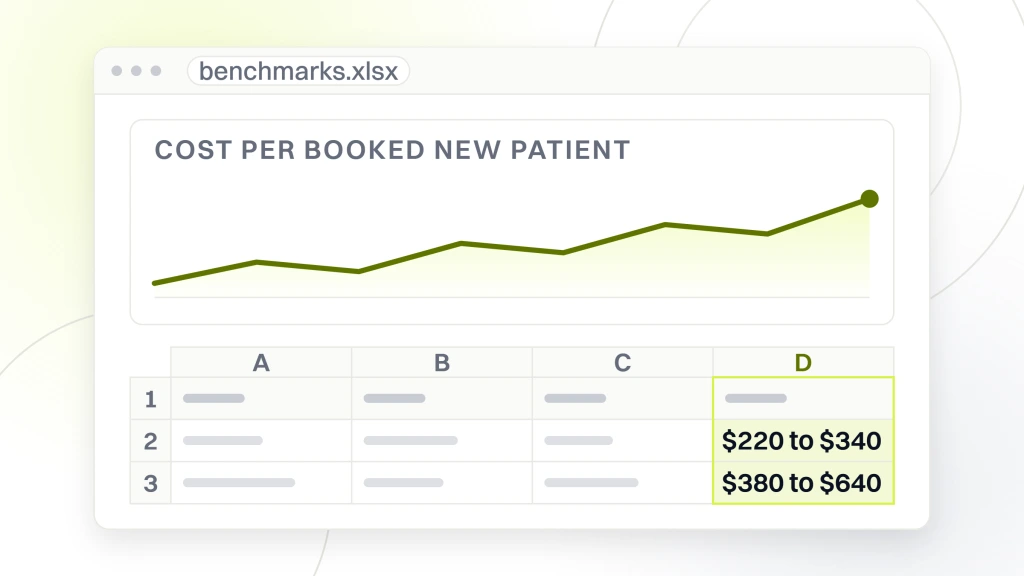
Benchmarks are where most dental marketing plans wobble. Owners chase channel numbers without knowing what “good” looks like across the market. Median cost per booked new patient sits at $220 to $340 for hygiene and $380 to $640 for cosmetic and implant cases. Cost per lead in Google Ads sits at $45 to $90 for well-optimized campaigns. Meta prospecting cost per lead sits at $12 to $28 for well-built creative.
Organic traffic growth benchmarks 8 to 14 percent per quarter for a plan running well. Review count grows 4 to 8 net reviews per month for solo practices and 12 to 20 for groups. Lag any of those bands for 2 quarters and the channel mix needs a rewrite. Our dental marketing tips post walks the tactical fixes we run when benchmarks miss.
Case study North County Dental Care a dental marketing plan that drove 1000 percent patient growth
North County Dental Care, a 20-year family practice in Vista, California, came to Redefine Web with a strong offline reputation and almost no online presence. Fragmented agencies, inconsistent NAP data, no top 10 rankings, and a thin Google Business Profile. The plan we built stayed constant from 2021 to 2024. The tactics rotated inside it every quarter.
What the plan established first
The first phase set the foundation. A secure mobile-friendly website replaced the legacy site. Local SEO cleaned citations, aligned NAP, and mapped keywords to service pages. Technical SEO fixed broken links and added schema. GMB PPC launched targeted map-based ads.
The multi-year compound
Over the full program, North County Dental Care saw patient volume grow 1,000 percent, organic traffic grow 385 percent, and marketing ROI hit 500 percent above baseline. The dental marketing plan reset every quarter but the core levers stayed constant. That is the structural payoff of running a real plan instead of chasing tactics. Full write-up under our dental marketing for dentists.
For groups and DSOs, the same discipline plays out at scale. Smile Design Dentistry, a 50+ location DSO in Central Florida and Tampa Bay, cut cost per call 30 percent and grew PPC conversion rate 20 percent by restructuring PPC by funnel and geo, adding CallRail analytics, and rolling brand-consistent landing pages across every office.
How to run your own quarterly review inside a dental marketing plan
The quarterly review is the piece most practices skip. Miss it, and the plan becomes a legacy doc. Keep it, and the plan resets against the previous quarter’s real numbers and the next quarter’s actual runway. Set the quarterly review as a non-negotiable calendar event.
Prepare the data pack
Pull the last 90 days of KPI data. Break out spend, leads, and booked patients by channel. Note major campaign changes, new content published, and reviews earned. Chart the KPI trend against the plan’s quarterly targets. A one-page summary reads faster than a 40-slide deck and produces better discussion. Include a short note on what changed operationally at the practice too, since chair capacity, a new hygienist, or a schedule adjustment often explains half the KPI movement.
Rewrite goals and budget
Rewrite the next quarter’s goals based on actuals. Reallocate budget away from underperforming channels toward outperforming ones. Approve any new campaigns, new content clusters, or new attribution improvements. The rewritten plan carries into the next quarter’s cadence. For content investment, revisit Google’s helpful content guidance so the pieces you fund actually rank.
Adjust the vendor mix
Quarterly is the right cadence to evaluate vendors. Any vendor missing agreed KPIs for two quarters running gets a hard conversation or replaced. Any vendor exceeding KPIs gets scope expansion. Vendors on the fence get a documented 90-day plan to close the gap. Our how to choose a dental marketing company covers the criteria we use. Owners can cross-check basics against the American Dental Association’s practice management resources too.
Tooling and templates that keep a dental marketing plan alive
Tooling and templates decide whether a dental marketing plan survives the first quarter or turns into a legacy PDF. Practices that pick the wrong tools rebuild their dashboards every 6 months. Practices that pick the right ones spend that time acting on data instead of collecting it.
The workbook itself
Keep the plan in a live Google Sheets or Notion workbook. One tab per section, goals, personas, budget, channel mix, KPIs, cadence, and quarterly rewrites. Version the workbook quarterly so you can look back at the plan you had 12 months ago. Practices that keep the plan in a static PDF lose the ability to iterate on it every week.
Dashboard software
Looker Studio or Power BI plugged into GA4, Google Ads, Meta, CallRail, and the PMS produces the live KPI dashboard the plan runs against. Start with a two-page template covering acquisition, cost, quality, and retention. Add channel breakouts as the team gets comfortable. Keep the dashboard the practice opens weekly limited to one page.
Meeting templates
Weekly review template covers KPI movement and budget shifts. Monthly deep-dive template covers channel dives and creative refreshes. Quarterly rewrite template covers goals, budget splits, and vendor evaluation. Practices that run meetings without a template revisit the same conversations every quarter. See our dental marketing tools for the tooling stack.
Turn your dental marketing plan into a weekly operating rhythm
The best dental marketing plan is the one your practice actually opens on Monday morning. Numbers matter more than templates. Cadence matters more than length. Start with a working 3-page plan, run the weekly cadence for 90 days, and rewrite the plan at the quarterly review. That rhythm turns marketing from a mystery into an operating discipline that compounds year over year for solo practices, groups, and DSOs alike.