
PPC for healthcare works when you treat every click like it costs real money, because it does. The average healthcare cost-per-click sits well above most industries, and if your funnel is loose, that money vanishes into curious clicks that never book a patient. This guide walks you through the full paid-search stack so PPC for healthcare campaigns actually pay for themselves. You’ll learn how PPC for healthcare intersects with HIPAA compliant PPC tracking, the campaign structures that scale across multiple locations, and the benchmarks that separate a healthy paid search account from one bleeding budget every month. We’ll cover keyword tiers, landing page essentials, call tracking, bidding automation, and the specific mistakes that show up in nearly every healthcare PPC audit our team runs. According to Google’s own benchmarks, healthcare CPCs and conversion rates vary widely by specialty, and knowing where you sit determines every downstream call in paid search planning.
Building a Healthcare PPC Keyword List That Books Patients
A smart PPC for healthcare keyword list works in three tiers. Bottom-of-funnel means exact-match “book appointment,” “urgent care open now,” and “dentist near me [zip].” These are your money keywords for PPC ads for healthcare. Middle-of-funnel covers “invisalign vs braces cost,” “back pain specialist,” and “best dermatologist [city]” for comparison and research intent. Top-of-funnel covers “why does my knee hurt” and “signs of gum disease.” Broad, cheap, low conversion rate, but great for seeding video and building remarketing audiences that catch patients earlier in their decision cycle.
Aim for 60 to 70% of budget on bottom-of-funnel exact and phrase match. Put 20 to 25% on middle-of-funnel research terms. Save 10 to 15% for branded terms including your practice name and competitor brand terms where the intent is explicit. Skip broad-match on healthcare almost always. The savings on tire-kicker clicks pays for a full month of proper media buying, and the higher blended conversion rate pulls the whole account into profitable territory faster than any bid tweak.
| Keyword Tier | Match Type | Budget Share | Expected CPC | Target CVR |
|---|---|---|---|---|
| Bottom-funnel exact intent | Exact + phrase | 60-70% | $8-25 | 10-18% |
| Middle-funnel research | Phrase | 20-25% | $3-9 | 4-8% |
| Branded + competitor | Exact + phrase | 10-15% | $1-5 | 15-25% |
| Broad awareness | Broad match | 0-5% | $1-3 | 1-3% |
Negative keywords are non-negotiable when running PPC for healthcare at scale. Common healthcare negatives include “jobs,” “free,” “school,” “training,” “definition,” “reviews of [competitor]” if you’re not bidding on competitor brand, and every misspelling of common conditions that pulls in curious searchers. Your negative list should grow every week for the first six months, and mature accounts often carry 500 to 1,000 negatives across account and campaign level. For the full framework, see our PPC Keywords for Healthcare.
campaign structure for Healthcare PPC Advertising That Scales
The single-account, single-campaign model breaks the moment you have more than one location or service line. Structure healthcare PPC advertising by service line first, then location. That way you can allocate budget to the specialties that are highest-margin and lowest-supply, not spread thinly across everything. For a DSO with 20 offices, run separate campaigns for general dentistry, invisalign, implants, and pediatric across each region cluster, not each individual office. Otherwise you end up with orphan campaigns that never gather enough data to optimize properly.
Ad groups sit under campaigns and hold 5 to 15 keywords each with matched ad copy. The rule stays simple. If an ad group needs two different ad headlines to serve its keywords well, split it into two ad groups. Tight, tight, tight is how you get high Quality Scores and lower CPCs. Loose ad groups get penalized by Google’s relevance algorithm and you pay for the sloppiness in every auction the account enters.
Match landing pages to ad groups. One landing page per intent, not one page for the whole practice. Someone clicking “emergency dentist” should land on an emergency-dentist page with a phone number in the hero and a “next available today” indicator. Someone clicking “cosmetic dentist” should see veneers and smile makeover imagery. Same practice, two very different pages. That single decision moves conversion rates by 40 to 60% compared with a shared home page for every ad.
Below 30 to 50 conversions per month, stay on manual CPC or Enhanced CPC. Smart Bidding without volume just hands Google your budget on trust.
Bid Strategy When to Automate and When to Stay Manual
Google will push you toward Smart Bidding, Target CPA, Max Conversions, and Target ROAS the moment your account starts hitting 30 to 50 conversions per month. And Smart Bidding actually works well in PPC for healthcare once your conversion tracking is clean and you have enough data. Before that threshold, stay on manual CPC. Automated bidding without volume is a gamble, and gambling is not a bid strategy when you’re paying $25 a click on cosmetic surgery terms.
The gotcha here matters. Smart Bidding optimizes toward whatever conversion action you tell it about. If your tracked “conversion” is a form fill from anyone including tire-kickers, Google will happily find you more tire-kickers. Tie conversions to booked appointments through CallRail with lead scoring or a CRM integration, and Smart Bidding suddenly looks like magic. Feed it garbage, it feeds you garbage back. The mechanism is simple. The fix requires patience while the account relearns the new signal.
For accounts with multiple locations or service lines, portfolio bid strategies let you set different targets by campaign. That way your high-margin implants campaign can chase Target ROAS while your urgent-care campaign runs Max Conversions with a hard CPA cap. Same account, different economics per service line, all under one login. That’s how mature PPC for healthcare accounts stay flexible as service line margins shift over the year.
Landing Pages That Turn Healthcare PPC Clicks Into Booked Patients
Your ad got the click. Now the landing page has 5 seconds to convince a hurting, cautious, insurance-checking human that you’re the practice for them. Which is to say, your homepage is not a landing page. Homepages talk to everyone. Landing pages talk to one person with one intent. Every practice we work with gains ground when they build service-specific pages instead of pointing ads at the home page. The math is not subtle. Dedicated pages typically double the conversion rate of a generic home page for the same ad.
The essentials look like this. Phone number visible above the fold with click-to-call on mobile, one-sentence value prop that names the service and location, real photos of the office and providers (stock photos read as fake), insurance logos if you accept common plans, patient reviews near the CTA, and a form short enough to fill on a phone in 30 seconds. Save the detailed intake for after they book. Pages with a single, clear CTA outperform multi-CTA pages across industries, and healthcare is no exception.
Speed matters more in healthcare than most industries because a chunk of your traffic is mobile-in-waiting-room-of-a-competitor. If your page takes 4 seconds to load, you lost them. Target under 2 seconds for Largest Contentful Paint, and skip the giant hero videos that look great on your Mac and murder mobile performance. For the CRO framework, see our Healthcare Website CRO.
One well-built landing page tied to $2K/mo of paid search books more patients than a $10K rebuild that ignores the ad path.
Call Tracking and Lead Quality Scoring for PPC in Healthcare
Around 60% of PPC for healthcare conversions still come through the phone, not a form. If you’re not tracking calls back to keywords, you’re optimizing blind. CallRail, WhatConverts, and Invoca are the usual suspects, and all three can score call quality based on duration, keywords spoken, and whether the caller booked. That last part is where the real money hides. Optimizing to “call started” is not the same as optimizing to “appointment booked” and the algorithm needs to know which is which to do its job.
Score every PPC for healthcare call. A 30-second call where someone asked directions to your parking lot is not the same conversion as a 4-minute call that ended with a booked appointment. Feed the “booked appointment” signal back into Google Ads as the conversion action and Smart Bidding will chase those callers by name. Practices that get this dialed in cut their cost per booked patient by 30 to 50% within a quarter, without touching their budget or ad copy at all.
Add a simple lead grade to every conversion. A means booked, B means qualified but did not book, C means info gathering, D means wrong number, out of area, or spam. Report on cost per A-grade lead, not cost per conversion. That single change reframes the whole account and stops the awkward monthly meeting where the ad platform says “your CPA is great” but your front desk says “we barely booked anyone.”
HIPAA Compliant PPC Tracking and Server-Side Setup
HIPAA compliant PPC tracking is where most PPC for healthcare advertising accounts break the law without realizing it. Standard Google Ads pixels can pass protected health information (PHI) through URL parameters, form fields, or call recordings, and the platform is not a business associate under HIPAA. Any PPC ads for healthcare that pass PHI back to Google Ads or Meta risks a HIPAA violation, plus the reputational hit that comes with it. Server-side tagging fixes most of the exposure.
The pattern looks like this. Fire the conversion pixel from your own server after scrubbing PHI, so Google only receives an anonymized “conversion happened” ping, not the patient’s name, condition, or appointment type. Use enhanced conversions with hashed email only where a signed BAA covers the vendor. CallRail, HIPAA-configured, sits between the caller and your team so recordings stay in a compliant environment. This part is boring, technical, and non-negotiable if you plan to run PPC for healthcare for more than a quarter.
The upside is real. Once server-side tracking is clean, Smart Bidding gets a stronger signal without the compliance risk, and your reporting finally ties booked patients to keywords without exposing PHI. Get your Google Tag Manager server container audited by someone who has done it for a healthcare account before. The $2,000 setup fee saves you from a $50,000 fine and a very bad Monday morning.
If a PPC vendor won’t sign a BAA and can’t show you a server-side tag setup, they can’t run compliant healthcare PPC campaigns. Keep looking.
Budget CPC Benchmarks and What Good Looks Like
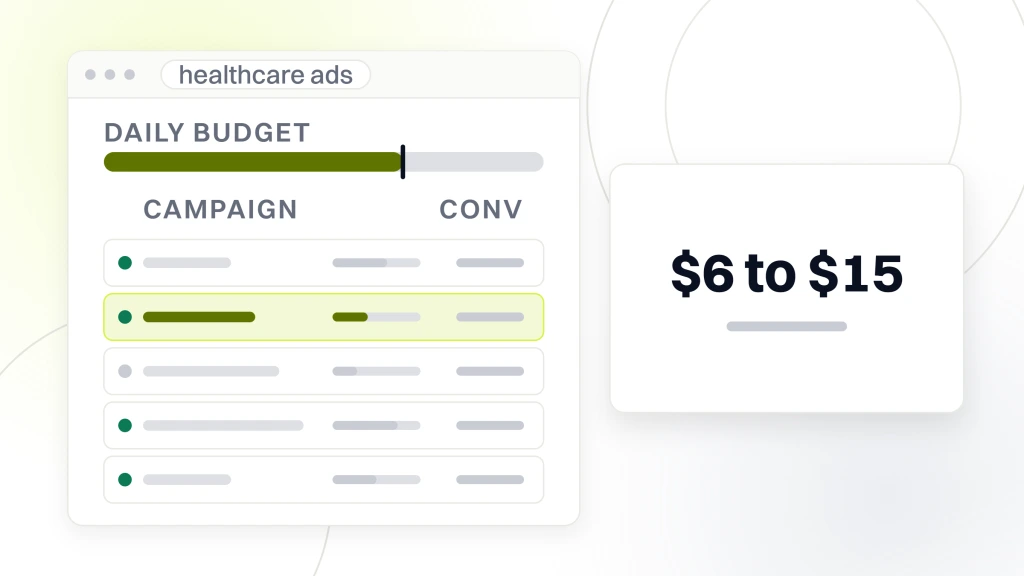
PPC for healthcare CPCs range widely by specialty. Dental average CPC runs $6 to $15. Urgent care runs $8 to $25. Cosmetic surgery and hair transplant runs $25 to $80. Substance abuse and rehab runs $75 to $300 (yes, really, and no we don’t know why either, though everyone has a theory). Set expectations by pulling Google Ads Keyword Planner data for your service and geography before you commit to a monthly spend. Nothing kills a PPC for healthcare engagement faster than a budget set from a national average that has no relationship to your local auction.
Minimum viable monthly budget for a single-location practice sits between $2,500 and $5,000. Below that you don’t generate enough data for the account to optimize, and Smart Bidding cannot get out of learning mode. Multi-location DSOs and hospital systems typically run $15,000 to $100,000 monthly across specialties. The rule of thumb, budget for at least 30 clicks per day on your highest-intent keyword group or the algorithm never has enough signal to work with when it starts making bid decisions on your behalf.
- Cost per booked patient should sit between 10 and 25% of average patient lifetime value.
- Conversion rate on service-specific landing pages should hit 6 to 15%, higher for urgent care.
- Impression share for branded terms should be 95% or higher. If competitors are eating your brand, you’re losing pipeline.
- Search impression share (non-brand) should be climbing month over month. Flat means you’re capped by budget or Quality Score.
PPC Audit Fixing an Account You Already Have
Ninety percent of PPC for healthcare accounts our team audits have the same three problems. First, broad-match keywords bleeding budget on irrelevant queries. Second, conversion tracking that fires on the wrong action, like thank-you page views instead of qualified leads. Third, landing pages that push traffic to the home page or a generic contact page. Fix any one and the account gets healthier. Fix all three and the whole economics of the account changes inside 60 days.
The audit walk starts with search terms reports. Pull the last 90 days and sort by cost. Every query that spent money but did not convert is a candidate for a negative keyword. Then verify conversion tracking by loading a landing page, filling the form, and confirming the conversion appears in Google Ads within 24 hours. Then check Quality Scores. Anything under 6 out of 10 means your keyword-ad-landing page trio is misaligned and you’re paying a penalty in every auction the account enters.
Little-known one, check your ad schedule. Half of healthcare accounts run 24/7 ads even though the office closes at 5. After hours, most searchers just want a phone number, and if yours goes to voicemail, you’re paying for clicks that never convert. Either dial back the after-hours bid, route calls to an answering service, or pause overnight and re-invest in daytime. Free money, sitting there. For the full walkthrough, see our PPC Audit for Healthcare.
Working With a Healthcare PPC Agency or Doing It Yourself
You can absolutely run PPC for healthcare in-house if you have someone who lives in the account weekly, understands HIPAA compliant PPC tracking, and won’t get seduced by Google’s Smart Bidding pitch before the data is ready. That’s a rare hire. The alternative is a specialist agency that has run enough healthcare accounts to know the compliance gotchas and the intent patterns cold. Either path can work. Both PPC for healthcare paths fail when the person running the account cares more about impressions than booked patients.
What to look for in an agency. Named team members (not “your account will run through our team”), monthly reporting that includes cost per booked patient (not just cost per lead), a signed BAA for any tracking they set up, and case studies from your specific vertical. If they’re pitching you the same generic PPC playbook they use for local plumbers, keep looking. Healthcare is different enough to need specialists who understand the auction dynamics your competitors know cold.
Fair joke on us. The number of times we’ve heard “our last agency was hitting a $12 cost per lead and it was amazing” only to find those leads were the practice’s own staff filling out forms to test the site. Real cost per booked patient tells the real story. Vanity metrics tell the agency’s story. Insist on the former, because your revenue depends on it. For evaluation criteria, our Choosing a Healthcare PPC Agency lays out the full checklist.
Case Study Smile Design Dentistry Cut Cost Per Call 30% in 90 Days
Smile Design Dentistry, a 50+ location dental support organization founded in 2004 in Dade City, Florida, came to Redefine Web with a familiar problem. Inflated ad spend, poor lead quality, and no reliable way to tie campaign performance back to actual booked patients. Their previous agency ran one big campaign per state, which meant a high-margin location in Tampa was subsidizing a low-margin one in Ocala and no one could see it. That kind of blended reporting hides the specific bleed points from the very people who could fix them.
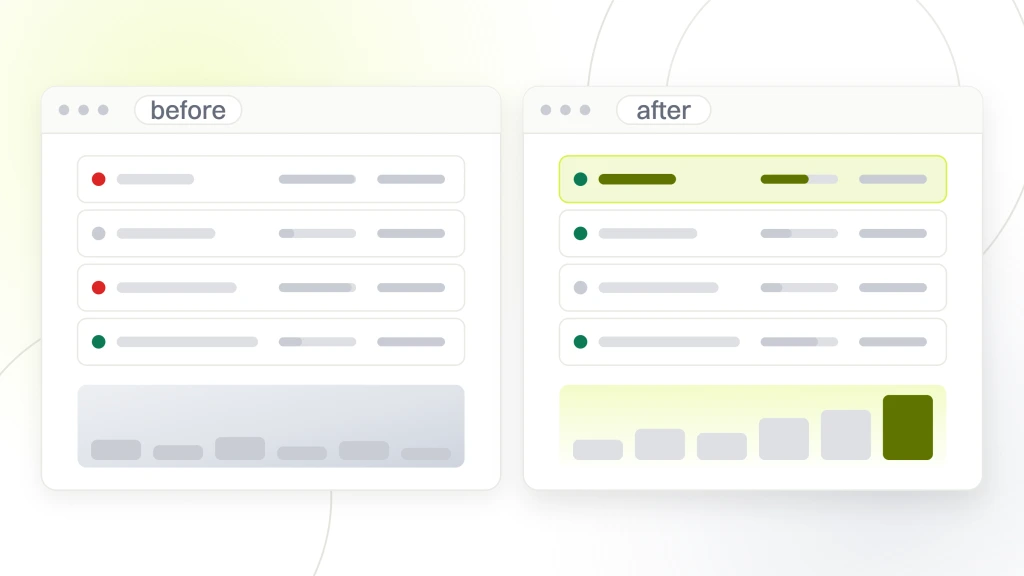
Our team restructured the account by funnel stage and geography. High-intent keywords got their own campaigns, with per-location bid adjustments driven by capacity signals from the front desk. Landing pages went to a full rebuild so each service line had its own conversion page, and CallRail integrated with the scheduling system to score every call by whether it booked. Ninety days in, Smile Design Dentistry’s PPC conversion rate grew 20%, cost per call dropped 30%, and the DSO could finally see which locations needed budget and which were fully booked. That kind of visibility changes weekly decisions across the whole organization.
The kicker sat in the reporting. Once “booked appointment” became the conversion action fed back into Smart Bidding, the algorithm started finding more people who actually book, not more people who click. That single change did more than any bid tweak, and it proved the core principle. Your conversion definition is your bidding strategy in disguise, and the account for Smile Design now scales cleanly across 50+ locations without the old blended-state reporting fog.
Common Healthcare PPC Mistakes and the Fixes That Book Patients
The mistakes repeat because the platforms make them easy. Google’s default recommendations optimize for Google’s revenue, not yours. Smart Campaigns for PPC for healthcare is a trap. Auto-applied recommendations that add broad-match keywords or expand geographic targeting will drain a budget in a week. Turn them off. Read every recommendation manually. Every account our team takes over has 4 to 6 auto-applied changes silently working against the practice, and cleaning them up is usually the first afternoon of the engagement.
- Running one campaign for everything. Split by service line and intent. Always.
- Sending ads to the home page. Build service-specific landing pages that match each ad group.
- Tracking form fills as the only conversion. 60% of healthcare conversions are phone calls. Track them.
- Ignoring negative keywords. Add 20 to 30 per week for the first six months.
- Trusting Smart Bidding on day one. Wait for 30 to 50 conversions per month first.
- Missing HIPAA compliant PPC conversion setup. Server-side tracking, signed BAA, PHI scrubbed.
- Bidding on generic condition terms. “Back pain” is $8 CPC and 2% CVR. “Back pain specialist near me” is $5 CPC and 12% CVR.
Fix these seven PPC for healthcare mistakes and the average practice sees 30 to 50% better cost per booked patient inside two months. None of them require more budget. They require attention. If you’d rather hand it to specialists, our Healthcare PPC Services Explained shows what a proper engagement includes.
Book More Patients With Healthcare PPC Campaigns That Compound
PPC for healthcare rewards the operators who treat every click like a booked patient waiting for permission. Tight keyword tiers, clean HIPAA compliant PPC tracking, service-specific landing pages, and a bidding strategy tied to booked appointments (not form fills) is the whole game. Do those four well and the account compounds. Skip any one and you’ll spend two years explaining why the CPA is fine but the schedule is empty. Start with a search terms audit this week, tighten one campaign at a time, and let the numbers pull the rest of the account forward.