PPC keywords for healthcare fall into four working buckets, and the account structure that separates them keeps cost per booked patient predictable month to month. In the healthcare paid-search accounts we audit at Redefine Web, most practices run one campaign holding 300 to 500 mixed keywords, half a negative list, and a booking form catching low-intent traffic every week. This guide gives you the four buckets, bid ranges that fit each, the negative keyword list that keeps $8 clicks away from symptom checkers, the B2B split, and a real Smile Design Dentistry rebuild where cost per call dropped 30% on the same monthly budget. Read it through in about eight minutes and map the right list to your practice or medtech brand.
The four honest buckets of PPC keywords for healthcare
Every profitable account we run at Redefine Web sorts PPC keywords for healthcare into four buckets. Branded terms, condition-plus-city terms, service-plus-city terms, and near-me terms. Each bucket carries its own intent signal, click price, and close rate once the call lands at the front desk. Run them as one mixed campaign and Quality Score slides inside two weeks. Split them into four ad groups with matched landing pages and cost per booked patient call typically drops 30% to 60% inside the first 60 days on a dental or medical account.
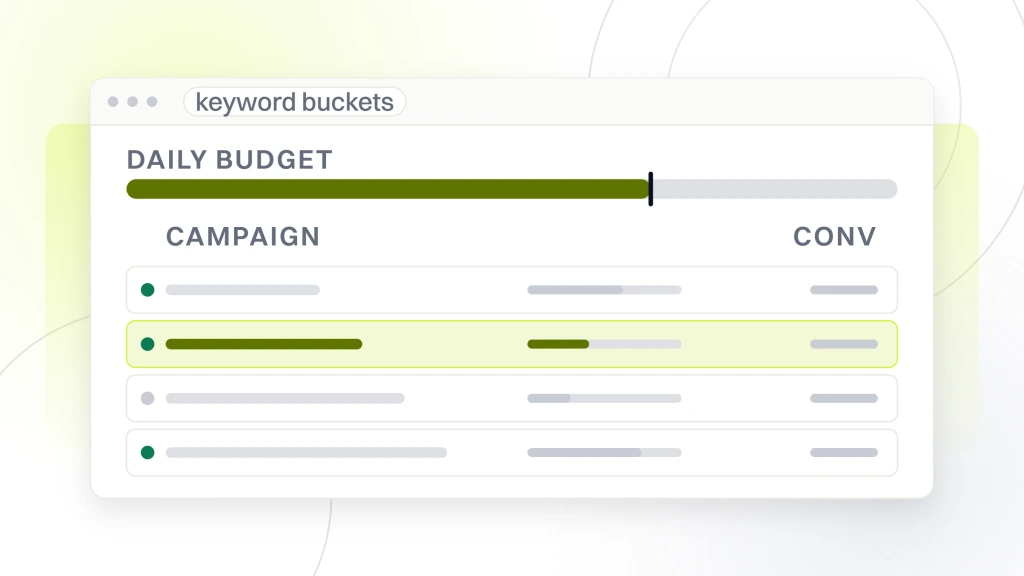
Branded terms convert at 15% to 25% and cost $2 to $6 per click. Condition-plus-city terms convert at 4% to 8% and cost $6 to $22. Service-plus-city terms convert at 6% to 12% and cost $4 to $18. Near-me terms convert at 8% to 14% and cost $5 to $16. Bidding the same amount across all four buckets means you overpay on branded and underbid on service. Sort them and set bids per bucket, not per account. That single change moves conversion economics faster than any landing page tweak you can push live in the same week.
Bucket, sample keyword, CPC range, conversion rate:
- Branded, smile design dentistry tampa, $2 to $6, 15% to 25%
- Condition + city, root canal pain tampa, $6 to $22, 4% to 8%
- Service + city, emergency dentist tampa, $4 to $18, 6% to 12%
- Near-me, dentist near me, $5 to $16, 8% to 14%
Branded bucket rules
Your branded bucket protects map pack real estate around your practice name. Skip it and a competitor bids on your name, stealing the click from a patient who already knows you. Budget 10% to 15% of monthly PPC spend here. Exact match only. Bid to sit in position one on desktop and mobile. Ad copy repeats the practice name and drops a booking phone number. This is the cheapest booked call in your account every single month.
Condition bucket rules
Condition-plus-city keywords carry the highest intent in the healthcare paid stack. Someone typing root canal pain tampa is not researching, they are booking today. But the same keyword pulls symptom checkers, students, and researchers if you run it broad. Force phrase match at minimum. Layer a hard negative list under it. Ad copy names the condition and the fix in the first line and drops a same-day booking offer. The landing page mirrors the ad copy word for word or Quality Score punishes you inside two weeks.
Negative keyword lists that protect PPC keywords for healthcare
Every PPC keywords for healthcare campaign wastes 20% to 40% of monthly spend on non-patient clicks unless the negative list is built and refreshed weekly. Five categories drive the loss. Job seekers, students, insurance shoppers, symptom checkers, and free-service hunters. Each carries its own trigger words. Miss one and $9 clicks pay for search terms like dentist jobs, dental hygienist school, or free dental clinic near me. None of those queries book a paying appointment at your practice.
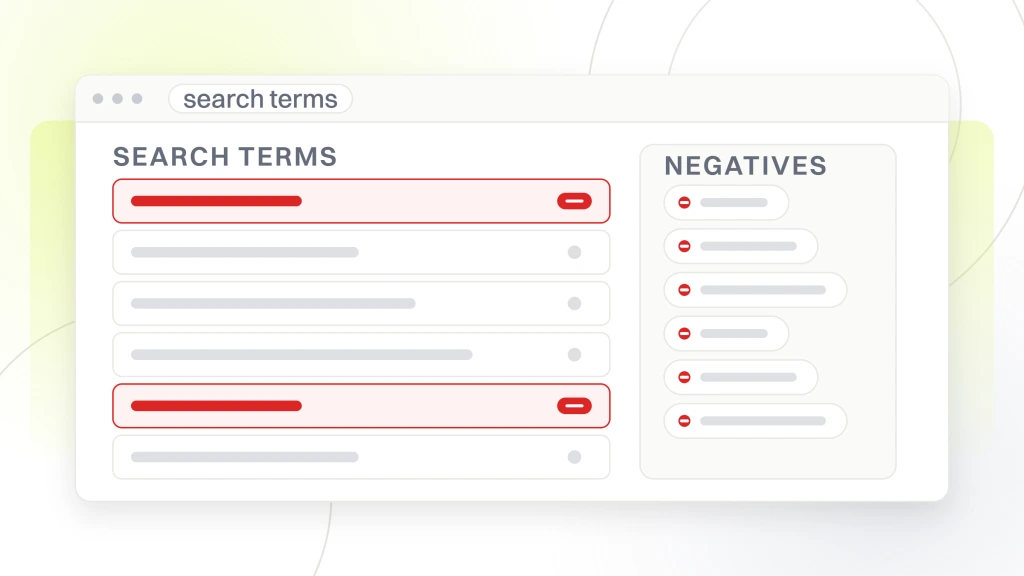
Build the negative list once at account level, then let each campaign inherit it. Refresh it every Monday with search term data from the last seven days. In an average healthcare PPC account we onboard, the first negative sweep cuts wasted spend 22% to 38% inside week one. That saved budget shifts straight to the branded and near-me buckets where conversion is highest. Cardinal Digital Marketing’s healthcare negative keyword breakdown lines up with what we see in every audit.
Weekly search-term audits are the single highest-value activity on a healthcare PPC account. Skip a month and 12% to 20% of your budget quietly returns to non-patient queries you already killed.
Job seeker and symptom checker negatives
Job-related clicks eat 6% to 12% of a healthcare account’s monthly spend before any human notices. Someone searching dental hygienist jobs tampa clicks your emergency dentist ad because Google matched service and city and dropped the noun that mattered. Load the full job seeker list into account-level negatives on day one. Include job, jobs, career, careers, hiring, salary, resume, interview, internship, employment, position, opening, apply.
Symptom checker traffic looks like intent but converts at 1% because the searcher wants an explanation, not an appointment. Force the split with symptom negatives. Symptom, symptoms, causes, why does, what is, home remedy, diy, natural cure, is it normal, should I worry. The volume of low-intent clicks that disappears in week one is usually 15% to 25% of the impressions your ad group was pulling.
Bid tiers for PPC keywords for healthcare by bucket
One flat max CPC across a healthcare account overpays on the cheapest wins and underbids on the calls with real patient value behind them. Set four bid tiers, one per bucket, then let Google smart bidding scale inside each ceiling. Branded runs $2 to $6, near-me runs $5 to $16, service-plus-city runs $6 to $22, and condition-plus-city runs $8 to $28. Each tier maps against the expected conversion rate and average revenue per new patient. Bid against patient value, not click price. Google Ads account structure best practices back this ceiling-per-bucket pattern for high-value verticals.
For a general dentistry practice at $340 average revenue per new patient and 22% close rate on booked calls, the honest max cost per booked call lands around $75 (a 34.4% target cost per acquisition). Divide by conversion rate per bucket and you get bid ceilings around $18 on branded, $9 on near-me, $6 on service-plus-city, and $5 on condition-plus-city. Set those as ad group max bids and let Enhanced CPC or Target cost per acquisition scale under the ceiling. The account never wastes budget on a click that cannot pay for itself.
Mobile bid adjustments and dayparting
Mobile drives 68% to 82% of healthcare PPC clicks in 2026. Desktop still converts 30% better on booked-call value but represents 25% of impression volume. Set a +15% to +25% mobile bid adjustment on service and near-me buckets. Set a -10% mobile adjustment on branded terms where desktop research patterns still hold. Healthcare PPC calls hitting outside booking hours go to voicemail and 60% never call back. Set -30% from midnight to 6 AM, +15% from 8 AM to 6 PM Monday through Friday, and -50% on Sundays if closed. Booked-call ratio improves 18% to 24% inside 30 days without any keyword or ad changes.
B2B healthcare PPC keywords work differently
B2B healthcare PPC targets hospital procurement leads, health system directors, and clinic administrators, not patients. The bid math flips because average deal value runs $18,000 to $240,000 instead of $340 per patient. Keywords move to platform-plus-use-case phrases like ehr integration platform, hipaa compliant scheduling software, or revenue cycle management vendor. Search volume drops around 90% versus consumer intent, and click cost climbs to $22 to $85 because ten SaaS vendors bid the same 40 phrases every day. Conversion sits at 1% to 3% per click because that first click opens a 4 to 9 month sales cycle.
Bid tiers for B2B healthcare PPC change too. Branded runs $12 to $28. Product category runs $28 to $65. Competitor terms run $18 to $48. Solution-plus-persona runs $22 to $58. Landing pages need a demo request form, not a phone number. Attribution windows stretch to 90 days. LinkedIn Ads plus Google Search is the honest split, not Google alone. Running B2B healthcare PPC through the same account structure as consumer patient PPC starves both.
Mixing B2B healthcare PPC with consumer patient PPC in one Google Ads account is the single most expensive structural mistake we see in mid-market medical brands. Two accounts, two pixels, two attribution windows.
Four B2B buckets and B2B negatives
B2B healthcare PPC keywords sort into four buckets of their own. Category terms (revenue cycle management software), competitor terms (epic alternative), solution terms (reduce claim denials by percent), and integration terms (ehr api integration). Budget splits: 30% category, 20% competitor, 30% solution, 20% integration. Ads hitting generic corporate homepages drop conversion to 0.4%, which does not clear the $48 click cost on this side of the account. Add these negatives on day one. Patient, symptom, appointment, near me, hours, review, reviews, pricing (for consumer software), consumer, individual, personal, home use, buy online.
Healthcare software PPC and medtech vendors
Healthcare software PPC is a separate game from consumer patient PPC and from generic B2B SaaS PPC. The buyer is a clinical director, an IT director, or a CFO at a hospital or health system, and each persona clicks a different keyword root. Clinical directors search for tool-specific terms (sepsis detection platform, medication reconciliation software). IT directors search infrastructure terms (hipaa compliant cloud storage, healthcare data warehouse). CFOs search financial terms (revenue cycle management, claim denial software, prior authorization automation). Match ads and landing pages to the persona in the search, not to the product category alone.
Healthcare software PPC click prices run $28 to $85 with average sales cycle of 6 to 14 months. Consumer patient PPC clicks run $4 to $28 with same-day booking possible. Do not blend the two under one account or the machine learning model treats them as one signal and collapses. Split into two Google Ads accounts, two conversion pixels, two attribution windows. Run each on its own quarterly optimization calendar. Blending is the single most common mistake we see when auditing mixed healthcare accounts.
Persona-matched ad copy triples click-through rate on healthcare software PPC. Three ad variants per persona per campaign is the floor, not the ceiling.
Persona-matched copy and common mistakes
A CFO clicking revenue cycle management vendor wants to see a headline about denial rate reduction and days-in-AR improvement. A clinical director clicking sepsis detection platform wants sensitivity, specificity, and the FDA clearance year in the ad text. Generic corporate positioning kills both. Write three ad variants per persona per campaign and let the auction rotate. The most common healthcare software PPC mistake in accounts we audit is a single campaign holding 240 mixed intent keywords pointed at a generic corporate homepage. Split the campaign by persona and match the landing page to the search intent.
Smile Design Dentistry case study on PPC keywords for healthcare
Smile Design Dentistry, a Tampa-area general and cosmetic dental DSO with more than 50 offices across Florida, engaged Redefine Web with one Google Ads campaign holding 380 keywords in a single ad group, a negative list under 40 terms, and cost per booked patient call sitting at $186 on $9,400 in monthly ad spend. Three agencies had rotated through the account in two years, each adding keywords without cleaning the ones burning budget. The search terms report showed roughly 34% of monthly spend firing on symptom checker and job-seeker queries every month.
We rebuilt the account into four ad groups on the bucket structure. Loaded a 620-line negative list on day one. Set bid ceilings per bucket at $18, $9, $6, and $5. Wrote three ad variants per bucket. Pointed each bucket at a matched landing page instead of the homepage. Inside 60 days, PPC conversion rate rose 20% overall, cost per call dropped 30% from $186 to $130, and monthly booked calls climbed from 51 to 72 on the same $9,400 spend at Smile Design Dentistry. Incremental monthly revenue reached $8,610 at a $410 average revenue per new patient, adding $103,320 in annual incremental revenue against the same budget the practice had been running for two years.
Two lessons from the Smile Design Dentistry rebuild
First, ad spend size is not the lever, keyword structure is. The account spent the same $9,400 before and after the rebuild. Every dollar of gain came from cleaner keywords and matched landing pages. Second, negative lists are not one-and-done. The Smile Design Dentistry negative list still grows 12 to 30 terms every Monday as new junk queries appear in the search term report. Agencies that skip the weekly refresh watch cost per call creep back up inside two quarters.
Long-tail PPC keywords for healthcare companies
Long-tail PPC keywords for healthcare produce the cheapest booked patients in the account, and most practices skip them because monthly search volume shows 10 to 40 per term. Aggregate 60 long-tail phrases and the tail runs at 2 to 3 times the conversion rate of head terms at roughly 40% of the click cost. Bundle the group under dynamic keyword insertion so the ad headline mirrors the query. Point the ad group at a landing page that answers the specific search term in a long-copy layout with a phone number and a form.
Example long-tail patterns that work in dental, medical, and vision. Same day emergency dentist open now, root canal cost without insurance, gentle dentist for anxious patients, best pediatric dentist accepting new patients, walk in urgent care no appointment, saturday orthodontist consultation, invisalign consultation same week, weekend eye exam near me. Every term names a moment of decision, not a moment of research. That moment closes 2 to 3 times more often than a head term click at half the cost per click.
Match landing pages to the keyword bucket
PPC keywords for healthcare convert on the landing page, not on the ad. A well-bid keyword pointed at a generic homepage converts at 1% to 3%. The same keyword pointed at a landing page that mirrors ad copy converts at 8% to 18%. That is a 5x gain on the same click cost. Build one landing page per bucket as the floor, and one landing page per keyword theme inside the bucket as the target. The extra landing-page discipline is the cheapest growth lever in the account.
Landing page match rules. H1 uses the same nouns as the ad headline. The first paragraph names the specific condition or service the keyword targeted. A phone number sits in the top-right corner, hyperlinked as tel:. A three-field booking form sits above the fold. Trust signals (state license number, insurance logos accepted, real doctor photo) sit inline with the form. Nothing else above the fold. Practices that skip these five rules watch Quality Score drop and cost per click creep up every month.
Tracking and attribution for PPC keywords for healthcare
You cannot optimize PPC keywords for healthcare without call tracking on every campaign. Roughly 76% to 88% of healthcare PPC conversions arrive as inbound phone calls, not form fills. Google Ads default conversion tracking captures form fills only, so the account sees around 15% of true conversions and optimizes against the wrong signal. Install CallRail, WhatConverts, or CallTrackingMetrics with dynamic number insertion on every landing page and pass the qualified call back into Google Ads as a conversion event inside 24 hours.
Attribution windows matter for PPC for healthcare companies with sales cycles longer than a single click. B2B healthcare and healthcare software attribute back 60 to 90 days. Consumer patient PPC attributes at 7 to 30 days. Set the attribution window in Google Ads to match reality. Data-driven attribution beats last-click by 12% to 18% for accounts with 30 or more conversions per month. Below that threshold, use position-based to weight the first and last touch. Push offline conversions back into Google Ads via the offline conversion API within 72 hours so smart bidding optimizes for showed-and-paid patients, not booked calls alone.
Where to start on PPC keywords for healthcare this quarter
Start with a 90-day search terms audit. Export every search term that spent over $30 without a conversion. Group the results into the seven non-patient categories (jobs, students, insurance, symptoms, free, content, product). Load the full set into account-level negatives on day one. That single move typically removes 20% to 35% of wasted spend inside week one. Reallocate the saved budget into the branded and near-me buckets where conversion runs highest.
Then split the account into the four buckets. Match landing pages to each bucket. Set bid ceilings per bucket based on the practice’s average revenue per patient and target cost per acquisition. Layer dayparting on top. Install call tracking with dynamic number insertion. Our Healthcare PPC Agency That Books Patients engagement runs the full rebuild in 4 to 6 weeks. For the retainer at $1,499 per month that adds SEO on top, our Healthcare Marketing Retainer Plans from $1,499/mo is the plan. Pair the paid stack with our Healthcare PPC Campaigns breakdown and our PPC Audit checklist. Compare against SEO thinking in our Healthcare SEO Keywords guide and the unified view in our Benefits of Combining SEO + PPC post.
Key takeaways on PPC keywords for healthcare
- Sort every account into four buckets and match a landing page to each bucket.
- Load the seven category negative list on day one and refresh every Monday.
- Bid against patient value per bucket, not one flat max CPC across the account.
- Split B2B healthcare PPC from consumer patient PPC into two accounts always.
- Track calls, import offline conversions, and let smart bidding chase showed patients.
Three pro tips from the account rebuilds
- Rebuild the negative list before you touch bids. Cleaner clicks change the math on every bucket you are about to reprice.
- Point every ad group at its own landing page. One shared homepage burns 3x to 5x the click cost of a matched page.
- Post the offline conversion event back to Google Ads. Smart bidding without shows-and-paid data optimizes for the wrong outcome.