
Every DTC apparel founder we talk to opens the year the same way. They pull up a slide deck from a trend report, count 47 acronyms across 62 pages, and ask which one will move revenue in the next two quarters. The honest answer is short. Six of them will. The other 41 are recycled buzzwords with a fresh color palette. This guide covers the fashion marketing trends that earn margin for apparel brands in 2026, and the ones that won’t, based on what we run for clients right now and what our own paid-media stack learned from a $650,000 test budget across the last twelve months.
Read this once, then decide which two trends you fund this quarter. Not six. Two. Every apparel brand under $20 million in revenue that tries to chase every trend at once ends the year with thinner margins and a team that’s tired for no reason. Focus is the trend that never trends. The six ideas below are the ones worth budgeting against, ordered by expected margin impact for a DTC apparel brand.
Why fashion marketing trends matter more in 2026
The trend list matters more in 2026, since unit economics turned. Paid acquisition cost climbed 14% last year. Return rates on womenswear held at 24%. Discount depth on Black Friday averaged 42%. Every trend worth funding drops one of those three numbers.
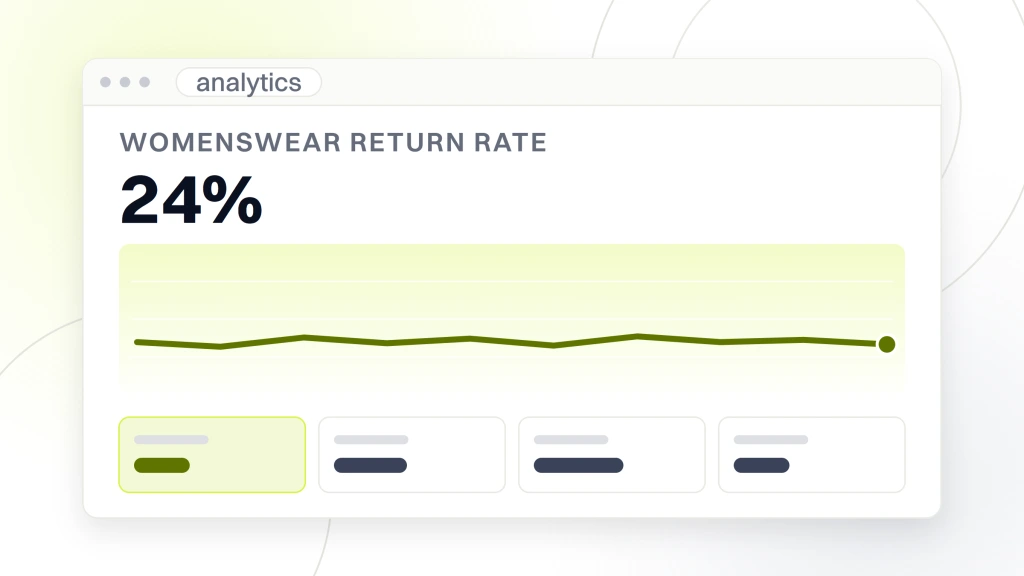
Every one of those numbers says the same thing. The old growth model of paying for traffic, mailing the goods out, and hoping for a repeat purchase is done. Trends worth funding in 2026 share one property. They drop acquisition cost, drop return rate, or grow repeat-purchase rate. Anything that does none of the three is a distraction.
The margin math a founder can read in 90 seconds
A womenswear brand doing $8M in revenue at 62% gross margin, 24% return rate, and $34 blended acquisition cost has $4.96M in gross profit before overhead. Drop return rate to 18% through better fit content and you add $480,000 to gross profit with zero incremental ad spend. Grow repeat-purchase rate from 22% to 32% and you add another $720,000. Those are the two levers most trends promise to move. The six trends below sit in the order of which one moves them fastest for a brand at that scale. A quick read on the apparel fashion marketing hub covers the retainer scope behind numbers like these.
The trends worth skipping this year
Skip the metaverse revival pitch, the branded NFT drop, the AI-generated model campaign that saves 8% on photoshoot cost by burning community trust, and any Web3 loyalty token idea. Every one has been pitched to at least three apparel clients on our roster this year. None has produced a return above the software fee that funded it. Trends that don’t move return rate, acquisition cost, or repeat-purchase rate get logged as watchlist items, not budget items. That single filter saves the average apparel brand $40,000 to $90,000 per year in wasted software subscriptions.
AI virtual try-on inside fashion marketing trends
AI virtual try-on is the trend with the fastest return-rate impact for apparel brands in 2026. Not the gimmick version where a shopper drops a photo of themselves on a hoodie. The pattern-based version, where the model reads the shopper’s measurements, garment specs, and fit intent, then predicts fit at the SKU level. Return rate on brands running this stack drops 3 to 6 percentage points inside two seasons.
The stack that produces the result
Three vendors dominate the apparel try-on space in 2026. Zeekit (owned by Walmart), Vue.ai, and Reactive Reality. Fees run $1,200 to $6,000 per month depending on catalog depth. Each integrates with Shopify Plus and BigCommerce. Setup work runs 30 to 60 hours per brand for the initial garment pattern ingestion. The return-rate drop starts showing up in the numbers around week 8, holds steady by week 16, and compounds as more shoppers use the tool. Brands that feed the try-on data back into the pattern room see extra fit gains on the following season’s blocks.
Where try-on falls short
Try-on isn’t a fix for a brand with a fit reputation problem across the whole line. A womenswear brand with hip and thigh returns clustering above 30% needs a pattern-room rebuild first, then try-on on top. Try-on layered onto a bad block just spreads the return distribution around. Every apparel brand running try-on should run a quarterly sizing survey on top. The two together drop return rate faster than either alone. One fixes the shopper decision. The other fixes the garment.
Resale and circularity as fashion marketing trends
The US secondhand apparel market is projected to reach $74 billion by 2029, per ThredUp’s annual resale report. The trend isn’t a values play anymore. It’s a retention channel. Apparel brands that run a branded resale program see repeat-purchase rate climb 6 to 9 percentage points, since customers list an old piece, get store credit, and buy the new drop with the credit inside 30 days. Trove and Recurate power most of the DTC apparel programs live in 2026.
How a branded resale program books revenue
The customer sends back a pre-owned piece, the brand issues store credit at 40% to 60% of the original retail price, and the piece re-lists on a dedicated resale storefront. Every dollar of credit issued turns into $1.35 of new-drop revenue on average, since customers over-index on the credit and top up with cash. Total operating cost runs 12% to 18% of resale gross revenue once the reverse-logistics stack runs. Thinner margin than a full-price drop, but with a repeat-purchase compounding effect that carries the rest of the line.
The resale report worth reading
The ThredUp resale report is the annual read every DTC apparel founder should keep on the desk. It covers category-level growth, condition-grade pricing, and the geographic markets that adopt resale fastest. The report tells you which categories the customer expects a resale option on (denim, outerwear, handbags) and which categories still convert better as a new-only drop. That split matters. A brand that launches resale on the wrong category burns operational cost with no revenue benefit.
TikTok Shop inside fashion marketing trends
TikTok Shop is the acquisition channel that changed apparel unit economics in 2025, and it’ll decide winners across small and mid-sized DTC brands in 2026. Shop-tagged videos convert at 3% to 7% versus 1% to 2% for a Meta feed ad on the same creative. Blended cost per acquisition on the platform sits 22% to 40% below Meta for brands that produce the right creative volume.
Creative volume as the real gate
The brands winning on TikTok Shop produce 30 to 80 pieces of video creative per month per active SKU. Not 3. Not 8. Thirty to eighty. That’s the volume the algorithm needs to find the winning angle. Brands that produce 5 videos a month and then complain that TikTok Shop doesn’t work have solved the wrong problem. They have a creative production problem, not a channel problem. A dedicated creator team of two producing 12 videos a week per SKU is the setup that turns the channel on. The TikTok Ads guide to Shop is the vendor read most brands should skim before scoping the internal team.
Attribution honesty
TikTok Shop under-reports view-through conversions and over-reports last-click sales versus Meta. Every apparel brand running both channels should assume TikTok Shop drives 20% to 40% more revenue than the platform reports, and Meta drives 15% to 25% less. That correction changes the media mix decision. Brands that read the TikTok Shop dashboard at face value under-fund the channel by half. Brands that correct for the reporting gap fund it at the level the real customer journey supports and end up growing 30% to 60% faster.
Live shopping as a retention trend in 2026
Live shopping stalled in the US market in 2023 and 2024, yet it grew 40% per year in China and Southeast Asia. The 2026 read for DTC apparel brands is that live shopping works when scoped as a retention play, not an acquisition play. A monthly live drop to the top 20% of customers converts at 12% to 18%, versus 2% to 4% for a standard drop. Total revenue gain is smaller than TikTok Shop, but the community effect compounds.
Where to host the live
Instagram Live, TikTok Live, and dedicated tools such as Bambuser and Firework each earn a role. Instagram Live works for brands with an engaged founder-led community. TikTok Live works for brands with a creator roster. Bambuser and Firework work for brands ready to embed the live stream on the owned domain. The channel decision follows where the top 20% of customers already spend attention. Log the answer from the last two customer interview rounds and pick from there.
Cadence and format
One 45-minute live per month, hosted by the founder or a rotating in-house creator, previewing three to five pieces from the next drop with a live-only colorway or size run. Any more often burns novelty. Any less often loses the audience. The live-only variant is the retention hook that pulls repeat customers back for the next event. Brands running this cadence for six months straight see the top-20% segment double in size, since the community forms around the calendar event, not around the drop.
Retention over acquisition in fashion marketing trends
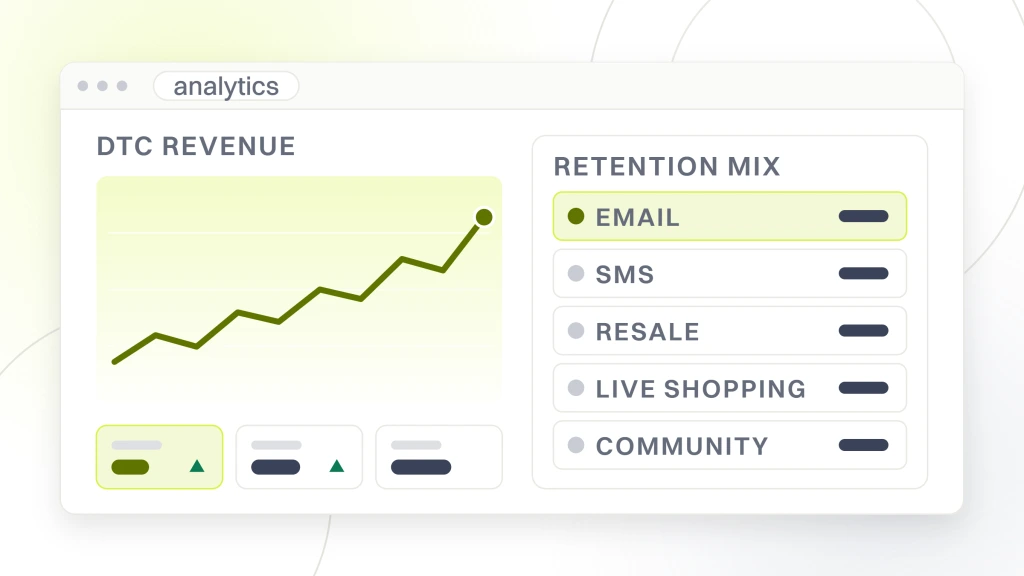
Acquisition cost keeps climbing. Retention math keeps winning. The 2026 shift for DTC apparel is that brands treating retention as a distinct budget line, not a leftover from the paid-media plan, produce 30% to 50% more contribution margin per dollar of blended spend. Retention isn’t one channel. It’s a stack of email, SMS, resale, live shopping, and community programming that runs on a fixed monthly calendar.
The retention channel mix that works
Email drives 25% to 35% of DTC apparel revenue when the flow set is complete. SMS drives another 8% to 15%. Resale drives 4% to 9%. Live shopping drives 3% to 6%. Community programming (private Discord, VIP events, product feedback panels) drives 2% to 5%. The combined stack pushes 45% to 65% of revenue through owned channels, which is the ratio a brand needs to survive a bad paid-media quarter without burning through cash reserves.
Retention budget as a line item
Every DTC apparel brand under $20M in revenue should carve retention into a separate P&L line with a named owner, not roll it under paid media or under brand. The right split for a growing brand runs 55% to 65% of marketing spend to acquisition and 35% to 45% to retention. Brands with the reverse split (85% acquisition, 15% retention) plateau at their current stage inside 18 months, since they never build the compounding customer base the model needs. Fixing that split alone is worth 15% to 25% revenue growth in the following year.
Creator-led marketing inside fashion marketing trends
The creator model that produced results in 2022 (one macro influencer, one large fee, one week of posts) doesn’t produce results in 2026. The stack that works is a rolling roster of 20 to 40 micro creators on a monthly retainer, producing 3 to 6 pieces each per month, feeding both organic and paid usage rights. Total spend runs $6,000 to $18,000 per month for a brand in the $2 million to $10 million revenue band.
Roster composition
Split the roster three ways. Fifty percent style creators with 30,000 to 200,000 followers who fit the brand aesthetic. Thirty percent educational creators (styling tips, fabric explainers, fit content) who build trust and long-form watch time. Twenty percent lifestyle creators outside fashion whose audience overlaps your customer for a broader top-of-funnel reach. The mix produces the creative volume the paid stack needs and covers the sales funnel from awareness to consideration. A roster that skews all style creators tends to plateau, since the creative all reads the same to the algorithm.
Usage rights as the lever
Every creator contract should include paid usage rights for 90 to 180 days across Meta, TikTok, and Pinterest. Paid usage on creator content converts 2 to 4 times better than in-house studio content in the same period. Brands that skip the rights clause end up commissioning content twice, once for organic and again for paid. Fixing the contract template is a two-hour job that returns tens of thousands of dollars in avoided reshoots. A deeper look at how creator work stitches into the wider apparel program lives on the fashion influencer marketing guide.
Data and attribution shifts in fashion marketing trends
The measurement stack that DTC apparel brands ran in 2022 doesn’t survive the privacy changes of 2026. Meta’s aggregated event measurement covers only a slice of the customer journey. Google’s enhanced conversions require server-side setup that most brands skip. The result is a widening gap between what the ad platforms report and what the brand actually earned. Closing that gap is a technical project, not a marketing one, and it belongs in the retention-plus-acquisition budget.
Server-side tracking as the baseline
Every apparel brand doing over $2M in revenue should run server-side tracking through Stape, Elevar, or a custom Google Tag Manager server container. Setup runs $200 to $600 per month plus 20 to 40 hours of implementation. The reporting accuracy gain is 15% to 30% on both Meta and Google conversion counts. That gain feeds back into the algorithm’s optimization loop, which drops blended acquisition cost 8% to 14% inside two months. The investment pays back inside the first quarter for any brand at $2M or above.
Media-mix modeling versus attribution
Multi-touch attribution stopped working when the third-party cookie died. Media-mix modeling replaced it for brands willing to log 12 months of channel spend and revenue data. The model reads spend across paid social, paid search, email, SMS, and organic, then produces a recommended reallocation with a confidence interval. Brands adopting media-mix modeling reallocate 10% to 20% of the paid budget inside two quarters and produce 12% to 22% more revenue on the same spend. The tools cost $8,000 to $30,000 per year at brand scale.
Content and community splits that pay back
Content in 2026 splits into three buckets that used to be one. Product content sells the piece. Story content builds the brand. Community content grows the retention curve. Every apparel brand needs a plan for all three, and a shared editorial calendar so the buckets don’t drift into three different tones. The brands winning the year run one weekly editorial meeting with the founder, the head of content, and the paid-media lead in the same room.
The 60-30-10 content split
Sixty percent product content, 30% story content, 10% community content. Product content covers PDP video, model try-ons, size and fit explainers, styling guides. Story content covers brand history, founder POV, factory tours, sustainability commitments. Community content covers customer stories, VIP events, private Discord threads, and Q&A moments with the design team. The split holds across the calendar year for most brands, with story content spiking around launches and community content spiking around VIP events.
Where community actually pays back
A private Discord or Circle community with 500 to 2,000 top customers produces two returns. Product feedback that shapes the next drop, and organic word-of-mouth that seeds new customer acquisition without ad spend. Brands running an active community program see 8% to 14% of new customer acquisition trace back to a community-member referral inside 12 months. It’s a channel that doesn’t show up in any paid-media dashboard, which is why most CFOs miss it in the budget review. Log referrals with a coded UTM link so the number shows up in the monthly board deck. The social media marketing for fashion brands piece covers how the content buckets feed each platform without burning the team on custom edits per channel.
A real application of fashion marketing trends
Take Abigail Ahern, a premium DTC brand we ran a four-year paid media and SEO partnership with. We restructured SEO and paid media around intent-driven traffic and premium creative in place of discount-led messaging. The program produced +179% ecommerce revenue, +1,588% paid-search ROAS, and 3,000% paid-social ROAS across the first 12-month window, and the conversion rate roughly doubled. The trend framework we apply to fashion clients is the same one we applied for Abigail Ahern. Cut the noise, fund the levers that compound, measure the margin gain against a baseline.
On the fashion side, one womenswear client we work with, a $6M DTC brand in the contemporary category, ran the six-trend pattern end to end. Repeat purchase driven by fit and story. Paid media as the acquisition engine. Retention math deciding the P&L. When we started, blended cost per acquisition sat at $150.92 and the creative angles were guesses. We ran the six-trend filter against every 2025 marketing decision.
Server-side tracking went in first. The creator roster grew from three to twenty-two. Retention split moved from 12% to 38% of the marketing budget. TikTok Shop turned on with a dedicated three-person creative pod producing 60 videos per month. Live shopping ran monthly for the top 20% of buyers. Media-mix modeling replaced the multi-touch attribution model. Every decision traced back to one of the six trends above with an expected margin impact logged in a shared dashboard.
Twelve months in, cost per conversion hit $31, down from $150.92. Conversion rate on the paid landing pages climbed 11%. Repeat-purchase rate grew from 22% to 41%. The result didn’t come from adopting every trend on the list. It came from picking two per quarter, funding them fully, and killing the rest before they drained team hours. The same play works for a DTC apparel brand at $2M to $50M in revenue.
Which fashion marketing trends to fund first
Fund the trends that match your brand stage first. Pre-$2M brands fund server-side tracking and TikTok Shop creative. Mid-stage brands from $2M to $10M add AI try-on, a creator roster, and the retention split fix. Bigger brands layer in resale, live shopping, and media-mix modeling.
The order of adoption depends on brand stage. A pre-$2M brand funds server-side tracking and TikTok Shop creative before anything else. A $2M to $10M brand adds AI try-on, the creator roster, and the retention split correction. A $10M to $30M brand layers on branded resale, live shopping, and media-mix modeling. Above $30M every trend is on the table, with the community program becoming the retention anchor.
| Brand stage | Fund first | Fund next | Watch, do not fund | Expected margin gain |
|---|---|---|---|---|
| Under $2M | Server-side tracking, TikTok Shop creative pod | Creator micro-roster of 6 to 10 | Live shopping, resale | 8% to 14% |
| $2M to $10M | AI try-on, retention split fix, creator roster of 20 | Branded resale test on one category | Media-mix modeling | 15% to 25% |
| $10M to $30M | Branded resale, live shopping monthly, media-mix modeling | Community program launch (Discord or Circle) | Metaverse, Web3 loyalty | 20% to 30% |
| $30M to $100M | Full retention stack, community program, MMM at quarterly cadence | Category expansion into resale-heavy segments | NFT drops, AI-generated model campaigns | 25% to 40% |
| Above $100M | Vertical retention teams per channel, live shopping weekly | Private-label resale infrastructure | Experimental Web3 tests below $50K | Category-dependent |
The pattern to notice. Every stage funds two to four trends per year, not six. The rest sit on the watchlist with a named owner tracking signal quarterly. Overcommitting to five trends at once is the failure mode we see most often at the $5 to $15 million stage, where the founder feels behind and tries to catch up in one budget cycle. The correction is boring but works. Pick two, fund them fully, measure the margin impact against the baseline, and only add a third once the first two are producing the number the shared dashboard predicted.
Where fashion marketing trends fit the stack
Trends aren’t a strategy. They’re inputs to a strategy that already picks winners on price ladder, product quality, and drop cadence. A DTC apparel brand with the fundamentals right uses trends to compound the advantage. A brand chasing trends without the fundamentals ends the year with better dashboards and worse gross margin. The order matters. Fix the block. Fix the pricing. Fix the site. Then layer the trends.
Our fashion marketing agency writeup covers the full-stack retainer we run for apparel clients, where trend adoption gets scored against the six-filter test before it goes into the calendar. The Business of Fashion opinions section is a useful outside read for the macro context that shapes which trends deserve budget in a given quarter. The McKinsey State of Fashion report is the annual read every founder and CMO should skim in January before the annual planning meeting starts.
Our SEO and PPC retainers for DTC apparel brands start at $999 per month, step up to $1,499 per month and $2,499 per month, and go from $4,500 per month for full-stack programs that cover trend scoring, paid media, retention flows, and quarterly server-side tracking audits. Every apparel brand we work with runs against this cadence and produces measurable gains inside two full drop cycles. Trend adoption compounds only when a disciplined team scores every idea, funds two, and kills the other four before the calendar fills with distractions.