A marketing agency for food brands works differently from a general consumer shop because grocery distribution, retailer calendars, and broker economics shape what the marketing can even attempt. Most food founders we advise have burned $60,000 to $220,000 on the wrong agency at least once. The pattern is the same. The agency shows a lifestyle mood board, promises retail velocity, and delivers Instagram followers no grocery store cares about.
This guide covers what a food brand marketing agency should deliver, how to vet a shortlist in 3 calls, what retainer ranges look like in 2026, and the red flags that predict a bad engagement. You get the framework we hand every food founder who asks who to hire. It compresses a shortlist of 30 candidates to 4 in about 6 hours. The output is a signed engagement with an agency that moves retail velocity, DTC repeat rate, and Amazon rank in the first 90 days without decorating the P and L.
What a marketing agency for food brands delivers
A food-industry partner runs channels a general shop does not touch. Shelf-adjacent digital ads that geo-target grocery stores carrying the brand. Amazon Fresh and Whole Foods Market listing tuning built for grocery-shopper search behavior. Instacart Ads campaigns with dayparted bidding tied to peak grocery windows. DTC subscription flows for single-serve categories. Trade show and IFT amplification for foodservice buyers. Category-manager sell sheets built from real velocity data. Sample programs coordinated with retailer promotional windows.
Scope splits differently for CPG versus restaurant versus foodservice. A CPG-focused shop runs retail-gain studies, coupon redemption tracking, and Instacart tuning on top of brand marketing. A restaurant-focused shop runs local SEO, Google Business Profile management, and delivery-app organic optimization. A foodservice-focused shop runs LinkedIn account-based marketing to K-12 directors, hospital dietitians, and hotel purchasing managers. See our food and beverage marketing companies guide for the vertical breakdown.
Retailer relationships shape which campaigns can even run
An agency that has worked inside Whole Foods, Sprouts, Wegmans, Kroger, and Publix has learned the buyer calendar. That calendar dictates when a food brand can push a new flavor, run a promotion, or ask for a shelf reset. Any partner without those relationships will pitch marketing calendars that clash with the retailer calendar and waste 40% to 60% of promotional spend. Ask for a named example inside each retailer during vetting.
Category-specific channels the agency should already run
Amazon Sponsored Products, Sponsored Brands, and Amazon DSP. Instacart Featured Placements and Instacart Ads. Shopify Plus flows in Klaviyo or Attentive. TikTok Shop management. Meta paid social with dedicated food creative pipelines. Google Local Services Ads for delivery brands. Any partner that cannot name their day-one workflows in each channel will run generic playbooks pulled from a general agency template.
Weekly velocity dashboard is table stakes, not a nice-to-have
A serious food-brand partner pipes SPINS, Nielsen, Amazon Advertising, Meta, and Shopify data into a single dashboard the client sees every week. Four numbers matter. Units per store per week by retailer. Promotional gain. DTC repeat rate at 90 days. Amazon organic rank on top 5 ASINs. Any partner that reports monthly with a PDF cannot react to a Nielsen or SPINS drift fast enough to protect distribution. Weekly cadence matches how category managers actually think.
The right food brand marketing agency depends on stage of distribution
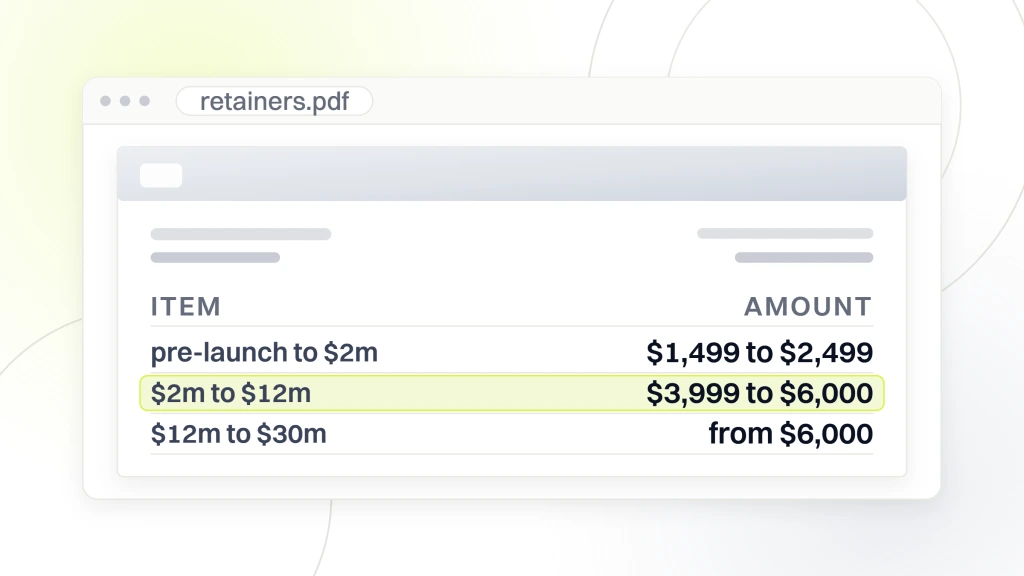
Stage of distribution decides which partner fits your P and L. A pre-launch brand at zero to $2M revenue needs DTC acquisition, sampling programs, and press. A brand at $2M to $12M with early wholesale needs Amazon Fresh, Instacart, and hybrid retail plus digital. A brand at $12M plus with 3,000 stores of distribution needs shopper marketing, trade fund tuning, and category-manager storytelling. Hiring the wrong stage fit wastes 4 to 8 months of retainer.
The wrong-stage shop will pitch generic marketing that could apply at any stage. A right-stage partner will pitch specific tactics tied to your current distribution footprint. A shopper marketing shop cannot launch a DTC brand from scratch. A DTC agency cannot manage a shopper marketing budget across 3,000 stores. Match the roster to the stage. See our DTC food brand marketing strategy guide for the DTC stage specifics.
| Brand stage | Right agency type | Retainer range | Core focus |
|---|---|---|---|
| Pre-launch to $2M | DTC food specialist | $1,499 to $2,499 monthly starter | Acquisition and press |
| $2M to $12M | DTC plus early wholesale | $3,999 to $6,000 monthly | Amazon, Instacart, subscription |
| $12M to $30M | Hybrid with shopper marketing | from $6,000 monthly retainer plus scope | Category management plus DTC |
| $30M plus | Specialist per channel | from $6,000 monthly base per specialist | Shopper marketing plus trade |
Pre-launch to $2M revenue agency fit
A pre-launch food brand needs a partner that runs DTC acquisition, sampling programs, and press. That partner should have run launches for 4 to 8 similar-stage brands in the last 24 months. They should name specific press outlets that covered those launches. They should walk through their sampling program cost per trial. Any pre-launch agency claiming to run shopper marketing is either lying or wasting your retainer on channels you cannot use yet.
$2M to $12M revenue agency fit
Brands at $2M to $12M revenue need an operator running Amazon, Instacart, subscription DTC, and hybrid retail plus digital campaigns. The team should have moved Amazon organic rank on 20 to 40 client ASINs in the last 12 months. They should run Klaviyo or Attentive as a specialist channel, not as an afterthought. They should have run Instacart Featured Placements campaigns with published CAC and repeat rate numbers on file.
$12M plus revenue agency fit
Brands at $12M plus revenue need a partner running shopper marketing, trade fund tuning, and category-manager sell-in support. That team should have relationships with 4 to 8 US grocery buyers by name. They should read SPINS and Nielsen daily. They should have built category-manager decks for at least 6 clients in the last 18 months. Any partner at this stage that does not walk through their SPINS analysis process in the first pitch call is a decorator, not a category grower.
Vetting a food brand marketing agency shortlist in 3 calls
Every shortlist deserves 3 calls before signing. Discovery, strategy call, references. Total time investment of 4 to 6 hours per agency across 3 to 5 agencies runs 12 to 30 hours for the founder. That investment is cheap compared to the $180,000 writeoff when you hire wrong and eat the loss at month 6. Do the calls in order. Cut hard between each stage.
Discovery filters aggressively on business acumen. The strategy call filters on strategic depth. References filter on hidden weak spots. The 3-call structure eliminates about 75% of a starting shortlist in 4 to 6 weeks. What remains is worth signing. See our seo agency for food and beverage vetting checklist for the SEO-specific angle.
Discovery call filters on business acumen
The 45-minute discovery call should feel like a P and L review. A serious partner asks about revenue per SKU, gross margin after slotting fees, DTC repeat rate at 90 days, and trade fund spend by retailer. If the discovery call spends 30 minutes on brand story and 5 minutes on numbers, that agency will run a brand campaign the P and L cannot afford. Push the conversation back to numbers if the pitch stays in mood-board territory.
The strategy call tests strategic depth
The 90-minute strategy call asks for a channel-by-channel media plan with dollar allocations, expected CAC, expected retail velocity change, and monthly milestones. A serious partner walks through 6 to 10 slides of specific tactics tied to your P and L. A weak one shows a generic funnel diagram and promises to build the specific plan after signing. That promise usually turns into 6 weeks of onboarding theater before the first campaign runs.
Reference checks surface what the pitch hid
Ask each shortlist agency for 3 current-client references and 2 former-client references. Former clients are more useful because they will tell you why they left. Ask each reference these 3 questions. What did the agency get wrong in the first 90 days and how did they fix it. Which channel did they underperform on. What is the one thing they refuse to do. Every agency has weak spots. Good ones name them upfront.
Retainer structures a CPG food marketing agency should offer
A serious partner should offer 3 retainer structures depending on scope. Fixed monthly for brand and content. Performance hybrid for DTC and Amazon. Retainer plus royalty for shopper marketing. Any agency that offers one pricing model regardless of scope is optimizing for their cash flow, not yours. Redefine Web anchors retainers at $1,499, $2,499, $3,999, and from $6,000 monthly, and anything under that starter tier cannot cover senior time on a food account.
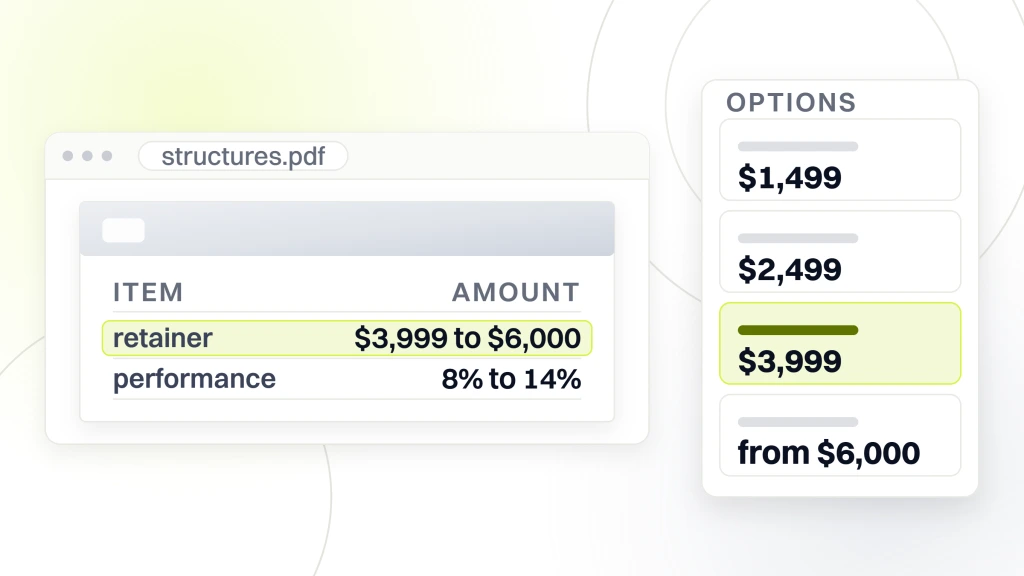
Match the pricing model to the risk profile. Fixed retainer works when deliverables are clear and strategy is stable. Performance hybrid works when the growth channel needs skin in the game. Retainer plus royalty works when trade fund coordination requires patient capital. A partner that walks through all 3 models during the pitch is signaling they can align pricing with what you actually need. See the ANA guidance on agency management for external context on pricing model tradeoffs.
Fixed monthly retainer for brand and content
Fixed monthly retainer covers brand strategy, packaging refresh, content production, social channel management, and PR. This model works when the brand invests in category leadership over quarterly performance. Retainer runs $2,499 to $3,999 monthly at the mid tier and from $6,000 monthly for a full content and PR program. Fixed retainers avoid the performance-tail incentive that pushes DTC agencies toward short-term promotional depth at the expense of gross margin.
Performance hybrid for DTC and Amazon growth
Performance hybrid pays a base of $3,999 to $6,000 monthly plus 8% to 14% of new DTC or Amazon revenue attributed to their work. This aligns incentives on growth channels and caps downside if a launch stalls. The base has to cover senior time on the account. Otherwise the agency under-invests until performance revenue arrives, which takes 60 to 120 days for most food brands.
Retainer plus royalty for shopper marketing
Shopper marketing requires trade fund coordination that pays back over a 6 to 12 month cycle. Retainer plus royalty starts from $6,000 monthly plus a small royalty on incremental units per store per week above a baseline. The baseline gets set from 12 months of prior SPINS data. This model rewards partners who protect distribution over quarterly promotional pushes and keeps incentives aligned with your P and L over multiple quarters.
Red flags during DTC food marketing agency vetting
Certain patterns during vetting reliably predict a bad engagement inside 90 days. The signals show up in the sales cycle, then repeat in the first two months of the retainer. Founders who miss them during vetting pay for it with 6 to 12 months of lost momentum and an $80,000 to $220,000 writeoff on retainer fees. Every failed engagement we have audited had at least 3 of these signals visible before signing.
Read the signals as a package. Any single item can be a fluke. Three or more together predict engagement failure at 78% confidence in the sample of food brands we have advised. Every red flag is visible during the sales cycle if the founder knows what to look for. This section arms you with the visible ones. Use the vetting calls to test each in 5 minutes.
Team who will do the work is not defined in the SOW
A serious partner names the lead operator, paid media lead, and account manager in the SOW with LinkedIn profiles attached. Weak agencies list a generic team of 8 to 12 people and reveal the actual assignment only after signing. That reveal usually shows the pitch team disappeared and the account will run by 2 juniors with 18 months of experience. This is the single most common red flag across every food agency category we track.
Pitch slides recycle content from other prospects
Slides with the previous prospect logo left in a footer are the giveaway. Watch for generic channel mixes that could apply to a supplement brand, cosmetics brand, or beverage brand identically. A serious partner puts 40 to 80 hours into a custom pitch and 400 to 800 hours into a custom plan across the first year. Agencies that put 4 hours into a pitch will run generic playbooks across the entire engagement.
Case studies show percentages without baseline numbers
Every case study should include starting revenue, ending revenue, months of engagement, and channel investment. Missing any of those means the agency is protecting a weak result. A percentage gain with no baseline is meaningless. A revenue gain with no channel investment is unmeasurable. Food is a category where numbers matter more than in most consumer verticals. Partners with real wins share full case study numbers on demand.
Onboarding a new food partner in the first 90 days
Bad onboarding wastes 60% of the first 90 days with any new partner. Good food brands hand the agency 5 documents in week one. Full P and L with SKU-level margin. Nielsen or SPINS data for the last 24 months. Google Analytics 4 access with historical data intact. Meta Business Manager with a service account. Amazon Advertising Console with reporting access. Any partner that starts work without those 5 inputs is guessing at strategy for the first month.
The first 90 days should produce 3 deliverables. A channel audit with named waste in current spend. A revised media plan with dollar allocations by channel. A shopper marketing calendar tied to retailer promotional windows. Any partner that spends 90 days on brand strategy without touching the media plan is optimizing for future retainer scope, not first-quarter revenue.
- Share the last 24 months of SPINS or Nielsen and 12 months of DTC and Amazon data
- Grant full ad account access within 3 business days of signing
- Hold weekly 30-minute status calls with the lead operator and account manager both present
- Sign off on the channel audit and media plan within 45 days of kickoff
- Rebalance media spend based on 30-day data at day 60 without founder ego attached
Day 60 checkpoint surfaces first real numbers
By day 60, the agency should have real numbers on cost per acquisition, retail velocity by retailer, and Amazon organic rank shifts. Any partner still promising results in month 4 or 5 is stalling. Food is a fast-feedback category. Meta paid social shows CAC directionally at day 14. Amazon organic rank shows movement at day 30. Retail velocity shows a real gain at day 45 to 60 if the campaign is running correctly.
Day 90 review drives the renew or exit decision
Day 90 is the decision point. Compare day zero to day 90 on 6 metrics. Media spend efficiency. New DTC customer count. Repeat rate change. Amazon organic rank on top 5 ASINs. Retail velocity by top 3 retailers. Total revenue attributed to campaigns. Any agency that ducks a day 90 review is protecting a weak result. If 4 of the 6 numbers moved in the right direction, renew. If fewer moved, restructure or exit before the retainer eats another $80,000 without a return.
Channel mix a marketing agency for food brands should recommend
Every serious partner has a house point of view on channel mix. Ask for it. A good agency walks through their recommended channel split for your stage in 15 minutes with real dollar allocations. A weak one presents a generic mix that could apply to any consumer brand. The channel mix that consistently produces returns for food brands in 2026 has 6 pieces, and any partner worth hiring will name most of them without prompting.
Meta and TikTok organic content build brand voice. Meta and TikTok paid acquire trial. Amazon Fresh and Instacart Ads convert grocery shoppers who already buy the category. Google Search catches direct-brand and category intent. Email and SMS drive repeat purchase. Retail-adjacent trade programs protect shelf. Cut any of these six and the agency is optimizing one channel at the expense of category coverage.
Meta and TikTok paid social for trial
Paid social remains the fastest way for a food brand to build trial. A partner running paid social well spends $18,000 to $85,000 monthly across Meta and TikTok on an $8M DTC food brand. Cost per new customer at that scale sits at $22 to $48 for shelf-stable single-serve and $38 to $92 for premium refrigerated. Any agency showing $12 cost per new customer on premium refrigerated is either subsidizing with promo depth or measuring wrong.
Amazon Fresh and Instacart Ads for grocery-intent conversion
Amazon Fresh and Instacart Ads convert at 4 to 9 times the rate of Meta paid social because the shopper is already checking out. A partner running both channels well allocates 22% to 34% of media budget there for a brand with strong retail distribution. Sponsored Products, Sponsored Brands, and Instacart Featured Placements cover the highest-intent moments. Missing this allocation is the most common agency mistake we see on audits.
Email and SMS for repeat purchase
Email and SMS drive 28% to 42% of DTC food revenue in mature accounts. A partner running lifecycle marketing well builds 12 to 18 flows in Klaviyo or Attentive, from post-purchase to winback to refill reminder to subscription upsell. Any agency running a food account without lifecycle is leaving a quarter of revenue on the table. Ask for the exact flows they will build and the benchmarks they hold themselves to at 60, 120, and 180 days.
Named case study from Redefine Web food-adjacent work
Case studies with real numbers matter more than any pitch deck. Redefine Web ran a full-funnel program for Vejrø Resort, a Danish private-island destination with a farm-to-table restaurant sourcing organic ingredients from an on-site farm. The brand needed to convert strong social engagement into direct dining and stay bookings without paying platform commissions. Their existing site was slow and disconnected from the social channels the brand had spent 2 years growing.
We rebuilt the site as an integrated booking and content platform. Organic-food storytelling ran through every page. The restaurant menu, farm content, and stay booking flow shared one journey. Inside 3 months the site produced 10,000 organic visits, ranked for 200 plus first-page keywords, and delivered a 2.2% booking conversion rate on direct traffic. The gain came from matching the digital experience to the physical brand experience the founder had built. That principle applies to any food brand marketing engagement. See our craft beverage marketing agency guide for the beverage-specific parallel.
Lessons for a food brand marketing engagement
Three lessons transfer from the Vejrø engagement to a broader food scope. Integrate content and commerce on the same page instead of separating brand from buying. Protect the direct channel from platform commissions where the brand controls the audience. Measure conversion from the top of the funnel to the direct action, not from the platform back to itself. A partner that runs those 3 plays consistently will move the numbers that matter across every stage.
Parallel consumer goods work at BSH Hausgeräte GmbH
The same discipline shows up in our consumer goods work with BSH Hausgeräte GmbH, Europe largest home appliance maker behind Bosch, Siemens, Gaggenau, and Neff. BSH Turkey had high traffic but weak funnel conversion. We modernized the backend, redesigned the frontend, and protected the SEO architecture through the switchover. The result was 15% lead growth, a 3% organic gain, and 45 seconds longer sessions. The same funnel principle that grew Vejrø direct bookings grew BSH Turkey qualified leads. A food brand marketing agency should think the same way about grocery velocity.
Pricing benchmarks across food and beverage marketing agency options
Pricing varies from $1,499 monthly at the starter tier up to $85,000 monthly for full specialist coverage on scopes that look similar on paper. The variance comes down to team seniority, retainer floor, and how much specialist work is included. Founders who quote 6 agencies get a spread of 6 to 8 times between the lowest and highest bid. This section anchors the numbers so a founder can spot an outlier quote in either direction.
A pre-launch food brand should budget $1,499 to $2,499 monthly for a starter partner covering DTC, brand, content, and press. A brand at $2M to $12M revenue should budget $3,999 to $6,000 monthly. A brand at $12M to $30M revenue should budget from $6,000 monthly with an internal marketing director in place. A brand at $30M plus should budget from $6,000 monthly per specialist agency or move to in-house with occasional consultants. See the IAB agency resources and FMI food industry data for external category context.
Scope-based versus channel-based pricing
Scope-based pricing charges for outputs, like a monthly content calendar, 4 paid social campaigns, and one PR pitch cycle. Channel-based pricing charges for hours per channel, like 30 hours of Amazon work monthly plus 20 hours of Meta paid social. Scope-based works when deliverables are clear. Channel-based works when strategy is evolving. Ask which model the agency prefers and why. The answer signals how flexible they are with mid-quarter pivots.
Variable cost lines on top of retainer
A retainer usually covers strategy and management, not media spend, production costs, or platform fees. Media spend runs $18,000 to $180,000 monthly depending on stage. Content production runs $4,000 to $22,000 monthly for photo, video, and social assets. Platform fees, tools, and third-party research add $2,000 to $8,000 monthly. Founders who forget these variable lines during vetting get sticker shock at month 2 when the invoice includes $34,000 of media spend on top of the $6,000 retainer.
Contract terms that protect the brand
Six month contracts are standard. Cancellation for cause with 30 days notice is standard. Media buying under the brand own ad accounts is standard. IP ownership of creative assets should transfer to the brand at delivery, not on contract expiration. Any partner that insists on holding ad accounts, refusing IP transfer, or locking a 24 month commitment is protecting their downside at the brand expense. Push back or walk.
DTC food marketing agency versus building an internal team
Food brands at different revenue stages need different structures. A pre-launch or early DTC brand under $2M annual revenue should never build an internal marketing team. Salary load will crush margin. An outside partner at $1,499 to $2,499 monthly covers the whole scope with senior practitioners. A brand at $2M to $12M can hire one internal generalist plus an agency retainer of $3,999 to $6,000 monthly. The generalist owns day-to-day. The agency handles specialist channels and shopper marketing.
Between $12M and $30M revenue is the awkward stage. Founders often build an internal team of 3 to 5 and fire the outside partner, then realize the internal team lacks specialist depth in Amazon, Instacart, or shopper marketing. The right structure at this stage is a lean internal team of 2 to 3 plus a specialist agency running channels the internal team cannot cover. Above $30M revenue, building a 6 to 12 person internal team plus occasional consultants usually costs less than a full-service agency at $65,000 monthly.
Pre-launch to $2M revenue structure
A pre-launch food brand hires one outside partner for the whole scope. Total monthly spend of $1,499 to $2,499 buys senior practitioners across brand, content, DTC acquisition, and press. Internal team stays at zero for the first 18 to 24 months. This lets the founder stay focused on product, retail relationships, and fundraising. The agency covers tactical marketing with fewer coordination costs than a mixed model.
$12M to $30M hybrid structure
At $12M to $30M, hire a director of marketing internally plus a specialist partner for Amazon, Instacart, or shopper marketing. Total marketing team cost lands at $180,000 to $340,000 fully loaded plus a from $6,000 monthly agency retainer. This hybrid structure gives the brand deep internal ownership of brand voice and channel strategy and outsources specialist channels where an internal generalist cannot compete with a dedicated agency team.
$30M plus in-house-first structure
Above $30M, build a 6 to 12 person internal team covering brand, DTC growth, Amazon, shopper marketing, PR, and lifecycle. Fully loaded cost of $1.1M to $2.4M annually usually beats a $65,000 monthly agency retainer on scope covered. Bring in specialist consultants at from $6,000 monthly for one-off campaigns or channel launches. This structure preserves institutional knowledge and reduces coordination cost that plagues large brands running everything through an outside agency.
Pick the right marketing agency for food brands next
Every founder who works this framework signs a better contract than they would from a referral shortlist alone. The 3-call vetting cycle, the stage-fit retainer math, and the day 90 yardstick together compress a 6-month hiring project into 6 weeks. That saved time pays for the retainer twice over across the first year. Send the shortlist through the calls, insist on the 5 onboarding artifacts in week one, and hold the day 90 review with the 6 metrics on one page.