Fashion Marketing Strategies, the Calls Before the Media Plan
Fashion marketing strategies are the framework decisions on brand versus response, retention economy, community programming, drop cadence, and repeat purchase loops. This guide covers the strategic layer for DTC apparel between $2M and $50M revenue.
TFTim Fux · Co-founder of Redefine Web. Google Ads specialist. · 15 min read
SHARE THIS ARTICLE
Key takeaways
✓Fashion marketing strategies live upstream of the media plan, not inside it.
✓Owned channels at 55% of revenue protect margin from one bad paid quarter.
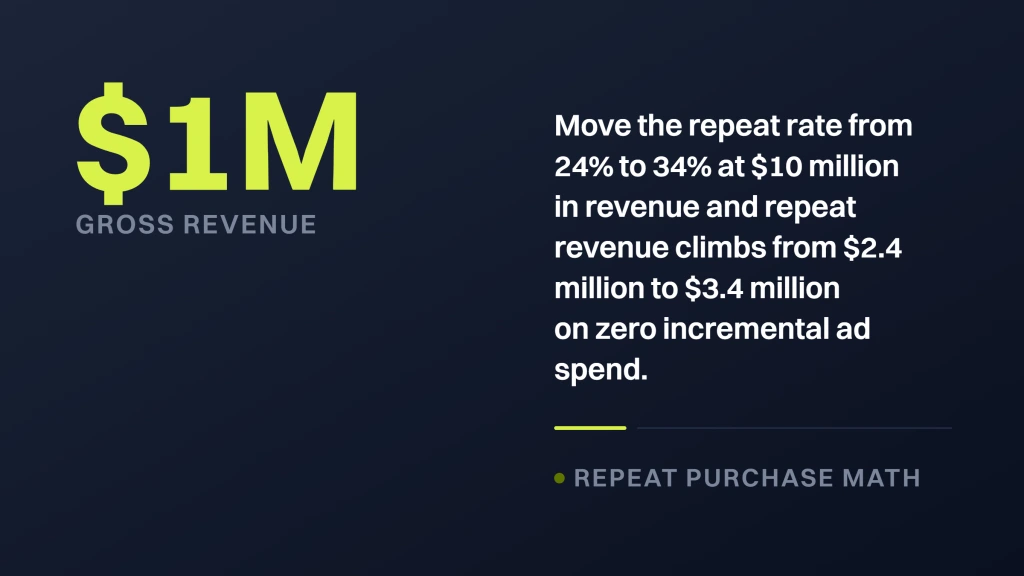
✓Repeat purchase gains from 24% to 34% add $1M on $10M with zero ad spend.
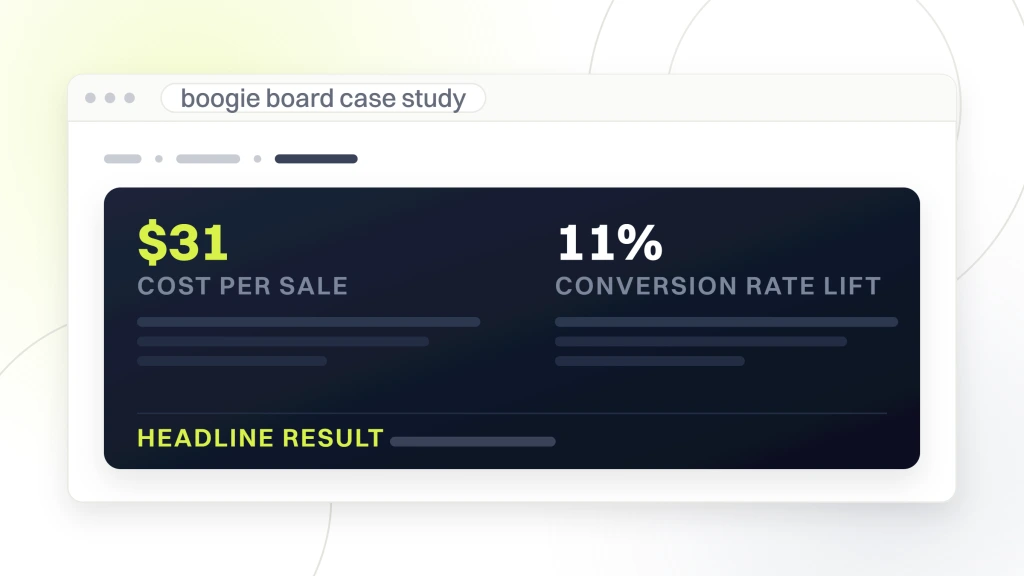
✓Boogie Board cut cost per sale to $31 with a rebuilt strategy layer.
✓Cadence, mix, and pricing hold for a full year until a numerical trigger fires.
Fashion marketing strategies are the framework calls a DTC apparel founder makes before the first ad ever runs. Brand or response as the anchor. Retention or acquisition as the growth bet. Drop cadence as a two week cycle or a four week cycle. Community programming as a real budget line, or a slide with no owner. Every one of those calls decides where the next 24 months of gross margin comes from, and every one of them gets made badly by founders who confuse a marketing strategy with a media plan. The two are not the same. A media plan buys placements. A strategy decides which placements earn the buy and which ones drain the P&L without paying back inside a season.
This guide covers the frameworks that produce compounding growth for DTC apparel and accessories brands between $2 million and $50 million in annual revenue. The frameworks below cover the brand versus response split, the retention economy math, the community-led loop, the drop calendar decisions that move repeat purchase, and the review meeting that keeps a strategy honest against the numbers. Every framework runs on real client work through 2024 and 2025. For a Shopify apparel program, the same four decisions apply.
Brand versus response inside fashion marketing strategies
The first framework decision is the brand versus response split. Founders who run 95% response campaigns get busy quarters with soft margin because every dollar buys a click without building recall. Founders who run 95% brand campaigns get pretty ads and slow checkout. The working split for a mid market apparel program lands at 30% brand and 70% response, adjusted quarterly against the paid media efficiency curve. Brand spend earns audience recall that grows the response campaigns 12 to 22% on click through rate and 8 to 14% on landing page conversion. That compounding is invisible in the weekly Meta dashboard, and that is why most founders undercount its value.
Brand campaigns for apparel run on three formats. Founder-led talking head video with a real point of view. Product-in-hand craft storytelling that shows the material and the make. Community-in-action content that shows real customers wearing the piece in real settings. Each format costs 3 to 6 weeks of pre-production but earns 6 to 9 months of compounding CTR gain on the response campaigns that follow. Programs that copy a competitor’s paid social angle without a written brand foundation waste 30 to 50% of the paid budget on undifferentiated creative that never earns the audience recall that lowers acquisition cost.
The retention economy is the second framework decision on the list. Blended acquisition costs on Meta and Google climbed 14% for apparel advertisers between Q4 2024 and Q4 2025, and the trend line is not friendly. Every DTC apparel brand still growing in 2028 will have moved retention from a leftover line item to a full budget category with a named owner. Retention is not one channel. It is a stack of email, SMS, resale, live shopping, membership tiers, and community programming that runs on a fixed monthly calendar with its own board metrics.
The retention channel mix that works for a mid market apparel brand lands at roughly 30% email, 12% SMS, 6% resale, 4% live shopping, and 3% community programming as a share of total revenue. That combined 55% of revenue coming through owned channels is the ratio a brand needs to survive a bad paid media quarter without burning cash reserves. Brands that report 20 to 25% of revenue from owned channels are one Meta algorithm change away from a margin crisis. The correction takes 6 to 9 months and starts with the email flow set, not with a new SMS tool. Klaviyo, Attentive, and Recurate are the vendor picks most mid market apparel programs land on. The Klaviyo flow strategy documentation is the useful outside read for the email side.
Repeat purchase math a founder can read in 60 seconds
An apparel brand at $10 million in revenue with a 24% repeat purchase rate carries $2.4 million in repeat revenue. Move the repeat rate to 34% and the number climbs to $3.4 million on zero incremental ad spend. That is a full million dollars of gross revenue that shows up on the P&L without a single new customer acquired. The retention split correction is the fastest margin gain available to a DTC apparel brand at that revenue band. Founders who see the math and still budget 85% to acquisition are pattern matching to an era when acquisition costs were half what they are today. That era is done.
Drop cadence inside fashion marketing strategies
Drop cadence is the third framework decision. A two week drop cycle keeps the audience engaged and produces 45 to 60% of first order revenue for brands with a design system that can sustain the pace. A four week cycle produces bigger single drop moments and works for brands with more editorial storytelling per drop. A six to eight week cycle works for premium brands where each drop is a small collection. The cadence choice cascades into every downstream decision. Paid social creative volume. Email flow triggers. Creator seeding pack shipping windows. PDP merchandising rotation. Warehouse pick pack capacity.
Brands that shift cadence quarterly confuse both the audience and the internal team. The audience learns the calendar and turns up for the drop. Shift the calendar and the audience misses the moment. The internal team learns the operational rhythm. Shift the rhythm and every drop feels like a first launch again. The right move is to pick the cadence during annual planning against the design team’s capacity and the merchandising plan, then hold it for the full year. Cadence pivots inside the year cost 8 to 14 points of sell through rate on the first two drops after the shift, and the recovery takes 3 to 4 subsequent drops to fully absorb.
Cadence by revenue band
A brand under $2 million runs monthly drops with 4 to 8 SKUs per drop. A $2 to $10 million brand runs biweekly or monthly drops with 6 to 15 SKUs. A $10 to $30 million brand runs weekly capsule drops layered under quarterly full collections, with 20 to 40 SKUs per full collection. Above $30 million, the brand runs a hybrid model. Weekly always-on drops for the core, monthly capsule moments for the mid tier, and 2 to 4 large seasonal collections annually for the flagship. Programs that copy the cadence of a competitor 5 times their revenue burn team capacity inside 6 months and end the year with a tired design bench.
Community led loops that scale apparel brands
Community-led programs treat a private group of 500 to 3,000 top customers as the acquisition engine, not the loyalty program. A well run community produces product feedback that shapes the next drop, organic word of mouth that seeds new customer acquisition without ad spend, and a repeat purchase base that grows customer lifetime value by 40 to 90% inside 12 months. Brands running an active community program see 8 to 14% of new customer acquisition trace back to a community member referral inside a year. That is a channel that never shows up in the paid media dashboard, and that is the reason most CFOs miss it in the budget review.
Where to host the community
Discord works for brands with a younger audience, a founder-led voice, and a real content pipeline of design previews and behind the scenes. Circle works for brands with a more curated audience and a paid membership tier. Geneva sits between the two. Slack works for B2B and creator programs but rarely works for consumer apparel. Instagram Broadcast Channels work as a stepping stone for brands that are not ready to run a dedicated community platform. The decision follows where the top 20% of customers already spend attention. Founders who pick the platform from a slide deck instead of from customer interview transcripts usually end up migrating the community twice inside two years, and that migration burns early community trust faster than any other misstep.
Programming a real community needs
A working community program runs on a fixed monthly calendar, and it slots under the broader what is fashion marketing channel plan. One founder AMA per month. One design preview drop 7 days before public launch. One customer story feature per week. One VIP invite to a real world event per quarter. One product feedback panel per season. That cadence takes 8 to 12 hours of internal work per week and one dedicated community manager as the community grows past 800 members. Programs that launch a Discord and then let it go silent inside 60 days train the members that the space is not worth returning to, and the recovery from a dead community is harder than starting from zero.
Channel mix inside fashion marketing strategies
The channel mix is the fourth framework decision. Every dollar of marketing spend goes to one of eight channel categories, and the working split shifts by revenue band and brand stage. Founders who default to 90% Meta because the last agency was a Meta shop leave 30 to 60% efficiency on the table by year end. A working channel mix is the honest reading of where the customer is, not the reading of where the internal team is comfortable buying.
The split above is a starting point, not a locked answer. Every brand should stress test the mix quarterly against the last 12 weeks of channel level return, the customer interview data on where new buyers first learned of the brand, and the media mix model output if the brand has one running. Programs that hold a single mix for the full year miss the seasonal rotations that produce 10 to 20% efficiency gain. Founders who read this table and start reallocating spend on the same afternoon usually swing the mix too hard in one direction and reset the paid social learning phase, which costs 7 to 12 days of stable delivery. The rule is 5 to 10 percentage points of shift per 4 week cycle, no more. Google’s GA4 attribution documentation covers the measurement layer that keeps a mix decision honest against reality.
Pricing inside the growth stack is a marketing decision, not a finance decision. Every DTC apparel brand runs a price ladder with three to five tiers, from entry SKU up to hero piece. The ladder decides which audience segment the brand acquires, which creative angle earns paid social approval, and which return rate segment the brand carries. A brand with a flat ladder at a single price point captures a narrow audience and caps growth at the size of that segment. A brand with too wide a ladder confuses the audience about who the brand is for. The working ladder for a mid market apparel brand carries a hero at 3 to 4 times the entry SKU price, with 2 to 3 tiers in between.
Discount depth is the second pricing decision, and it is where most DTC apparel brands quietly ruin their gross margin. A brand that discounts 30% or more on 60% of orders trains the audience to wait for the next markdown, and that habit caps annual revenue growth at 12 to 18% even when volume goes up. A brand that discounts less than 15% on fewer than 20% of orders holds full price integrity and grows gross margin trajectory. Founders who inherit a discount heavy brand usually need 12 to 18 months to reset the customer expectation, and the reset costs one soft quarter of order volume before the repeat purchase rate on full price recovers.
The full price recovery play
Every brand resetting from discount heavy to full price runs the same three step play. Freeze discounts for 90 days across all channels. Rebuild creative around story and craft rather than price. Shift the calendar promotion from sitewide sales to hero drop moments where the newness carries the buying urgency. The first 90 days show a 15 to 30% order volume dip that founders panic over. The next 90 days show the volume return with 8 to 14 points of margin gain. Programs that hold the freeze the full 180 days end the year with materially better P&L than the discount heavy comparison brand, and the strategy layer stops feeling like overhead.
What fashion marketing strategies look like in production
Boogie Board runs a DTC ecommerce program with customer dynamics close to an apparel brand. Repeat purchase driven by product love. Paid media as the acquisition engine. Retention math that decides the P&L. Their program is a real case for how the strategy layer sitting above the tactical layer plays out on the numbers.
Our team started with Boogie Board when the paid media program sat at a high blended cost per sale and the creative angles were pattern matching to what the internal team already knew. The strategy layer was undefined. Response versus brand was 95% response by default because nobody had written a strategy document. Acquisition versus retention was 88% acquisition. Drop cadence was reactive to inventory releases rather than planned against a calendar. Channel mix was 92% Meta paid social because the previous agency was a Meta shop. Discount depth was creeping up quarterly because response campaigns needed the price hook to hold return on ad spend. The first working session named the four framework decisions in writing, then set the sequence to fix them in.
The rebuild ran across two quarters. Brand versus response moved to 30% brand and 70% response. Acquisition versus retention moved from 88/12 to 62/38. Drop cadence locked to a planned calendar. Channel mix opened to 60% Meta, 20% TikTok Shop, 12% creator, and 8% email and SMS. Discount depth froze at 15% max on 20% of orders. Twelve months in, Boogie Board delivered $31 cost per sale, boosted conversion rates 11% through optimized landing pages and refined ad targeting, and sustained $650K in managed ad spend without eroding gross margin. The strategy layer did the work. Not the tactical pivot the founder first asked about. The fashion marketing agency writeup covers the full retainer scope that runs a program like this end to end.
Attribution inside fashion marketing strategies
Attribution is the layer that keeps the strategy honest against reality. Multi touch attribution stopped working when the third party cookie died and Meta’s aggregated event measurement replaced the old pixel granularity. Every apparel brand doing over $2 million in revenue runs four data streams reconciled inside one weekly dashboard. Shopify revenue by UTM and code. GA4 sessions and assisted conversion. Meta plus TikTok ads platform attribution. A post purchase survey on every order asking how the customer first heard of the brand.
Each stream lies on its own. Meta over-reports by 30 to 90% on fashion accounts because the pixel double counts view-through revenue. GA4 under-reports since the model discounts paid social influence on longer consideration windows. Shopify tells the truth on first order revenue but nothing on assisted revenue. Post purchase surveys catch the audience that saw the campaign on TikTok, searched a week later, and bought through direct traffic. The four together reconcile inside a 5 to 8% margin on a well tagged account, and only the four together read as truth. Brands that read only the Meta return on ad spend number end up funding the wrong channel and starving the one that drives orders.
Server side tracking as the baseline
Server-side tracking through Stape, Elevar, or a custom Google Tag Manager server container runs $200 to $600 monthly plus 20 to 40 hours of implementation. The reporting accuracy gain lands at 15 to 30% on both Meta and Google conversion counts. That gain feeds back into the platform optimization loop and drops blended acquisition cost 8 to 14% inside two months. The investment pays back inside the first quarter for any apparel brand at $2 million and above. Skipping server-side tracking in 2026 leaves acquisition data broken enough to guide the wrong budget calls for a full year.
Quarterly review that keeps the strategy honest
A strategy holds up when the founder runs a quarterly review separate from the weekly campaign readout. 90 minutes, one agenda, one written output. Read last quarter’s strategy document. Compare the four framework decisions against actual results. Decide which hold, which need a written update, then publish the new document to the pod.
The four numbers a founder reads
The quarterly review reads four numbers against the four framework decisions. Blended acquisition cost against the brand versus response split. Repeat purchase rate against the acquisition versus retention split. Sell through rate on the last three drops against the drop cadence decision. Owned channel share of revenue against the retention economy target. Every one of those numbers ties to a strategy decision the founder made, and every miss traces back to a decision that needs a written update rather than a tactical pivot. Founders who confuse a tactical pivot with a strategy update fall into the monthly whiplash pattern that burns internal teams and caps growth at the current revenue band.
What to change and what to hold
The rule for what changes at the quarterly review is that framework decisions hold for a full year until a numerical trigger fires. Repeat purchase rate flat or declining for two quarters straight triggers a retention split review. Blended cost per acquisition up more than 15% quarter over quarter triggers a channel mix review. Sell through rate below 65% on two consecutive drops triggers a cadence review. Discount depth creeping above the 20% floor triggers a pricing review. Trigger based reviews stop the founder from constantly renegotiating the strategy on hunch. That single discipline separates the brands that compound from the ones that plateau at their current revenue band for years.
What the strategy layer costs to run
The strategy layer runs $8,000 to $22,000 monthly for an apparel brand between $2 million and $10 million in revenue. Above $10 million it climbs to $22,000 to $60,000 monthly with a dedicated head of strategy. The number sits at 3 to 6% of total marketing budget across every band.
Framework document authoring for the four decisions with named owners for each
Quarterly strategy review meetings with the founder and department heads in the same room
Weekly readout of the four numbers that trigger a mid quarter framework review
Channel mix reallocation at 5 to 10 percentage points per 4 week cycle when triggers fire
Server-side tracking setup and monthly QA on the four data stream reconciliation
Community platform selection, launch, and monthly programming calendar management
Retention flow build and quarterly optimization against the repeat purchase rate target
Discount depth policy documentation with named exceptions and holiday windows
The Redefine Web fashion strategy retainer starts at $1,499 per month for the framework authoring and quarterly review layer, moves to $2,499 and $3,999 monthly for the full operational retainer, and scales from $6,000 per month for enterprise programs on a 6 month contract. Founders shopping the strategy layer without the tactical layer usually end up with a strong document that nobody executes against. Buying only the tactical layer produces the busy quarters with soft revenue that this guide opened on. The two layers work together, and the working retainer scopes both. Business of Fashion runs a useful outside read on the annual strategy planning cycle at their opinions section that founders should skim in January before the annual planning meeting.
Where the strategy fits the growth stack
The strategy layer sits at the top of the growth stack. Every media buy, creative brief, retention flow, and drop calendar rolls up to the four framework decisions. Programs that budget for tactics without a written strategy end up with tactical wins that never compound into strategic gain. Programs that build the strategy first end up with tactical wins that add up to compounding revenue trajectory across 24 to 36 months.
Our fashion marketing campaigns guide covers the campaign layer that sits directly under the strategy. The McKinsey State of Fashion report is the annual read every founder should skim in January before the strategy review meeting. Trends only compound when a written strategy scores every candidate, funds two, and kills the other four before the calendar fills with distractions. The framework is boring. The bottom line is that boring framework builds the compounding gross margin that most DTC apparel programs never reach.
Frequently asked questions
The key fashion marketing strategies for DTC apparel brands break into four framework decisions. First, the brand versus response split, which sets how much budget builds long term recall and how much drives short term orders. Second, the acquisition versus retention split, where owned channels reach roughly 55% of revenue for brands with margin protection. Third, drop cadence, from two week cycles up to seasonal collections, matched to the design team's capacity. Fourth, channel mix across paid social, paid search, TikTok Shop, creator, email and SMS, community, and retail. Every media buy, creative brief, and calendar decision rolls up to those four calls. Programs that skip the framework and jump to tactics get busy quarters with soft revenue and no compounding gain.
A fashion marketing strategy is the written framework a DTC apparel brand runs before any ad, drop, or email goes live. It sets the target customer profile, the brand versus response split, the retention versus acquisition mix, and the channels that earn budget across a 12 to 24 month horizon. The strategy layer sits above the tactical calendar and decides which campaigns are worth funding and which ones drain gross margin without paying back inside a season. In practice, a working fashion marketing strategy names four calls in one page. Brand versus response as a percentage of budget. Retention as a share of total revenue, usually 45 to 60% for margin protected brands. Drop cadence, from two week cycles to seasonal collections. Channel mix by revenue band. Every buy rolls up to those four numbers.
Real fashion marketing strategies examples focus on the strategy layer, not campaign creative. Boogie Board, an ecommerce brand with dynamics close to DTC apparel, rebuilt its strategy layer across two quarters. Brand versus response moved from 95/5 to 30/70. Acquisition versus retention moved from 88/12 to 62/38. Channel mix opened from 92% Meta to a spread across Meta, TikTok Shop, creator, email, and SMS. Discount depth froze at 15% max on 20% of orders. Twelve months later, cost per sale hit $31, and conversion rate on paid landing pages grew 11% on a $650K managed ad budget. The tactical layer never changes those numbers on its own. The written strategy above it does the work.
The 4 Ps of fashion marketing are product, price, place, and promotion, and each one carries a specific weight for a DTC apparel brand. Product covers the drop calendar, size run, fabric quality, and the seasonal story that anchors the collection. Price sets full price sell through targets, discount depth floors at 15 to 20%, and the margin math that funds retention flows. Place is the channel stack, from the Shopify Plus or WooCommerce storefront to wholesale, marketplace, and pop up retail. Promotion is the paid and owned media mix, from Meta and TikTok Shop through to Klaviyo flows, creator seeding, and community programming. Founders who treat the 4 Ps as an academic checklist miss the operator layer. The working version uses each P to lock a real number the finance team can defend inside a quarterly review.
The strategy layer runs $8,000 to $22,000 monthly for an apparel brand between $2M and $10M in revenue, and $22,000 to $60,000 monthly above $10M with a dedicated head of strategy. That sits at 3 to 6% of total marketing budget across every revenue band, and it pays back inside two quarters when the tactical layer executes against the framework. Redefine Web's fashion strategy retainer starts at $1,499 per month for framework authoring and quarterly review, moves to $2,499 and $3,999 monthly for the full operational retainer, and scales from $6,000 per month for enterprise programs. All tiers include the quarterly strategy review, server-side tracking QA, retention flow build, and channel mix reallocation windows.
The working channel mix for DTC apparel fashion marketing strategies shifts by revenue band. Under $2M, roughly 45% goes to paid social, 20% to creator, 15% to TikTok Shop, 10% to paid search, and 8% to email and SMS. Between $2M and $10M, paid social drops to 40% and paid search climbs to 15%. From $10M to $30M, retail and out-of-home enter the mix at 4%, and paid social falls to 35%. Above $30M, community and events grow to 8% and retail to 7%. Above $100M, the mix balances at roughly 25% paid social, 20% paid search, 15% creator, 12% retail and OOH, 10% each on TikTok Shop, email and SMS, and community. Stress test quarterly against real return data.
Fashion marketing strategies get reviewed every 90 days on a fixed calendar, separate from the weekly campaign review. A 90 minute meeting, one agenda, one written output. Read last quarter's strategy document. Compare the four framework decisions against the four numbers that matter. Blended acquisition cost. Repeat purchase rate. Sell through rate on the last three drops. Owned channel share of revenue. Framework decisions hold for a full year until a numerical trigger fires. Repeat rate flat for two quarters. CPA up more than 15% quarter over quarter. Sell through below 65% on two consecutive drops. Discount depth above the 20% floor. Trigger based reviews stop founder hunch from renegotiating the strategy every 30 days and burning the internal team's calendar.
Drop cadence sits inside fashion marketing strategies because it cascades into every downstream decision the team makes. Paid social creative volume ties to the drop calendar. Email flow triggers fire on drop dates. Creator seeding pack shipping windows plan backward from the launch. PDP merchandising rotation aligns with the SKU release. Warehouse pick pack capacity scales with the drop size. A two week cycle produces 45 to 60% of first order revenue for brands with a design bench that can sustain the pace. A four week cycle produces bigger single moments and works for editorial storytelling. Brands that shift cadence mid year lose 8 to 14 points of sell through on the first two drops after the change, and the recovery takes 3 to 4 subsequent drops to absorb.
Found this useful? Share it.
TF
WRITTEN BYTim FuxCo-Founder, Redefine Web / CTO & CMO, Solar Alliance / Co-Founder, Fux Marketing
Tim Fux co-founded Redefine Web in 2023 to run websites, SEO, paid media, and marketing automation as one revenue-tied program for growth-stage brands. He is Chief Technology Officer / Chief Marketing Officer at Solar Alliance since 2025, and Co-Founder of Fux Marketing. His work focuses on Google Ads at scale across the solar, home services, and DTC verticals, with published tutorials and case studies showing 4x to 6x return on ad spend on multi-market accounts.
Co-Founder, Redefine Web (since 2023)CTO & CMO, Solar Alliance (since 2025)Co-Founder, Fux MarketingGoogle Ads specialist / paid-media strategist