Your product photography cost $22,000 for the spring drop. Your paid social spend runs $16,400 monthly. The storefront that carries all of that was built by a freelancer you found on Dribbble in 2022 for $3,800, and the mobile PDP still hides the size chart behind a shipping icon. When you decide to hire fashion web designers this quarter, the choice isn’t between three job descriptions on LinkedIn. It’s between a freelancer who delivers a beautiful Shopify theme in 6 weeks, an agency pod that owns the PDP, filter, and checkout system across 6 months, and a full-time hire who sits inside the brand and rebuilds the storefront over 18 months of iteration.
This guide runs the decision the way our pod scopes it with apparel brands between $1.2M and $28M annual revenue. You’ll see how to size the job before you post the role, how to read an apparel portfolio for real fit and returns work, what hourly rates pass at every tier, and a scope template you can hand to any candidate. Read the full apparel fashion marketing hiring spec.
How to read an apparel storefront portfolio
Portfolio review is where most founders lose this decision. A Dribbble screenshot tells you nothing about whether the designer solved the PDP fit problem. Founders who pick on aesthetics end up with a beautiful storefront that converts at 1.1% on mobile. Read for operational work, not surface craft.
What to look for
- Live URLs, not static mockups. Open the storefront on your phone and audit the PDP zone order.
- Case study with real numbers. Return rate before and after. Mobile conversion before and after. AOV before and after.
- Size chart and fit finder inside the delivered work. If the portfolio shows a generic size table, the designer hasn’t solved fit.
- Filter rail on a collection page. Size and color sit at the top. Anything else signals a homepage-first designer.
- Checkout screenshots. Guest checkout as default, Apple Pay and Shop Pay above the card form, pickup at store logic if it applies.
- Lookbook and collection page split. If both look the same, the designer doesn’t know the discovery vs storytelling difference.
Red flags that route the hire elsewhere
Portfolio red flags include a homepage that autoplays a 4K hero video with no size chart in the PDP walkthrough, a fit finder credited to a third-party app with no configuration work shown, a case study that reports vanity metrics (impressions, followers) with no returns or conversion number, or a checkout flow that only shows the desktop happy path. Spot 2 or more red flags in a single portfolio, route the hiring conversation to a different candidate. The Baymard research on apparel product page description patterns is the industry reference every serious apparel designer should quote from.
Hourly rates when you hire fashion web designers
Hourly rates for apparel storefront designers run wide since the category mixes junior generalists with senior specialists. A 2024 industry rate survey across 1,240 freelance designers in the ecommerce vertical put apparel-focused specialists 32 to 48% above the generalist median. Founders who anchor on the generalist rate end up on the wrong side of the portfolio review before the hire even starts.
Rate ranges by experience and region
Junior freelance designers with 1 to 3 years building apparel storefronts run $45 to $75 hourly in North America, $30 to $55 in Western Europe, and $18 to $32 in India, Southeast Asia, and Eastern Europe. Mid-level designers with 3 to 6 years and 8+ delivered apparel builds run $75 to $135 hourly in North America, $55 to $95 in Western Europe, and $32 to $60 offshore. Senior specialists with 6+ years, a portfolio of headless builds, and case studies on returns reduction run $135 to $240 hourly in North America and $95 to $170 in Western Europe. Agency blended rates run $145 to $285 hourly across the pod, which reflects the mix of design, front-end, and project management inside the fee.
Fixed-fee versus hourly on apparel builds
Fixed-fee contracts protect the founder on scope drift. Hourly contracts protect the designer on discovery-heavy builds. On apparel storefronts, the right split runs fixed-fee for the theme customization, PDP zones, and filter rail (predictable scope) and hourly for the fit finder configuration and exchange-in-checkout work (unpredictable integration surface). A hybrid contract with a fixed-fee base plus a capped hourly discovery pool covers both risks and matches how our pod scoped an apparel storefront rebuild for a mid-market denim brand in Q4 2024. That structure keeps the incentives aligned instead of forcing either side to eat unbudgeted overruns.
Pay for the trial. A $600 to $2,400 paid trial at the designer’s rate saves the $18,000 to $40,000 you burn on a bad 6-month engagement.
Scope template that keeps the project on rails
The scope template is the single document that keeps this project on rails. Founders who skip the template negotiate 3 change orders inside the first sprint and burn the budget before the PDP redesign starts. A working template locks the deliverables, the acceptance criteria, and the change-order rules before the contract signs.
What the template contains
- Deliverable list by page type (PDP, collection, lookbook, cart, checkout, account, blog).
- Acceptance criteria per deliverable (LCP under 2.5s, zone order fixed on mobile, WCAG 2.2 AA on interactive elements).
- Design source files handoff (Figma with organized components, not a flat PDF).
- Front-end handoff (Shopify Liquid, or React components for headless, with a README).
- Change-order rule (any scope addition over 4 hours triggers a written change order, no verbal approvals).
- Milestone payments (25% on kickoff, 25% on design approval, 25% on staging live, 25% on production live).
- Warranty period (30 days of bug fixes included after production live).
Acceptance criteria that matter for apparel
Apparel-specific acceptance criteria go beyond generic ecommerce checks. The PDP shows the fit prompt above the add-to-cart. The size guide opens in a slide-over panel, not a new tab. The gallery pinch-zooms on mobile with no modal that closes on further zoom. The color swatches update the gallery with no full page reload. The filter rail leads with size and color. Applied filters persist across pagination. Guest checkout is the default. Exchange logic sits inside the checkout for brands with the operational maturity, or routes to Loop Returns or ReturnGO cleanly for brands that outsource it. Founders who write these criteria into the acceptance section of the scope template avoid the retrofit conversation that costs $6,400 to $22,000 on the next contract when the storefront gaps surface after launch.
Where to find designers worth hiring
The sourcing question decides the shortlist quality before the portfolio review starts. Dribbble and Behance are visual-first platforms that surface homepage design work, not storefront systems. Founders who source only there end up with strong art directors and weak storefront designers. A better sourcing mix runs across 3 or 4 channels weighted toward the apparel-specific work you need.
Sourcing channels ranked
Shopify’s Experts marketplace ranks first for solo freelancers and small pods with verified Shopify project history. LinkedIn ranks second for boutique agencies and full-time hires since the case-study posts surface real returns and conversion numbers. Working Not Working ranks third for senior specialists open to short-term contracts. Dribbble and Behance rank fourth as portfolio references, useful for surface craft verification but not for storefront system depth. Referrals from your Klaviyo account manager, your paid social agency, or your Shopify Plus success manager consistently produce the highest-signal candidates since they see which storefronts convert.
Cold DMs and outbound sourcing
Cold outbound to designers whose work you already admire on live storefronts converts at 8 to 14% to a discovery call, per our own outbound tracking on 320 designer touches through 2024. The message that works is short, pointed, and quotes one detail from a storefront the designer delivered. Founders who send generic “loved your portfolio” outreach convert at under 2% since senior designers see 50 of those messages a month and read none of them. Name the storefront, quote the pattern, ask a pointed scoping question. That approach opens the conversation with a designer who already understands the apparel category rather than a generalist looking for their first apparel client.
Trial projects and paid tests before you commit
Trial projects are the single highest-signal filter in the hiring workflow. A portfolio tells you what the designer delivered for other brands. A paid trial tells you how they solve your storefront problem. Founders who skip the trial phase hire on portfolio confidence and discover the ownership gap 8 weeks into the engagement.
Grade the trial on 3 axes. Craft, reasoning, operational awareness. 3 passing scores route to full engagement. 1 passing score routes to a different candidate.
What a fair paid trial looks like
A fair paid trial runs 8 to 16 hours on a real deliverable at the designer’s hourly rate. Not a spec project that sits in a portfolio unused. Not free work disguised as an interview. A real PDP redesign for one SKU, delivered as a Figma file plus a 400-word writeup on the decisions. That deliverable gives the founder a working artifact regardless of the hire outcome and gives the designer a paid engagement that respects their time. Founders who request more than 20 hours of trial work with no pay burn their reputation in the freelance community and stop attracting the senior candidates worth hiring. Pay for the trial. It costs $600 to $2,400 and saves the $18,000 to $40,000 you’d have burned on a bad 6-month engagement.
How to grade the trial output
Grade the trial on 3 axes. Craft (does the Figma file organize into reusable components, or is it a flat art board). Reasoning (does the writeup explain the fit prompt, size selector position, and gallery zoom pattern with real data, or does it wave at “clean modern feel”). Operational awareness (does the designer flag the fit finder integration risk, the color swatch out-of-stock signal, and the exchange-in-checkout scope, or do they design a beautiful hero and stop). 3 passing scores across the axes route to a full engagement. 2 passing scores route to a smaller-scope contract to verify the third. 1 passing score routes to a different candidate before the 6-month scope signs.
Contracts and IP that protect the brand
Contract terms decide the ownership question after the engagement closes. Founders who sign the designer’s template with no red-line pass end up with the design source files locked inside the designer’s Figma account and the front-end code held under a license the founder never negotiated. That gap costs $8,000 to $24,000 to unwind on the next engagement.
The contract assigns full IP of design files and front-end code to the brand at final payment. Skip the clause and you pay $8,000 to $24,000 to unwind it later.
IP assignment clauses that protect the brand
The contract should assign full IP ownership of the design source files, the front-end code, and any custom app scaffolding to the brand at final payment. The designer keeps the right to display the work in their portfolio and case studies. Standard language runs “designer assigns to client all right, title, and interest in the work product upon receipt of final payment” plus a portfolio carve-out. Skip the assignment clause and the founder can’t legally hand the Figma file to the next designer with no license fee paid. Skip the portfolio carve-out and the designer refuses to sign. Both clauses fit inside a single paragraph and cost nothing to include when the contract drafts.
Kill fees, warranty, and change orders
The contract locks a kill fee at 25 to 40% of remaining scope if either party terminates early. It defines a warranty period (30 days is standard) during which the designer fixes bugs traceable to their work at no added cost. It defines change orders as any written scope addition over 4 hours, priced at the designer’s hourly rate with a 20% markup on unbudgeted work. Founders who skip the change-order rule end up in verbal side conversations that inflate the scope by 40 to 90% before launch. Baymard’s ecommerce usability research library is a useful reference to attach to the scope document so the acceptance criteria carry industry-standard weight in disputes.
How much does it cost to hire fashion web designers
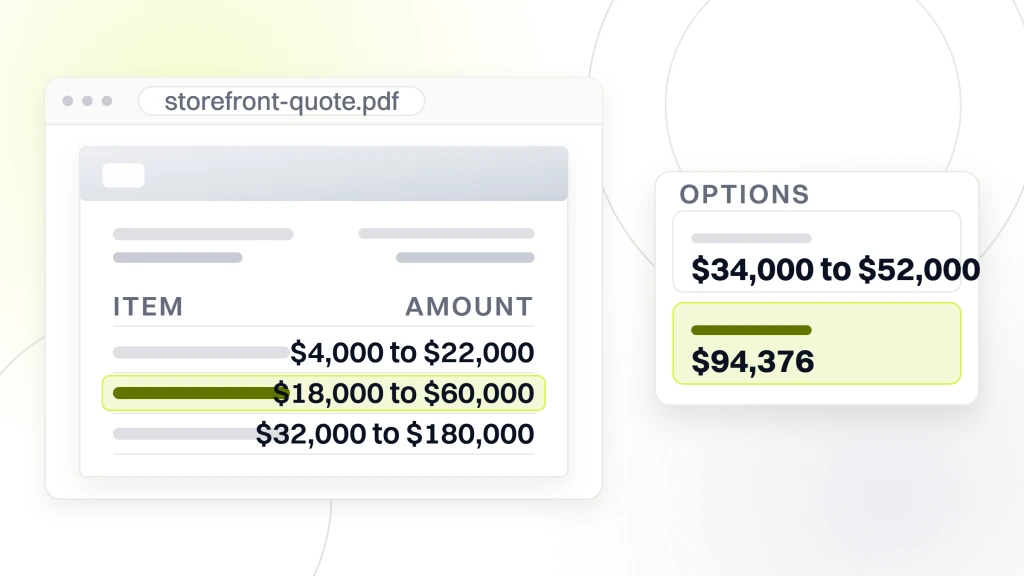
Total cost to hire fashion web designers depends on scope duration and hiring model. A solo freelance theme customization runs $4,000 to $22,000 as a one-shot fee. A freelance pod rebuild runs $18,000 to $60,000. A boutique agency full storefront runs $32,000 to $180,000 plus a $599 monthly retainer on a 6 month contract.
Total cost of ownership over 24 months
A solo freelancer over 24 months costs $22,000 for the initial build plus $12,000 to $30,000 in smaller follow-on projects, for a total of $34,000 to $52,000. A boutique agency over 24 months costs $80,000 build plus $14,376 retainer ($599 monthly for 24 months on a 6 month renewing contract), for a total of roughly $94,376. A full-time in-house designer over 24 months costs $220,000 to $380,000 in fully-loaded compensation. The agency model earns the middle position when the roadmap runs 6 to 24 months of continuous work. The in-house model earns the top position when the roadmap runs 24 to 60 months and the brand needs the storefront designer inside the daily merchandising conversation. Redefine Web’s SMB web design tiers sit at $2,500, $4,500, and $7,500 for scoped Shopify builds, with maintenance retainers at $199, $299, or $499 monthly to cover the ongoing PDP experiment queue.
What sits below the freelance floor
Below the $4,000 freelance floor sits the pre-built theme customization market on Envato, TemplateMonster, and the Shopify theme store. Founders in that band buy a $180 to $450 theme and hire a $28 to $52 hourly Upwork contractor for 20 to 40 hours of configuration. Total cost $740 to $2,530. That approach fits pre-revenue and sub-$500K stores where the brand equity hasn’t compounded yet and the design work doesn’t fund itself against paid social. Above $500K revenue, the cheap-theme approach starts to cost the brand more in lost conversion than the storefront saves in build fees. For discovery-stage pricing at the wider tier math, our ecommerce web design pricing guide covers the proposal structure. For fully-custom, headless-first builds, the price floor sits at $18K+.
Onboarding designers onto your storefront
Onboarding decides the first 30 days of the engagement. Founders who hand over Shopify admin access on day one and expect a redesign by week 6 burn the first 2 weeks on the designer learning the storefront from scratch. A working onboarding runs a structured week-one program that gets the designer inside the data before they touch a Figma file.
Week-one onboarding checklist
- Read-only access to Shopify admin, GA4, Klaviyo, and the reviews platform.
- Loom walkthrough of the current PDP, collection, lookbook, and checkout at 45 minutes total.
- Access to the last 12 months of return data by SKU and by size category.
- Access to the last 6 months of session recordings on Hotjar or FullStory for the top 40 SKUs.
- The scope document, the design principles doc, and the brand identity guide as a single Notion or Google Drive folder.
- A day-five debrief where the designer presents their storefront audit before any Figma work begins.
Programs that run the week-one checklist end sprint one with a designer who already knows which SKUs return at 34%, which size chart lives 3 taps deep, and which filter combination the analytics data shows 89% of shoppers ignore. Programs that skip it end sprint one with a designer who redesigned the homepage hero and moved nothing on the operational surface where returns and conversion live.
A real apparel storefront engagement
A mid-market denim and outerwear brand at $6.4M annual revenue faced this problem head on. Their storefront ran on a customized Shopify theme built by 3 separate freelancers over 5 years. Each freelancer left the site in a different visual dialect and the PDP zone order flipped between product categories. Mobile conversion sat at 1.7% against an apparel benchmark of 2.9%. Return rate ran at 31% on denim and 24% on outerwear, both above the category median.
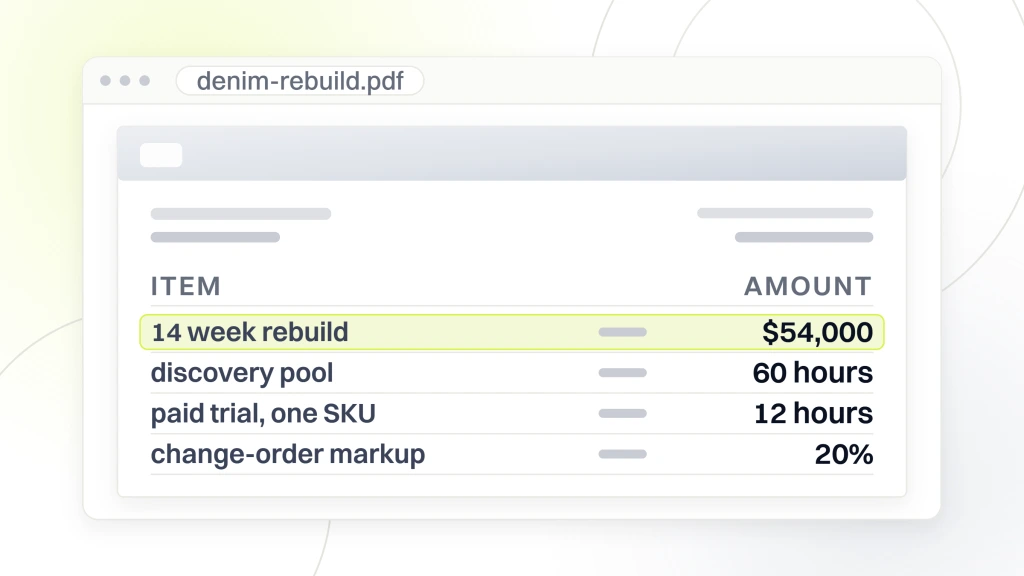
Our pod ran the hiring workflow the way this guide describes. Scoped the role as a 14 week rebuild with a $54,000 fixed-fee base plus a capped hourly discovery pool of 60 hours for the returns-flow integration. Ran a paid trial on one SKU redesign at 12 hours of billable time. Signed the contract with full IP assignment and a 20% change-order markup. Onboarded across a five-day audit week with read-only access to Shopify, GA4, and the returns platform before any Figma work began. Delivered the rebuild across 12 weeks and held the last 2 weeks for QA and performance work.
6 months after production go-live, mobile conversion climbed from 1.7 to 2.8%, denim return rate dropped from 31 to 22%, and average order value grew from $118 to $146 on the higher-margin SKUs the redesigned PDP surfaced. The rebuild paid for itself inside 11 weeks against the returns reduction and mobile conversion gains combined. The workflow held together since the scope document, the paid trial, and the onboarding checklist front-loaded the risk. For the wider agency scoping, our fashion web design agency guide covers the retainer structure.
Ecommerce parallel from our own work. Boogie Board, a stylus-notepad ecommerce brand, dropped cost per sale to $31 on an annual paid-search curve after we tightened PDP structure, filter behavior, and checkout hygiene on their storefront. Same underlying playbook the denim brand ran, applied to a different SKU shape. And in a separate post-launch rebuild for RAFZ Cirkulära Interiörer, conversion rate grew 28% inside the first quarter live. Numbers like these come from the same discipline. Scope tight, hire against the scope, put live the storefront the operations team can actually run.
Where this hire fits the wider stack
The decision to hire fashion web designers sits above the storefront build and below the brand strategy. Get it wrong and every downstream investment (paid social spend, SEO retainer, email flow work) compounds against a storefront that hides the size chart and burns the traffic. Get it right and every downstream investment routes into a storefront that answers the fit and returns questions before the shopper has to hunt.
The retainer that runs the ongoing design work starts at $1,499 monthly on a 6 month contract and scales with SKU count and experiment cadence. That number is the floor across every vertical Redefine Web serves, apparel included. The retainer covers the PDP experiment queue, seasonal collection setup, filter and taxonomy audits, and the quarterly design review that catches drift before it costs revenue. Founders scoping the wider apparel program should treat the retainer as an operating cost, not a nice-to-have, since the storefront that gets audited quarterly outperforms the storefront that got built beautifully in year one and quietly drifted through 8 seasons of unchecked variant sprawl.
Founders comparing hires against the wider apparel program should read our fashion web design retainer page for the deliverables built into every engagement. A designer hired with no scope template reads as an expensive experiment. A designer hired against the scope template, portfolio filter, and onboarding checklist this guide describes reads as a storefront system that funds itself against paid social spend inside the first 2 quarters after production go-live.
Next steps to hire fashion web designers with confidence
Take the scope template in this guide, draft your role brief in a single afternoon, and shortlist 3 candidates through Shopify Experts, LinkedIn, and one warm referral from a marketing partner. Run the paid trial on one SKU redesign. Grade the output on the 3 axes. Sign the contract with IP assignment, warranty, and change-order clauses baked in. Onboard across a five-day audit week before any Figma work starts. Book a call with our pod if you want the same workflow run against your storefront, and we’ll return a scope document you can hand to any designer.