Fashion ecommerce web design lives or dies on the phone. Open your own product page on mobile and time how long it takes to find a size chart, a fit note, and a return window. If the chart hides three taps deep and the fit finder does not exist, you are burning paid social spend against a storefront that answers none of the questions apparel shoppers ask before they add to cart. Mobile conversion stalls near 1.4% and desktop shows a number that convinces the founder the store works. It works for laptops. It fails for the 71% of shoppers on a small screen. See our mobile-friendly ecommerce web design patterns for the layout choices that lift small-screen add-to-cart.
This guide is the build spec our pod runs on apparel and accessories stores between $1.2M and $28M annual revenue. It pairs with our broader ecommerce web design tips for stores outside apparel. You will see the PDP layout that answers fit questions before the shopper asks, the collection and lookbook page pattern that carries brand storytelling into product discovery, the filter architecture that respects size and color the way apparel shoppers browse in the wild, and the checkout flow that handles pickup, exchange, and returns without kicking the shopper to a third-party portal. Read straight through for the full apparel fashion marketing build spec.
Size chart and fit guide that shoppers read
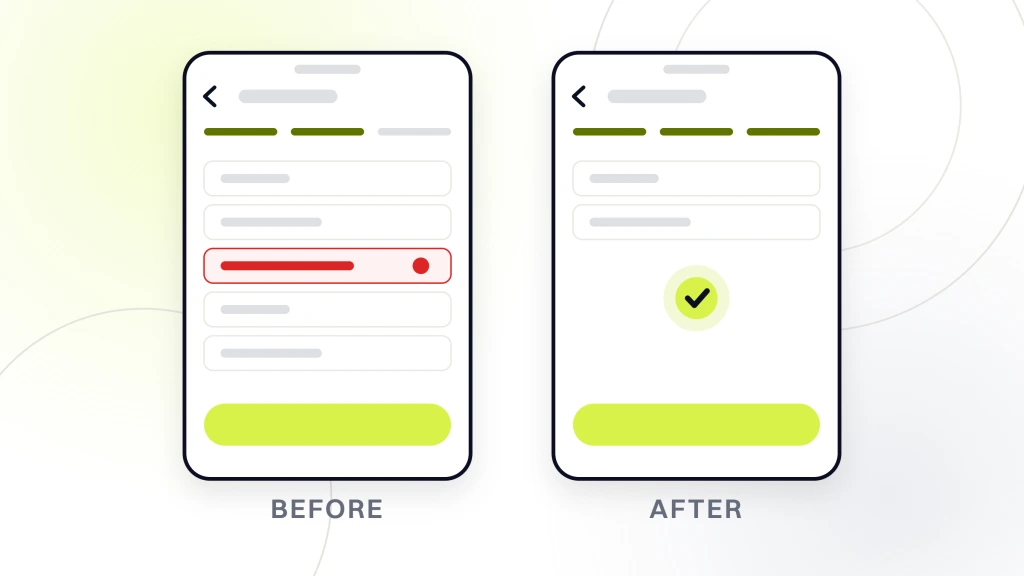
The size chart is the single most-abandoned element on apparel PDPs and the single highest-return fix in fashion ecommerce web design, covered inside our luxury fashion ecommerce web design trends 2026 primer. Shoppers open the chart in 41% of sessions and buy in 29% of those sessions. When the chart forces a new page or makes them guess, half of that 29% walks. A working fit guide reads at fifth-grade level, sits behind a one-click accordion, and pairs measurements with a live size finder that takes height plus bust or waist plus preferred fit and returns a size recommendation in under 200 milliseconds.
What lives inside the fit accordion
- Measurement table with metric and imperial toggles that persists across the session.
- Model measurements and the size the model is wearing on this SKU.
- Fit finder input for height plus one body measurement plus preferred fit style.
- Fabric stretch note (“2% stretch through the waist, holds shape after wash”).
- Two paragraphs of styling and layering context written for the category, never boilerplate.
- Three real customer photos with the customer’s height and size for scale reference.
The fit finder logic is not a machine learning model. It’s a lookup table your team writes once per fit block. Slim through the waist, straight in the hip, standard rise. Oversized top with dropped shoulders. Cropped hem versus regular length. Six to twelve fit blocks cover a full apparel line and the size finder returns a clean recommendation from any block inside 200 milliseconds. A Melbourne womenswear brand our pod rebuilt in Q2 2024 saw their return rate drop from 28 to 17% after we pushed live that lookup on their 220-SKU catalog.
Collection pages and lookbook design
Collection pages carry the discovery job. Lookbooks carry the brand storytelling job. The two pages sit in different navigation slots, look different, and drive shoppers into the PDP through different mechanics. Storefronts with only a collection page miss the brand story that qualifies buyers before the price. Storefronts with only a lookbook miss the shopper who arrived from a Google search on linen shirt dress midi and wants to filter, not scroll a mood board.
Collection page pattern
Your collection page holds a filter rail on the left (desktop) or a top-sheet filter (mobile), a grid of product cards with hover-to-swap gallery, and a category intro at the top with 90 to 140 words of category context. The card shows the product on-body, price, color swatches, and a wishlist heart. The category intro answers 3 questions. What fits in this collection. What fabric families dominate. What size and fit range the collection covers. Google reads the category intro for the topic signal that pushes the collection into ranking on high-intent commercial queries.
Lookbook pattern
Your lookbook page carries editorial imagery at 60 to 90% viewport width, a short essay per look (60 to 120 words) that names the pieces and links each to its PDP, and a shoppable pin overlay on each hero image. No filter rail. No price on the hero. The buy button lives on the linked PDP where the size and stock story sits. A lookbook that behaves like a collection page reads as a catalog and burns the brand equity you spent the shoot week building. A collection page that behaves like a lookbook reads as an art project and buries the size filter the shopper needed.
Filter architecture for apparel shoppers
Filter architecture is where the apparel storefront either matches how shoppers browse or fights them. Apparel shoppers filter by size first, color second, and price third. Anything else (fabric, occasion, sustainability) belongs in a secondary group. Filter rails that lead with occasion or trend produce a beautiful sidebar that nobody touches. Baymard found that putting the size filter at or near the top of the sidebar and expanding it by default prompted 90% of participants to filter by size before they began browsing.
Filter rail hierarchy
| Filter group | Rail position | Default state | Interaction pattern | Applies to categories |
|---|---|---|---|---|
| Size | Position 1 | Expanded | Multi-select chips | All apparel |
| Color | Position 2 | Expanded | Multi-select color swatches | All apparel and accessories |
| Price | Position 3 | Expanded | Slider with numeric input | All categories |
| Fit or silhouette | Position 4 | Collapsed | Multi-select chips | Tops, dresses, denim |
| Fabric or material | Position 5 | Collapsed | Multi-select checkboxes | All apparel |
| Occasion or category | Position 6 | Collapsed | Multi-select chips | Dresses, outerwear |
| Sustainability | Position 7 | Collapsed | Toggle badges | All apparel |
The filter rail on mobile hides behind a bottom sheet, never a header dropdown, so the header dropdown never collides with the sticky nav on scroll. Applied filters render as removable chips at the top of the grid so the shopper never loses track of what narrowed the results. Filter counts update live as the shopper toggles, and out-of-stock combinations gray out rather than disappear so the shopper knows the size existed even if it sold out on that color. A clear-all button sits at the top of the mobile sheet and applied filters persist across pagination, so shoppers who browse 3 pages of results never rebuild the same size and color combination twice inside one session. That single fix cuts the bounce rate on collection pages by 8 to 14 points on the six apparel accounts our pod measured through Q4 2024.
Checkout flow with pickup and exchange
The checkout is where the apparel storefront either closes the sale or pushes the shopper into a portal that never returns them. Apparel checkouts carry 2 jobs a general checkout does not. The pickup option for brands with a store network. The exchange option for the shopper who already knows they will size out of the first pick. Skip either and the abandonment rate climbs 12 to 18 points on the mobile checkout.
The three-step checkout that works
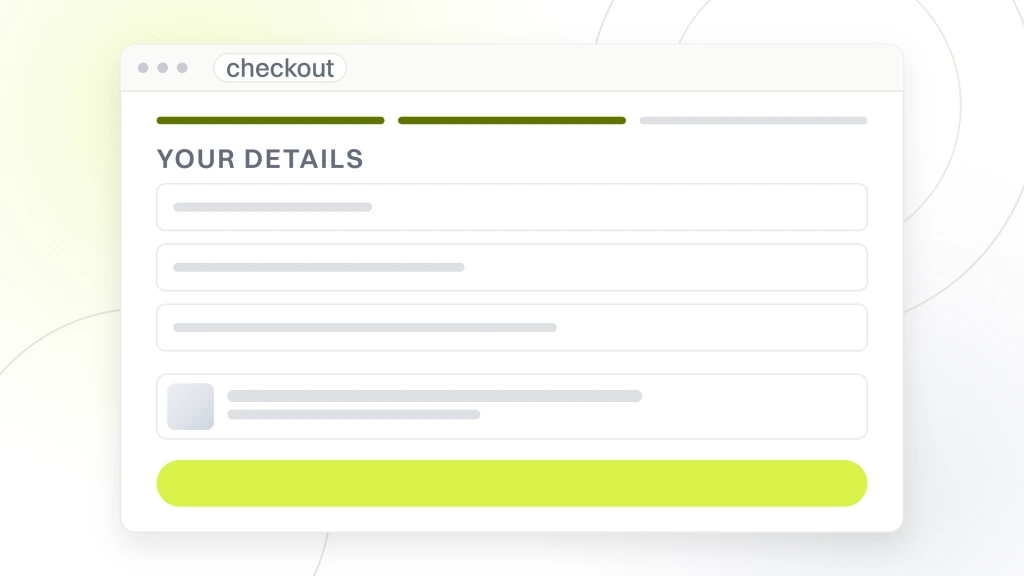
Your checkout runs 3 steps on mobile and holds all 3 on a single accordion on desktop. Step 1 collects email plus shipping method (ship, pickup at store, or ship-to-store for exchange). Step 2 collects address if shipping, or store selector if pickup. Step 3 collects payment. Apple Pay and Shop Pay sit above the manual card form so 41 to 62% of your mobile shoppers reach one of them first. Guest checkout stays default with a one-click account creation on the thank-you page. In Baymard research on cart abandonment, 18% of US online shoppers say they have abandoned an order because the site wanted them to create an account.
Exchange logic inside checkout
Exchange logic lives in the checkout, not in the returns portal, for brands that carry the operational maturity to support it. The shopper checks a “start an exchange with this order” box during checkout, picks the SKU and size they expect to swap into, and the store reserves the exchange SKU on ship-out. When the shopper returns the original inside the exchange window, the exchange SKU ships automatically. Our team built that flow for a Toronto denim brand and cut their exchange resolution time from 18 days to 4 days across the fall 2024 collection, which pulled their return-to-repeat-buyer conversion from 22 to 41% inside 2 months.
How much does fashion ecommerce web design cost
Fashion ecommerce web design pricing runs $18,000 to $180,000 for a full build depending on SKU count, custom PDP logic, and the depth of the fit finder and exchange system. Retainer for the ongoing merchandising and experimentation queue starts at $999 monthly on a 6 month contract, scaling with SKU count and the cadence of seasonal collection drops.
What each tier includes
The $18,000 to $32,000 tier includes a customized Shopify theme, seven-zone PDP, a static size chart per category, and a standard three-step checkout. Fits independent labels under $1.5M revenue. The $32,000 to $80,000 tier adds a lookup-based fit finder, category-specific filter rails, editorial lookbook pages, and pickup at store logic. Fits growing brands between $1.5M and $6M revenue. The $80,000 to $180,000 tier adds custom PDP variants, exchange-in-checkout logic, endless-aisle store integration, and a headless architecture for the discovery layer. Fits brands above $6M revenue where the design work funds itself inside 2 quarters through returns reduction and repeat purchase gains.
Below the $18,000 floor, the build runs as a lightly customized theme with no fit finder and no exchange logic, and the store still converts on brand alone if the audience is small. Above the $180,000 ceiling, the extra spend rarely earns itself back on a single-brand storefront and starts to make sense only for portfolio brands running 3 or more labels off shared infrastructure. For discovery-stage pricing at the wider tier math, our ecommerce web design pricing guide covers the proposal structure and change-order rules every founder should negotiate before signing the scope.
Platform choice for the apparel storefront
Your platform decision drives 60% of the build cost and 100% of the operational ceiling. Shopify Plus carries the majority of independent fashion brands between $1M and $50M revenue so the app ecosystem covers size guides, exchange flows, and store pickup without a full custom build. BigCommerce fits brands with heavy B2B wholesale alongside DTC. Headless architecture on Next.js paired with a headless commerce backend fits brands above $30M revenue where the design roadmap outruns what the platform natively supports.
Shopify Plus for most fashion brands
Shopify Plus solves 80% of the apparel storefront job at a Shopify Plus license fee starting at $2,300 monthly. The theme layer handles the PDP zones, the app ecosystem covers the fit finder (Kiwi Sizing, Fit Analytics), returns and exchanges (Loop Returns, ReturnGO), and pickup at store (native Shopify Point of Sale). The gap sits at the exchange-inside-checkout flow and the endless-aisle store integration, both of which need a Shopify Plus developer or a partner agency to build. Google’s web.dev commerce performance guidance covers the technical baseline every Shopify Plus theme should meet on Core Web Vitals.
When headless earns the extra spend
Headless commerce on Next.js plus Shopify or Commerce.js earns the extra $60,000 to $140,000 of build cost when 3 conditions hold. Your product data lives in 3 or more systems (Shopify plus a PIM plus a store POS) and needs sub-second sync. Your PDP layout demands motion, video, and 3D that the Shopify theme layer stalls on. Your marketing team pushes live a new page pattern every month and the theme’s Liquid layer bottlenecks the release cadence. Fewer than 18% of fashion brands under $20M revenue meet all 3 conditions. Do not go headless just so a competitor did. For the wider scoping question, our custom ecommerce web design services primer covers when a custom build earns the money versus when the Shopify theme handles the job.
SEO inside the apparel storefront
SEO on the apparel storefront breaks into 3 page types with 3 separate playbooks. Category pages earn commercial-intent queries like linen midi dresses or oversized wool coats women. Product pages earn brand-plus-SKU queries and long-tail attribute queries. Editorial content on the blog and the lookbook layer earns informational queries that route into category pages through internal linking. Storefronts that treat every page the same produce a technically clean site that never ranks.
Category page optimization
Category pages need a 90 to 160 word intro that reads for humans first, unique H1s per category, breadcrumb navigation with schema markup, and internal links from at least 3 blog posts that discuss the category. The filter and sort URLs use canonical tags pointing back to the base category URL to prevent duplicate content, and Google’s ecommerce site structure documentation covers the faceted-navigation patterns that keep the crawl budget honest on stores with thousands of SKU variants.
Product page and schema
Every PDP needs Product schema markup with price, availability, reviews, and shipping details. Rich results on price and rating still drive click-through on Google Search Console data across the apparel accounts our pod manages. Product images need descriptive alt text and lazy loading below the fold. The URL structure runs /collections/{category}/products/{sku-slug} and stays stable across the SKU’s lifecycle, so changing the URL never burns the ranking history you built over 18 months of Google earning trust in the page.
Performance and Core Web Vitals for fashion stores
Fashion stores load slower than they should as the gallery carries 6 to 12 high-resolution images per PDP and the collection page loads 24 to 48 product cards on first render. Renault measured that a 1 second LCP improvement cut its bounce rate by 14 percentage points and raised conversions 13%. Your Largest Contentful Paint target sits at 2.5 seconds on mobile, your Interaction to Next Paint at 200 milliseconds, and your Cumulative Layout Shift at 0.1 or below.
What moves the vitals
- Serve product images in AVIF with WebP fallback, sized at 3 breakpoints, capped at 90 KB per image.
- Lazy-load every image below the first fold on the collection page and past the hero on the PDP.
- Serve the mobile menu, hero, and add-to-cart inside the initial 14 KB critical CSS.
- Defer third-party scripts (chat, review widget, personalization) until user interaction or 3 seconds after load.
- Preconnect to the CDN, payment provider, and analytics domain before the browser needs them.
- Reserve layout space for every image with width and height attributes to hold the CLS score below 0.1.
A Portland outerwear brand our pod rebuilt in Q3 2024 dropped their LCP from 4.1 seconds to 1.9 seconds across the PDP catalog, which pulled mobile conversion from 1.8 to 2.7% inside 60 days without touching a single word of copy or a single design element. Performance is design work. The store that loads in 2 seconds sells better than the store that looks 20% prettier and loads in 5. Our ecommerce web design trends 2026 read covers the pattern shifts that will decide which performance-forward design choices earn the sprint next year.
The build spec in production
Boogie Board, a direct-to-consumer brand our pod runs Google and LinkedIn Ads for, sits inside the same E-commerce and Retail group as apparel and holds a data point every fashion founder should study. Our team boosted conversion rate by 11% on the storefront through optimized landing pages and refined ad targeting, and pulled the cost per sale down to $31 across a $650,000 ad spend on the annual curve. The 11% gain came from the same PDP zone discipline, the same filter clarity, and the same checkout flow this guide covers. The delta between a page that answers the buyer question before add-to-cart and a page that hides it is worth 11 conversion points on a mature ecommerce storefront.
The rebuild pattern our pod runs on apparel accounts follows a 12 to 16 week engagement. Write the seven-zone PDP with a fit prompt keyed to the last 400 reviews per SKU. Build a lookup-based fit finder covering the full catalog. Reorder the filter rail to lead with size and color. Split the collection pages from the lookbook pages and give each their own navigation slot. Rebuild the checkout with pickup at store, and push live the exchange-in-checkout flow on top of Shopify Plus with a custom app. Assign ownership to the founder or ecommerce director with the pod supporting on merchandising, PDP experiments, and quarterly review.
Six months into that pattern on a $4.8M annual revenue apparel account we rebuilt through Q3 2024, mobile conversion climbed from 1.4 to 2.6%, returns dropped from 34 to 19%, average order value grew from $184 to $228 on the higher-tier SKUs the fit finder recommended, and repeat purchase rate at day 180 moved from 24 to 38% as the exchange flow kept shoppers inside the brand instead of routing them to a returns portal. The design work paid for itself inside 14 weeks against the returns reduction alone. For the wider agency context, our fashion web design agency guide covers scoping the retainer.
Where fashion ecommerce web design fits the stack
The apparel storefront sits at the base of your growth stack. Every paid social dollar, every SEO investment, every editorial anchor either compounds through the storefront or works against it. Storefronts that spend $20,000 monthly on paid social against a PDP that hides the size chart burn the ad budget teaching Google and Meta the traffic converts at 1.4%. Storefronts that fix the design first earn the compounding gain across every downstream channel as the traffic finally lands on a page that answers fit and returns questions before the shopper has to hunt for them.
The retainer that runs the ongoing work on the storefront starts at $999 monthly on a 6 month contract and scales with SKU count, merchandising cadence, and the depth of the experimentation calendar. The retainer covers the PDP experiment queue, seasonal collection setup, filter and taxonomy audits, and the quarterly design review that catches drift before it costs revenue. Founders should read that as an operating cost, not a nice-to-have. The store that gets audited quarterly outperforms the store that got built beautifully in year one and then quietly drifted through 8 seasons of unchecked variant sprawl.
Founders scoping the wider apparel program can read our fashion web design retainer page for the deliverables baked into every engagement, from the PDP experiment queue to seasonal filter rebuilds and endless-aisle store integration work. A storefront built without the fit and returns work reads as a beautiful catalog that quietly bleeds margin every month. A storefront built with them reads as a store where every shopper knows their size before add-to-cart and every return routes back into a repeat purchase inside the same brand relationship. If you want that build spec run against your own storefront, book a scoping call with our team and we will walk the PDP, checkout, and returns flow with you inside 40 minutes.