How to market a med spa comes down to five decisions you make in order. Which channels you run. Which offers you push. Which follow-up sequences you automate. Which patients you build a membership around. Which numbers you track every week. Get all five right and the calendar fills the same way every month. Get any of them wrong and you spend $6,000 to $18,000 a month with almost nothing to show for it.
This guide walks through each decision in the exact order every aesthetics practice we advise runs them. You get the 7-step playbook, the paid channel budget split, the offer design that protects margin, the segmented email flows that carry owned-audience revenue, the referral engine that pushes cost per booked treatment under $20, and a Med Spa Pacific Northwest rebuild that grew consult requests 241% inside 9 months on the same $8,400 monthly spend. Read straight through in about 12 minutes and pick the two steps to start on this week.
Start with the funnel first
Before you spend a dollar on ads, map the funnel a new patient walks. Ad click, landing page, booking form, confirmation email, day-before SMS, in-clinic consult, first treatment, membership pitch, rebook nudge, referral card. Every practice has that same 10-step funnel whether they built it on purpose or not. Fix any broken step and every dollar you spend upstream books more treatments downstream. Skip the funnel work and paid campaigns burn budget you can’t get back.
The 3 steps most practices break are the landing page, the booking form, and the follow-up sequence. Landing pages ask for too much before a visitor books. Booking forms have 7 fields instead of 3. Follow-up sequences fire a single automated email 48 hours after form submit and then go silent. Fix those 3 and paid conversion rate climbs 3 to 5 times without touching the ads themselves.
Map every step on paper
Draw the funnel on a whiteboard or a shared doc. Every step. Every automated message. Every human handoff. Time each step and count the number of fields, taps, or minutes required to move a patient forward. That one exercise finds more bottlenecks than any consulting engagement. Practices that map the funnel find 3 to 6 fixable frictions inside 30 minutes. Fixing them takes a week of dev work and moves booked treatments the following month.
Count the drop-offs on every step
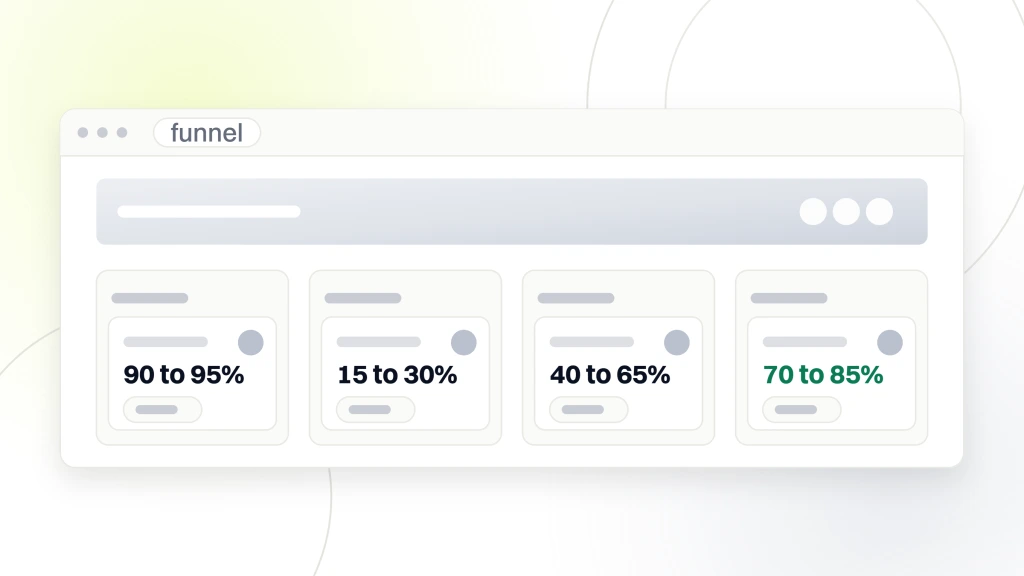
Every step in the funnel drops some percent of visitors. Ad click to landing page load hits 90 to 95%. Landing page to booking form open lands at 15 to 30%. Form open to submit runs 40 to 65%. Submit to confirmed appointment sits at 70 to 85%. Multiply the whole chain. A 3% end-to-end conversion rate on a paid click is normal for a broken funnel. A 10 to 15% rate is normal for a clean one. That gap is the whole opportunity every practice should chase before touching ad copy.
Pick the paid channels that hold aesthetics volume
Four channels do most of the paid work in aesthetics. Google Ads for high-intent local search. Meta for retargeting warm audiences that touched the site. Local SEO for the map pack and city-level content. Email and SMS for owned audiences. Miss one and cost per lead climbs, and owned revenue slides. Cover all four and cost per booked treatment settles into a predictable band inside 60 to 90 days.
The budget split we run for a $12,000 monthly spend looks like $4,800 Google Ads, $2,400 Meta, $1,800 SEO retainer, $1,200 email and SMS platform plus content, $900 photography and video, and $900 reserve for micro-influencer buys. That mix books 55 to 120 treatments per month on average across our aesthetics accounts. Solo injectors starting at $3,600 total scale the same ratios down and add sweat equity on organic content plus referral outreach.
| Monthly budget | Google Ads | Meta | SEO | Email + content |
|---|---|---|---|---|
| $3,600 solo | $1,800 | $400 | $800 | $600 |
| $6,000 small | $2,600 | $900 | $1,200 | $1,300 |
| $12,000 established | $4,800 | $2,400 | $1,800 | $3,000 |
| $24,000 chain | $9,600 | $4,800 | $3,600 | $6,000 |
Google Ads role and typical costs
Google Ads catches the patient who is already searching. “Botox near me,” “dermal filler in Denver,” “laser hair removal specials.” Those queries convert on a clean landing page at 8 to 15%. Cost per booked treatment settles into a $28 to $65 band inside 60 days on the accounts we run through our Med spa PPC engagement. Skip Google Ads and you cede that traffic to the corporate chain running a $12,000 monthly campaign inside your service area.
Meta for retargeting only
Meta belongs in the mix for retargeting form drop-offs and warm audiences that visited the site. A patient who visited your Botox page but didn’t book gets served a before-after carousel plus a $99 consult offer inside 7 days. Retargeted conversion rate lands at 4 to 9% on that warm audience. Cold prospecting on Meta struggles for aesthetics since interest targeting is too broad. Cap Meta at 20% of paid spend and point it almost entirely at warm audiences that already touched the site.
Callout. Cap Meta at 20% of paid spend and point every dollar at warm site visitors. Cold aesthetics prospecting on Meta burns budget fast.
Design the offer with ideas that protect margin
Offer design is where most aesthetics campaigns either book treatments or torch margin. A discount offer that costs the practice $150 in gross margin and books a $700 treatment is a win. A discount offer that costs $400 in margin and books a $500 first visit is a loss the second the patient never rebooks. The rule of thumb is simple. Cap any first-visit discount at 20 to 25% of gross margin on the treatment being offered. Above that, you’re paying to acquire someone who will only ever buy from a coupon.
The strongest paid offers we run for aesthetics practices lead with a low-risk consult, not a discounted treatment. A $99 consult that gets credited against the first treatment converts 3 to 5 times better than a discounted first Botox appointment. The consult filters out coupon shoppers, gives the injector a chance to build a treatment plan across 6 months, and doubles the average first-year patient value from around $840 to a $1,600 to $2,100 band.
Anchor the offer to a membership
Membership plans priced at $99 to $199 per month lock in monthly recurring revenue and rebook patients on autopilot. Members get a discounted treatment credit, free skincare add-ons, and priority scheduling. Practices we run that hit 8 to 12% of active patients on a membership plan push monthly recurring revenue to 30 to 45% of total revenue inside 18 months. That base takes the panic out of a slow ad month and turns aesthetics into a predictable business.
Skip Groupon and steep discount platforms
Groupon and similar discount platforms cut 30 to 50% off the treatment price and then take 50% of what’s left. On a $500 filler treatment, the practice nets roughly $125 before product cost. The patient walks in trained to expect that price forever and rarely rebooks at full rate. Every practice we advise that killed Groupon inside their first year reinvested that same budget into paid search and referral cards, and every one of them booked more full-margin treatments 60 days later.
Build the email and SMS flows that scale bookings
Owned-audience revenue carries 25 to 40% of monthly bookings once the flows run. Six flows do most of the work. Welcome series for new subscribers. Post-consult follow-up. Post-treatment aftercare with a rebook nudge. 90-day lapsed reactivation. Membership pitch. Birthday and anniversary reward. Every one of those flows can be built in a weekend on Klaviyo, Mailchimp, or a Zenoti add-on. Practices that run all six flows push email and SMS to 25% or more of monthly revenue inside 6 months.
SMS carries the urgent nudges. Day-before appointment reminders. 90-minute post-treatment aftercare tips. Same-day cancellation waitlist offers. SMS opens land at 90%+ inside 3 minutes, so reserve it for high-value or time-sensitive messages only. Send more than 4 SMS per patient per month and unsubscribe rates spike past 8%. Follow the TCPA opt-in rules covered in the FCC guidance on the Telephone Consumer Protection Act or the fines get expensive.
Welcome series that segments buyers
The welcome series runs 4 emails over 10 days. Email 1 delivers the promised discount code or guide inside 5 minutes. Email 2 tells the practice’s founder story with a photo of the actual injector. Email 3 shows before-after imagery on the top 3 treatments. Email 4 pitches the $99 consult with a same-week booking link. Segment the list by what the subscriber clicked. Botox clickers get a Botox-first path, filler clickers get a filler path, and skincare clickers get the membership pitch first.
90-day lapsed reactivation flow
Any patient who hasn’t rebooked inside 90 days gets a 3-email reactivation flow. Email 1 is a warm check-in with no offer. Email 2 shares a new treatment or seasonal add-on. Email 3 puts a time-limited $50 credit on the calendar. That flow alone pulls 8 to 14% of lapsed patients back into a booked treatment inside 30 days. On a 2,400-patient list, that’s 190 to 335 booked treatments recovered every year from patients the practice had already written off.
Callout. A 90-day lapsed flow recovers 8 to 14% of dormant patients inside 30 days. Skip it and every ad dollar you spent to acquire them walks away for good.
Run the referral engine as med spa advertising that pays for itself
Referrals produce the cheapest booked treatments in aesthetics. Cost per booked treatment on a well-run referral program lands at $12 to $22. Compare that against $28 to $65 on Google Ads and $85 to $180 on Meta cold prospecting. Referral patients rebook at 2.3 times the rate of paid-acquired patients across the first 12 months. The engine that produces those numbers has 3 parts. A physical card handed at every checkout. A digital referral link inside every post-treatment email. A tiered reward that scales with volume.
The reward structure that works. First successful referral, $50 treatment credit for the referrer and $50 off the first visit for the friend. Third referral inside 12 months bumps to $100 credit. Fifth referral earns a free treatment worth up to $250. Cap the annual reward at $500 per patient to protect margin. Practices that run this structure book 12 to 22% of monthly treatments from referrals inside 6 months. Above 22%, the program tips into diminishing returns and rewards need to shift toward status perks like priority scheduling.
The physical card at checkout
Print a matte 3.5 x 2 inch card with a QR code that opens the referral landing page. Hand it to every patient at checkout with a single line. “If you know someone who’d love the same treatment, this saves them $50 on their first visit and gives you a $50 credit toward yours.” That one sentence, repeated at every checkout, produces 40 to 60% of the referral engine’s volume in the first 90 days.
Local SEO plan that owns the map pack in your metro
Local SEO produces 30 to 45% of monthly booked treatments once organic ranks. Three levers pull the map pack. Google Business Profile completeness. Review velocity at 4 to 8 new Google reviews per week. Weekly GBP posts with current offers and before-after imagery. Add treatment-specific service pages tuned to beauty search intent, one per treatment, each 1,400 to 2,200 words, each optimized for your city. Practices that commit to a $1,500 to $2,400 monthly SEO retainer for 12 months land in the top 3 organic results for their core service keywords in their metro.
Content topics that book treatments follow patient intent. “How much does Botox cost in Phoenix” books more consults than “Ten tips for glowing skin” since the intent is transactional. Four content buckets carry the plan. Cost and pricing pages per city per treatment. Before-after gallery pages indexed for search. Provider bios with credentials and treatment tags. Neighborhood-specific treatment guides. Our Med spa SEO services runs that editorial plan on every retainer account.
Callout. Push 4 to 8 new Google reviews per week for 6 months and the map pack ranks 60 to 80% of your target keywords. Below 40 total reviews, fix reviews before touching ads.
Google Business Profile discipline
Complete every field on Google Business Profile. Categories, hours, services, service area, attributes, photos, Q&A. Post weekly with current offers, staff spotlights, and before-after imagery. Respond to every review inside 48 hours whether it’s 5 stars or 1 star. Practices that run this discipline for 6 months land in the local 3-pack on 60 to 80% of their target keywords. See the Google Business Profile setup guide for the full field checklist.
Review velocity that shifts rankings
Ask every patient at checkout for a Google review. Hand them a card with a QR code linking to the review page. Follow up by SMS 24 hours after the visit with a shortened review link. Practices that push 4 to 8 new reviews per week climb from a 4.1 average on 40 reviews to a 4.8 average on 400 reviews inside 12 months. That review volume drives 30 to 50% of the map pack ranking movement. Skip this and rankings stall.
Case study in a corporate-chain city
Med Spa Pacific Northwest, a multi-room aesthetics practice, came to us running a template WordPress site, a single combined service page, no visible pricing anywhere on the site, and $8,400 per month in Google Ads spend booking 22 to 28 consults per month. The practice was competing against 3 corporate chains inside a 2-mile radius. The owner suspected the site was the bottleneck. She was right, and the site was one of 4 bottlenecks feeding the funnel.
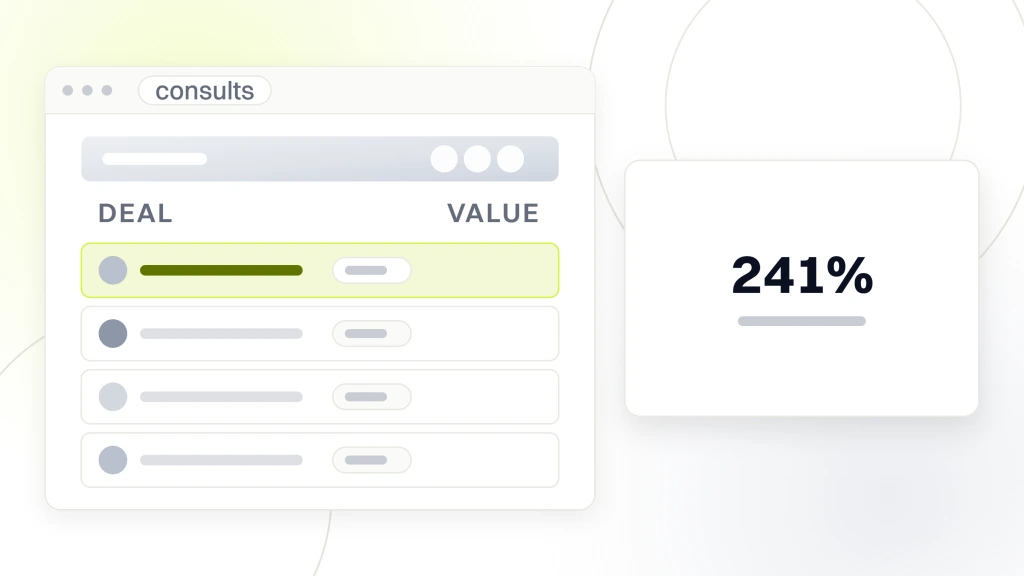
We ran a full rebuild across 4 workstreams over 90 days. Treatment-mapped service pages built individually for Botox, filler, laser hair removal, chemical peels, dermaplaning, and body contouring. A price simulator embedded on every treatment page so patients could estimate their visit inside 30 seconds. A rebuilt before-after gallery with 180 indexed pages and treatment-specific alt text. Segmented Google Ads campaigns and Meta retargeting rebuilt from scratch. Nine months later, consult requests climbed 241%, organic traffic 178%, and paid cost per lead dropped 38% on the same monthly budget. Full numbers live on the Med Spa Pacific Northwest case study.
Callout. Cap first-visit discounts at 20 to 25% of gross margin. Above that, you’re paying to acquire coupon shoppers who never rebook at full rate.
Price simulator on treatment pages
The single biggest lever in the Med Spa Pacific Northwest rebuild was the price simulator. Patients pick treatment area, provider tier, and number of sessions. The simulator shows a price range and a Book Consult button. Aesthetic pricing anxiety is the number-one reason patients bounce before booking. Answering it inside 30 seconds on the treatment page moved consult conversion rate from 2.1% to 6.4% across the 6 treatment pages. That one feature drove roughly 40% of the 241% growth in consult requests.
Segmented paid campaigns
The old paid setup ran a single Google Ads campaign with a broad ad group covering every treatment. We rebuilt it into 6 campaigns segmented by treatment, each with 3 ad groups by neighborhood, each with 3 ad variants tested weekly. Cost per lead dropped 38% inside 90 days. Meta retargeting ran alongside with a $99 consult offer for form drop-offs. That combined structure pushed booked treatments per month from 38 to 112 on the same $8,400 monthly spend.
The plan on under $5,000 monthly
Under a $5,000 monthly ceiling, lean heavier on organic and owned channels. Cap paid spend at $2,000 to $2,800 on Google Ads only. Run a $1,200 to $1,500 SEO retainer. Spend $180 on email and SMS. Push referral cards at every checkout. The rest goes to content and print. That mix trades speed for durability, and every practice we advise at this budget lands in a bigger monthly plan by month 9.
The trade-off at that budget is time. Growth takes 6 to 9 months instead of 3. That’s fine if the practice has runway. The alternative is chasing quick paid spend on Groupon or discount influencer buys that torch margin and attract one-time buyers who never return. Every practice we’ve advised at the $5,000 ceiling that stayed disciplined for 6 months landed in a $9,000 to $12,000 marketing budget by month 9. Referral and retention loops produced enough revenue to reinvest.
Track the numbers that prove the return
Every paid and organic move needs tracking to prove the return. Aesthetics practices routinely spend $6,000 to $18,000 per month with no clear picture of which channel booked which treatment. That gap turns budget decisions into guesswork. Fix it with 3 tools. Call tracking on the phone number for paid campaigns. UTM tags on every ad URL. A CRM or scheduler that logs source per patient. Together those 3 feed a monthly cost-per-booked-treatment number per channel.
Track cost per booked treatment, not cost per lead. A lead is a form fill. A booked treatment is revenue. Google Ads at $88 cost per lead that closes at 45% produces a $196 cost per booked treatment. Meta at $42 cost per lead that closes at 12% produces a $350 cost per booked treatment. Same-looking cost per lead, wildly different actual cost. Every budget move gets tested against the booked-treatment number, or you optimize for the wrong outcome. See Google’s Campaign URL Builder for consistent UTM tagging.
Call tracking basics
Call tracking uses dynamic phone numbers swapped on the site based on visitor source. A paid Google Ads visitor sees one number. Organic visitor sees a different number. Direct traffic sees the main practice number. Every call routes to your front desk, and the tracking platform logs the source in the background. Tools like CallRail and CallTrackingMetrics run $45 to $180 per month depending on call volume. That spend pays back the first month it catches a channel that was invisible in scheduler-only reporting.
Weekly numbers review
Set a weekly 30-minute meeting where the team reviews channel-level cost per booked treatment, week-over-week booking volume, and any campaigns showing runaway cost per lead. Kill campaigns that trend past a $500 cost per booked treatment cap. Scale campaigns that trend under a $150 cap. That one 30-minute weekly rhythm produces more budget discipline than any quarterly strategy meeting. Practices that skip the weekly review discover a $22,000 wasted paid quarter when they finally audit at year end.
Where to start this week
Start with 3 moves this month. Rebuild the paid landing page as a 3-field booking form with a clear price band. Turn on the 90-day lapsed reactivation email flow. Print physical referral cards and hand them at every checkout starting next Monday. Those 3 moves book measurably more treatments inside 45 days at almost any budget. Every other tactic in this guide stacks on top of those 3. Membership funnel, referral cards, and city-level SEO come next as staffing and cash flow allow.
When you’re ready to run the full plan, our Med spa marketing agency engagement covers strategy, paid channels, SEO retainer, and site rebuild in one plan. The Med spa marketing retainer starts at $1,499 per month for a lighter touch across email, SEO, and content, so you keep paid in-house. For sibling reads, see our med spa marketing ideas and med spa marketing strategies guides for the full picture across a related lens.