Med spa marketing strategies fall into two buckets. One bucket cycles through disconnected promos and hopes the schedule fills itself. The other bucket wires offers, funnels, and channels into one flow that produces predictable bookings every week. This guide walks the second version. You get the seven core med spa marketing strategies that move real treatment volume, the channel budget breakdown behind each play, the offer math that pays back, and a Manhattan aesthetics case study that ran the full stack for 12 months.
Every play in this guide came out of a live account we rebuilt or advised in the past two years, not a recycled listicle. You get the paid channel mix, the SEO plan, the referral engine, the membership funnel, the email flows, the city-level content plan, and the retention loop that keeps patients on the books for years. Read it end to end in about 12 minutes, then pick the two plays your practice can staff and push live inside 30 days. Park the rest for later quarters.
Seven core med spa marketing strategies that book patients
These seven plays sit at the core of every high-performing aesthetics practice we work with. Each one carries its own budget, staffing model, and expected payback window. Each plays a role inside the wider system. Drop one and the rest cover for a stretch but never fully close the gap. Run the full seven with real discipline for 12 months and monthly booked treatments climb 2 to 4 times over a comparable practice running scattered promos. That is the difference between a busy schedule and a predictable one.
- Paid search on Google Ads for high-intent local queries
- Retargeting on Meta for form drop-offs and warm audiences
- Local SEO for map pack rankings and city-level content
- Pre-purchase membership funnel for margin protection
- Two-sided referral card program handed at every checkout
- Segmented email and SMS flows for owned-audience revenue
- Website rebuild with treatment-mapped pages and price bands
Paid search on Google Ads
Paid search catches the patient who is already looking. Botox near me. Dermal filler in Phoenix. Laser hair removal specials. Those queries convert on a well-built landing page at 8 to 15%. Skip Google Ads and you hand that traffic to the corporate chain running a $10,000 monthly campaign inside your service area. Cost per booked treatment settles into a $28 to $65 band inside 60 days on the accounts we run through our Med spa PPC engagement, so long as the landing page is clean and the offer is tight.
Meta retargeting and social proof
Meta belongs in the mix for retargeting form drop-offs and warm audiences that respond to visual social proof. A patient who visited your Botox page but did not book gets served a before-after carousel and a $99 consult offer inside 7 days. Retargeted conversion rate lands at 4 to 9% on that warm audience. Cold prospecting on Meta struggles for aesthetics, and that is down to interest targeting being too broad. Cap Meta at roughly 20% of paid spend, and point it almost entirely at warm audiences that already touched the site.
Local SEO and map pack rankings
Local SEO produces 30 to 45% of monthly booked treatments once organic ranks. Three levers pull the map pack. Google Business Profile completeness. Review velocity at 4 to 8 new Google reviews per week. Weekly GBP posts with current offers and before-after imagery. Add treatment-specific service pages, one per treatment, each 1,400 to 2,200 words, each optimized for your city. Practices that commit to a $1,500 to $2,400 monthly SEO retainer for a year land in the top three organic results for their core service keywords in their metro.
Channel mix and budget split behind med spa marketing
Every one of the med spa marketing strategies in this guide lives inside a channel mix. The wrong mix wastes budget on channels that never had a chance to book high-margin treatments. The right mix stacks Google Ads for high-intent local searches, Meta for retargeting, organic SEO for map pack rankings, and email plus SMS for owned-audience nurture. Miss one channel and paid cost per lead climbs, and owned revenue slides. Cover all four and cost per booked treatment settles into a predictable band inside 60 to 90 days on the same med spa marketing strategies.
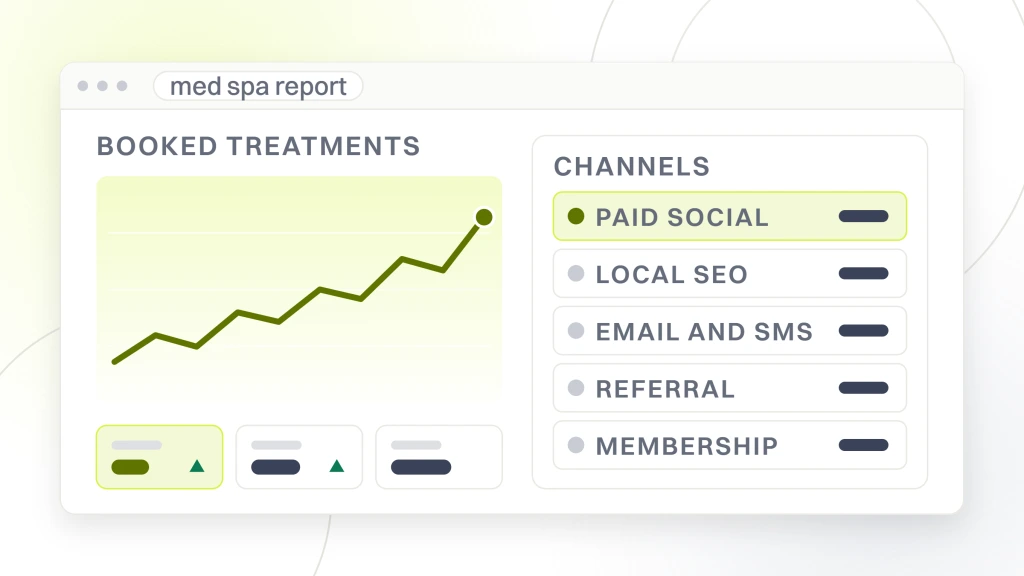
The budget split we run for a $12,000 monthly med spa marketing spend looks like $4,800 Google Ads, $2,400 Meta, $1,800 SEO retainer, $1,200 email and SMS platform plus content, $900 photography and video, and $900 reserve for micro-influencer buys. That mix produces 55 to 120 booked treatments per month on average across our aesthetics accounts. Chains with heavier ad budgets scale the same ratios up. Solo injectors starting at $3,600 total scale the same ratios down and add sweat equity on organic content and referral outreach.
| Monthly budget | Google Ads | Meta | SEO | Email + content |
|---|---|---|---|---|
| $3,600 solo injector | $1,800 | $400 | $800 | $600 |
| $6,000 small practice | $2,600 | $900 | $1,200 | $1,300 |
| $12,000 established med spa | $4,800 | $2,400 | $1,800 | $3,000 |
| $24,000 multi-location | $9,600 | $4,800 | $3,600 | $6,000 |
Solo injector at $3,600
Solo injectors and brand-new med spas run a $3,600 monthly floor. Half goes to Google Ads on a controlled cap. The rest goes to SEO retainer at $800, email and content at $600, and Meta at $400 for retargeting only. Growth takes six to nine months instead of three. That is fine if the practice has runway. The alternative is chasing quick paid spend on Groupon or discount influencer buys that torch margin and pull in one-time patients who never come back. Discipline pays back inside a full year.
Multi-location at $24,000
Multi-location med spas scale the same ratios and layer per-location SEO on top. Each location gets a dedicated Google Business Profile, a dedicated review pipeline, and location-specific landing pages. Paid campaigns segment by location plus treatment. Chains that keep the ratios and add location-level discipline see cost per booked treatment stay flat as they scale from three to eight locations. Chains that abandon the mix and push everything through a single national campaign see cost per booked treatment climb 40 to 90% as targeting gets muddy.
Membership funnels as your highest-return play
The single highest-return of every med spa marketing strategies stack is a pre-purchase membership funnel. Patients pay $99 to $189 per month for 12 months and get a monthly credit toward any service plus a member discount on add-ons. You book the recurring revenue up front. Patients use the credit whether they need a facial or a Botox touch-up. Practices that push memberships properly move 25 to 45% of new consult patients into paid membership on the first visit. Recurring revenue stabilizes and cost per booked treatment drops by more than half.
Membership design matters more than membership price. Include a monthly credit that rolls forward for 90 days. Include a 10 to 15% member discount on all treatments. Include an annual gift such as a free skincare consult or a birthday facial. Charge the same amount every month regardless of usage. That structure produces a 3 to 6% monthly churn ceiling inside a 12-month commitment window. Practices that skip the monthly credit and just offer a discount see churn climb past 12% as patients stop feeling the value.
Membership math
A $149 monthly membership across 200 active members produces $29,800 in monthly recurring revenue. Cost of goods on the monthly credit runs about 32% of the credit value. Gross margin on membership revenue lands at roughly $20,000 per month at that scale. That number carries the practice through slow weeks, funds marketing continuity, and lets the owner sleep during a down month. Membership is the cash-flow backbone every serious med spa needs.
First-visit conversion push
Membership sign-ups happen at first visit or almost never. Train the front desk to present membership at every checkout on a first visit. Include a one-page printed handout with member benefits, monthly cost, and cancellation terms. Offer a first-month waiver when the patient signs before leaving. Practices that push membership at first checkout hit a 25 to 45% conversion rate on the offer. Practices that wait and follow up by email see 3 to 8% conversion, and that is down to the moment of maximum interest already passing.
Referral engine that turns every checkout into two patients
Referrals produce 18 to 25% of monthly booked treatments once the engine runs for four months. The mechanics are simple. Physical referral cards handed at every checkout. Two-sided reward with $50 off the friend’s first treatment plus $50 credit for the referring patient. Digital referral codes still work but produce 3 to 5 times fewer bookings than physical cards, and that is down to a card living in a wallet and getting handed off in person. Referral is the lowest-cost channel in aesthetics once the loop runs.
Print 2,000 referral cards at $180 total on a professional card stock. Hand them at every checkout with a scripted line from the front desk. Track redemptions in your scheduler with a referral source field. Report referral bookings monthly. Practices that run this discipline for six months see referral bookings climb from 5 to 8% of monthly volume to 18 to 25%. That volume comes at a cost per booked treatment of $8 to $18, which is the lowest per-channel cost in the mix.
The checkout script that works
Front desk hands the card at checkout and says one sentence. “Here’s a $50 card for a friend, and you get $50 credit when they book their first treatment.” That is the entire script. No pitch. No overselling. Patients who love the practice already want to refer. The card gives them a physical object to hand over. Practices that overtrain the script into a paragraph pitch see redemption rates drop, and that is down to patients feeling sold to.
Redemption tracking and reporting
Every card has a unique code. Front desk enters the code at booking. Scheduler logs the source. Monthly report shows referral bookings by month, referral bookings per referring patient, and average patient value on referred bookings. Practices that skip this tracking never know whether the program works and quietly abandon it after quarter two. Practices that report referral numbers to the team every month keep the front desk motivated to hand out cards at every checkout.
SEO and content strategy that ranks in your metro
SEO takes 90 to 180 days to move rankings, so most owners underinvest and competitors underrun it too. Practices that commit to a $1,500 to $2,400 monthly SEO retainer for 12 months land in the top three organic results for their core service keywords in their metro. Organic bookings climb to 30 to 45% of monthly volume. Once organic is producing, paid cost per lead drops, and that is down to Google Ads no longer carrying the whole load. That compounding return is what makes SEO the highest-payback long-term option among med spa marketing strategies in the mix.
Content topics that book treatments follow patient intent, not blog trends. “How much does Botox cost in Denver” books more consults than “Ten tips for glowing skin”, and that is down to transactional intent. Four content buckets carry the plan. Cost and pricing pages per city per treatment. Before-after gallery pages indexed for search. Provider bios with credentials and treatment tags. Neighborhood-specific treatment guides. That editorial focus drives our Med spa SEO services engagement across every account.
City-level treatment pages
Every treatment gets a dedicated page per city or neighborhood the practice serves. “Botox in Denver” gets its own page. “Botox in Highlands Ranch” gets its own page. Each page runs 1,400 to 2,200 words with local landmarks, provider bios, pricing bands, and treatment-specific FAQ schema. Ten treatment pages across five neighborhoods lands 50 unique pages that each rank for their local query. That volume of city-specific content is what beats corporate chains that push everything through a single national services page.
Before-after gallery indexed for search
Before-after galleries are the single most-visited page on almost every med spa site we audit. Yet most galleries live behind a lightbox script that Google cannot index, so the SEO value is zero. Rebuild the gallery as static pages with descriptive alt text, one image per URL, and treatment-specific captions. Practices that do this see organic traffic to the gallery climb 5 to 12 times inside 90 days, and consult requests attributed to gallery pages climb along with it.
Email and SMS flows for owned-audience revenue
Email and SMS produce the highest return on any owned channel in aesthetics. A well-segmented list of 2,400 patients produces $18,000 to $42,000 per month in booked treatments from a $180 email platform bill plus one hour of staff copywriting per week. That math works in almost no other channel. Practices that see nothing from email typically run single-list broadcasts to every subscriber with the same offer. That approach burns list health inside three months and produces almost no measurable revenue.
Segmented flows we set up on every med spa marketing plan cover six triggers. New consult inquiry drip. First-treatment welcome. Post-visit rebook nudge. Ninety-day lapsed reactivation. Membership renewal reminder. Birthday offer with $50 credit. Every flow runs on autopilot after setup. Every flow gets a copy refresh every 90 days. That maintenance runs about four hours per month per account and produces most of the email-driven revenue every month.
- New consult inquiry drip: 3-email sequence over 7 days
- First-treatment welcome: 2-email sequence with rebook nudge at day 30
- Post-visit rebook nudge: single SMS at day 90 for Botox and filler
- Ninety-day lapsed reactivation: 4-email sequence over 14 days
- Membership renewal reminder: 30-day pre-renewal email plus 7-day SMS
- Birthday offer: single email with $50 credit good for 30 days
Reactivation flow for 90-day lapsed patients
The 90-day lapsed reactivation flow produces the highest revenue of any owned email sequence. Trigger fires 91 days after last visit. Four-email sequence over 14 days. First email is a soft check-in with no offer. Second is a $50 credit on any treatment. Third is a limited-time membership entry offer. Fourth is a last-call reminder with a booking calendar link. Practices we run this on reactivate 15 to 28% of the audience inside 30 days, worth $600 to $1,900 per reactivated patient over the next six months.
SMS compliance and cadence
SMS covers appointment reminders 24 hours out, rebook nudges 30 days after a treatment that wears off in three to four months, and last-minute openings when a same-day cancellation frees a chair. Open rates hover at 92 to 98% inside three minutes. Rebook take-up on Botox and filler reminders lands at 22 to 35%, filling calendar slots that would otherwise stay open. Compliance rule is opt-in on every form and a clear STOP option in every message. See the FTC guidance on the Telephone Consumer Protection Act for full compliance rules.
Manhattan case study on the full stack in action
Beauté Aesthetics New York, a Manhattan luxury aesthetics clinic serving men and women, came to us with a poorly managed SEO footprint. Important keywords were missing. Landing pages lacked structure. Metadata was incorrect. The clinic wanted to position itself as the premier destination for medical-grade treatments in New York, but the site was blocking the goal. The owner suspected user experience was the bottleneck. She was right, and the paid channels, SEO, and analytics all needed a rebuild too.
We ran a full rebuild across four workstreams over 12 months. A gender-neutral luxury redesign that felt inclusive without losing premium feel. Treatment-specific landing pages targeted to high-priority services. Schema markup for stronger search indexing. Analytics tracking to refine the funnel every month. Twelve months later, leads climbed 166%, new users climbed 88%, and website conversion rate climbed 27% on the same monthly budget. Those numbers came from the same seven-play stack this guide covers.
Treatment-specific landing pages
The biggest lever in the Beauté rebuild was scrapping the single combined service page and building a dedicated landing page per treatment. Each new page carried a hero image, provider bio, price band, treatment-specific FAQ schema, and a three-field booking form. Aesthetic pricing anxiety is the number-one reason patients bounce before booking. Answering it on the treatment page moved consult conversion rate from a low baseline to a 27% overall gain across the site inside 12 months.
Schema markup and SEO landing pages
The old SEO setup ran a thin site with missing metadata. We rebuilt title tags, meta descriptions, header structure, and LocalBusiness schema across every treatment page. Behavior tracking through GA4 fed weekly optimization on the treatment pages that already ranked. That combined structure pushed leads up 166% and new users up 88% inside 12 months at the same spend. The clinic went from invisible to a premier Manhattan aesthetics destination in one year of disciplined work.
Low-cost plays for practices under $5,000 monthly
Not every practice runs a $12,000 monthly marketing budget. Solo injectors, brand-new med spas, and providers rebuilding after a slow year need med spa marketing strategies that produce under a $5,000 monthly ceiling. Those low-budget med spa marketing strategies lean on organic search, email, and referral cards more than paid. The plays that work at that budget lean heavier on organic and owned channels. Paid spend gets capped at $2,000 to $2,800 on Google Ads only. SEO retainer at $1,200 to $1,500. Email and SMS platform at $180. The rest goes to content, referral incentives, and print marketing.
The trade-off at that budget is time. Growth takes six to nine months instead of three. That is fine if the practice has runway. The alternative is chasing quick paid spend on Groupon or discount influencer buys that torch margin and pull in one-time buyers who never return. Every practice we have advised at the $5,000 ceiling that stayed disciplined for six months landed in a $9,000 to $12,000 marketing budget by month nine, and that is down to referral and retention loops producing enough revenue to reinvest.
Organic-heavy channel mix
Under a $5,000 ceiling, organic search plus email plus referral produce 55 to 70% of monthly booked treatments. Google Ads produces the balance at a controlled cap. Meta gets removed from the mix, and that is down to retargeting volume being too low to justify the platform overhead. Weekly Instagram posts still run for social proof, but not as a paid channel. This mix takes longer to ramp and produces a lower cost per booked treatment inside 12 months, and that is down to owned-audience compounding doing most of the work.
Local micro-influencer partnerships
Local micro-influencers with 5,000 to 25,000 followers in your metro book treatments better than macro-influencers with 500,000. The local overlap between their audience and your service area is 20 to 45% versus 1 to 3% for a national account. Fees run $150 to $400 per post plus a comped treatment. Two to three partnerships per quarter produce 6 to 15 booked consults each on average. That math works for practices at any budget and produces better results than the $8,000 celebrity booking most practices reach for.
The website that carries every play in this guide
Every play in this guide lives or dies on the website. A brilliant campaign pushed to a broken page still books nothing. The site has to load under two seconds on a phone, show pricing bands in the first screen, present real before-after work, and let a patient book a consult in under 30 seconds through a three-field form. Practices that skip the rebuild and layer paid on top of a shaky foundation waste 40 to 65% of ad budget. Fix the site first, then scale paid.
The rebuild we deliver on our Med spa web design engagement covers the seven patterns that book treatments. Sticky header with click-to-call and Book Consult. Above-the-fold trust bar with review count and patient count. Insurance-optional payment plan callout. Six treatment tiles with one benefit line each. Live scheduler embedded on the primary landing page. Real practice photography, no stock models. Below-the-fold review carousel with real names, dates, and treatment tags. Every one of those seven patterns matters.
Mobile-first site design
Seventy to 80% of aesthetic traffic lands on a phone. Desktop is the secondary view. Mobile-first design puts the primary Book Consult button in the sticky footer at thumb reach, keeps forms at three fields, and compresses hero imagery to under 60 KB WebP. Practices that treat desktop as primary and mobile as an afterthought lose 45 to 65% of their mobile traffic to bounce inside 8 seconds. See Google’s Core Web Vitals reference for the ranking thresholds a mobile-first build hits.
Copy that answers pricing anxiety
The single most-important sentence on any treatment page is the price band. “Botox in Denver starts at $12 per unit with most consult treatments falling between $180 and $340.” That sentence removes the primary bounce trigger. Sites that hide pricing bleed 40 to 60% of qualified visitors who assume the practice is out of budget. Sites that publish clear price bands convert 2 to 3 times higher on the same traffic, and that is down to the visitor self-qualifying before they book.
Tracking and attribution that survives real audits
Every play in this guide needs tracking to prove the return. Aesthetic practices routinely spend $6,000 to $18,000 per month on marketing with no clear picture of which channel booked which treatment. That gap turns budget decisions into guesswork. Fix it with three tools. Call tracking on the phone number for paid campaigns. UTM tags on every ad URL. A CRM or scheduler that logs source per patient. Together those three feed a monthly cost-per-booked-treatment number per channel.
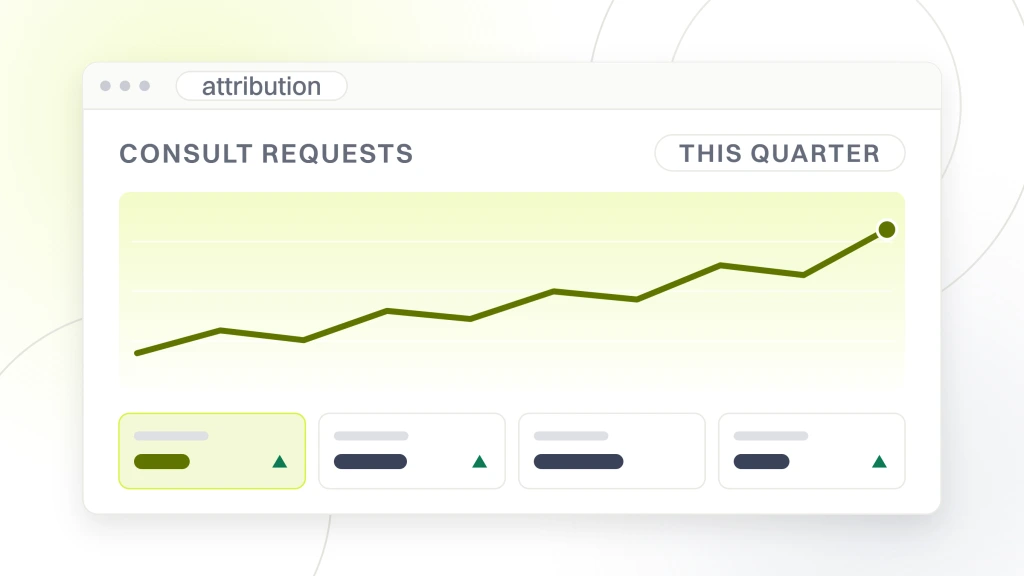
The number you optimize against is not cost per lead. It is cost per booked treatment. A lead is a form fill. A booked treatment is revenue. Google Ads at $88 cost per lead that closes at 45% produces a $196 cost per booked treatment. Meta at $42 cost per lead that closes at 12% produces a $350 cost per booked treatment. Same-looking cost per lead, wildly different actual cost. Every play in this guide gets tested against the booked-treatment number, not the lead number, or you optimize for the wrong outcome.
Call tracking basics
Call tracking uses dynamic phone numbers swapped on the site based on visitor source. A paid Google Ads visitor sees one number. Organic visitor sees a different number. Direct traffic sees the main practice number. Every call routes to your front desk, and the tracking platform logs the source. Tools like CallRail and CallTrackingMetrics run $45 to $180 per month depending on call volume. That spend pays back the first month it catches a channel that was invisible in scheduler-only reporting.
UTM tagging discipline
Every ad URL, email link, and social bio link gets UTM tags. Source, medium, campaign, content. Without UTMs, Google Analytics attributes half your paid traffic to “direct” and you cannot tell which campaign booked which patient. Standardize the tagging in a shared spreadsheet so every team member follows the same convention. Google’s Campaign URL Builder is the fastest way to get consistent tags across a team.
How to market a med spa without wasting spend
The short answer on how to market a med spa is to pick two channels, run them with discipline for 90 days, and measure booked treatments per channel every week. Most owners fail here, and that is down to scattering budget across six channels without stacking enough spend on any one to see it work. Two channels done well beat six channels done half. Google Ads plus a segmented email flow is the highest-return starter pair for practices with an existing patient list of 800 or more.
Once the starter pair produces steady bookings, layer in local SEO, referral cards, and a membership funnel in that order. Each new play adds owned-audience compounding on top of paid, and paid cost per lead drops as organic and referral start absorbing volume. That sequencing is the difference between a med spa marketing plan that works in month three and one that still gets rebuilt every quarter. Discipline on the sequence beats brilliance on a single channel every time.
Where to start on your own med spa marketing plan this month
Start with two plays this month. Rebuild the paid landing page as a three-field booking form with a clear price band. Turn on the 90-day lapsed reactivation email flow. Those two moves produce measurable movement in booked treatments inside 45 days at almost any budget. Every other play in this guide stacks on top of those two. Membership funnel, referral cards, and city-level SEO come next as staffing and cash flow allow. That is a med spa marketing plan you can actually staff and run.
When you’re ready to run the full plan, our Med spa marketing agency engagement covers strategy, paid channels, SEO retainer, and site rebuild inside one plan. The Med spa marketing retainer starts at $1,499 per month for practices that want a lighter touch across email, SEO, and content plus running paid in-house. For sibling reads on tactics and city-level angles, see our med spa marketing ideas and our optometrist website design breakdown for the same seven-pattern rebuild logic in a related vertical.