
Content marketing for chiropractors earns its keep the day a midnight search becomes a booked exam. Not the day it fills a keyword report. Not the day it clears a 1,500-word target. This is the working motion we run at independent practices booking 30 to 90 patients a month. Real topics, real formats, real cadence. The patterns that quietly burn $500 a month on posts nobody reads, and the tight set of formats that compound into new patients over 24 months.
By the end you’ll have a topic list, a publishing cadence, a working format mix, and a clear picture of the ROI curve month by month. Content marketing for chiropractors is a slow, high-return channel. Google Ads books this week. Content books month twelve. Practices that walk away at month four hand every ranking to whoever stays. The plan below is built to survive the quiet months without wasting spend, and it’s the same one we ran with Pain Cure Clinic on the way to 205% more patient appointments in 12 months.
The two-post monthly cadence for chiropractic content marketing
Two blog posts a month is the practical cadence for chiropractic content marketing. Enough volume to earn topical authority. Light enough that the writer keeps their standards intact. Twenty-four posts a year plus four to six condition pages give the site the coverage it needs to compete on chiropractic long-tail queries inside 12 to 18 months.
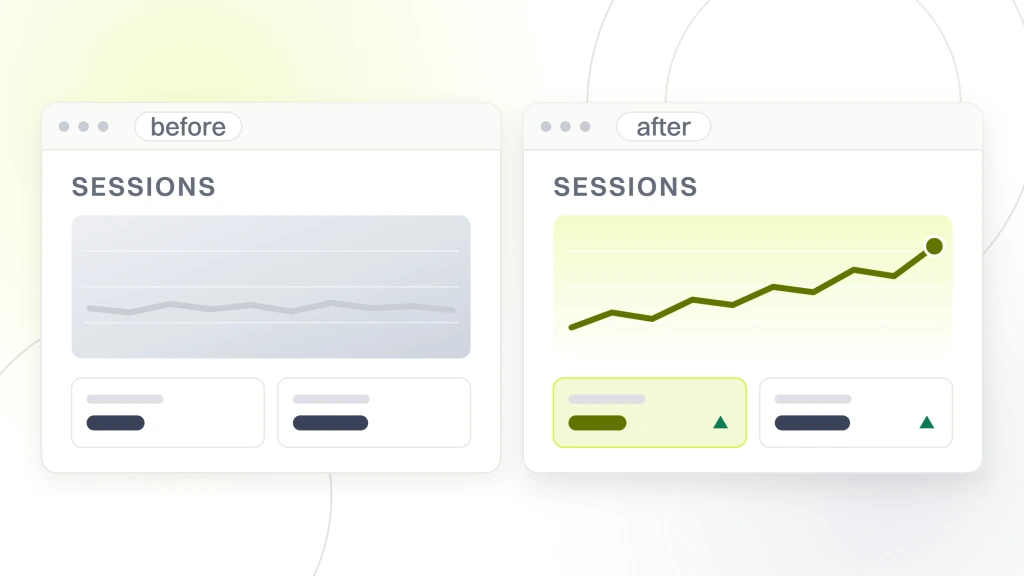
Weekly sounds ambitious and prints worse results. Practices that push weekly usually burn the writer out by month four and publish thin posts that never rank. Quarterly sounds sustainable and never earns the topical density Google needs to rank the site. Two a month is the middle that holds.
The editorial calendar that works
Plan the year in quarters. Q1 covers back pain topics tied to the New Year wellness push. Q2 covers sports injury and youth pre-season screening topics. Q3 covers auto injury topics tied to summer driving and back-to-school posture. Q4 covers stress, tension headaches, and winter weather aches. Tie each blog post to a season, an ad campaign, and a Google Business Profile post series so all channels cover the same topic at the same time.
A chiropractor in Highland Park who lines up a March sciatica blog with a March Google Ads campaign and a March GBP post series triples the return on each asset. The article ranks. The ad drives paid traffic to the same page. The GBP post surfaces in the map pack for the same query. Three surfaces, one topic, one week of writing.
Who writes the content in a chiropractic practice
Doctors who write well and have four hours a week produce the best content. The voice is authentic. The medical accuracy is guaranteed. Doctors who can’t write or lack the time should hire a health-specialized writer at $200 to $500 per post. Avoid general-purpose freelancers at $50 per post. The output is usually AI-generated fluff Google can spot and patients ignore. Quality writer, quality content, quality ranking.
Short video content that supports the written library
Short vertical video is the format that reaches patients on Instagram Reels, TikTok, and YouTube Shorts in 2026. Any chiropractic content plan that skips video walks past half of social discovery. The kit is a phone and 30 minutes a week. The output is 100+ clips over 12 months, each one resurfacing in algorithms for a year at a time. Video marketing for chiropractors is the assist that keeps the written library visible between search cycles.
The video format. Doctor on camera, 30 to 45 seconds, hook in the first two seconds, one demonstration or one drawing, one line at the end that says “Book a consult if this sounds like you.” Recycle the same clip across Reels, TikTok, and YouTube Shorts. Read our Video marketing strategy for chiropractors for the weekly production plan.
Video topics that book patients
“Three stretches for sciatica pain.” “Why your neck hurts after working from home all week.” “What to do in the first 24 hours after a car accident.” “How to sleep if your back is killing you.” These topics earn saves. Saved videos get resurfaced in algorithms and reach ten times more people than videos with only likes. Same topics as the written blog posts. Different format. Same job.
Why quality beats frequency in short video
Two well-crafted videos a week beat seven rushed videos a week. The algorithm rewards watch time and shares, not upload count. A video with 40,000 views does more for the practice than fourteen videos with 3,000 views each. Skip the daily posting pressure. Aim for two videos a week that a real person would watch and share. That’s the whole strategy.
Chiropractic email newsletter content that retains active patients
The monthly chiropractic email newsletter is the retention leg of content marketing for chiropractors. Practices that skip it quietly lose 15 to 25% of active patients a year to plain attention drift. Practices that send one crafted newsletter a month keep those patients on plan and pick up occasional reactivations from patients who lapsed by accident.
The format is two links, one paragraph each. Link one goes to the most recent blog post. Link two goes to a booking page or a specific offer. The paragraph explains why each link matters. Plain text from the doctor by name. No stock photography. No decorative banners. No branded email templates that scream “marketing.” Read our Email marketing for chiropractors for the full monthly newsletter template.
Newsletter open rate benchmarks for chiropractic
Independent chiropractic practices see 40 to 55% open rates on monthly newsletters when the sender is the doctor by name and the subject line refers to a specific topic. Generic branded newsletters average 18 to 25% open rates. The gap is worth 15 to 30 booked exams a year through the newsletter alone. Use the doctor’s name in the sender field. Keep it there.
What not to put in the newsletter
Skip the “employee of the month” section. Skip the office birthday announcements. Skip the industry news. Skip anything that reads like a company memo. The newsletter is the doctor talking to the patient about their care. Not the practice talking to the patient about the practice. That distinction changes open rates by 20 to 40%.
Local content for chiropractor Google Business Profile posts
Local content is the layer that moves Google Business Profile ranking. Weekly GBP posts, neighborhood-level location pages, and locally anchored blog posts all tell Google the practice is a real business rooted in a specific place, not a national chain running the same template in every zip code. Local content for chiropractors is the fastest lever on the map pack.
The weekly GBP workflow. One photo of the practice, doctor, or office. One post explaining a condition with a booking link. One review reply on every review inside 48 hours. That’s the whole weekly workflow. Practices that run this for 12 weeks consistently see 40 to 90% more map pack impressions and 15 to 30% more booked exams from local search.
Neighborhood location pages that rank
One page per neighborhood the practice draws patients from. Highland Park, Bronxville, Yonkers Heights. Each page carries the neighborhood name in the H1, three references to local landmarks, a paragraph on driving directions, and the same condition promise as the main site. These pages rank for “chiropractor Highland Park” queries that the main site never touches. Add one page per quarter until every drawn-from neighborhood has coverage.
Why local content outranks national chains
Chain practices produce generic templated content. Independent local practices can write content anchored in specific neighborhoods, specific landmarks, and specific local seasons. “Back pain after the Highland Park summer 5K” is a query no chain can write for authentically. The neighborhood specificity is a moat that lasts.
Content mistakes to avoid in year one
A handful of content patterns quietly burn months of writer time and print zero booked exams. The list below is the failure pattern we see repeat across dozens of independent practice audits. Skip these to save the year of chiropractic content marketing that would otherwise walk in a straight line to zero.
Publishing AI-generated content without editorial review. Writing about industry news instead of patient questions. Publishing weekly and burning out the writer by month four. Using stock photos of models pretending to be patients. Overwriting the doctor’s real voice with agency SEO copy. Skipping Google Business Profile posts. Skipping the monthly newsletter. Skipping video with the excuse of “we’re not a video practice.” Every one of these mistakes costs measurable booked exams over 12 months.
The AI content trap
ChatGPT, Claude, and Gemini all produce plausible chiropractic content in 30 seconds. Google can spot AI-generated content patterns and demotes it in search. Practices that publish raw AI output see no ranking movement for months. AI works as a research and outline tool. AI does not work as a finished writer for content that has to rank. Use AI to speed the draft. Never publish the raw draft.
The voice mistake that kills reader trust
Content written in a generic corporate voice reads as untrustworthy to a patient looking for medical guidance. Content written in the doctor’s real voice, with specific references to actual patient scenarios, reads as trustworthy. The best-performing blog post at any independent chiropractic practice is written by the doctor, not by an agency copywriter or an intern. Voice matters more than format in medical content.
Condition pages and chiropractic blog content that convert
Condition pages carry the intake. Chiropractic blog content carries the topical authority. Both surfaces need to exist for the plan to compound. A blog post ranks for the research query. A condition page ranks for the ready-to-book query. Practices that run only blog posts collect readers. Practices that run only condition pages have no long-tail coverage. Both together book patients.
The condition page format. 900 to 1,400 words. Three photos of the doctor or office. One booking form above the fold. Symptoms, causes, treatment plan, what a first visit looks like, insurance and pricing, one patient story with permission. That page structure books 3 to 8 exams a month at steady state inside six months for a condition the practice already treats well.
The conditions worth a dedicated page
Sciatica, disc herniation, auto accident recovery, sports injury rehab, prenatal chiropractic, pediatric chiropractic, tension headaches, and workplace neck pain. Eight pages cover 80% of what independent practices actually treat. Build them in order of the practice’s real intake mix, not in order of national search volume. The condition that walks in the door twice a week is worth a page. The one that walks in twice a year is not.
Tracking content marketing performance for chiropractic
Chiropractic content marketing is a slow-return channel, which makes measurement non-negotiable. Without a tracking plan, practices quit at month four before the curve turns. With one, practices know which posts are producing patients and which need a refresh or a rewrite before quarter’s end.

Three metrics matter. Organic search traffic per post per month. Bookings sourced from content pages (tracked via EMR source field or GA4 conversion event). Blog post ranking positions for target queries. Read our marketing tracking maintenance for chiropractors for the technical setup that catches all three.
The quarterly content review meeting
Every three months, pull the last quarter’s posts. Rank them by organic traffic. Rank them by booked exams sourced. Update the top two posts with fresh data. Update the bottom two posts with a new angle. Kill posts that produced zero of either metric after six months. This 90-minute quarterly meeting is what separates content marketing that compounds from content marketing that piles up.
The content refresh workflow that ranks old posts
Posts published 12 to 24 months ago often need a refresh to hold rank against newer competition. The refresh. Update stats to the current year, add one new section covering a query the original missed, refresh internal links, replace outdated advice, republish with a new date. Refreshes typically produce 40 to 80% traffic bumps in 30 to 60 days at a fraction of the cost of writing new posts.
How Redefine Web runs content marketing for chiropractors
Redefine Web runs the whole chiropractic content stack as a monthly retainer covering topic research, writing, editing, publishing, and quarterly review. Practices come to us with a mix of existing posts and gaps. We audit the library, build the topic map, run the monthly cadence, and report on booked exams sourced from content every quarter.
We opened the case work with Pain Cure Clinic on this exact content foundation. Education-driven SEO content, condition pages, an educational hub with articles and infographics and videos and FAQs, targeted PPC and Facebook ads reinforcing the content, and segmented email automation. Twelve months later the practice had 205% more new patient appointments (averaging 122 monthly vs 40 previously), 289% more organic traffic, and reviews up 162% to a 4.9-star Google average. Content marketing was the compounding channel that carried the second half of the growth curve.
A typical content engagement
Two-hour audit of the current site content. Written topic map for the next 12 months. First two blog posts published inside week three. Video shoots scheduled monthly. Monthly newsletter live inside week four. Quarterly review meetings starting month four. Retainer starts at $1,499 per month for the base package and scales with post count and video production volume. Read our Content marketing strategy for chiropractors for the full 12-month roadmap.
Which content move to start with this week
Publish one condition page for the top presenting complaint at the practice. Not a blog post. A condition page. 900 to 1,400 words. Doctor’s voice. Three photos. One booking form above the fold. That one page produces 3 to 8 booked exams a month at steady state inside six months. Book a strategy call through the chiropractor marketing services page when the practice is ready to run the full content stack with agency support.