
Med spa PPC tips get traded like recipes at aesthetics conferences. Most fall apart the first time a solo injector runs a $3,200 monthly Google Ads budget against a dermatology group spending $28,000. The gap isn’t the budget. The gap is which ten patterns get pulled out of the toolbox in the first 60 days. Get the stack right and a practice running $2,400 to $4,800 monthly books 40 to 80 new treatment consults at a paid cost per lead between $38 and $92.
This guide walks the ten med spa PPC tips our paid team applies on growing aesthetics practices through 2026. Match type discipline. Radius rules. Treatment-specific landing pages. Meta creative rotation. Bid strategy pivots at day 14 and day 30. Retargeting sequences tied to real consult stages. Plus the tracking layer that answers the only question that matters at month-end, which is booked treatments per dollar spent across the paid stack. Bring the last 90 days of Ads Manager data and a spreadsheet of consult-to-treatment conversion by service before rewriting a single line of the current account setup.
One landing page per treatment beats a menu every time
The first of the med spa PPC tips that moves cost per consult the fastest is one page per treatment. A single generic services page bleeds 35 to 60% of the paid traffic that lands on it. A visitor searched for Botox pricing and got dropped onto a home page listing 18 services with one generic Book Consult button. Google Ads Quality Score reads the mismatch between the search query and the landing page, ad rank drops two to four positions, and cost per click climbs 22 to 48% within the first two weeks of the campaign.
The working pattern is one landing page per revenue-driving treatment (Botox, dermal filler, laser hair removal, microneedling, IPL, coolsculpting, hydrafacial). Each page opens with the treatment name in the H1, a specific benefit sentence, one hero image that shows the treatment being administered, three trust signals (injector credentials, patient count, before-and-after slider), a price transparency block covering the range not the exact number, and a booking widget or phone number above the fold. The med spa ppc management page covers the full landing page pattern our team applies on paid rebuilds.
Med Spa · Pacific Northwest, the Seattle injector-led practice we worked with, grew consult requests 3.4 times after replacing a single generic services page with 11 treatment-specific landing pages. Paid cost per lead dropped 38% inside 9 months on the same monthly budget, and treatment-page click-through jumped from 2.1% to 5.8% as Quality Score climbed on every service keyword group. Organic traffic climbed 178% on top of the paid win, because the same treatment pages ranked for the same head terms once indexed. The pattern transfers across markets when the practice commits the time to write one page per service rather than defaulting to a single catchall URL.
Match type discipline decides where the budget goes
Google Ads has spent four years pushing broad match as the default, and every experienced med spa paid manager has watched a broad-match campaign burn 30% of a monthly budget on searches for veterinary Botox, forehead lines cost in Ohio when the practice is in Nashville, and how to inject Botox at home. Broad match isn’t evil. It’s the wrong tool for a med spa running under $8,000 monthly ad spend against a specific service list and a specific geographic radius. The right approach mixes phrase, exact, and one hard-capped broad discovery ad group.
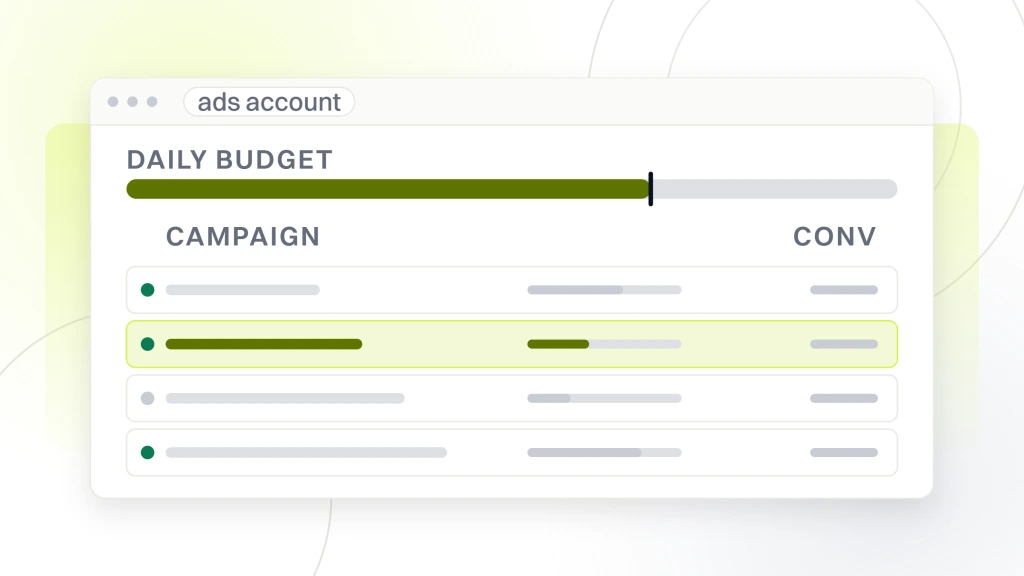
Working med spa PPC tips on match type run this pattern. Phrase match on the top 20 revenue treatment queries (Botox near me, laser hair removal cost, filler pricing Nashville). Exact match on the top 5 branded and semi-branded queries (Nashville Botox, Belle Meade filler, franchise-brand med spa). Broad match reserved for one dedicated campaign labeled Broad Discovery with a hard cap of 15% of monthly spend, aggressive negative keyword feeds pulled from the search-terms report weekly, and a manual bid ceiling 40% below the account average. See Google’s own guide on keyword match types for the auction mechanics behind why the three-tier mix outperforms broad-only.
Negative keyword lists carry as much weight as the positive match strategy. Every med spa PPC account needs three tiers of negatives loaded before day one. Career negatives (jobs, salary, training, courses, DIY, at home, cheap). Competitor negatives at the brand level if the practice isn’t running competitor conquesting. Geographic negatives for every state and metro outside the service radius. A tight negative list saves 12 to 22% of monthly spend inside the first 30 days, mostly on broad-match discovery traffic that would have converted at zero.
Three-zone location radius med spa PPC tips stop wasted paid spend
Location targeting defaults burn budget faster than any single lever inside med spa PPC tips for a growing account. Google’s default 25-mile radius around the practice address includes zip codes with zero conversion history, pulls in commuter traffic that never books, and hides the real profitable radius under a mound of low-intent clicks. The three-zone pattern fixes this. Core zone (0 to 8 miles) gets a positive bid modifier of +20 to +35%. Working zone (8 to 22 miles) runs at baseline bids with tight negative geographic keywords. Discovery zone (22 to 40 miles) runs at a bid modifier of -30 to -50% and gets pruned every 30 days based on conversion data.
Set the radius rings inside Google Ads location targeting with the target-only-people-in-this-location setting, never the default target-people-in-or-interested-in setting. The interest-based default pulls searches from users physically outside the ring who once searched for a Nashville hotel, and cost per consult jumps 35 to 60% on that traffic alone. Meta location targeting works the same way. Set the People Living In This Location option, not the default Recently In or Traveling To option, and layer a 15-mile radius zoom on the top-performing zip cluster inside the working zone after 45 days of data collection.
Zip-code-level bid modifiers open the last mile of paid efficiency. After 60 days of conversion data, pull the search-terms and geographic performance reports, rank every zip inside the working zone by cost per consult, and set +15 to +40% bid modifiers on the top-decile zips plus -20 to -60% on the bottom quartile. This one adjustment cuts blended cost per consult 18 to 34% on accounts that had been running flat-radius bids since launch. New patients still come from every zip in the ring, but the ad dollars go where the conversion math already works.
Med spa PPC tips on bid strategy pivots at day 14 and day 30
The most under-taught of the med spa PPC tips is that every med spa PPC campaign launches on Manual CPC for the first 14 days. Smart bidding needs 30 to 50 conversions inside a 30-day window before the algorithm calibrates, and a new account has zero conversion history for Google’s model to learn from. Running Maximize Conversions on day one produces cost per click ceilings that swing 3 to 5x the sensible bid because Google is guessing. Manual CPC for the first two weeks caps that swing and gives the account a clean conversion baseline the smart bidding model can inherit.
Day 14 pivots the account to Maximize Clicks with a target CPC ceiling, once the top three ad groups have logged 8 to 12 conversions each. This intermediate strategy hands click volume optimization to Google while the account operator still owns the per-click ceiling. Day 30 pivots to Maximize Conversions if the account has crossed 30 total conversions in the trailing 30 days, or to Target CPA if the practice has a hard cost-per-consult ceiling (typical target is $65 to $95 for injectables, $85 to $140 for laser and coolsculpting). Day 60 pivots to Target ROAS if consult-to-treatment conversion data is loaded into Google Ads via offline conversion imports.
Never let Google auto-apply the Recommendations tab bid strategy changes. The auto-apply feature switches a working Manual CPC campaign to Maximize Conversions the moment 30 conversions land, ignoring whether those conversions are real consult bookings or spam form fills. Manual pivots on the three-day cadence above outperform the auto-apply switch by 15 to 30% on blended cost per treatment across every med spa PPC account we’ve audited since Google turned auto-apply on by default in early 2024.
Meta creative rules power the paid-social side of the plan
Meta creative sits inside the med spa PPC tips stack, and it breaks two rules that work on every other vertical. Rule one, Meta’s algorithm reads the first 1.5 seconds of a video for facial detection and disqualifies the ad from broad reach if the frame shows a needle, a syringe barrel, or a fresh injection puncture. Rule two, before-and-after photos in a single-frame carousel get flagged as personal health claims 40 to 60% of the time and enter Meta’s manual review queue, which delays campaign start 24 to 72 hours per creative. The workaround is split-screen framing at 60/40 with the after image on the left, a black gradient overlay on the seam, and a text lockup covering the treatment name only, never a percentage change or a duration promise.
Creative rotation matters more than creative brilliance on the Meta side. Refresh 4 to 6 creative variants every 14 days at the ad-set level. Wait longer and CPMs climb 20 to 60% as the audience fatigues on the same three hooks. The winning creative pattern on 2026 med spa Meta accounts runs a 15-second injector-narrated explainer, a 30-second patient testimonial with the practice interior visible in the background, and a 10-second before-and-after reveal with the split-screen framing above. Every creative gets a URL parameter for post-click attribution inside GA4, so the paid dashboard tags which creative drove which booked consult, not just which one drove the click.
The Meta Ads Manager creative guidelines spell out the current policy on medical and cosmetic imagery, and it changes twice a year. A working med spa paid manager reads the policy update within 72 hours of every quarterly Meta release, adjusts the creative library within a week, and never runs a creative flagged in the last two policy cycles without an appeal filed and approved.
Med spa PPC tips ranked by impact across the ten patterns
Not every med spa PPC tip moves the same needle. The table below ranks the ten patterns by the typical cost-per-consult delta they produce inside the first 60 days on a $3,200 to $4,800 monthly Google Ads budget. Time-to-see-effect and account-operator hours per week are averaged across 40+ med spa paid audits our team has run since 2023. Use the ranking to sequence the rollout when only one or two patterns can be tackled per two-week sprint.
| Pattern | Cost-per-consult delta | Time-to-effect | Weekly hours |
|---|---|---|---|
| One landing page per treatment | -35 to -48% | 14 to 21 days | 3 to 5 |
| Match type + negatives discipline | -22 to -38% | 7 to 14 days | 1 to 2 |
| Three-zone location radius | -18 to -34% | 21 to 30 days | 1 to 2 |
| Bid strategy pivots (day 14 / 30) | -15 to -30% | 30 to 45 days | 0.5 to 1 |
| Meta creative rotation | -20 to -35% CPM | 14 to 28 days | 4 to 6 |
| Retargeting by consult stage | -12 to -26% | 21 to 30 days | 1 to 2 |
| Call tracking + qualification | -10 to -22% | 7 to 14 days | 0.5 to 1 |
| Ad extensions (all types) | -8 to -18% | 7 to 14 days | 1 |
| Weekly search-terms review | -12 to -20% | Ongoing | 1 to 1.5 |
| Booked-treatment attribution | Reveals real ROI | 45 to 60 days | 2 to 3 |
Med spa PPC tips for retargeting sequences by consult stage
Standard retargeting inside med spa PPC tips drops a pixel on every page view and serves the same offer to every visitor for 30 days. This is the wrong pattern for aesthetics because the funnel has three distinct consult stages, and each one wants a different message. Stage one is treatment-curious, stage two is price-comparing, stage three is booking-hesitant. A single retargeting audience blends all three, so the price-comparer sees an educational reel while the booking-hesitant visitor sees an intro-to-Botox 101 explainer. Both segments underperform.
Build three retargeting audiences at the pixel level. Audience A: viewed a treatment landing page but didn’t scroll past 50% (treatment-curious, 14-day window). Audience B: scrolled past the price transparency block or opened the pricing FAQ (price-comparing, 21-day window). Audience C: started a booking form or clicked the phone number but didn’t submit (booking-hesitant, 7-day window). Each audience gets a different creative. Audience A gets educational and social proof. Audience B gets bundled pricing plus new-patient credit. Audience C gets a hard offer (this-week booking window, single-provider urgency, or first-treatment credit toward second visit).
Frequency caps hold at 3 impressions per audience per week for stages A and B, and 5 per week for stage C. Above those caps, brand-safety and creative-fatigue penalties kick in on Meta and cost per booked consult climbs 25 to 45%. The three-audience retargeting stack typically drops blended paid cost per booked consult 12 to 26% inside 30 days on accounts that had been running a single flat retargeting audience.
Med spa PPC tips on call tracking that make or break the stack
Call tracking is the single most under-implemented tool in med spa PPC. The average practice reports paid Google Ads conversions from form fills alone and completely ignores the 40 to 65% of paid consult requests that come in as phone calls. The bid algorithm then optimizes toward form-fill campaigns, starves the call-driving campaigns of budget, and blended cost per real booked consult climbs 22 to 40% over 90 days. The fix is dynamic number insertion (DNI) with a 60-second qualification threshold on call conversion counting.
Use CallRail, WhatConverts, or an equivalent DNI tool to swap the phone number on paid landing pages based on the traffic source. Fire a call conversion into Google Ads only when the call duration exceeds 60 seconds, which filters out wrong-number calls, hang-ups, and vendor solicitations. Google’s call tracking documentation covers the setup for offline conversion imports, and a working paid manager wires call conversions into the same conversion action bucket as form fills so the bid algorithm can optimize toward the combined signal.
Every call gets a manual dispositioning tag within 24 hours (booked, no-show risk, wrong number, existing patient, competitor). The dispositioning feeds a weekly report that answers the question, of the 47 paid consult requests last week, how many became held appointments and how many became paid treatments. Without this feedback loop the paid manager is bidding blind on top-of-funnel volume metrics, and the practice owner ends the quarter wondering why lead counts are up while treatment revenue is flat.
Ad extensions inside med spa PPC tips carry more weight than most paid teams admit
Ad extensions belong on every med spa PPC tips checklist because Google Ads assets (formerly extensions) increase click-through rate 12 to 28% on med spa search campaigns when all six relevant asset types run at the campaign level. Sitelink assets get four (Book a Consult, Treatment Menu, Before-and-After Gallery, New Patient Offers). Callout assets get eight (Board-Certified Injectors, Same-Day Appointments, 0% Financing Available, Free Consultation, 500+ 5-Star Reviews, In-House Anesthesia, Package Pricing, Patient Portal). Structured snippet assets carry the Services header with the full treatment list. Call assets run on mobile with the DNI-swapped tracking number. Location assets pull from the Google Business Profile. Price assets run on the top three treatments with price ranges, not exact numbers.
The assets get refreshed every 90 days. Google’s asset-performance report inside Ads flags weak sitelinks and callouts after 200 to 400 impressions each. Rotate weak assets out on a monthly cadence and the campaign click-through stays high over the trailing 6 months. Skip the refresh and click-through decays 15 to 25% over the same window as the asset library goes stale in the auction.
Image assets in Performance Max and Search campaigns need patient-friendly aesthetic imagery, never stock injection photos, never overly clinical shots. The winning image pattern on 2026 med spa accounts is a warm-toned interior shot of the practice, a smiling patient at a consult desk, and a soft-focus product-line shot of the injectable bottles or laser device. Three images at 1200×1200, 1200×628, and 600×600 covers the placement grid Google needs to serve across the network.
Weekly search-terms review protects the account from slow drift
Every med spa PPC account drifts, so med spa PPC tips on weekly search-terms review outperform every other maintenance habit. Google’s algorithm expands broad-match reach quietly week over week, competitor bidding shifts change auction dynamics, and new negative keyword patterns emerge inside the search-terms report every seven days. Skip the weekly search-terms review and drift compounds. Cost per click climbs 8 to 15% per month on unattended accounts, and cost per consult follows within 60 days.
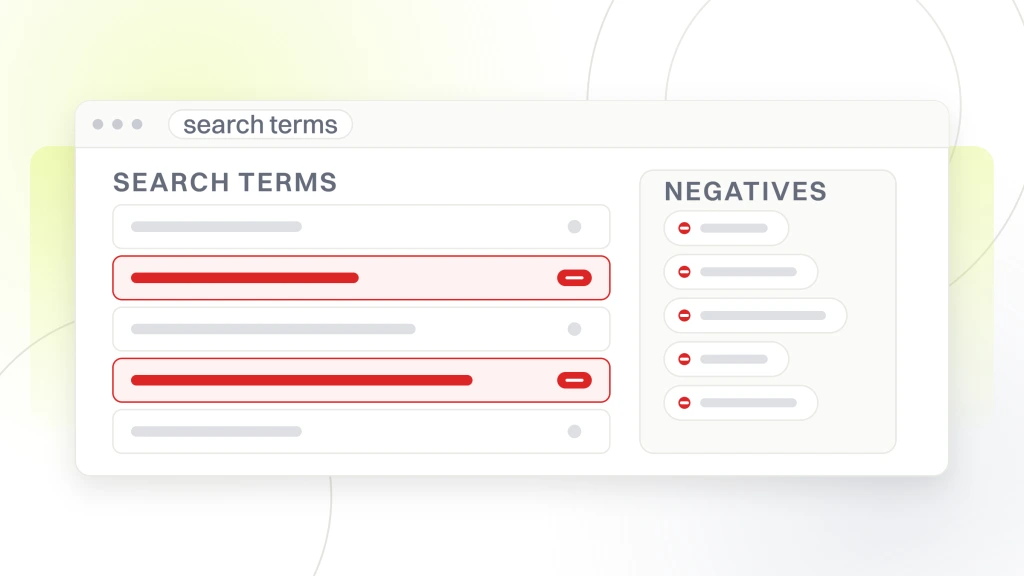
The weekly review is a one-hour block. Pull the last 7 days of search-terms data across every campaign. Rank by cost descending. Flag every search term above $25 spent that produced zero conversions. Add those terms to the account-level negative keyword list. Flag every search term below $15 spent that converted at above the account-average cost per consult. Add those terms as exact-match keywords in a dedicated High Converters ad group with a bid 20 to 30% above the account average. Repeat every Monday morning without exception.
The compounding effect over 90 days is a 20 to 35% blended cost-per-click drop across the account, no bid strategy change required. Beauté Aesthetics New York, a luxury aesthetics practice we worked with, cut cost per booked consult 27% inside a single quarter through weekly search-terms review paired with the three-zone radius pattern. Lead volume climbed 166% over the following year as organic and paid compounded on the same treatment-page architecture. The point is that consistency beats cleverness on paid account maintenance.
Med spa PPC tips on tracking booked treatments, not just consult forms
The last of the ten med spa PPC tips is attribution honesty. Form-fill counting is table stakes. Booked-treatment attribution is what separates a $60 paid cost per consult report from the real number, which is paid cost per treatment revenue. The gap matters because 40 to 55% of consults become held appointments, and 55 to 75% of held appointments become paid treatments. Miss the multiplication step and the reported ROI overstates paid performance by 2 to 3.5x.
The core of the med spa PPC tips on attribution is to wire offline conversion imports from the practice management system (Aesthetic Record, Nextech, Zenoti, Boulevard) into Google Ads and Meta Ads Manager. The upload cadence is weekly, the conversion action bucket is Booked Treatment with a value equal to average treatment revenue for that service category, and the attribution window is 90 days on Google and 28 days on Meta. Smart bidding then optimizes toward booked treatment value rather than form-fill volume, and blended cost per treatment drops 15 to 30% over the first 60 days of the new bid signal.
Booked-treatment attribution also exposes the treatment mix problem. Half the med spas we audit discover their Botox campaigns are profitable at $65 per consult while their coolsculpting campaigns are unprofitable at $140 per consult. Without booked-treatment data both campaigns look similar in Google Ads because form-fill counts are close. With the data loaded the paid manager can reallocate budget by treatment margin, kill the unprofitable service campaigns, and grow blended treatment-revenue ROAS 40 to 90% inside a single quarter.
Weekly checklist to apply these med spa PPC tips this week
Ten patterns is a lot to sequence. The next-90-day rollout looks like this. Week 1, audit the current landing page situation and commit to building three treatment-specific pages on the top revenue services. Week 2, rebuild match types across the top 20 keywords and load the three-tier negative keyword list. Week 3, set up the three-zone radius pattern with the location-in-this-location setting on Google plus the People-Living-Here setting on Meta. Week 4, install call tracking with 60-second qualification and wire calls into the conversion action bucket alongside form fills.
Week 5 to 6, rebuild the retargeting audiences by consult stage. Week 7, load the six ad extension types and refresh Meta creative to the split-screen framing pattern. Week 8, pivot bid strategy to Maximize Conversions or Target CPA based on trailing 30-day conversion count. Week 9 to 12, The core of the med spa PPC tips on attribution is to wire offline conversion imports from the practice management system and start weekly search-terms review on Monday morning as a permanent recurring block.
The full rollout takes 60 to 90 days of focused paid-manager time. A solo practice owner running paid alongside clinical work will realistically get through it in 5 to 6 months. Either timeline outperforms leaving the account on default settings. If the practice cannot spare the operator hours, our med spa PPC management team runs the full ten-pattern rollout on retainer, priced at $999, $1,499, $2,499, or from $4,500 per month depending on account complexity and treatment mix. Ad spend is billed separately at the practice’s chosen budget.
Where med spa PPC tips fit the full aesthetics marketing plan
Med spa PPC tips are one lane in the wider aesthetics growth plan. The full stack includes local SEO on Google Business Profile, treatment-specific organic content that ranks on the same treatment pages the paid ads point to, a review acquisition program hitting 4.6+ average and 40+ reviews per practice location, and an email nurture stream for the 35 to 50% of consult requests that don’t book on the first pass. Run paid in isolation and the account plateaus at 60 to 90% of its ceiling because organic is not compounding underneath the paid landing pages.
Our full med spa marketing agency service pairs paid with SEO plus review acquisition plus email nurture on a single retainer, and the med spa SEO service plus the med spa web design service layer the organic and technical foundations underneath the paid rollout above. The blended stack cuts blended cost per booked treatment 30 to 55% inside 6 months compared to running paid as a standalone lane. The math is simple, patients research on organic, book on paid, and re-book on email, so all three lanes need to be present for the account economics to work.
Med spa PPC tips work best when the practice starts with the audit before the rebuild. Pull the last 90 days of Google Ads and Meta Ads Manager data. Rank the current campaigns by cost per booked consult if the data exists, or by cost per form fill if it does not. Pick the two patterns above with the largest cost-per-consult delta the account can realistically absorb inside a two-week sprint. Book the sprint on the calendar, block the review meeting for day 21, and start. The med spa PPC tips in this guide compound only when the rollout is sequenced and the results reviewed on a fixed cadence.