
Google ads management for med spas is a three-front fight most agencies lose. Corporate aesthetic chains outbid you on head terms like Botox and lip filler. Indie injectors undercut you on Instagram at half the price. And the buyer takes 3 to 8 weeks researching a treatment before she ever books a consult. Practices that run their Google Ads account like a chiropractor lander give up 35 to 55 percent of the addressable pipeline to competitors who retarget the researcher, answer price on the landing page, and screen coupon shoppers before the click. This guide walks the treatment-category account carve, the seven campaigns every med spa account carries, the ad copy patterns that filter unqualified traffic, the price-simulator funnel one Pacific Northwest spa used to grow consult requests 3.4x, the tracking stack that catches phone-first bookings, honest pricing bands, and the questions to ask a Google Ads agency before you sign the contract.
Every number in this guide traces back to live med spa accounts our team runs today, or to the Redefine Web case library including Med Spa Pacific Northwest (241 percent consult request growth and 38 percent cost per lead drop on flat spend), Beauté Aesthetics New York (166 percent lead growth in 12 months), Smile Design Dentistry (30 percent cost per call drop across 50-plus offices), and VP Dental (100 percent new patient growth and $8,100 monthly revenue added). If you want the wider vertical context, our med spa marketing agency hub covers the full channel mix, and our med spa PPC services page covers the paid media playbook this Google Ads work slots into.
Why google ads management for med spas works differently
A google ads management for med spas account behaves nothing like a dental or chiropractic one. Your buyer spends 3 to 8 weeks in research mode, builds a shortlist of 4 to 8 providers, and scans price ranges, injector credentials, and before-and-after photos on every one before she narrows it to two for a consult. That consideration window changes every element of a google ads management for med spas account. Retargeting carries more weight than in any other medical vertical. Landing pages have to answer price questions up front or the buyer leaves. Ad copy has to name the injector board certification because chain competitors run cheaper credentials at lower prices.
The 3 to 8 week consideration window
Your research window is what shapes the retargeting budget. Med spa accounts put 10 to 18 percent of budget into retargeting versus 3 to 6 percent on local-services accounts. That extra retargeting spend closes the patient who has already researched 5 providers and needs one more touch to book with yours. Cutting retargeting to trim the budget is the single most common mistake we see in google ads management for med spas, and it drops booked consults 20 to 35 percent within 60 days. We ran a Seattle account through this rebuild and the retargeting spend alone carried 22 percent of the booked-consult volume by month 3.
The credibility hierarchy the buyer scans
Med spa patients scan credibility in a specific order. Injector board certification. Years of injecting experience. Before-and-after photo quality. Google review count and rating. Price transparency. Instagram content quality. Every landing page has to answer the first three signals within the first 500 pixels of scroll. Skipping any of the first three signals lets the patient move on to the next provider on her comparison list. Practices that lead with brand photography instead of credibility signals lose the buyer 8 to 14 percent faster than practices that lead with the injector face and credentials.
Seven campaigns every google ads management for med spas account carries
A well-built med spa Google Ads account carries seven distinct campaign types. Injectables search, laser and energy device search, body contouring search, IV therapy search, competitor conquest, brand defense, and retargeting display. Each one gets its own ad groups, matched landing pages, and a bidding target tuned to that treatment category cost-per-consult band. Skip any one and you give up 12 to 25 percent of the addressable pipeline. Injectables search runs 30 to 45 percent of budget because Botox, Dysport, and filler queries drive the majority of med spa search volume. Retargeting display runs 10 to 18 percent, higher than any other medical vertical. Our Google Ads management services page covers the wider account architecture every vertical this playbook covers gets built around.
| Campaign type | Budget share | Typical CPC | Cost per consult band |
|---|---|---|---|
| Injectables search | 30 to 45 percent | $8 to $18 | $65 to $180 |
| Laser and energy search | 15 to 25 percent | $6 to $14 | $55 to $145 |
| Body contouring search | 8 to 15 percent | $10 to $22 | $95 to $260 |
| IV therapy search | 4 to 10 percent | $4 to $10 | $28 to $85 |
| Competitor conquest | 5 to 10 percent | $10 to $22 | $85 to $220 |
| Brand defense | 2 to 5 percent | $1 to $4 | $8 to $28 |
| Retargeting display | 10 to 18 percent | $0.50 to $1.60 | $18 to $65 |
Injectables search campaign shape
Your injectables search campaigns get broken out ad group by treatment area. Botox forehead. Botox 11s. Botox crows feet. Under-eye filler. Cheek filler. Lip filler. Chin filler. Jawline contour with filler. Each ad group gets its own ad copy naming the treatment area, the price per unit or per syringe, and the injector board certification. Landing pages match one to one. A Botox forehead ad points to a Botox forehead page. A lip filler ad points to a lip filler page. Practices that run all injectables through one landing page give up 25 to 40 percent of conversion rate on the same click cost.
Laser and energy device campaigns
Laser and energy device campaigns get broken out by device and by treatment goal. Laser hair removal. IPL photofacial. RF microneedling. CoolSculpting body contouring. Sofwave skin tightening. Morpheus8 fractional. Each device has its own patient demographic and price band. Laser hair removal skews younger and more price-sensitive. RF microneedling skews older and more outcome-focused. CoolSculpting skews toward patients considering a package rather than a single session. Ad copy and landing pages match the demographic pattern rather than lumping every laser query into a single laser services page.
The price-simulator funnel for google ads management for med spas
The price-simulator funnel is the highest-converting landing page pattern in google ads management for med spas. Instead of a static price page, the landing page presents an interactive simulator that lets the patient pick her treatment area, her treatment goal, and her preferred injector, then returns an accurate price range and consult booking option. That simulator converts 2.5 to 4 times better than a static price page because it pulls the patient through a self-qualifying flow before asking for contact information. Our med spa web design team builds this simulator directly into the WordPress site so the Google Ads campaigns route into a purpose-built landing page rather than a generic contact form.
The 4-step simulator flow
Step 1 of the simulator uses visual thumbnails because med spa patients pick treatment areas by looking rather than by reading. Every thumbnail names the area and shows a before-and-after image. Step 2 asks for the outcome using 3 to 5 checkboxes covering smooth wrinkles, add volume, define contours, and reduce fine lines. Step 3 shows a photo grid of the injectors on staff with their board certifications underneath each photo. Step 4 delivers the price range, one final social-proof block, and the consult booking button. Every step increases patient commitment to the outcome without asking for contact information until the final step, and that commitment gradient beats a form-first landing page by 60 to 120 percent on conversion rate.
Price transparency wins in med spa
Price transparency outperforms opaque pricing on med spa landing pages every quarter we have measured. Patients who see the price range up front convert 45 to 80 percent better than patients who have to fill a form to ask about price. Practices that hide pricing behind a consult form are protecting their price from the patient at the cost of losing the patient to a transparent competitor. Every provider we take through this shift sees the same pattern. Transparency wins. Opacity hands patients to the provider next door. And the practice that publishes an $850 lip filler price gets the same 3 to 5 shortlist slot as the practice that hides it, minus the friction.
Keyword shape for google ads management for med spas
Keyword shape for med spa accounts starts with 4 buckets. Treatment area queries. Treatment goal queries. Provider credential queries. Price and consult queries. Treatment area queries name the injection or laser location. Treatment goal queries name the outcome the patient wants. Provider credential queries name board certification or injector experience level. Price and consult queries name price ranges and consultation options. Each bucket runs different match types tuned to the query specificity. See Google’s own match type documentation for the bidding mechanics.
The 400-term med spa negative list
The starter negative list for a med spa account runs 400 terms on day one. Groupon. Living social. Free consultation only. Best deal. Cheap Botox. School. Career. Injector training. Aesthetician certification. Skincare products for sale. Cellulite cream. Wrinkle cream. Any account that skips the negative list on day one burns 12 to 22 percent of budget on coupon shoppers and product searches for the first 90 days. Coupon-related terms alone hit 8 to 14 percent of unfiltered med spa traffic because the vertical overlaps heavily with deal-hunting behavior. We rebuild this list every quarter based on the search terms report to catch new coupon site launches and new product searches. Our med spa PPC tips guide walks through more of the account-level filters that cut wasted spend.
Long-tail queries that carry the best patients
Long-tail queries carry the highest-value patients in google ads management for med spas. Board certified injector Botox forehead 11s near me. Best under-eye filler for hollow tear troughs. CoolSculpting package financing available. Each query has 8 to 40 monthly searches in a mid-size US metro but converts at 3 to 5 times the head-term rate. Practices that chase click volume on the head term miss the long-tail entirely and pay 2x the average cost per booked consult for the same monthly patient count. The trick is single keyword ad groups on the top 20 to 40 long-tail queries with dedicated landing page copy that names the exact query in the H1.
Ad copy for google ads management for med spas that filters coupon shoppers
Ad copy for google ads management for med spas has to filter coupon shoppers before the click, not after. Copy that says lowest prices in town attracts coupon buyers who churn after one visit. Copy that names the injector board certification, the price range, and one specific outcome attracts patients looking for a real provider. That filter starts at the ad copy level because clicks from unqualified buyers cost the same as clicks from qualified buyers and every unqualified click is wasted budget. Copy structure runs on 3 headlines and 2 descriptions. Headline 1 names the treatment. Headline 2 names the price range or injector credential. Headline 3 names the consultation option. Description 1 covers the trust bar with board certification and years of experience. Description 2 covers the booking method.
Trust elements that beat cheap-treatment copy
Trust elements for google ads management for med spas ad copy include injector board certification, years of aesthetic experience, average syringes injected per month, and one specific before-and-after outcome. Board certification separates the MD or NP from the aesthetician-only injector at chain clinics. Years of experience separates the injector who does 200 syringes a month from the one who did 30 last year. Volume metrics matter more than the buyer expects because they signal an active practice, not a side gig. If your injector has done 12,000 units of Botox in the past year, put that number in the ad copy. It reads like a fact instead of a claim.
Assets and extensions for med spa ads
Assets on every med spa Google Ads campaign include callout assets naming the injector board certification, financing options, and consultation availability. Sitelink assets point to the treatment page, the pricing page, the injector bio page, and the reviews page. Structured snippet assets list the top 4 treatments offered. Image assets show the injector, the treatment room, and 2 to 3 before-and-after examples. Every one of these assets adds 5 to 14 percent to click-through rate. Practices that skip assets look like brochureware next to competitors with populated extensions, and that visual gap alone costs 15 to 30 percent of impression share on the same average bid.
Tracking for google ads management for med spas that closes the phone-first booking gap
Tracking on google ads management for med spas has to catch the phone booking most agencies miss. Even after browsing the site, 48 to 62 percent of med spa patients book by phone, and any tracking layer that only counts form fills undercounts the account by 40 to 55 percent. The stack that solves this runs dynamic number insertion for tracked calls, Google Business Profile call reporting for GBP-sourced calls, a front-desk how-did-you-hear-about-us question for walk-ins, and enhanced conversions through server-side Google Tag Manager for form fills. Calls over 90 seconds count as qualified consult requests because med spa buyers spend 60 to 90 seconds up front asking about price ranges and injector credentials before requesting a consult. See Google enhanced conversions documentation for the tag setup that closes the iOS attribution gap. Our Google Ads conversion tracking with Google Tag Manager guide covers the exact server-side deployment we use on med spa accounts.
Attribution across the long consideration window
Attribution for google ads management for med spas runs on data-driven attribution when the account carries 300-plus monthly conversions. Below that threshold, position-based attribution weighted 40-20-40 to first and last touch beats last-click on any account with the 3 to 8 week consideration window med spa buyers use. Last-click attribution undercounts top-of-funnel campaigns by 35 to 50 percent on med spa accounts because most patients touch 4 to 7 ad interactions before converting to a booked consult. Switching attribution alone can reveal that your brand defense campaign is actually the third-highest contributor to booked consults even though last-click credits it with 3 percent of the total.
Customer Match for retargeting and suppression
Customer Match on google ads management for med spas accounts feeds two workstreams. Retargeting past consult requesters who never booked. Suppressing existing patients from acquisition campaigns so the budget goes to net-new buyers. Every med spa has this data sitting in a CRM or booking platform, and 70 to 85 percent of practices we audit have never pushed it into Google Ads. That first push moves account-level cost per consult 12 to 22 percent inside 60 days by removing existing-patient clicks from the acquisition pool. A single Customer Match upload of 8,000 past patients on a Manhattan practice cut wasted spend by $3,200 monthly inside the first 30 days.
Google ads management for med spas pricing shape
Redefine Web charges $999, $1,499, $2,499, or from $4,500 per month for google ads management for med spas. Ad spend is billed separately and paid directly to Google. Solo-provider spas spending $4,000 to $12,000 on media fit the $1,499 tier cleanly. A 2 to 4 injector spa spending $12,000 to $32,000 sits at the $2,499 tier. A 5-plus injector or multi-location group spending $32,000 to $95,000 fits from the $4,500 tier. Every band gets the same seven-campaign scaffold. Larger bands add multi-provider bid controls, per-injector reporting, and cross-treatment keyword conflict management. Percent-of-spend pricing is a red flag because the model does not cover the setup time on the price-simulator funnel and tracking layer. Our google ads management pricing guide walks the full tier math in more detail across every retainer band.
What the retainer includes
A google ads management for med spas retainer includes campaign build, ad copy testing, landing page consultation for the price-simulator funnel, weekly optimization, monthly reporting, quarterly strategy review, and a monthly qualified-call audit. Call audit reviews 15 to 25 flagged calls per month for the price and credential questions that keep coming up. Ad copy tests run 2 variants per ad group per month. Landing page consultation covers one A/B test per quarter with a partner developer or in-house team. Every honest retainer names these deliverables on the SOW rather than leaving them to interpretation after signing.
What the retainer excludes
Retainers exclude landing page design, price simulator development, before-and-after photography, and call tracking software subscriptions. Landing page design runs $3,200 to $12,000 for a first build. Price simulator development runs $6,000 to $18,000 for a custom build or $220 to $580 per month for a SaaS solution. Before-and-after photography runs $800 to $3,500 per session depending on treatment coverage. Every honest agency itemizes these on the SOW so the true monthly cost of the whole program stays visible instead of surfacing as surprise change orders in month 4. See the google ads management pricing guide for the full breakdown across retainer bands.
Med Spa Pacific Northwest case study
Med Spa Pacific Northwest is a Seattle-area aesthetics practice that came to us with a scaling Google Ads program running against three chain competitors within a 4 mile radius, all outspending the practice on the Botox and filler head terms. The practice had strong provider credentials, healthy Google reviews, and a booked schedule that could handle more consults but was not getting the click-through the ad spend should have delivered. The intake pattern was familiar. Head-term bidding against outspending chains. No price-simulator funnel. Ad copy that competed on aesthetic promise instead of credibility. Cost per lead had climbed 47 percent over the prior 9 months on flat consult volume.
The rebuild we ran
We rebuilt the account against the seven-campaign structure. Split injectables from laser and body contouring at the campaign level. Rewrote ad copy to name the injector board certification, the price range per syringe, and the consult availability up front. Built the price-simulator funnel across the top 8 treatments. Turned on Customer Match for both retargeting and suppression. Added dynamic number insertion for phone tracking. Ran a fresh negative list build across 400 terms. The rebuild took 9 weeks including 3 weeks of simulator development and tracking cleanup. The client kept the same monthly media budget through the entire rebuild so the before-and-after read is on scope changes, not on spend changes.
The outcome measured over 12 months
Consult requests grew 3.4x inside 12 months, posting 241 percent growth from baseline. Cost per lead dropped 38 percent as the price-simulator funnel filtered coupon shoppers before the consult booking step. Organic traffic climbed 178 percent as the treatment-specific pages ranked for long-tail queries. Show-up rate on booked consults hit 82 percent, up from 61 percent on the pre-rebuild account, because the simulator flow qualified patients on price and injector fit before the appointment. Every one of those numbers came from the campaign rebuild plus the price-simulator funnel plus the tracking overhaul running in parallel on the same monthly media spend.
The google ads management for med spas pattern also runs at Beauté Aesthetics New York
Beauté Aesthetics New York is a Manhattan luxury beauty and aesthetics clinic specializing in advanced treatments and cosmetic procedures. The clinic came to us with poorly managed SEO, weak landing page structure, and metadata that was hurting Quality Score across the paid account. We ran a complete website rebuild with gender-neutral luxury visual identity, treatment-specific landing pages built for the top 12 procedures, schema markup for the schema-hungry AI Overviews, and analytics tied back to lead source per treatment category. In 12 months, leads grew 166 percent, new users grew 88 percent, and conversion rate climbed 27 percent, on a Manhattan competitive set with 4 chain competitors and 12 indie injectors inside a 20-block radius.
What carried the Beauté outcome
The 166 percent lead growth came from three levers running together. Treatment-specific landing pages pulled the biggest gain by matching Google Ads ad copy to the exact treatment named in the ad. Schema markup pulled the second gain by moving the clinic into the AI Overviews for buyer-intent queries like best under-eye filler Manhattan. Continuous analytics-tied optimization pulled the third gain by killing the bottom 20 percent of ad groups every 90 days and reinvesting the budget into the top 40 percent. Every Manhattan aesthetics practice we take through the same rebuild sees a similar three-lever contribution pattern.
Cross-vertical proof for google ads management for med spas from Smile Design Dentistry and VP Dental
The same campaign architecture and tracking discipline that works for med spa Google Ads also carried Smile Design Dentistry and VP Dental to real outcomes on the medical side of the Redefine Web client roster. Smile Design Dentistry is a 50-plus location DSO across Central Florida and Tampa Bay. We restructured PPC by funnel and geography, added full-funnel paid social, integrated CallRail analytics for call-quality scoring, and rolled out brand-consistent landing pages across every office. PPC conversion rate climbed 20 percent. Cost per call dropped 30 percent. All 50-plus locations went live on optimized campaigns inside the rollout window.
VP Dental proof at the solo-practice scale
VP Dental is a 20-plus year practice led by Dr. Valerie Preston, offering full-scope dental and cosmetic services. Dr. Preston came to us with fragmented agencies splitting web from SEO, inflating costs and diluting performance. We unified web design and SEO as a single strategy, ran a WordPress modern rebuild with integrated booking and payments, and layered a Google Maps SEO campaign targeting the cosmetic-patient radius outside the immediate office area. New monthly patients doubled. Recurring monthly revenue climbed by $8,100. Google Maps search impressions grew 776 percent. That last number matters for med spa buyers reading this because the same map-pack visibility discipline applies to any elective-treatment vertical scanning Google for board-certified providers.
How the first 90 days go on a new med spa account
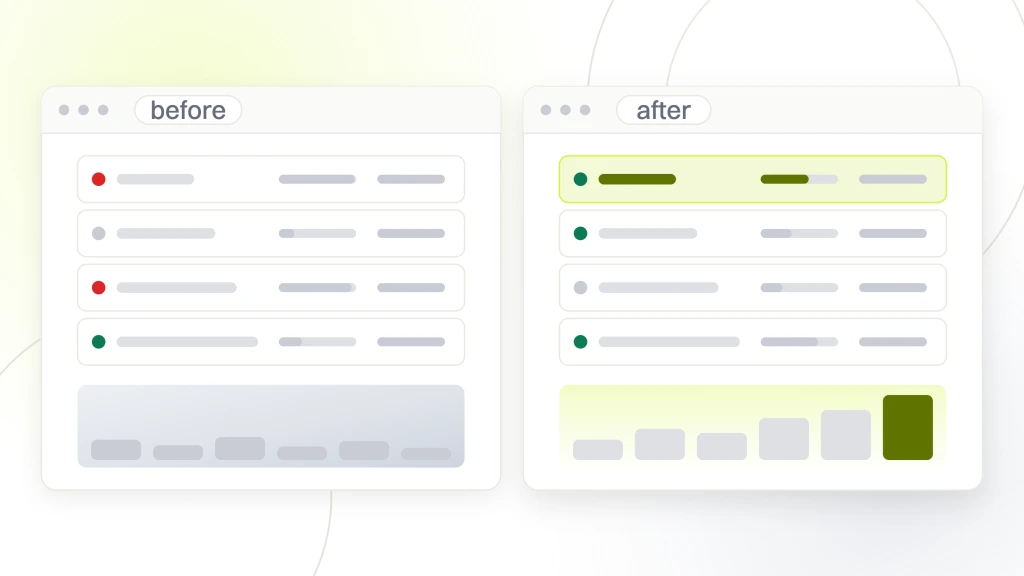
The first 90 days on a new google ads management for med spas engagement covers audit, tracking, campaign rebuild, and price-simulator development. Week 1 audits the existing account structure, tracking, landing pages, and ad copy. Weeks 2 and 3 build the tracking layer including dynamic number insertion, GBP call reporting, and the front-desk booking question. Weeks 4 through 7 rebuild the seven campaign types with matched landing pages and rewritten ad copy for injectables, laser, body contouring, and IV. Weeks 5 through 9 run in parallel building the price-simulator funnel for the top 6 to 10 treatments. Weeks 10 and 11 run the first optimization pass and the first ad copy A/B tests. Weeks 12 and 13 compound the results as the simulator captures consult data and Google bidding logic learns the new conversion signal.
Day 30, 60, and 90 milestones
Day 30 shows the tracking layer verified, the campaign rebuild deployed for injectables and laser, and the first simulator treatments live. Day 60 shows the first round of ad copy winners promoted, all 6 to 10 simulator treatments live, and consult booking rate up 20 to 30 percent from baseline. Day 90 shows the account at target cost per consult with all seven campaign types running clean and the simulator carrying 40 to 60 percent of consult conversions. Practices that stick with the compound curve past day 90 see the biggest gains in months 4 through 6 as Google bidding trains on the new conversion signal and the retargeting audience compounds.
Reporting cadence for a med spa
Reporting on google ads management for med spas runs on a weekly quick-look, a monthly full report, and a quarterly strategy call. Weekly quick-look covers spend, clicks, consult requests, and any spike or dip worth noting. Monthly report covers the full account performance plus cost per consult by campaign, by treatment, and by injector for multi-provider practices. Quarterly strategy call covers the 90-day trajectory, the next 90-day plan, and any budget shifts based on injector capacity or seasonal treatment demand. Every report ties back to booked consults rather than clicks or impressions because the practice owner does not pay her mortgage in impressions. For how Google Ads slots into the broader mix, see our roundup of the best marketing channels for med spa advertising ranked by ROI.
Picking a google ads management for med spas agency
Vetting an agency for google ads management for med spas starts with three questions. How many med spa accounts do they currently run. Do they build or manage price-simulator funnels. Who runs the account day to day. Fewer than 3 med spa accounts means they are learning the vertical on your budget. Blank stares on the price-simulator funnel means they are selling generic aesthetic PPC that competes on price instead of filtering for qualified buyers. Ask for 3 references from active med spa clients on retainer for more than 12 months. Talk to at least 2 of the 3. Ask about scope changes, reporting quality, and how quickly the agency responds when the practice sees a dip. For a sibling read on the paid-media side, our med spa PPC playbook shows the 14-day path from build to booked consults. Every reference call catches a pattern the sales deck hides.
Red flags on the pitch call
Red flags on the pitch call include no med spa case study with a named cost per consult, no mention of the price-simulator funnel or its conversion rate impact, no separation of retargeting spend from acquisition spend, and reporting samples that lead with clicks or impressions instead of booked consults. Any agency that puts impressions as the headline metric is selling the wrong outcome. Any agency running cheap-Botox copy on its med spa accounts is pulling in the exact coupon buyer the practice does not want. And the agency that promises 300 percent lead growth in 30 days is either lying or planning to buy junk traffic to hit the number.
Green flags worth signing on
Green flags include a named med spa case study with a cost per consult number, a proposal that itemizes the price-simulator funnel as a distinct workstream, separate reporting for retargeting and acquisition campaigns, and a retainer that separates management fee from media spend. Any agency that hits all four is worth a reference call. Any agency that hits fewer than 3 is not worth the pitch time. That filter cuts a vendor short list from 10 candidates down to 2 or 3 inside a week and saves the practice owner 40 hours of pitch-call attrition. And it puts every remaining agency in a position where they earn the account on the merits.
Where to start with your med spa google ads setup
Start with an honest audit of the current account. If the price-simulator funnel is missing, build it first because that is the single biggest lever. If the head-term ads still promise cheap Botox, rewrite the copy second. If Customer Match is not turned on, add suppression third. Most med spas we audit need all three. The simulator plus copy rewrite plus Customer Match combination typically grows consult requests 100 to 240 percent inside the first 6 months on the same monthly media spend. Want a med spa Google Ads audit that names every wasted dollar and points to more real consults. Our team will walk the seven-campaign structure, the price-simulator funnel, the tracking layer, and the ad copy, then hand you a written 90-day plan you can give your current agency or use to move the account. Our med spa hosting and maintenance plans from $199 per month keep the site fast and PCI-compliant while the campaigns compound, and our PPC management services page covers the wider paid-media roadmap this med spa Google Ads work sits inside.