Dental website optimization decides whether the patient who tapped your listing at 7:42 on a Tuesday morning waits 3 seconds for the page to load and books an appointment, or bounces back to search results and calls the practice down the street. Mobile drives 70 to 80% of patient traffic on dental sites, and Core Web Vitals below the green threshold cost 30 to 50% of visitors before the page even finishes loading. This guide covers the speed targets, the mobile UX patterns, and the conversion fixes that turn a slow practice site into one that books patients on the first visit.
The numbers below track what we see across active engagements at Redefine Web. A site rebuild at North County Dental Care in Vista, California, replaced a site that did not work on phones and had no HTTPS with a secure, fast, mobile-first build. Paired with the local SEO layer, it helped grow new patients from 1 to 2 per month to 12 to 16 from 2021 to 2024. Organic traffic grew 385% and marketing ROI hit 500% over the program. Real speed work moves real numbers.
Key takeaways
- Mobile drives 70 to 80% of dental site traffic and decides most bookings
- Fix LCP under 2.5s and CLS under 0.1 to protect ranking and conversion
- Six mobile UX patterns move booking rate 15 to 30% on their own
- Track booked patients, not PageSpeed scores, as the real output metric
- Budget bands run $2,500 for speed sprints to $18,000 for platform rebuilds
Fixing Largest Contentful Paint on dental sites
Largest Contentful Paint on dental practice sites almost always fails on one of 3 elements. The homepage hero image, when it loads uncompressed at 3 to 5 megabytes. A third-party chat widget script that blocks the main thread during first paint. A hero video that autoplays and pulls megabytes of data before the page settles.
The fixes run in order of impact. First, convert hero images to WebP or AVIF, targeting under 200 KB for the hero itself. Next, set fetchpriority=”high” on the hero image so the browser prioritizes it during load. Then load third-party chat widgets after the page interactive event, not on initial paint. After that, replace hero videos with a lightweight poster image plus a click-to-play button, or drop autoplay entirely. Practices running these 4 fixes see Largest Contentful Paint drop from 4 to 5 second territory into 1.5 to 2.5 second territory on a single deployment.
- Convert hero to WebP or AVIF. Cuts image size 60 to 80% versus uncompressed JPEG or PNG on the same visual quality.
- Set fetchpriority high. Tells the browser to prioritize the hero download over other assets.
- Preload the hero. Add a link rel preload in the head so the request starts during HTML parsing.
- Defer chat widgets. Load after DOMContentLoaded, not during initial paint.
- Drop autoplay video. Replace with a poster image plus click-to-play button.
The other lever that matters is the hosting layer. Shared hosting on low-tier plans caps Time to First Byte at 600 to 1,200 milliseconds, which absorbs half the Largest Contentful Paint budget before any code runs. Moving from shared hosting to managed WordPress hosting usually cuts Time to First Byte to 200 to 400 milliseconds, which frees up budget for the rest of the page. Redefine Web maintenance plans at $199, $299, and $499 per month include managed hosting at that tier for practices that want the whole stack under one roof.
Cumulative Layout Shift, the quiet conversion killer
Cumulative Layout Shift measures how much the page jumps around during load. On dental sites, the biggest CLS offenders are testimonial sliders that autoplay, images without width and height attributes, ad slots that load after paint, and web fonts that swap in mid-render. A CLS score above 0.25 means the page shifts so much that patients click the wrong button and lose trust in the site.
Pro tip. CLS above 0.25 causes patients to click the wrong button and lose trust in the site. Fixing it delivers booked-patient gains inside 4 to 8 weeks of deployment.
The fixes are structural. Every image needs width and height attributes so the browser reserves space during load. Web fonts need font-display swap plus a preload hint so the fallback font renders immediately without jumping. Testimonial sliders should render server-side or wait until user interaction before rotating. Third-party embed containers need fixed height dimensions declared in CSS. Practices running through these 4 fixes see CLS drop from 0.4 to 0.6 territory into 0.05 to 0.15 territory reliably.
- Image dimensions. Width and height attributes on every img tag, no exceptions.
- Font loading. Font-display swap plus preload for hero fonts.
- Testimonial sliders. Fixed container height and no autoplay rotation on initial load.
- Embed containers. Fixed aspect ratio via CSS, not runtime measurement.
- Announcement bars. Reserved height in CSS so late-loading content does not push down the hero.
CLS interacts with conversion rate more directly than Largest Contentful Paint does. Patients tapping a booking button that shifts under their thumb rarely go back and try again. They close the tab and call the next practice. Fixing CLS produces measurable booked-patient improvements inside 4 to 8 weeks of deployment on any dental site sitting above 0.25 at kickoff.
Mobile UX patterns that book patients on responsive dental websites
Mobile UX for a responsive dental website lives on 6 patterns. A sticky header with the phone number click-to-call. An online booking button in the hero above the fold. A treatment services grid on the homepage with each treatment linking to its own page. Patient testimonials with faces near the primary booking CTA. A map with directions and parking notes on every location page. And a FAQ block on every treatment page covering cost, insurance, and duration.
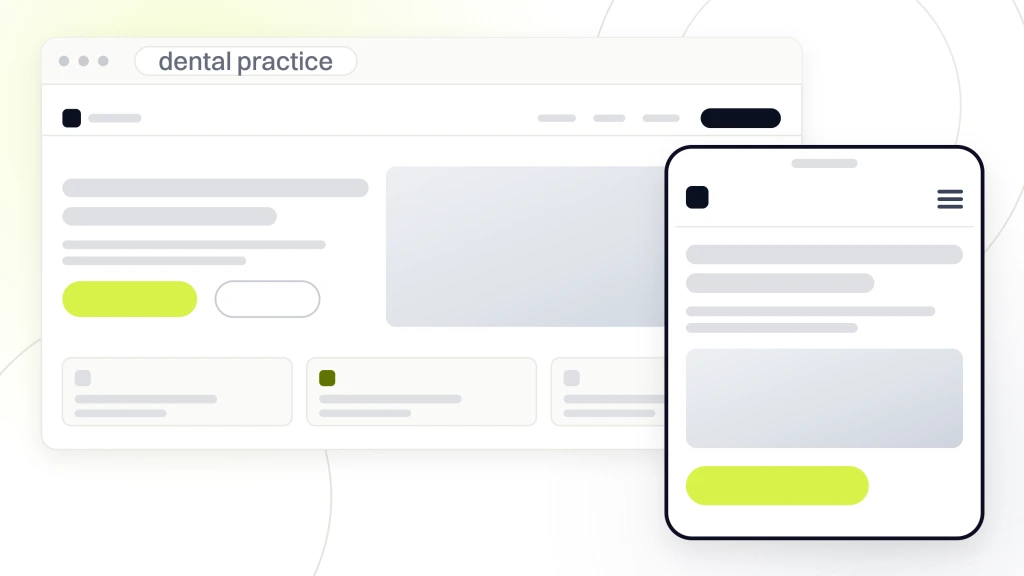
Practices missing 3 or more of the 6 lose 15 to 30% of otherwise-bookable visitors to competitors with the complete pattern. The pattern works so well because it matches how patients decide. A patient searching for a dentist at 7:42 on a Tuesday morning wants to see the phone number in 2 thumb taps, see a face they trust, understand which treatments the practice offers, and know where to park. Sites forcing that patient to scroll through a homepage carousel of stock images before finding any of that information lose the booking.
Pro tip. Ship a sticky mobile footer with phone plus book buttons on every page. Practices adding it see call volume rise 20 to 35% in the first month.
- Sticky header phone. Click-to-call, always visible on scroll.
- Hero booking CTA. Online booking button in the top viewport.
- Treatment services grid. 6 to 9 primary treatments, each linked to its own page.
- Testimonials with faces. Photo plus name plus treatment plus city.
- Map with parking notes. Directions plus a sentence on where to park.
- Treatment FAQ blocks. Cost, insurance, duration, and recovery on every treatment page.
Beyond the 6 primary patterns, secondary UX touches move the booking rate another 5 to 15%. Insurance carrier logos on the homepage. A new patient special callout in the hero for practices running an offer. Live chat during business hours only. A staff photo grid on the About page. Our dental website content guide covers the on-page copy patterns that pair with these UX moves.
Conversion patterns that grow booked patients
The conversion layer sits on top of speed and UX. A fast, well-designed responsive dental website with no conversion pattern still books fewer patients than a slightly slower site with the pattern locked. The pattern is a small stack of design decisions that together turn visitors into booked appointments.
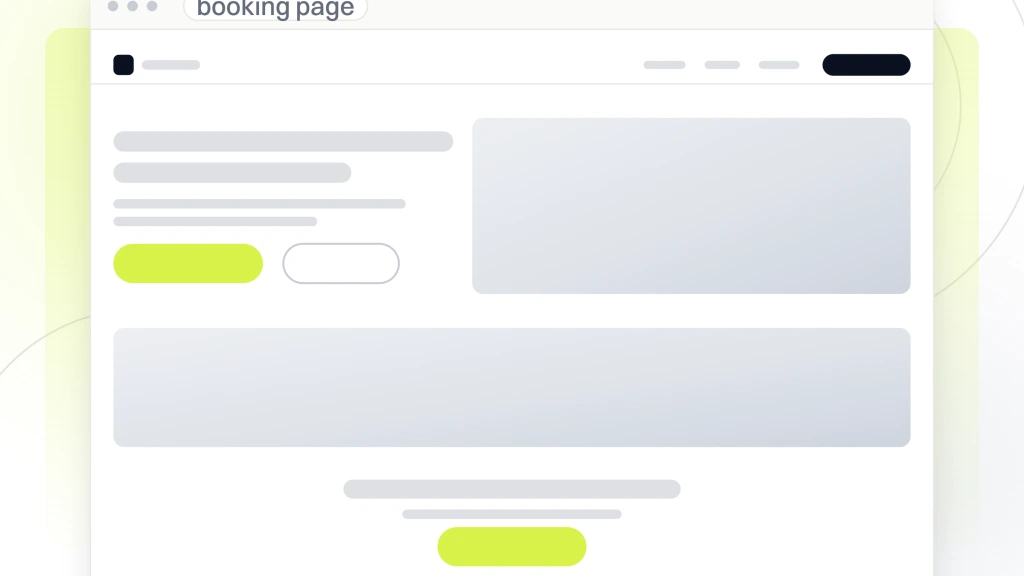
Pro tip. A hero with a booking button plus a phone number pulls 30 to 60% more bookings than a hero with a stock image and a vague scroll invitation.
The primary conversion pattern runs across 5 elements. A hero section with one primary CTA to book online and one secondary CTA to call the office. Trust signals visible without scrolling, such as years in business, patient count, and insurance logos. A treatment grid that answers “do you do what I need”. A testimonial block within the first 2 scrolls with faces and names. And a sticky footer or bottom nav on mobile with phone and book buttons always available. Practices with all 5 see booking rate grow 30 to 60% versus a site missing 3 or more.
- Hero dual CTA. Online booking primary, phone call secondary.
- Trust signals above the fold. Years in business, patient count, insurance accepted.
- Treatment services grid. 6 to 9 treatments, one page each, on the homepage.
- Testimonial block early. Within the first 2 scrolls, faces and names visible.
- Sticky mobile footer. Phone plus book buttons always visible on scroll.
- Insurance carrier logos. Near the hero, so patients whose plan you accept self-qualify fast.
Practices adding a treatment-specific hero for landing pages tied to paid campaigns (Invisalign consults, emergency dental care, dental implants) see booking rate rise another 25 to 40% on those specific pages, because the hero matches the search intent that brought the visitor. Our dental website marketing guide covers the landing page and homepage patterns in more depth.
The optimization audit workflow
A working audit runs in 5 passes over 2 to 3 weeks. First, gather baseline metrics through Google PageSpeed Insights, Google Search Console Core Web Vitals, and a real-user monitoring tool like SpeedCurve or Cronitor. Second, audit the mobile UX pattern against the 6 primary UX moves. Third, audit the conversion pattern against the 5 primary elements. Fourth, prioritize fixes by impact and effort. Fifth, sequence the fixes across a 6 to 8 week implementation window.
The step that catches most practices is the prioritization pass. A 40-item audit report reads like a full-page rebuild recommendation. The working prioritization keeps the top 8 to 12 fixes that produce 70 to 80% of the measurable improvement, and defers the remaining items to a quarterly maintenance queue. Practices attempting to knock out all 40 items in 1 sprint usually cancel the project halfway through once the timeline stretches to 4 or 5 months.
Pro tip. Field data from Search Console beats lab data from PageSpeed Insights every time. Real users on real phones tell the true story of your dental site.
- Baseline. PageSpeed Insights, Search Console Core Web Vitals, real-user monitoring.
- Mobile UX audit. Score against the 6 primary patterns.
- Conversion audit. Score against the 5 primary conversion elements.
- Prioritize. Top 8 to 12 fixes for 70 to 80% of the improvement.
- Sequence. 6 to 8 week implementation window with weekly deploys.
The re-measurement after implementation runs on a 4-week lag, since Core Web Vitals report field data on a 28-day rolling window. Practices measuring before the 4-week mark see incomplete data. Practices holding to the 6-week benchmark see the full effect of the fixes and can decide whether to move on to the quarterly maintenance cadence or add another sprint.
Budget bands for dental website optimization
The dental website optimization budget for a single-location practice runs from $2,500 for a targeted speed-only sprint up to $6,500 for a full audit plus UX and conversion rebuild. Multi-location groups run $8,000 to $18,000 depending on location count and shared component reuse. Ongoing maintenance sits inside a monthly retainer at $199 to $499 per month across Redefine Web plans.
The table below tracks what we see across active dental engagements. Numbers shift with the platform, the current state of the site, and whether the practice needs a design refresh alongside the optimization work. Practices on modern WordPress themes need less rework than practices on outdated builders like Divi or Beaver Builder from the 2018 era. Practices on Wix or Squarespace need a platform migration before optimization can produce green Core Web Vitals reliably.
| Scope | One-time cost | Timeline | Ongoing monthly | Best fit |
|---|---|---|---|---|
| Speed-only sprint | $2,500 to $3,800 | 3 to 4 weeks | $199 | Modern theme, weak Core Web Vitals only |
| Speed plus UX audit | $3,800 to $5,500 | 4 to 6 weeks | $299 | Older theme, mobile UX gaps |
| Full audit plus conversion rebuild | $5,500 to $6,500 | 6 to 8 weeks | $499 | Site not converting, multi-treatment practice |
| Platform migration plus rebuild | $8,500 to $18,000 | 10 to 14 weeks | $499 | Wix, Squarespace, or outdated builders |
The middle band produces the strongest return for most single-location dental practices. Speed-only sprints cover ranking and page load gains but miss the conversion pattern that turns the traffic into booked patients. Full audit projects cover both, and pay back through booked patient volume inside 8 to 14 weeks of launch. Practices choosing a full rebuild instead of an audit can start with SMB website packages at $2,500, $4,500, and $7,500. Our dental website design cost guide covers the wider website pricing pattern when a rebuild is on the table.
Platform choices that affect optimization outcomes
The website platform sets the ceiling on how much dental website optimization is achievable. WordPress on a modern theme with a good hosting plan clears the green Core Web Vitals threshold reliably with 20 to 40 hours of optimization work. Squarespace and Wix cap Largest Contentful Paint at 3 to 4 seconds on mobile no matter what fixes the practice attempts, since the platform architecture blocks core performance work. Custom builds on frameworks like Next.js or Astro clear the green threshold on day 1 but cost 3 to 5 times more to build and maintain.
The pattern most single-location practices land on is WordPress on managed hosting, running a modern theme like GeneratePress, Astra, or Kadence. That combination clears the Core Web Vitals thresholds, keeps hosting inside a $199 to $499 per month maintenance plan, and allows the design flexibility patients expect. Multi-location groups sometimes move to headless setups with WordPress backend plus Next.js frontend, which improves speed further but requires ongoing developer support the practice manager cannot supply in-house.
- WordPress plus a modern theme. Cleanest path for most single-location practices.
- Managed WordPress hosting. Bundled into Redefine Web maintenance plans at $199, $299, and $499 per month.
- Squarespace or Wix. Capped performance, migration usually required for green Core Web Vitals.
- Custom Next.js or Astro. Fastest option, highest cost, developer-dependent.
- Headless WordPress. WP backend with Next.js frontend for multi-location groups.
Practices sitting on older builders (Divi, Beaver Builder, Elementor from 2018 to 2020) face a choice. Rebuild inside the same builder with performance-tuned templates, or migrate to a lighter modern theme. The rebuild usually costs 40 to 60% less than the migration. The migration produces cleaner Core Web Vitals numbers and lower ongoing maintenance load. Both options work if the scope matches the budget. The web.dev measurement guide covers the tooling for platform-level performance benchmarking.
Accessibility and ADA compliance in the optimization pass
Accessibility overlaps with the speed and UX work on several structural fixes. Color contrast between text and background. Screen-reader labels on form fields and interactive elements. Keyboard navigation across the site. Alt text on every image. Dental practices face real ADA compliance risk on inaccessible sites, and the fix work runs in parallel with the speed and UX passes.
The audit tools are Google Lighthouse for automated accessibility scoring, WAVE by WebAIM for detailed contrast and label reports, and manual keyboard-only navigation testing to catch what automation misses. Sites scoring 90 or above on Lighthouse accessibility usually clear the common ADA compliance patterns. Sites scoring below 80 carry structural issues that need direct rework, not plugin overlays.
- Color contrast. 4.5:1 for body text and 3:1 for large text, per WCAG 2.1 AA.
- Screen-reader labels. Aria-label on icon buttons and always-visible labels on form fields.
- Keyboard navigation. Tab order matches visual order and focus outline stays visible.
- Alt text. Descriptive on every image and empty on decorative ones.
- Skip-to-content link. First tab stop on every page.
Accessibility overlay tools like accessiBe or UserWay do not fix underlying structural issues, and courts have ruled against practices relying on overlays as the sole compliance measure. The working approach is structural remediation as part of the optimization pass, plus a Voluntary Product Accessibility Template (VPAT) statement on an accessibility page. Our dental website compliance guide covers ADA plus privacy compliance in more depth.
Measurement and reporting that holds up on mobile dental websites
Measurement for mobile dental websites pulls from 4 sources tied together. Reporting is only useful when the 4 sources feed a single monthly view. Google Search Console Core Web Vitals report for field data (real user measurements). Google PageSpeed Insights for lab data (synthetic tests). Real-user monitoring tools like SpeedCurve or Sentry for granular field data. And Google Analytics 4 for conversion rate, bounce rate, and behavior flow.
The reporting cadence pairs weekly review of Analytics conversion metrics with monthly review of Search Console Core Web Vitals. Weekly Analytics review catches conversion drops from a broken form or a testimonial slider that started autoplaying. Monthly Core Web Vitals review catches speed regressions from image uploads or plugin updates that push the site out of the green zone. Practices adding SpeedCurve or Sentry get real-time alerts on specific metric thresholds crossing the yellow zone.
- Search Console Core Web Vitals. Monthly field data review.
- PageSpeed Insights. Post-deploy synthetic checks.
- Real-user monitoring. SpeedCurve, Sentry, or Cronitor.
- Google Analytics 4. Weekly conversion and bounce rate review.
- CallRail or CallTrackingMetrics. Booked calls attributed to organic and paid.
The metric that ties this work back to revenue is booked patient count per month attributed to the website. Practices reporting only PageSpeed scores and bounce rates cannot defend the optimization budget through a quarterly review. Practices tying the work back to booked patient calls through CallRail or CallTrackingMetrics can. Our dental marketing attribution guide covers the reporting pattern that ties website work back to bookings.
Common mistakes that stall dental website seo results
Six patterns cost dental practices the return on dental website seo work more than any other. Each looks reasonable in isolation. Together they cap the results the retainer produces.
The first is optimizing only for PageSpeed score rather than for booked patient outcomes. The second is treating the audit as a one-time project rather than an ongoing quarterly review. The third is adding a chat widget or booking overlay from a third party that reintroduces the speed regressions the audit corrected. The fourth is uploading uncompressed images through the WordPress media library after the audit, undoing the WebP conversion work. The fifth is running an accessibility overlay in place of structural remediation, which leaves ADA compliance risk on the table. The sixth is measuring lab data (PageSpeed synthetic tests) rather than field data (real user metrics from Search Console), which misreports real-world performance.
- PageSpeed score obsession. Track booked patients as the primary output metric.
- One-time audit mindset. Run quarterly reviews to catch regressions.
- Third-party widget bloat. Audit every new widget for performance impact.
- Uncompressed uploads. Enforce WebP conversion at upload via a plugin like ShortPixel.
- Accessibility overlays. Use for interim coverage and replace with structural fixes.
- Lab data only. Track Search Console field data as the primary measurement source.
Fixing all 6 in the first 90 days after the initial dental website optimization pass produces the compounding results the ongoing retainer is supposed to deliver. Practices postponing any 3 of the 6 see the site slip back into the yellow or red zone on Core Web Vitals inside 4 to 6 months, and the ranking and conversion gains regress alongside it.
What is dental website optimization and why does it matter?
Dental website optimization is the work of tuning a practice site for speed, mobile UX, accessibility, and conversion so more searchers turn into booked patients. It matters because mobile drives 70 to 80% of dental traffic, and a page that loads in 4 seconds instead of 2 loses 30 to 50% of visitors before the first click. The payoff shows up in bookings, not scores.
How much does dental website optimization cost?
Dental website optimization budgets run from $2,500 for a speed-only sprint to $6,500 for a full audit with UX and conversion fixes. Multi-location groups pay $8,000 to $18,000 depending on location count. Ongoing retainers sit at $199 to $499 per month. Redefine Web SMB website packages run $2,500, $4,500, and $7,500 for practices that want a fresh build instead of an audit.
How long does dental website optimization take to show results?
Speed and CLS fixes show in synthetic tests inside a week of deploy. Field data from Search Console updates on a 28-day rolling window, so honest before-and-after comparisons take 4 to 6 weeks. Booked patient impact shows up 6 to 12 weeks after launch as rankings settle and conversion improvements compound across returning traffic.
Do I need a responsive dental website or can I add mobile fixes to my current site?
A responsive dental website is the baseline in 2026. Practices on outdated fixed-width layouts, old Divi or Beaver Builder templates from 2018 to 2020, or Wix and Squarespace pages usually need a rebuild rather than patches. If your current site already uses a modern responsive theme, targeted mobile fixes cover the gap for $2,500 to $3,800.
What are the biggest mistakes practices make with mobile dental websites?
The three biggest mistakes on mobile dental websites are burying the phone number below the fold, using a testimonial slider that autoplays and pushes content around, and hiding the booking button inside a hamburger menu. Each cuts bookings by 10 to 20% on its own. A sticky header with click-to-call plus a visible hero booking button fixes the most damaging pair fast.
Which Core Web Vitals matter most for dental website SEO?
Largest Contentful Paint under 2.5 seconds, Interaction to Next Paint under 200 milliseconds, and Cumulative Layout Shift under 0.1 are the 3 thresholds that move dental website SEO. Google rewards sites clearing all 3 on 75% or more of real-user visits. Practices sitting in the yellow or red zone on any single metric lose ranking ground month over month.
Can I run dental website optimization in-house or should I hire an agency?
Practices with a strong in-house marketing coordinator and a modern WordPress theme can run 60 to 70% of the audit in-house using PageSpeed Insights and Search Console. The remaining work, hero image handling, third-party script deferral, and structural CLS fixes, usually needs a developer. Most single-location practices pay an agency $199 to $499 per month for ongoing dental website optimization rather than hire a full-time role.
Where to start this week
Three actions this week produce more measurable improvement than any single item on a 40-item audit report. First, open Google Search Console and check the Core Web Vitals report. Note the LCP, INP, and CLS numbers on the mobile URL group. Second, open Google PageSpeed Insights on the practice homepage, both mobile and desktop, and save the report. Third, walk the site on your own phone with LTE data (not office WiFi) and time how long the homepage takes to become tappable. If it takes more than 3 seconds, the optimization budget will pay itself back through booked patients.
Those 3 actions produce the baseline every optimization project starts from. The rest of the work runs across 4 to 8 weeks and produces measurable results in weeks 6 to 12 after the fixes deploy. Practices already running a website retainer that does not include quarterly Core Web Vitals reporting should ask the current agency why. The report is free from Google. Not reviewing it monthly is a choice the retainer should stop making.
Practices weighing whether to keep the current site or start fresh can pair this guide with our best dental websites reference. Practices making the platform migration decision should read the dental website hosting guide before signing with a new host.