
PPC management for pet care brands lives or dies on three numbers. Return on ad spend on the first purchase. Repeat purchase rate inside 90 days. And subscription attach on that first order. Every other paid metric rolls up into one of those three. You either get those numbers right and pour paid budget into predictable customer growth every month, or you burn budget on first-time buyers who never come back and blame the ad platform when the real gap sits inside the PDP, the checkout, or the post-purchase email flow.
This guide walks the operator side of ppc management for pet care brands in 2026. Account structure, creative cadence, landing page CRO, retention loop wiring, attribution setup, and the budget math that separates a scaling pet DTC program from a stalled one. Numbers cited are field averages from pet DTC accounts our team has worked inside or watched close during 2024 and 2025. Category norms flex a little every quarter but the framework holds across food, treat, toy, health, and grooming brands. For the wider vertical view, our pet products marketing hub covers channel mix and retention, and our PPC management services page covers the retainer structure that runs the work.
Why pet DTC paid media looks different from generic ecommerce
Pet DTC runs on a shorter payback window than most other ecommerce categories. Average order value sits low, the repeat purchase cycle sits short, and the buyer researches longer than an impulse-buy category. A shampoo brand at $24 AOV and a 6-week reorder cadence carries a totally different paid math than a furniture brand at $800 AOV and a two-year reorder cycle. Media buyers who bring generic ecommerce playbooks to pet accounts overpay on first-click acquisition because the payback assumption gets the timeline wrong.
Pet buyers research across multiple touches
Your buyer researches across Reddit threads, brand comparison YouTube reviews, and pet parent forums before they ever click a Meta ad. That research window shows up in the click path data as multiple touches spread across two to three weeks. Attribution windows shorter than 14 days routinely underreport paid social contribution because the last touch on Google branded search grabs credit for the conversion. Accounts that close the attribution window at 7 days on pet routinely overinvest in Google branded and underinvest in Meta prospecting. That mistake costs pet brands meaningful growth every quarter.
Subscription is the third difference
Pet consumables lend themselves to subscription in a way that few other consumer categories do. Food, treats, litter, supplements, grooming, and dental all move on predictable cadence. Your paid program has to be wired into the subscription attach flow so the paid dollar buys a first-time trial that converts to a recurring subscriber at a defined rate. Our post on category page structure covers the on-site work that supports paid traffic once the click lands.
Account structure for ppc management for pet care brands
Your account structure should split by funnel stage first and product category second. Three funnel tiers work reliably across pet DTC brands. Brand search protection at the bottom, category prospecting at the top, and retargeting in the middle. Product categories inside pet split roughly into food and treats, health and wellness, grooming and hygiene, and toys and accessories. Each category has a distinct buyer journey and a distinct margin profile, which shifts the target cost per acquisition inside each campaign.
Brand search protection tier
Brand search protects the brand terms against competitor bidding and against Amazon marketplace bidding on the brand name. This tier runs at a target cost per acquisition well below the blended target because the buyer is already in market. Pet DTC brands with strong brand awareness routinely spend 8 to 12% of total paid budget on brand search protection and see 4 to 6x return on ad spend on that spend because intent is fully bottom funnel. Cutting this tier to save budget is the single biggest mistake pet accounts make during budget squeezes. The competitor ad shows up in the search results the moment brand protection lapses.
Category prospecting tier
Category prospecting drives new customer acquisition at the top of the funnel. This tier splits across Meta prospecting, TikTok prospecting, and Google Performance Max (see the wider Google Ads management for ecommerce framework) with a strong asset library and audience signal feed. Pet DTC accounts running Performance Max well pull in 20 to 35% of new customer volume from PMax alone once the asset library and audience signals get built correctly. Meta prospecting sits at 40 to 50% of new customer volume for most pet brands under $10M annual revenue. TikTok prospecting sits at 10 to 25% depending on how well the brand creative fits the platform. Google’s own Performance Max documentation covers the asset requirements that decide whether PMax carries its weight.
Retargeting tier
Retargeting closes site visitors who did not convert on first visit. Pet DTC accounts run retargeting across Meta, Google Display, and dynamic product remarketing at a target return on ad spend 40 to 60% higher than prospecting because the audience is warmed up. Your retargeting creative should feature the specific product the visitor viewed, a customer review, and a free shipping threshold reminder. Retargeting spend typically sits at 15 to 20% of total paid budget and returns 5 to 8x on well-run pet accounts. Cutting retargeting to fund prospecting is the second most common mistake. The math never works because retargeting return is meaningfully higher than prospecting return.
Creative testing cadence that keeps pet paid social fresh
Creative testing cadence sets a floor. Three new creative concepts per week at minimum on the primary paid social channel. That number is not aspirational. It is the rate at which the creative library refreshes fast enough to keep first-click cost per thousand impressions from spiking as audience fatigue sets in. Pet brands running slower creative cadence see cost per thousand impressions climb 15 to 25% inside a quarter as Meta scales the audience past the point where the existing creative feels fresh. Fast cadence is not about volume for volume’s sake. It is about staying ahead of audience fatigue on the platforms that reward variety.
User generated content dominates the mix
User generated content sits at 40 to 60% of the winning creative mix on pet DTC accounts we watch closely. Pet parents love seeing other pet parents review the product. Dogs on camera outperform static product shots on click-through rate by 30 to 50% typically. Cats on camera outperform dogs on click-through rate by 15 to 20% when the audience skews cat parent. Brands running polished studio creative only miss the volume that UGC brings. Brands running UGC only miss the brand equity that polished creative builds. A working mix runs 50/30/20 across UGC, brand studio, and product education, adjusted by the brand stage and category.
Hook testing methodology
Hook testing runs one core creative asset across three to five hook variations to isolate which opening drives thumbstop rate the highest. Hooks that work on pet fall into a handful of patterns. Problem statement hooks (my dog’s skin was raw until I found this). Result hooks (three weeks in and the itching stopped). Curiosity hooks (this is not a supplement but it fixed the itching). Founder story hooks (my rescue had allergies so I made this). Testing hooks first, then variations on body copy and offer, produces the fastest learning cadence because the hook is the single highest lever inside the 3-second window that decides whether the ad gets watched at all. Guidance on paid social creative frameworks at Think with Google reinforces the same pattern.
Winner scaling protocol
Winner scaling takes creative that clears the winning threshold (usually 2x the account average return on ad spend at $100 of spend) and moves it into a dedicated scaling campaign at 3x the initial daily budget. Winners get 7 to 10 days to prove they hold up at scale. Winners that hold up graduate into the evergreen library and get iterated with variations. Winners that decay at scale get retired and replaced. Scaling matters because creative that wins at $50 a day does not automatically win at $500 a day. The audience gets broader at scale and the creative signal has to hold up against a less warm audience. Not every winner clears that bar.
Landing page conversion work is the highest ROI lever in pet paid media
A fast site under fast managed hosting is table stakes here; slow pages quietly cap paid ROI on landing pages that convert cold traffic.
A paid click on your pet brand ad hits a landing page at a conversion rate that ranges from 1.8% (average) to 4.5% (top decile). Moving the conversion rate from 2% to 3% on the same ad spend produces a 50% gain in customer acquisition volume without a single extra dollar of budget. That gain is the highest ROI activity inside ppc management for pet care brands, and it sits entirely outside the ad platform. This is the work most media buyers touch last and where the biggest math lives first.
Product detail page hierarchy
Your product detail page should lead with the pet parent problem the product solves in the H1, then the ingredient or feature evidence that backs the claim, then trust signals like reviews and third-party testing, then the offer stack (subscription discount, free shipping threshold, satisfaction guarantee). Pet PDPs that lead with generic product descriptions convert 30 to 40% lower than PDPs that lead with the problem statement. The buyer scrolled onto the PDP because the ad promised a solution. The PDP has to repeat that promise in the first viewport or the buyer bounces back to research.
Above the fold offer stack
The above-the-fold offer stack should include the primary product with a clear price, the subscribe-and-save discount percentage (typically 10 to 20% on pet consumables), and the free shipping threshold. Pet buyers respond strongly to the subscribe-and-save value stack because the subscription cadence maps cleanly to their real reorder cycle. PDPs that bury the subscription option below the fold miss subscription attach rate that would otherwise flow naturally. Well-configured pet PDPs run subscription attach rates of 20 to 35% on first order, which is the single highest driver of lifetime value growth in the category.
Trust signal stack
Your trust stack should include review count, average star rating, third-party ingredient testing, vet formulation endorsement (if applicable), and a satisfaction guarantee. Pet buyers overweight trust signals because the buyer is choosing on behalf of an animal that cannot report back on the product experience directly. Every trust signal on the PDP removes a specific friction from the buyer decision. Reviews below 500 count get discounted heavily by buyers. Reviews above 2,000 count carry meaningful conversion weight. Building review volume is a slow compound but the payoff on paid conversion rate compounds every quarter as the review base grows. Nielsen Norman Group research at nngroup.com covers the wider PDP usability rules that apply to pet brands identically.
Benchmarks for pet DTC paid programs across brand stages
The table below shows working benchmarks across three brand stages. Emerging (under $1M annual revenue). Growth ($1M to $5M annual revenue). Scale ($5M plus annual revenue). Numbers reflect field averages from pet DTC accounts our team has worked with or watched during 2024 and 2025. Use these as benchmarks against your specific account rather than gospel, because product margin, subscription attach, and creative library all shift the math meaningfully.
| Metric | Emerging under $1M | Growth $1M to $5M | Scale $5M plus |
|---|---|---|---|
| Blended return on ad spend target | 2.5x to 3.0x | 2.0x to 2.5x | 1.8x to 2.2x |
| Meta share of budget | 50 to 60% | 40 to 50% | 30 to 40% |
| Google share of budget | 25 to 35% | 30 to 40% | 35 to 45% |
| TikTok share of budget | 5 to 15% | 10 to 20% | 15 to 25% |
| Weekly creative concepts | 3 | 5 to 7 | 10 plus |
| Subscription attach target | 15 to 20% | 20 to 30% | 30 to 40% |
How to read the return on ad spend row
Read the return on ad spend row against the payback window your finance team accepts. A pet brand that accepts a 90-day payback on paid can run blended return on ad spend at 1.8x profitably. A pet brand that requires 30-day payback needs to run at 2.5x or higher to hold contribution margin positive. The tighter the payback window, the higher the return on ad spend target has to sit, which restricts prospecting spend and slows the growth curve. Most pet brands over-index toward tight payback windows in year one and slow their own growth as a result. The right payback window balances cash flow against growth speed.
How to read the platform share rows
Read the platform share rows against your current creative library. A brand with strong UGC creators and a video-native brand voice can lean heavier on TikTok. A brand with polished studio production and a mature email list can lean heavier on Google. Nothing about the platform mix is fixed. It flexes with what the creative can support and what the audience actually engages with. Test at the margins every quarter and let the data reallocate the budget rather than defending yesterday’s split.
Pet DTC case studies that prove the paid framework
Four Redefine Web pet accounts anchor the pattern this guide describes. Each brand carried a different profile, different scale, and different channel mix, and each one moved a specific number that ties directly to the paid framework above. The pattern is not theoretical. It is the compound of real account restructures, real creative work, and real conversion rate gains on real spend.
Pet Insurance Australia · 1132% return on investment
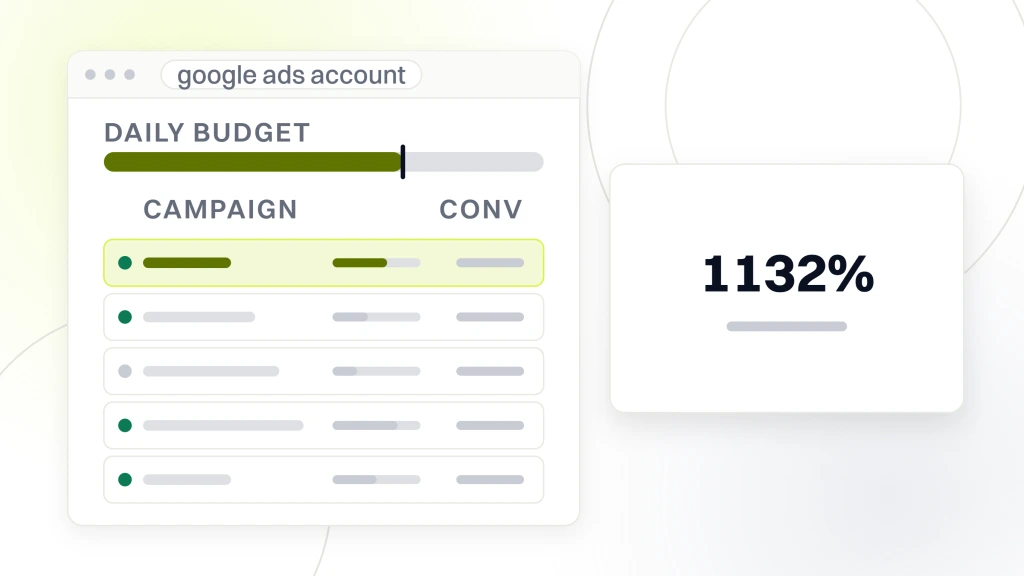
Pet Insurance Australia ran a highly competitive category with three well-funded incumbents outspending them consistently. Before the restructure, the brand was buying clicks broadly across paid search and social with no clear tier structure or attribution model. Cost per lead ran high and the conversion rate on landing traffic sat below the category average. The restructure rebuilt the account into three tiers with proper attribution across a 14-day window. Paid search moved into a bottom-of-funnel intent tier with landing pages built in particular for each product line. Paid social moved into a top-of-funnel awareness tier with UGC-forward creative segmented by pet type and life stage. Retargeting closed the gap with dynamic product remarketing at a lower target cost per acquisition. Inside 5 months the account produced 455 total conversions across phone calls and form leads. Return on investment landed at 1132%, meaning every $1 spent returned $11. Conversion rate on landing traffic hit 31.06% against industry averages of 2 to 5%. Click-through rate hit 8.87% against a 1 to 3% benchmark. That conversion rate gain was the single largest driver of the ROI, and it came from the landing page work rather than the ad platform work. The full public write-up sits on the Pet Insurance Australia case page.
Mission Pet Health · 54% YoY lead growth across 400+ clinics
Mission Pet Health is a veterinarian-owned and operated network of 400+ animal hospitals nationwide. Each location maintains local branding while gaining operational and marketing support from the broader network. Before the restructure, spend was not tied to appointment availability or financial objectives. Reporting was scattered and conversion tracking lacked standardization. Our team designed a scalable paid framework aligning marketing with operational and financial data. We restructured search campaigns, integrated conversion tracking across the network, implemented better bidding strategies, consolidated fragmented accounts, and expanded into Performance Max and Local Service Ads. Results across the 12-month program were +54% year-over-year lead growth, +74% over the 12-month return on ad spend goal, and +11% return on ad spend efficiency at scale. The framework proved that paid media at 400-location scale needs consolidated account architecture, capacity-aligned budgets, and network-wide conversion tracking to compound rather than churn.
Boogie Board · $31 cost per sale on $650K managed budget
Boogie Board, creator of the first reusable writing tablet in 2009, needed a rebuild across Google Ads targeting and landing page conversion work. The account carried broad targeting, unoptimized landing pages, high cost per acquisition, and no nurture flow for repeat purchase. Our team ran keyword research plus targeted Google Ads plus LinkedIn Ads to extend reach. Audience-matched ad creative and optimized landing pages simplified the shopping flow. Product-focused lead magnets showcasing sustainability and creativity captured engaged prospects. Automated email follow-ups and retargeting drove repeat purchases. Results across the annual engagement were +11% conversion rate, $31 cost per sale (down from broad-targeting inefficiency), and $650K in managed ad spend delivered at sustainable return on investment. The Boogie Board pattern applies to pet DTC brands with a mixed audience that spans Google intent traffic and LinkedIn-adjacent B2B interest, since the audience-splitting and landing page discipline transfer directly.
Pet Shop · Independent Retail · UK · 2.6× local inquiries. Paid works harder when local SEO for pet businesses is already earning the Map Pack
A long-standing independent UK pet shop was losing ground to chains and online marketplaces. The site was a dated, desktop-first template that did not surface a phone number, did not support click and collect, and did not make it clear what was actually stocked. Our team rebuilt the site mobile-first with fast load, click-to-call and WhatsApp and reserve-and-collect calls-to-action above the fold, and a stock-led homepage. Google Business Profile was rebuilt for “pet shop near me” intent with consistent name-address-phone across pet-trade directories. A review-velocity workflow captured happy customers at the till. Daily Instagram and Facebook content (branded carousels, short tips, pet-of-the-week, before-and-after grooming) kept the shop in feeds. Results across the first quarter were +158% calls plus WhatsApp inquiries, +212% click-and-collect orders, and +47% repeat customer rate, without growing the team or advertising spend. The pattern applies directly to pet DTC brands running local delivery zones or click-and-collect pilots because the mobile CTA discipline is identical.
Retention loop wiring that compounds pet DTC lifetime value
Retention loop wiring closes the gap between first purchase and second purchase. Paid acquisition brings a customer in the door at a specific cost per acquisition. Retention brings that same customer back for a second, third, and fifth purchase inside the lifetime value window. Pet brands running paid programs without retention infrastructure burn budget on customers who never come back. Pet brands running paid plus a well-built retention loop compound customer lifetime value across quarters and shift the paid math from a growth expense to a growth investment.
Post purchase email flow
Your post-purchase email flow should include a welcome sequence, a product education sequence tied to the specific product purchased, a review request sequence at day 21, a replenishment reminder sequence at 80% of the expected reorder cycle, and a winback sequence at 30 days past expected reorder. Pet brands with mature post-purchase flows drive 25 to 40% of total revenue from email against 10 to 15% for brands with underdeveloped flows. The email revenue share matters because it lowers the effective cost per acquisition on the paid dollar. Every recurring purchase amortizes the acquisition cost across a longer lifetime value window.
Subscription attach and retention
Subscription is the highest lever in the pet DTC retention loop. Pet consumables that convert to subscription on first order retain at 60 to 75% through the first three cycles typically. That retention rate turns a one-time buyer into a predictable annual revenue stream that pays back the paid cost per acquisition many times over. Brands running subscription poorly (weak subscription discount, no easy skip or swap, unclear cancellation) retain at 30 to 45% through the first three cycles and struggle to make the paid math work at scale. Your subscription infrastructure is not an afterthought. It is a core component of ppc management for pet care brands because it decides whether paid growth compounds or churns.
SMS retention layer
An SMS retention layer drives incremental purchase behavior that email misses. SMS delivers shipping updates, replenishment reminders, subscription cadence changes, and time-sensitive promotions with higher open rates than email. Pet brands running SMS as a primary retention channel drive 15 to 25% of total revenue from SMS at maturity. The channel requires careful list hygiene and compliant opt-in flow but the return justifies the setup work. Guidance on SMS opt-in compliance at ftc.gov business guidance covers the current TCPA and CAN-SPAM requirements.
Attribution setup for the multi-touch pet buyer journey
Attribution setup has to accommodate the multi-touch buyer journey that pet purchases actually follow. The buyer sees a Meta ad, researches on Reddit, watches a YouTube review, comes back through a Google branded search, and converts on the Shopify checkout with a subscription attach. Attribution that only credits the last click misses the Meta contribution entirely. Attribution that credits every touch equally overstates lower-funnel channels. The right setup uses a data-driven attribution model plus a media mix modeling overlay at scale.
Data driven attribution setup
Data-driven attribution inside Google Ads and Meta assigns fractional credit to each touch in the click path based on the platform algorithmic model. This model gives more credit to first-click touches and view-through touches than last-click attribution does, which surfaces the real contribution of prospecting channels. Pet brands moving from last-click to data-driven attribution routinely reallocate 15 to 30% of budget from bottom-of-funnel branded search to top-of-funnel prospecting because the data-driven model reveals the real driver of downstream conversions. The reallocation feels risky at first because branded search return on ad spend drops on paper. Total account revenue grows because the prospecting channel was underinvested.
Server side conversion tracking
Server-side conversion tracking through Google Tag Manager server-side container or through Shopify server-side integration recovers 15 to 25% of conversions that iOS tracking restrictions and browser cookie restrictions would otherwise drop. Pet DTC accounts running server-side tracking see materially higher reported conversion volume, which lets the ad platform algorithms optimize more accurately toward the right audiences. Installing server-side tracking is a two-week engineering project that pays back inside 30 days on most pet accounts because the algorithm optimization improves the moment conversion volume gets more accurate.
Media mix modeling overlay
Media mix modeling overlay at $5M plus annual revenue replaces platform attribution as the primary decision framework because platform attribution consistently double-counts conversions across channels at scale. MMM uses aggregate spend and revenue data at the weekly level to model the incremental contribution of each channel including offline channels like podcast and influencer. Pet brands running MMM alongside platform attribution make better budget allocation decisions because the total picture accounts for cross-channel effect that platform data cannot see. MMM is not required at emerging or growth stage but becomes valuable once total paid spend crosses $100K per month.
Budget allocation math tied to lifetime value and payback window
Budget allocation starts with the target cost per acquisition and the target lifetime value. Target cost per acquisition should sit at 40 to 60% of first-year lifetime value for a healthy paid program. Pet brands with subscription attach rates of 30% plus can accept cost per acquisition up to 100% of first order value because lifetime value over 24 months justifies the front-loaded acquisition. Pet brands without subscription infrastructure have to keep cost per acquisition below 60% of first order value because the lifetime value window is shorter and the paid math cannot amortize across as many purchase cycles.
Payback window calibration
Payback window calibration decides how aggressive the paid program can run. A 90-day payback window allows the buyer to accept lower first-order return on ad spend in exchange for higher volume, which compounds lifetime value faster because more subscribers enter the retention loop. A 30-day payback window forces the buyer to run tighter return on ad spend and slower volume, which slows the retention loop growth. Well-capitalized pet brands typically run 90 to 180-day payback windows because the lifetime value growth from higher acquisition volume more than offsets the cash flow tightness in month one. Undercapitalized brands run 30-day payback because they cannot fund the cash gap. The right payback window matches available capital, which is a founder decision more than a media buyer decision.
Scaling ramp inside monthly budgets
Your scaling ramp should increase by 15 to 25% month over month during a scaling phase. Faster ramps than 25% typically break the target cost per acquisition because the ad platform algorithm cannot re-learn on the new audience fast enough. Slower ramps than 15% leave growth on the table because the algorithm is not stress-tested against enough audience. Pet brands during scaling phases benefit from monthly budget review cadence rather than weekly because the algorithm needs a full week of data to stabilize after each budget change. Choppy weekly adjustments produce worse results than steady monthly ramps.
Seasonality flex inside pet PPC
Seasonality flex inside pet PPC follows category patterns. Food and treats run steady through the year with a modest bump around holidays. Grooming and hygiene spike in spring and summer as pet parents deal with shedding and outdoor activity. Toys and accessories spike around Q4 gifting. Health and wellness has a bump around New Year resolution behavior on pet parents. Pet brands that flex budget up 30 to 50% during their category peak season capture the seasonal wave better than brands running flat budgets year-round. The seasonal flex requires cash flow planning six months ahead and creative planning three months ahead because the platform algorithms need time to relearn the seasonal audience.
Common mistakes that quietly cap pet DTC paid growth
Common mistakes cluster in a few predictable patterns that show up on account audits again and again. Media buyers who avoid these mistakes hold accounts at scale better than buyers who fall into them. The mistakes are not obvious in real time. They accumulate quietly across a quarter or two and show up as a slow return on ad spend decline that gets blamed on platform algorithm changes when the real problem sits in the account architecture. The fixes are cheap once you name them.
Chasing platform return on ad spend instead of blended cost per acquisition
Chasing platform return on ad spend instead of blended cost per acquisition pushes the buyer to over-invest in bottom-of-funnel channels where platform return looks strongest and under-invest in prospecting where blended cost per acquisition actually lives. Google branded search shows 8x return on ad spend in the platform. Meta prospecting shows 1.5x. The buyer cuts Meta and doubles Google. Six months later new customer volume has collapsed because branded search only converts existing demand and prospecting was the demand generator. The right dashboard measures blended cost per acquisition across all channels combined and evaluates each channel against its role in the funnel rather than against a shared return threshold.
Understaffing creative production
Understaffing creative production on pet accounts starves the paid social program of the creative variety it needs to hold cost per thousand impressions down. Pet brands running one video editor for a Meta program spending $100K per month cannot produce enough creative to keep audiences fresh. The right ratio is one full-time creative producer for every $50K to $75K per month of paid social spend. Brands with lean creative teams should partner with a UGC creative agency or a network of pet parent creators to keep the creative library refreshing without the internal headcount burden. The creative library is not a nice-to-have. It is the primary determinant of paid social performance at scale.
Skipping the landing page work
Skipping the landing page work leaves 30 to 50% of paid conversion volume on the table permanently. Media buyers focus on the ad platform because that is where their attention lives. Landing pages sit inside the marketing team remit or inside the product team remit and get less attention. Pet brands that treat the landing page as part of the paid program and run monthly conversion rate optimization cycles on it drive materially higher paid return on ad spend than brands that treat the landing page as a static asset. Conversion rate is the fastest lever in the paid stack and it lives entirely on the site.
What a good ppc management for pet care brands agency actually does
A good agency brings pet category depth, creative production capacity, landing page conversion rate work, and attribution setup together in one team. Fragmented agencies that only handle media buying leave the landing page and retention work uncovered, which caps the paid program performance. Integrated agencies that cover the whole funnel drive materially better results because every lever of the paid math gets pulled by the same team with the same data view. Our pet products marketing program starts at $999 per month and covers the account structure work, creative production support, landing page conversion rate work, and attribution setup end to end. The pet products marketing retainer page carries the full tier breakdown.
Evaluating agency category depth
Evaluating agency category depth for pet requires asking in particular about pet accounts the agency has worked with. Agencies that generalize across ecommerce categories know the mechanics of paid media but often miss the pet-specific patterns like subscription attach math, pet parent audience segmentation, and category seasonality. Pet DTC brands should ask potential agencies for three references from pet accounts at similar scale and ask those references about the agency understanding of subscription mechanics in particular. Agencies that stumble on subscription math should be passed over for pet accounts because subscription is the core of the lifetime value story. Passion Built ran a similar diligence pass on renovation-vertical experience before starting the paid program that produced $60K+ in bookings inside 12 months.
Retainer tiers that fit pet brands
Retainer structure that fits pet brands should include a fixed monthly management fee tied to the account complexity, not a raw percentage of spend. Pure percentage-of-spend retainers push the agency to grow spend regardless of performance, which does not align with the pet brand need for efficient acquisition. Our retainer tiers are $999, $1,499, $2,499, and from $4,500 per month. Ad spend is billed separately and paid directly to the ad platform. The $999 tier covers a single-brand pet DTC account with $3K to $10K monthly ad spend across search and social. The $1,499 tier layers in creative production support and monthly landing page conversion rate tests. The $2,499 tier suits multi-brand pet portfolios and DTC accounts with $30K to $80K monthly spend across paid search, paid social, retargeting, and Performance Max. The $4,500+ tier suits pet DTC brands at $5M+ annual revenue running six-figure monthly paid budgets with in-house paid teams that need agency oversight and creative capacity. Six-month engagement minimums make sense because paid programs need a full quarter to relearn and a second quarter to prove the new structure at scale.
The right approach to ppc management for pet care brands in 2026 combines disciplined account structure, aggressive creative testing, dedicated landing page conversion rate work, wired retention loops, and honest attribution. None of the five is optional. Skipping any one caps the paid program ceiling and leaves growth on the table. Media buyers who bring all five to a pet account routinely double or triple new customer acquisition volume inside six months at flat or declining cost per acquisition. Media buyers who bring only the account structure and creative testing pieces stall out at the audit ceiling and blame the platforms. Pet DTC founders evaluating whether the current paid program is working should benchmark against the field averages above. Blended return on ad spend below the tier threshold, subscription attach below the tier threshold, and payback window mismatched with capital availability each signal a fixable gap. Category demand data from the American Pet Products Association at americanpetproducts.org pairs with the framework for benchmarking brand-level growth against the total category expansion. If you want a working paid program that ties spend to subscription revenue, our PPC management services cover the full stack end to end.
What does ppc management for pet care brands cover at an agency+
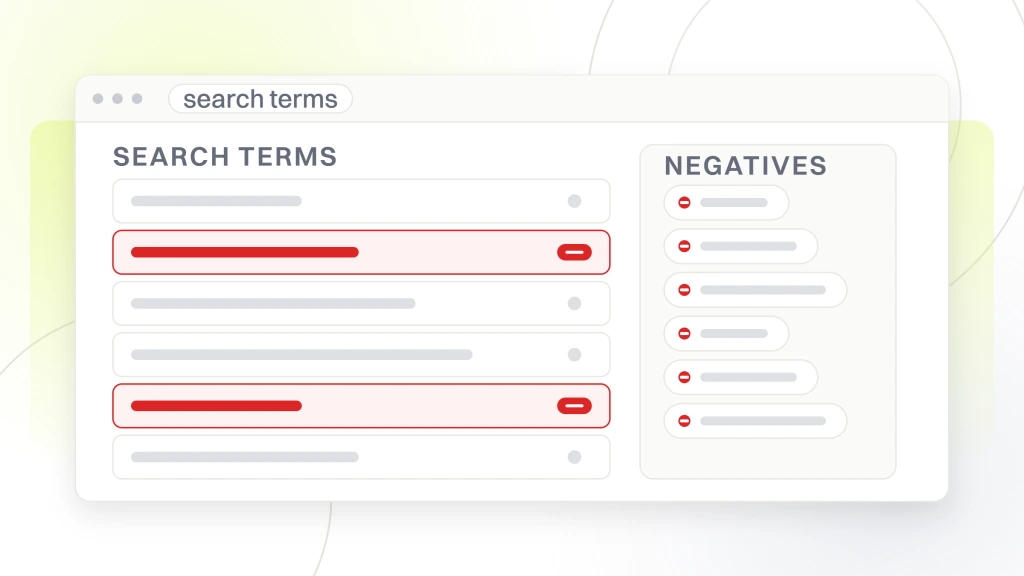
Ppc management for pet care brands at a specialist agency covers account structure across brand search protection, category prospecting, and retargeting on Google Ads and Meta plus TikTok and Performance Max. It also covers creative production or oversight, weekly search terms and negatives review, monthly landing page conversion rate tests, subscription attach optimization inside the PDP, retention loop wiring across post-purchase email and SMS, server-side conversion tracking installation, data-driven attribution setup, and monthly reporting that ties paid spend to blended cost per acquisition, lifetime value, and subscription revenue. Fragmented agencies that only handle media buying leave the landing page and retention work uncovered, which caps program performance inside two quarters.
How much does ppc management for pet care brands cost per month+
Our ppc management for pet care brands retainer tiers are $999, $1,499, $2,499, and from $4,500 per month. Ad spend is billed separately and paid directly to Google, Meta, or TikTok. The $999 tier suits single-brand pet DTC accounts spending $3K to $10K monthly on ads. The $1,499 tier layers in creative production support and monthly landing page conversion rate tests. The $2,499 tier covers multi-brand pet portfolios spending $30K to $80K monthly across paid search, paid social, retargeting, and Performance Max. The $4,500+ tier suits pet DTC brands at $5M+ annual revenue running six-figure monthly paid budgets with in-house paid teams that need agency oversight and creative capacity.
How to do ppc management for pet care brands in house without an agency+
Running ppc management for pet care brands in house works if you can staff one full-time media buyer plus one full-time creative producer per $50K to $75K of monthly paid social spend. Start with the three-tier account structure (brand search protection, category prospecting, retargeting). Wire server-side conversion tracking through Google Tag Manager server-side container or the native Shopify integration. Install data-driven attribution inside Google and Meta. Run three new creative concepts per week minimum. Track blended cost per acquisition across all channels rather than platform return on ad spend, and calibrate the payback window against your finance team cash flow tolerance.
How to do ppc management for pet care brands on Meta and Google together+
Ppc management for pet care brands across Meta and Google together should split budget by funnel stage rather than by channel. Google carries brand search protection and non-branded intent search, plus Performance Max once the asset library and audience signals are built. Meta carries category prospecting with UGC-forward creative segmented by pet parent life stage and pet type. Retargeting runs on both platforms with dynamic product remarketing. Attribution moves from last-click to data-driven so first-click and view-through Meta contribution gets credit. Expect Meta to sit at 40 to 50% of paid budget for pet brands under $5M annual revenue and Google to sit at 30 to 40%.
What is a good return on ad spend for ppc management for pet care brands+
A healthy blended return on ad spend for ppc management for pet care brands sits between 1.8x and 3.0x depending on brand stage and subscription attach rate. Emerging brands under $1M annual revenue target 2.5x to 3.0x because subscription infrastructure has not compounded yet. Growth brands $1M to $5M target 2.0x to 2.5x as subscription attach starts amortizing acquisition cost. Scale brands $5M plus can run 1.8x to 2.2x profitably because subscription cadence covers the payback inside 90 days. Brands with subscription attach above 30% can accept cost per acquisition up to 100% of first-order value because lifetime value over 24 months justifies the front-loaded acquisition.
How long before ppc management for pet care brands starts producing results+
A new pet DTC paid account typically shows the first purchases within 5 to 14 days of launch since paid search and paid social are demand-capture and demand-generation channels that reach pet parents already looking or ready to look. Cost per acquisition usually stabilizes inside 60 to 90 days as Smart Bidding trains on conversion signal, negative keyword lists get pruned, and creative winners emerge. Pet brands switching from a badly-run account to a well-run account often see cost per acquisition drop 30 to 50% inside the first 90 days of the switch, driven by cleaner tier structure, tighter negatives, and landing pages that match query intent.
How to pick an agency for ppc management for pet care brands+
Picking an agency for ppc management for pet care brands starts with asking for three pet DTC references at similar scale, then asking those references in particular about the agency understanding of subscription attach math and post-purchase retention. Agencies that stumble on subscription mechanics should be passed over because subscription is the core of pet lifetime value. Also ask for the last three landing page A/B test results, the current creative production cadence per week, and the attribution model in use. Retainers below $299 monthly usually mean the account gets a monthly glance rather than weekly work, which produces the drift pattern (15 to 30% cost creep in 90 days) that founders eventually notice as a stalled growth curve.
How does subscription attach change ppc management for pet care brands math+
Subscription attach changes the ppc management for pet care brands math by extending the payback window from a single purchase to a multi-cycle recurring revenue stream. Pet consumables that convert to subscription on first order retain at 60 to 75% through the first three cycles typically. A brand with 30% subscription attach and 65% three-cycle retention can accept cost per acquisition up to 100% of first-order value because lifetime value over 24 months more than covers the paid spend. A brand with 10% subscription attach has to keep cost per acquisition below 60% of first-order value or the paid math breaks. Fixing the subscription attach on the PDP is often a bigger ROI move than any ad platform change.
How to measure ppc management for pet care brands beyond return on ad spend+
Ppc management for pet care brands should be measured on blended cost per acquisition (across all paid channels combined), first-order return on ad spend, 90-day repeat purchase rate, subscription attach rate on first order, three-cycle subscription retention, and lifetime value to cost per acquisition ratio (target 3.0x or higher inside 24 months). Platform return on ad spend inside Google or Meta is a leading indicator only. It systematically over-credits bottom-of-funnel channels and under-credits prospecting. Reports that show only platform return on ad spend hide the real health of the paid program. Insist on a monthly one-page dashboard that carries the six metrics above alongside the platform numbers.
How to run ppc management for pet care brands on a tight budget under $10K per month+
Ppc management for pet care brands on a paid budget under $10K per month should concentrate on the highest-return channels first and skip Performance Max until search has trained on enough conversion signal. Run Google brand search protection at $500 to $1K monthly, non-branded intent search at $2K to $4K monthly, and Meta prospecting at $3K to $5K monthly with retargeting at 15 to 20% of the paid budget. Skip TikTok until spend clears $15K monthly since TikTok needs creative volume that a lean team cannot support. Focus creative on UGC over polished studio to stretch the creative budget. Land the paid clicks on a single well-optimized PDP rather than multiple landing pages until conversion data justifies the split.