
Ecommerce PPC management for DTC brands is the fastest way a direct-to-consumer store pulls in new customers without waiting six months for organic search to compound. Most DTC brands under $2M in yearly revenue rely on paid media for 60 to 80% of first-time buyer traffic. The ones that grow past $10M usually run Google Shopping and Meta Advantage+ as one connected funnel instead of two disconnected channels. Our guide to ecommerce ppc services covers the tier-matched deliverable scope this funnel operates against per retainer. Stores that scale profitably almost always have a media buyer who checks three numbers daily. Blended ROAS, marketing efficiency ratio, and contribution margin per order. Stores that stall usually track platform-level ROAS in isolation and miss the whole picture.
This guide walks the account structure, budget math, creative rotation cadence, and reporting standards that decide whether an ecommerce PPC program earns its budget month after month. Every number below comes from real DTC retainer accounts our team runs across Shopify, WooCommerce, and BigCommerce stores from starter brands under $500K in revenue up to Scale-tier brands past $20M. Read our ecommerce PPC agency page alongside for the retainer scope details. Redefine Web offers PPC retainers at $999, $1,499, $2,499, and from $4,500 per month, with ad spend billed separately so store owners see media budget and management fee as two clean lines.
What Ecommerce PPC Management Covers Under a Working Retainer
A real DTC paid retainer runs seven working surfaces under one paid media plan, from Google Shopping catalog campaigns down to Meta retargeting audience windows. The retainer packages strategy, campaign builds, weekly optimization, monthly reporting, and quarterly business reviews so the store owner sees every decision made and why.
Google Shopping handles high-intent product-search demand. Google search on non-branded terms captures buyers researching a product category. Google branded search defends the brand term against competitor bidding. Google Performance Max fills the gap where the catalog and creative fit the ad type. Meta Advantage+ shopping campaigns drive algorithmic prospecting. Meta retargeting recovers warm audience revenue. And the catalog feed layer under all of it keeps product data clean across Google Merchant Center, Meta Commerce Manager, and any secondary channels like Microsoft Ads or TikTok Shop.
A DTC brand running Bark and Bond, a Chicago-based pet accessories store doing $1.4M a year in revenue, spends $22,000 a month on paid media split roughly 55% Google and 45% Meta. Their retainer covers all seven surfaces plus weekly creative rotation and monthly reporting that splits new customer revenue from returning customer revenue. That split matters. Paid media inflates its own credit when reports blend the two. It is the pattern most weak agencies rely on to keep clients past the six-month mark.
The Seven Working Surfaces
- Google Shopping campaigns segmented by margin tier and product priority
- Google non-branded search across category and problem-aware keywords
- Google branded search to defend against competitor bids on the brand term
- Google Performance Max with catalog and video assets where the fit is honest
- Meta Advantage+ shopping campaigns for algorithmic prospecting at scale
- Meta retargeting split into 3-day, 30-day, and 180-day audience windows
- Catalog feed hygiene across Google Merchant Center and Meta Commerce Manager
Stores that run all seven surfaces coordinated under one media buyer usually see 40 to 60% lower cost per new customer than stores that run Google and Meta through separate specialist agencies. The coordination gain compounds. Product feed changes flow through both platforms at once, creative learnings transfer across channels, and the reporting math reconciles rather than fighting itself. It is the single biggest structural argument for consolidated paid media management.
Google Shopping Structure Inside Ecommerce PPC Accounts
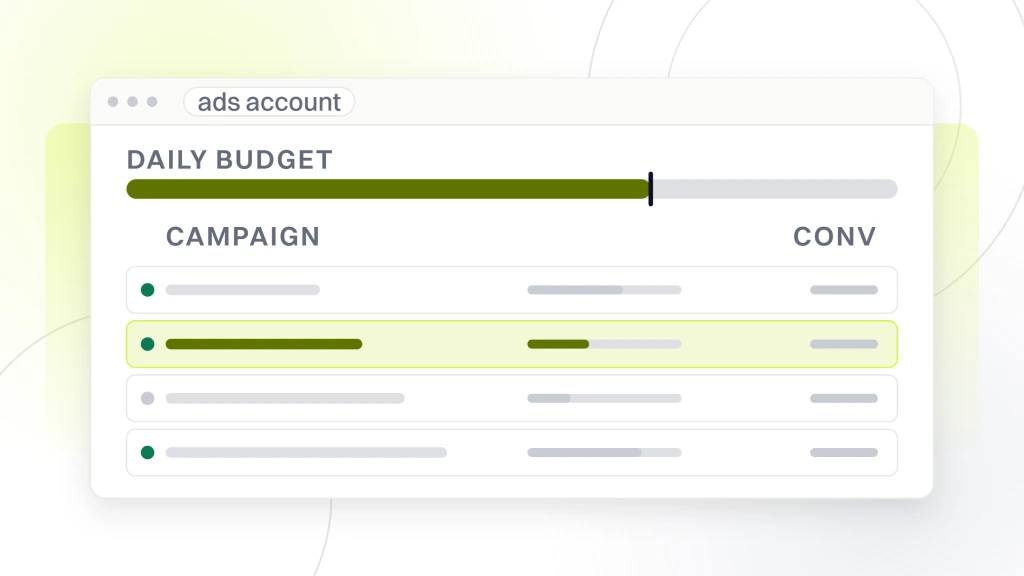
Google Shopping structure decides whether paid dollars concentrate on the products that make real margin or spread evenly across a catalog where 20% of SKUs earn 80% of the profit. The default Google Shopping setup lumps every product into one campaign, which lets Google’s algorithm favor high-search-volume items regardless of margin. That default costs most DTC brands 15 to 25% of potential profit compared to a segmented account structure that respects the margin tiers.
The Three-Tier Segmentation That Works
A working Google Shopping account splits products into three tiers. Tier 1 covers hero SKUs with the strongest margin and proven conversion rates. Tier 2 covers steady sellers with acceptable margin. Tier 3 covers long-tail SKUs and clearance items where the goal is inventory turn rather than new customer acquisition. Each tier gets its own campaign with a target ROAS that matches the margin structure. Tier 1 targets a 4.0 to 5.0 ROAS. Tier 2 targets 3.0 to 4.0. Tier 3 targets 2.0 to 2.5 where inventory pressure justifies lower efficiency.
Product Feed Hygiene as the Foundation
The product feed under a Google Shopping account hides roughly 60% of paid media waste. Missing GTIN codes on branded products drop ad impressions by 30 to 50%. Google downranks feeds with incomplete attribute data. Broken image URLs disable listings without a warning email. Product titles that match the manufacturer catalog rather than what shoppers search for miss high-intent matches. A working retainer audits the feed monthly and pushes fixes through Merchant Center within 48 hours of detection. The Google Ads feed specification documentation covers the exact attributes that move ranking, and any DTC paid media consultant worth the retainer already knows them cold.
Meta Advantage Plus Campaigns Inside Ecommerce PPC
Meta Advantage+ shopping campaigns rewrote how paid media runs on Facebook and Instagram across 2023 and 2024. The old campaign structure built separate ad sets for prospecting and retargeting with tight audience targeting on interests. Advantage+ collapses that structure into one algorithmic campaign that decides prospecting versus retargeting spend automatically based on real-time conversion probability. The result on well-run accounts is a 20 to 35% gain in blended ROAS compared to the manual structure. The catch is that Advantage+ needs clean pixel data, a healthy catalog feed, and at least 15 creative variations to work at full potential.
Creative Volume Requirements
A working Meta Advantage+ campaign runs 12 to 20 creative variations at any given time. Static product images, lifestyle photography, user-generated content clips, founder-facing story videos, and product-demo videos all get tested in parallel. The algorithm sorts winners from losers inside 72 hours based on conversion data. Media buyers who feed only three or four creatives into Advantage+ starve the algorithm and see mediocre ROAS. Media buyers who rotate 3 to 5 new creatives per week keep the account fresh past the 90-day mark where fatigue starts pulling performance down. That weekly rotation cadence is the single most reliable paid media discipline for holding Meta ROAS in the 2.5 to 4.0 range at scale.
Retargeting Windows That Still Work
Meta retargeting inside a DTC paid account runs three audience windows in parallel. A 3-day window targets high-intent recent viewers with product-focused creative and urgency messaging. A 30-day window targets warm site visitors with lifestyle and social proof creative. A 180-day window targets past purchasers with new arrival announcements and cross-sell messaging. Each window earns its own budget line and its own ROAS target. Blending the three into one retargeting campaign is the most common mistake a growth-stage brand makes when it moves away from a specialist agency, and it usually costs 15 to 25% of retargeting revenue over the first 60 days after the switch.
How Much Should a Store Spend on Ecommerce PPC Each Month
A healthy DTC brand spends 10 to 20% of monthly revenue on paid media during a scaling phase, and 8 to 12% during a maintenance phase. A brand doing $100K a month that wants to grow 30% usually needs $15,000 to $20,000 in monthly paid spend.
Paid media spend correlates with revenue targets more than with brand stage or industry vertical. The working benchmark for a growth-stage DTC brand sits at 10 to 20% of monthly revenue in paid media spend during a scaling phase, and 8 to 12% during a maintenance phase. A brand doing $100K a month in revenue that wants to grow 30% year over year usually needs $15,000 to $20,000 a month in paid spend to hit the growth curve. Brands that spend under 8% of revenue on paid media rarely scale past their organic ceiling. Brands that push past 25% usually run at negative contribution margin. The exception is products carrying 70% gross margin or better.
| Brand stage | Monthly revenue | Paid spend floor | Paid spend ceiling | Retainer typical |
|---|---|---|---|---|
| Starter | Under $40K | $2,000 | $5,000 | $999 to $1,499 |
| Growth | $40K to $200K | $5,000 | $25,000 | $1,499 to $2,499 |
| Mid-market | $200K to $850K | $25,000 | $90,000 | $2,499 to $4,500 |
| Scale | $850K to $2.5M | $90,000 | $300,000 | Starts at $4,500 |
| Enterprise | $2.5M plus | $300,000 | Uncapped | Starts at $4,500, custom |
The floor and ceiling in the table above assume a 45 to 60% gross margin, which covers most DTC apparel, beauty, home decor, and pet accessory brands. Grocery and consumables with 25 to 35% gross margins need to run at the lower half of the spend range or the contribution margin math breaks. Luxury and premium categories with 65 to 80% gross margins can push the ceiling higher without losing profitability. The right paid media consultant runs the contribution margin calculation before recommending a spend level, and shares the math with the store owner so both sides trust the number.
Ecommerce PPC Reporting That Tracks Revenue Cleanly
Reporting decides whether the retainer stays or gets cut at the six-month mark. Weak paid media reporting rolls all revenue into one number and takes credit for growth the brand equity earned on its own. Strong reporting splits revenue three ways. New customer revenue from paid prospecting. Returning customer revenue from paid retargeting and lifecycle overlap. Branded search revenue that would come in without paid spend. The three-way split gives the store owner a real read on which spend earns new customers versus which spend rides on brand demand that would convert anyway.
The Metrics That Move Budget
- Blended ROAS across all paid channels combined, not just per-platform ROAS
- Marketing efficiency ratio, or MER, at the store level covering all revenue divided by all spend
- New customer acquisition cost split from returning customer acquisition cost
- Contribution margin per order after product cost, shipping, payment fees, and returns
- First-order to second-order conversion rate at 60, 90, and 180 days
- Branded search share of total paid revenue reported as a separate line
- Share of new customers acquired below target cost per acquisition
Store owners who track all seven metrics honestly catch spend drift inside 30 days and cut wasted budget before the loss compounds. Store owners who track two or three usually cherry-pick the numbers that support the campaigns they already wanted to run. A monthly Looker Studio dashboard that pulls Shopify order data, Google Ads reporting, Meta Ads reporting, and Klaviyo revenue into one view is the working standard for mid-market and Scale-tier brands. The retainer scope details on our ecommerce digital marketing agency guide cover the same reporting logic across the wider growth stack.
Ecommerce PPC Audit Before Any Scaling Call
A DTC paid media audit runs before any scaling conversation. The account structure decides whether new spend earns new revenue or just pours into underperforming campaigns. A working audit takes 14 days end to end and produces a written fix map covering account structure, catalog feed health, negative keyword coverage, creative rotation cadence, retargeting audience hygiene, and tracking integrity across Google Analytics 4, the Meta pixel, and Shopify order attribution.
The Six Audit Sections
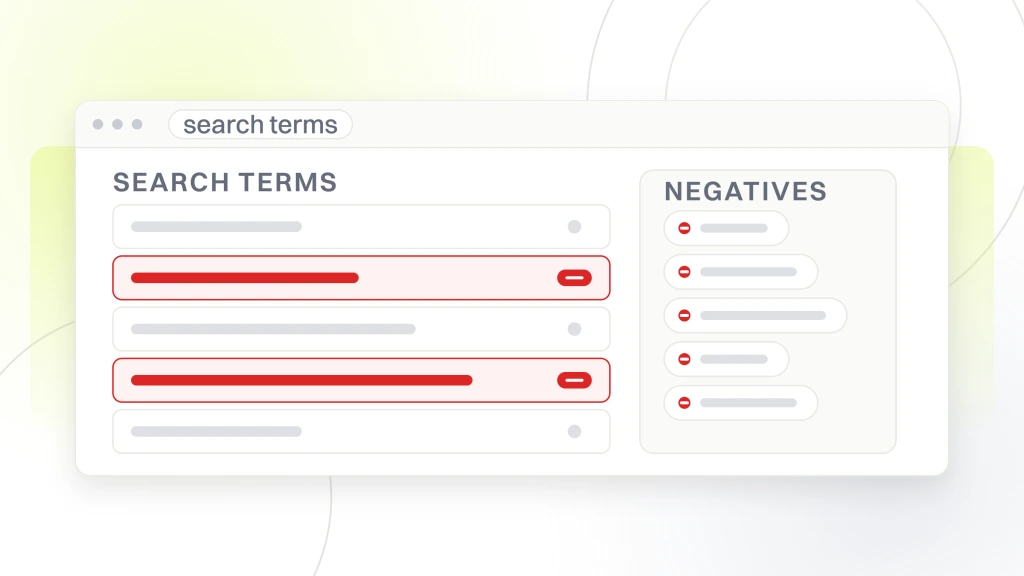
Section one covers account structure and campaign segmentation. Section two audits the product feed for missing GTINs, broken image URLs, weak product titles, and incomplete attribute data. Section three sweeps negative keyword coverage across Google search and Shopping campaigns for irrelevant queries eating budget. Section four measures creative rotation cadence and identifies fatigued Meta ads with declining click-through rates. Section five checks retargeting audience windows for overlap and cannibalization. Section six validates tracking integrity by comparing Shopify order revenue to Google Ads and Meta Ads reported revenue for the last 90 days.
Common Fixes That Recover Revenue Fast
The three fixes that recover revenue fastest across most paid audits are negative keyword pruning on Google search campaigns, product title rewrites on Shopping feed items, and Meta retargeting audience window separation. Negative keyword pruning usually cuts wasted Google spend by 8 to 15% inside the first week. Product title rewrites grow Shopping ad click-through rates by 12 to 22% inside 30 days. Retargeting window separation grows Meta retargeting ROAS by 15 to 30% across the 3-day, 30-day, and 180-day audiences. Those three fixes alone usually pay for the audit inside the first 45 days for any brand spending over $20,000 a month.
Creative Rotation Cadence for Ecommerce PPC Accounts
Creative rotation is the single most reliable paid discipline for holding ROAS across a scaling account. A written ppc strategy for ecommerce ties the rotation cadence to the wider channel-split math so the whole account moves together. Meta ad fatigue starts pulling click-through rates down after 14 to 21 days of continuous run time on the same asset. Google search ad copy fades slower, usually around 60 to 90 days. Google Shopping images stay fresh longer. The algorithm picks between catalog variants automatically. The rotation cadence has to match the fatigue curve of each channel, or spend keeps flowing into ads the audience already saw and ignored.
Weekly Cadence by Channel
The working weekly cadence runs 3 to 5 new Meta creatives per account, 1 to 2 new Google search ad variants per campaign, and 2 to 3 new Google Shopping product image tests per month. Our guide to ecommerce ppc audit covers the seven scoring areas our team walks before opening any retainer. Media buyers who hit that cadence hold Meta ROAS steady past the 90-day mark. Media buyers who miss it watch ROAS drift down by 5 to 10% per month as fatigue accumulates. The cadence is not optional. It is the price of a working paid media account.
Creative Formats That Convert
Static product-on-white images anchor the catalog feed and Google Shopping placements. Lifestyle photography with the product in real-use context drives Meta prospecting click-through rates 20 to 40% higher than static-only accounts. User-generated content, or UGC, video clips of real buyers reviewing the product drive Meta prospecting ROAS 15 to 25% above studio-only creative. Founder-facing video where the brand owner explains the product story works especially well for beauty, wellness, and premium home decor brands. Product-demo videos showing the item in use raise click-through rates on complex or technical products. A working creative library holds at least 20 assets across the five formats at any given time.
Attribution Across Google Meta and Shopify for Ecommerce PPC
Attribution inside a DTC paid account sits on three sources of truth that rarely agree with each other. Shopify order data reports first-click UTM revenue with high accuracy but misses cross-device journeys. Google Analytics 4 reports session paths across sessions and devices but has gaps on iOS Safari users after the 7-day cookie expiration. Meta Ads Manager reports last-touch revenue by pixel but overclaims retargeting revenue that would have converted without the touch. A working attribution model reconciles the three by anchoring on Shopify for total revenue truth and using GA4 for channel share.
The Reconciliation Method That Works
Reconciliation starts with Shopify total revenue for the period as the anchor number. GA4 channel share breaks that number into paid, organic, direct, email, and referral buckets. Google Ads and Meta Ads report platform revenue that usually sums to 110 to 140% of the GA4 paid bucket, thanks to overlapping last-touch claims. The overlap gets normalized by scaling each platform’s reported revenue down to match the GA4 paid share. That normalized number becomes the reporting revenue for each channel. The method is not perfect but it is honest, which is more than most agencies deliver. The Google Analytics Data API documentation covers the technical setup for pulling the numbers into a Looker Studio dashboard. Reconciled numbers get reviewed weekly during scaling phases and monthly once the account settles into a steady state, so the store owner and the media buyer share one revenue truth instead of arguing across three different platform reports every Monday morning.
Contribution Margin Beats ROAS in DTC Paid Media Decisions
Contribution margin per order matters more than ROAS. ROAS ignores product cost and fulfillment cost. An $80 sale at a 4.0 ROAS on paid media, but a $45 landed cost and $8 shipping cost, leaves $7 of contribution margin before the retainer, payment fees, and returns. Stores that ignore contribution margin scale spend into unprofitable territory chasing headline ROAS numbers. Stores that report contribution margin per order weekly catch the drift inside a month and adjust bids before the loss compounds through a full quarter.
Marketing Efficiency Ratio as the North Star
Marketing efficiency ratio, or MER, divides total store revenue by total marketing spend for the period. A brand doing $100K a month in revenue on $22,000 in spend runs a 4.5 MER. That number cuts through channel-level ROAS noise, capturing the halo effect paid media has on branded search, direct traffic, and organic sessions that would not exist without the paid demand generation. Most healthy mid-market DTC brands run at a 3.0 to 4.5 MER. Below 2.5 the business usually loses money on new customer acquisition after fulfillment cost. Above 5.0 the brand is under-spending relative to demand and could scale profitably with more budget.
Customer Lifetime Value Anchors the Ceiling
Customer lifetime value, or LTV, sets the upper bound on how much paid spend a new customer can absorb. A DTC beauty brand with a 180-day LTV of $180 can spend up to $60 to acquire a new customer at a 3.0 LTV to acquisition cost ratio. A DTC home decor brand with a 180-day LTV of $340 can spend up to $113 per new customer at the same ratio. Paid media decisions that ignore LTV usually cap spend too low and miss growth, or push spend too high and burn contribution margin. Brands that model LTV honestly by cohort and by acquisition channel run more precise budget allocation across Google and Meta.
DTC Paid Media Consultant vs Full-Service Agency
DTC brands weigh a solo paid media consultant against a full-service agency retainer at least once during every scaling phase. The right call depends on the brand’s internal team, the channel mix, and the coordination need across paid media, ecommerce SEO, email, and creative production. Consultants win on channel depth and lower monthly cost. Agencies win on cross-channel coordination, creative bandwidth, and specialist coverage across the surfaces a DTC brand needs at scale.
When a Consultant Fits Best
A solo paid media consultant fits best for brands with an internal marketing director who owns strategy across channels and needs specialist execution on paid media alone. Consultants usually run $150 to $300 an hour or $3,000 to $6,000 a month on retainer. The brand handles ecommerce SEO in-house or through a separate agency. Email lives in-house on Klaviyo. Creative production runs through a freelance designer or in-house team. The consultant slots into the paid media surface, delivers deep channel expertise, and coordinates through the internal marketing director. The setup works cleanly for brands past $3M in yearly revenue with mature internal teams.
When a Full-Service Agency Fits Best
A full-service ecommerce ppc agency fits best for brands under $3M in revenue without an internal marketing director, or for brands past $8M that want coordinated messaging across paid, SEO, email, and creative production at the same cadence. Full-service retainers run $999 to $1,499 for starter brands, $1,499 to $2,499 for growth-stage brands, and from $4,500 per month for scale and enterprise brands, with ad spend billed separately. The agency delivers strategy, execution, reporting, and creative under one roof with one account team. That coordination gain compounds. Product launches, promotional calendars, and creative themes flow through every channel at once instead of getting siloed by specialist. Our PPC management services cover the full-service scope for growing DTC brands.
Real Work Inside a DTC Paid Media Retainer
Boogie Board, a US-based writing tablet and digital notebook brand, partnered with our team on a paid media rebuild after years of Google Ads running with imprecise targeting and unoptimized landing pages that muddied product benefits. Wasted spend was climbing, conversion rates were soft, and the store owner needed a working PPC engine before adding channel bandwidth. The pre-partnership account leaned heavily on broad-match Google spend without margin-tiered Shopping structure, and creative on the landing pages did not walk shoppers through the product value quickly enough to convert warm traffic.
Over the engagement our team ran keyword research, restructured Google Ads into intent-tiered campaigns, added LinkedIn Ads to extend reach into education and creative professional segments, rebuilt the landing pages to simplify shopping, and shipped lead magnets showcasing sustainability and product benefits. The impact was measurable and durable. Cost per sale settled at $31 across an annual curve, conversion rate improved by more than 11% through optimized landing pages and refined ad targeting, and the team profitably managed $650,000 in ad spend while securing long-term customer engagement. The Boogie Board case study covers the multi-channel work and the ROI math in full.
Where Paid Media Fits the DTC Growth Stack
Paid media sits at the top of the demand generation funnel for most DTC brands, feeding new customers into the store where email, SMS, and retention marketing take over the repeat-purchase work. Paid media alone rarely builds a profitable DTC business past $5M in yearly revenue. Paid media plus ecommerce SEO plus lifecycle email plus creative production, all coordinated under one plan, compounds into the growth curve most brands want. The stack does not work if the paid media surface runs disconnected from the other three.
The right paid media partner also stays honest about what paid media cannot do. Paid media cannot fix a product that customers hate. Paid media cannot fix a Shopify store with a 1.2% conversion rate when the industry average is 2.8%. Paid media cannot fix an email flow set that recovers 4% of abandoned carts when the benchmark is 12%. The audit-first pattern names those gaps before any spend recommendation, so the store owner knows which fixes come first and which channels earn budget after the fixes go live.
Store owners ready to talk retainer scope with Redefine Web can start with a free paid media audit that produces the six-section fix map inside 14 days across every account surface listed above. Whether the brand is a starter Shopify store doing $200K a year or a Scale-tier DTC brand pushing past $20M, the audit-first pattern beats the demo-first pattern every quarter. Our ecommerce marketing retainer ties this paid media discipline to the wider growth stack for interested brands. Read the deeper walk on our ecommerce digital marketing strategy guide for how these channels stack under one plan.
For the full picture across paid, organic, email, SMS, and retention, see our companion post on ecommerce marketing strategies that drive DTC revenue. For a creative-play companion piece, see our marketing ideas for ecommerce guide with 12 real DTC examples and the numbers each idea moves.
For DTC founders buying paid search for the first time, our plain-language walkthrough of what is ppc in ecommerce covers the auction, the channel mix, and the first budget math before any of the tactics above apply. A fashion marketing agency handles the paid social, creative production, and retention side for DTC apparel brands. For fashion-specific paid media, our fashion PPC agency for apparel and accessories brands guide covers the Meta, TikTok, and Pinterest triad for apparel brands.
Fashion accounts add a drop-cycle overlay on top of the standard ecommerce cadence covered here. Our monthly PPC management scope for fashion brands guide covers the fashion-specific weekly rhythm, and our PPC for fashion ecommerce catalog ads guide walks through the apparel-specific catalog and retargeting work.