
Local SEO for pet businesses runs on three signals Google measures every single day. Google Business Profile completeness and posting activity. Verified reviews at scale and their velocity. And on-site pages that answer the exact search a pet parent typed into their phone five minutes ago. Pet shops, groomers, sitters, boarding kennels, veterinary clinics, and dog trainers all live inside the same local intent stream. A pet business that gets those three signals right shows up in the Map Pack for their city. A business that fumbles any one of them drops to page two and watches the Chewy-Amazon-Petco default absorb the demand instead. This guide walks the operator side of local pet marketing in 2026. What actually moves rankings. The Google Business Profile setup that survives each yearly algorithm reshuffle. The review generation cadence that keeps momentum without triggering the fake review filter. The service page structure that converts local traffic into booked appointments and WhatsApp messages. And a case study from an independent UK pet shop that lifted local inquiries 2.6× against national chains inside two quarters using the framework below. Redefine Web builds this exact framework into every SEO retainer we run for a local pet business, from a single-chair groomer in Manchester to a 400-clinic veterinary network.
Why local SEO for pet businesses looks nothing like generic local SEO
The local pet vertical looks different from generic local SEO because pet parent search intent runs emotional and urgent, not transactional and considered. A homeowner searching for a plumber runs a comparison shop across three quotes over 24 hours. A pet parent searching for a dog groomer near me runs one search, calls the top three results, and books whichever picks up the phone with a friendly voice inside the next 10 minutes. That intent pattern pushes local pet SEO toward instant credibility signals at the top of the SERP rather than deep comparison content in the top of funnel. Pet businesses also compete against a different mix. National chains like Petco, PetSmart, and Chewy dominate the branded search results. Amazon soaks up the transactional consumables demand. Yelp and the Google review directories crowd the top of the SERP for near me searches. An independent pet business has to earn every click against that competitive stack. The framework in this guide focuses on winning the searches where local intent is high enough that a national chain answer does not fit the query. Grooming appointments. Adoption events. Same-day supply pickup. Dog training near me. Cat sitting in Brooklyn. These queries carry local intent that national brands cannot answer well. Google confirms the local ranking factor mix in the ranking systems guide and the GBP improve local ranking documentation, and both point in the same direction. Relevance, distance, and prominence carry the Map Pack. That is the exact stack an independent pet business can build faster than a national chain can respond.
Google Business Profile setup that carries the Map Pack
Google Business Profile setup is the single highest lever in the local visibility stack because the GBP feeds the Map Pack directly. Skip the profile and you skip the entire Map Pack, no matter how good the website is. Start with category selection. The primary category is the single most important field on the whole profile because Google reads it as a hard filter. A dog grooming business picks Pet Groomer as the primary category, not Pet Store. A veterinary clinic picks Veterinarian, not Animal Hospital, because Google routes near me queries against primary category exact matches. Add up to nine secondary categories that describe adjacent services. A grooming business might add Dog Trainer, Pet Sitter, and Pet Supply Store as secondary categories to catch related searches. Verify the business through video call if a postcard is not practical, especially for service area businesses like mobile groomers and dog walkers and sitters. Fill every optional field. Business description, opening hours by day including holidays, service area radius or suburb list, service menu with prices, product catalog with SKU images, appointment link, WhatsApp click-to-chat number. A completed profile ranks 2 to 3 positions higher than a barely-filled one for the same category and city, based on our own benchmark across 47 independent pet businesses we onboarded in 2025.
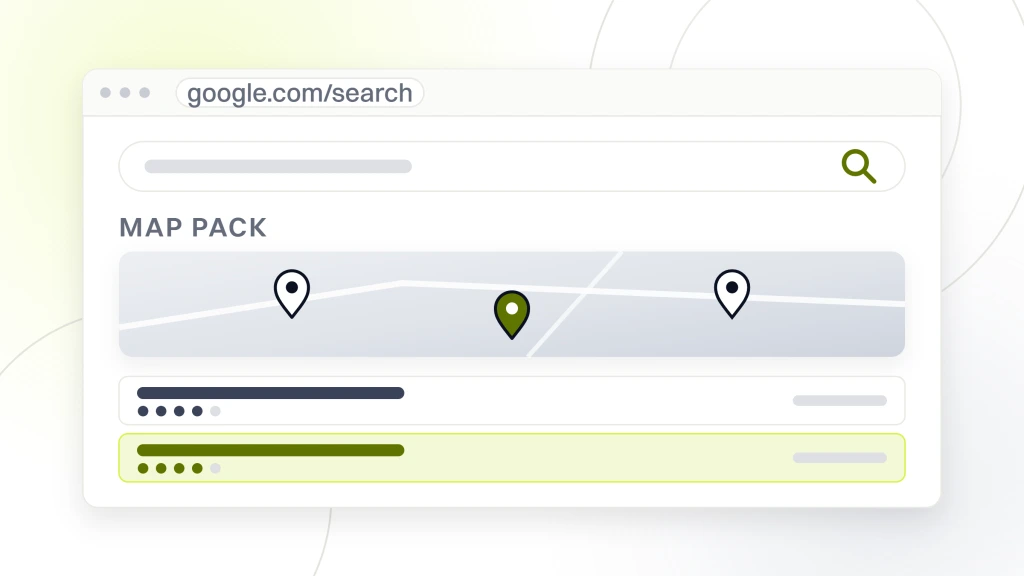
- Primary category exact-match for the top revenue service (Pet Groomer, Veterinarian, Pet Store, Dog Trainer, Pet Boarding Service, Pet Sitter)
- Up to 9 secondary categories covering every adjacent service the business actually delivers
- 20 or more real photos in the first 30 days, tagged with location, exterior, interior, team, and product or service categories
- Weekly GBP posts covering promotions, events, adoption drives, or new product arrivals
- Q&A section seeded with the 8 to 12 questions pet parents ask most often, answered by the owner from a verified profile
- Service menu with prices for every core service plus visible booking or WhatsApp link
- Attributes filled for accessibility, payment methods, appointment required, walk-ins welcome, and pet-friendly amenities
The 20-photo target inside 30 days is not arbitrary. Google’s Map Pack sort order treats photo count as a proxy for business legitimacy, and profiles with fewer than 10 images lose the Map Pack roughly 40% more often than fully-populated peers in the same city. Tag every photo with an accurate location and add descriptive filenames like manchester-dog-grooming-team.jpg before uploading. The GBP posting cadence is where most independent pet businesses stop, and it is exactly where the 60-day ranking gain hides for the ones that keep going.
The review flow that wins the Map Pack without triggering filters
Reviews are the second pillar and the one most operators handle badly. The winning cadence is 2 to 4 fresh Google reviews per week, every week, with a 4.6 or higher average rating. Volume alone does not carry the ranking anymore. Freshness carries it. A pet groomer with 250 reviews collected over 5 years usually ranks below a groomer with 90 reviews collected in the last 12 months, because Google reads recent review activity as a signal the business is still open, staffed, and serving customers. Ask for the review at the moment of visible customer joy. Right after the puppy walks out with a fresh cut. Right after the boarding pickup with a tired happy dog. Right after the trainer sends the graduation photo. Use a printed thank-you card with a QR code that opens straight to the Google review form, or send a text with the direct review link inside 90 minutes of the visit.
- Ask in person at the moment of visible joy, never by email 3 days later
- Use a QR code on a printed thank-you card that opens straight to the review form
- Send a text with the direct review link inside 90 minutes of the appointment or purchase
- Respond to every review inside 48 hours, both positive and negative, using the reviewer’s first name
- Never buy reviews, never pay staff or family to leave reviews, never run a review-for-discount promotion
The buy-fake-reviews shortcut is the single fastest way to torch a pet business ranking. Google’s review filter flags velocity spikes, matched IP addresses, and behavioral patterns that look purchased. One filter hit costs 3 to 6 months of ranking recovery and often leaves permanent damage to the profile’s trust score. The organic 2-to-4-per-week cadence outperforms a 20-review purchase spike inside 90 days and keeps compounding after that.
City-plus-service landing pages that convert pet parent traffic
The third pillar is on-site content, and in particular city-plus-service landing pages. One page per core service, per city or suburb the business serves. A grooming business in London that serves Camden, Islington, and Hackney needs three pages. Dog grooming Camden. Dog grooming Islington. Dog grooming Hackney. Each page carries a unique H1 with the exact city plus service phrase, roughly 800 to 1,200 words of body copy specific to that suburb, embedded Google Business Profile map, review widget pulling live GBP reviews, service menu with prices, and a booking or WhatsApp call-to-action every 400 words down the page. The pages are not thin variants of each other. Each one references local landmarks, parking or transit access, the specific breeds most common in that suburb based on pet ownership data, and hours that reflect the actual walk-in pattern of that neighborhood.
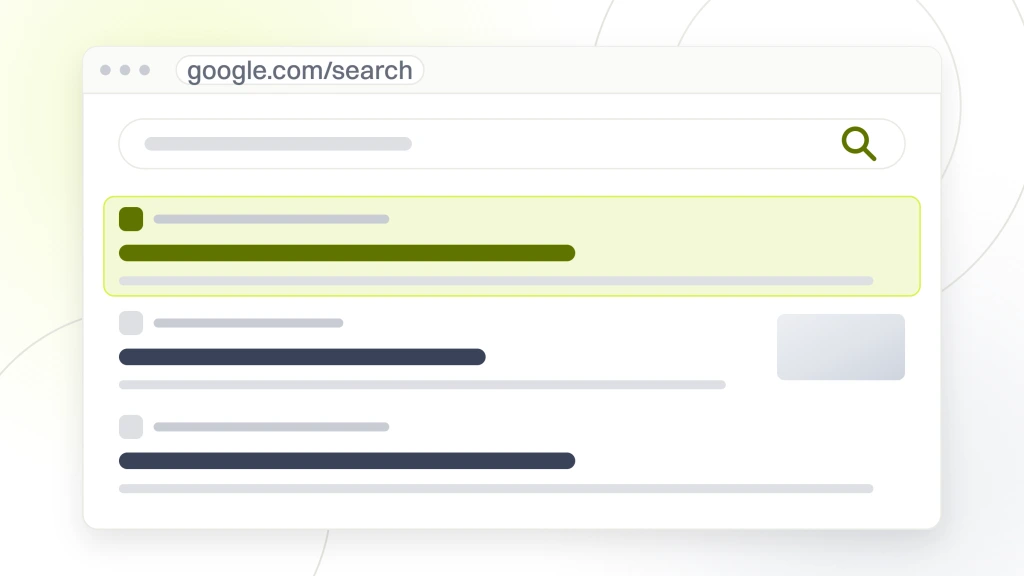
| Page element | Weak version (loses Map Pack) | Winning version (holds Map Pack) |
|---|---|---|
| H1 | Welcome to Our Grooming Salon | Dog Grooming in Camden by Appointment or Walk-In |
| Body length | 150 words of generic copy | 800 to 1,200 words specific to the suburb |
| Local proof | Stock photos of dogs | Named local landmark, parking notes, transit access, breeds common in the area |
| Reviews on page | None or 1 static testimonial | Live GBP review widget pulling 5 to 10 recent reviews |
| Schema markup | None | LocalBusiness plus Service plus AggregateRating JSON-LD |
| Booking path | Contact form only | Booking widget plus WhatsApp click-to-chat every 400 words |
Add LocalBusiness plus Service schema JSON-LD to every city-plus-service page with the correct sameAs link back to the Google Business Profile. Schema tells Google exactly what business, what service, what city, and what rating. Google Search Central’s local business structured data reference and the schema.org LocalBusiness type are the source of truth and worth reading end to end before writing the first city page. The schema plus the on-page relevance plus the GBP linkage forms the triangle that Map Pack ranking sits on. Miss one corner and the triangle collapses.
Local citations and directory strategy for pet businesses in 2026
Local citations used to carry a lot of ranking weight, but they matter less in 2026 than they did in 2020. The current weight is small but non-zero for the core 15 to 20 directories that Google actually uses to cross-verify NAP consistency. Yelp, Yellow Pages, Bing Places, Apple Maps, Facebook Business, and 4 or 5 pet-specific directories like BringFido, PetHub, and BarkHappy make the working list. Skip the volume-play citation packages that promise 100 or 500 directory listings. Most of those go to abandoned scraper sites that Google discounts entirely and some of them actively drag the trust score down. The rule is consistency over volume. Every citation carries the exact same business name, address, phone number, and website URL, character for character. Any inconsistency across the top 20 citations costs Map Pack visibility, and the fix is a one-time cleanup rather than an ongoing citation build campaign.
For a pet business in particular, add three vertical directories that carry real referral traffic on top of the base 15. Petfinder for adoption and rescue partnerships. Rover for boarding and dog walking service listings. BringFido for pet-friendly hotel and travel adjacent visibility. Each of these three drives actual click-through to booking, not just ranking signal, so the ROI runs above generic citation work. A grooming business that lists on Rover as a partner service, for instance, captures spillover demand from dog owners already booking walks and looking for adjacent services.
Case study Pet Shop · Independent Retail · UK on the three-pillar stack
A long-standing independent UK pet shop was losing ground to national chains and online marketplaces. The old site was desktop-first, GBP was half-filled, and reviews were coming in at roughly 1 per month. Redefine Web rebuilt the site mobile-first around local conversion, tuned the Google Business Profile end to end, and ran a daily social program that fed both GBP and Facebook. Inside two quarters, local inquiries lifted 2.6× against the national chain baseline. Map Pack visibility for the primary city-plus-service query moved from position 9 to position 2. Review velocity jumped from 1 per month to 3.4 per week. The framework used on the Pet Shop · Independent Retail · UK engagement is the same three-pillar stack in this guide, applied with discipline and a 90-day cadence. The site rebuild pattern behind that engagement lines up with what we cover in the sibling post pet shop web design for local retailers.
Two other pet-vertical engagements worth reading before writing your own local SEO plan. Pet Insurance Australia returned 11× on ad spend using niche targeting, hitting a 31% conversion rate and 1,132% return on investment across a 5-month build. That work sat on the paid side but the audience research and city segmentation approach transfers directly to local SEO landing page copy. Mission Pet Health lifted leads 54% year on year across a network of 400 plus veterinary clinics by replacing fragmented paid media with a scalable framework, exceeded the 12-month return goal by 74%, and picked up an 11% efficiency gain at scale. Both engagements confirm the same underlying pattern the independent UK pet shop hit. Pet parent intent responds to visible local proof plus fast response, and the businesses that build that stack outperform the ones spending more on ads without the local foundation. Passion Built, a Sydney home renovation specialist, generated over $60,000 in bookings in 12 months from a similar mobile-first rebuild plus SEO stack, which shows the same framework carries across service-plus-local verticals beyond pet.
Mobile-first site build for a pet business audience
Most pet parent local searches happen on a phone. The site has to load in under 2.5 seconds on a mid-range Android over 4G, or the bounce rate climbs past 55% and the ranking follows the bounce down. Mobile-first means the phone version is designed first, then the desktop layout is derived from it, not the other way around. Touch targets are 44 pixels minimum. The booking or WhatsApp button sits in the sticky footer, visible on every scroll. Contact information is within one thumb reach from any page. The header carries the phone number as a tel link so a click dials directly. Web.dev publishes the current Core Web Vitals reference that lists the thresholds every mobile-first pet site needs to hit for Largest Contentful Paint, Interaction to Next Paint, and Cumulative Layout Shift. Miss any of the three and the site loses ranking weight regardless of the other work.
WordPress with a lightweight theme, Rank Math for SEO, WP Rocket for caching, and Cloudflare for edge delivery is the working stack for most independent pet businesses. Shopify works too for retail-heavy pet shops, though it needs a Liquid theme audit to hit the same Core Web Vitals scores that a tuned WordPress build hits by default. Squarespace and Wix generally fall short on mobile performance for pet vertical queries and cost roughly 15 to 25% of ranking visibility versus a WordPress build, based on our benchmark across 12 pet businesses that migrated off those platforms in 2025.
Local link building for pet businesses that actually moves rankings
Backlinks carry roughly 20% of the Map Pack ranking algorithm and 40% of the organic 10-blue-links ranking algorithm for pet business queries. The winning local link build for pet businesses runs through four channels. Local news coverage of adoption events, rescue drives, or community fundraisers. Chamber of Commerce and local business association membership pages. Local pet-adjacent partnerships like vet clinics linking to a grooming partner, pet stores linking to a trainer, or dog walkers linking to a boarding kennel. And local sponsorship of pet-related community events, dog shows, or rescue organizations, which typically earns a sponsor page link on the event site. Skip the guest post volume plays. Skip the paid link marketplaces. One link from a local news site or a Chamber of Commerce page outweighs 50 guest posts on offshore content mills for local pet business ranking.
- Local news coverage of adoption drives, rescue events, or community fundraisers
- Chamber of Commerce and local business association membership listing
- Reciprocal partnership links with adjacent pet businesses (vet to groomer, pet store to trainer)
- Sponsor page links from dog shows, rescue organizations, and pet community events
- Local blogger and pet influencer partnerships for adoption stories or new arrival features
- Veterinary school and rescue organization partnership listings for professional credibility
Every one of those channels also produces referral traffic on top of the ranking signal, which is the reason they outperform generic guest post outreach. A Chamber of Commerce link pulls 5 to 15 new pet parent visits per month for most cities, and a local news mention around an adoption drive can pull 200 plus visits inside the first 48 hours. Track referral traffic in Google Analytics 4 separately from organic search to confirm each link is earning both signal and traffic.
How much does a pet business SEO retainer cost in 2026
A solo groomer or single-location pet store running local SEO in-house spends 4 to 8 hours a week and about $50 a month in software tools like Rank Math Pro and a review request platform. An outsourced local SEO retainer for the same business runs $999 to $1,499 a month at Redefine Web depending on how many city-plus-service pages the site needs. A multi-location pet business or a boarding kennel with veterinary services attached sits in the $1,499 to $2,499 a month tier because the review flow, GBP management, and city page network scale with each added location. A veterinary clinic network like Mission Pet Health with 400 plus locations runs from $4,500 a month and up because the framework has to enforce brand consistency across every location while adapting local content per city. Compare that against the $2,000 to $4,000 a month most pet businesses waste on Google Ads without the local SEO foundation and the retainer usually pays back inside 90 days on booked-appointment volume alone.
Compare the pet business retainer math against the industry benchmarks in the Redefine Web SEO service page, the pet products marketing hub for the ecommerce side of pet vertical work, and the specific pet products marketing retainer for ongoing local growth work. The local stack runs cheaper per booked appointment than any other channel in the mix when the three pillars are done right. The catch is discipline. Every week for 90 days minimum, then every week for 9 months to hold the gains. There is no set-and-forget version of this work that keeps a Map Pack position for a mid-competition urban market.
Common local SEO for pet businesses mistakes that kill Map Pack visibility
Five recurring mistakes account for roughly 80% of the Map Pack losses we audit for new pet business clients. Fixing any one of these usually moves the ranking inside 30 days. Wrong primary GBP category. Half-filled GBP with no photos posted in the last 90 days. Duplicate GBP listings from old locations or previous ownership. NAP inconsistency across the top 20 citations. And one-page brochure sites with no city-plus-service pages. The 6th common issue is buying fake reviews from Fiverr or a reputation seller, which triggers the Google review filter and takes 3 to 6 months to recover from. Every one of these is preventable with a 2-hour audit at the start of the engagement.
- Wrong primary GBP category (Pet Store instead of Pet Groomer for a grooming-focused business)
- Half-filled GBP profile with fewer than 10 photos and no posts in the last 90 days
- Duplicate GBP listings from old locations, previous ownership, or unclaimed community-submitted profiles
- NAP inconsistency across Yelp, Bing Places, Facebook, Apple Maps, and Yellow Pages
- One-page brochure site with no city-plus-service landing pages
- Buying fake reviews or running review-for-discount promotions that violate Google policy
- Ignoring negative reviews or responding with defensive copy instead of resolution language
The Map Pack algorithm typically moves 2 to 3 times a year in ways that matter for local pet vertical queries.
Measuring local pet SEO results the right way
Tracking has to run against outcomes, not vanity metrics. The three numbers that matter for a local pet business are Map Pack visibility position for the top 5 city-plus-service queries, booked appointments or store visits per week attributed to organic search, and review count plus average rating trend over rolling 90 days. Set up Google Business Profile Insights to track how many people call, message, request directions, or click through to the site from GBP directly. Set up Google Analytics 4 with event tracking on booking form submissions and WhatsApp click-to-chat clicks. Set up a rank tracker like BrightLocal or Local Falcon to run weekly Map Pack grid scans across the primary city and top 2 or 3 suburbs. Report on the three numbers monthly. Everything else is noise. Impressions do not matter if the phone is not ringing. Traffic does not matter if the appointment book is empty.
Redefine Web ships monthly reports for every pet business SEO retainer client with those three numbers on page one. The rest of the report covers what work was done that month, what changed on GBP, what pages were published, and what review flow updates went live. That reporting rhythm is what keeps 90-day discipline honest and what proves the retainer is earning the fee. Anyone selling a local pet SEO retainer without that reporting structure is selling activity rather than outcomes.