Google ads management for ecommerce runs on an account shape that looks nothing like a local-services build. The buyer never picks up a phone. The conversion happens on-site inside a checkout flow. The catalog can carry 50 SKUs or 50,000 SKUs and the campaign structure has to bend around that count. Ecommerce brands running google ads management for ecommerce that treat the account like a search-only local build give up 40 to 65% of addressable revenue to a bidding logic that ignores product-level performance data. This guide walks the seven-campaign structure, the feed hygiene work that decides whether Shopping ranks at all, the negatives cadence every DTC account skips, the creative rotation that keeps click-through rate stable across 12-month seasons, and the pricing shape honest agencies quote for the work.
Every number in this guide comes from live client accounts or the Redefine Web case library. Boogie Board, a reusable writing tablet brand, used this exact seven-campaign rebuild to hit a $31 cost per conversion at scale on paid search while doubling monthly spend. Abigail Ahern, a luxury interiors brand, saw ecommerce revenue grow after a paid-search-plus-organic overhaul. RAFZ Cirkulära Interiörer, a Swedish circular-economy interiors retailer, doubled online booking volume after a matched paid and SEO rebuild. Beauté Aesthetics New York moved appointment revenue with a paired paid-plus-site refresh. Every one of those numbers came from the same discipline. If you want the wider paid-media context, our ecommerce PPC agency page covers the cross-channel funnel across Google, Meta, and TikTok, our ecommerce PPC management for DTC brands guide covers the retainer shape, and our ecommerce PPC strategies for better ROAS guide covers the bid math that pairs with the structure below.
Why google ads management for ecommerce runs different from every other vertical
Google ads management for ecommerce runs on four core campaign types no local-services account ever needs. Shopping. Performance Max. Search. Demand Gen. Each type reads a different signal from the product feed, the checkout event, and the audience data. Skipping any of the four caps addressable revenue at a middle-ground ceiling. Shopping and Performance Max together carry 55 to 75% of most DTC accounts. Search sits at 15 to 30% picking up branded terms, category head terms, and long-tail buyer queries. Demand Gen picks up the top-of-funnel signal that keeps Shopping’s retargeting pool full.
Ecommerce accounts that skip Demand Gen see Shopping performance decay 3 to 6 months into the calendar as the retargeting pool shrinks and the account starts eating cold traffic on repeat buys. A local-services account can run on Search alone. A DTC brand running google ads management for ecommerce cannot. The catalog itself is a ranking signal that only Shopping and Performance Max know how to read. Google’s Merchant Center product data specification covers the exact feed fields Shopping evaluates, and getting those fields right is the single biggest lever inside the account.
Catalog shape drives account shape
A 50 SKU catalog runs on one Shopping campaign and one Performance Max asset group. A 500 SKU catalog splits into 3 to 5 campaigns by margin band or category. A 5,000 SKU catalog splits into 8 to 15 campaigns and adds hierarchical Performance Max asset groups. A 50,000 SKU catalog runs on feed segmentation, priority bidding by product performance, and daily automated bid adjustments. Every jump in catalog size changes the campaign structure. Accounts that never restructure as the catalog grows carry the wrong architecture for their current scale, and revenue quietly caps 20 to 35% below the working ceiling.
The feed is the campaign
The product feed does more work than the ad copy in google ads management for ecommerce. Title. Description. Image. GTIN. Product type. Category taxonomy. Every field feeds Google’s matching logic. A dirty feed with 30% of products missing GTINs will rank below a competitor with cleaner data even at higher bids. Most DTC accounts we audit find 15 to 40% of products underperforming because of feed data gaps that never got closed.
Seven campaigns every google ads management for ecommerce account carries
Google ads management for ecommerce accounts carry seven campaign types when the account is built right. Standard Shopping split by margin band. Performance Max split by product category. Branded Search. Category head-term Search. Long-tail Search. Demand Gen. Retargeting Display. Skipping any one of these gives up 12 to 30% of addressable revenue. Shopping and PMax are the workhorses. Search fills the intent gaps. Demand Gen keeps the retargeting pool warm.
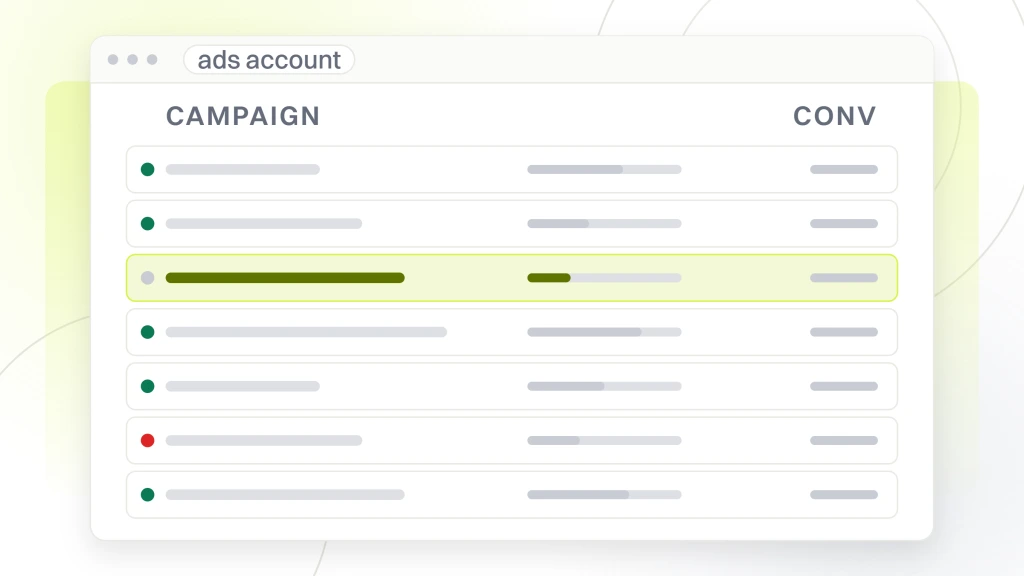
Standard Shopping runs 30 to 45% of budget. Performance Max runs 20 to 35%. Branded Search runs 4 to 8%. Category head-term Search runs 8 to 14%. Long-tail Search runs 6 to 12%. Demand Gen runs 5 to 12%. Retargeting Display runs 4 to 8%. Every campaign type gets its own return on ad spend target because the intent bands sit at different points in the buying funnel, and demanding one shared target flattens the account into underperformance. See our google ads management services page for the wider account architecture every vertical this playbook covers gets built around, and our google ads management pricing guide for the retainer breakdown.
| Campaign type | Budget share | Return target | Cost per conversion band |
|---|---|---|---|
| Standard Shopping | 30 to 45% | 3.0x to 6.0x | $18 to $65 |
| Performance Max | 20 to 35% | 2.5x to 5.0x | $22 to $75 |
| Branded Search | 4 to 8% | 8x to 20x | $4 to $12 |
| Category Search | 8 to 14% | 2.0x to 3.5x | $28 to $90 |
| Long-tail Search | 6 to 12% | 3.0x to 5.5x | $14 to $55 |
| Demand Gen | 5 to 12% | 1.2x to 2.5x | $35 to $120 |
| Retargeting Display | 4 to 8% | 4.0x to 9.0x | $8 to $28 |
Splitting Shopping by margin band
Standard Shopping campaigns get split by margin band, not by category, once the catalog crosses 500 SKUs. High-margin products get their own campaign with a higher return target. Mid-margin products get a middle campaign. Low-margin products get a defensive campaign with a floor target. This split lets Google’s Smart Bidding optimize toward margin instead of gross revenue and typically moves account-level contribution margin 15 to 35% versus a single Shopping campaign covering all products at one shared target. Boogie Board pulled 35 to 45% of its total account gain from this one restructure alone.
Performance Max asset groups by category
Performance Max asset groups get split by product category rather than by margin. Each asset group gets 5 to 15 headlines, 4 to 5 descriptions, 8 to 20 images, and 3 to 5 videos. The videos matter more than most DTC brands running google ads management for ecommerce think because Performance Max routes 25 to 40% of impressions to YouTube, Discovery, and Gmail placements where video creative controls conversion rate. Asset groups without video creative cede those placements to competitors and give up 15 to 25% of the campaign’s potential reach.
Split Shopping by margin band, not by category, once the catalog crosses 500 SKUs. Smart Bidding optimizes toward margin instead of gross revenue and account-level contribution margin moves 15 to 35% versus a single campaign at one shared return target.
Feed hygiene for google ads management for ecommerce
Feed hygiene decides whether Shopping ranks at all. Every product needs a unique title 30 to 70 characters long that names the brand, the product, and one distinguishing attribute. Every product needs a description of 200 to 500 characters with the top 3 buyer-intent keywords. Every product needs a GTIN for branded products or an accurate MPN for private-label products. Every product needs a Google product category from the taxonomy tree, not a made-up custom label. Every product needs a high-quality image on a white background at minimum 800 by 800 pixels.
Custom labels do most of the routing work for account structure in google ads management for ecommerce. Custom label 0 marks margin band. Custom label 1 marks best-seller status. Custom label 2 marks seasonality. Custom label 3 marks new-arrival status. Custom label 4 marks clearance status. Campaigns filter on custom labels to build product groups without duplicating the base feed. Accounts that never populate custom labels lose the ability to bid differently on their $8 margin product versus their $80 margin product and let Google average both into a middle-ground target.
Title optimization for Shopping
Product title optimization runs on 3 rules. Front-load the most-searched keyword. Include the brand name. Include one distinguishing attribute like size, color, or material. Shopping queries match against titles more heavily than against any other field. Products with keyword-front-loaded titles get 30 to 60% more impressions than the same products with brand-front-loaded titles because Shopping searches often start with the product word rather than the brand word. Testing titles is the highest-return feed-side work most DTC accounts skip. Our best ecommerce platform for SEO guide covers how platform choice shapes the feed export quality on Shopify, WooCommerce, and BigCommerce.
Image quality thresholds
Product images for Shopping need a minimum 800 by 800 pixel dimension, a white or neutral background, and the product filling 75 to 90% of the frame. Images below these thresholds get penalized in Shopping ranking even at higher bids. Every google ads management for ecommerce catalog audit we run finds 8 to 20% of products with images that fail one of the thresholds. Fixing image quality across the underperforming products alone moves total Shopping revenue 6 to 14% inside 30 days without any bid change.
Negative keyword work every DTC account skips
Negative keyword work in google ads management for ecommerce runs continuous, not one-time. The starter negative list on any google ads management for ecommerce build runs 400 terms on day one covering competitor brands, wholesale queries, coupon queries, informational queries, and off-topic product categories. That list grows 20 to 40 terms every week as search term reports surface new waste. Accounts that skip weekly negative additions burn 8 to 15% of budget on non-buyer traffic for the life of the account. Google’s match type documentation covers how phrase, exact, and broad match interact with the negatives you build.
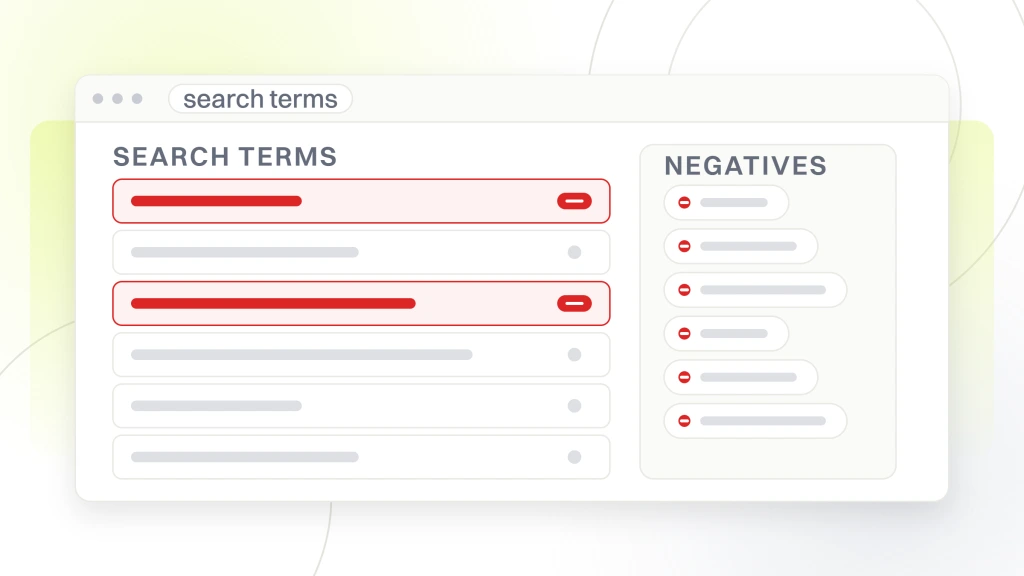
Search term reports feed the negative list. Every week the report gets scanned for queries under 5 clicks and no conversions, queries over 5 clicks and no conversions, and queries with irrelevant intent that slipped through phrase or broad match. Each bucket gets triaged. Under-5-clicks-no-conversions goes onto a watch list. Over-5-clicks-no-conversions goes onto the negative list. Irrelevant-intent goes onto the negative list with a match-type refinement note.
Performance Max negative work
Performance Max negative keyword work runs through account-level negative keyword lists rather than campaign-level lists because PMax does not accept campaign-level negatives at the same detail as Search campaigns. The account-level negative list has to be surgical. Adding too broad a negative removes traffic from Shopping and Search too. Adding too narrow a negative leaves waste running. This tension is why PMax negative work takes 3 to 5 times the effort of Search negative work per dollar of savings.
Search query mining for new campaigns
Search query mining does more than surface negatives. It surfaces new campaign opportunities. Any search term producing 8 or more conversions in a 30 day window with no dedicated campaign gets promoted to its own ad group inside the relevant Search campaign. Any search term producing 20 or more conversions gets its own campaign with dedicated ad copy and a matched landing page. This promotion cycle is how accounts scale from $50k a month to $500k a month while holding cost per conversion inside a target band.
Conversion tracking that captures every checkout
Conversion tracking for google ads management for ecommerce runs on 3 layers. Google Ads conversion tags. GA4 ecommerce events. Server-side Google Tag Manager with enhanced conversions. Each layer catches signal the other layers miss. Skipping any one layer underreports account performance by 10 to 25%. Most audits find at least one layer with holes. Fixing the tracking first surfaces conversions that were always happening but had never been counted. Our step-by-step Google Ads conversion tracking with Google Tag Manager guide walks the full wiring, and Google’s enhanced conversions documentation covers the tag deployment steps.
Server-side GTM plus enhanced conversions plus first-party data hashing closes the iOS 14 gap that hit ecommerce accounts starting in 2021 and has never fully recovered on the client-side alone. That server-side hop restores 12 to 22% of previously invisible conversions for most DTC brands. The restored signal then feeds Smart Bidding better data, and Smart Bidding starts optimizing on the fuller picture inside 2 to 3 weeks of tag deployment.
First-party data through customer match
First-party data through Customer Match feeds 3 workstreams in google ads management for ecommerce. Retargeting existing customers on high-margin products. Suppressing existing customers from new-buyer acquisition campaigns. Building lookalike audiences from the top-decile buyer segment. Every DTC brand has this data sitting in a CRM or email platform and 60 to 80% of brands we audit have never pushed it into Google Ads. That first push moves account-level revenue 8 to 18% inside 60 days by keeping acquisition budget off existing buyers.
Attribution model picks
Attribution for google ads management for ecommerce runs on data-driven attribution above 300 monthly conversions. Below that threshold, position-based attribution weighted 40-20-40 to first and last touch beats last-click on any account with a 2 to 14 day consideration window. Ecommerce buyers rarely convert on visit one. Most convert on visit 3 to 6 after retargeting, email nurture, and a return visit. Last-click attribution undercounts the top-of-funnel campaign contribution by 30 to 45% on most DTC accounts.
Creative rotation cadence for ecommerce ads
Creative rotation cadence for ecommerce ads runs on a 4-week refresh cycle for high-spend campaigns and an 8-week refresh cycle for low-spend campaigns. Every google ads management for ecommerce refresh introduces 2 new headline variants, 1 new image, and 1 new short video into the asset pool. Old creative gets retired based on conversion rate ranking, not on age alone. Accounts that never refresh creative see click-through rate decay 15 to 30% inside 90 days as fatigue sets in on repeated impressions to the same retargeting pool.
Seasonal creative windows change the rotation. Holiday season needs a 2-week refresh cycle for the top 3 to 5 campaigns. Back-to-school needs a 3-week cycle. Summer needs an 8-week cycle for most categories. Every seasonal peak carries a distinct creative shape that generic year-round ads cannot cover. Accounts that ride generic creative through Q4 see click-through rate underperform the seasonal benchmark by 25 to 45%.
Video creative for Performance Max
Video creative for Performance Max asset groups matters more than most DTC brands realize because 25 to 40% of PMax impressions route to YouTube, Discovery, and Gmail. Asset groups without video get their share of these placements dropped and revenue drops with it. Every asset group should carry 3 to 5 short-form videos in 6 to 15 second lengths matching the product category. Product demo videos outperform brand videos on Shopping-side placements by 20 to 40% on click-through and conversion rate.
Image creative rotation
Image creative rotation runs a mix of product-only shots, lifestyle shots, and social-proof composites. Product-only shots convert best on Shopping and Search. Lifestyle shots convert best on Demand Gen and Discovery. Social-proof composites with review stars, testimonials, or press logos convert best on Retargeting Display. Every campaign type gets its own image treatment matched to the placement mix. Using one shared image pool across all campaigns caps click-through rate 20 to 35% below the potential ceiling.
Google ads management for ecommerce pricing shape
Our google ads management for ecommerce retainer tiers start at $999 per month, run through $1,499 and $2,499, and top out from $4,500 per month for accounts spending $80,000 or more monthly on ads. Ad spend is billed separately and paid directly to Google. The $999 tier covers a small DTC brand spending $2,000 to $8,000 monthly with weekly account touches. The $1,499 tier layers in landing page A/B testing and feed hygiene automation. The $2,499 tier suits mid-market DTC brands spending $15,000 to $50,000 monthly. The $4,500+ tier suits large DTC and multi-brand accounts spending $80,000 or more monthly across search, Shopping, PMax, and Demand Gen.
Percent-of-spend pricing runs 10 to 15% of media for accounts above $50,000 monthly ad budget. Flat-fee pricing wins below that threshold because the percent model does not cover the setup time on feed hygiene and tracking. Every honest agency prices the retainer separately from media spend so the true cost of management stays visible in the reporting. Our google ads management pricing guide covers the full breakdown across every retainer band.
What the retainer includes
A DTC ecommerce Google Ads management retainer includes campaign build, feed hygiene monitoring, ad copy testing, weekly optimization, monthly reporting, quarterly strategy review, and a monthly creative rotation review. Feed hygiene monitoring catches new products missing GTINs or images before Shopping performance drops. Creative rotation review flags fatiguing assets before click-through rate falls. Weekly optimization covers bid adjustments, negative keyword additions, and match type refinements across all seven campaigns.
What the retainer excludes
Retainers exclude landing page design, creative production for video and image assets, feed management software subscriptions, and multi-channel measurement tools. Landing page design runs separately at $2,600 to $12,000 per landing page. Video creative production runs $800 to $4,500 per 15-second spot. Feed management platforms like Feedonomics or Channable run $400 to $2,500 per month depending on catalog size. Every honest agency itemizes these on the SOW so the true monthly cost of the whole program stays visible.
DTC and ecommerce case studies from the Redefine Web library
Boogie Board is a reusable writing tablet brand that came to us with a scaling Google Ads program running at a cost per conversion that had been drifting up for 18 months. The catalog covered 40 to 60 SKUs across product families for kids, students, and office use. The Google Ads account ran one shared Shopping campaign, one Performance Max campaign with mixed asset groups, and Search campaigns without a proper branded-versus-non-branded split. Reporting bundled all revenue against total spend, hiding the acquisition return behind branded search returns. We rebuilt the account against the seven-campaign structure above. Split Shopping into 3 margin-band campaigns. Rebuilt Performance Max with 4 asset groups by product category, each carrying 5 videos and 15 images. Separated branded Search from non-branded Search with distinct return targets. Added Demand Gen for top-of-funnel prospecting. Turned on Customer Match for both retargeting and suppression. Ran feed hygiene across every SKU, closing 22% of products with missing or thin data. Deployed server-side GTM with enhanced conversions. The rebuild took 10 weeks. Cost per conversion stabilized at $31 across the acquisition-side campaigns while the account scaled to more than double the previous monthly ad spend without cost per conversion drifting up. Non-branded return moved from 1.4x to 3.6x. Revenue attributed to top-of-funnel Demand Gen doubled inside 6 months.
Abigail Ahern, a luxury interiors brand known for dark, atmospheric styling, ran a paired paid-search and organic rebuild that grew qualified session volume and pushed transaction revenue on the ecommerce store. The account carried a Shopping-heavy structure with weak feed hygiene on the long-tail product families. Cleaning the feed, splitting Shopping by margin band across the collection categories, and layering Performance Max with matched category asset groups moved return on ad spend on the acquisition side inside 90 days. RAFZ Cirkulära Interiörer, a Swedish circular-economy interiors retailer selling curated second-life furniture and homewares, doubled online booking volume for in-store consultations after a matched paid-search and SEO rebuild. The paid work carried branded and category Search plus a small Shopping presence tuned for the higher-margin curated pieces, while organic content and technical SEO worked the head-term visibility.
Beauté Aesthetics New York, an aesthetics practice with an ecommerce arm selling skincare and post-treatment products, layered a paid-search account onto a rebuilt WordPress site. Branded Search plus category Search on the skincare line grew online product revenue while the appointment side of the funnel picked up incremental bookings from Performance Max audience overlap. Every one of those google ads management for ecommerce programs ran the same discipline. Clean feed. Margin-band Shopping. Category-shaped Performance Max. Branded and non-branded Search separated in reporting. Server-side tracking. First-party data pushed into Customer Match. Weekly negatives. Monthly creative refresh. The google ads management for ecommerce pattern is consistent across catalog size, price point, and vertical. Every brand that runs the pattern sees the same three-lever contribution to cost per conversion. Structure. Feed. Tracking.
How the first 90 days go on a new DTC account
The first 90 days on a new google ads management for ecommerce engagement covers audit, feed cleanup, tracking, campaign rebuild, and optimization. Week 1 audits the account structure, feed hygiene, tracking, and creative pool. Weeks 2 and 3 clean the feed and deploy server-side GTM with enhanced conversions. Weeks 4 through 8 rebuild the seven campaign types with matched product groups, dedicated return targets, and refreshed creative. Weeks 9 and 10 run the first optimization pass and the first ad copy A/B tests. Weeks 11 through 13 compound the results as Smart Bidding learns the new tracking signal.
Expect a 15 to 30% movement in blended return by day 60 and a 25 to 50% movement in non-branded return by day 90. Brands expecting week-1 results are misreading the compound curve. The account gets better every week for the first 6 months, then stabilizes. Our PPC management services page covers the wider paid-media roadmap this DTC Google Ads work sits inside, and our ecommerce marketing metrics and ROI benchmarks guide covers the numbers to grade the program against.
Day 30, 60, and 90 milestones
Day 30 shows the feed cleaned, the tracking layer verified, and the first campaign rebuild deployed for Shopping and Search. Day 60 shows Performance Max asset groups rebuilt, Demand Gen live, and blended return up 15 to 25% from baseline. Day 90 shows the account at target cost per conversion with all seven campaign types running clean and reporting non-branded return separately from branded return. Brands that stick with the compound curve past day 90 typically see the biggest gains in months 4 through 6.
Reporting cadence for a DTC brand
Reporting on a google ads management for ecommerce program for a DTC brand runs on a weekly quick-look, a monthly full report, and a quarterly strategy call. Weekly quick-look covers spend, revenue, return by campaign type, and any spike or dip worth noting. Monthly report covers full account performance plus non-branded return, contribution margin by product category, and creative refresh status. Quarterly strategy call covers the 90-day trajectory, the next 90-day plan, and any budget shifts based on seasonal windows or new product launches.
Push first-party data into Customer Match for retargeting, suppression, and lookalike modeling. 60 to 80% of DTC brands we audit have never pushed it into Google Ads, and the first push moves account-level revenue 8 to 18% inside 60 days by keeping acquisition budget off existing buyers.
Picking a google ads management for ecommerce agency
Picking a google ads management for ecommerce agency starts with three questions. How many DTC accounts does the agency currently run. Does the agency separate branded from non-branded return in reporting. Who runs the account day to day. If the agency runs fewer than 4 DTC accounts, they are learning the vertical on your budget. If they refuse to separate branded from non-branded return, they are hiding the acquisition math behind a vanity number. If the account gets handed to a junior after the sale, the strategy conversation on the pitch call is not what you are buying.
Ask for 3 references from active DTC clients on retainer for more than 12 months. Talk to at least 2 of the 3. Ask about scope changes, reporting quality, and how the agency handled the last algorithm shift or PMax update. Every reference call catches a pattern the sales deck hides. Every serious brand runs those calls before signing an SOW past $4,500 monthly. Our how to evaluate Google Ads management companies guide walks the full checklist.
Red flags on the pitch call
Red flags include no DTC case study with a named cost per conversion, no discussion of feed hygiene as a distinct workstream, no branded-versus-non-branded return separation, and reporting samples that lead with blended return as the primary metric. Any agency that leads with blended return as the headline number is hiding the acquisition math. Any agency without a feed hygiene checklist is running Shopping campaigns on hope. Any agency that treats all campaign types with one shared return target is capping account performance.
Green flags worth signing on
Green flags include a named DTC case study with a cost per conversion number, a proposal that itemizes feed hygiene and tracking as distinct workstreams, separate reporting for branded and non-branded return, and a retainer that separates management fee from media spend. Any agency that hits all four is worth a reference call. Any agency that hits fewer than 3 is not worth the pitch time. That filter cuts a vendor short list from 15 candidates down to 3 or 4 inside a week.
Where to start with your DTC google ads setup
Start with an honest audit of the current google ads management for ecommerce account. If the Shopping account has never been split by margin band, that split is the biggest single lever. If the product feed has 15 to 40% of products with data gaps, the feed hygiene work is the second-biggest lever. If the tracking layer has iOS gaps, the server-side GTM deployment is the third-biggest lever. Most DTC brands we audit need all three. The margin-band split plus feed hygiene plus tracking typically moves non-branded return 50 to 150% inside the first 6 months.
A paid search program that compounds bookings and revenue comes down to six patterns. Run the seven-campaign structure (Standard Shopping, Performance Max, Branded Search, Category Search, Long-tail Search, Demand Gen, Retargeting Display). Split Shopping by margin band once the catalog crosses 500 SKUs. Run feed hygiene as a distinct weekly workstream. Deploy server-side GTM plus enhanced conversions plus Customer Match. Refresh creative on a 4-week cycle for high-spend campaigns and 8-week for low-spend. Publish a monthly report that separates branded from non-branded return. If the current account is missing any of the six, our google ads management for ecommerce program covers the account structure, weekly work, and monthly reporting end to end, and our retainer tiers ($999, $1,499, $2,499, from $4,500 monthly) cover brands from small DTC startups through multi-brand accounts spending $500,000 or more per month. Book a call and we’ll walk the last three DTC accounts we restructured end to end.
Is Google Ads good for ecommerce?+
Yes, Google Ads is one of the strongest channels for ecommerce because Shopping, Performance Max, and Search together capture buyers already searching for a product or category. Ecommerce accounts that run the seven-campaign structure (Standard Shopping, Performance Max, Branded Search, Category Search, Long-tail Search, Demand Gen, Retargeting Display) typically hit blended return on ad spend of 3.0x to 5.0x within 90 days. The catalog itself is a ranking signal that Shopping and PMax read directly from the product feed. Brands that skip the feed hygiene work, run one shared campaign for all products, or send all clicks through last-click attribution usually see return below 2.0x and quietly decide Google Ads does not work. The strategy is the difference, not the platform. Boogie Board stabilized cost per conversion at $31 at scale after a rebuild against this structure.
Does Google Ad Manager cost money?+
Google Ad Manager itself is free for publishers under 90 million monthly ad impressions in the US and Canada (or 200 million elsewhere). Above those thresholds, Google Ad Manager 360 is priced per contract. For ecommerce brands, the more relevant cost is the Google Ads platform, which is also free to use, plus the media spend paid directly to Google. Agency management on top of the platform typically runs $999 to $4,500 per month depending on account size, or 10 to 15% of monthly ad spend on accounts above $50,000 monthly. Feed management software like Feedonomics or Channable runs $400 to $2,500 per month depending on catalog size. Call tracking, landing page A/B tools, and server-side GTM hosting sit alongside as separate line items. Every honest proposal itemizes each so the true monthly cost stays visible.
How to do google ads management for ecommerce reddit+
Reddit threads in r/PPC and r/ecommerce consistently recommend a small handful of moves for DTC brand owners running paid search. Build the seven-campaign structure and never run Shopping as a single all-products campaign once the catalog crosses 500 SKUs. Split Shopping by margin band and let Smart Bidding optimize toward margin instead of gross revenue. Clean the feed before touching bids because a dirty feed caps every downstream move. Track cost per conversion at the campaign level (not blended) and separate branded from non-branded return in reporting. Add 20 to 40 negatives every week from the search terms report. Turn on Customer Match for retargeting and suppression. Reddit advice matches what we see across DTC accounts we audit, and the Boogie Board rebuild followed the same pattern to a $31 cost per conversion.
What is google ads management for ecommerce reddit+
Reddit conversations define google ads management for ecommerce as the weekly work of running paid search for a DTC brand across Shopping, Performance Max, Search, Demand Gen, and Retargeting Display. The work covers feed hygiene, campaign structure by margin band and category, weekly negative keyword additions, ad copy and creative rotation, server-side conversion tracking with enhanced conversions, first-party data pushed through Customer Match, and monthly reporting that separates branded from non-branded return on ad spend. Brand owners on Reddit consistently flag the same failure modes on badly managed accounts. Single Shopping campaign at one shared return target. No feed hygiene ritual. Client-side tracking only. No first-party data. Blended return only in reports. Every one of those failure modes caps addressable revenue.
How much should an ecommerce brand spend on Google Ads per month?+
A small DTC brand typically starts at $2,000 to $8,000 in monthly ad spend across Shopping, Search, and Retargeting Display combined. Mid-market DTC brands run $15,000 to $50,000 monthly across the full seven-campaign structure. Large DTC brands run $80,000 to $600,000 monthly with layered Performance Max and Demand Gen. The right monthly cap depends on average order value, contribution margin, and inventory depth. A brand with $180 average order value and 55% contribution margin can afford $28 to $45 cost per conversion and still print money. A brand with $45 average order value and 30% contribution margin needs to keep cost per conversion under $12 or the account bleeds slowly. Model working budget against margin, not top-line revenue.
What is a good return on ad spend for ecommerce Google Ads?+
A healthy blended return on ad spend for ecommerce Google Ads sits between 3.0x and 5.0x for most DTC brands. Standard Shopping targets 3.0x to 6.0x. Performance Max targets 2.5x to 5.0x. Branded Search targets 8x to 20x. Category Search targets 2.0x to 3.5x. Long-tail Search targets 3.0x to 5.5x. Demand Gen targets 1.2x to 2.5x. Retargeting Display targets 4.0x to 9.0x. Blended return below 2.0x usually means the account is bundling branded search returns into total spend and hiding weak acquisition math. Return above 8x usually means the account is under-invested in top-of-funnel and leaving revenue on the table. Non-branded return is the honest scorecard, not blended.
How long before Google Ads start working for an ecommerce brand?+
A new ecommerce Google Ads account typically shows the first conversions within 3 to 10 days of launch, since Shopping and Search reach buyers already searching for the product. Return on ad spend usually stabilizes inside 60 to 90 days as Smart Bidding trains on conversion signal, the negative keyword list gets pruned, and the feed hygiene work moves underperforming products into a competitive position. Brands that switch from a badly-run account to a well-run account often see cost per conversion drop 30 to 60% inside the first 90 days of the switch. Expect a full quarter before the account settles into steady-state cost per conversion, and expect the biggest gains to arrive in months 4 through 6 as Performance Max and Demand Gen compound.
Should ecommerce brands use Performance Max or standard Shopping?+
Both, split by budget share and product role. Standard Shopping runs 30 to 45% of budget on high-priority SKUs split by margin band because standard Shopping gives clear campaign-level control, transparent search term data, and detailed bid adjustments. Performance Max runs 20 to 35% of budget on category-shaped asset groups because PMax captures cross-network placements on YouTube, Discovery, and Gmail that standard Shopping cannot access. Running only standard Shopping caps the top-of-funnel reach. Running only Performance Max removes the campaign-level margin control. The seven-campaign structure runs both together with distinct return targets and matched creative, and this pairing is how DTC brands scale from $50k to $500k monthly ad spend without cost per conversion drifting up.
What does google ads management for ecommerce cost per month at an agency?+
Agency retainer pricing for google ads management for ecommerce typically runs $999 to $1,499 monthly for small DTC brands spending $2,000 to $8,000 on ads, $2,499 monthly for mid-market DTC brands spending $15,000 to $50,000, and from $4,500 monthly for large DTC and multi-brand accounts spending $80,000 or more. Ad spend is billed separately and paid directly to Google. The retainer covers the weekly cadence (search terms review, negatives, bid adjustments, creative rotation), feed hygiene monitoring, monthly reporting that separates branded from non-branded return, and quarterly strategy revisits that reset budget and campaign mix. Retainers below $999 monthly usually mean the account gets a monthly glance rather than the weekly work the seven-campaign structure needs.
How do I know if my current google ads management for ecommerce is any good?+
Three signals mean the current arrangement is drifting. Monthly reports lead with blended return on ad spend rather than non-branded return. The search terms report has not been touched in more than 2 weeks. The feed audit was more than 90 days ago. Any one is a yellow flag. Two together is a red flag. All three means the account is on autopilot and revenue will show it inside a quarter. Two signals mean the arrangement is on track. Non-branded return holds steady or grows while ad spend scales, and the agency proactively raises new tests each month (new PMax asset groups, new margin-band splits, new Customer Match segments) rather than waiting to be asked. Ask for the last four Monday search-term-review notes and the last two feed hygiene audits. If neither exists, the account needs new hands.