Automotive manufacturer website design is the practice of turning a Tier 1 or Tier 2 supplier’s capability catalog, quality system, and RFQ flow into a working web experience that earns qualified OEM inquiries every week. It runs on 4 pillars, IATF 16949 evidence, APQP and PPAP submission depth, buyer-path clarity for procurement engineers at Ford, GM, Stellantis, BMW, Toyota, Honda, and the EV OEMs, and a friction-free quote widget on every capability page.
You know the feeling of walking a bad Tier 1 supplier site. Slow mobile loads. Marketing copy where the PPAP sample should be. A 9-field contact form buried 3 clicks deep. No cell photography. No tolerance ranges. No named OEM programs. Just a hero video looping over a stock photo of a robot arm. That’s the site your competitor shows the Bosch, Continental, ZF, Denso, or Magna procurement team when they’re deciding who to include on the Ford F-150 Lightning or GM Silverado EV sourcing list.
I’ve spent 12 years building automotive supplier sites for machining, stamping, injection molding, and assembly clients. The pattern is the same every time. Procurement engineers arrive on a Google search, judge the fit in 3 seconds on a mobile screen, and file an RFQ only if the page hands them IATF 16949 evidence, a PPAP sample, and a quote path fast. Get that flow right and the site earns 20 to 40 qualified OEM inquiries a month. Get it wrong and it books nothing from Tier 1 procurement. This guide walks the 12 automotive manufacturer website design best practices that book OEM RFQs, the buyer-path research behind each one, and a checklist you can hand to your marketing team the same afternoon.
1. Choosing an automotive manufacturer website design that scales with your OEM program roster
The first tip, skip the aesthetic-first agency pitch. OEM procurement engineers don’t respond to art direction. They respond to information density, PPAP evidence, IATF 16949 audit history, and a working RFQ widget. Pick the agency that walks into the first meeting with a case study built around OEM RFQ volume, not a moodboard built around visual style. The plants that pick style-first agencies ship pretty sites that book nothing from Ford Q1 or GM QSB procurement teams.
The second tip, insist on real technical due diligence. Ask the agency to interview your plant quality manager, your sales engineer, and 3 recent RFQ winners before delivering wireframes. Design work that starts without buyer-path research produces a site that looks nice and books nothing. Design work that starts with 90 minutes of buyer-path interviews produces a site with an OEM RFQ pattern that earns qualified inquiries every week for the next 3 years.
The third tip, pick the platform based on your capability catalog size, ERP integration needs, and internal team skill. Under 50 capability lines with light integration and a marketing team that owns content, use WordPress with a custom theme. 50 to 500 capability lines with ERP integration and a technical team, use WordPress plus Advanced Custom Fields plus a custom capability data pipeline. Over 500 capability lines with real-time capacity and multi-plant complexity, use a headless CMS plus a React or Vue front end. Match the platform to the scale, not to the agency’s preferred stack.
2. The UX role in automotive manufacturer website design is buyer-path clarity for procurement engineers
The UX role in a Tier 1 supplier site isn’t visual polish. It’s buyer-path clarity for the procurement engineer running an APQP milestone calendar. A buyer arriving on a capability page from a Google search should reach the PPAP sample download in 1 click. A buyer arriving on the homepage should reach the right capability category in 2 clicks. A buyer arriving on a case study should reach the RFQ form in 1 click. Three paths. Nine clicks total across the whole session. Every extra click drops the inquiry rate.
The measurable UX metrics for an automotive manufacturer website are time to first PPAP sample (under 90 seconds from landing), pages per session on the capability catalog (over 4), and RFQ form completion rate (over 40% of buyers who reach the form). Track those 3 metrics every month. Any regression is a signal to audit the buyer path. The wrong UX metric for an automotive supplier site is time on page in aggregate. Some procurement engineers download the PPAP sample and leave in 60 seconds. That’s a success, not a failure.
The other UX pattern that pays off is the sticky RFQ widget on every capability page. The widget sits in the sidebar on desktop and slides in from the bottom on mobile. Two visible fields (program interest, work email) plus 1 hidden field for the referrer URL. Ninety-second completion time. That widget outperforms a full contact form by 40 to 80% on OEM inquiry volume. UX work that adds one widget in one sprint carries more revenue impact than most full rebuilds. For the wider take on manufacturer site fundamentals, see our guide to Manufacturing Website Design Best Practices.
3. High conversion automotive manufacturer website design means fewer clicks between landing and an OEM quote
High conversion design for automotive manufacturers means fewer clicks between the landing page and a real quote in the OEM procurement engineer’s inbox. Not more content. Not fancier animations. Fewer steps. Every extra step drops conversion 8 to 12%. Every extra form field drops it 4 to 7%. Every second of load time past 2 seconds drops it 5 to 9%. Add those numbers up and a slow, form-heavy Tier 1 site converts 50 to 70% lower than a clean, fast one.
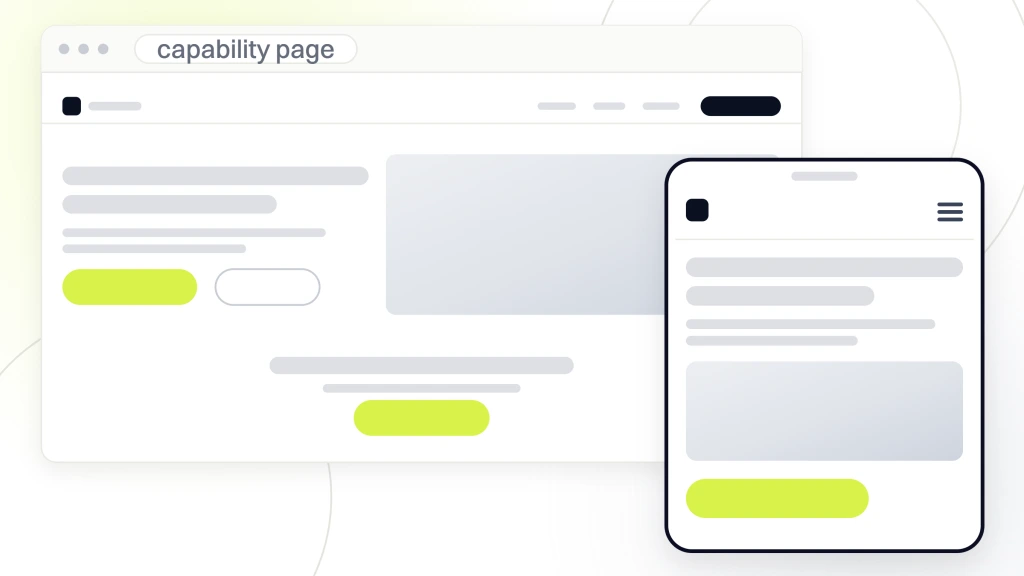
The 3 friction points that most Tier 1 sites carry are the multi-step contact form asking for annual revenue and plant location, the phone-gated capability conversation that forces a callback loop, and the PPAP sample gated behind a full corporate profile form. A marketer designed each of these to score leads. Each costs the plant OEM inquiries. The fix, inline RFQ widgets, published tolerance ranges, and ungated PPAP samples. Trade some lead-scoring granularity for volume at the top of the funnel and let the sales engineer qualify on the actual call.
The other conversion pattern worth adopting is inline video walkthroughs on the capability page. A 20 to 30 second video showing the machining cell in operation, with the plant quality engineer narrating the key tolerance. Buyers who watch the video complete the RFQ form at 2 to 3 times the rate of buyers who scroll past. The video doesn’t need broadcast quality. It needs a real employee showing a real cell in the real plant. Authenticity beats polish on every automotive supplier metric we track.
4. Structure the Tier 1 supplier page around 6 modules OEM procurement teams scan in order
The Tier 1 supplier page is the highest-payoff page group on any automotive manufacturer site. Get the structure right and every capability page ranks on the head term the buyer types (5-axis CNC machining Tier 1, progressive die stamping Ford Q1, injection molding IATF 16949). Get it wrong and the site collects impressions on brand searches only.
Build the page in 6 modules. Module 1, the capability hero with the IATF 16949 badge, a named OEM logo strip (Ford, GM, Stellantis, Toyota where you’re a validated supplier), and a 1-line description of the primary process. Module 2, the process capability block covering CNC machining cell counts, stamping tonnage, molding cavitation counts, or assembly line stations. Module 3, the quality system block covering IATF 16949, ISO 14001, ISO 45001, and OEM-specific requirements like Ford Q1 or GM QSB.
Module 4, the PPAP and APQP capability block with real examples of completed submissions, level 3 versus level 4 capability evidence, and named OEM programs where the plant has submitted. Module 5, plant and production photography with real cell shots, real inspection equipment, and real automation. Module 6, the sticky RFQ widget that lets a buyer file the inquiry in 90 seconds. Six modules, same order on every capability page. Marketing teams add new programs, new certifications, and new OEM logos without a designer touching the file.
5. Ungate PPAP samples and CAD files on every capability page
Ungated PPAP samples and CAD files are the single biggest win most automotive manufacturers ignore. Buyers who download a sample PPAP package convert to RFQ at 3 to 5 times the rate of buyers who don’t. Buyers who download a CAD reference file convert at 8 to 15 times the rate. Yet most Tier 1 sites gate both files behind a full contact form. Every gate you remove grows qualified OEM pipeline.
The trade feels wrong until you run the math. Marketers gate files to score leads. Sales engineers then chase every download regardless of intent. Ungate the file and the marketer loses the email capture on 40 to 60% of downloads. But the RFQ volume from the remaining buyers grows 2 to 4 times. Net qualified pipeline grows, sales engineer time on real prospects grows, and the CRM stops filling with cold contacts who downloaded 1 PPAP sample 8 months ago and never came back to source a program.
If you want a light capture, offer a 1-field email box next to the file that says “Get updates when this capability spec changes.” Optional. Under 15% of buyers opt in. The ones who do are worth 10 times the average lead score. That’s a real procurement engineer. Everyone else gets the file, gets the answer, and comes back when the APQP milestone hits and they’re ready to file an RFQ.
6. Publish tolerance and tonnage ranges on capability pages
Published capability ranges are the second-biggest win most automotive manufacturers refuse to take. Procurement engineers arriving on a capability page need to know the order of magnitude before they file an RFQ. 5-axis CNC tolerance of $pm$0.0005 inch or $pm$0.005? Stamping tonnage of 200 tons or 1,600? Cavitation counts of 4 or 96? A range on the page (say, $pm$0.0005 to $pm$0.002 inch across the 5-axis cell) lets a buyer self-qualify in 3 seconds.
Sales engineers push back on this constantly. Every program is custom. We can’t publish a range. The band handles that. A range doesn’t commit you to a quote. It commits you to a conversation. And the conversation is with a procurement engineer who has already accepted the range, so the RFQ call runs 40% shorter and closes 30% higher. Compare that to the alternative, discovery calls with programs that wanted $pm$0.005 inch and asked for $pm$0.00005. Every one of those calls is 45 minutes of sales engineer time you don’t get back.
The counter-example is the Tier 1 site that refuses to publish capability ranges and forces every OEM procurement engineer through a phone-gated conversation. That site books 30 to 60% fewer RFQs than a site with published bands. The buyers who fill the form skew toward tire-kickers. Serious procurement engineers move to the next site that gives them the answer. Published ranges filter for program readiness, not price sensitivity.
7. Add an IATF 16949 and named OEM strip under the hero
An IATF 16949 and named OEM strip under the hero is a 90-second design change that grows homepage-to-capability click rate 10 to 20%. Post the IATF 16949 registration number, the ISO 14001 and ISO 45001 badges you actually hold, plus the logos of 3 to 5 recognizable OEMs or Tier 1 partners (Bosch, Continental, ZF, Denso, Magna, or a Ford Q1 badge). Trust signals stacked above the fold cut buyer hesitation in half.
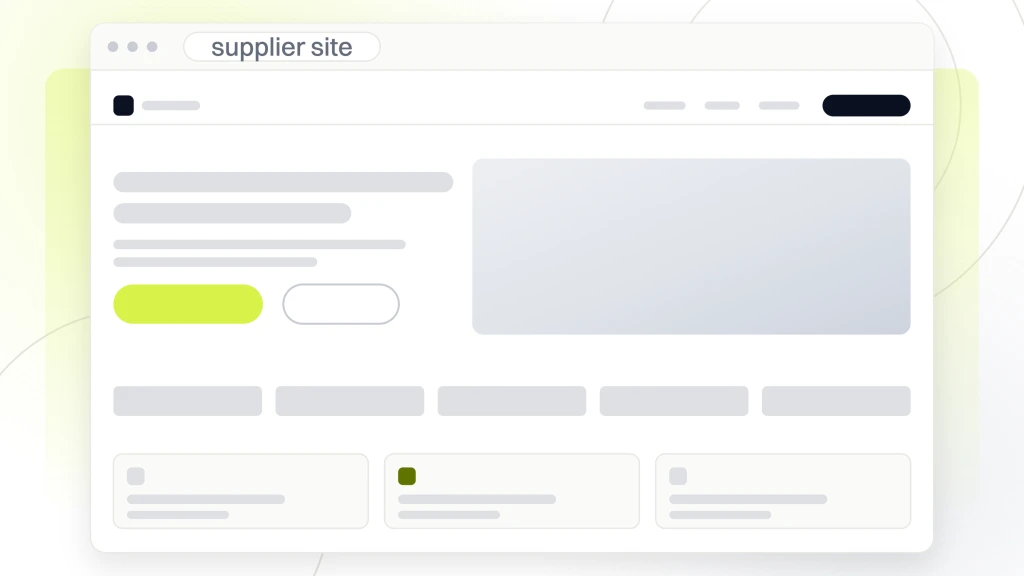
The rule of thumb, 4 to 6 trust badges maximum. Any more and the strip reads as noise. Any fewer and buyers wonder what you’re hiding. Rotate the badges based on the buyer persona landing on the page. EV supply chain buyers see the battery-adjacent certs and named EV OEM logos first. Legacy powertrain buyers see the ICE-adjacent certs first. The dynamic ordering takes 1 sprint to build and grows conversion measurably on paid campaigns.
Never post a badge you can’t back up. Procurement engineers who verify certifications through the IATF database or the OEM tier-portal will bounce the moment they catch a fake. A plant in Cleveland claiming IATF 16949 that can’t produce the actual registration number is losing every serious automotive RFQ within 48 hours of the first check. This gets audited.
8. Publish named case studies with real numbers, not testimonials
Named case studies with real numbers outperform generic testimonials on every metric that matters for an automotive supplier site. A case study titled “Smith-Midland unified fragmented regional sites, doubled conversions, cut bounce 65%” earns 3 to 5 times the RFQ traffic of a case study titled “How we helped a manufacturer grow.” Named clients, real percentages, and specific timelines are what OEM procurement engineers look for when they’re vetting a Tier 1 or Tier 2 candidate.
Every case study needs 4 blocks. The client (named, with a 2-sentence description of what they manufacture). The problem (2 to 3 paragraphs of specific business pain, not marketing platitudes). The work (the exact deliverables, tools, and integration points). The outcome (real numbers, verified with the client, with the time window called out). Case studies that skip the numbers or hide the client name convert 60 to 80% lower than ones that don’t.
Ask every client for permission to name them upfront. Bake it into the master services agreement. 70 to 80% of manufacturing clients say yes if you ask at kickoff. Under 30% say yes if you ask 18 months in. The right time to earn the case study is week 1, not month 18.
9. Case work. BSH Hausgeräte, Smith-Midland, and Poly Processing patterns applied to automotive manufacturer website design
BSH Hausgeräte GmbH is Europe’s largest home appliance manufacturer (Bosch, Siemens, Gaggenau, Neff), $euro$15.9 billion revenue in 2022. BSH Turkey ran a high-traffic site that underperformed on conversion. Redefine Web modernized the backend, redesigned the frontend, and rewired the funnel and preserved the SEO architecture in the same pass. Result, lead generation up 15%, organic traffic up 3%, average session duration up 45 seconds. The lesson for automotive manufacturers, backend modernization plus buyer-path redesign beats a full brand rewrite when the traffic is already there. Same pattern applies to a Tier 1 supplier with strong OEM search rankings and a weak RFQ funnel.
Smith-Midland Corporation is a precast concrete manufacturer serving construction, utilities, transportation, and public safety. Fragmented regional sub-brand sites fractured the brand online. Redefine Web ran a UX audit, consolidated the regional properties, integrated video and interactive content, and migrated to WordPress with a lead-focused CMS. Result, bounce rate down 65%, conversions doubled, and 100% in-house CMS efficiency after launch. The lesson for automotive manufacturer website design, a multi-plant Tier 1 with 4 or 5 regional sites should consolidate before it rebuilds. One cohesive property with a single capability catalog outperforms 5 fragmented ones on OEM search.
Poly Processing manufactures polyethylene chemical tanks for industrial applications. Redefine Web rebuilt the site around a working tank configurator. Buyers pick capacity, base material, fitting configuration, and chemical service. The tool generates a downloadable spec sheet, routes the RFQ to the named regional sales rep, and posts the record into HubSpot with full attribution. Twelve months after launch, Poly Processing saw 10x inbound ROI, cost per lead down 90%, and hundreds of qualified monthly leads. The lesson for a Tier 1 with a configurable capability set (custom stamping, custom molding, custom machining), a working configurator does the qualification work the sales engineer used to do on discovery calls.
10. Hit Core Web Vitals under target on mobile
An automotive manufacturer site pays off only when the mobile page loads fast. 65% of B2B industrial buyers now start research on a phone, and OEM procurement engineers are no exception. Sites that hit Largest Contentful Paint under 2.5 seconds convert 20 to 40% higher than sites that don’t. Sites that pass Core Web Vitals across LCP, Cumulative Layout Shift, and Interaction to Next Paint outrank ones that fail by 3 to 8 positions on the same buyer query.
The 3 wins that fix most Tier 1 sites in 1 sprint. Compress and lazy-load every hero image (most sites serve 2MB hero images that could be 180KB WebP). Defer non-critical JavaScript (most sites load 4 to 6 chat widgets and analytics scripts synchronously). And host on a CDN close to buyer geography (US-hosted sites serving Asian procurement teams add 400 to 900 milliseconds of latency per request). For deeper detail, web.dev’s LCP guide is the reference.
Accessibility is the other performance layer manufacturers underinvest in. WCAG 2.1 AA compliance is table stakes now. Color contrast, alt text on every cell photo, keyboard navigation on the RFQ widget, and captions on the video walkthrough. Tier 1 sites that pass accessibility audits happen to load faster and convert higher. The two go together, since screen-reader-friendly HTML is crawler-friendly HTML too.
11. Publish technical content that answers pre-RFQ questions
Technical content is the flywheel behind every automotive manufacturer site that earns compounding OEM RFQs. Blog posts, capability guides, comparison tables, and installation walkthroughs each rank for the pre-purchase questions procurement engineers Google before they ever see your homepage. A single 2,500-word technical article on IATF 16949 audit prep or level 3 PPAP submission can earn 400 to 900 organic visitors a month at zero incremental cost after publication.
The right topic list comes from 3 sources. The 20 questions your sales engineer hears most often on discovery calls (“What’s the difference between PPAP level 3 and level 4?” “What’s your first-time submission rate on Ford Q1 audits?”). The head terms your top 3 Tier 1 competitors rank for that you don’t. And the long-tail phrases in Google Search Console that show impressions but no clicks. Prioritize commercial-intent phrases first (Tier 1 supplier comparison, IATF 16949 versus ISO 9001), informational phrases second (how APQP milestones map to a PPAP submission).
Publish 2 to 4 technical articles a month for 12 months. That’s 24 to 48 pages of new indexable content covering PPAP, APQP, IATF 16949, EV supply chain integration, and OEM-partner walkthroughs. Compounding growth kicks in around month 6 as the earliest posts start ranking and internal linking pulls the later ones up. By month 12, organic traffic has usually tripled and the RFQ mix is 50 to 70% inbound versus 20 to 30% outbound at the start.
12. Wire GA4 and CRM attribution before the automotive manufacturer website design launches
A Tier 1 supplier site without attribution is a black box. You’ll spend $60,000 on a rebuild and 12 months later have no idea which pages, which OEM programs, or which content drove the RFQs that closed. Wire GA4, Google Search Console, and CRM attribution before the site goes live. Every RFQ that lands in HubSpot or Salesforce needs to carry the source, medium, campaign, and landing page fields populated. For the schema layer, Google’s structured data reference covers Product, Organization, and FAQ markup that grows rich-snippet capture.
Track 6 events at minimum. Homepage view. Capability page view (per process). PPAP sample download. CAD file download. RFQ widget start. RFQ widget submit. Every event needs a matching goal in GA4 and a matching workflow in the CRM. That gives you the funnel view (what percentage of buyers who hit the homepage reach the RFQ widget) and the source view (which OEM segment earns the most closed revenue per dollar).
Reporting cadence lives at 3 layers. Weekly for the paid and SEO teams. Monthly for the plant marketing and sales leadership. Quarterly for the OEM account board. Each layer needs a different report format. Weekly is a dashboard. Monthly is a 5-slide deck. Quarterly is a written narrative with year-over-year comparisons and a rebuild-or-refresh recommendation for the next quarter’s APQP calendar.
Where Redefine Web fits on automotive manufacturer website design
Redefine Web builds automotive supplier sites as 1 integrated team covering design, development, SEO, and technical content. SMB website packages land at $2,500, $4,500, and $7,500 depending on scope. Maintenance retainers land at $199, $299, or $499 per month for updates, content edits, and monitoring. Full custom builds with capability configurators, ERP integration, and PPAP delivery portals run $12,000 and up. We publish scope lists per tier so you know what lands each week before you sign. For the parent industry view, our Manufacturing Marketing Agency Built for Industrial RFQs hub covers the full stack.
Every engagement gets a designer, a developer, and a project lead. The project lead owns the buyer-path research and the monthly reporting call. The designer owns the interface. The developer owns the build and the ERP integration. Three people touching your account, not eight. For deeper detail on the design track, our Manufacturing Website Design That Drives Real RFQs page covers deliverables and timelines. For the responsive design side, our Responsive Web Design Services that Convert page covers the core offering. For CMS-heavy builds with ERP integration, our WordPress Website Development Services page covers the platform work.
Every project follows the same rhythm. Week 1 runs buyer-path research and content audit with your plant quality manager and sales engineer. Weeks 2 to 4 run design in Figma with weekly reviews. Weeks 5 to 9 cover development, content migration, and capability data integration. Week 10 runs QA across accessibility, performance, and browser compatibility. Weeks 11 and 12 run launch and post-launch monitoring. That rhythm produces a repeatable pattern the client can plan around. Small builds compress the timeline. Configurator builds add a technical discovery phase up front.
Where to start applying these best practices this quarter
Start with a 90-minute audit. Open your homepage on mobile. Time the Largest Contentful Paint. Read the hero copy out loud and ask whether it passes the 6-second fit test for an OEM procurement engineer. Try to file an RFQ from the mobile site. Count the fields on the form. Try to find a PPAP sample without landing on a contact page. Score each checkpoint out of 5. Any category under 3 is a rebuild candidate. Any category between 3 and 4 is a refresh candidate.
Fix the friction points inside a 60-day sprint. Publish the RFQ widget as 2 fields on a sticky sidebar. Add an IATF 16949 and named OEM strip under the hero. Ungate the PPAP samples. Rewrite the capability hero for the fold-one specificity test. Publish tolerance and tonnage ranges on category pages. Add a video walkthrough on your top-selling capability page. Six changes. Six weeks. Twelve months of OEM RFQ returns. These best practices aren’t a big-bang rebuild. They’re a series of small mechanical fixes stacked on a healthy foundation.
For the buyer-path research layer, Nielsen Norman Group covers the usability patterns behind the click-to-quote flow. The bottom line, automotive manufacturer website design is a repeating cycle, not a 1-time build. Fix, measure, add, repeat. Every quarter you audit the Core Web Vitals scores, the RFQ conversion rate, and the OEM search rankings, then run a 1-sprint fix on the weakest layer. Sites that follow that rhythm compound. Sites that treat the launch as the finish line stall. Pick the compounding path.