A B2B sales funnel is the mapped path a business buyer walks from first anonymous visit to signed enterprise contract, tracked across seven months of research, 5 to 11 stakeholders per Gartner data, and a procurement review your marketing team never sees. You get more stages than a consumer version, longer time horizons at every step, and a stricter definition of what counts as a qualified lead. Every stage carries its own metric with an owner and a real conversion range.
You will read the six stages that longer cycles demand, the metrics that predict a healthy pipeline, real examples from client work, the mid-market template we hand every account, the performance benchmarks that separate a working pipeline from a broken one, and the marketing-sales handoffs that drive the biggest single revenue impact inside 90 days.
The 6 B2B sales funnel stages that fit longer cycles
Every serious funnel maps to six stages. Awareness, Interest, Consideration, Evaluation, Decision, and Loyalty. That extra stage count matters. Consumer funnels finish at Decision. B2B pipelines keep going into renewal, expansion, and referral because the average business buyer sits inside a five-year vendor relationship, not a one-shot purchase.
Awareness runs on organic search, industry reports, and paid social to a targeted role. Interest fires when the buyer downloads a gated asset or reads three pages. Consideration is the highest-value content stage. Evaluation is where sales gets involved. Decision is procurement and legal. Loyalty is Customer Success. Every one of those stages needs a named owner and one metric the team reads weekly.
Modern buyers spend only a small slice of their journey talking to vendor sales, so most of the buying work happens inside the funnel you built. That single stat rewrites how much depth the middle stages need. If your content stops at product pages, the buyer stalls at Evaluation and your win rate quietly drops.
B2B funnel vs B2C funnel in one paragraph
B2C funnels compress to three stages and days. B2B versions stretch to six stages and months. B2C buys on emotion and price. B2B buys on business case and risk. B2C has one decision maker. B2B has 5 to 11 stakeholders per Gartner. B2C cycles run hours to weeks. B2B cycles run 45 days for services and 90 to 360 days for enterprise. Every design choice inside a B2B sales funnel flows from those five differences.
Metrics that predict pipeline health
Every funnel needs a small set of numbers tracked every week. Read these five. Unique visitors, new leads, MQLs, SQLs, and signed deals. Add cost per signed deal and average deal size for the finance conversation. That handful of numbers tells you everything about pipeline health without drowning the weekly review in vanity metrics that nobody acts on.
Every measurement setup we build tracks two supporting metrics behind the five headline numbers. Sales cycle length per segment. Win rate per source. Both metrics predict pipeline movement one to two quarters out, which lets finance forecast within 15 to 20 percent even in longer enterprise cycles. Every serious account we run reads these two monthly and adjusts channel budgets against them.
The performance benchmarks below come from our own client work across roughly 30 B2B accounts, cross-checked against public data from Gartner CSO reports. Read them as guardrails, not targets. Your account will fit inside one column and drift toward the other over time as the funnel matures. Every serious quarterly review runs this table against last quarter’s actuals.
| Stage transition | B2B services | B2B SaaS | Enterprise |
|---|---|---|---|
| Visitor to Lead | 2 to 8 percent | 3 to 10 percent (trial) | 1 to 4 percent |
| Lead to MQL | 20 to 40 percent | 30 to 60 percent | 15 to 30 percent |
| MQL to SQL | 30 to 60 percent | 25 to 50 percent | 25 to 50 percent |
| SQL to Deal | 15 to 25 percent | 10 to 20 percent | 15 to 30 percent |
| Sales cycle length | 45 to 180 days | 7 to 30 days SMB, 90 plus enterprise | 90 to 360 days |
| Cost per signed deal | $150 to $2,500 | $300 to $3,000 | $3,000 to $15,000 |
Weekly funnel review pattern
Monday at 9 a.m. Pull the five headline numbers. Compare against the four-week rolling average. Any number more than 15 percent off average gets a diagnostic dig-in. Any number more than 25 percent off average gets an action plan by end of day. 15 minutes on the calendar. Enforced weekly. That review catches drift while it is still cheap to fix and builds the shared operating language marketing and sales need.
B2B marketing and sales handoffs that leak revenue
Every marketing and sales pipeline breaks at a handoff, not at a channel. Marketing hands leads to sales. Sales sends unqualified ones back. Marketing feels dismissed. Sales feels flooded with tourists. Both teams stop trusting the numbers. That handoff friction is the biggest single revenue gap we see in audits, and it is fixable inside 30 days without changing any channel spend.
The fix has three pieces. A written scoring model both teams agreed on and published. A CRM automation that enforces the model at MQL and SQL transitions. A shared SLA that says sales calls every MQL within four business hours. Every serious pipeline we help build starts with these three documents. They cost nothing beyond one meeting to write. They save 10 to 30 percent of leaked pipeline every month.
Every marketing-sales pipeline also needs a feedback loop from sales back to marketing. Sales sees objections marketing never hears. Sales knows which content actually landed with the prospect during the sales cycle. Every monthly review should include a 15-minute segment where sales reports back on the top three objections and the top three winning content pieces from the last 30 days. Marketing uses that intel to refine the top of the funnel. That loop compounds fast.
Writing the marketing-to-sales SLA
Marketing delivers X MQLs per month. Sales calls each MQL within four business hours. Sales works each MQL for a minimum of five touches over three weeks. Sales returns unqualified MQLs to marketing with a written reason. Marketing refreshes the scoring model quarterly based on returned MQLs. Publish the SLA. Review it monthly. Every pipeline we run treats this document as one of the top three operational artifacts of the whole marketing org.
Content that feeds each B2B sales funnel stage
Every stage of the funnel demands a different content type. Top of funnel runs on research reports, industry benchmarks, and thought leadership. Middle of funnel runs on comparison guides, buyer’s guides, and ROI calculators. Bottom of funnel runs on case studies, demo videos, pricing pages, and security documentation. Match the content to the stage the buyer sits in. Content that fits the buyer’s current question closes the next-stage transition faster than content that lists features.
The Consideration stage is the highest-value content stage in the entire journey. It is where the buyer builds their internal business case. Comparison guides help. ROI calculators help. Named-client case studies with real numbers help most. Every serious account we run publishes at least three case studies per persona, so a Champion inside the prospect account has ammunition to bring to their internal committee. That single output shortens the Evaluation-to-Decision transition meaningfully.
Every content plan should also include a security and compliance page for the late stages. Enterprise buyers ask about SOC 2, GDPR, HIPAA, and data residency during the Decision stage. If your website has no answers, the deal stalls in Legal Review for weeks. A short security overview page and a linked compliance summary shave 14 to 30 days off Legal Review for most enterprise deals we run.
Case study format that closes deals
Client name, industry, and role of the champion in one line. Baseline problem in two sentences. Solution deployed in three sentences. Three numeric outcomes with real metrics. Quote from the champion. Timeframe. Total, 400 words. Every case study we publish for a client follows this format because it fits the way an internal buyer packages ammunition for their committee. Long case studies get skimmed. Short case studies with real numbers get forwarded.
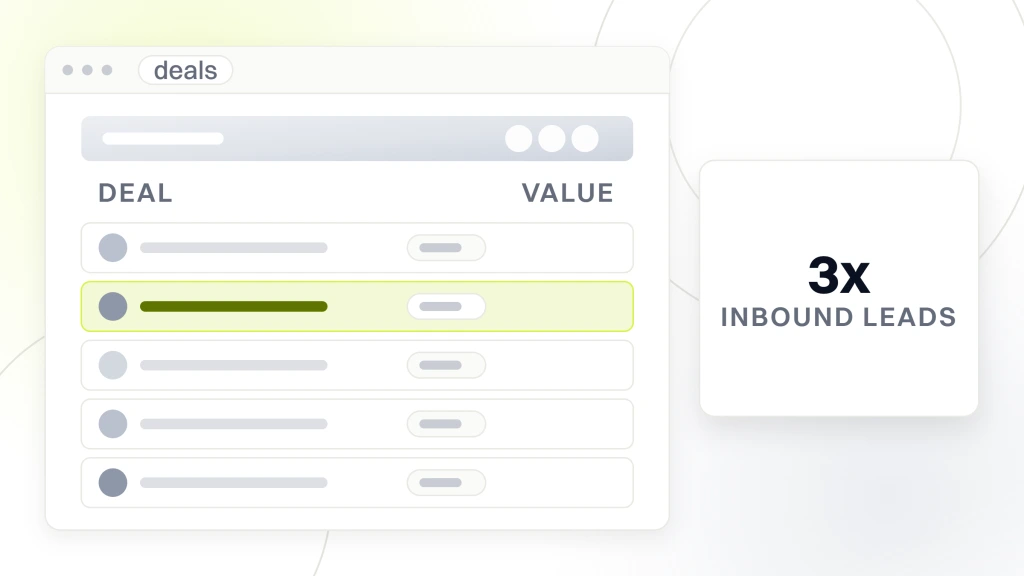
For example, our work with Rapyd Financial Network, a fintech SaaS running the exact B2B sales funnel motion this article describes, tripled their inbound leads, added over £1.8 million in pipeline, and grew organic traffic 5x. That is the shape of what a well-wired pipeline delivers when marketing, content, CRM, and sales all read from the same operating model.
Tools that run a modern B2B sales funnel
Every modern pipeline runs on four tool categories. CRM. Marketing automation. Sales engagement. Dashboard. Every mid-market account we serve eventually converges on a stack of five to seven paid tools. Free tiers work for the first 90 days. Paid tools earn their subscription as revenue scales and specific gaps open up.
HubSpot Marketing Hub Pro plus HubSpot Sales Hub plus CallRail plus Databox plus Semrush is a common stack. Total monthly cost runs $1,600 to $3,000 depending on contact volume. That stack handles CRM, marketing automation, call attribution, dashboards, and SEO in one login. Alternative stacks like Salesforce plus Marketo plus Outreach plus Tableau plus Semrush cover the same jobs at a higher price point and are more common at enterprise scale.
Every management-tool decision should trace back to a stage you cannot currently measure or a workflow you cannot currently automate. If a tool does not close a real gap, do not buy it. Every serious audit we do finds one or two paid tools the client can cancel today without losing any capability. Buy for gaps. Cancel for redundancy. Do not buy for FOMO on a competitor stack. Every mid-market brand overpays for tools by about $12,000 a year on average.
Stack by team size
Solo founder runs on HubSpot Free plus GA4 plus MailerLite. Total, $0/mo. Small team runs on HubSpot Starter plus CallRail plus Databox. Total, $400/mo. Mid-market runs on HubSpot Pro plus Salesforce plus CallRail plus Looker Studio plus Semrush. Total, $2,400/mo. Enterprise runs on Salesforce plus Marketo plus Outreach plus Tableau plus 6sense. Total, $12,000-plus/mo. Match the stack to the revenue, not the ambition. Every account overspends on tools before the funnel earns it.
Common B2B sales funnel mistakes we see on audits
Every audit we run turns up the same short list of mistakes. Read the list before you build. Mark the ones that apply to your account. Pick the top two to fix this quarter. Sequential fixes compound. Parallel fixes cost more time to unwind than the whole build took to set up in the first place.
- Treating every lead as an MQL. Marketing inflates the number. Sales stops trusting it. Both lose.
- No sales feedback loop. Marketing keeps publishing content nobody in a real sales conversation ever asked for.
- Consideration stage nurture that nags weekly. B2B buyers ghost during evaluation. A five-email cadence over 30 days keeps warm without pestering.
- Skipping security and compliance content. Deals stall in Legal Review because the website has no answers.
- Copying an enterprise funnel for an SMB account. The stage count and cycle length do not match. Adjust the model.
- Reading a single average across all deal sizes. Enterprise and SMB deals get averaged into a single number that hides both signals.
- Waiting three months to fix the CRM data quality. Bad CRM data corrupts every downstream forecast. Fix it in week one.
The biggest single first-quarter fix
Write a shared MQL definition and enforce it in the CRM. Publish it in a shared Google Doc. Require two data points to enter MQL status. That single change fixes more revenue than any additional ad spend can. Every serious audit we do produces this definition as a first-week deliverable. Cost, one meeting. Payback, measurable inside 30 days on every account we have applied it to.
Forecasting revenue from your pipeline
Once your funnel has 90 days of clean stage data, forecasting becomes possible. Roll forward the top-of-funnel volume against the historical stage rates. The result predicts next quarter’s closed revenue within 15 to 20 percent, which is enough for finance to plan hiring, capacity, and cash flow. Every account we advise treats this forecast as one of the most valuable outputs of the whole marketing operation.
Every forecast should segment by deal size. A $250K enterprise deal and a $15K SMB deal move through the pipeline on completely different timelines. Averaging them together produces a number that fits neither. Every serious forecast we run separates deals into two or three size bands, forecasts each band separately, then sums for the top-line number. That extra work pays back in accuracy every single quarter.
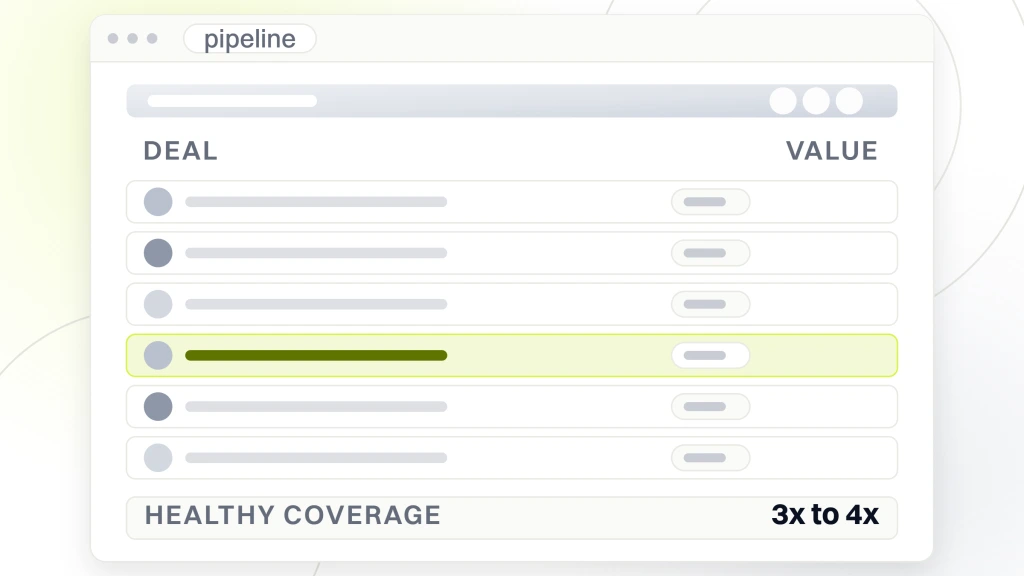
Every measurement setup we build also tracks pipeline coverage as a leading indicator. Pipeline coverage means total open pipeline dollars divided by the next quarter’s revenue target. Healthy coverage lands at 3x to 4x for services and 4x to 5x for enterprise SaaS. Below coverage means the top of funnel is under-fed. Above coverage means either sales capacity is short or the pipeline includes deals that will never close. Both signals matter to finance and to sales leadership.
Pipeline coverage as an early warning
Divide open pipeline dollars by next quarter’s revenue target. Above 3x for services. Above 4x for enterprise SaaS. Watch weekly. Any dip below the threshold triggers a top-of-funnel investment or a channel reshuffle. Every marketing team we coach reads this ratio every Monday alongside the five headline numbers. It is the single best leading indicator of next-quarter revenue trouble.
Where to go next with your funnel work
Once your pipeline has 90 days of clean stage data and one round of shared-definition work, three next moves compound. Add a second audience segment with its own nurture sequence. Add account-based marketing plays for the top 50 target accounts. Add a Retention program if your business runs on renewals or subscriptions. All three layer on top of the base funnel without disrupting the numbers you already read.
From here, the natural next reads are the deeper posts in this cluster. Start with what is a sales funnel if you want the primer. Continue with sales funnel stages for the stage breakdown across all business types. If you are building from scratch, how to create a sales funnel covers the build sequence in full.
Ready to hire a team that runs this exact process on your account. Our Sales funnel and automation services delivers every project with the full six-stage build, real tracking wiring, a shared marketing-sales SLA, and a 90-day pipeline forecast. For broader marketing help alongside the funnel work, our B2B PPC services covers pipeline-attributed paid search on the same retainer.
The next three cluster reads
The three deepest follow-up posts in this cluster cover the sales funnel primer, the stages breakdown, and the build guide. Read in that order. Total time from here to a working plan is about 45 minutes of reading and about eight weeks of build for a mid-sized brand. That is a modest investment for a pipeline your finance team can actually forecast against inside two quarters.