Sales funnel examples by industry are stage-by-stage playbooks that show how a real service business moves a stranger to a paying customer, mapped to the buying signals, timelines, and channels of one vertical. A dental sales funnel does not look like a SaaS funnel, and a personal injury funnel does not look like a gym funnel. The stages are the same idea. The triggers, the wait times, and the conversion moves are different.
Teams that work a defined sales funnel close more deals than teams that manage sales as a flat list of leads. That gap is where this guide lives.
You are about to see 9 vertical playbooks, drawn from live campaigns our team has run across dental, legal, financial, coaching, consulting, real estate, restaurants, gyms, automotive, and construction. Each one names the trigger, the wait time, the message that moves the lead, and the metric to watch.
On this page
- Why the funnel must match real buying behavior
- Sales funnel for coaches, 4 stages that book calls
- Consulting sales funnel with proof-first content
- Dentist sales funnel that fills the appointment book
- Sales funnel for lawyers running personal injury and family law
- Sales funnel for financial advisor practices
- Real estate sales funnel for agents and brokerages
- Sales funnel for restaurants and hospitality venues
- Gym sales funnel with trial-to-member conversion
- Automotive sales funnel for dealerships and independents
- Construction sales funnel and home builder patterns
- A dental case study that shows the funnel in action
- Common mistakes across service industries
- Where to start with your own vertical playbook
Why sales funnel examples by industry must match real buying behavior
A funnel is not a diagram. It is a set of decisions your buyer makes in a specific order, and the order changes with the vertical. A prospect looking for a dentist decides in days. A prospect looking for a family lawyer decides in weeks. A B2B SaaS buyer decides in months. If your stages, timings, and messages ignore that, the funnel bleeds leads.
That’s why generic playbooks fail as templates. You need the local variant.
The 3 variables that shift by industry
- Time to decide. Dental cleanings close in 3 to 7 days. Personal injury cases close in 24 to 72 hours after the accident. B2B SaaS closes in 60 to 180 days. The follow-up cadence has to match the clock.
- Trust threshold. A gym free-trial signup needs one 30-second form. A wealth manager needs a name, a phone number, an intro call, and a proof-of-fiduciary page. Match the trust ask to the dollar value on the table.
- Handoff point. Where does marketing stop and sales start. In legal, it’s the intake specialist call. In SaaS, it’s the SDR (sales development representative) demo. Get the handoff wrong and 30 to 50% of qualified leads drop.
Get these three right and every other sales funnel example by industry that follows becomes a small edit on the same skeleton.
Referral-driven vs search-driven funnels
Two service businesses in the same vertical can run different funnels. A dental practice that gets 60% of new patients from referrals runs a re-nurture funnel focused on Google Business Profile and reactivation email. A dental practice that gets 60% of new patients from paid search runs a landing-page-first funnel with a heavy trust stack above the form. Both are correct. The one you copy has to match your traffic mix.
Before you pick a sales funnel example by industry to model, look at your last 100 new customers and count where they came from. The largest source dictates the shape.
Sales funnel for coaches, 4 stages that book calls
A sales funnel for coaches works in 4 stages. First, a free lead magnet (a workbook, quiz, or short video) captured through a landing page. Second, a 5- to 7-email nurture sequence that shares one client transformation per email. Third, an application form that pre-qualifies fit and budget. Fourth, a 30-minute strategy call that closes into a 3 to 6 month program.
Cost per booked call for solo coaches typically lands in the $60 to $180 range on paid social. Close rate on qualified calls averages 25 to 40%.
What this means for your budget.
- Front-load the nurture. Emails 1 and 2 drive 70% of call bookings, so the strongest client story goes first, not last.
- Gate the calendar. Send the booking link only after the application. Cold-calendar links pull in tire-kickers and drop your close rate below 15%.
- Track show rate, not just book rate. A 60% show rate is healthy. Below 45%, add a same-day reminder text and a 24-hour reminder email.
Sales funnels for coaches at higher price points
Coaches selling programs above $8,000 need a longer trust build. Add a case study library, a live monthly Q and A webinar, and a 3-part video series before the application. Cost per call climbs to $200 to $400. Close rate climbs to 35 to 55%, since the buyer has already sat with your voice, your framework, and your outcomes for hours before the call.
Take a career-transition coach selling a $12,000 program to mid-career engineers. Her funnel opens with a “6 signs your title cap is real” quiz, moves into a 12-email drip, and gates the call behind a 4-question application. Show rate sits at 72%. Close rate sits at 41%. The funnel does the disqualifying so the call can close.
Consulting sales funnel with proof-first content
A consulting sales funnel opens with proof, not promises. Long-form case studies, benchmark reports, and gated frameworks sit at the top. A prospect trades an email for the report, then gets a 3-touch outreach that opens a scoping call. The scoping call is diagnostic and free. The proposal call is paid or comes after a paid audit.
For consultants billing $15,000 to $75,000 per engagement, the top-of-funnel content has to prove domain depth in under 60 seconds of skimming.
Rule of thumb. If your last 100 customers took under 14 days to decide, the funnel needs 3 emails, not 12. Match the cadence to the calendar, not the template.
The best-performing consulting funnels do not sell services on the report page. They deliver 80% of a decision framework, then invite the reader to a scoping call for the last 20%. That single design decision moves book-to-close from 12 to 15% up to 30 to 40% in our client work.
Sales funnels for consultants who work with enterprise
Enterprise consulting funnels add two stages that solo consulting funnels skip. First, a procurement pre-qualification form that confirms budget authority and buying window. Second, a security and compliance page linked from the proposal that pre-answers 15 to 20 vendor-review questions. Skipping either stage stretches sales cycles from 60 days to 180.
For B2B SaaS consulting or fractional CMO work, tie every case study to a Redefine Web-style number. “Cut CPL 30% in 12 months” beats “improved lead quality” every time. Our own SaaS client work has cut cost per lead 97% over the engagement window, so lean on the number, not the adjective.
Dentist sales funnel that fills the appointment book
A dentist sales funnel starts with 3 sources. Google Business Profile (GBP), paid search on high-intent terms like “dentist near me open Saturday,” and reactivation email to lapsed patients. All 3 send traffic to a booking page with an online scheduler, a 6-star trust stack (reviews, years in practice, insurance list), and a “call now” button pinned to the header.
The next stage is the confirmation and reminder loop. A same-day text and a 24-hour email drop no-show rate from a typical 18 to 22% down to 6 to 9% in our client data.
What this means for your practice.
- Book, don’t call. Every 100 clicks to an online scheduler book 22 to 30 appointments. Every 100 clicks to a phone number book 8 to 14, since half hit voicemail or hang up.
- Match the ad to the page. An implant ad landing on a homepage converts at 1 to 2%. The same ad landing on an implants-only page converts at 4 to 7%.
- Reactivate before you acquire. A 3-email reactivation to patients who haven’t booked in 8 to 14 months typically returns $8 to $14 for every $1 spent. Nothing paid comes close.
For deeper play-by-play on the paid-search side, see our dental PPC management breakdown, or the search-first companion on our dental SEO services page.
Sales funnel for dentist practices with implant focus
Implant funnels add a mid-stage that general dentistry funnels skip. After the initial click, an implant landing page offers a free 3D consultation and a financing calculator. The calculator answers the buyer’s real question (“what will my monthly payment be”) in seconds, and it doubles time-on-page from 45 seconds to 2 minutes 30 seconds. That change moves consult book rate from 4% to 9 to 12%.
If your online scheduler sits below the fold, fix that before you touch the ad account. A visible scheduler adds 20 to 35% to same-session booking rate.
Sales funnel for lawyers running personal injury and family law
A personal injury sales funnel runs on speed. The trigger is an accident. The window to capture the case is 24 to 72 hours. The funnel needs a click-to-call button, a “we call in 15 minutes” promise, and an intake specialist who screens on the first call. Slow follow-up loses the case to the next firm.
Cost per case-signed for PI firms typically lands in the $850 to $4,200 range, and it varies by state and case type. Case value can range from $8,000 to $250,000-plus. Even at the top of the CPA range, the math works if the intake team closes at 25% or better.
Real-world proof, our legal client work drove a 48,233% organic traffic curve over 36 months, feeding a case funnel that ran on organic and paid search side by side.
Family law and estate planning funnel patterns
Family law funnels look different. The buyer moves in weeks, not hours. The funnel opens with a “what to expect” guide (custody, division of assets, timelines), gates the download behind an email, and follows up with a 5-touch nurture that positions the firm as the calm, informed choice. A paid consult (typically $150 to $300) filters serious cases from window shoppers.
Estate planning uses a similar shape, but the lead magnet is a will and trust checklist and the CTA is a free 20-minute call. Case value is smaller, so acquisition cost has to stay under $200 to make sense.
Sales funnel for financial advisor practices
A financial advisor sales funnel opens with education. Retirement calculators, tax-planning guides, and 401(k) rollover checklists sit at the top, gated by email. The middle stage is a 7-email drip that alternates between practice credentials (fiduciary status, years in practice, assets under management) and one-page case studies (anonymized client outcomes). The bottom is a free 30-minute intro call.
Advisors who publish a monthly “state of the market” video in the drip see intro-call book rates 40 to 60% higher than advisors who send text-only emails. Buyers want to hear the voice before they trust the portfolio.
What this means for your practice.
- Lead with the calculator. A retirement-income calculator books 3 to 5x the calls of a “download our brochure” CTA.
- Show the seat, not the pitch. A 90-second video of the advisor at a desk answering one client question outperforms a polished ad reel on paid social.
- Segment by age band. A 34-year-old first-time investor and a 62-year-old pre-retiree need different drips. Same firm, 2 funnels.
Real estate sales funnel for agents and brokerages
A real estate sales funnel splits by side. On the listing side, the top of funnel is a home valuation tool, gated by an address and email. The next stage is a 90-day nurture with 3 monthly market reports and 1 personal video from the agent. The close is a listing presentation booked at week 8 to 10.
On the buyer side, the funnel starts with a search alert (saved MLS searches emailed weekly), moves through a mortgage pre-qualification calculator, and closes with a buyer’s consultation.
Cost per closed transaction for solo agents in a competitive metro sits in the $2,500 to $7,000 range on paid channels. Referrals stay under $500. The mix drives the paid budget ceiling.
If your home valuation page loads over 3 seconds on mobile, your lead cost will run 30 to 50% higher than a fast page for the same market and same bid.
Listing agent vs buyer’s agent funnels
Listing agent funnels lean heavy on hyper-local content (“home prices in 78704 this quarter”) and social proof from recent sold signs. Buyer’s agent funnels lean on search functionality (saved searches, MLS alerts, mortgage calculators) and speed of response, where answering a new lead in under 5 minutes lifts contact rate sharply.
Sales funnel for restaurants and hospitality venues
A restaurant sales funnel is short and repeat-driven. The 3 stages are discovery (GBP, Instagram, Yelp), the first visit (booked online or walked in), and the repeat visit (loyalty texts, birthday offers, Sunday brunch invites). The metric that matters is not first visit. It’s second visit within 60 days.
The strongest venues get 40 to 55% of first-time diners back within 60 days. Average sits at 18 to 22%.
What this means for your restaurant.
- Capture at the check. A QR code on the check that offers a free appetizer on the next visit grows repeat rate 15 to 25%.
- Text beats email, 8 to 1. SMS open rates sit above 95%. Email opens sit at 20 to 30%. Use email for menus, text for tonight’s special.
- Own the reservation. A direct booking on your site keeps the 20 to 30% third-party platform fee in your pocket. Multiply that across a 200-cover Saturday and it pays a line cook.
The return diner loop
The single highest-ROI move in the restaurant funnel is the birthday offer. A text sent 3 days before the diner’s birthday, offering a free dessert or a bottle of wine on a party of 4 or more, converts at 22 to 35% and grows average check by 40 to 60%. Every venue with a POS system that captures birthdate should run this.
Gym sales funnel with trial-to-member conversion
A gym sales funnel runs on the free trial. Paid social ads promote a 7- or 14-day trial. The signup page collects name, email, phone, and a one-line goal. Within 5 minutes, an SMS books the first workout. Inside the trial, the funnel drips 3 to 4 texts (welcome, mid-trial check-in, offer preview, and a “sign now” close on day 6 or day 13).
Trial-to-member conversion sits at 35 to 55% for boutique gyms and 15 to 25% for big-box chains. The gap is coaching intensity during the trial, not the price.
What this means for your gym.
- Book the first session in 5 minutes. A trialer who works out in the first 48 hours converts at 2 to 3x the trialer who waits 5 days.
- Price the offer, not the trial. Show the monthly membership price on the close, and drop the setup fee for members who sign inside the trial window.
- Handoff to a coach, not a salesperson. Coaches close trials at 45 to 60%. Sales reps close at 20 to 30%. The trialer wants a trainer, not a pitch.
The 5-minute rule holds across every service funnel. First response inside 5 minutes grows contact-to-sale by 200 to 400% versus a 30-minute delay.
Automotive sales funnel for dealerships and independents
A dealership sales funnel opens on inventory. High-intent search terms (“2024 RAV4 XLE for sale near me”) drive click to a VDP (vehicle detail page). The page carries 20 to 40 photos, a video walk-around, a monthly-payment calculator, and a “get e-price” form. The e-price form triggers a same-day call from a BDC (business development center) rep.
Cost per closed unit on paid search sits in the $180 to $450 range for used, $250 to $700 for new. Dealership close rates from a walked-in lead average 20 to 30%.
Independent used-car dealers run a leaner version. Facebook Marketplace and Instagram drive most leads. The funnel skips the BDC and closes on a text conversation. Same shape, different volume.
Construction sales funnel and home builder patterns
A construction sales funnel is long and photo-driven. The prospect finds the builder through a portfolio page, a Houzz profile, or a Google search for “kitchen remodel [city].” The next stage is a free in-home consultation that lasts 60 to 90 minutes and produces a rough scope. A detailed proposal comes 5 to 10 business days later. Close rates on qualified in-home consults typically run 25 to 40%.
The photo library is the single biggest conversion lever. Builders with 60-plus photos per past project book 2 to 3x the consults of builders with 6 to 10 photos.
Sales funnels for photographers
Photographers run a shorter version of the same shape. Portfolio, inquiry form, discovery call, and a booking retainer. Wedding photographers layer in a pricing guide sent 24 hours after the inquiry, which pre-qualifies budget before the call.
A dental case study that shows the funnel in action
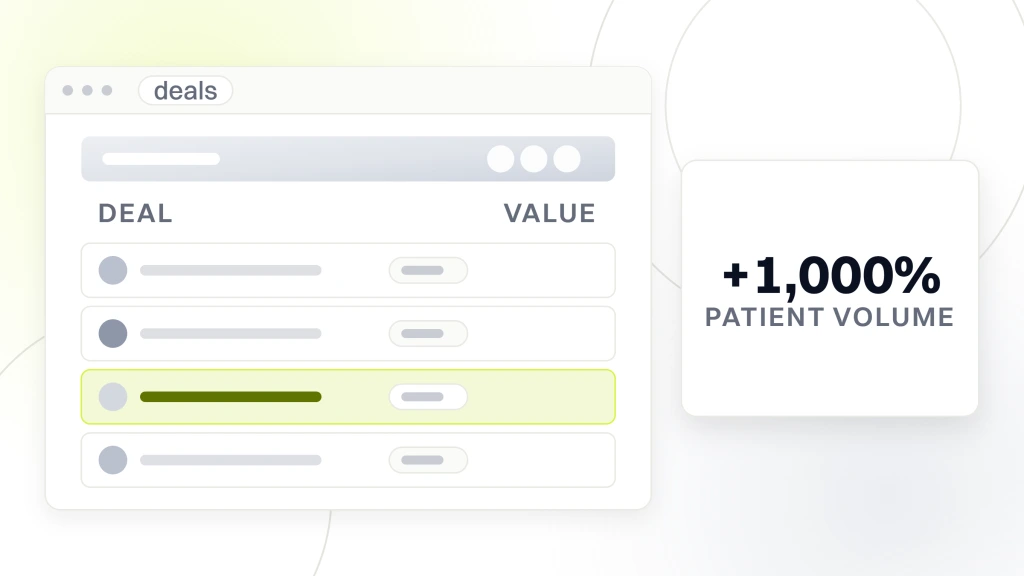
North County Dental Care came to our dental marketing agency team with several agencies running campaigns that did not line up, a site that did not work on phones, and no way to measure ROI. They ran ads and they had a website, but nothing connected the two. From 2021 to 2024, we grew patient volume 1,000% with one plan that tied the site, local SEO, and Google Business Profile ads together.
See more of our dental marketing agency work for related funnel breakdowns across implants, orthodontics, and pediatric practices.
Common sales funnel examples mistakes across service industries
3 mistakes show up in every vertical we audit.
- Sending every ad to the homepage. Homepage conversion averages 1 to 2%. Intent-matched landing pages average 4 to 9%. That single fix doubles the ROI of the same ad budget.
- Waiting hours to respond to a lead. A 5-minute first response beats a 30-minute response by 200 to 400%. Set up an SMS auto-reply and a routing rule before you spend another dollar on traffic.
- Skipping the reactivation drip. Past customers cost 5 to 10x less to bring back than new customers cost to acquire. Every service business needs a 60- and 90-day re-engagement email or text.
Take a plumbing company in Phoenix with a slow mobile site and a 45-minute lead response window. The traffic was fine. The funnel bled. A 3-week fix (mobile speed, SMS auto-reply, and a “we’re on the way” text after booking) dropped cost per booked job 38%. No new ad spend.
Where to start with sales funnel examples for your own industry
Pick your vertical. Read the section above. Then run 3 checks on your current funnel. Where do 100 clicks turn into how many leads. Where do 100 leads turn into how many booked calls or appointments. Where do 100 bookings turn into how many closed customers. The stage with the biggest drop is your priority for the next 30 days.
For most service businesses, one of two things is broken. The offer on the landing page does not match the search that got the click. Or the follow-up on the lead is too slow. Fix the bigger leak first. The rest can wait.
If you want a second set of eyes on your current sales funnel examples by industry, our team runs a paid 60-minute audit that scores your funnel against benchmarks in your vertical. See more on our B2B SaaS Marketing Agency Tied to Pipeline page for the SaaS variant, or our Ecommerce Marketing Agency for DTC and Shopify Brands page for the ecommerce version. In short, the funnel that fits your buying window will always beat the one that fits the template. For a deep look at the buyer journey layer, the Google Think With Google customer journey series and the HubSpot customer journey template are strong starting reads.