A dental Google Ads account either books 20 to 40 new patient calls a month at a defensible cost, or it burns $4,000 a month on clicks that never turn into appointments. If you inherited an existing PPC (pay-per-click) account, you can spot the second pattern fast. The phone stays quiet, the report shows impression share, and nobody can explain what the account is doing. Learning how to run ads for a dental practice starts with fixing that gap between clicks and booked chairs.
This guide walks you through how to run ads for a dental practice from account structure to reporting. North County Dental Care in Vista, CA, a Redefine Web case study, moved from 1 to 2 new patients per month to 12 to 16 and hit 500% marketing ROI (return on investment) on a program that paired paid search with local SEO. Organic traffic climbed 385%. Real accounts book patients. They don’t just show impression share climbing while the front desk phone stays quiet.
Ad copy that converts dental searchers
Ad copy is the visible edge of dental practice ads. Copy that converts names a specific outcome or pain, includes the treatment and city, and closes with a clear next step. Generic openers about caring family dentistry underperform specific hooks like same-day emergency appointments or no-insurance dental cleanings by 30 to 50% on click-through rate. Specificity matches the ad to the search query, and Google’s Quality Score rewards that with lower cost per click.
Run two or three copy variants per ad group tested against each other, with a significance threshold of 200 conversions per variant. Below that number, a winning ad is noise, not signal. Practices that swap copy weekly on 12 conversions per variant optimize on random variation, and the account never improves. Set the threshold at kickoff and hold it.
- Headline 1. Specific pain or outcome plus treatment name.
- Headline 2. Location plus differentiator (technology, hours, insurance).
- Headline 3. Call-to-action plus proof point (reviews, guarantee, financing).
- Description 1. 90-character elaboration of the offer or benefit.
- Description 2. 90-character second angle or objection response.
- Extensions. Call, location, promotion, sitelink, structured snippet.
Extensions carry real weight in the Google Ads auction because they influence Ad Rank and click-through rate. Skipping call extensions on a dental account is a common early mistake, since most searchers on mobile want to call rather than fill out a form. Practices running dental ads without call extensions leave 15 to 25% of the potential call volume uncaptured. See our converting dental ppc ads post for full ad copy examples with breakdowns.
Landing page rules for dental practice ads
Landing pages sit at the center of a dental PPC setup, and dental ad clicks should never land on the practice homepage. Homepages serve too many audiences (new patients, existing patients, prospective providers, insurance verification) and dilute the conversion action. Working dental Google Ads accounts send each ad group to a dedicated landing page matched to the search intent, with a headline that restates the offer, a single primary conversion action (call or form), and objection-response content below the fold.
Landing page conversion rate on dental paid traffic sits between 8 and 22% for working pages. Homepages sit at 1.5 to 4% for the same traffic. That gap is the difference between a $60 booked call and a $210 booked call at the same click volume. Dedicated landing pages pay off inside the first month.
- Headline. Restate the offer from the ad copy and match the search query.
- Subhead. 15 to 25 words on the benefit or outcome in plain language.
- Primary CTA. Click-to-call button, form, or booking widget above the fold.
- Trust block. Google reviews, provider bios with credentials, insurance accepted.
- Objection response. Cost transparency, insurance FAQ, financing options.
- Second CTA. Repeat the primary action below the trust block.
- Mobile speed. Under 2.5 seconds Largest Contentful Paint on mobile.
Mobile speed matters more than any single design choice, since 68% of dental searches happen on mobile. Landing pages slower than 3.5 seconds lose 25 to 40% of paid clicks before the page renders. The Unbounce landing page framework covers the technical build guidelines that align with Google’s Core Web Vitals thresholds.
A dedicated landing page beats a homepage every time. Every ad group gets its own page, its own headline, and its own primary conversion action above the fold.
Conversion tracking and HIPAA for dental practice ppc
Tracking is the invisible half of dental practice PPC. Conversion tracking runs the entire optimization loop. Without accurate conversion data, Google’s algorithm can’t tune bids toward booked patient calls, and the account stays stuck on generic click optimization. Working dental accounts track form submissions through Google Ads standard conversion tracking, phone calls through HIPAA-aware call tracking (CallRail or WhatConverts with a signed BAA), and booked appointments through offline conversion tracking that reports back to Google without exposing patient identifiable data.
HIPAA (Health Insurance Portability and Accountability Act) restricts what data flows through third-party ad platforms. Standard Google Ads pixels on health-related form fields (treatment interest selectors, insurance carriers, symptom descriptions) can trigger a HIPAA violation, since Google Ads is not a covered entity and Google won’t sign a BAA (business associate agreement). Working setups strip health-identifying fields from pixel-tracked forms and use offline conversion imports instead. See HHS HIPAA guidance for the current covered entity interpretation.
- Form conversion tracking. Google Ads pixel, but not on health-identifying fields.
- Call tracking. CallRail HIPAA or WhatConverts HIPAA with signed BAA.
- Offline conversion imports. Booked patient calls uploaded to Google Ads as offline conversions.
- GA4 setup. UTM parameters on all paid links, cross-domain tracking configured.
- Call recording review. Weekly quality score on tracked calls to flag spam or wrong-number.
The offline conversion import is where the optimization loop closes. Google’s algorithm reads booked patient call data (not just form fills or raw calls) and tunes bids toward the keyword and landing page combinations that convert clicks into paying patients. Skip the import, and the account drifts toward higher volume of lower-quality leads. Fix the import first, and every other optimization compounds off cleaner data.
Bidding and budget management for dental ads setup
A clean dental ads setup starts with manual CPC at kickoff. Automated bidding needs 30 to 60 conversions per campaign per month to work correctly, and most new dental accounts don’t hit that volume in the first 90 days. Manual bids let the account collect conversion data at controlled cost per click while the automated bidding algorithm learns which auctions to target. Switching to Target CPA or Maximize Conversions after 90 days of manual data typically improves cost per booked call by 12 to 22%.
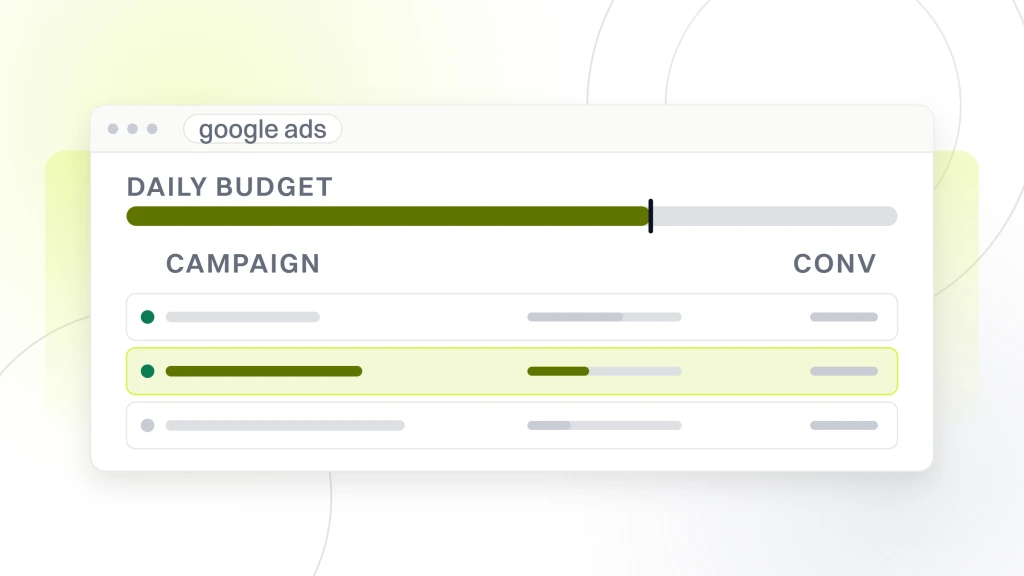
Budget management runs at the campaign level. Each campaign gets a daily budget of monthly-target divided by 30.4 days, which stops a single high-spend day from eating the monthly budget in week one. Practices that accept Google’s recommended budgets end up 40 to 60% over target, since those recommendations optimize for Google’s impression share, not the practice’s cost per booked call.
The Google Ads recommendations tab is optimized for Google’s revenue, not your booked patient calls. Read every suggestion twice before you accept one.
| Campaign | Monthly budget | Target CPC | Notes |
|---|---|---|---|
| New patient search | $1,200 to $2,500 | $4 to $12 | Broadest reach, highest volume. |
| Emergency dental | $400 to $900 | $8 to $22 | Higher CPC, higher intent, higher conversion. |
| Implant campaign | $600 to $1,800 | $18 to $45 | Longer sales cycle, higher lifetime value. |
| Cosmetic campaign | $400 to $1,200 | $8 to $20 | Best paired with Meta remarketing. |
| Brand defense | $100 to $300 | $1 to $4 | Low volume, prevents competitor poaching. |
The budget table above assumes moderate market competition. Practices in dense urban markets should plan on 30 to 60% higher target CPCs on the treatment campaigns, since auction density pushes bids up. Redefine Web PPC retainer tiers start at $999, $1,499, or $2,499 per month for single-location practices, and from $4,500 per month for multi-location groups that need per-office segmentation. See our high roi dental google ads guide for benchmark data on ROI at each budget tier.
Reporting and optimization cadence
Reporting on a dental practice ads account runs weekly, monthly, and quarterly. Weekly reports cover search terms mining, negative keyword additions, ad copy performance, and budget pacing. Monthly reports summarize spend, clicks, form submissions, phone calls, booked patient calls, and cost per booked call. Quarterly reports review campaign structure, keyword lists, landing page conversion rates, and direction for the next quarter.
The optimization cadence sits at weekly for tactical work (negative keywords, budget pacing, ad rotation) and monthly for structural work (new ad copy tests, landing page updates, campaign structure changes). Practices operating on monthly-only optimization miss the two to four hours per week where waste gets blocked before it compounds. Practices operating on daily optimization usually over-optimize on noise and produce worse results than a disciplined weekly cadence.
- Daily. Automated budget pacing check, no manual intervention.
- Weekly. Search terms review, negatives added, ad rotation check, budget pacing correction.
- Monthly. Spend report, booked-call report, ad copy performance review, landing page test review.
- Quarterly. Campaign structure review, landing page A/B test wrap-up, next quarter roadmap.
The quarterly business review with the practice owner runs 60 minutes and covers results against target cost per booked call, the working versus underperforming campaigns, and strategic direction for the next quarter. Skipping the quarterly review is where accounts drift on generic monthly deliverables. See our dental marketing roi guide for how the paid search report ties into overall marketing ROI.
Local Services Ads for dental practice advertising
Local Services Ads (LSAs) show up above standard Google Ads results for dental searches and charge per lead instead of per click. Qualifying practices go through a Google Guarantee application that covers license verification, insurance verification, background checks on providers, and Google Business Profile completion. Approved practices get a green Google Guarantee badge on their ad and often see cost per booked call 30 to 45% below standard search campaigns.
LSAs work as a complement to standard search campaigns, not a replacement. Standard search campaigns reach searchers using long-tail treatment queries where LSAs sometimes miss placement. LSAs reach searchers using short generic queries (dentist near me, best dentist [city]) where standard search bids climb high enough to hurt ROI. Running both channels together captures the full spread of dental search intent at a blended cost per booked call below either channel alone.
- Application. License verification, insurance, provider background checks.
- Google Guarantee badge. Green check mark next to the ad, worth 15 to 25% higher click-through rate.
- Pay per lead. $18 to $45 per lead depending on market density.
- Dispute process. Refund available for spam or wrong-number leads within 30 days.
- Review requirement. 5-plus Google reviews with a 4-plus average rating.
The dispute process matters. LSAs charge for leads at contact, so spam calls, wrong numbers, and out-of-service-area calls all generate a charge the practice can dispute. Practices actively disputing invalid leads recover 15 to 30% of the charged amount monthly. Set a Friday dispute review in the calendar and stick to it.
Run LSAs alongside standard search, not instead of it. Together they capture the full spread of dental search intent at a lower blended cost per booked call.
Common mistakes when you run ads for a dental practice
The audit view of dental practice ads is easier to read by looking at what usually goes wrong. Most underperforming dental Google Ads accounts share the same five mistakes. Broad match keywords with no negative list. The homepage used as the landing page for every ad group. No call tracking installed. No offline conversion import for booked patient calls. And one ad variant per ad group with no split testing. Fixing all five takes 15 to 30 hours of specialist time and typically drops cost per booked call by 40 to 65% inside 90 days.
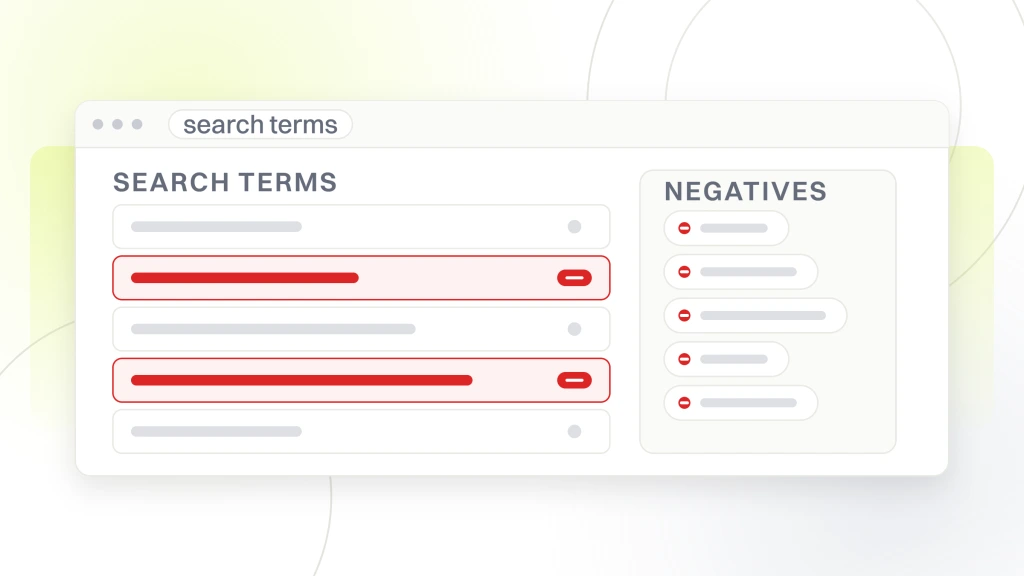
The next tier of mistakes hides in the details. Location targeting set to the state or region instead of ZIP codes around the practice. Bid strategy set to Maximize Clicks (a Google default) instead of a conversion-focused strategy. Ad extensions missing on 40 to 60% of ad groups. And Quality Score under 6 on 30% or more of core keywords. Each one costs 8 to 18% of the account’s efficiency and stacks on top of the five foundation mistakes above.
- Broad match without negatives. Search terms wander into unrelated queries.
- Homepage landing pages. Conversion rate crashes versus dedicated landing pages.
- No call tracking. No way to attribute booked calls to specific keywords or ads.
- No offline conversion import. Algorithm optimizes on leads, not booked patients.
- Single ad variant. No split testing means no improvement over time.
- Wrong location targeting. State-level targeting wastes spend outside the service area.
- Wrong bid strategy. Maximize Clicks favors volume over conversion quality.
Practices auditing their own accounts against this list before hiring a new agency often find the exact fix roadmap the next agency should be running. That audit takes 90 to 120 minutes with a Google Ads certified reviewer and produces a clear prioritized list. See our dental ppc mistakes guide for the full audit walkthrough.
Case study. North County Dental Care in Vista, CA
North County Dental Care in Vista, CA had served patients for 20 years with a strong offline reputation and almost no visible digital presence. Zero top-10 search positions, inconsistent directory listings, a weak Google Business Profile, and fragmented marketing across multiple agencies with no measurable ROI. Redefine Web took the account over, cleaned up the NAP data, and rebuilt paid search around Google Business Profile-driven PPC, local SEO, and video under one roadmap.
The results, verified against the case study record. New patient volume grew 1,000% from 2021 to 2024, from 1 to 2 booked patients per month at kickoff to 12 to 16 per month on a steady run rate. Organic traffic grew 385%. Marketing ROI hit 500%. The program also cut the cost of winning each patient.
How to run ads for a dental practice in 2026 and beyond
Dental Google Ads is moving toward AI-driven bidding, offline conversion optimization, and Local Services Ads for practices that qualify. Target CPA bidding paired with offline conversion imports beats fully manual bidding by 15 to 25% on cost per booked patient call across dental accounts. The account structure covered above is what makes those automated bid strategies work, since the algorithm needs clean conversion data at volume to earn its keep.
The second shift is toward Performance Max campaigns for dental, which produce mixed results. Practices with strong brand assets, high-quality landing pages, and clean conversion tracking see Performance Max produce incremental booked calls at defensible cost. Practices without those foundations see Performance Max waste 30 to 50% of the budget on unrelated audience placements. Test Performance Max only after the search account is stable, not as the first campaign type at kickoff.
If the current dental Google Ads account has stalled on booked-call growth, or the practice is setting up its first account, the structure above runs cleanly on single-location and multi-location practices alike. See dental ppc services, our dental google ads guide, or the Google Ads campaign structure documentation for the reference framework any dental practice ad account should follow.