Dental website SEO decides whether your practice site pulls new patients out of Google every week or sits invisible while a competitor down the street books them. This guide walks through the exact structure, on-page work, technical fixes, local signals, and conversion moves that make dental website SEO pay off. Every recommendation here is one we’ve deployed on live dental accounts, including the site rebuild for VP Dental that doubled new patient bookings and added $8,100 a month in recurring revenue inside a single engagement. If you own a practice, run marketing at a DSO, or manage the site for a growing group, the checklist below is the one to work through this quarter.
The short version. Most dental sites rank because of who links to them and how quickly they load, not because of clever copy. Fix the foundation first, then earn the rankings. If your current site is over three years old and untouched on schema, image weights, or service page structure, dental website SEO gains of 40 to 80 percent in organic sessions are usually sitting there for six to nine months of steady work.
What Dental Website SEO Actually Covers
Dental website SEO is the full stack of on-page, technical, local, and content signals that push a practice site into the top three results for the searches patients actually run. It is not a plugin, not a monthly report, and not a list of keywords. Every practice we work with wants the same outcome. More booked appointments from Google without paying for every click. To get there, five layers of the site have to be right at the same time. Skip a layer and rankings plateau three months in.
Site architecture and service page depth
Every service you offer needs its own page with 900 to 1,500 words of real content, a video or photo the patient recognizes as your office, and internal links to related services. Most dental sites we audit have one Services page listing 14 procedures with 40 words each. That structure cannot rank. Rebuild it as one page per service with a clear parent hub, and organic sessions to service pages climb 60 to 120 percent inside two quarters. That is the biggest single lever in dental website SEO for a mid-size practice.
Local signals tied to the Google Business Profile
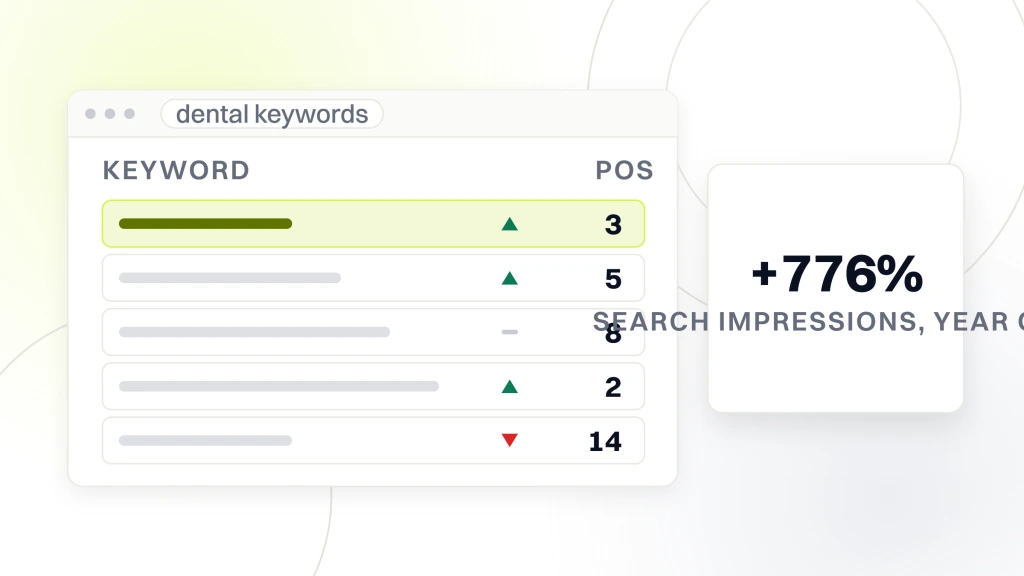
Your website and your Google Business Profile are two halves of the same ranking system. The site tells Google what you do. The profile tells Google where you do it and how patients rate you. Both have to agree. When we rebuilt VP Dental’s site, we tied every location page to a matching profile, cleaned up name-address-phone data across 40 citation sources, and rewrote review request timing. Search impressions climbed 776 percent in the first year. That is not a copy trick. That is agreement between the site and the profile.
Technical foundation that pages load on
Core Web Vitals, mobile rendering, HTTPS, crawlability, and schema. If any of these is broken, ranking work above the fold does not compound. We cover the specific fixes in the technical section below.
On-Page Dental Website SEO That Actually Books Patients
On-page dental website SEO is where 60 percent of the ranking work happens on a practice site. Every service page, provider bio, and location page needs the same on-page checklist run against it. The list below is the one we run for every dental client during a site audit, and the one we walked North County Dental Care through when we rebuilt their site during the 2021 to 2024 engagement that grew patient volume 1,000 percent.
Title tags and H1 discipline
Every page needs a unique title tag under 60 characters that opens with the primary phrase and closes with the practice name. The H1 on the page repeats the phrase in a slightly different form so the page reads naturally to a patient. Duplicate title tags across service pages is the single most common on-page miss we see. A three-doctor practice with 14 services and 4 location pages should have 18 unique titles and H1s. Most have 4 to 6 unique combinations sitewide.
Meta descriptions patients click
Meta descriptions are a click-through factor, and click-through is a ranking factor. Write each description as a 150 to 158 character sentence that names the service, the neighborhood, and the reason the patient should click your listing. Avoid “we are dedicated to.” Every dental site says that.
Service page word counts and structure
Service pages under 800 words rank for nothing outside pure brand searches. Service pages between 900 and 1,500 words with clear sub-headings, a numbered process, an FAQ block, and a video routinely reach page one for procedure plus city searches inside six months. Provider bios follow the same rule. A 90-word bio does not rank. A 500-word bio with education history, procedure specialties, and one personal detail patients remember does.
Technical Dental Website SEO That Clears the Crawl Path
Technical dental website SEO is the base layer nothing else works without. If Google cannot crawl and render your site quickly on mobile, no amount of content depth or link building overcomes it. The technical checklist below is the one we run for every practice we audit. It takes two to five days on a typical site and pays for itself inside a quarter every time.
- Core Web Vitals in the green on mobile for at least 90 percent of pages tracked in Search Console
- Largest Contentful Paint under 2.5 seconds on the homepage, service pages, and location pages
- Every image compressed under 200KB with WebP as the default format and lazy loading below the fold
- A working XML sitemap submitted to Google Search Console and refreshed on every publish
- Schema markup for LocalBusiness, Dentist, MedicalOrganization, Person for each provider, and FAQPage where applicable
- SSL everywhere with no mixed content warnings on any page
- A robots file that does not accidentally block the sitemap or the wp-content uploads directory
- Mobile-first rendering with no horizontal scroll on any page under 400 pixels wide
Fix Core Web Vitals first. Every content and link building gain compounds faster on a site that loads inside 2.5 seconds than one that loads inside 6 seconds. The math is that direct.
Schema patients and Google both use
Dental schema markup like LocalBusiness and Dentist tells Google your practice is a specific type of medical business at a specific address. FAQPage schema on service pages earns rich results in the SERP that push click-through 15 to 30 percent higher on the same rank. Person schema on provider bios ties each doctor to the practice and reinforces the local authority signal. We install all four on every dental site we build. It is not optional in 2026.
Local Dental Website SEO and the Map Pack
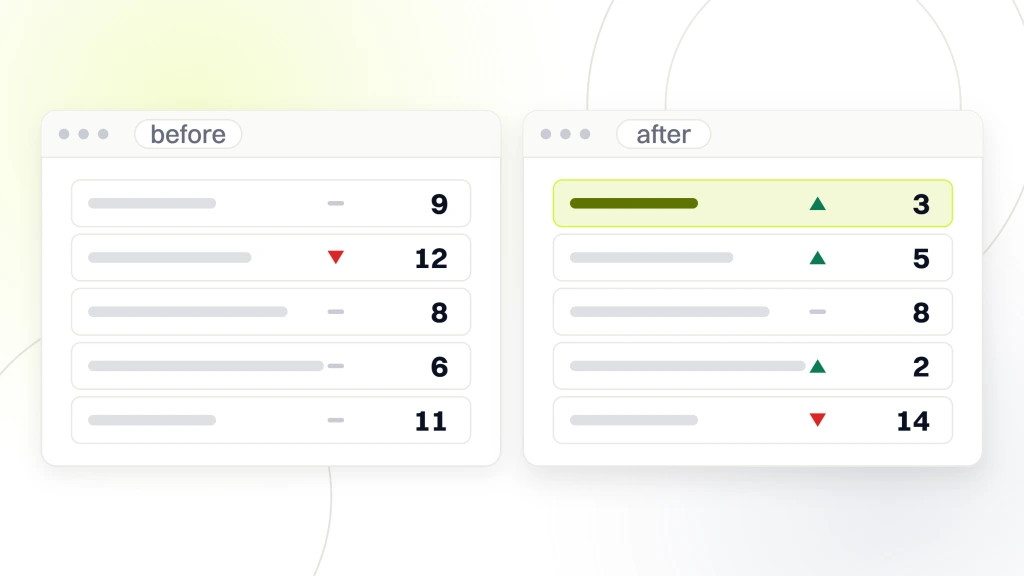
Local dental website SEO is the reason a three-office group can outrank a national dental chain for “dentist near me” searches inside their service area. The map pack is where most patients decide. If your practice is not in the top three there, you are competing with the seven listings below the fold on the organic results. The work below is what moves the map pack for a practice site.
Google Business Profile as a ranking asset
Every location gets its own fully filled profile with primary category set to Dentist (see the full Google Business Profile for dentists setup), secondary categories for the specialties you offer, weekly photo uploads, monthly posts, service items filled out with descriptions, and review responses inside 24 hours. When Delicate Dental Group came to us, their profile had 47 reviews and no category structure. We rebuilt the profile system across their scratch-launched locations, ran a review acquisition sequence tied to their patient flow, and grew total reviews to 700 plus while tripling their Maps impressions. Every dental practice can run this playbook.
Citations and name-address-phone consistency
Pull a citation audit and fix mismatched name, address, or phone data across the 40 to 60 sources that matter for a dental practice. Yelp, Healthgrades, Zocdoc, Vitals, Wellness, and the specialty directories tied to your service mix. Google reads consistency as trust. Inconsistency across even 10 sources drags map pack rankings. This is boring work. It is also the work most practices skip because it is boring, and skipping it is the cheapest ranking mistake you can make.
Location page structure on the site itself
Every physical location on your site needs its own page with the address, embedded map, hours, phone, provider bios for the doctors at that office, patient reviews specific to that location, driving directions from nearby landmarks, and a booking link that routes to the right calendar. Generic contact pages that list four addresses in a footer do not rank for any of your neighborhoods. Individual location pages do.
Dental Content That Earns Links and Rankings
Content is where dental website SEO scales beyond the map pack. Every practice we work with runs the same content system. A hub page for each major service, three to five deep guides tied to that service, a blog cluster tied to the guides, and a case studies section that names real patient outcomes without violating privacy. The system is repeatable across specialties, from general dentistry to sedation to cosmetic to pediatric. iSmile Dental Spa in Carmichael grew organic traffic 800 percent over five years running exactly this content pattern with our team.
Guides that answer patient questions in full
The guides that rank for dental queries in 2026 answer the full patient question in one page. Cost, timeline, pain expectations, insurance coverage, recovery, before and after, and the alternatives. A 2,500-word implant guide with real cost ranges, a comparison table with bridges and dentures, and a booking CTA at the end books 3 to 7 percent of the readers who land on it from organic search. That conversion rate is 8 to 15 times what a 400-word service page books.
Blog posts that build topical authority
Blog posts on a dental site should support the guides, not float alone. Every post links to one guide and one service page. Every post opens with a specific patient scenario or stat. Every post ends with a booking or contact CTA. If a post cannot tie back to a service the practice offers, do not write it. Topical relevance to what you actually sell is the only pattern that ranks.
Video that earns time on page
Every hub and every guide gets a short video, one to three minutes, of the doctor explaining the topic. Time on page climbs 40 to 90 percent when the video is present and the transcript is on the page. Google reads time on page as a quality signal. Patients read the doctor’s face as trust. Both matter, and both come from the same asset.
Conversion Work That Turns Rankings Into Booked Visits
Dental website SEO that ranks pages and never books patients is a waste. Every ranking gain has to route into a booking, a call, or a form fill. The conversion work below is what turns organic sessions into new patient value. It is also the piece most practices skip because they think SEO ends at rank position.
- A sticky mobile call button on every page below 900 pixels wide, tied to a tracked phone number
- An online booking widget above the fold on the homepage and on every service page
- Insurance logos and a “we accept most insurance” note visible without scrolling on service pages
- A live chat window that routes to the front desk during business hours and a form after hours
- Financing options named in a single line so patients know the practice fits their budget
- Real patient reviews on every service page, not just the reviews page, tied to the treatment described
Tracking that proves the SEO work is paying
Every booked patient from organic search should be traceable back to the page and the query that started them. Google Analytics 4 goals for booking submissions. Call tracking numbers on the header and footer with dynamic insertion tied to the referring source. Search Console queries mapped to the pages that answer them. Without this stack, you cannot prove the dental website SEO work is paying. With it, the case for continued investment writes itself every quarter.
Real Dental Website SEO Results at VP Dental
VP Dental came to us in early 2023 with a WordPress site that loaded in 6.8 seconds on mobile, no schema, two undifferentiated location pages, and a Google Business Profile with the wrong hours listed on the secondary location. Search impressions were flat for the previous eight months and new patient calls were down against the prior year. The full engagement covered website redesign, dental website SEO strategy, hosting, and conversion optimization.
What we rebuilt on the site
We rebuilt the site on a WordPress theme optimized for Core Web Vitals, cut homepage load time from 6.8 seconds to 1.9 seconds, and wrote nine new service pages with full on-page structure. Every service page got a video, a booking CTA above the fold, patient reviews specific to that treatment, and FAQPage schema. The two location pages were rewritten with full address, hours, provider bios, and neighborhood-specific driving directions.
The results after 12 months
Doubled new monthly patient bookings, added $8,100 a month in recurring revenue tied to hygiene and treatment plan follow-through, and grew search impressions 776 percent year over year. Booking integrations on the site closed the loop from ranking to appointment, and the conversion work meant every ranking gain routed into a scheduled visit. This is what dental website SEO looks like when the site, the profile, the content, and the conversion path all agree.