
Ecommerce market expansion strategies fall apart the same way every quarter. A DTC founder reads that Germany is the second-largest ecommerce market in Europe, flips the store to euros, runs a 2-week Meta test, and watches ad spend disappear against a checkout that reads Vermont-shaped to a Bavarian shopper. The winners pick 1 country on real intent data, translate 10 pages instead of the whole site, price landed-cost with VAT baked in, and stitch a local payment rail on before the first paid dollar goes out.
This guide walks through the ecommerce market expansion strategies our team runs for real DTC brands. Country selection with the 4 data points that predict conversion. Localization deeper than translation and lighter than a rebuild. Tax and compliance work you can’t skip. Payment and currency choices that decide checkout completion. Fulfillment models sized to volume. Marketing channel mixes that shift by region. Every recommendation runs on brands we work with at our ecommerce marketing agency.
Localizing ecommerce marketing for international markets
Localizing ecommerce marketing for international markets is where most brands overspend or underspend. Overspend looks like translating the entire site into 3 languages before the first order ships. Underspend looks like a store that reads Vermont-shaped to a Bavarian shopper because the founder ran Google Translate on the checkout page and pushed it live. The right scope sits between those two, and the local buyer decides what belongs in it.
The pages that need real localization
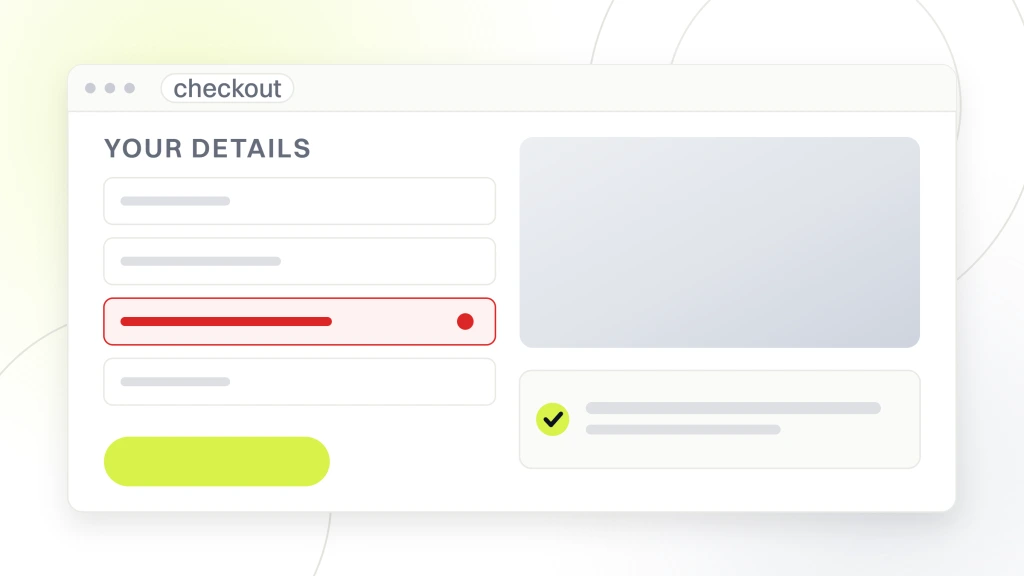
Real localization applies to 7 page types. The homepage. The top 3 category pages. The top 5 product pages by projected volume. The cart and checkout screens. The shipping and returns policy pages. The order confirmation email. The winback email. Everything else can wait for launch 2.
Localization on those 7 pages covers translation by a human native speaker (not machine), local currency with the correct decimal separator (comma in Germany, period in the UK), local phone number formatting on the checkout form, local address format with the correct postcode field, local trust badges (Trusted Shops in Germany, Feefo in the UK), and product measurements in the local unit (grams and centimeters in Europe, ounces and inches in the US).
Voice, references, and cultural anchors
Translation is the easy part. Voice localization is where the depth work sits. Copy references that hit for a US buyer (Super Bowl commercials, the words apartment and gas station, tipping culture) read as translated-American to a European shopper and kill trust in the first 10 seconds. British buyers expect flat and petrol station. Germans expect direct product-benefit copy without US-style exclamation marks. Australians want the price to include GST.
Getting voice right is worth more than pixel-perfect design. A local editor doing a 2-hour pass on your product pages before launch beats a 3-week translation project run through a US-based agency that never lived in the market.
Tax and compliance inside ecommerce market expansion strategies
Tax, duties, and compliance are the plumbing under every cross-border launch. Get them right and the customer pays the price they see at checkout and never thinks about duties. Get them wrong and orders get held at customs, buyers get surprise invoices, and the return rate climbs 15 to 20 points in the first quarter.
| Market | Sales tax or VAT | Duty threshold | Filing model | Return law risk |
|---|---|---|---|---|
| United Kingdom | 20% VAT | 135 GBP low-value regime | UK VAT reg once over threshold | 14-day cooling-off |
| European Union (via IOSS) | 17-27% VAT by country | 150 EUR IOSS ceiling | Single IOSS return, monthly | 14-day cooling-off, all EU |
| Australia | 10% GST | 1,000 AUD low-value | Register at 75k AUD annual | Consumer guarantees law |
| Canada | 5-15% GST/HST by province | 20 CAD gift, 40 CAD other | Register at 30k CAD annual | Provincial variation |
| Japan | 10% consumption tax | 10,000 JPY personal-use | Register at 10M JPY annual | Cooling-off narrower |
The table above is a starting point, not tax advice. Rules change every finance year. A local accountant in each target market should confirm registration thresholds and any category-specific duty rates (cosmetics, apparel, electronics all sit under different HS codes with different duties).
Most DTC brands under 500k in annual cross-border revenue outsource this to Global-e, Zonos, or Passport, which handle IOSS filing, duty pre-payment, and returns paperwork inside a single API integration. The service fees look expensive at 4 to 6 percent of revenue until you price the alternative of a founder trying to file German VAT quarterly. Compliance is what keeps the launch alive at month 3 when the accountant asks whether you registered.
Payments and currency for cross-border ecommerce
Payment method mix decides checkout completion in a way US founders often miss. Card share on US ecommerce checkouts runs 68 percent. Card share on German checkouts runs 18 percent. If you launch in Germany with Stripe on cards only, 82 percent of shoppers hit checkout and bounce. The fix is not 1 payment provider. The fix is the local mix.

Local payment share by market
- Germany. Klarna 25%, PayPal 21%, SEPA direct debit 15%, Sofort 10%, cards 18%, other 11%.
- Netherlands. iDEAL 60%, PayPal 12%, cards 15%, Klarna 8%, other 5%.
- United Kingdom. Cards 55%, PayPal 20%, Klarna 12%, Apple Pay 8%, other 5%.
- France. Cards 60%, PayPal 18%, Cartes Bancaires (domestic scheme) 10%, other 12%.
- Japan. Cards 40%, Konbini (convenience-store cash) 20%, PayPay wallet 15%, other 25%.
- Brazil. Pix 45%, Boleto 20%, cards 25%, other 10%. Pix is 24/7 real-time bank transfer.
Currency display and FX pass-through
Displaying local currency grows checkout completion 12 to 18 percent over showing USD to a foreign buyer. Don’t fake it with a JavaScript converter. Charge in the local currency at the payment processor level. Take the FX hit on your end (usually 1.5 to 2.5 percent through Wise or Adyen) and let the customer see the amount their bank will actually charge.
Foreign transaction fees on the buyer’s card add another 2 to 3 percent when they pay in USD. Charging local eliminates that surprise and shows up as measurably higher completion inside the ecommerce marketing dashboard in the first 4 weeks. Klarna, PayPal, and Adyen all support this natively for DTC volume.
Fulfillment models for cross-border ecommerce
Fulfillment scales in 3 stages when you expand ecommerce to new markets. Cross-border shipping from US inventory, third-party logistics inside the target region, and dedicated in-region warehousing once volume justifies the fixed cost. Pick the wrong stage for your volume and you either burn margin on air freight or tie up cash in a European warehouse that sits half-empty.
Stage 1, cross-border from home inventory
Stage 1 applies under roughly 100 international orders per month per region. Fulfill from your US warehouse using DHL Express, FedEx International Priority, or UPS Worldwide Saver on a DDP (delivered duty paid) basis. Landed cost per unit runs $18 to $32 for a 1 lb parcel. Transit time hits 5 to 7 business days. Customs friction stays low because the courier files the paperwork.
Return rate stays manageable at that volume because you can afford to eat the shipping-back cost. Brands that jump from stage 1 to stage 3 (in-region warehouse) before hitting real volume tie up $80k to $150k in working capital that could be paying for marketing tests.
Stage 2, third-party logistics in-region
Stage 2 kicks in between 100 and 800 orders per month per region. A third-party logistics provider in your target region (ShipMonk EU, Huboo, Bergen Logistics, or Cubyn) takes inbound bulk shipments and fulfills local orders at $4 to $7 per order plus $0.15 to $0.30 per unit for pick and pack. Transit time drops to 1 to 3 days. Return handling gets automated.
Cash tied up in inventory doubles versus stage 1, and marketing efficiency also improves. Faster delivery grows repeat rate 20 to 35 percent. Stage 2 is where most DTC brands stay for years, and it’s the right answer under 10k monthly orders per region.
Marketing channels region by region for cross-border DTC
Marketing channel mix shifts by region in ways that catch US founders by surprise. Meta owns paid social in the UK and Australia the way it does in the US. Meta is weaker in Germany, France, and Japan, where competing local platforms and privacy-first shopper behavior blunt the retargeting stack. Getting the channel mix right cuts wasted spend by 30 to 50 percent in the first quarter.
Paid channels by region
Google Ads works everywhere with adjusted bidding by region. Meta (Facebook plus Instagram) works well in the UK, Ireland, Australia, and the Nordics. Meta underperforms in Germany and France, where iOS 14.5 attribution loss hit harder. Apple share is higher and consent rates are lower in those markets. TikTok Ads outperforms Meta in the UK and Southeast Asia on younger DTC verticals (beauty, fashion, wellness).
Pinterest works in the UK and Germany for home goods and DIY. LINE ads dominate Japan. Naver ads dominate South Korea. Yandex still runs paid volume in specific Central Asian markets.
Organic and content by region
SEO in the UK is easier than the US. Content depth expectations sit lower. SEO in Germany rewards long-form technical detail over lifestyle content. SEO in Japan rewards mobile-first design and short punchy paragraphs. Content Marketing Institute published useful guidance on global content strategy that covers cadence and workflow for teams running content across 3 or more markets.
The content marketing strategy for ecommerce framework we published earlier this year covers the pillar plus cluster approach that scales across markets without doubling headcount.
International ecommerce agency decisions to make first
Working with an international ecommerce marketing agency changes the math on which markets you can enter and how fast. The wrong agency runs the same US playbook against a German audience and burns through budget. The right agency has native speakers on staff, real experience with local platforms and local payment rails, and honest opinions about which markets to skip.
What to look for in scope conversations
A real scope conversation with an international ecommerce marketing agency covers native-language creative production (not translated US ads with local subtitles), local media buying relationships with the platforms the agency will run (Naver, LINE, Yandex have direct relationships that matter), local payment integration experience specific to your platform (Shopify Markets Pro, WooCommerce with WPML, BigCommerce Multi-Storefront), local returns handling experience with your 3PL, and case studies with brands in your revenue band.
Agencies that skip any 1 of those and quote a retainer under $2,000 per market per month usually run offshore contractors as the creative team.
Retainer sizing per market
Retainer sizing per additional market depends on channel mix and content cadence. Our ecommerce marketing retainer tiers run $1,499, $2,499, $3,999, and from $6,000 per month for multi-market DTC work. Ad spend bills separately.
The Foundation tier covers a single-market DTC brand fixing domestic conversion before crossing borders. The Growth tier covers a brand adding the UK only (English content, existing Shopify store, minor localization). The Scale tier covers a brand adding Germany with full German-language content and Klarna integration. The Enterprise tier covers a brand adding Japan with LINE and local creative production, where creative and media buying both need in-country teams.
Expand ecommerce to new markets with a launch runbook
Every brand that will expand ecommerce to new markets needs a runbook. A runbook is a single document that lists every task, owner, deadline, and check for the first 90 days of the launch. Without it, the founder becomes the bottleneck for questions the 3PL, the tax accountant, the agency, and the platform vendor keep asking. With it, the launch runs on rails and the founder gets to focus on the metrics that matter.
The 30-60-90 skeleton
- Days 1-30. Legal entity or tax registration confirmed, IOSS or local VAT number issued, storefront localized on the 7 page types, top 3 PDPs translated, cart and checkout localized, local payment methods live in test mode.
- Days 31-60. 3PL inbound shipment received and inventory confirmed, courier accounts opened, returns workflow tested with 1 live return, local trust badges installed, first paid campaigns live at 20 percent of planned budget.
- Days 61-90. Paid budget scaled to 100 percent of plan, first winback email flow live, first review-collection flow live (Trustpilot in EU, Feefo in UK, Judge.me global), monthly reconciliation of landed cost vs plan, decision to add second country or double down.
- Ongoing. Monthly tax filings on time, quarterly review of return rate against category benchmark, twice-yearly review of local platform ad share against alternatives.
Who owns the runbook
Runbook ownership matters as much as the runbook itself. At a founder-led DTC brand under $5M annual revenue, the founder owns the runbook and the agency runs weekly standups against it. At a brand between $5M and $20M, the head of ecommerce owns the runbook, and the agency plus the 3PL plus the tax provider report against it in a shared Notion or Airtable.
Above $20M, an internal international lead owns the runbook full-time. Nobody at the practice, the brand, or the agency should be able to say they didn’t know what week the tax registration was due. It lives on the runbook and updates automatically in the shared view.
A real cross-border launch story from our work
Abigail Ahern, a luxury home decor brand headquartered in London, came to us with a checkout that read US-first, yet the brand’s home base was the UK. The store showed USD to non-logged-in visitors, ran discount-led paid social that eroded the premium positioning, and had no coherent story for German or French shoppers landing on the homepage. The expansion plan had to solve 2 problems at once. Recover the domestic premium voice, and open the 2 nearest European markets without breaking the brand.
Our team restructured the UK homepage and top 10 category pages around premium interior-design intent rather than discount-driven acquisition. Shifted paid social away from constant-promo creative toward editorial-style hero images that matched the brand voice. Localized Sterling as the default currency for UK visitors, euros for detected EU IPs, and USD only for confirmed US traffic. Added Klarna to the German checkout path, iDEAL to the Dutch path. Restructured the paid search account with country-level campaigns and negative-keyword sweeps for out-of-scope regions. Introduced category-page content depth for luxury interior-search intent that the site had never targeted.
Over the following year, Abigail Ahern grew online revenue 179 percent, drove paid-social ROAS to 3,000 percent, and hit paid-search ROAS of 1,588 percent across a 12-month window. That result took the brand off discount-led acquisition and doubled conversion rates on the localized checkout paths. The cross-border piece didn’t carry all the gains alone. What it did was open 2 markets the brand had left on the table and give the domestic UK site room to stop discounting itself into the ground.
Measuring ecommerce market expansion strategies against real KPIs
Measurement closes the loop on any launch. Founders who measure the wrong things celebrate a country that is quietly losing money on landed cost. Founders who measure the right things kill weak markets fast and double down on the winners inside 90 days.
The 7 KPIs per market
Track 7 KPIs per market. Revenue by market, month over month. Contribution margin after landed cost, duties, payment fees, and returns (not gross margin). Conversion rate on the localized checkout path. Average order value in local currency. Return rate against category benchmark. Repeat purchase rate at 60 days. Cost per acquisition in local currency divided by 60-day repeat rate, which gives payback in weeks.
The ecommerce marketing metrics benchmark guide covers the North American versions of these numbers. Cross-border versions run 10 to 25 percent below US benchmarks in year 1 and usually recover by year 2.
The kill-or-scale decision
Every market gets a kill-or-scale decision at 90 days and again at 180 days. Kill criteria are honest. Contribution margin under 15 percent after all landed costs. Return rate over 25 percent. Repeat rate under 10 percent at 60 days. If any 2 hit, the market isn’t working and the runway you’re burning on it belongs at the next country instead.
Scale criteria are the mirror. Contribution margin over 25 percent, return rate under category median, repeat rate over 20 percent at 60 days. Markets that hit those numbers get the second wave of budget, the local warehouse conversation, and the local hire. Cross-border ecommerce lives or dies on the honesty of that quarterly decision.
Where cross-border ecommerce fits the wider stack
Cross-border expansion sits on top of the domestic stack. If the domestic funnel is not converting profitably, adding countries multiplies the shortfall instead of fixing it. Founders who launch international before fixing domestic conversion end up with a brand that loses money in 5 countries instead of 1. Fix the home market first, then expand.
What that fix looks like differs by brand. Some brands need a full ecommerce site rebuild before international will pay off. Some brands need only a category-page overhaul. Some brands need to fix a returns policy that is bleeding contribution margin before any second market makes sense. Reading the omnichannel ecommerce marketing playbook gives you a frame for auditing the domestic funnel before you commit to the cross-border build.
The rest of the stack sits under expansion. Marketing automation across email and SMS that respects local consent rules (GDPR in Europe, PECR in the UK, LGPD in Brazil). Content marketing that produces native-language content at a cadence that supports the local site. Paid media buying with local platform relationships. Returns handling that reads normal to the local buyer. Payment rails that match local checkout share. Expansion is not 1 tactic. Expansion is every tactic done with a specific country in mind, and the plan holds together only when every tactic pulls the same way. Reference the guidance from MarketingProfs on global marketing fundamentals if you need 1 more outside frame.
Book a cross-border ecommerce expansion audit
Cross-border ecommerce works when the country pick, the checkout, the tax stack, and the paid mix line up before the first ad spends. Skip any 1 and the launch bleeds cash for 6 months. Book a call. We’ll walk your top 2 candidate markets against real intent data, price the localization scope, and hand back a 90-day runbook you can run with your team or with ours. Retainers start at $1,499 per month for a domestic-first fix and scale to $6,000 and up for full multi-market coverage.