Healthcare web accessibility is the practice of building patient-facing websites, portals, and booking tools so people with disabilities can use every feature without friction, measured against the Web Content Accessibility Guidelines (WCAG) 2.1 AA and enforced under the Americans with Disabilities Act (ADA), Section 504, and Section 1557. It is a legal duty, a patient-care duty, and a booking duty.
Practices that skip the work land in the same place regardless of specialty. A demand letter arrives. An audit surfaces 200 violations. Remediation runs 3 to 5 times what a clean build would have cost. On top of that, the HHS Section 1557 nondiscrimination rule for healthcare now names WCAG 2.1 AA as the standard, and the parallel Section 504 rule sets a May 2026 deadline for most federal healthcare funding recipients.
This guide walks through what healthcare web accessibility requires under the ADA and WCAG 2.1 AA, the 20-plus items we see fail in nearly every audit, and the working checklist we run on real practice sites before we sign off on a launch. Use this as the reference before code review starts.
What healthcare web accessibility really means for a practice site
It means patients with disabilities can use the site without friction. Screen readers reach every region. Keyboard-only navigation gets through every widget. Low-vision zoom holds together at 200% without breaking layout. Color-blind palettes still communicate state. Video runs with captions, and forms parse cleanly through assistive tech. If a patient cannot use the site to book a visit, the practice has an accessibility problem to fix on Monday.
The legal obligation flows from the ADA. The technical standard the courts point to is WCAG 2.1 AA. ADA sets the duty. WCAG sets the measurable target. HHS layered a sharper duty on top in 2024 through updated Section 504 and Section 1557 rules that name WCAG 2.1 AA in the regulatory text itself.
Why the ADA applies to healthcare websites
Healthcare practices are places of public accommodation under Title III of the ADA. Courts have consistently ruled that a practice’s website is an extension of the physical place of business and carries the same accessibility duty. That is the settled legal position across most federal circuits. Practices that argue the ADA does not apply to their site have almost always lost when tested. State-run and locally funded health programs sit under Title II, which reached a similar conclusion in the 2024 DOJ rule.
WCAG 2.1 AA as the working target
WCAG 2.1 AA is the version the U.S. Department of Justice consistently references, and the version plaintiffs’ firms use to build demand letters. The W3C WCAG 2.1 quick reference lists the 50 success criteria that make up the AA target. Building to WCAG 2.2 AA gives an even stronger position and adds 9 newer criteria. Building only to WCAG 2.0 A gets a practice in trouble. AA is the working target every healthcare site should hit.
What healthcare web accessibility is not
Accessibility is not an overlay widget. Overlay vendors sell a script that promises to make the site accessible in one click. Every serious accessibility auditor treats overlays as a red flag, not a fix. Overlays create their own accessibility bugs, do not remediate the underlying markup, and have been the target of successful lawsuits themselves. If your current agency is proposing an overlay as the accessibility solution, that is a signal to change agencies before the practice inherits the exposure.
ADA compliant websites healthcare practices actually build
ADA compliant websites for healthcare practices share the same skeleton regardless of specialty. Semantic HTML. Keyboard-navigable interfaces. Form fields with visible labels. Color contrast that hits 4.5 to 1 on body text. Alt text on every content image, captions on every video, and error states assistive tech can announce. Those are the concrete outputs of building to WCAG 2.1 AA, and every one of them is measurable inside an afternoon audit.
Semantic HTML is the base layer
Semantic HTML gives assistive technology the structural information it needs to make a page navigable. Proper heading order. Landmark regions for main content, navigation, and footer. Form labels associated with fields. Lists marked as lists. Buttons that behave as buttons instead of styled divs. Every one of these is invisible to a sighted user with a mouse. Every one of them is critical for a patient using a screen reader or keyboard.
Keyboard navigation as a first-class requirement
Every interactive element on a healthcare site must be reachable and operable with a keyboard alone. Menus. Booking forms. Insurance verification widgets. Provider filters. Focus indicators must be visible so the patient can see where they are on the page. Focus traps in modals or booking widgets are one of the most common WCAG failures we see, and one of the easiest to catch with a 5-minute keyboard-only test. If you get stuck, so does every patient using a switch device or a screen reader.
Color contrast and low-vision patients
Color contrast has to hit 4.5 to 1 for normal body text and 3 to 1 for large text and interface components. Light gray text on white backgrounds is the single most common WCAG contrast failure on healthcare sites. Practices designing to a modern minimal aesthetic have to trade the fashion-forward contrast for the accessible contrast. The math is not negotiable. Older patients and patients with early macular changes make up a bigger slice of any healthcare audience than designers assume.
Patient portals and telehealth
Patient portals and telehealth interfaces carry the highest accessibility stakes on the site and are often outsourced to a vendor. Portals must let patients read lab results, refill prescriptions, and message providers by keyboard or screen reader. Telehealth video needs live captions, an accessible chat channel, and a keyboard-operable console. Practices inherit vendor bugs and stay on the hook for them anyway. Contract that risk out at procurement, not after the demand letter.
ADA compliance for healthcare websites and the real cost of skipping it
ADA compliance for healthcare websites carries a real business cost most practices never model. Every practice we audit that skipped accessibility work either fielded a demand letter within 24 months of launch or paid a settlement to make one go away quietly. Remediation after the fact runs 3 to 5 times the cost of building to standard the first time. The reputational cost with disability advocacy communities never appears on the balance sheet.
What a demand letter looks like
A typical ADA demand letter against a healthcare website arrives as certified mail. The plaintiffs’ firm names specific WCAG violations on specific URLs, cites case law, and offers a settlement number. The number usually lands in the tens of thousands of dollars with a remediation timeline attached. Practices that ignore the letter go to litigation. Practices that respond quickly and remediate visibly usually settle on more favorable terms. Route it to counsel and to the web team the day it lands.
The remediation math
Remediating an existing site to WCAG 2.1 AA runs about $8,000 to $40,000 depending on site size and how much markup needs a rewrite. Building to the standard from a fresh design typically adds 5% to 15% to the project cost. The math favors doing it once, correctly, and never revisiting the topic under legal pressure. The accessibility work usually costs less than the ADA settlement it prevents.
What settlements typically include
Settlements almost always require a documented remediation plan, a specific WCAG target date, third-party audit reports, and ongoing monitoring. The practice ends up doing the accessibility work anyway. The only question was whether it happened before or after the demand letter arrived. Doing it before is cheaper and quieter. Practices that build to standard the first time avoid the whole conversation.
The HHS Section 504 rule and the May 2026 deadline
In May 2024, HHS finalized an update to the Section 504 rule that names WCAG 2.1 AA as the standard for websites and mobile apps of federal healthcare funding recipients. Most covered entities have to meet the standard by May 2026, with smaller recipients getting an extra year. The rule reaches health systems that take Medicare or Medicaid dollars, state and local public health programs, and federally funded clinics. The parallel Section 1557 rule reinforces the same standard for covered health programs.
Accessibility requirements for healthcare websites, the full checklist
Accessibility requirements for healthcare websites collapse into a working checklist we run on every audit before launch. The checklist maps to WCAG 2.1 AA success criteria and covers the categories where healthcare sites most commonly fail. Every item can be tested in an afternoon by one careful person. Every item earns its place since it surfaces on real practice sites and real remediation projects, not since a scanner told us to add it.
- Every image has an alt attribute. Decorative images use empty alt. Content images describe the content.
- Color contrast on body text meets 4.5 to 1 minimum. Large text and interface components meet 3 to 1.
- Every form field has a visible label associated with the field via for and id attributes.
- Error messages announce clearly through assistive technology and describe the fix.
- Every interactive element is reachable and operable with a keyboard alone.
- Focus indicators are visible on every interactive element that receives focus.
- Heading order is logical, starts at H1, and does not skip levels going down.
- Landmark regions mark the main content, primary navigation, and footer.
- Every video has captions. Every audio has a transcript. Autoplay is off or has a pause control.
- Any content that flashes stays under three flashes per second.
- Motion animations respect the user’s prefers-reduced-motion setting.
- PDF documents that carry patient information are tagged and accessible or offered as HTML.
- Color is never the sole indicator of meaning. Icons or text accompany color states.
- Text can be resized up to 200% without loss of function.
- Time-based interactions provide a way to extend the time or turn off the timer.
- The site provides a Skip to Content link at the top of every template.
- ARIA is used only where native HTML cannot express the pattern, never as a shortcut.
- Language of the page is declared in the html tag, and language changes inside content are marked.
Which items catch the most sites
Color contrast, form labels, keyboard navigation, and alt text are the four most-failed items across every healthcare accessibility audit we run. Together they account for about 70% of the WCAG violations on a typical practice site. The other items still matter. They just surface less often. Practices that catch these four at design and code review stages launch sites that pass audits and rarely field a demand letter.
Which items only show up on complex sites
Time-based interactions, video captions, and PDF accessibility mostly show up on larger practice sites with patient portals, education libraries, or telehealth. Solo practices with a marketing site plus a booking widget rarely hit these items. Multi-location networks and DSO operators absolutely do. The checklist scales with the site, and specialty groups running PDF content inherit the biggest hidden pile of legacy accessibility bugs.
Best practices for accessibility in healthcare websites at design stage
Best practices for accessibility in healthcare websites start at the design stage, not at QA. The cheapest accessibility bugs are the ones the designer never introduces. That means color palettes with tested contrast, form patterns with visible labels, motion patterns that respect reduced-motion preferences, and heading structures baked into wireframes. Accessibility is a design decision first, a code decision second.
Design tokens for contrast
Every color pair in the design system should get tested for contrast at design token stage. A working design system carries pre-approved foreground-background combinations. Designers picking from that palette cannot launch a low-contrast pairing by accident. Designers freehanding colors always eventually do. The fix is systemic, not per-project.
Form patterns with visible labels
Placeholder-only labels look clean and fail accessibility on every audit. Best practice is a persistent visible label above or beside every form field, with the placeholder used only for example input format. This applies to booking forms, insurance verification widgets, patient intake, and any other form the practice runs. Floating labels that persist above the field once the patient starts typing are the modern compromise that keeps designers and screen readers both happy.
Reduced motion and vestibular safety
Motion animations trigger vestibular issues for a real slice of patients. Best practice is to design animations that respect the user’s prefers-reduced-motion setting and give the user a way to pause any motion on the site. Hero videos that auto-loop without a pause control are the most common vestibular-safety failure we catch at audit. Parallax scrolling and aggressive fade-and-slide reveals are the next two offenders, and each is a two-line CSS fix.
Comparing accessibility testing approaches for healthcare sites
Not every accessibility test catches the same issues. Automated scanners catch about 30% of real WCAG failures on a healthcare site. Manual keyboard testing catches another 30%. Screen reader testing catches most of the remaining 30%. User testing with patients who use assistive technology catches the last 10%, which is often the most consequential of all. Sites that rely on any single testing approach get a false green light and a long remediation invoice later.
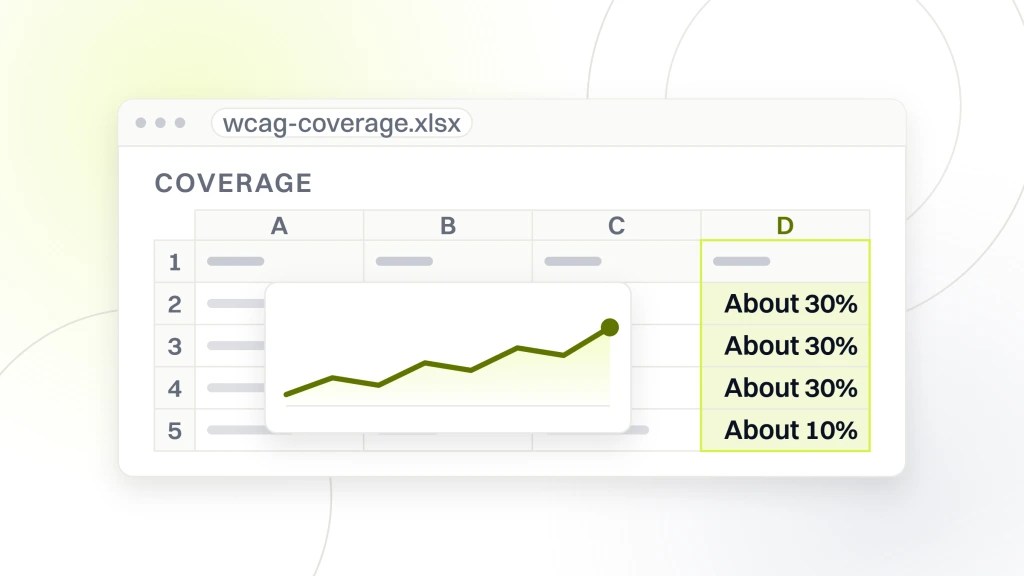
| Testing approach | What it catches | Coverage | Common use |
|---|---|---|---|
| Automated scanner (axe DevTools, WAVE, Lighthouse) | Missing alt text, contrast failures, form label misuse | About 30% | Daily CI runs |
| Keyboard-only manual test | Focus traps, missing focus states, unreachable elements | About 30% | Pre-launch pass |
| Screen reader testing (NVDA, JAWS, VoiceOver) | Semantic HTML gaps, incorrect ARIA, unclear announcements | About 30% | Sprint milestones |
| User testing with AT users | Real-world workflow blockers automated tests miss | About 10% | Major redesigns |
| Third-party accessibility audit | Combines all four, plus VPAT documentation | Full coverage | Annual review |
Reading the coverage math honestly
The percentages are rough working numbers, not exact science. Different sites and different specialties shift the balance. The point is that no single testing approach hits full coverage. A healthcare site that only runs an automated scanner is missing more than half the accessibility issues on the site. That gap is what plaintiffs’ firms find in a demand letter. Every serious accessibility program stacks at least two of the four approaches, and the most rigorous programs use all four before every major launch.
Testing coverage is not the same as remediation coverage. A test that catches an issue only helps if the team fixes it. Every finding needs an owner, a due date, and a verification step in the same sprint. Practices that log 400 findings and fix 40 are worse off than practices that log 100 and fix all 100. The unfixed paper trail becomes evidence for the next demand letter.
Healthcare web accessibility case study from a real client
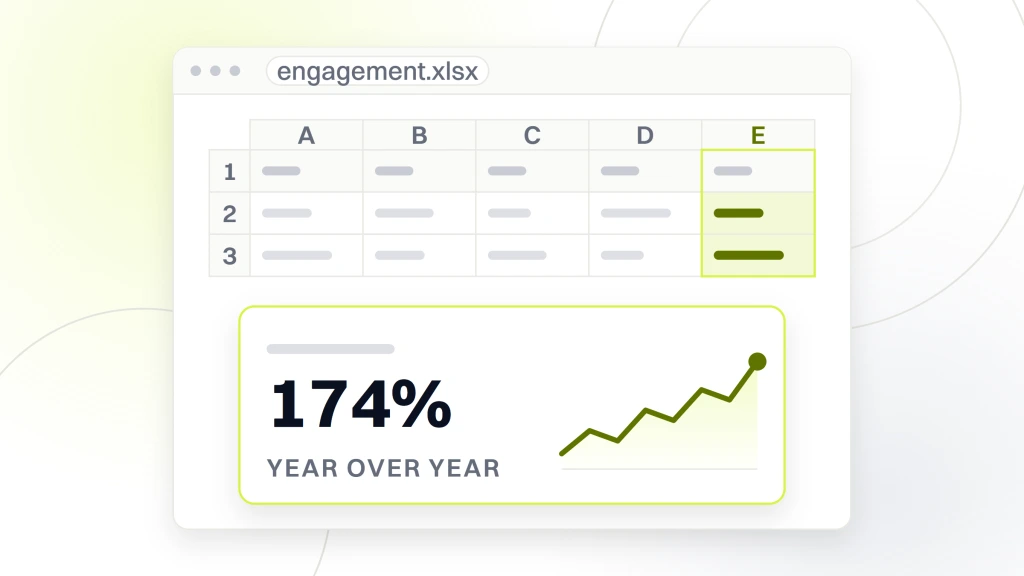
Pelvic Rehabilitation Medicine, a specialty medical group with 14 locations across 10 states, went through an accessibility remediation as part of a full redesign with Redefine Web. The pre-project site had color contrast failures on primary body text, form fields without visible labels on the booking flow, and a hero carousel with keyboard focus traps. Remediation addressed each category systematically and went live alongside a restructured content architecture. Across the 2023 to 2024 engagement, organic keyword rankings expanded 174% year over year and organic traffic grew 166%, and the accessibility posture cleared the practice’s compliance review without a follow-up demand letter arriving.
Why the accessibility work paid back beyond compliance
The accessibility fixes had side effects on the general patient experience. Better focus states helped every keyboard user. Higher contrast helped every mobile user in sunlight. Cleaner form labels helped every visitor booking on a phone. The audit-driven changes did not just clear a legal requirement. They gave the whole site a usability upgrade that showed up in booking rate and in organic search performance.
Why the community platform passed accessibility from day one
The dedicated Worthy Warrior patient community platform launched alongside the site was built to WCAG 2.1 AA from wireframe stage. That decision saved a second remediation project 12 months later. The lesson is boring and correct. Design for accessibility from the first sketch, and the remediation project never has to happen.
How to run a healthcare web accessibility audit
Running the audit is a project management exercise as much as a technical one. The audit has to be scheduled, resourced, executed against a specific WCAG version, documented, and turned into a remediation plan. Skipping any of those steps produces a report nobody reads. Sequence the work so the practice ends up with a prioritized fix list, not a 200-page PDF that sits on a shared drive.
Choose the WCAG version and level
Audit against WCAG 2.1 AA at minimum. Include 2.2 success criteria if the site was launched or majorly redesigned after October 2023. The audit report should name the version explicitly so nobody argues about the standard later. Reference the DOJ web accessibility guidance for the enforcement view alongside the WCAG technical standard.
Run the stack in the right order
Start with an automated scanner to catch the easy items. Then run keyboard-only manual tests on the highest-traffic templates. Then run screen reader tests on the booking flow, the provider bios, and the location pages. Finish with user testing on the actual booking flow. Ordering the stack this way produces the least duplicate work and matters most for practices racing the HHS 2026 deadline.
Document violations by severity and effort
Every violation should get a severity rating and an effort estimate. High severity plus low effort items go first. High severity plus high effort items get a scheduled sprint. Low severity items get batched. Practices that try to fix everything at once produce a big remediation project that never gets across the line. Practices that sequence the work correctly clear the site in weeks, not months.
Ongoing healthcare web accessibility after launch
Accessibility does not end at launch. Every new page, every new plugin, every new campaign landing page introduces accessibility risk. Practices that treat the launch audit as a one-time event drift back below WCAG within 12 months. Mature programs run a quarterly checkpoint audit and a monthly automated scan, and they hold every new template to the same accessibility bar the launch template met.
Monthly automated scans
A scheduled monthly scan across the whole site catches the drift content editors introduce. New blog posts with missing alt text. New landing pages with untested color contrast. New plugins that add non-labeled form fields. The scan takes about an hour to set up. Route the output to a shared inbox so somebody actually reads it.
Quarterly manual passes
Every quarter, run a manual keyboard and screen reader pass on the booking flow, the highest-traffic service pages, and any new templates that went live in the previous 90 days. That pass catches issues automated scans miss and keeps the site accessible in practice. Two hours every 90 days is a small cost against the size of the settlements the pass prevents.
Annual third-party audits
An annual third-party accessibility audit gives the practice a defensible position if a demand letter ever arrives. The third-party report shows good-faith compliance work and dates the practice’s accessibility posture. That documentation is the difference between a settlement conversation and a friendly remediation timeline. Practices that maintain 3 years of dated accessibility reports negotiate from a position of visible good faith. Practices that produce nothing when asked negotiate from a position of neglect. The paperwork alone changes the tone of the conversation.
Getting healthcare web accessibility right the first time
Getting it right the first time is cheaper, faster, and quieter than any remediation project. The list below is the working sequence we run at Redefine Web on new healthcare projects. For the wider design view this sits inside, see our Healthcare Web Design (Pillar) reference.
- Design with a tested color palette and pre-approved contrast tokens.
- Wireframe every form with visible labels and error state affordances.
- Bake heading order, landmarks, and semantic patterns into the component library.
- Test every template with a keyboard-only pass before visual QA starts.
- Run a screen reader pass on the booking flow before code review sign-off.
- Include an automated accessibility scan in the CI pipeline for every deploy.
- Schedule the launch audit two weeks before the target date, not on launch week.
- Document the WCAG version and level in the site’s accessibility statement.
- Publish the accessibility statement in the site footer with a working contact address.
- Assign a named accessibility owner at the practice before the site launches.
Publishing the accessibility statement
Every healthcare site should publish an accessibility statement that names the WCAG version, describes the ongoing accessibility program, and provides a working contact for patients to report issues. The statement is not a shield against demand letters, but it is a documented good-faith commitment that plaintiffs’ firms take seriously. Practices with a well-maintained statement look like they run a working program. For the wider technical view this sits inside, see our Core Web Vitals reference.
Assigning ownership internally
Somebody at the practice has to own accessibility. Not the developer at the agency. Not the abstract compliance officer. A named person who receives accessibility-related patient contacts, triages them, and follows up. In most practices this is the marketing lead or the practice manager. The role does not need to be full-time. It does need to be assigned. For the wider build-side view this sits inside, see our Best Healthcare Website Design reference.
Where the accessibility program lives inside the practice
The accessibility program lives at the intersection of marketing, IT, and compliance. That intersection is uncomfortable at most practices, since the three functions rarely coordinate. The fix is a quarterly cross-functional review meeting on the accessibility posture and an owner who calls it. The meeting takes 45 minutes and keeps the practice out of the demand-letter pipeline.
Healthcare web accessibility is the working baseline every practice site has to clear. In short, ADA, Section 504, Section 1557, and WCAG 2.1 AA point to the same finish line, and the HHS May 2026 deadline puts a real date on it. If your site has never been audited against WCAG 2.1 AA, our team runs paid diagnostics that surface the biggest violations and end in a prioritized fix list matched to effort. For the design-side view, our Healthcare Website Design Services reference walks through the wider engagement. Let’s talk if you want a defensible posture before the next demand letter arrives.