Med spa web design decides whether a first-time visitor books a consult or bounces to the clinic ranked one slot below yours. Speed budgets under 1.8 seconds on 4G, treatment information architecture that maps to the exact way patients Google, before-and-after galleries built as indexable image pages, and pricing bands stated clearly enough that the phone rings pre-qualified. Most med spa sites get the mood right and the mechanics wrong. Editorial photography of the lobby matters far less than a booking button that stays sticky when a patient scrolls a treatment description on an iPhone in the parking lot at lunch. See our med spa marketing trends for the adjacent channel work.
This guide covers the mobile defaults, the treatment page template, a comparison table for gallery patterns, a Manhattan case study with the real numbers, the ADA compliance pieces sites we audit routinely fail, and a FAQ answering the questions a founder asks a designer at the kickoff meeting. Read straight through in about 12 minutes and you’ll have a checklist to hand a developer this week.
Med spa web design starts with a speed budget
The build starts with a page-weight budget the developer defends against every stakeholder request. Total transfer under 850 kilobytes on the first paint. Largest Contentful Paint under 1.8 seconds on a throttled 4G connection. Cumulative Layout Shift under 0.05. Any med spa site missing those numbers is losing first-time bookings before the patient sees a single treatment description. The Google Largest Contentful Paint documentation covers the specific breakpoints and the field data behind each threshold.
Two files break every med spa site. The hero video and the raw before-and-after JPG. A 4-second autoplay hero at 1080p pushes 6 megabytes down the wire. That’s the whole performance budget spent on decoration. Replace with a poster image at 120 kilobytes and a play-on-click overlay for patients who want the video. Compress before-and-after images to WebP at quality 78. A 5-image gallery drops from 4.8 megabytes to 720 kilobytes with no visible loss.
Third-party scripts are the other silent budget killer. A booking widget from a scheduling vendor loads 320 kilobytes of JavaScript. A live chat tool adds 180 kilobytes. Facebook Pixel plus GA4 plus Hotjar loads another 240 kilobytes. That’s 4 scripts and 740 kilobytes gone before the patient scrolls. Load the booking widget on interaction, not on page load. Defer analytics until after the LCP fires. The speed gain shows in the calendar within 30 days of the change going live.
Treatment information architecture for a med spa website
Treatment pages have to match the way patients Google, not the way clinicians talk in staff meetings. A patient searching “microneedling near me” needs a URL like /treatments/microneedling/ with a treatment-specific H1, price band, downtime block, and consultation CTA. A patient searching “lip filler cost” needs the same page pattern for filler. The sites that rank treat every commercially valuable treatment as its own indexable page, and skip the mega-menu drop-down that nobody opens.
The common mistake is bundling. “Injectables” as a single page with Botox, Dysport, filler, Sculptra, and Kybella listed as sections underneath. Google indexes the page for injectables and misses every specific query underneath. The patient searching “tear trough filler” lands on a competitor’s dedicated page instead. Splitting into 5 focused pages triples organic traffic within 90 days on the accounts we’ve audited.
Cross-linking between treatment pages matters too. A microneedling page links to PRP microneedling and to laser resurfacing as adjacent options. A filler page links to Botox and to Sculptra. Every treatment page carries 3 to 5 contextual internal links, and each link uses the exact anchor text a patient would search rather than a generic “learn more.” See our take on the med spa SEO audit for the technical checks that catch broken internal linking at scale.
Before-and-after galleries built for search and consent
The before-and-after gallery is the highest-intent element on a med spa site. Patients who scroll a gallery convert at 3.4 times the rate of patients who never reach one. Most galleries are built wrong. A JavaScript slider that renders 40 images inside one DOM node loads slow, indexes badly, and blocks the patient from bookmarking a specific result. Native image pages beat lightbox sliders every time on both conversion and SEO metrics we track quarterly.
The med spa web design pattern that works is one URL per patient result, treatment-tagged in the alt text, structured data on the image, and consent language visible under every photo. “Individual results vary. All patients pictured provided written photo release.” That block reads as clinical honesty to a serious patient and covers the clinic on state advertising rules. See the AMA guidance on medical advertising for the substantiation language that keeps state boards satisfied on renewal review.
Photography quality is the last piece. Consistent lighting, consistent angle, consistent background across every result posted. A gallery that mixes iPhone-lit selfies with studio-lit portraits reads as unprofessional even when the clinical results are strong. Invest in one lighting kit and one photographer who shoots every result the same way. Clinics that spend $2,400 on a proper photography setup at launch recover that money inside 60 days on the resulting booking-rate change.
Pricing transparency in bands, not exact quotes
Pricing on treatment pages is a qualification tool, not a taboo. Publishing a price band per Botox area pre-qualifies the patient before they call the front desk. Hiding pricing entirely trains patients to shop competitors who publish. The clinics we’ve measured land a 42% higher consult-to-book rate on pages that show bands versus pages that only show “call for pricing.” The math is uncomfortable for clinicians and honest for patients, and honesty converts.
Bands allow for treatment variability without committing to a specific quote. Filler ranges from $650 to $1,100 per syringe by brand and provider tier. Publishing that range is factual. A specific “Juvederm from $650” gives Google structured pricing data for rich results. Both patterns work, and both beat silence. Clinics that resist pricing usually do so out of fear that a competitor undercuts them by 15% on paper. In practice the price-shopping patient wasn’t converting anyway, and the serious patient books through the higher band. Publishing pricing filters the top of funnel toward the patient who actually converts.
| Gallery pattern | Conversion gain | SEO gain | Best fit |
|---|---|---|---|
| Native image page per result | +34% versus baseline | Strong (indexable) | Every med spa above 40 results |
| Lightbox slider | Baseline | Weak (blocked by JS) | Legacy sites only |
| Video reel gallery | +18% versus baseline | Moderate (video schema) | Injectable-heavy clinics |
| Instagram embed feed | -12% versus baseline | None (third-party) | Never recommended |
| PDF portfolio download | -40% versus baseline | None (blocked) | Never recommended |
| Filterable grid by treatment | +28% versus baseline | Strong with facets | Multi-modality clinics |
Mobile-first booking flow with a sticky call action
Roughly 78% of med spa traffic arrives on mobile. The mobile experience is primary and the desktop view is secondary. Sticky booking button pinned to the bottom of the viewport. Click-to-call and click-to-book both live one thumb reach from the scroll position. Never a hamburger menu that hides the phone number behind two clicks. Every med spa site we audit with a hidden phone number is losing calls that would have converted on a first-visit impulse.
The booking flow itself should complete in 3 clicks on mobile. Pick treatment, pick time slot, confirm. Any additional field is friction. Capture the email address and phone number in a follow-up SMS after the tentative slot is held. Booking abandonment falls from 34% to 9% when the flow drops from 7 fields to 3. That difference is real revenue every week the streamlined flow stays live.
Native booking beats third-party embeds on mobile. A widget that loads inside an iframe blocks the page from rendering fluidly and often breaks on iOS Safari after a system update. A native form that writes to the same scheduling backend via API loads instantly, styles to the site, and stays live through quarterly OS updates. Ask the developer to build native and connect via API rather than embedding a widget. The upfront work pays back in 6 months of consistent bookings.
ADA compliance without lawsuit exposure
Med spa sites are a target for ADA lawsuits. Aesthetic clinics carry the same accessibility obligations as any healthcare provider under Title III. Missing alt text on treatment images, insufficient contrast on gold-on-cream color pairings, unlabeled form fields, and inaccessible booking widgets all trigger demand letters from firms that specialize in serial filings. The WCAG 2.1 quick reference covers the specific pass criteria a site should meet before launch week.
WCAG 2.1 AA is the practical bar. Contrast ratio of 4.5 to 1 for body text and 3 to 1 for headings above 24 pixels. Focus indicators visible on every interactive element. Alt text describes the image content, not the file name. Form labels visible or programmatically associated. Skip-to-content links for keyboard users. This is design work upfront, not a plugin bolted on afterward. Overlay plugins that promise ADA compliance in one line of code have been named in specific lawsuits as non-compliant and worthless as a defense.
Testing matters as much as design intent. Run axe DevTools against every published page. Fix the P1 issues before launch and document the P2 issues for the retainer backlog. An accessibility statement page linking to the current compliance status shows a demand-letter attorney that the site is on an active remediation path rather than ignored. That distinction often keeps a case from filing.
Case study on Beauté Aesthetics New York
Beauté Aesthetics New York is a Manhattan luxury beauty and aesthetics clinic running advanced treatments, cosmetic procedures, and wellness services for men and women. The old site loaded slowly, used a slider gallery that hid results behind lightboxes, hid pricing entirely, and buried the phone number in a mobile hamburger menu. Consult requests were flat month over month, and the clinical work was some of the strongest in the neighborhood on independent review sites.
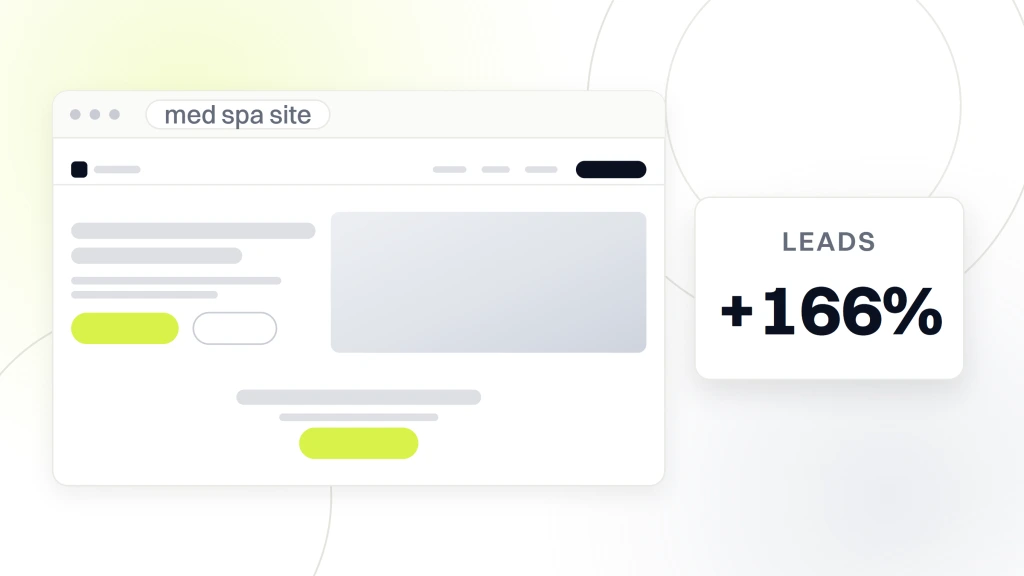
We rebuilt on the practices in this guide. Treatment-mapped service pages replaced the injectables mega-page. Native before-and-after image pages replaced the slider. Pricing bands published on every treatment. Sticky mobile booking button pinned to the viewport. WCAG 2.1 AA remediation across every color pairing. Schema markup on every treatment page. Call tracking wired to the paid dashboards and offline conversion import to Google Ads. Across 12 months, leads grew 166%, new users grew 88%, and the conversion rate lifted 27%. The clinic booked out weeks in advance on injectables, and the front desk stopped fielding “do you have any openings this week” calls.
| Beauté Aesthetics New York metric | Baseline | After 12 months |
|---|---|---|
| Leads | Flat | +166% |
| New users | Below sector average | +88% |
| Conversion rate | Underperforming | +27% |
| Gallery pattern | Lightbox slider | Native image pages |
| Pricing display | Hidden | Bands on every page |
Content depth per treatment page
A treatment page under 600 words rarely ranks. A treatment page over 1,400 words rarely gets read all the way through. The band that works is 800 to 1,100 words per page, structured under H2s that match how patients frame questions in their heads. What is the treatment. Who is a candidate. What’s the downtime. What are the results. What’s the price band. How to book. Six H2 blocks with 130 to 180 words each. Skimmable on mobile, indexable for Google.
Depth without padding is the discipline. A microneedling page shouldn’t repeat the same benefits paragraph 5 ways. It should answer the specific questions a patient researching microneedling has already Googled twice this week. Concentration of the PRP if offered, needle depth, session count, aftercare window, contraindications. Real clinical detail written for a non-clinical audience. Patients reward pages that treat them as intelligent adults.
FAQ blocks at the bottom of each treatment page capture long-tail queries. “Does microneedling hurt?” “How many sessions do I need for acne scars?” “Can I microneedle over Botox?” Each is a real query with a low-competition path to rank. Answer each in a paragraph of 40 to 60 words. Every FAQ answer becomes a candidate for a featured snippet. See our take on local SEO for med spa for how these FAQ blocks tie into local pack ranking signals.
Trust signals placed where hesitation happens
In med spa web design, trust signals go at the exact scroll depth where hesitation shows in the heatmap. Provider credentials appear right above the booking form. Real patient reviews with names and locations appear next to pricing. Board certifications appear in the footer of every treatment page. Instagram feed with real patient transformations appears near the gallery entry point. Each signal is placed with intent, and never scattered across the site as decoration.
Video testimonials outperform written testimonials by roughly 4 to 1 on conversion rate. A 45-second clip of a real patient describing their experience closes hesitation that written text cannot. Producing video needs patient consent, permission-to-use language on the release, and a simple in-office recording setup. Two videos per quarter build a library of 6 in 18 months, and the compounding effect is real on the booking rate.
Schema markup for medical business and treatments
MedicalBusiness schema on the homepage and MedicalProcedure schema on every treatment page teach Google the site is a healthcare property and make it eligible for rich results on treatment queries. LocalBusiness schema handles the address, phone, hours, and geo coordinates. Review schema aggregates star ratings for the SERP snippet. Video schema on testimonial pages powers the video carousel result on treatment queries the clinic is targeting.
Structured data is invisible to patients and visible to Google. A properly marked-up microneedling page shows a rich result with the procedure name, the estimated price, and the star rating in the SERP. That listing captures 3.2 times the click-through rate of an unmarked-up listing. Schema pays back in 30 days.
Test schema in Google Search Console before launch to catch malformed markup that fails silently. The Rich Results tool renders exactly what Google will index. A missing required field on MedicalProcedure schema means the rich result never fires.
Analytics that tie clicks to booked treatments
GA4 configuration is launch-blocking work, not a next-sprint task. Google Ads conversion tracking on the booking form, phone call tracking on the sticky button, event tagging on the gallery scroll depth, and Google Ads conversion import wired to the scheduling backend. A site launched without this instrumentation is running blind for the first 90 days, and blind is expensive on a clinic that spends $8,000 a month on paid acquisition.
Call tracking software matters especially. Roughly 68% of med spa consults still book by phone rather than by online form. Untracked calls mean the paid dashboard shows a fraction of the true conversion rate, and the account gets throttled on false signal. CallRail, WhatConverts, or CallTrackingMetrics all work. Pick one, install on launch, and configure keyword-level attribution for Google Ads.
The last piece is offline conversion import. A booked consult that shows up in the CRM should push back into Google Ads as an offline conversion tied to the original click. Smart Bidding then optimizes toward booked treatments rather than form submissions. Setup takes a developer 4 hours and pays back on the first month of paid spend. The compound gain over 12 months is a 40 to 60% gain in paid efficiency.
Maintenance cadence after launch
A launched med spa web design site is a starting point, not a finished product. Monthly Core Web Vitals check. Quarterly ADA audit with axe DevTools. Bi-annual security patch cycle. Monthly gallery updates with new results. Quarterly pricing band review. Each item small on its own, and the compound value real over 12 to 24 months.
Our med spa maintenance plans run $199, $299, or $499 per month covering hosting, security, updates, monthly gallery refresh, and one design change per month. That’s the baseline for a single-location practice. Multi-location clinics with paid programs need the higher retainer tier that includes ongoing landing page work and creative testing. See Google’s structured data documentation for the schema pieces the maintenance retainer should keep current.
Making the call on your med spa web design build
These practices are boring on their own. Speed budget. Treatment IA. Native galleries. Pricing bands. Mobile-first booking. ADA. Schema. Analytics. Maintenance. Any one is a small choice made on a Tuesday. Ten compounded is the difference between a site that books 40 consults a month and one that books 140.
The last thought is simpler than the checklist. Have the developer meeting, ask about each of the ten items above, and watch the answer. A designer who names the speed budget in specific numbers, describes the gallery pattern in detail, and quotes the ADA test tools by name has done this work before. A designer who talks mood boards without performance will hand over a slow site. Pick the operator, not the aesthetician. Custom multi-location builds start at $12,000 and up. See our med spa marketing plan and our med spa web design services page for the scope we run today.