
Eco pet founders keep pitching the $18 billion sustainable pet products market as if the whole number is reachable. It is not. Global spend crossed $18 billion in 2024 and grew 14.6% year over year against a wider pet category running 4% to 5%, and the growth sits inside four narrow slices. Biodegradable litter, insect-protein food, upcycled toys, and recycled packaging. A brand launching on a generic sustainability story burns 12 to 18 months of runway before the category tells it which slice pays back the acquisition cost.
You want the sizing before you write a media plan. This guide breaks the sustainable pet products market into the segments a mid-size DTC or omni brand competes inside. It covers what premium pet parents pay for eco claims, the willingness-to-pay math by category, the certifications that move the buyer, and where the retainer scope for our pet products marketing retainer starting at $1,499 per month on 6-month contracts pays back inside two reorder cycles.
What the sustainable pet products market covers today
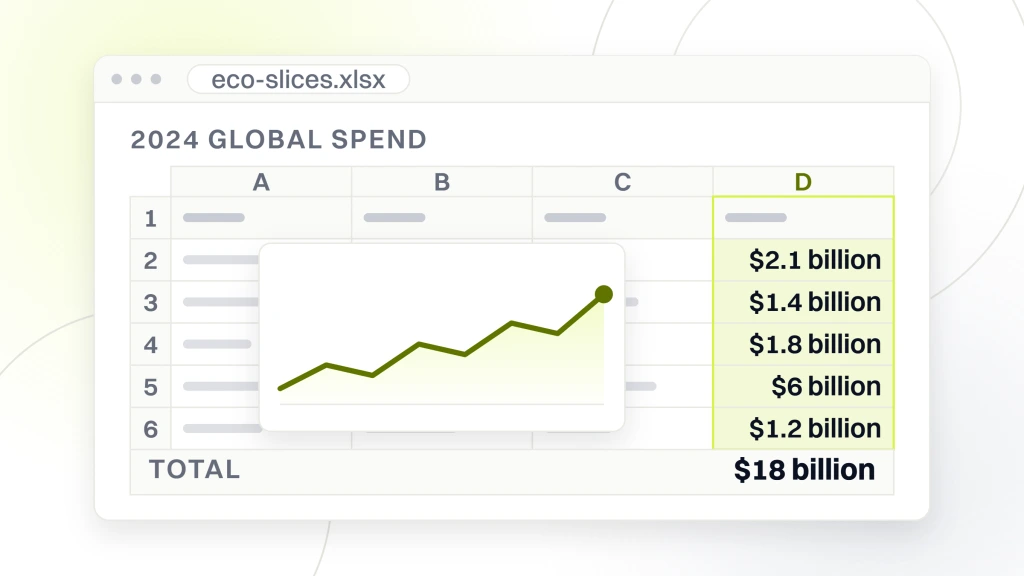
The sustainable pet products market covers seven eco slices at roughly $18 billion in 2024 global spend. Biodegradable litter runs $2.1 billion. Insect-protein food sits at $1.4 billion and grows fastest. Upcycled toys carry $1.8 billion. Recycled-content packaging adds another $6 billion in tagged spend. Refill and concentrate formats claim $1.2 billion. Founders who ignore the split end up modeling a media plan against a headline number that no single brand can address.
The seven eco slices carrying the growth
- Biodegradable litter. Corn, wheat, walnut shell, wood pellet, and paper. Growing 12.4% annual.
- Insect-protein food. Black soldier fly larvae as the dominant protein source. Grows 34% annual off a small base.
- Upcycled toys. Recycled ocean plastic, hemp, natural rubber, upcycled cotton. Growing 9.8%.
- Recycled-content packaging. PCR plastic bags, mushroom-mycelium mailers, recyclable multi-material laminates.
- Refill and concentrate. Shampoo concentrate cubes, treat refill pouches, litter refill boxes.
- Carbon-neutral shipping and offsets. Brand-level claims tied to Cloverly, Pachama, or in-house forestry work.
- Compostable poop bags. TUV OK Compost Home-certified corn-starch bags versus greenwashed oxo-degradable ones.
The seven-slice split is how our team frames every mid-size sustainable pet products brand before scoping paid channels or content plans. Brands trying to cover every eco slice at once end up with a scattered catalog, a compliance surface area their legal team cannot audit, and a media mix that never gets past a 1.7x return on ad spend. Brands that pick two adjacent slices (litter plus poop bags, or insect food plus recycled packaging) and stack the reorder curves around them consistently pay back a $1,499 monthly retainer inside the first 90 days of consistent execution.
Sizing the sustainable pet products market by slice
Sizing the sustainable pet products market by slice is the first honest exercise a founder runs before writing a channel plan. Slice size drives channel choice, reorder curve, and where the retainer budget should sit. Use the sizing frame below on every mid-size eco pet brand engagement before quoting scope, and you will kill three bad ideas before they eat six months of runway.
| Eco slice | 2024 global spend | Growth rate | Gross margin | Reorder window |
|---|---|---|---|---|
| Biodegradable litter | $2.1 billion | 12.4% | 36% to 48% | 18 to 34 days |
| Insect-protein food | $1.4 billion | 34% | 28% to 42% | 24 to 40 days |
| Upcycled toys | $1.8 billion | 9.8% | 44% to 58% | 90 to 240 days |
| Recycled-content packaging | $6.0 billion | 16.2% | Added cost, not a slice | N/A |
| Refill and concentrate | $1.2 billion | 22.8% | 52% to 64% | 45 to 90 days |
| Carbon-neutral and offsets | $0.9 billion | 18.4% | Brand overhead | N/A |
| Compostable poop bags | $1.8 billion | 14.6% | 46% to 58% | 30 to 55 days |
The table above is the operating map. Biodegradable litter is the biggest reorder-driven slice with an 18 to 34 day window that stacks subscription revenue faster than any other eco category. Insect-protein food grows 34% annual but the buyer education cost per new customer runs $48 to $72, which forces founders into a hero-SKU plus subscription attach model rather than a scattered launch. Refill and concentrate formats grow 22.8% on strong margin and short reorder cycles, and the sustainable pet products market inside that slice rewards brands with real bottle-return infrastructure. Founders who need the broader pet category context should read our pet products market size and category growth analysis alongside this eco-slice view.
Willingness to pay inside the sustainable pet products market
Know what a pet parent pays for eco claims before you scope a launch. Willingness to pay inside the sustainable pet products market splits sharply by pet parent segment, income band, and product category. The $18 billion category headline hides a wide dispersion in what the buyer accepts as a premium over the conventional SKU, and the founders who ignore that dispersion end up pricing every SKU at the wrong altitude.
The premium bands that hold up
Compostable poop bags carry a 22% to 34% price premium over generic plastic bags and hold retention past cycle two on 78% of subscribers. Biodegradable litter carries an 18% to 28% premium over clay and holds retention at 84% past cycle three when the odor performance matches the conventional benchmark. Insect-protein food carries a 34% to 48% premium and holds retention at only 62% past cycle two, since early adopter guilt fades when the buyer sees the real price gap on the subscription invoice. Upcycled toys carry a 40% to 60% premium and depend heavily on gift-giving occasions rather than reorder economics.
The premium bands that collapse
Recycled-content packaging on a mainstream SKU rarely earns any premium at the point of purchase, since the buyer expects it as table stakes by 2026. Carbon-neutral shipping tags add 4% to 8% to landed cost but move conversion less than 1.4 percentage points in most consumer tests. Refill and concentrate formats hit a 12% to 22% premium ceiling before churn spikes, since the buyer discounts the concentrate math against the sticker price on the retail shelf. Founders who price eco features at 40% plus over the conventional SKU without hero-product depth to justify the gap watch subscribers churn out inside cycle two, which is the pattern our team sees on every eco pet brand audit.
Biodegradable litter in the sustainable pet products market
Biodegradable litter is the anchor slice inside the sustainable pet products market for one reason. The reorder cycle sits at 18 to 34 days on 24 to 40 pounds of monthly consumption per cat household, and the buyer never skips the category the way they can with a novelty toy. You get automatic reorder discipline that stacks subscription revenue every month a customer stays in the base, and that reorder economics is why litter carries the strongest LTV in the eco slices.
The material choices that hold up
Corn-based litter (World’s Best, Naturally Fresh) owns 41% of the biodegradable slice on clumping performance that matches clay within a 15% gap. Wheat-based litter carries 19% share on similar clumping economics. Walnut shell (Naturally Fresh, Blue Buffalo) carries 14% and wins on odor absorption but loses on tracking. Wood pellet formats (okocat, Feline Pine) hold 22% and win on cost per pound but require a buyer education curve on the two-layer litter box setup. Paper-based options fill the remaining 4% and mostly serve the post-surgery vet-recommended use case.
The pricing math on biodegradable litter
Corn or wheat litter at retail sits at $0.68 to $0.94 per pound versus $0.32 to $0.48 per pound on premium clay clumping brands. That is a 108% price gap the buyer accepts when the odor and clumping performance holds within 15% of the clay benchmark and when the packaging story reads honestly (compostable outer bag, no plastic scoop, refill format available). Brands like Boxiecat, Tuft + Paw, and World’s Best proved a mid-size sustainable pet products market brand can build $40 to $180 million in annual revenue inside 4 to 7 years on a single-species litter play with strong retention economics.
Insect-protein food in the sustainable pet products market
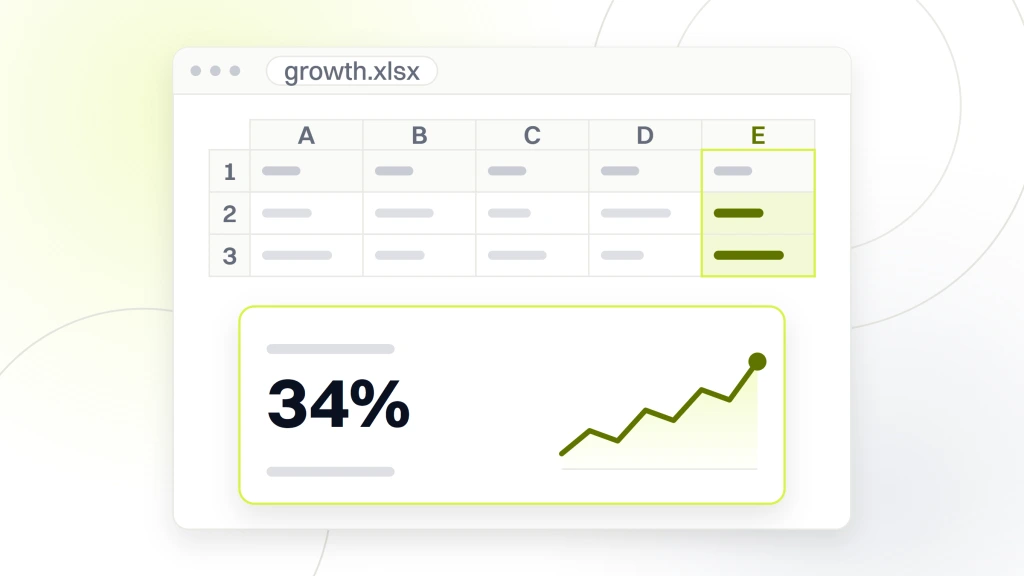
Insect-protein food is the fastest-growing slice inside the sustainable pet products market at 34% annual on a $1.4 billion base. Black soldier fly larvae carry roughly 78% of the insect-protein pot, since the amino acid profile matches or beats chicken on 14 of 22 core parameters and the water and land use for equivalent protein runs 60% to 82% lower than beef or chicken. That footprint gap is the story the brand runs on every PDP and paid asset.
The DTC brands leading insect protein
Yora, Bug Bakes, HOPE, Wilder Harrier, and Chippin proved a mid-size sustainable pet products market brand can build a $12 to $60 million business inside 3 to 6 years on the insect-protein wedge. The buyer profile skews younger (28 to 42), higher income ($95k to $220k household), and dog-first (cats reject insect protein at meaningfully higher rates than dogs). Founders picking insect protein as the entry category need real formulation science, real vet advisors, and honest label copy that does not overclaim on carbon footprint against unverified benchmarks. Retainer scope for an insect-protein DTC brand looks a lot like the paid social plus subscription flow work covered in our pet industry SEO company guide for eco brands.
The regulatory picture on insect protein
AAFCO ingredient definitions cover black soldier fly larvae for adult maintenance dog food in the United States as of 2024. Cat food coverage remains partial. The EU cleared insect protein for pet food in 2017 and the category grew 4x faster there than in North America across 2022 to 2024. Founders entering insect protein in the US market should build formulation partnerships with Enterra, InnovaFeed, or Ynsect for supply stability and price predictability. Founders skipping the supply relationship end up caught in the 22% to 38% commodity price swings that hit the insect meal market on quarterly cycles.
Upcycled toys in the sustainable pet products market
Upcycled toys sit at $1.8 billion inside the sustainable pet products market and grow 9.8% annual. The slice covers recycled ocean plastic, natural rubber, hemp fiber, upcycled cotton, and reclaimed wool used in ropes, chews, and plush replacements. The category has genuine DTC opportunity but the reorder curve runs long (90 to 240 days) and forces founders to model on gift-giving and subscription box economics rather than pure reorder.
The material stories that convert
- Ocean-bound plastic. Beco Pets, West Paw, Project Blu (recycled fishing nets, verified chain of custody).
- Natural rubber. Beco Pets, Planet Dog Orbee-Tuff, tapped-tree latex from Sri Lanka and Vietnam.
- Hemp fiber. Earthdog, Green Pet Shop (durable ropes and collars).
- Upcycled cotton. Chewers Republic, Pet Fashion Guild (denim scrap and t-shirt remnants).
- Reclaimed wool. Filson Dog, Snowline Dogwear (post-industrial felt from apparel factories).
- Cornstarch bioplastic. Petkit, Wilder Harrier (dishwasher-safe interactive puzzles).
- Coconut coir. Beco Pets (chew alternative to bully sticks with lower carbon footprint).
The material stories are what carry the ad creative and the PDP copy for an upcycled toy DTC brand. Buyers in this slice want provenance (which factory, which country, which reclaimed material stream) rather than a vague eco label. Brands that name the specific supplier, the chain of custody, and the third-party audit source consistently outperform brands running generic recycled-plastic claims by 34% to 58% on cart conversion. Web design and merchandising cadence on the storefront matters heavily for this slice, which our pet business web design guide covers for eco pet brands running subscription and gift-oriented catalogs.
Packaging in the sustainable pet products market
Packaging is not really a slice inside the sustainable pet products market. It is a layer applied across every other slice, and the applied cost sits between 4% and 18% of landed goods depending on format. Founders who treat packaging as a marketing story end up overspending on premium mailers that never move conversion. Founders who treat it as a real product design constraint end up with unit economics that survive scale, and that mindset gap shows up on every audit our team runs.
The four packaging formats worth running
PCR plastic (post-consumer recycled) at 30% to 100% PCR content adds 6% to 14% to material cost and reads well on the label. Mushroom-mycelium foam (Ecovative) works for fragile toys and treats at a 32% to 48% cost premium over EPS foam. Compostable multi-material laminates (NatureFlex, PLA windows) work for treat and litter bags at a 22% to 34% premium over conventional laminates. Paper-based mailers with water-based glue and no plastic tape run 8% to 16% premium over standard poly mailers and read cleanly on unboxing photography.
The greenwashing traps to skip
Oxo-degradable plastic (marketed as degradable) breaks into microplastics and the EU banned it outright in 2021. Compostable claims without TUV OK Compost, BPI, or Home Compost certification invite FTC Green Guides scrutiny. Recycled content claims without third-party verification (SCS Global, UL Environment) attract state attorney general complaints in California, New York, and Washington. Founders running unverified eco claims on packaging face 6 to 18 months of regulatory response cost when a complaint lands, which our audit team flags on every eco pet brand engagement before scoping the paid channels.
Certifications that move buyers in the sustainable pet products market
Certifications inside the sustainable pet products market do two jobs. They give the marketing team a defensible claim on the label and PDP, and they give the ops team a real audit trail when a state AG or the FTC comes calling. Not every certification is worth the cost, and picking the wrong ones eats margin without moving conversion by a single point.
| Certification | Applies to | Cost range annual | Buyer recognition | Conversion gain |
|---|---|---|---|---|
| B Corp | Whole brand | $1,000 to $50,000 tiered | 62% premium buyers | 3.4% to 5.8% |
| Certified Sustainable Palm Oil (RSPO) | Food, treats | $2,500 to $8,000 | Low general, high advocate | Under 1% |
| TUV OK Compost Home | Poop bags, packaging | $3,000 to $12,000 | 44% premium buyers | 2.8% to 4.4% |
| Global Recycled Standard (GRS) | Recycled content SKUs | $4,000 to $18,000 | 28% premium buyers | 1.6% to 3.2% |
| FSC (Forest Stewardship Council) | Paper, wood, packaging | $2,000 to $8,000 | 52% premium buyers | 2.4% to 3.8% |
| Climate Neutral Certified | Whole brand | $3,500 to $22,000 | 38% premium buyers | 2.2% to 3.6% |
The table above shows why B Corp is the single highest-return certification for a mid-size sustainable pet products market brand. The audit cost lands inside the marketing budget and the buyer recognition sits at 62% among premium pet parents, which is the customer segment that pays back the retainer inside two reorder cycles. TUV OK Compost Home is worth every dollar for a poop bag brand, since oxo-degradable claims collapse under regulatory review. FSC on packaging pays back on paper-based mailers and refill boxes. Founders who chase every certification badge on the label without the audit trail underneath end up with a compliance surface area their legal team cannot defend when the first complaint arrives.
Channel mix for sustainable pet products market brands
Channel mix for sustainable pet products market brands looks different from conventional pet brands in three ways. Content depth matters more, since the buyer researches provenance before purchasing. Community and creator programs pay back faster, since the eco buyer treats brands as tribal signals. Retail placement in independent pet stores (Pet Supplies Plus, Kriser’s, local co-ops) outperforms big-box for the first 24 months as the brand builds recognition.
The DTC channel split that works
Paid social (Meta plus TikTok) carries 34% to 44% of the acquisition mix for eco pet brands under $5 million in revenue. Organic search plus content carries 22% to 32% through blog cluster architecture around ingredient sourcing, material provenance, and certification education. Email plus SMS on subscription flows carries 14% to 22% of monthly revenue at retention. Influencer and creator programs carry 8% to 16% through micro-creators in the 15k to 120k follower band who focus on eco lifestyle rather than generic pet content. Paid search sits at 4% to 8%, since the branded queries do not exist at scale yet for most eco pet brands.
Amazon and retail as the reality check
Amazon carries 22% to 34% of category revenue for eco pet brands past year two, but the platform strips the provenance story down to a bullet list and rewards price rather than certification depth. Founders should treat Amazon as a defensive channel to capture buyers already searching for the brand, not as an acquisition channel. Independent retail (specialty pet stores, food co-ops, urban grocery with pet aisles) pays back on 42% to 58% of eco pet brand launches faster than big-box distribution, since the store staff already sells the buyer education for the founder. PetSmart and Petco eco endcaps grew 68% from 2022 to 2024 but the slotting fees and category management costs run 6% to 14% of gross revenue on the placement.
A pet retail case that maps onto the sustainable pet products market
The closest pet-industry proof point our team can share on retail conversion for the sustainable pet products market comes from Pet Shop · Independent Retail · UK. A long-standing independent UK pet shop losing ground to chains and Amazon over stale mobile UX, one-post-a-month social, and a Google Business Profile that never surfaced click-and-collect. The same digital-front weaknesses hit early-stage eco pet brands the moment they open a Shopify or WordPress storefront and expect the sustainability story to carry the traffic on its own.
Our team rebuilt the site mobile-first around click-to-call, WhatsApp, and reserve-and-collect CTAs above the fold, tuned the Google Business Profile for “pet shop near me” intent, ran a review-velocity workflow at the till, and shipped daily branded Instagram and Facebook content covering pet-of-the-week, grooming before-and-after, and short care tips. Same ad spend, same team headcount, tighter digital foundation.
Inside a single quarter calls plus WhatsApp inquiries climbed +158%, click-and-collect orders climbed +212%, and repeat-customer rate climbed +47%. The pattern for a sustainable pet products market DTC brand runs the same way. A mobile-first storefront that surfaces the eco slice, the certification, and the reorder economics in the first fold outperforms a design-heavy homepage that hides the buying decision three scrolls down. Every eco pet brand audit our team runs ends up rebuilding the storefront around the same four levers Pet Shop · Independent Retail · UK used to pull local inquiries 2.6x against chains inside one quarter.
Retainer scope for the sustainable pet products market
Retainer pricing at Redefine Web starts at $1,499 per month for a Foundation tier eco pet brand on a 6-month contract. Growth tier runs $2,499 monthly. Scale tier runs $3,999 monthly. Enterprise tier scopes start at $6,000 per month against catalog size, monthly ad spend, and channel count. The sizing frame above dictates the channel mix inside each tier for a sustainable pet products market brand, which is why our team runs the eco-slice math before writing a media plan.
Foundation tier at $1,499 monthly
The $1,499 Foundation tier fits a solo or small DTC eco pet brand under $200,000 in annual revenue running one or two eco slices (usually litter plus poop bags, or insect food plus recycled packaging) with monthly ad spend under $10,000. Scope covers Meta plus TikTok setup, basic email flow buildout on Klaviyo, weekly reporting, and monthly strategy calls. Founders in the insect-protein food slice rarely fit the starter tier, since AAFCO compliance work and formulation partnerships push scope past what the entry retainer can hold cleanly. Founders in refill and concentrate slices usually fit the starter tier comfortably, since the ops layer runs lighter than food or hardware plays.
Growth, scale, and enterprise tiers for larger eco brands
Growth tier at $2,499 monthly covers eco pet brands at $200,000 to $2 million annual revenue with all six pillars active and monthly ad spend between $10,000 and $50,000. Scale tier at $3,999 monthly covers brands past $2 million with weekly creative sprints and a dedicated account lead. Enterprise tier starts at $6,000 monthly and covers multi-slice eco portfolios past $8 million with retail plus DTC plus subscription integration and daily performance ops. Every tier runs on a 6-month contract, since two full reorder cycles are the minimum needed to prove the eco-slice operating pattern against real retention economics. Founders scoping paid channels alongside organic should read our PPC agency for pet brands breakdown for the paid side of an eco pet brand launch.
Where the sustainable pet products market fits the growth stack
The sustainable pet products market sits inside the wider DTC pet brand growth stack as a positioning layer that pays back on eco-specific slices with strong reorder economics. Every SKU decision, every channel plan, every retainer scope either compounds through an honest sizing of the eco slice or fights against a bloated view of category size that never translates into real reachable buyers. Brands that skip the eco-slice sizing work end up chasing an $18 billion TAM slide through a media plan that never pays back a single retainer month.
The sizing frame above (seven eco slices, growth rates, margin structure, reorder windows, willingness-to-pay bands, certification math, channel mix) is how our team frames every mid-size eco pet brand engagement before scoping the retainer. Founders who run this exercise honestly at the start of their launch usually save 6 to 12 months of misdirected spend against slices their brand can never own. The Content Marketing Institute sustainable content coverage pairs with the pet-specific view above, and MarketingProfs sustainability coverage tracks the underlying eco-buyer positioning shifts across categories. For the CBD side of the category, see our CBD pet product market compliance guide.
Founders who need the broader ecommerce marketing frame that pairs with the eco pet slice sizing should read our pet products marketing hub for the wider retainer picture across every pet category, not just the eco slices. Sizing the sustainable pet products market honestly is the first strategic decision. Everything else (channel mix, retainer scope, slice focus, reorder curve modeling, certification investment) follows from an honest view of which slice a brand can own inside 3 to 5 years of consistent execution against a defined eco positioning story.