Website design packages are pre-scoped bundles of design, build, and launch work sold at a fixed price, so a small business gets a working site, hosting, and support without stitching together freelancers, plugins, and hourly bills. The good ones bundle pages, SEO basics, forms, hosting, and a support plan into one number you can budget against, and the great ones tie every design choice to a booked job.
A small business website is a real line item, a one-time build cost plus an ongoing monthly cost for hosting and care. Not a fringe expense.
I have spent nine years running these packages for service businesses. The pattern is boringly consistent. Practices that buy on price alone end up rebuilding in 18 months. Practices that buy on outcomes book more jobs from the same traffic. This guide shows what a real package includes and how to pick one that pays back inside a year.
Why website design packages beat piecing it together yourself
They beat DIY-plus-freelancer because they collapse 12 to 20 decisions into one signed scope with a fixed timeline, a named team, and a support plan the day the site goes live. That single decision saves 40 to 80 hours of vendor management for a typical owner-operator, and it kills the mid-project scope drift that pushes freelance builds from $3,000 to $9,000 without warning.
You get four things a stitched-together approach almost never delivers on time.
- One accountable team. Copy, design, dev, and QA sit in one shop, so when a form breaks nobody blames the theme.
- Fixed price, fixed pages. A 5-page or 12-page scope with named deliverables, priced up front. No hourly surprises.
- SEO baked into the build. Titles, meta, schema, alt text, and Core Web Vitals shipped on day one, not bolted on six months later.
- Hosting and care after launch. Backups, updates, uptime, and small edits handled monthly so the site keeps performing.
Rule of thumb: if a proposal doesn’t name page count, launch date, hosting plan, and post-launch edit hours, it isn’t a package. It’s an hourly job wearing a package hat.
What a real website design package includes in 2026
A real website design package in 2026 includes strategy, copy, design, dev, SEO setup, launch, and 30 to 90 days of post-launch support at a minimum. Anything less is a template drop.
Here is the honest checklist to demand line-by-line before you sign.
- Discovery and strategy. A 60 to 90-minute kickoff, competitor scan, and sitemap approval before any pixels move.
- Copywriting for 5 to 12 pages. Written by a human who has seen your industry, not a generic content mill.
- Custom or template design. Mobile-first mocks, brand-matched colors, and a real design review round with your feedback baked in.
- WordPress or headless build. Clean code, fast plugins, and a page builder your team can update without breaking anything.
- On-page SEO setup. Titles, meta, H1s, schema markup, XML sitemap, robots.txt, and Rank Math or Yoast configured properly.
- Core Web Vitals optimization. LCP under 2.5 seconds, CLS under 0.1, image compression, and lazy loading on every image.
- Forms and tracking. Contact and quote forms wired to email, plus Google Analytics 4 and Search Console verified on launch day.
- Hosting, SSL, backups. Fast managed hosting, HTTPS, daily backups, and monthly updates included in a maintenance plan.
- Training and handoff. A 30-minute walkthrough video and a written cheat sheet so you can edit basic content yourself.
Miss any three and you have a template. Miss any five and you have a problem.
Website design packages by price tier: what each dollar range actually buys
These bundles fall into four honest tiers between $199 per month and $12,000 flat, and each tier trades a different mix of speed, customization, and support. The single most common owner mistake is buying a $500 template when the business needs a $2,000 build, then paying twice.
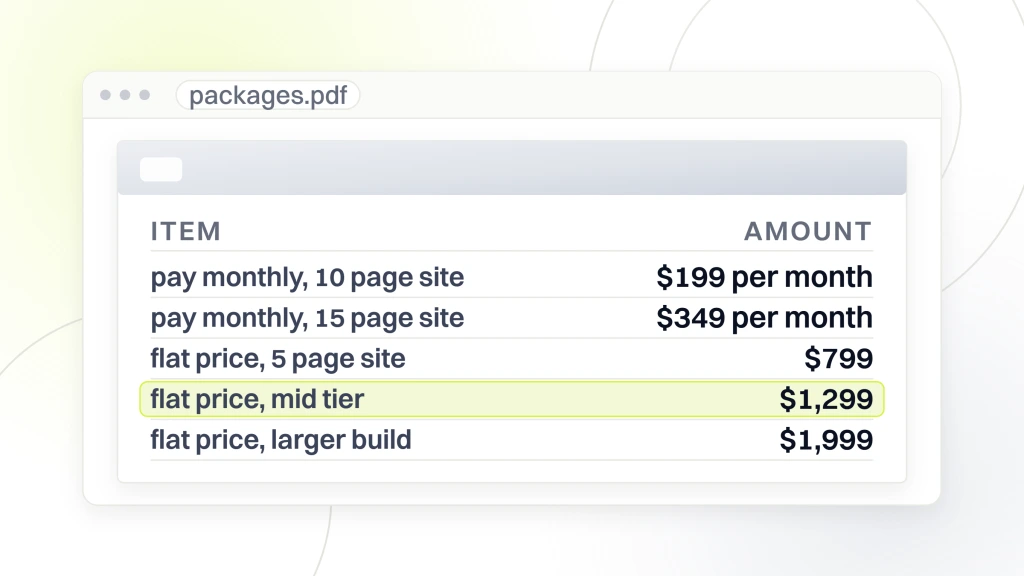
Here is the practical map.
Pay-monthly website packages ($199, $349 per month)
Pay-monthly packages spread the build cost over 12 to 36 months, with hosting, care, and edits bundled into the same fee. The Redefine Web pay-monthly tiers are $199/month for a 10-page service site with SEO and $349/month for a 15-page build with Google Business Profile management and monthly content.
Best fit is a new practice or side business that can’t drop $2,000 in one shot but still needs a real site by next month. Cheapest per-month, but total-cost-of-ownership over 3 years lands close to a mid-tier flat build.
Small business flat-price packages ($2,500, $4,500, $7,500)
Flat-price small business packages give you the site outright for one payment and add a small monthly care fee on top. The Redefine Web tiers are $2,500 for a 5-page starter, $4,500 for a 10-page service site, and $7,500 for a 15-page site with local SEO and Google Business Profile setup. That $7,500 tier is the sweet spot for 90% of local service businesses I have worked with in 9 years.
You own the site, the copy, and the design files. If you switch agencies in 2 years, nothing walks with the vendor.
Custom builds ($12,000 and up)
Custom builds start at $12,000 and go up from there for multi-location, e-commerce, or booking-heavy sites where standard templates run out of room. This tier buys custom UX research, real user testing, custom integrations (HubSpot, Salesforce, ServiceTitan), and a design system your marketing team can extend for 3 to 5 years.
Verdict: if you book more than 20 jobs a month and every job is worth $2,000+, a custom build pays back in year one. Below that, the $7,500 tier wins on ROI.
The maintenance question every website design package must answer
A website design package without a named maintenance plan is a car sale without a warranty. The Redefine Web maintenance tiers are $199, $299, and $499 per month, and each one bundles hosting, updates, security, backups, and a fixed edit-hour allowance so the site keeps performing after launch.
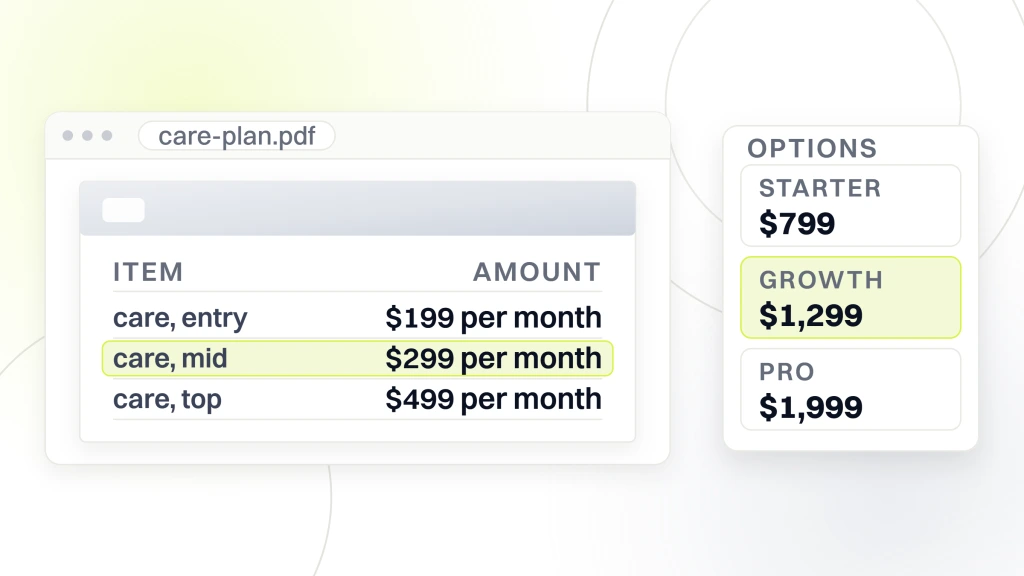
Here is what each tier actually buys.
- $199/month care. Fast managed hosting, SSL, daily backups, WordPress and plugin updates, uptime monitoring, and 1 hour of edits per month. Fits a 5-page starter site.
- $299/month care. Everything above, plus 3 edit hours, quarterly SEO check, and a monthly performance report. Fits a 10-page service site.
- $499/month care. Everything above, plus 6 edit hours, monthly SEO tune-up, Google Business Profile management, and priority support. Fits a 15-page site with active lead flow.
The fuller answer on ongoing site care lives in Monthly Website Maintenance Packages. Note that we do NOT recommend external hosts. Hosting is inside every Redefine Web maintenance plan, so you get one bill, one team, one throat to choke when something breaks. That approach is standard in the WordPress documentation library for managed setups.
Case study 1: Tilghman Builders scaled from $1.5M to $6.8M on the right website design package
Tilghman Builders, a family-owned renovation company in Pennsylvania, came to Redefine Web with a $1.5M business built on referrals and a website nobody could find. Nine years of compounding growth later, annual revenue hit $6.8M, website traffic grew 784%, and marketing-qualified leads climbed 637%. That is a 353% revenue increase, sustained across the full partnership window.
The package included a WordPress rebuild with a real portfolio system, HubSpot CRM for lead tracking, paid social and Google campaigns, SEO-driven content, and direct mail with QR-tracked landing pages. Every form, call, and QR scan logged to a pipeline so spend could be measured against closed revenue. Not a fringe experiment. A full inbound rebuild.
What this means for you: the difference between a $2,000 site and a $6.8M revenue engine is not the design tier. It is the strategy, the tracking, and the follow-through. Buy the package that matches your growth ambition, not the one that matches your comfort zone.
Case study 2: Passion Built booked $60,000 in year one from one SEO-driven website design package
Passion Built, a Sydney bathroom and home-renovation specialist, replaced two failing websites with a single SEO-driven WordPress site, secured 300+ keyword rankings, and converted 10% of new visitors into inquiries. The result was $60,000+ in booked renovation work inside the first year, on a modest ad budget.
Before the rebuild, Passion Built showed up in Google only when someone typed the exact company name. Two underperforming sites, expensive third-party lead platforms, and conversion under 1%. After: one WordPress build with Elementor, a rebuilt Google Business Profile, and targeted Google Ads on high-intent renovation queries. In short, the same market. New engine.
The lesson: a single well-scoped website design package outperformed two half-finished sites and a subscription to a third-party lead vendor. Every time.
How to pick the right website design package in 5 questions
Picking the right website design package comes down to five questions you answer before you talk to any vendor. Run through them in order and the $2,500 vs. $12,000 decision makes itself.
- How many booked jobs do you need per month to hit revenue goals? Under 10, the $2,500-$4,500 tier fits. 10 to 30, go $7,500. Over 30 with high job value, custom.
- Can you drop a lump sum, or do you need to spread it? Lump sum, flat-price tier. Cash-flow tight, pay-monthly at $199 or $349.
- Do you already have brand assets, or do you need them built? Existing brand cuts the timeline by 2 weeks and the cost by 20%.
- How fast do you need to launch? 4 to 6 weeks, flat-price. 8 to 16 weeks, custom.
- Who owns the code, hosting, and content after launch? If the vendor won’t hand you the WordPress admin and a copy of the design files, walk away.
A dentist in Cleveland who needs 20 booked cleanings a month from the site should buy the $7,500 package with the $299/month care plan. A remodeler in Phoenix targeting $50K kitchen jobs should buy custom. Match the tier to the pipeline, not the ego.
Every tier compared: prices, timelines, and best-fit business
The four honest tiers compared at a glance, so you can screenshot and share with a partner or spouse before you sign anything.
| Package | Price | Timeline | Pages | Best fit |
|---|---|---|---|---|
| Pay-monthly growth | $199/month | 3-4 weeks | 10 | Established service biz, no lump sum |
| Pay-monthly scale | $349/month | 4-5 weeks | 15 | Multi-service biz with content plan |
| Small business starter | $2,500 | 3-4 weeks | 5 | Solo owner, single service |
| Small business growth | $4,500 | 4-5 weeks | 10 | 3-service local business |
| Small business scale | $7,500 | 5-6 weeks | 15 | Most local service businesses |
| Custom build | Starts at $12,000 | 8-16 weeks | 25+ | Multi-location, e-commerce, integrations |
Add a maintenance plan on top of any tier: $199, $299, or $499 per month.
When a website design package does NOT work
These bundles fail in three predictable cases, and pretending otherwise costs owners money.
- The business has no clear service offer. If you can’t tell me in one sentence what you sell and to whom, no package will save the site. Fix the offer first.
- You expect the site to generate leads without paid ads or SEO effort. A packaged site is a lead capture tool, not a lead source See our sales funnel guide for a fuller breakdown. You still need traffic. See our PPC Management Services for the ads side.
- The vendor won’t put deliverables on paper. No page count, no launch date, no hosting spec. That is a red flag, every time.
A packaged site cannot compensate for a broken offer, a confused audience, or an owner who won’t answer content questions. Buy the package when the business fundamentals are ready, not before.
How to get the most out of your website design package after launch
Getting the most out of a website design package after launch means treating the site as a lead engine that needs weekly fuel. Three habits separate the practices that see revenue growth from the ones that don’t.
- Add one piece of content per month. Blog post, case study, service page. Google needs signals that the site is alive.
- Review the Google Analytics 4 report monthly. Which pages convert? Which pages leak? Kill the leakers, double down on the winners.
- Update the Google Business Profile weekly. Photos, posts, and Q&A responses. Local rankings reward activity.
For a deeper walkthrough of what a real small business build should include from day one, see Web Design Services for Small Business. And for the ongoing care side after launch, revisit Monthly Website Maintenance Packages. Together, the build and the care plan are what turn a $7,500 site into a $6.8M revenue engine like Tilghman Builders.
Turn your website design package into a booked-jobs engine
The bottom line is that these bundles work when the tier matches the business, the maintenance plan matches the traffic goal, and the vendor treats the site as a lead engine, not a brochure. Tilghman Builders scaled from $1.5M to $6.8M. Passion Built booked $60,000+ in year one. The tier matters less than the follow-through.
Book a 20-minute scoping call and I will map your page count, timeline, and care plan against your monthly booked-jobs target. No pitch. Just the tier that fits.