
DSO dental practices in plain English
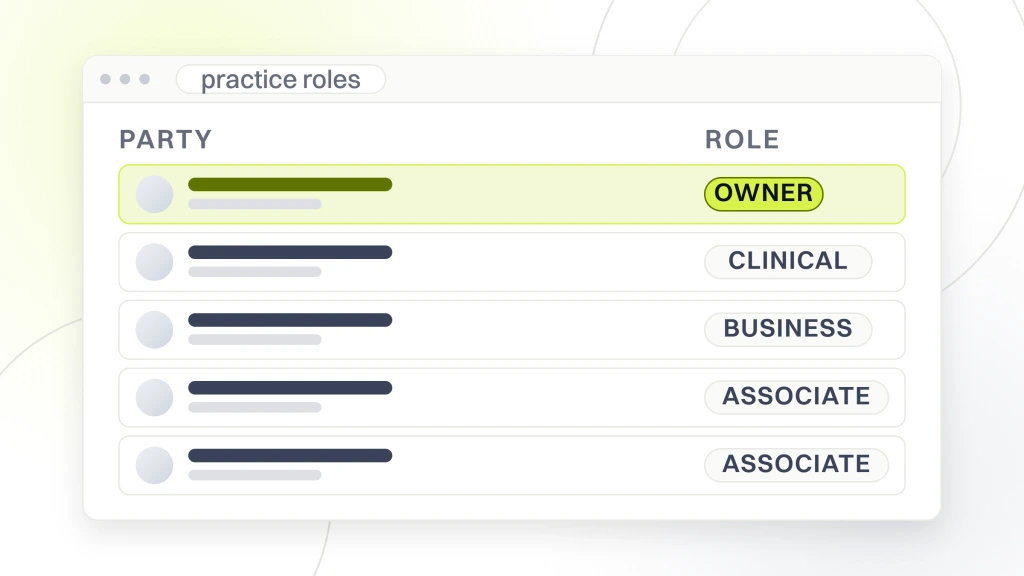
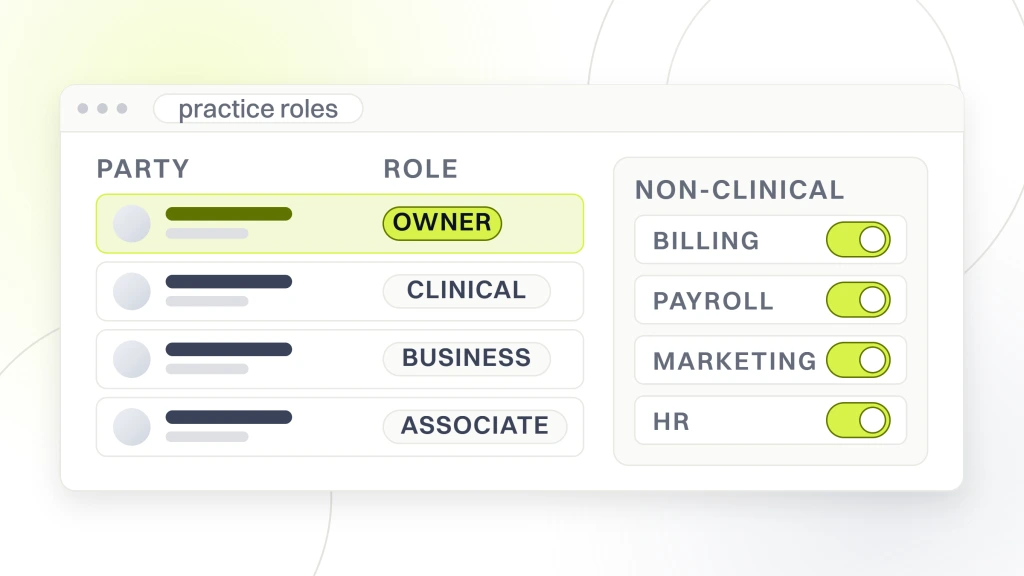
A DSO dental practice runs on a simple split. A Dental Service Organization owns the business side of a group of dental offices. The dentists still own the clinical side. The organization handles billing, payroll, marketing, HR, software licenses, and vendor contracts. The dentists handle the exam, the diagnosis, and the treatment. That split is the whole model in one sentence, and every question about pay, culture, patient flow, or ownership is a downstream question from that split.
You are likely reading this because you are joining a DSO as an associate, selling your practice to one, applying for a job at a group-owned office, or noticing your own dentist got quiet after acquisition. Each situation has a different set of tradeoffs, and this guide covers all four. About 16.1% of US dentists now practice inside a dental support organization.
Key takeaways on the DSO dental model
- A group owns operations while dentists keep clinical control and licensure.
- Acquisition multiples run 5.5 to 8.5 times EBITDA, roughly double independent sales.
- Patient attrition after acquisition runs 8 to 18% inside the first 24 months.
- Associate comp inside a group office ranges 25 to 32% of collections plus signing bonus and benefits.
- Most states use a Corporate Practice of Dentistry doctrine that shapes the two-entity structure.
What a DSO dental office feels like from the patient side
What a DSO dental office looks like to a patient is often nothing new. Most patients do not notice much. The office name usually stays. The dentist stays for the seller contract term. Scheduling gets smoother, recall texts get more automated, and the website looks a touch more polished. Insurance mix sometimes shifts inside two years. The group leans on scaled marketing and retention systems to backfill the small share of patients who leave after the change of ownership.
Some patients do leave. Attrition rates run 8 to 18% in the first 24 months after acquisition, mostly patients who had strong personal loyalty to the previous owner-dentist. Your specific dentist matters more than the ownership structure. If you like your dentist and they stay, you probably will not notice much.
Insurance and billing changes after acquisition
Within 6 to 24 months of acquisition, the PPO participation list often changes. The group renegotiates central contracts and drops plans that pay below the target reimbursement. Patients on the dropped plans get 30 to 90 days notice. This is one of the more visible day-one changes for patients. Billing statements also shift to a central address.
Does quality of care change under a group owner
Quality of care in a group-owned office tracks the individual dentist, not the corporate structure. A great dentist in a group office delivers great care. A mediocre dentist in an independent office delivers mediocre care. Where these groups affect quality is on the margins, through protocols, formulary choices, and the pressure on daily production. Patient satisfaction scores in group offices track closely with independent offices when case volume per operatory is held constant. Overloaded offices deliver worse care regardless of ownership.
Weighing the real DSO dental tradeoffs
The DSO dental deal in plain terms works like this. Independent keeps all the profit and all the risk. Group ownership trades ongoing profit for a lump sum today plus lower operational burden. Neither is objectively better. Career stage and risk tolerance decide the winner. A dental support organization sale usually pays 5.5 to 8.5 times EBITDA, while an independent sale pays 2 to 3.5 times EBITDA. That difference is what most dentists are weighing.
The comparison table below captures the tradeoffs most dentists surface after 90 days of due diligence. Notice the pay column is a range, not a fixed number. Every deal is different. Ask for the specific numbers on the specific deal in front of you before you sign anything.
| Aspect | Independent practice | DSO dental practice |
|---|---|---|
| Ownership share of profit | 40 to 55% of collections | 25 to 33% of collections plus equity |
| Operational burden | Owner runs HR, billing, IT, marketing | Central team owns non-clinical functions |
| Sale multiple at exit | 2 to 3.5x EBITDA | 5.5 to 8.5x EBITDA |
| Contract term | None, sell any time | 3 to 7 year employment contract |
| Clinical autonomy | Full, subject to state law | Full clinical, protocol-standardized business |
The career stage question
A 55-year-old dentist five years from retirement gets the cleanest exit. The lump sum funds retirement, the 5-year employment contract fills the pre-retirement window, and rollover equity is a modest upside. A 42-year-old at peak production has a harder call. The lump sum is real, but 20 years of independent ownership would produce more total wealth if the practice runs well. A 30-year-old associate joining one usually gets a fair deal on comp and mentorship, though ownership upside is not part of that package unless the group offers an equity buy-in track.
The risk tolerance question
Independent ownership carries operational risk. Bad staffing decisions, a slow market, a partner divorce, or a lease renewal that goes sideways can all cut deep into profit. Group ownership carries different risk. The parent could take on too much debt, miss its recap, or dilute your rollover equity in a bad capital cycle. Neither model removes risk. They just shift the shape of it. If you cannot sleep with operational risk, the group trade is worth serious consideration. If you cannot sleep with capital-market risk, staying independent is worth serious consideration.
DSO dental offices at different scales
A DSO dental office looks different at every scale. Emerging DSOs run 3 to 25 offices with family or regional operators. Mid-market groups run 25 to 150 offices. Mega groups run 150 to 1,900 offices with corporate-style systems. Heartland Dental sits at the top of the market with more than 1,900 affiliated practices across 39 states. Your questions change by scale, and the deal terms shift with them.
Emerging DSOs, the 3 to 25 office band, offer more clinical flexibility and a smaller upfront multiple. Mid-market groups offer stronger multiples and a shorter path to a next-recap capital event. Mega groups offer the highest multiples and the most predictable operational systems. Which band you match depends on how much upside you want versus how much simplicity you buy. The Association of Dental Support Organizations now represents more than 80 member groups across 48 states.
Emerging groups
An emerging group in the 3 to 25 office range often feels closer to a partnership than a corporate role. The founder-dentist still practices. Decisions run through fewer layers. Purchase multiples are lower, usually 4.5 to 6.5 times EBITDA, but the rollover equity often gets a bigger runway because the DSO is early in its growth cycle. If you value being in the room where decisions get made and can accept a lower cash multiple, this is the band to explore. Your dental marketing agency engagement usually stays relationship-driven at this scale, with the founder still weighing in on brand voice.
Mega platforms
Mega platforms run corporate-style operations. HR, billing, marketing, and IT are all centralized. Decisions above a threshold go to a regional director and above that to a national team. Purchase multiples are higher, usually 6.5 to 8.5 times EBITDA. Daily experience is more standardized and clinical flexibility is more negotiated up-front. Rollover equity usually has a nearer-term liquidity event, often within 3 to 4 years, though the platform size caps the return per share. This is the band that dominates industry news and the ADA News coverage of consolidation trends.
Should you join a DSO dental office as an associate
Joining a group office is a job decision, not an ownership one. You get W-2 comp, health benefits, malpractice coverage, and a $10,000 to $40,000 signing bonus in most markets. Comp runs 25 to 32% of your own collections with a monthly minimum of $9,000 to $14,000. About one in four dentists less than 10 years out of school now works inside one, which tells you the associate track has become the default rather than the exception.
The upside of associate life is that you practice dentistry and go home. You do not read insurance contracts, hire hygienists, argue with lab reps, or negotiate lease renewals. The downside is the office culture is set by the group, and you have less say in materials, scheduling, and how treatment plans get presented at checkout. If you value clinical work and dislike operations, the track can be a great career.
Questions to ask before you sign as an associate
Ask about production expectations by month for the first 12 months. Ask about the collections floor and the collections ceiling on your comp. Ask who chooses the schedule and the case mix. Ask what happens to your patient panel if you leave. Ask about the equity buy-in track, its timing, and its historical returns. Ask to talk to two current associates and one former associate. That last conversation, done off-site and away from HR, tells you more about the day-to-day experience inside a DSO dental office than any recruiter pitch will.
Red flags in an associate offer
Watch for aggressive daily production quotas, mandatory upsell scripts at treatment consult, and non-competes that cover a 25-mile radius for 3 or more years. Watch for comp structures that pay on collections but not on adjustments or write-offs, which lets the group claw back income you thought was earned. Watch for signing bonuses with 3-year full-clawback windows. Any one of these can appear in an otherwise-fine offer. All three together is a strong signal to keep interviewing.
Legal and regulatory basics behind DSO dental structures
The DSO dental model exists because most states have a Corporate Practice of Dentistry doctrine that prohibits non-dentists from owning a dental practice outright. The two-entity structure with a Professional Corporation and a Management Services LLC is the workaround that keeps the model compliant. State attorneys general audit these structures occasionally, and a small number of DSOs have been penalized for crossing lines on clinical decision-making. The vast majority operate cleanly, but the legal architecture is not neutral. It is a compromise between market forces and state licensure law.
The Federal Trade Commission has looked at consolidation in some markets. State licensing boards watch clinical decision-making pressure. Neither has moved to break up the model, though both have signaled attention. Texas and Massachusetts have stricter Corporate Practice of Dentistry doctrines than others. The ADA Practice Management resources cover the regulatory posture in more depth.
State-by-state variations
Texas requires the clinical entity to sit under majority dentist ownership in state. Massachusetts has similar restrictions. State board reference material at the Texas State Board of Dental Examiners covers the specifics. California allows more flexibility but polices Management Services Agreement language for clinical control. Florida and Arizona have historically been friendlier to consolidation. If you are structuring a deal across state lines, the legal work adds 6 to 14 weeks. Talk to healthcare counsel with dental-specific experience.
The Management Services Agreement
The MSA is the operational contract between the clinical PC and the management LLC. It defines the management fee, the services provided, the term, the termination triggers, and the decision rights. A well-written MSA preserves clinical autonomy for the dentist and defines business services clearly enough that a state auditor would not question who owns what. Any dentist signing a DSO dental deal should have healthcare counsel read the MSA line by line before signing, because the MSA governs daily life for the next 3 to 7 years.
Marketing and brand differences under DSO dental ownership
Marketing is one of the most visible changes after a group acquisition. Independent offices usually run marketing on a shoestring or through freelance vendors. Group-owned offices run marketing through a central team that owns the website, the Google Business Profile, the ad accounts, and the review workflow. The upside is more consistency and measurement. The downside is local voice sometimes gets sanded down in favor of a brand template that works across 40 or 400 offices.
Smile Design Dentistry is a US DSO dental group that grew to 50-plus locations. Redefine Web restructured their PPC accounts, added full-funnel paid social, and built a landing page for each location. Cost per call came down and PPC conversion rate improved at scale. That kind of centralized marketing is the model most mega groups pursue, and it is why local marketing choices you made pre-close usually get replaced within the first 12 months. Our DSO Dental Marketing for Multi-Location Groups covers the rollout pattern. We have run the same playbook for VP Dental, North County Dental Care, iSmile, and Delicate Dental.
- Central website with location-specific landing pages
- Standardized Google Business Profile categories across every office
- Central review workflow with per-office rating dashboards
- Regional Google Ads accounts with shared negative keyword lists
- Consolidated call tracking with per-location routing
- Shared creative library with per-location swap-in for hero images
- Central compliance review on any promotional offer
Preserving local voice inside a brand template
The best teams keep local voice inside the brand template. Location pages carry the practice manager’s photo, the tenured hygienists’ names, and the actual office phone number instead of a central call center. Reviews get responded to in the voice of the location, not a corporate template. Practices that lose local voice under a corporate template also lose 12 to 18% of organic search visibility inside 24 months. The answer is not to abandon the template, it is to leave enough local air in it that the office still feels like the office.
Reputation management at scale
Reputation management inside a large group is a scale problem, not a technique problem. You cannot hand-write responses to 6,000 reviews per month across 400 locations without a template layer. The template layer works when it stays within 2 to 3 sentence variations and gets edited per-location for tone. It fails when it becomes robotic and patients recognize the pattern. The best groups run this as a hybrid, with human review on any 1 or 2-star response and template on the 4 and 5-star acknowledgments. Our Dental SEO Services Built for Local Map Dominance covers how reputation ties into map-pack visibility inside these portfolios.
Four questions to ask before you decide on a DSO dental deal
Every conversation, whether a sale, an associate offer, or a partnership discussion, comes back to four questions. Answering them cleanly is the difference between a deal you feel good about in year three and a deal you regret. Skip one and the tradeoff slips through the paperwork. The questions are simple. The honest answers are hard to get without asking for specific data.
- What is the total cash-plus-equity value, and what percentage is cash at close
- What is the employment contract term, comp rate, and clawback trigger
- What clinical autonomy survives, and which protocols are non-negotiable
- What is the group’s growth trajectory, current debt load, and recap timeline
Cash versus rollover equity
The cash portion is what you get at close and pays off the debt, funds retirement, or buys back your time. The rollover equity is what you might get at the next recap event. A 70-30 cash-to-equity split is common. An 85-15 split is safer if you have low confidence in the group’s trajectory. A 55-45 split is riskier but has more upside if the group grows well. Do not let the seller-side broker push you into more equity than fits your risk tolerance.
Contract clarity on the day-to-day
The employment contract that starts on day one after close governs the next 3 to 7 years of your working life. It should specify comp rate, minimum production expectation, clawback threshold, vacation and CE days, coverage for maternity or medical leave, and the process for handling patient complaints. If any of these are vague, they will be interpreted in the group’s favor. Push for specificity. Our dental marketing pillar covers the operational realities.
Wrapping up the DSO dental question
A group practice, at the end of ten minutes of reading, is a business structure that separates clinical work from business work, moves the business work to a central company, and shares the resulting profit through a defined agreement. Whether that is the right structure depends on your career stage, risk tolerance, desire for operational simplicity, and the specifics of the deal in front of you. There is no single correct answer, and any broker who tells you otherwise is selling something.
If you are actively evaluating a decision right now, the four questions above are the fastest way to figure out whether the deal is fair. The tradeoffs, the money math, and the day-to-day changes are real. The best decisions we see come from dentists who did the homework, hired the right healthcare counsel, and treated the process as a career decision rather than a purchase. When you are ready to talk about the marketing side of the rollout, our team has run the playbook for Smile Design Dentistry, VP Dental, North County Dental Care, iSmile, and Delicate Dental at 50-plus location scale.