Picking a dental dso marketing agency makes or breaks group growth for the next 24 months. A boutique group with 8 clinics and a $180,000 monthly marketing budget produces 850 to 1,600 net new patients per month when the agency runs the account well. The same group on the same budget produces 220 to 480 net new patients with a mismatched partner. Location-level campaign structure, call tracking, and consult-to-treatment attribution never get built during setup, and the delta of 630 to 1,120 patients per month walks straight to a competitor.
This guide walks the 10 evaluation criteria our team applies when we compete for dental dso marketing agency work in 2026. Multi-location paid media capability. Local SEO ranking history on multi-location groups. Call tracking with real conversion definitions. Reporting stack maturity. Content production capacity. Reputation management workflow. New location launch plan. Attribution across clinics. Retainer structure that matches DSO operations. Reference calls with existing multi-location patients before signing. Pull the last 90 days of aggregated multi-location performance data before the search kicks off, since every question below leans on that baseline.
The stakes here are not academic. Redefine Web tracks post-signing outcomes across 40+ dental accounts, and the pattern holds year after year. DSO growth teams that pick on the four structural criteria first hit revenue milestones 8 to 14 months ahead of teams that pick on pitch-deck polish. So use this guide as a scoring sheet, not a browse. Read every section, run every check, and hand this to the operations lead who owns the search.
Multi-location paid media capability in a dental dso marketing agency
Real multi-location paid media is the first hard filter in any dental dso marketing agency pitch. Real means location-group bidding structures on Google Ads with dedicated campaigns per clinic, per-clinic keyword lists, per-clinic ad copy carrying the individual clinic name plus city plus service, and per-clinic budget allocation that flexes based on each clinic’s consult-to-treatment conversion rate. Anything less is a single-location playbook copy-pasted across the group’s clinic list with location extensions bolted on.
Agencies without multi-location paid experience default to one national campaign with location extensions serving every clinic. That setup produces 22% to 41% higher cost per booked patient across the group. Smart bidding averages conversion patterns across 8 to 40 clinics with wildly different auction dynamics. Nashville converts differently than Dallas. Charleston converts differently than Charlotte. The averaged setup produces mediocre performance in every market and strong performance in none. Our DSO dental marketing rollout page covers the multi-location paid framework our team runs on boutique and mid-size DSOs.
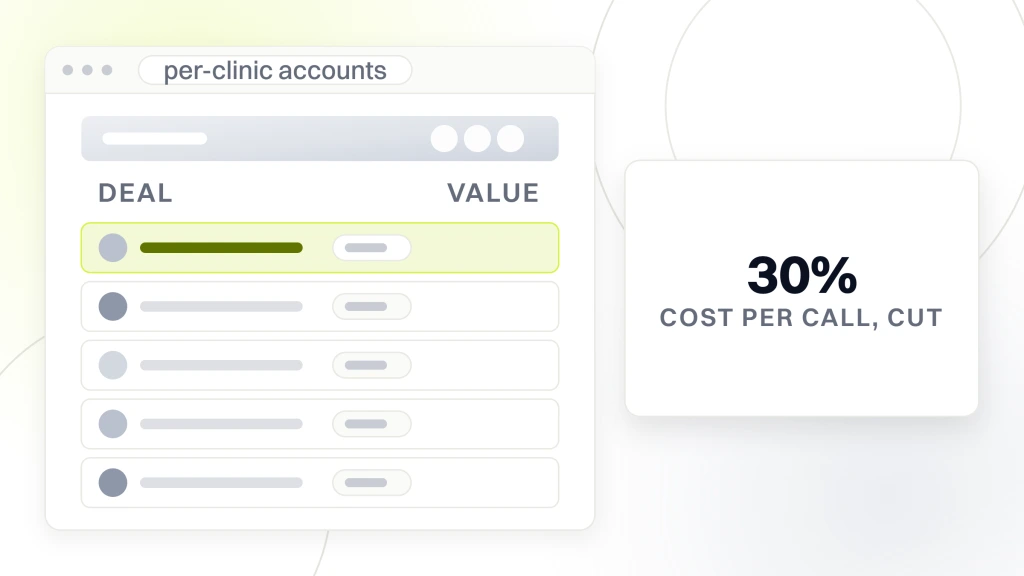
Take Smile Design Dentistry, the multi-location DSO where per-clinic PPC restructuring cut cost per call 30% and scaled qualified lead volume across 50-plus dental offices. PPC conversion rate climbed 20% once per-clinic ad copy started matching each city’s search intent instead of averaging across markets. The same pattern transfers across DSO groups when the agency builds the location-group bidding structure, not when the agency pitches it in the deck and then runs a single national campaign inside the account.
To pressure-test any dental dso marketing agency on this criterion, ask three specific questions during the pitch demo. First, open a live client account and show the campaign tree at the location level. Second, show three clinics in the same metro and compare bid modifiers, negative keyword sets, and ad copy variants. Third, walk the target CPA per clinic and show how the agency adjusts budget when one clinic’s cost per booked patient trends up 15% for 3 straight weeks. Agencies that pass all three questions are running real multi-location paid media. Agencies that stumble on any of the three are running a single-location playbook with a scale story on top.
Local SEO track record signals dental dso marketing agency maturity
Multi-location local SEO carries a specific skill stack most single-location dental SEO agencies do not have. The DSO local SEO stack runs Google Business Profile management across 8 to 40 clinics at once, location page architecture on the main brand site plus each clinic’s satellite page where one exists, review generation flows producing 8 to 15 new reviews per clinic per month, local citation building across the top 40 healthcare and dental directories per clinic, and structured data markup that clarifies the parent-brand plus child-clinic relationship so Google reads the hierarchy correctly.
Agencies without multi-location SEO experience produce ranking movement on 2 or 3 of the group’s clinics and flat performance on the other 5 to 37. The pattern is unmistakable in the reporting. Cherry-picked clinics move into positions 1 through 3 on the local pack for city-plus-service queries and the rest of the group sits at positions 5 through 15 with organic session counts stuck at 200 to 600 per month per clinic. The agency reports the wins and buries the losses. Ask for the per-clinic ranking dashboard on every clinic in the group before signing.
Multi-location dental SEO also demands a clear parent-brand versus child-clinic content strategy. Location pages on the brand site should target city-plus-service queries (Nashville dental implants, Belle Meade Invisalign). Clinic satellite pages, where present, should target hyper-local queries (dentist near me from the specific neighborhood zip codes surrounding each clinic). The two content layers reinforce each other when structured correctly and cannibalize each other when duplicated. Read the Google local business structured data documentation for the parent-organization plus branch-office markup pattern, and cross-check the Google Business Profile chain locations guide for verification steps that apply to DSO multi-location structures.
North County Dental Care shows the same local SEO discipline at a single office. Patient volume climbed 1,000% from 2021 to 2024 on a rebuilt local SEO stack that paired consistent listings with targeted Google Business Profile ads. Organic traffic climbed 385% over the same window. Both moves came from structural work at the location level, not from a national brand campaign that spikes home page traffic and moves nothing on the pages that actually book appointments.
Call tracking maturity separates real dental dso marketing agency work
Call tracking maturity is the fastest signal of whether a dental dso marketing agency runs operational muscle or vendor-of-the-month pitches. Multi-location dental groups take 65% to 82% of new patient inquiries by phone, not web forms. Without proper call tracking, the DSO has no idea which clinic is receiving which campaign’s calls and no idea which calls turned into booked appointments, which got dropped, which got hung up on, and which booked at a competitor after the front desk missed the ring.
The working call tracking setup runs three layers. Layer one is dynamic number insertion per clinic per traffic source through CallRail, WhatConverts, or CallTrackingMetrics. Layer two is call scoring rules that flag calls under 60 seconds as unqualified, calls without an appointment booking as consult-only, and calls with a next-day appointment as booked patients. Layer three is offline conversion import back into Google Ads and Meta Ads so smart bidding optimizes against booked patients, not proxy form fills across every clinic in the group.
Broken call tracking hides the biggest operational hole in DSO paid media. Reported form-fill conversions inflate and booked appointments and attended consults stay flat. The smart-bidding algorithm chases the phantom conversions, and cost per real booked patient climbs 30% to 45% quarter over quarter before anyone catches it in the reporting. Fix call tracking before signing any dental dso marketing agency retainer. Reference the Google Ads offline conversion import documentation for the CSV upload and API pipeline that pushes real booked appointments back into the account setup.
Verify the call tracking claim during pitch by asking the agency to walk one active account’s offline conversion feed live. A mature setup shows CallRail or WhatConverts firing the appointment-booked event on a specific call recording, then the same event landing inside Google Ads as a conversion the following morning, then smart bidding recalibrating the target CPA on that clinic’s campaign the same week. Agencies that can walk that loop end to end are running the operational layer. Agencies that talk about call tracking as a future workstream are pitching capability, not running it.
Reporting stack maturity in a dental dso marketing agency
Reporting stack maturity separates dental dso marketing agency work built for a multi-location operation from work built for the average single-location practice. Real DSO reporting stacks show per-clinic cost per booked patient week over week, per-clinic consult-to-treatment conversion rate month over month, group-level channel attribution across paid and organic, and 6-month plus 12-month LTV by acquisition channel per clinic. Any less depth and the operations director cannot answer the questions leadership asks in Monday’s meeting.
The working DSO reporting stack runs on four dashboards. Dashboard one covers per-clinic paid media performance (cost per call, cost per booked appointment, cost per attended consult per clinic per week). Dashboard two covers per-clinic organic performance (ranking positions on top 20 queries per clinic, organic session count, Google Business Profile call volume). Dashboard three covers group-level channel attribution across paid, organic, referral, and repeat patient revenue. Dashboard four covers front-desk conversion metrics (calls to booked appointments, booked appointments to attended consults, attended consults to accepted treatment plans).
Agencies without DSO reporting stack maturity default to Google Ads Manager screenshots plus Google Analytics organic reports plus a monthly PDF. That reporting depth is fine for a single-location practice at $8,000 monthly spend. It falls short for a multi-location DSO at $180,000 monthly spend, since the reporting cannot answer the questions the operations director needs to answer in the weekly leadership meeting. Ask for a sample DSO reporting dashboard on an existing client before signing any retainer.
The reporting stack has a second job most DSOs miss on the first pass. It is the audit trail for the marketing budget defense during the annual private-equity or board review. Boards ask for cost per acquired patient by clinic, retention curve by acquisition source, and payback period by channel. Reporting stacks that cannot answer those questions in under 5 minutes force the operations lead into a 3-day scramble that produces a shakier answer than what a mature stack would have handed over in 5 minutes. So the reporting stack is a growth tool during the year and a defense tool at review time. Both roles matter, and both need to be scoped in the initial agency conversation.
Dental dso marketing agency evaluation criteria ranked table
The 10 evaluation criteria below rank by weight in the agency selection decision. Weight reflects how much a strong or weak signal on that criterion shifts the probability of a successful 24-month engagement. Multi-location paid media capability and call tracking maturity carry the top weights, since both are structural criteria that cannot be added mid-engagement without breaking the account setup. Reference calls and case study depth carry lower weights individually but combine to produce the qualitative signal that separates operational partners from pitch decks.
| Evaluation criterion | Weight in decision | Signal to check | Deal-breaker if missing |
|---|---|---|---|
| Multi-location paid media capability | High | Location-group bidding structure on existing clients | Yes |
| Local SEO track record on multi-location groups | High | Per-clinic ranking dashboards from existing DSO clients | Yes |
| Call tracking maturity | High | Offline conversion import pipeline demonstrable in-account | Yes |
| DSO reporting stack maturity | High | Sample multi-location dashboard from an existing DSO client | Yes |
| Content production capacity | Medium | Portfolio of dental content ranking in positions 1 to 5 | No |
| Reputation management workflow | Medium | Review flow producing 8 to 15 reviews per clinic monthly | No |
| New location launch plan | Medium | 60-day new clinic launch timeline with weekly milestones | No |
| Cross-clinic attribution capability | Medium | Attribution model that handles patient movement between clinics | No |
| Retainer structure matching DSO operations | Low | Retainer scales with clinic count, not flat monthly fee | No |
| Reference calls with existing DSO clients | Low | 3 to 5 reference calls with matching-size DSOs | No |
The four high-weight criteria are structural. An agency missing any one of the four cannot fix the gap mid-engagement without breaking the account setup, which typically takes 60 to 120 days of rebuild work and stalls performance in the meantime. The six medium and low weight criteria are operational. Agencies missing one or two of the operational criteria can add the capability inside the first 90 days of engagement without disrupting performance. Use the four high-weight criteria as pass-fail filters. Use the six medium and low weight criteria as tiebreakers between finalists that pass the high-weight filter.
Content production capacity in a dental dso marketing agency
Content production capacity inside a dental dso marketing agency covers whether the agency produces enough monthly content to feed the group’s SEO plus paid social plus email plus community plus new patient education workflows. A boutique DSO with 8 clinics typically needs 12 to 20 new content pieces per month across the group. A mid-size DSO with 24 clinics typically needs 25 to 40 new pieces per month. The mix runs across long-form service pages, blog posts, patient education pieces, treatment comparison guides, and staff-authored expertise content.
Agencies without dental content production capacity outsource writing to generalist copywriters who produce dental content that reads as if the writer has never spoken to a dentist. The content ranks poorly since the topic depth is thin. It converts poorly since the buyer voice is off. Real dental content production requires writers with 100-plus hours of dental content history plus editorial oversight from a dentist or dental hygienist for medical accuracy. Ask for 5 to 8 sample pieces of published dental content from the agency’s portfolio before signing.
The content review workflow inside a DSO typically involves 2 to 3 review layers before publication. Layer one is the marketing agency’s editorial review for tone and SEO. Layer two is the DSO’s clinical review for medical accuracy through a designated dentist or dental director. Layer three is the DSO’s legal review for compliance with state dental board advertising rules. Agencies unfamiliar with the multi-layer review process build content pipelines that break at layer two or three, producing 4 to 6 week delays on every piece and burning content team hours on rework, not on net-new production.
Reputation management workflow in dental dso marketing agency operations
Reputation management inside a dental dso marketing agency covers how the agency generates 8 to 15 new Google reviews per clinic per month, handles negative reviews across 8 to 40 clinics at once, and holds 4.5-plus star average ratings across the entire group. Multi-location dental groups without a real reputation management workflow watch star ratings drift below 4.5 across 3 to 6 clinics per year. Every 0.1 star drop below 4.5 costs the affected clinic 8% to 22% of new patient calls month over month.
The working reputation management workflow runs three layers. Layer one is automated review requests through Podium, Birdeye, or a native integration with the DSO’s practice management software (Dentrix, Eaglesoft, Open Dental). Requests fire 4 to 8 hours after appointment completion via SMS with a direct link to the clinic’s Google Business Profile review page. Layer two is negative review response workflow with a 24-hour response SLA. Response templates get customized per situation, but the response goes out inside one business day so future patients see the practice engaging. Layer three is a monthly reputation health dashboard covering star rating trends per clinic plus review volume per clinic.
Agencies without dental reputation workflow experience default to setting up the review request automation and calling the job done. The automation produces new positive reviews for 60 to 90 days, then declines as patient outreach fatigue sets in and open rates drop from 32% to 14%. Real reputation management requires refreshing the review request messaging every 60 days, adding second-touch SMS follow-ups for patients who did not respond to the first request, and periodically switching between SMS and email channels to reset the outreach freshness signal to the patient inbox.
iSmile Dental Spa is a working reference on what a rebuilt reputation and organic search stack does inside a growing dental group. Patient load climbed 900%, scaling the practice from 1-2 new patients per month to 12-14 consistently. Website traffic climbed 800% off the same body of work through SEO, content, and PPC done in the correct sequence. Reputation and organic search compound together in dental at a rate paid media alone cannot match. So order the work reputation first, organic second, paid third when the base metrics are weak. Skip that order and the paid budget produces 30% to 50% less patient volume for the same spend.
New location launch plan from a dental dso marketing agency
New location launch plans are where a dental dso marketing agency proves the team can support DSO growth as clinics come online through acquisition or de novo builds. The working plan runs 60 days from clinic-lease signing to first-day-open patient volume. Week 1 through 4 covers pre-launch (Google Business Profile creation and verification, clinic satellite page or location page build, initial local citation submission across the top 40 directories). Week 5 through 8 covers soft launch (paid media campaign setup, review request automation configuration, first patient communication sequences).
Day one of clinic opening should see 30 to 90 scheduled appointments already on the calendar from pre-launch marketing work. Agencies without a real new location launch plan produce clinic openings with 3 to 8 scheduled appointments on day one, and the new clinic operates at 15% to 35% capacity for the first 90 days as marketing catches up. That capacity gap costs a boutique DSO $180,000 to $420,000 in first-quarter revenue per new clinic that a proper 60-day launch plan would have prevented. Our dental marketing retainer page covers the launch framework we run on new DSO clinic openings.
The launch plan also covers grand opening event marketing, local business partnership outreach to schools and employers inside the clinic’s service radius, and welcome offer structures that produce first-visit bookings without permanently discounting the practice’s fee schedule. Agencies unfamiliar with dental new-location marketing default to running the same Google Ads and Meta Ads approach on the new clinic as on the mature clinics in the group. That default misses the specific launch-mode acquisition math that produces 3 to 5 times the first-90-day patient volume of a mature-mode setup.
To pressure-test a launch plan, ask for the 60-day launch document from an actual clinic opening in the last 12 months. The document should show week-by-week deliverables, owner names, and a checkpoint at day 30 for Google Business Profile verification and day 45 for paid media launch. Agencies that hand over a real launch document have done the work. Agencies that describe a launch plan in the pitch deck but cannot produce the document have not.
Retainer structure matching DSO operations in dental dso marketing agency work
Retainer structure signals whether a dental dso marketing agency understands DSO operations or runs single-location dental patients and scales the fee linearly with clinic count. Real DSO retainer structures scale sub-linearly with clinic count, since shared central costs (paid media platform fees, content production overhead, reporting stack development) amortize across every clinic once the setup is complete. A boutique DSO with 8 clinics should pay roughly $18,000 to $32,000 monthly agency retainer, not $80,000 (which would be 8 times the single-location retainer of $10,000).
The working retainer structure runs three fee components. Component one is a base retainer covering the shared central work (reporting stack, content production, paid media strategy) at $8,000 to $18,000 monthly regardless of clinic count. Component two is a per-clinic fee covering location-specific work (Google Business Profile management, review generation, per-clinic ad copy) at $600 to $1,400 monthly per clinic. Component three is a percentage of paid media spend (12% to 18%) covering paid media management. The three-component structure typically produces 22% to 42% lower total agency cost than the linear-per-clinic structure and covers the same scope.
For teams that want a clean baseline to benchmark against, Redefine Web anchors dental retainers at $1,499/mo per office, layered with SEO and PPC tiers at $999, $1,499, $2,499, and from $4,500/mo depending on channel intensity and location count. Ad spend bills separately. This structure keeps the per-office cost predictable inside a growing group and separates the strategic work from the location-level execution, which is the split most DSO CFOs want on the P&L.
Agencies pitching flat monthly fees regardless of clinic count are running the DSO at a loss to win the account. They either raise fees at renewal or reduce scope inside the current retainer once the honeymoon period ends. Neither outcome serves the DSO. Ask for the three-component fee structure at the first proposal round. Agencies unable to break out the shared central work from the per-clinic work are almost certainly running the DSO on a single-location playbook with location extensions added on top. Our dental PPC services page covers the per-clinic paid framework that pairs with the retainer structure.
Reference calls before signing any dental dso marketing agency retainer
Reference calls with existing DSO patients close every dental dso marketing agency evaluation. Ask for 3 to 5 reference calls with DSOs of matching size (inside 50% of the evaluating DSO’s clinic count). Ask each reference three questions. Question one is what performance metric moved the most inside the first 6 months. Question two is where the agency struggled during the engagement. Question three is whether the reference would sign the same retainer again if starting the search today. Honest references answer all three without hesitation.
Agencies unable to provide 3 to 5 matching-size DSO references are running the pitch on single-location patients scaled up in the pitch deck. That gap is a dealbreaker for a multi-location group, since the operational muscle memory to run a DSO does not exist inside an agency that has never run one at scale. Better to pick an agency with 2 or 3 legitimate DSO references than an agency with 12 single-location references and a well-designed pitch deck about DSO capability.
Reference calls also surface the operational reality of the agency’s day-to-day work. Are weekly meetings scheduled on the calendar or ad hoc. Does the DSO have a dedicated account team or does the account rotate between generalist account managers. Is the reporting stack maintained by the agency or does the DSO’s in-house team maintain it. How quickly does the agency respond to urgent requests (new clinic launch, negative review escalation, campaign performance drops). The answers tell the evaluating DSO whether the daily engagement matches the pitch deck promise across the full retainer year.
Red flags across dental dso marketing agency pitches
Every dental dso marketing agency search surfaces the same short list of red flags in pitch decks. Spotting them saves 8 to 20 weeks of wasted evaluation cycles inside an already lengthy agency search. The red flags below show up whether the agency is a national multi-vertical firm, a dental-only vertical specialist, or a boutique multi-location marketing consultancy pitching for the DSO retainer.
- Case studies showing only single-location dental patients despite pitching multi-location capability
- No location-group bidding structure demonstrable in any active client account during the pitch demo
- Reporting stack that runs on Google Ads Manager screenshots plus a monthly PDF summary
- Retainer fee scaling linearly with clinic count (e.g. $10K per clinic per month)
- Content production outsourced to generalist writers with no dental medical review workflow
- Review generation via one automation setup with no refresh cadence past 90 days
- New location launch plan that reads as a checklist and skips week-by-week milestones
- Reference list heavy on single-location patients and thin on matching-size DSOs
Agencies passing the red flag filter still need the four high-weight structural criteria plus reference calls before signing. Passing the red flag filter alone does not mean the agency is the right pick. It means the agency clears the first-round filter and enters the finalist round. Finalist evaluation typically takes 4 to 8 weeks including reference calls, sample deliverable review, and pilot campaign structure discussion. Skipping the finalist round to save time typically costs the DSO 6 to 18 months of engagement rework once the wrong pick shows up in the first-quarter reporting.
VP Dental is a compact reference on what a right-fit engagement produces at the small end of the DSO market. New monthly patients doubled inside the first 12 months, adding roughly $8.1K in monthly recurring revenue from the website channel alone. Search impressions climbed 776% off the same organic and paid setup. The story matters here since it shows that structural criteria pay off even at 1 to 3 locations, and the same criteria compound harder as a DSO scales from 3 to 8 to 24 clinics.
Where dental dso marketing agency selection fits DSO operations
Marketing agency selection sits inside a broader DSO operations plan alongside clinical operations, revenue cycle management, HR and clinician staffing, and central purchasing. Marketing agency work drives top-of-funnel patient acquisition and reputation management. Clinical operations decides whether new patients turn into repeat patients across 5 to 15 year relationships. Revenue cycle decides whether booked appointments turn into collected revenue. HR decides whether the clinician bench can serve the acquired patient volume. Every one of these workstreams either compounds through the marketing budget or fights against it week over week.
DSOs that pick a marketing agency without the surrounding operations plan produce short-run wins with no compounding. DSOs that align the agency selection with the full operations plan turn every 24-month agency engagement into a compounding patient acquisition channel that scales across every clinic in the group. The broader plan sits inside our dental marketing agency page, which covers the sequencing that puts paid, organic, reputation, and content work in the right order relative to clinical operations across the first 24 months of any new DSO engagement.
Dental dso marketing agency selection is the specific discipline of running 10 evaluation criteria against every finalist agency, pass-fail filtering on the four high-weight structural criteria, tiebreaker filtering on the six medium and low weight criteria, and closing every evaluation with 3 to 5 reference calls with matching-size DSOs. Get the 10 criteria right and the agency selection produces 24 to 60 months of compounding patient acquisition. Get any one of the four high-weight criteria wrong and the DSO burns 8 to 24 months on the wrong agency before restarting the search. If you want our team to walk the 10 criteria against your DSO’s shortlist, book a working call and bring the last 90 days of aggregated performance data.