Social media marketing for chiropractors that actually books new patients runs on two platforms, six posts a week, and one weekly script the DC records in a single sitting. Not a 47-page content calendar. Not a Facebook boost every Tuesday. Not a $2,000 monthly retainer for a stranger to post trending audio clips of an office plant. Two platforms, one weekly recording, a repeatable structure, and a real ask for the booking.
This guide walks through the exact motion we use with independent practices booking 8 to 20 new patients a month from social. Real cadence, real formats, real hooks that stop the scroll. Bring a phone, a decent ring light, and 40 minutes of the DC’s time on a Sunday. If the practice already runs social and it feels flat, the sections below diagnose why and reset the plan without burning the audience already built. Read straight through in twelve minutes and pull the parts your team can run this Sunday.
Hooks that stop the scroll for a real patient
The first three seconds decide whether the Reel gets watched. Every Reel opens with a hook that names the pain in the viewer’s language and promises a specific answer. Not “hi guys today I’m going to talk about.” Not “welcome back to the channel.” A pain, an answer, the DC’s face on camera. That is the whole opening formula.
Hook structure works the same way for paid and organic content. The first three seconds must name the pain point better than the next scroll will. Practices whose Reels open with a specific chronic pain complaint outperform generic wellness intros by a factor of four to six on watch time. Watch time is the metric the algorithm rewards, so the hook is the whole ballgame.
Seven hook templates that work for chiropractors
- “If your lower back hurts after sitting for 30 minutes, this is what’s actually happening.”
- “Three signs your headache is coming from your neck, not your head.”
- “The one stretch I give every patient with sciatica on the first visit.”
- “You do not have a disc problem. You have this problem. Here is how I know.”
- “Every chiropractor tells you to sleep on your back. I’m going to tell you the truth.”
- “A patient came in last week saying this. Watch what I tell her.”
- “If your doctor said ‘just live with it,’ this Reel is for you.”
Rotate through the seven. Never open two Reels in a row with the same shape. Viewers notice, and so does the algorithm. A varied hook library is the difference between an account that plateaus at 800 followers and one that clears 5,000 in ninety days.
Hooks that fail every single time
“Welcome back to my page.” “Hey guys.” “So today I want to talk about.” Anything that starts with a greeting instead of a promise. The account trained on greetings never breaks 200 views a Reel. The account trained on pain-point hooks breaks 5,000 by month three. The difference is not the algorithm. The difference is that the second account gives the viewer a reason to stay for the next 44 seconds.
How to get actual booked exams from social
Every Reel needs an ask. Every fifth or sixth post is a hard ask. Every third Story has a booking sticker. If a viewer watched three condition explainer Reels, they are ready to book. The post that closes the loop is the one that says how, when, and where.
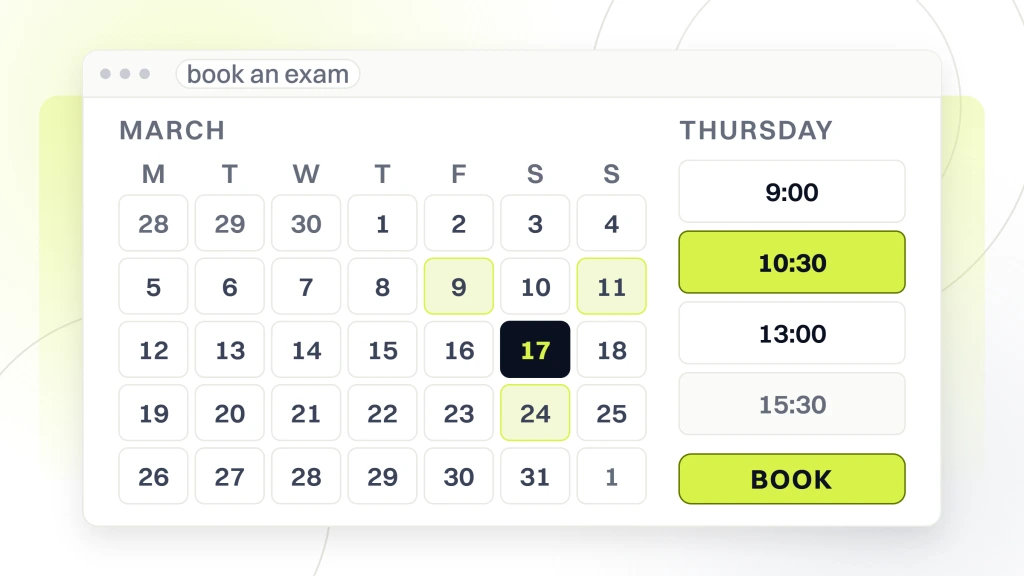
The ask sits in the caption, not the video. Video is where trust builds. The caption is where the exam gets booked. Something like “If this sounds like you, my next available new patient exam is Tuesday at 8:15am. Link in bio.” Direct, specific, dated. Not “call to schedule a consult.” That closes zero exams a month. The specificity is what converts. A named time on a named day feels like an invitation. A vague CTA feels like a billboard.
The Story booking sticker motion
Every third Story slide has a “Book Exam” link sticker. The Story before it is a 15-second clip of the DC talking about a real patient result from that morning. The Story after it is a poll asking the audience what they came in for last time. That three-slide motion books 4 to 8 exams a month from the Instagram audience alone, without ever spending a dollar on paid social.
The order matters. Proof, ask, engagement. A poll before the ask splits attention. A booking sticker on slide one feels transactional and gets skipped. The three-slide rhythm respects how viewers move through Stories and turns a passive audience into a booking pipeline.
The DM flow that closes without pressure
When someone DMs “does this work for X,” the response follows one pattern. Acknowledge the specific pain. Ask one clarifying question. Offer the booking link only after they answer. Roughly 40 percent of qualified DMs book an exam inside 72 hours when this pattern runs. The pattern breaks when the front desk pastes a booking link on message one. That closes 8 percent.
The Instagram profile that converts search traffic
Half the value of social media marketing for chiropractors happens on the profile page, not in the feed. When someone Googles the practice, clicks the Instagram link, and lands on the profile, the profile has 4 seconds to prove the practice is real. Bio, highlights, pinned Reels, link in bio. Every element does a job.
The bio names the vertical and the neighborhood. The highlights show reviews, before-and-after stories (with consent), the office tour, and the booking process. Three Reels get pinned. The DC introducing herself, a five-star patient story, and the highest-performing condition Reel from the last quarter. The link in bio goes to a single booking page, not a Linktree of nine competing choices.
The bio formula for a chiropractor Instagram
Line one. What the DC does and where. “Chiropractor in Highland Park helping with back pain, sciatica, and headaches.” Line two. A trust marker. “Board certified. 12 years in practice.” Line three. What to expect. “New patient exam takes 45 minutes.” Line four. A call to action with the link. That is the whole bio. Every emoji is a distraction from that structure.
Highlights that do the trust work
Five highlights, in this order. Reviews. Meet Dr. Smith. Office tour. Book an exam. Patient wins. Every highlight has 3 to 6 slides. Update them every quarter. Highlights are the trust page of the profile, and most practices never build them, which is the reason a stranger who lands on the profile does not click Book. Build the highlights, get the click.
Paid boosts versus organic Reels for a chiropractic practice
Boost the top performer. Do not boost every post. When a Reel breaks a natural threshold (usually 2x the average watch time in the first 24 hours), a $50 boost to a local radius adds 8 to 20 booked exams over the next 30 days. Boosting a Reel that did not earn its own reach is a fast way to spend $200 for zero exams.
The paid layer is a compounding play on top of a working organic base. Practices that skip organic and go straight to paid Facebook and Instagram ads spend more per booked exam than they would on Google Search. The rule stays simple. Earn the reach with organic. Amplify the reach that already earned itself with paid.
The exact criteria for boosting
Watch time over 45 seconds average. Local share rate above 2 percent. Saves above 1 percent. When all three fire, boost the Reel to a 10-mile radius, all ages 25 to 65, $50 to $75 over five to seven days. Track booked exams by asking every caller how they found the practice. The math is easy to see in the first 30 days. If the three criteria never fire in a given month, the money stays in the account. Skip the boost, keep recording.
When Facebook and Instagram ads earn their keep
Retargeting website visitors, retargeting the lapsed patient email list uploaded as a custom audience, retargeting Reel viewers who watched over 50 percent. Cold prospecting to strangers on Meta almost never earns its keep for a solo chiropractic practice. Retargeting a warm audience earns its keep almost every time. Read the Facebook marketing for chiropractors guide for the retargeting setup.
Content that pulls lapsed patients back through the door
Lapsed patients follow the account. They stopped booking, not stopped watching. A specific kind of content pulls them back. A personal update from the DC, a Story tagged “we miss you,” or a soft check-in Reel that ends with a “no pressure, but if it’s been six months.” One of these lands per month. The reactivation rate outpaces email in some months.
Pain Cure Clinic ran education-driven content across social and email in parallel and grew appointments 205 percent. Reviews grew 162 percent to a 4.9-star average over 2023 to 2024. The social layer did not win alone. It added the trust reinforcement that made the reactivation emails convert 40 percent better than they had before. Social plus email plus email marketing for chiropractors is the real system.
The monthly Close Friends post
Add every current patient to the DC’s Close Friends list at first visit (opt-in language at intake). Once a month, post a Close Friends Story with a light DC update, a shoutout to a recent patient win, and a booking sticker. Close Friends see it. The rest of the audience does not. Open rates on Close Friends Stories run 55 to 75 percent for practices that respect the list.
The quarterly open house Reel
Every quarter, film the practice inviting lapsed patients back for a free 15-minute check-in with the DC. Push the Reel with a small boost. The lapsed file responds. The invitation feels human, not like a marketing campaign. Practices that run this quarterly cadence report 12 to 25 lapsed patient reactivations per open house window.
Tracking what social media marketing for chiropractors actually books
The whole program lives or dies on the scoreboard the practice picks. Followers, likes, and view counts are not the scoreboard. Booked exams tagged social, DMs that turned into booking conversations, and link-in-bio clicks that landed on the booking page are. Every Monday, the marketing lead pulls those three numbers and compares them to the last four weeks. The trend line, not the individual post, tells the truth.
Instagram Insights and TikTok Analytics give the top-of-funnel numbers. The EMR gives the bottom-of-funnel numbers. When top-of-funnel goes up and bottom-of-funnel stays flat, the ask is broken. When bottom-of-funnel goes up and top-of-funnel stays flat, keep doing exactly what is working. The report writes itself once the two data sources sit side by side.
The single monthly review question
“Which Reel this month produced a booked exam and why.” The answer names the format, the hook, the platform, and the ask. That answer becomes next month’s shot list. Do not answer with “Reel about back pain got 12,000 views.” Views are not exams. The DC writes the answer in three sentences. The next month builds on it.
What to cut by month three
Any bucket that did not produce a booked exam or a real DM conversation in 60 days. Any platform where the practice’s followers sit outside the geographic service area. Any post format the DC hates recording. The DC will always outperform on the formats she enjoys. The formats she hates are the ones that quietly kill the calendar in month four. Cut them without guilt. The audience never notices what leaves. The audience notices when the DC shows up on camera looking relieved to be there. Cutting a bucket also frees a slot for a new experiment. That is the rhythm the calendar wants.
Tools that actually save the DC time
Three tools cover the whole workflow. A scheduler (Meta Business Suite, Later, or Buffer). A caption library (a Google Doc with 40 tested captions). A recording kit (phone, ring light, lav mic). Everything else on the market is nice-to-have. Practices that add nine tools in month one still only post twice a week in month three. The tools were never the bottleneck. The recording day was.
For a solo or two-DC practice, the base three above run the entire program under $50 a month. The bigger stacks make sense for multi-location groups running 4+ accounts in parallel.
The caption library that cuts posting time in half
A Google Doc with 40 caption templates, sorted by content bucket. Every Sunday, the DC or editor swaps in the specific numbers, patient details (with consent), and dates. The 45-minute weekly caption chore turns into 10 minutes. The templates started as top-performing captions from the last 90 days. The library grows itself over time.
The recording kit that fits in a desk drawer
A phone with a decent camera. A $30 ring light on a mini tripod. A $40 lav mic that plugs into the phone. That kit outperforms a $2,500 mirrorless camera setup for social. The phone is the platform the audience watches on. Match the recording to the viewing medium. Everything else is over-engineering.
A month-one launch plan for social media marketing for chiropractors
Week one, set the two platforms, build the bio and highlights, and record eight Reels in one Sunday afternoon. Week two, publish three per week, respond to every DM within four hours, and add the first booking sticker in Stories. Week three, boost the top performer if it clears the criteria and set the caption library. Week four, run the first reactivation Close Friends post and audit the numbers.
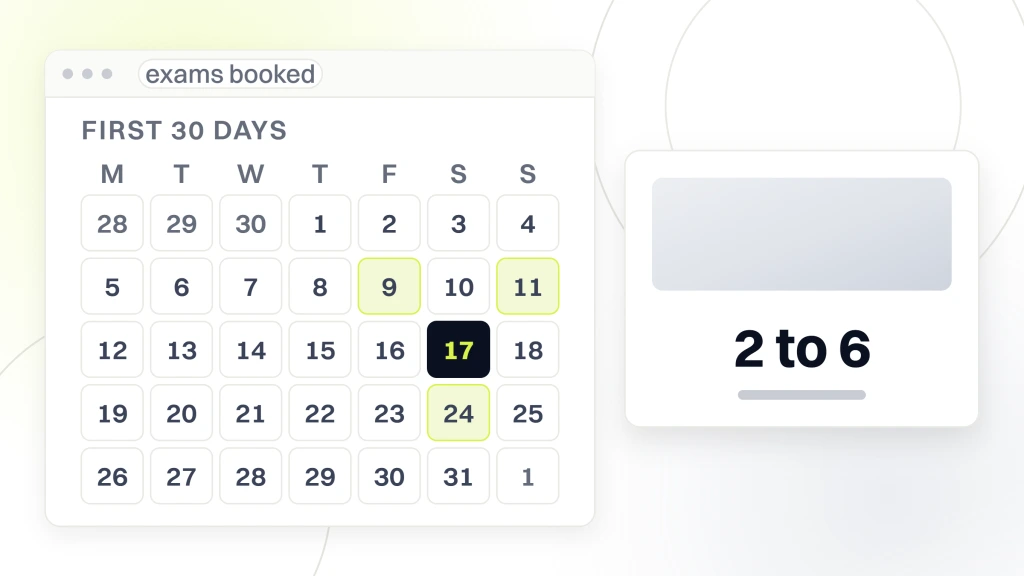
By the end of month one, the practice should have posted 12 Reels, added 200 to 500 local followers, and booked 2 to 6 exams tagged social. That is the base to build on. Month two the numbers usually double. Month three the audience compounds and the reactivation layer starts pulling weight. Month four the DC can look at the numbers and know whether to invest more or reallocate.
What to skip in month one
Any paid ad. Any collab with a “local influencer” who has 3,000 followers and lives 40 miles away. Any trending audio that has nothing to do with chiropractic care. Any post that starts with “hey guys.” Any Story that promotes a giveaway. The list of things to skip is longer than the list of things to do. That is the point. Focus is the whole strategy in month one.
When to add the second platform
When Instagram posts consistently at 3 to 4 per week for 8 straight weeks. Not before. Adding TikTok or Facebook to the mix mid-launch doubles the workload and halves the quality. Get one flywheel spinning, then add the second. Practices that skip this rule end up with two mediocre accounts instead of one that books patients.
Redefine Web runs the whole social layer for the practice
Redefine Web runs the social layer as part of the monthly marketing retainer. Shot lists, caption library, editing, scheduling, DM playbook, and monthly review. The DC records once a week, and the team handles the rest. Practices sign up when they want the social layer to actually book patients instead of eating a Sunday every week. Read the Sprout Social strategy framework for the broader marketing context.
We opened the case work with Pain Cure Clinic on the same foundation. Condition-focused content, targeted retargeting, referral and reactivation flows, and a real booking motion. Twelve months later the practice had 205 percent more appointments, 289 percent more organic traffic, and reviews up 162 percent to a 4.9-star average. Social was one layer of the stack, not the whole answer. The stack is what compounds.
What a typical engagement looks like
Two-hour kickoff, shot list and caption library within seven days, and the first four Reels edited and scheduled by day 10. Weekly recording block on Sunday, biweekly editorial review, monthly reallocation meeting. The chiropractor marketing retainer starts at $1,499 per month for the base package and scales when social is a bigger share of the plan.
When social is not the first move
Practices with fewer than 300 active patients or without a booking-ready website should fix those first before pouring energy into social. Social amplifies whatever it points to. If the landing page loses the click, more social traffic loses more clicks. If the practice is ready to make the social layer pay, our chiropractor marketing agency maps the plan to the practice’s actual position.
For the full playbook that ties social into paid, SEO, and email, see the pillar guide on chiropractor marketing strategies that fill schedules.