
Chiropractor website conversion rate optimization is a short, ranked stack of decisions about page speed, hero offer, above-the-fold proof, and booking flow that most practice sites get wrong in the same predictable ways. This guide walks the 7 site changes that push paid booking rate from 1 to 2% up to 5 to 9% inside 90 days, with no redesign and no rebrand. You’ll leave with the ranked list, the exact order to run it in, and the booking-rate numbers each fix tends to move on a working practice site.
Short version. Chiropractor website conversion rate optimization works when you fix speed first, then hero copy, then above-the-fold proof, then booking flow, then service pages. Every step compounds on the one before it. Practices that follow this order see booked appointments climb 2x to 4x on the same monthly ad budget inside 90 days. Practices that skip the order and pay a designer to make the site look modern usually end up back where they started with a prettier flat line. Read straight through in 12 minutes.
What Is Chiropractor Website Conversion Rate Optimization
Chiropractor website conversion rate optimization turns more of your existing visitors into booked appointments without pushing extra dollars into ads. If your Google Ads campaign sends 400 visitors a month and 6 book, that’s 1.5%. If the same 400 visitors book 32, that’s 8%. Same paid traffic, 5x the new patients on the schedule. That gap is the whole game.
Booking rate is the metric that pays
Pageviews, time on page, and bounce rate are diagnostic. Booking rate is what pays the practice. A page that ranks well and looks good but books nothing is worse than a page that ranks average and books consistently. Anchor every design decision to the question, does this move booking rate, and half the debates on the redesign committee end early. See Nielsen Norman Group’s overview of conversion rate patterns for the research behind why this focus works.
Where most practices sit today
The average independent chiropractic website converts paid traffic at 1 to 2%. Strong sites hit 5 to 9%. The gap is worth roughly 3x to 5x the ad budget in booked patients. On a $2,400 monthly Google Ads spend, that’s the difference between 8 new patients and 30. Same money, different site. The rest of this guide walks that gap, fix by fix, in the order that produces the fastest results on a working chiropractic practice site.
Why chiropractic sites underperform the national CRO average
Chiropractic practice sites face 3 handicaps most other verticals do not. First, patients arrive skeptical. Chiropractic still carries a credibility discount that dental or medical does not, so above-the-fold proof matters more here. Second, most templates a practice buys were built for dental or med spa, so the hero flow was never designed to convert a patient with back pain today. Third, booking software vendors load widgets that add 400 to 900 ms of load time. Every one of those handicaps is fixable inside a 90-day sprint.
7 Fixes That Move The Needle On Booking Rate
Here’s the ranked list of chiropractic CRO fixes. Run them in this order. Each fix changes the impact math on the next one, so skipping the first two and starting with the last three is the most common mistake we see. It produces flat booking-rate results even when every individual change looks polished in isolation.
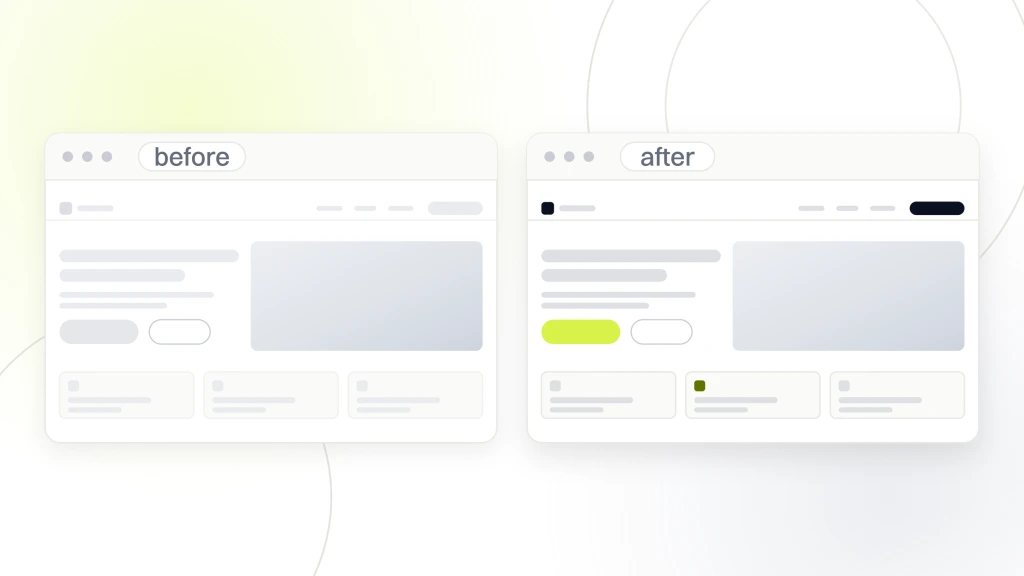
- Cut mobile load speed under 2.5 seconds on Lighthouse. Compress images, drop autoplay video, prune the tag manager.
- Rewrite the hero to name 1 patient type and 1 problem. Ten words or fewer, no adjectives.
- Put Google reviews above the fold with star rating and count. Real widget, not a screenshot.
- Add a sticky mobile booking button on scroll. Visible from every screen height.
- Move the phone number to the header with click-to-call. Text link, not an image.
- Split the services mega-page into 1 page per condition. Back pain, sciatica, neck pain, prenatal, sports.
- Add real practice photos and retire the stock library. The chiropractor’s face, not a model.
Speed sets the ceiling for every other fix
Google’s Core Web Vitals research shows 32% of mobile visitors bounce past the 3-second mark. If your page loads at 5 seconds, a third of your traffic never sees the hero rewrite you just paid for. Fix speed first. See Google’s Core Web Vitals guide for the current thresholds and how to measure them.
Hero rewrite is worth an afternoon
The hero headline is the single most valuable sentence on the site. Name 1 patient type and 1 problem in 10 words or fewer. Back on the field, not on the bench, for a sports practice. Drive-in prenatal care Denver moms recommend, for a prenatal focus. Practices that make this change alone see booking rate move 20 to 40% inside 2 weeks of live traffic. No design work, no new photography, just words.
Above-the-fold proof does the heaviest work on chiropractic sites
Chiropractic patients arrive skeptical. Star rating, review count, and 1 short quote sitting above the fold cuts that skepticism in seconds. On sites we’ve measured, moving the reviews widget from footer to hero moved paid booking rate 15 to 30% inside 30 days. Do not screenshot the reviews. Use the live Google widget so the star count updates itself and the trust signal stays fresh.
Chiropractic CRO Metrics That Really Matter
Most CRO dashboards show 15 metrics at once and force you to guess which 2 matter for a chiropractic practice. The answer is booking rate and cost per booked appointment. Every other number on the dashboard is diagnostic, and every diagnostic metric should tie back to one of those 2 headline numbers.
| Metric | Weak site range | Strong site range | How to move it |
|---|---|---|---|
| Booking rate, paid traffic | 1 to 2% | 5 to 9% | Fix hero, speed, sticky booking |
| Booking rate, organic traffic | 0.8 to 1.5% | 3 to 6% | Split service pages, add reviews |
| Cost per booked patient | $180 to $340 | $45 to $110 | Improve booking rate first |
| Mobile bounce rate | 62 to 78% | 32 to 48% | Speed under 2.5 seconds |
| Form completion rate | 14 to 22% | 38 to 55% | Cut fields, add trust marks |
| Call rate from mobile | 2 to 4% | 7 to 12% | Header click-to-call number |
Track the whole booking, not just the click
A click on the booking button is not a booked patient. Set up call tracking, form tracking, and a tie-in to your practice management software. Most CRO projects fail because they optimized for form submissions and never noticed that half the submissions were bots or the wrong specialty. Real conversion work needs the whole funnel wired up before you touch the page.
Baseline before you change anything
Give yourself a clean baseline for 14 days before the first optimization. That baseline is what tells you which change moved the number. Practices that skip the baseline usually credit the wrong fix and repeat the same mistake on the next round. Two weeks of restraint saves 6 months of guessing later.
How Much A Chiropractic CRO Sprint Actually Costs
A chiropractic CRO sprint runs $1,800 to $6,500 for 90 days. Solo consultants sit at the low end. Boutique agencies with a chiropractic focus run $4,000 to $6,500 for the full 7-fix sprint. Practices with an in-house marketing lead often run the same sprint for $600 to $1,200 in tools plus 1 photo session. The scope, not the vendor, drives the price.
What sits inside a $4,000 sprint
Baseline analytics setup, speed audit and cleanup, hero rewrite and design, Google reviews widget above the fold, sticky mobile booking button, header click-to-call, service page split from 1 page to 3, and a real photo session with a local photographer. Ninety-day timeline. One weekly check-in call. Numbers reviewed against the baseline at day 30, day 60, and day 90.
Where the ROI usually lands
A $4,000 sprint that pushes booking rate from 2% to 6% on a $2,400 monthly Google Ads spend adds roughly 22 new patients a month. At a $2,400 lifetime value per new chiropractic patient conservatively, that’s $52,000 in year-one lifetime value from a one-time $4,000 investment. The math almost always favors CRO over any extra ad budget for practices booking under 3% from paid traffic. Run the sprint first, then decide if more ad spend is even needed.
Real Numbers From a Live Chiropractic CRO Project
ProCare Sports, a San Diego sports chiropractic practice, ran the full 7-fix sprint over 6 months. Their starting position was the worst case a CRO project can inherit. A slow site, no clear offer, stock chiropractor photos, the phone number buried in the footer, and 11 services stacked on a single homepage. Here’s what we changed and how the booking numbers responded, step by step.
Where the baseline sat
Site loaded in 6.4 seconds on mobile. Hero listed chiropractic care for the whole family with no patient focus. Google Business Profile hours disagreed with the site. Yelp listing pointed at an old suite number. Baseline traffic sat at 6 visitors a day. Paid traffic converted under 2%. Every one of the 7 habits from the checklist was failing at once.
What the sprint changed
Speed stack rebuilt for under 2 seconds mobile. Brand-aligned photography of the lead chiropractor with real athletes. Hero rewritten around the sports-injury patient. Header phone number added with click-to-call. Sticky mobile booking button. Google reviews widget above the fold. Service pages split by condition. Google Business Profile and Yelp brought back into alignment.
The 6-month result
Website engagement climbed 30%. Daily visitors reached 20+ with steady local growth. Listing accuracy across Google and Yelp hit 100%. The paid campaign that had been unviable at 6.4 seconds became productive at $1,800 a month in ad spend and started booking from week 1. Every gain traced back to one of the 7 fixes, not to a magic feature. That’s what real conversion work looks like on a live practice site.
A bigger swing on a bigger sprint
Pain Cure Clinic, a chiropractic and wellness-focused healthcare provider, ran an even broader version of this playbook. Condition-specific SEO content, a real education hub, Google Business Profile cleanup, targeted paid ads, and online booking with segmented email nurture. Result over the campaign window, patient appointments up 205%, organic traffic up 289%, and reviews up 162% at a 4.9-star average. Same core moves as the 7 fixes above, layered with content and automation once the site was ready to convert.
Mistakes That Kill A Chiropractic CRO Sprint
Most CRO projects fail on execution, not on strategy. Here are the 6 mistakes we see every month when a new chiropractic client shows up asking why their last CRO round produced no booking-rate movement. Each mistake compounds on the next one in the list. Any single one of these can invalidate a whole quarter of work if it goes unaddressed for even a couple of weeks.
- Running A/B tests before speed is fixed and skewing every result.
- Optimizing form submissions without checking if the leads are qualified.
- Adding hero video autoplay because a reference site had one.
- Testing button colors before testing hero copy.
- Skipping call tracking and losing half the attribution picture.
- Refreshing the whole site at once with no baseline to compare against.
The button-color trap
Button color moves booking rate by tiny margins under 1%. Hero copy and above-the-fold proof move it by 20 to 40%. Practices that spend 3 weeks A/B testing green versus orange before rewriting the hero are optimizing the wrong tier of the funnel. Run the copy work first. Test button color once the copy is settled and the traffic is steady.
The unqualified-lead trap
A booking rate that doubles by attracting the wrong patient is not a win. If your prenatal practice starts booking general-adjustment appointments because the hero is now vague, the CRO gain shows up on the dashboard and disappears in the schedule. Track show rate and first-visit revenue alongside booking rate. A gain that survives all 3 is a real gain.
Chiropractic CRO vs Lead Generation Marketing
CRO and lead generation marketing sit in the same funnel, but they do different jobs. Lead generation marketing brings the paid and organic traffic to the site. CRO turns that traffic into booked patients on the schedule. Running one side without the other is why so many chiropractic marketing dollars vanish every quarter with nothing to show on the appointment book.
Traffic without conversion is a waste
A Google Ads campaign pushing 400 visitors a month to a 1.5% booking-rate site produces 6 patients. The same 400 visitors on a 6% booking-rate site produce 24 patients. If you have to pick 1 to fix first, fix the site. Traffic without a converting site is money set on fire. See our lead generation marketing playbook for the traffic side once the site is ready to convert.
PPC exposes site weakness within 48 hours
Paid traffic finds every weakness on the site inside 48 hours. Paid clicks arrive with intent to book. If the site loads slowly, the phone hides, or the hero is vague, the paid campaign burns budget with no bookings. Fix the site first, then run the campaign. See PPC for chiropractors for the ordered checklist.
The order that saves the most money
Fix the site to a 4 to 5% booking rate first. Then turn on paid traffic. Then optimize the campaigns using data from a converting site. That order saves you a full month of ad budget compared to running paid traffic to a broken site. Most practices do it in the wrong order and lose the equivalent of the CRO sprint budget to wasted clicks before they figure it out.
Tools That Support Chiropractic CRO Work
You don’t need a full analytics stack to run useful chiropractic CRO work. Five tools cover 90% of what a single-location practice needs. Two are free. Three cost under $100 a month combined. Every tool on this list ties back to the 7 fixes above.
Google Analytics 4 for baseline metrics
GA4 sits at the base of every CRO project. Set up goal tracking for booking form completion, phone calls, and directions clicks. Then run the numbers against the 14-day baseline before you change anything on the site. Free tier covers a single-location practice comfortably. See Google’s GA4 setup guide for the current wiring instructions.
Call tracking for the mobile funnel
Roughly 60% of chiropractic bookings on mobile come through a phone call, not a form. Without call tracking, you’re blind to which ad, which page, and which time of day drove the call. CallRail, WhatConverts, and CallTrackingMetrics all cover this and start at $45 a month. Pick whichever integrates with your CRM and stop guessing at attribution.
Heatmaps for the qualitative check
Hotjar or Microsoft Clarity give you scroll depth, click maps, and session recordings. Watch 10 sessions before you make a change. That single hour of watching real users usually surfaces the 2 biggest issues on the page. Clarity is free. Hotjar’s free tier covers a single-location practice.
Your Chiropractic CRO 90-Day Plan
Here’s the 90-day plan we run at Redefine Web when a chiropractic client signs on for a CRO sprint. Every week has a specific target on the board. Every month closes with a review against the day-zero baseline. This is the working plan that produces the 2x to 4x booking-rate results in practice, not a one-off theoretical template.
Days 1 to 14, baseline and speed
Set up GA4, call tracking, and heatmaps. Run 14 days of clean baseline data. In parallel, run the Lighthouse audit and start the speed fixes. Cut hero video autoplay, compress images, remove unused plugins and tracking pixels. By day 14, mobile speed should sit under 2.5 seconds.
Days 15 to 45, hero, proof, booking
Rewrite the hero for 1 patient type and 1 problem. Add the Google reviews widget above the fold. Install the sticky mobile booking button. Move the phone number to the header with click-to-call. Book the photo session and swap out the stock library. By day 45, booking rate should be showing 40 to 80% improvement against the baseline.
Days 46 to 90, service pages and refinement
Split the services mega-page into 1 page per condition. Rewrite each service page for the specific patient and search intent. Run 1 A/B test per week on the highest-traffic page. Day 90 review, compare booking rate, cost per booked patient, and total booked appointments to the day-zero baseline. When you’re ready to run this across the practice, our chiropractor marketing services covers the full stack, retainer starts at $1,499 a month. For the sibling walk-throughs, see chiropractor business website examples and best websites for chiropractors.
Chiropractic CRO vs a Full Redesign
Practices routinely ask for a full redesign when a CRO sprint would produce the same booking outcome for a fraction of the cost and half the timeline. The default answer we give is CRO first, redesign only if the sprint reveals that the current platform stack physically can’t carry the booking-rate numbers you’re aiming at.

When a sprint is enough
Most practices that ask for a rebuild really need a 2-week to 3-month sprint on the current site. If your site runs on a modern platform, WordPress, Webflow, or Squarespace, the 7 fixes above are applicable without a rebuild. The sprint saves 60 to 80% of the rebuild cost and produces booking-rate results in the same quarter.
When a rebuild is genuinely needed
Rebuild is the right call when the current site runs on a platform that can’t hit sub-2.5-second load speed, when the booking form is welded to a system your practice management software no longer supports, or when the site was built by a family member in 2011 and hasn’t been touched since. In those cases, no CRO sprint can outrun the underlying platform limits.
The hybrid approach most practices should take
Run the CRO sprint first. Use the numbers from days 30 through 90 to decide if the current platform can carry your target booking rate. If yes, keep the site and layer in maintenance. If no, use the sprint data to write a specific brief for the rebuild. That order means the rebuild lands on real numbers, not on gut feel, and the new site launches with a plan for CRO built in from day 1. See our chiropractor website design guide for the deeper strategic view.
Start Booking More Chiropractic Patients This Quarter
Chiropractor website conversion rate optimization is the highest-ROI marketing work most practices can put money into right now. Run the ordered fixes on the current site, watch the booking numbers move week by week, and let the site earn the rebuild on real data before you commission one. That’s the pattern that turns a $2,400 monthly ad budget into 30 booked patients instead of 8, and it’s the same pattern behind the 205% appointment growth Pain Cure Clinic hit inside a single campaign window.