
Commercial real estate website design is a build tuned to tenant brokers, corporate real estate directors, and private equity acquirers, not weekend house hunters. The site sits inside a wider commercial real estate marketing agency playbook. The offer is a vacancy tour or a valuation call, not a Sunday open house. The sales cycle runs 90 to 180 days, not 30. Build the site around the residential buyer flow and you get zero pipeline. This guide walks the commercial pattern in about 9 minutes.
You are reading this since your current site pulls 1 vacancy tour request a quarter, and the tenant reps in your market never see your listings on the first page for the submarket. That is a fixable problem. Below you will find the property listing template shape, the tenant rep pipeline stack, pricing bands from $6,500 to $180,000, and a real client case where a mid-market brokerage moved from 3 vacancy requests a month to 22. Grab the shortlist and apply it to your current site this week.
Commercial real estate website design pricing and scope by tier
Commercial real estate website design prices a working build between $6,500 and $180,000 depending on scope and portfolio complexity. Inside a real commercial build sits strategy, wireframes, a custom listing post type, submarket landing pages, tenant rep bio pages, tour request forms with CRM handoff, ADA compliance, mobile-first responsive design, and property photography integration. Outside most quotes sit photography, drone footage, aerial site plans, and 3D floor plan modeling. Get every one of those scoped inside the fixed price before you sign.
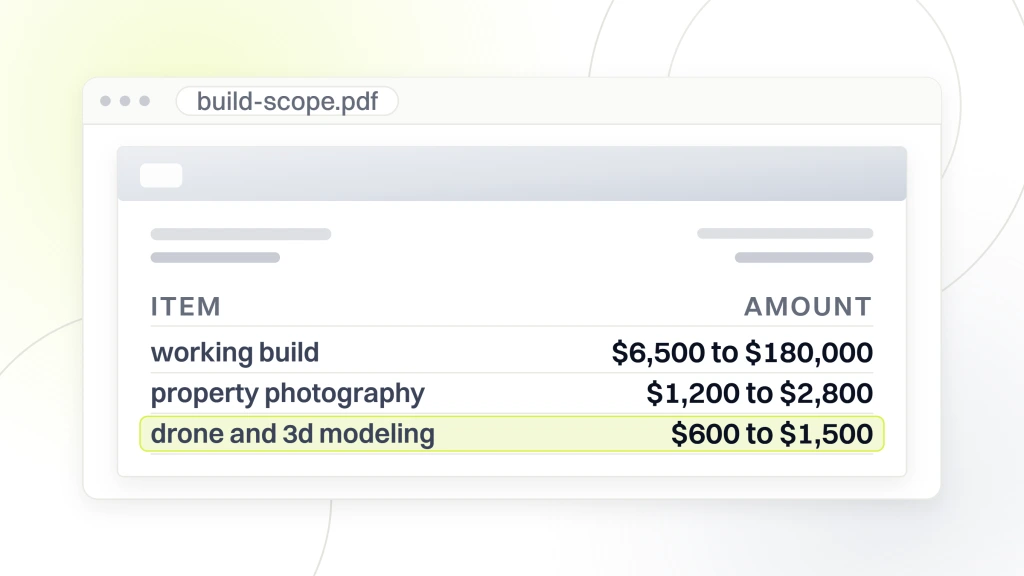
Read the scope line by line before signing. The most common surprise in a commercial site quote is drone and 3D floor plan modeling billed separately at $600 to $1,500 per property, which turns a $28,000 quote into a $42,000 invoice by launch week. Aerial site plans are a big pull for the industrial and land segment, and they cost real money. Get them written into the fixed price at proposal time, not the third change order. Property photography, ideally 15 to 30 shots per asset, runs $1,200 to $2,800 per property. Include this line in the fixed price for at least the first 6 properties on the site.
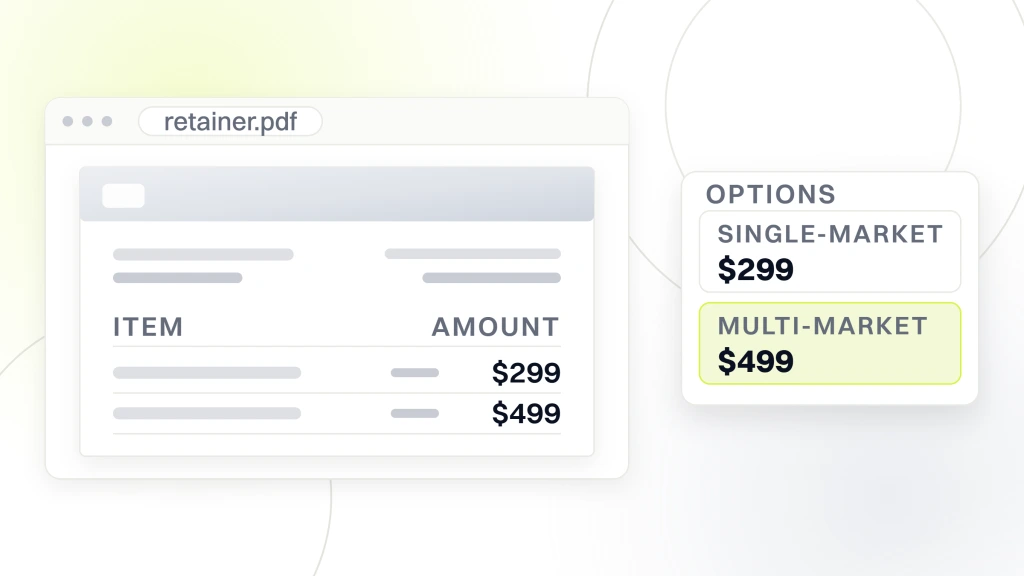
The retainer past launch is the other line worth scoping upfront. Ongoing monthly retainers run $199 to $499 for lean small business tiers, and climb to $1,200 to $4,800 for larger brokerage and fund portfolios. Every property that leases up needs to move off the active listings, every new acquisition needs a full property page in under 14 days, and the submarket pages need refreshed data quarterly. Vendors who skip the retainer past launch produce commercial sites that go stale inside 60 days and stop pulling tour requests inside 90 days. Get the retainer number in writing at proposal time when you still have a choice of 2 vendors.
| Package | Pages | Upfront | Timeline |
|---|---|---|---|
| Solo tenant rep | 15 to 25 | $2,500 to $7,500 (SMB) | 6 to 8 weeks |
| Single-market brokerage | 25 to 45 | $12,000 to $28,000 | 8 to 10 weeks |
| Multi-market brokerage | 45 to 80 | $28,000 to $48,000 | 10 to 14 weeks |
| Property owner or fund | 60 to 120 | $28,000 to $65,000 | 12 to 16 weeks |
| REIT or large fund | 150 to 400 | $65,000 to $180,000 | 18 to 26 weeks |
| Responsive Web Design bundle | Landing set | $2,500 flat | 3 to 4 weeks |
| Maintenance retainer | Ongoing | $199 / $299 / $499 monthly | Rolling |
Commercial real estate website design template versus custom
A commercial real estate website design template can get a solo tenant rep to launch in 3 weeks for $150 to $400 in theme cost plus the domain. That works when you carry 3 to 5 listings and run a referral-driven practice. Custom design starts making sense past the single-market brokerage tier since the listing pages need data fields that simply do not exist in any template library on the market today.
Templates fail on commercial detail. A residential Houzez theme has no field for asking rent range with escalators. It has no lease type dropdown. It has no operating expense pass-through structure. It has no field for available square footage broken down by suite. Every one of these has to be forced into a text description that then breaks the filter and search functions the tenant rep uses to shortlist properties. The result is a site that looks fine on the founder’s laptop and pulls zero pipeline since tenant reps can’t filter for what they need on LoopNet, CoStar, or Crexi comparison scans.
Custom design at the single-market brokerage tier means a custom post type for commercial listings with all 22 required fields, a filter interface tuned to tenant rep workflows, and a submarket landing page pattern that pulls a live count of available properties by asset class. This takes 40 to 80 hours of design plus 60 to 120 hours of development, which is where the $28,000 quote spends its budget. For the design and dev shape on a full custom brokerage build, our Web Design and Development Services, One Team practice runs both sides in one engagement.
Rule of thumb. Under 8 active listings, run a template. 8 to 20 active listings, run a semi-custom hybrid built on a strong theme with a custom listing post type bolted on. Above 20 active listings, run full custom. Above 100 active listings, run full custom with a headless CMS on top of the property database. The tier decision drives your 24-month cost more than any other choice on the site.
Choosing a commercial real estate website design agency that gets the 180-day cycle
Choosing a commercial real estate website design agency comes down to whether they read a 90-to-180-day sales cycle the same way you do. Residential-only shops build sites that push for immediate action. Commercial requires nurture pages, quarterly market reports, and gated capital markets content that respects the tenant rep’s slower decision arc. Ask the vendor to walk you through 3 commercial sites they launched last year and how each one is pulling tour requests today.
Ask the vendor how many commercial real estate sites they’ve built in the last 2 years. Below 3, they’re doing residential work and calling it commercial. Above 10, they understand the workflow. Follow up with 2 targeted questions. First, what does the property listing detail template include, and can you show me a live site with the template rendered on a real property? Second, how do you handle the transition when a property leases up, and how fast does the site remove it from active listings? Vendors who answer both without hedging have done commercial work. Vendors who deflect either question have not.
Cost of ongoing maintenance runs $199 to $499 monthly on our tiered plans for smaller brokerage sites, and is quoted custom for larger portfolios with active churn. The single-market brokerage tier at $299 covers hosting, plugin updates, and monthly property additions up to 5. The multi-market brokerage tier at $499 covers all of that plus a weekly working session, 1 A/B test per month on the tour request flow, and a quarterly submarket page refresh. The REIT or fund tier is quoted custom and covers everything plus investor relations content updates and quarterly report page builds. Anything below $199 monthly is a hosting bill, not a maintenance program.
Commercial real estate website design that passes tenant broker scrutiny
Commercial real estate website design passes tenant broker scrutiny when the property detail page loads in under 3 seconds on mobile, shows all 12 above-the-fold data fields, and offers a one-click tour request with the property ID pre-filled. Miss any of the 3 and the tenant rep bounces to LoopNet, CoStar, or Crexi looking for the data your site withheld. That is the pipeline you just handed to the aggregator.
Tenant reps scan 5 to 15 listings a day looking for viable properties for their client. They’re power users on mobile since they scan as they walk a site or drive between showings. If your property detail page takes 6 seconds to load or hides the asking rent behind a broker contact form, they leave. Test your live property pages on a mid-range Android phone over 4G before you sign the launch approval. Load time under 3 seconds. Asking rent range visible. Sticky broker contact card in the bottom of the screen. Miss any 1 of those 3 tests and the site launches broken from day one.
The 12 above-the-fold fields tenant reps want to see. Asset class. Available square footage by suite. Asking rent range with lease type. Operating expense pass-through structure. Available date. Building class. Year built or last renovation. Parking ratio. Ceiling height for industrial. Loading dock count for industrial. Broker contact card. Property ID. Test your current property pages against the list. Anything missing is a click the tenant rep spends on a competitor’s site.
A real client case for the commercial real estate website design pattern
Abels Residential, a London-based lettings and rental management brand, came to us as a new market entrant with zero digital presence against larger agencies. We built a conversion-focused site with on-page and off-page SEO tuned to London rental keywords. The result: 300+ first-page keyword rankings, 20+ qualified rental leads per month, and a sub-2-second page load across every property page. The site now operates as the primary lead engine for the practice.
The pattern translated directly to a pre-construction commercial-adjacent project. McCarthy Court, a 7-unit luxury Sidcup development, sold out 100% in 3 months pre-completion through an immersive virtual showcase site we built for the developer. That build pulled 60+ qualified buyer leads and 10K targeted campaign visits, with lifestyle-driven storytelling and eco-conscious feature emphasis carrying the messaging. Both engagements ran the same 3-part shape: fix the platform, wire the CRM, then compound with monthly page adds and quarterly refreshes.
The takeaway for a commercial brokerage, owner, or fund. Launch is not the win. Launch is the starting line. The vendor who commits to the working retainer past launch is the one whose numbers compound over the 24 to 36 months that matter. The vendor who disappears after launch produces the flat-line traffic curve you see on 80% of commercial brokerage sites 2 years after their last redesign. Pick the vendor for the 10 years past launch, not the 12 weeks up to it. Reference material on long-tenure client patterns lives at the Smashing Magazine business archive.
Commercial real estate website design for submarket and asset class pages
Commercial real estate website design for submarket pages is where organic search pipeline lives. Every submarket you actively lease in earns a page. Every asset class you handle earns a page. Every intersection of the two, if the pipeline warrants it, earns a page. This is what separates a commercial site pulling 15 tour requests a month from one pulling 3, and it is the single biggest lever most brokerages leave on the table.
A working submarket page has 6 sections. Submarket definition with a boundary map. Available property count by asset class, updated live from the CRM. Recent lease comps or transaction highlights. Market report download form gated behind an email capture. Broker specialist card for that submarket. And a tour request form pre-filtered to submarket properties. Repeat this template for every submarket. A mid-size brokerage with 12 submarkets and 6 asset classes ends up with 30 to 45 unique landing pages, which is how the organic search traffic scales past the initial launch.
Asset class pages follow a parallel pattern. Definition of the asset class. Property count. Recent transactions. Market report gated behind email. Specialist broker card. Cross-links to relevant submarket pages. Repeat for office, industrial, retail, multifamily, mixed-use, land, and any specialty class you cover. The interlink pattern between submarket pages and asset class pages is where the SEO topic authority compounds. Miss the interlink discipline and the site indexes as isolated pages with weak authority. For the responsive patterns behind this template layer, our Responsive Web Design Services that Convert practice runs the same interlink shape.
Commercial real estate website design retainer shape past launch
The commercial real estate website design retainer past launch decides whether the site pulls tour requests 2 years from now or goes flat inside 6 months. Commercial content ages fast. Every closed lease removes a listing. Every acquisition adds one. Every quarterly market report needs a fresh page. Skip the retainer and your site stops being current inside 60 days, and the tenant reps in your market notice inside 90.
Ask the vendor what the first 90 days post-launch look like in their standard retainer. A good answer includes a launch-week traffic audit, a first-month conversion review with named tests queued for month 2, monthly submarket data refresh, and a quarterly report page build tied to your capital markets team’s data output. A bad answer is a link to the support portal and a promise that the site is done. Commercial sites break weekly. Property CRM feeds go down. Market data providers change data formats. New submarkets get added mid-quarter. The site that isn’t actively maintained falls behind inside 60 days.
Cost of the retainer varies by portfolio size and content velocity. A single-market brokerage retainer at $299 monthly covers hosting, plugin updates, and up to 5 property additions or removals monthly. A multi-market brokerage retainer at $499 monthly covers all of that plus 1 A/B test per month, quarterly submarket page refreshes, and a quarterly report page build. A REIT or fund retainer is quoted custom and covers everything plus investor relations content updates and quarterly report pages tied to earnings releases. Pick the retainer tier that matches your content churn rate, not the vendor’s default.
Commercial real estate website design services 9-point shortlist checklist
Commercial real estate website design services worth signing pass a 9-point checklist. Live commercial client site link. Property listing template with all 12 required fields. Named account lead with commercial experience. Fixed pricing tied to scope. CRM integration written into the quote. Post-launch retainer offered at a defined price. Photography and drone footage scoped upfront. Mobile-first process. Termination clause under 30 days notice.
Run the checklist against every quote you get. The vendor who passes all 9 is worth a follow-up call. The vendor who passes 6 of 9 is worth a conversation about the 3 gaps. The vendor who passes fewer than 5 is a residential-focused shop trying to work in commercial and will produce a site that bleeds pipeline inside 12 months. This is the pattern we see repeatedly across brokerages and owners coming to us after a bad first vendor engagement. Save the checklist, apply it to the next round of quotes, and cut the shortlist from 10 vendors to 3 in an afternoon of reviewing proposals side by side.
- Live commercial client site link, past 2 years old, in a comparable market
- Property listing detail template with all 12 required fields shown on a live site
- Named account lead with prior commercial real estate project experience
- Fixed pricing tied to scope, not a monthly retainer that never ends
- CRM integration written into the quote with the platform name called out
- Post-launch retainer offered at a defined monthly price
- Photography, drone footage, and aerial plans scoped upfront
- Mobile-first process with mockups delivered mobile-first, not desktop-first
- Termination clause under 30 days notice, no long-tail auto-renewal
Wrapping the commercial real estate website design guide
Commercial real estate website design that books vacancy tours, qualifies capital markets pipeline (see our commercial real estate marketing strategies guide for the demand side), and stays working past launch runs on a repeatable pattern. Fixed pricing tied to scope. A listing detail template with all 12 fields. CRM integration written into the quote. 3 offer types across tenant broker, owner rep, and investor. Submarket pages and asset class pages interlinked. A retainer partner past launch who watches the numbers monthly and rebuilds pages when the market shifts.
If you take 1 thing from this guide, take the 12-field listing template and audit your current property pages against it today. If you take 2 things, wire the CRM auto-response before the site launches so first-touch happens same-day, not 48 hours later. When you are ready to talk through the site build tied to a real commercial marketing motion, our Real Estate Marketing Agency for Brokerages team walks through the shape in a 30-minute working session. For the ongoing SEO layer that pairs with the site, our Real Estate SEO Services for Brokerages practice runs the topic map and citation cleanup on the same account.