5.0 · verified April 2026
"They kept the process simple and focused. Understood our goals as a dental practice and stayed focused on improvements that would make the website and ad campaigns more effective."

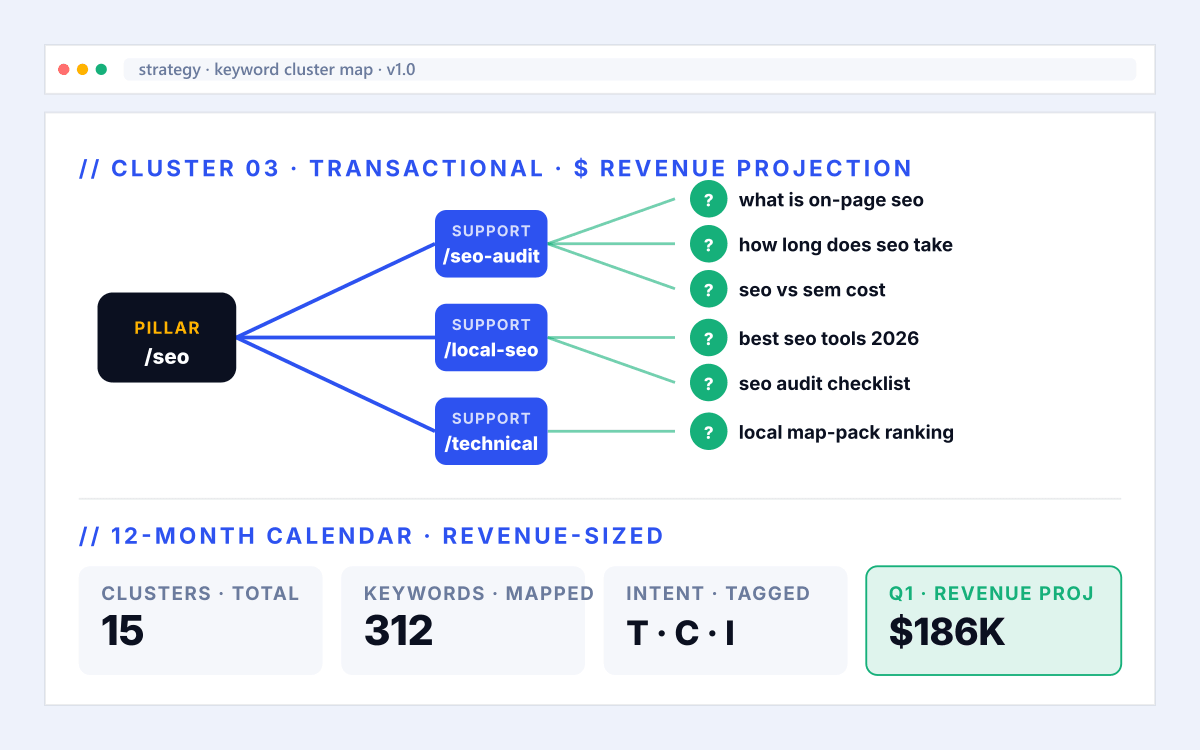
We run SEO for B2B SaaS companies that need organic to feed real pipeline, not vanity traffic. Category content, technical fixes, and authority link work rolled into one program. Every ranking gain gets tagged to a demo and a closed contract in your CRM, so you can see the payback line by line.
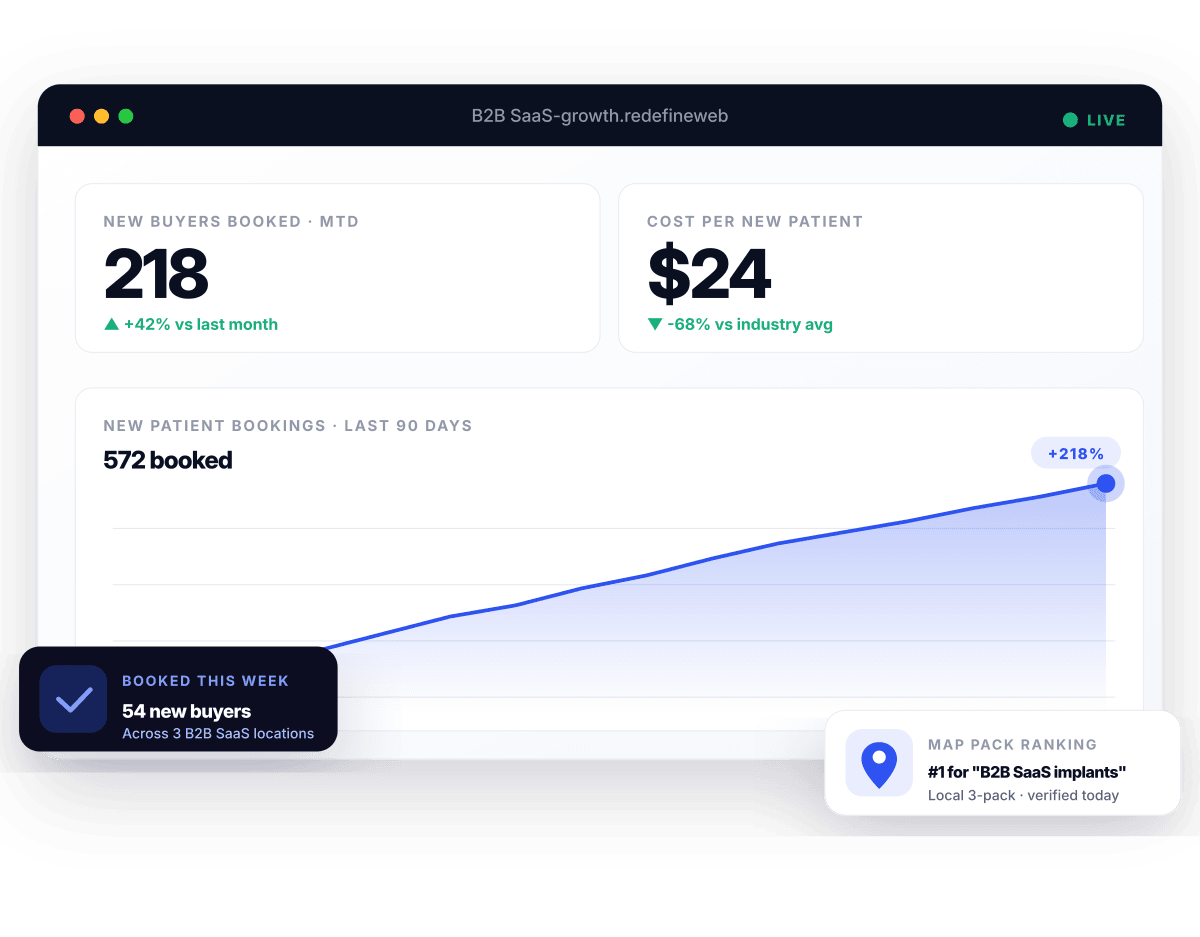


























Not reach. Not impressions. Every outcome below points at a revenue event you can name on a call with your CFO.
We build the category content, clean up the technical debt, and earn the links that put your pages in front of buyers who are already comparing tools like yours. No brand-search vanity wins.
One page per real use case, mapped to buyer intent, shipped with SaaS-native schema and a tight internal link map. Ranks page one for non-branded queries, not just for your logo.
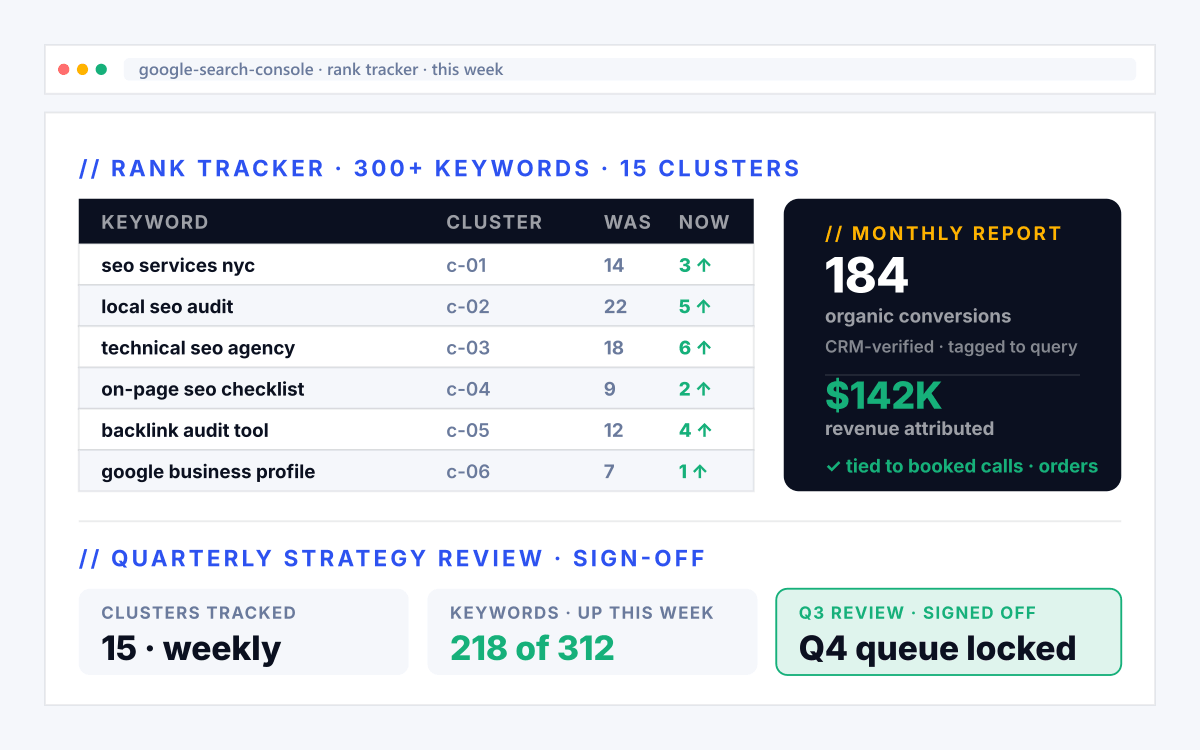
Weekly ranking dashboards, monthly written reviews. Every keyword gain traces back through the demo to the closed contract in HubSpot or Salesforce, not to a keyword count on a spreadsheet.
Pick the tier that fits your ARR and target-account list. Move up or down with 30 days notice. Setup runs at cost. Hover any feature name for a plain-English breakdown.
For early-stage SaaS building first content + technical foundation.
For SaaS turning bottom-of-funnel content into qualified demos.
For growth-stage SaaS owning category and integration content.
For enterprise SaaS running programmatic + international SEO at scale.
Tap any section to expand or collapse. Hover a feature name for a plain-English explanation.
| Feature | 01 · Foundation | 02 · GrowthPopular | 03 · Authority | 04 · Enterprise |
|---|---|---|---|---|
| Local SEO foundation | ✓ |
| Feature | 01 · Foundation | 02 · GrowthPopular | 03 · Authority | 04 · Enterprise |
|---|---|---|---|---|
| Named strategist + content + link-earning leads | ✓ | |||
| Quarterly executive reviews | ✓ |
| Feature | 01 · Foundation | 02 · GrowthPopular | 03 · Authority | 04 · Enterprise |
|---|---|---|---|---|
| Single domain / location | ✓ | |||
| Technical SEO audit + fixes | ✓ | |||
| 4 content updates / month | ✓ | |||
| Monthly ranking reports | ✓ | |||
| On-page optimization | ✓ | |||
| Backlink outreach | ✓ | |||
| Custom dashboards | ✓ | |||
| Single domain | ✓ | |||
| Full content strategy + 8 pages/mo | ✓ | |||
| On-page + technical SEO | ✓ | |||
| Backlink outreach (5/mo) | ✓ | |||
| GBP optimization | ✓ | |||
| Schema markup | ✓ | |||
| Internal link architecture | ✓ | |||
| Bi-weekly reporting | ✓ | |||
| Multi-property / multi-location | ✓ | |||
| 16+ content pieces / month | ✓ | |||
| Advanced technical SEO | ✓ | |||
| 15 backlinks/mo from DR40+ sites | ✓ | |||
| Topical authority maps | ✓ | |||
| Competitor displacement | ✓ | |||
| Weekly reporting + Looker | ✓ | |||
| Quarterly content audit | ✓ | |||
| Multi-domain / international | ✓ | |||
| Custom content team (20+/mo) | ✓ | |||
| Programmatic SEO | ✓ | |||
| 30+ links/mo from DR60+ sites | ✓ | |||
| Custom analytics dashboard | ✓ | |||
| SLA-backed reporting | ✓ |
Every quote below is verified by Clutch through a direct call with the client. Reviews shown are from clients across our verticals. B2B SaaS SEO references available on the strategy call.
Three engagements where SEO services moved the number that matters. All client-verified.
 B2B SaaS · SEO + PPC + Web
A SaaS platform for environmental asset management serving municipalities and nonprofits with GIS visualization tools.
 B2B SaaS · SEO + PPC + Web
A global leader in Robotic Process Automation serving 2,800+ companies and 1,600+ enterprise brands.
 B2B SaaS · SEO + PPC + Web
A secure SaaS platform for executive coaches and coaching businesses - scheduling, billing, progress tracking.
Slide in your numbers. Assumes a 20% relative conversion improvement, which is what our first audit typically finds on non-optimized sites.
If your question is not here, book the 30-minute call. A SaaS SEO lead answers on the call directly, not through a sales rep.
SaaS SEO services at Redefine Web run from $599 to $3,500 per month across four tiers. Foundation is $599/mo for early-stage SaaS validating category positioning. Growth is $999/mo for seed to Series A SaaS building out category and use-case content. Authority is $1,999/mo for Series B+ SaaS scaling to category leader positioning. Enterprise is $3,500/mo for public SaaS or multi-product portfolios needing dedicated content operations and analytics engineering.
What separates the tiers is content velocity, link earning depth, and technical scope. Foundation publishes 2 to 4 pages per month. Growth publishes 6 to 10 with active link outreach. Authority publishes 12 to 20 with a full editorial calendar. Enterprise scales to 30+ pages with a dedicated production team and portfolio-level keyword strategy.
Every tier includes technical SEO, on-page work, content publishing, link earning, and monthly reporting. Ad spend for supporting paid amplification is separate and optional.
Most SaaS accounts see first rankings gains in weeks 6 to 8, category-defining queries land by month 4, and compounding organic pipeline shows up by month 6 to 9. That timeline holds if the site is technically sound and the SaaS category has some existing search demand.
Fastest wins come on low-competition long-tail queries like "HubSpot alternative for law firms" or "Stripe Billing vs Chargebee for usage-based pricing." Those rank in 30 to 60 days because intent is narrow and content quality wins. Head terms like "CRM software" or "project management tool" take 12 to 24 months and require sustained content and link investment.
New SaaS domains (less than 12 months old) rank slower because Google trusts them less. Established SaaS domains with prior organic footprint move faster. Recovery from a bad prior SaaS SEO agency takes 3 to 6 months of cleanup before growth resumes.
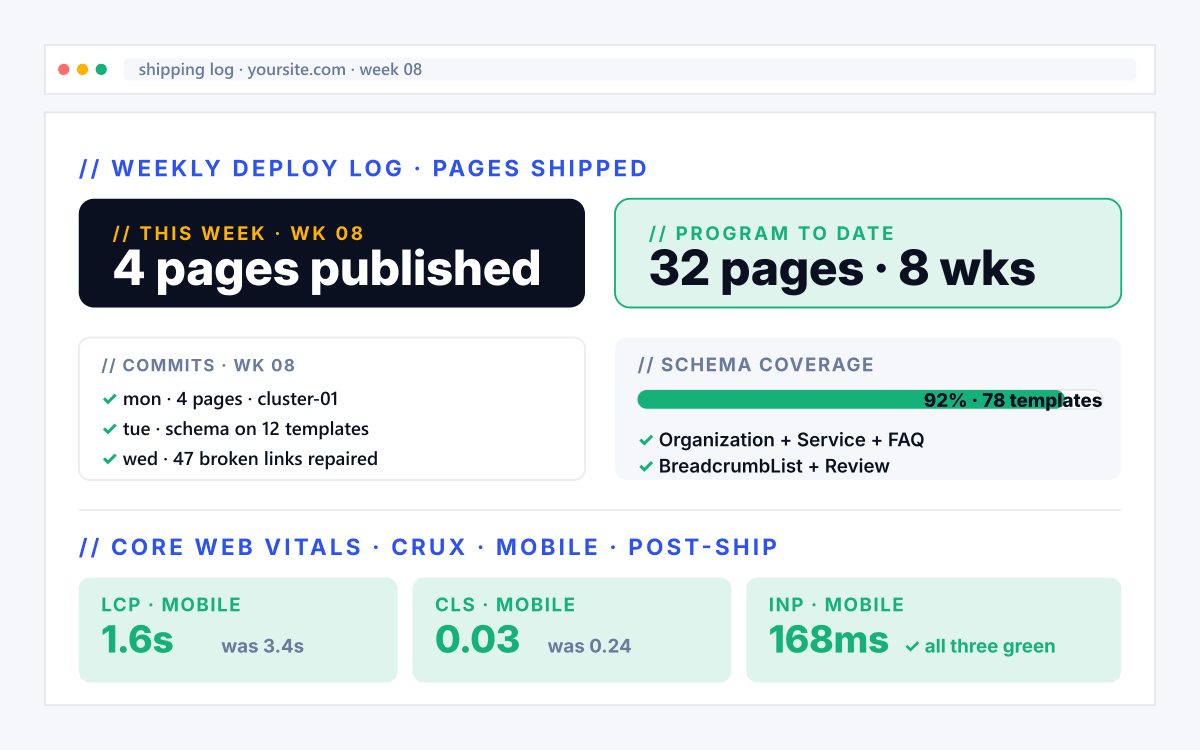
A SaaS SEO agency runs four workstreams every month: technical fixes, content publishing, link earning, and conversion optimization on category and product-led landing pages. At Redefine Web, every retainer gets a written scope for the month with owner names and due dates before work begins.
Technical work covers Core Web Vitals, structured data for Product and Organization schema, hreflang for international SaaS, canonical hygiene, and JavaScript rendering audits for headless stacks. Content publishing hits category pages, use-case pages, comparison ("vs") pages, integration pages, and buyer-intent programmatic SEO where it fits.
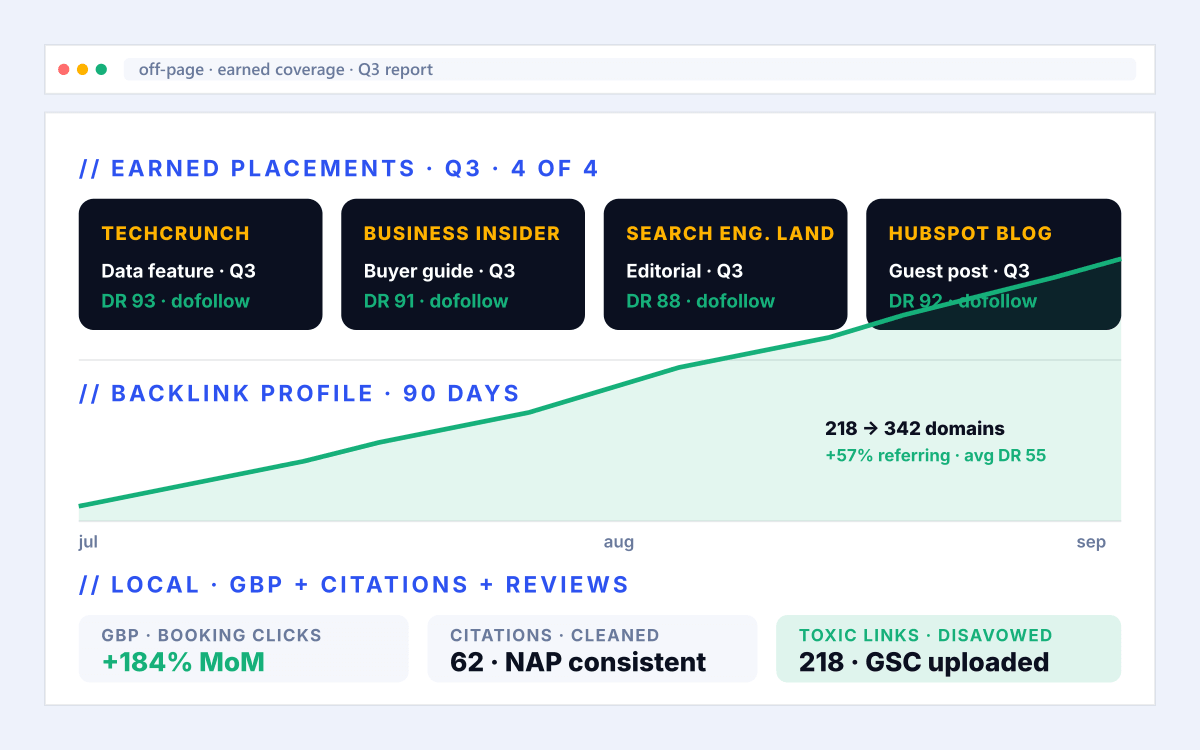
Link earning uses category-specific digital PR, guest content on niche SaaS publications, integration partner co-marketing, and unlinked brand mention outreach. Conversion work runs A/B tests on demo request forms, trial signup flows, and pricing page layouts so organic traffic turns into pipeline, not just sessions.
SaaS category authority is Google's compounding trust that your site is a legitimate source in your specific software category. It shows up as rankings on both branded and non-branded queries, higher click-through rates on the same rankings, and cheaper link earning because publishers already recognize the brand.
Building category authority takes 3 to 5 SaaS SEO workstreams stacked together: comprehensive category content covering 80 to 200 target queries, integration and partnership content that earns links from complementary SaaS, executive thought leadership on LinkedIn and podcasts, and consistent brand mention frequency across niche SaaS publications.
Our SaaS SEO company work targets category authority as the primary long-horizon KPI because it is the moat that protects rankings from every future Google algorithm update. Pages built without category authority get flushed by Helpful Content and Product Reviews updates. Pages backed by real authority survive.
Yes. Multi-product SaaS SEO lives on our Authority tier at $1,999/mo per brand or on Enterprise at $3,500/mo for portfolios needing a shared account team. PE-backed rollups and holdcos with 3+ SaaS brands fit Enterprise best because keyword strategy has to prevent portfolio cannibalization.
Portfolio work adds a shared keyword map so brands do not compete for the same target queries, a shared link earning calendar so digital PR pitches consolidate authority, and cross-brand content that funnels visitors to the right-fit product without confusing them. Reporting rolls up to a portfolio dashboard plus per-brand detail.
Newly acquired SaaS brands almost always inherit a Google Search Console mess from prior owners. Enterprise engagements include a 30 to 45 day audit and cleanup phase to establish a clean baseline before growth work begins.
All SaaS SEO content is written by our in-house SaaS writers with category-specific product knowledge, not outsourced to a content mill. Every page is intent-mapped to a specific target keyword, briefed against a competitive SERP teardown, and reviewed by a senior SaaS SEO strategist before publishing.
Content briefs cover target keyword, secondary keywords, target word count, semantic keyword coverage, competitive gap analysis, primary CTA, and internal linking plan. Writers work from the brief, not from a prompt. Every draft gets edited for clarity, accuracy, and voice match before it goes into your CMS.
Product-specific technical content (integration docs, API pages, comparison pages against named competitors) sometimes needs input from your product team. We coordinate interviews (usually 30 minutes) with your PM or engineering lead so the technical claims are accurate, not made up.
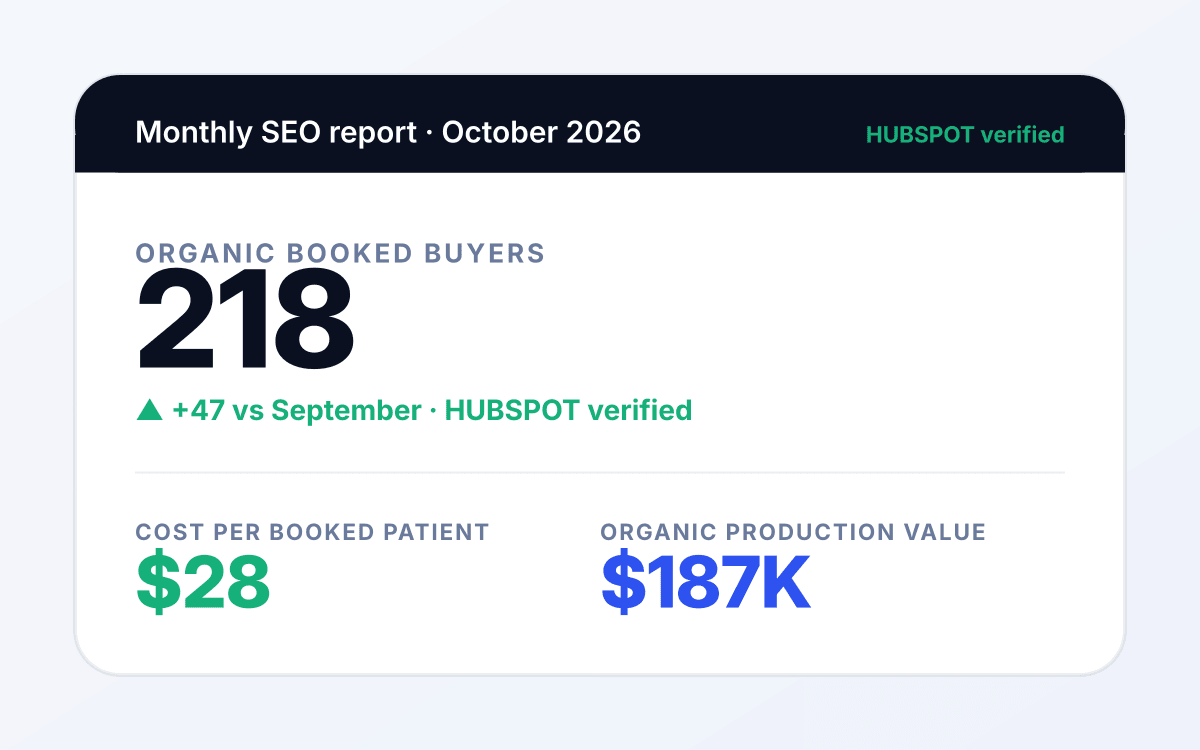
Every SaaS SEO retainer includes a live dashboard, a written monthly review, and a quarterly strategy session. The dashboard shows organic sessions, keyword rankings by category, organic-attributed demo requests and trial signups, and organic pipeline dollar attribution when the CRM integration allows it.
The written monthly review pairs numbers with narrative. It says what published, what ranked, what did not, what the next month's plan is, and what we need from your team on product screenshots, case study interviews, or integration content. Every claim ties back to Google Search Console, GA4, and your CRM so nothing is unverifiable.
Quarterly strategy sessions revisit keyword strategy against category shifts, recalibrate content velocity, and adjust link earning targets. New product launches, competitive positioning shifts, or Google algorithm updates all get discussed on the quarterly call.
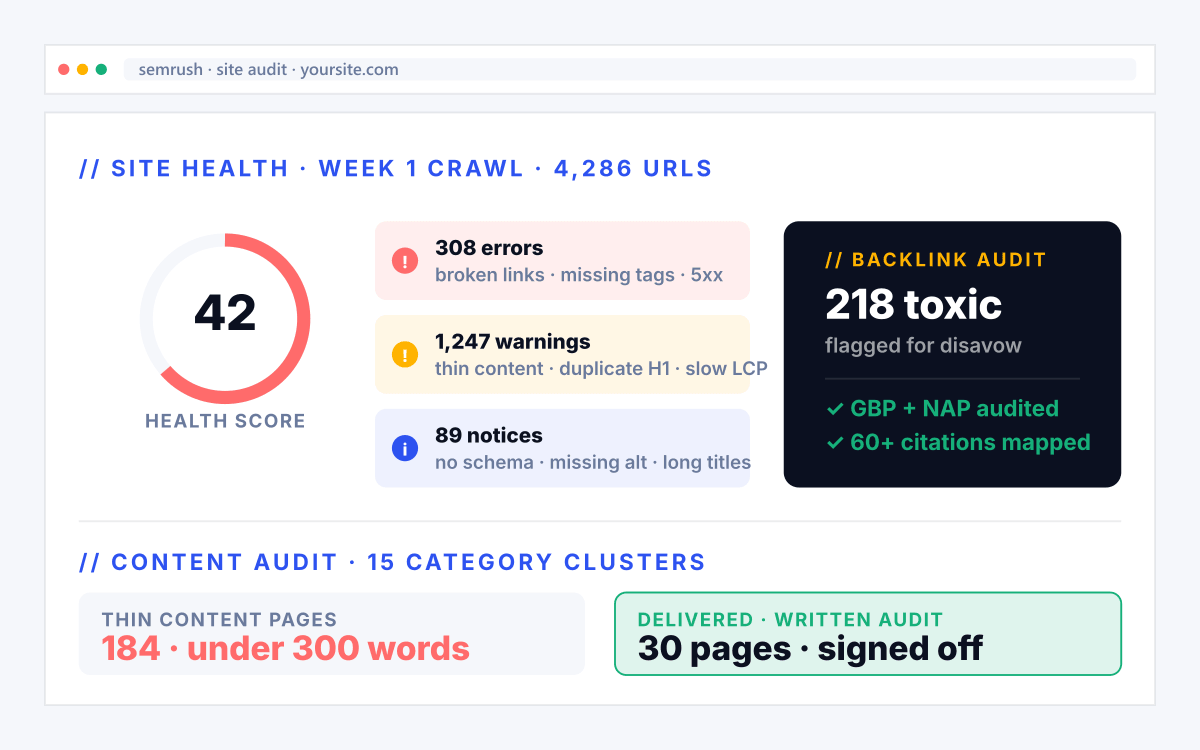
Yes. Post-agency recovery is one of the most common projects new SaaS clients start with. First 30 to 45 days go to a full technical audit, a backlink audit with a disavow file, a content audit that identifies thin or off-topic pages, and a written recovery roadmap with dates and owners.
Manual penalties get reconsideration requests filed with Google. Algorithmic drops (Helpful Content, Product Reviews, spam updates) get content rewrites, EEAT signals added, and thin AI-generated content either rewritten with real expertise or removed. Toxic link profiles from prior agencies that bought Fiverr links or PBN placements get disavowed and slowly replaced with editorial links from real SaaS publications.
Recovery timelines run 3 to 9 months depending on severity. We publish a monthly recovery scorecard so you see disavow progress, indexation change, and ranking recovery in one report.
Yes, and the two channels compound. SaaS SEO produces free organic sessions on category and use-case queries that Google Ads charges for on paid search. Retargeting SEO visitors on Meta or LinkedIn typically converts 3 to 5x higher than cold prospecting because they already know your brand.
Running SEO and PPC together drops blended CAC by 25 to 45 percent inside 9 months for most SaaS accounts because organic sessions cover top and middle funnel while paid ads close the bottom. Comparison and integration queries especially benefit from paid amplification of organic-earned rankings.
We coordinate SEO and PPC content plans so paid ad copy, landing pages, and organic content share positioning and messaging. Fragmented channel copy is where most agencies leave conversion on the table.
Yes. Every SaaS SEO tier structures content into category, use-case, and integration clusters. Growth tier covers up to 3 product lines or use cases. Authority covers up to 8. Enterprise covers unlimited plus programmatic SEO for long-tail use case coverage.
Use-case content targets buyer-specific queries like "customer support software for ecommerce" instead of "customer support software." Those queries convert 3 to 4x higher than generic category queries because the search intent already matches the buyer segment. Integration content targets partnership queries like "HubSpot Slack integration" and earns links from the integration partner as a bonus.
Product-led SaaS with multiple use cases benefits most from use-case-first content architecture. It also enables ICP-specific retargeting and lifecycle work because you know which use case a visitor engaged with.
Every SaaS SEO account gets full CRM integration so organic sessions map to marketing-qualified leads, demo requests, trial signups, sales-qualified opportunities, and closed-won revenue. We wire up HubSpot, Salesforce, Pipedrive, Attio, or Close depending on your CRM, plus GA4 and Search Console.
Attribution runs multi-touch (first-touch, last-touch, linear) so you see the compound value of a category page that first captured a buyer, plus the retargeting or sales touch that closed them. Single-touch attribution undervalues SEO because SaaS buying committees touch multiple pages before converting.
Monthly reporting rolls up organic pipeline dollars against SEO retainer spend so ROI is honest, not vanity-metric based. Ranking count and organic session growth are input metrics. Pipeline dollars per SEO dollar is the output metric that matters.
SaaS SEO retainers run on 6-month initial terms across all tiers. After the initial term, engagements continue month by month with 30 days' notice from either side. That gives us runway to actually compound rankings, not just publish for a quarter and vanish.
SEO is a compounding channel. Content published in month 3 typically ranks and produces its best pipeline volume in month 6 to 9. Cutting a retainer at month 3 forfeits the compounding return on the work already done. The 6-month term is honest about the actual timeline, not a lock-in play.
If a program is not working by the check-in at month 4, we would rather adjust scope or refund and part cleanly than churn a bad-fit account through month 6. Trust matters more than a one-quarter revenue line to us.
A SaaS SEO lead runs the call. You walk out with three ranking fixes you can apply with or without us. Written recap in your inbox the next business day.
Drop your work email. A SaaS SEO lead reviews your organic funnel and books the 30-minute working session within one business day.