
Best SaaS SEO Tools and Platforms for B2B SaaS Teams in 2026
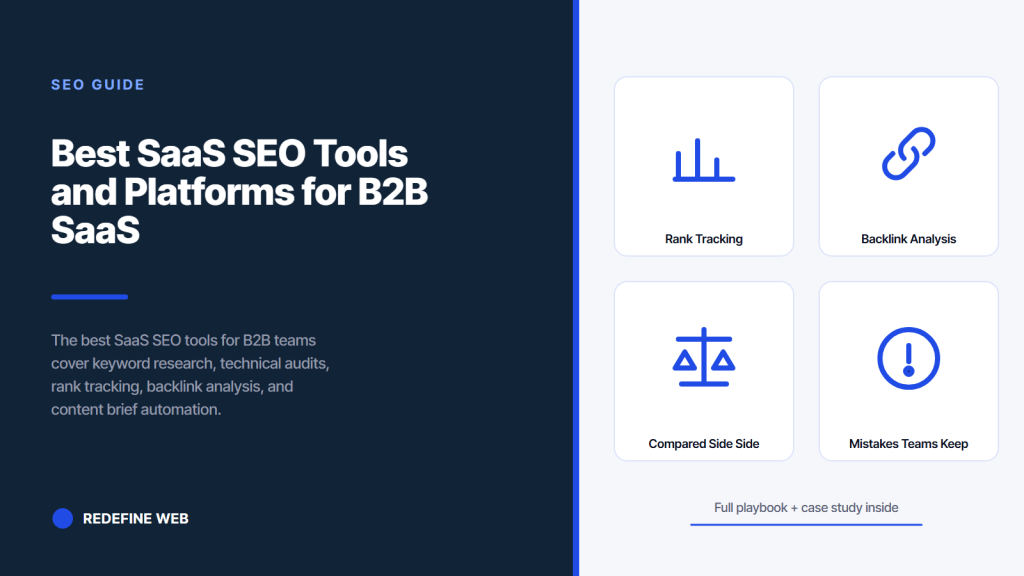
- Pick one all-in-one tool as the core stack.
- Add a keyword research specialist for depth.
- Run a separate technical audit tool monthly.
- Rank tracking should sample daily on the top 200.
- Avoid the everything platform trap on small teams.
- Budget $400 to $1200 monthly for the working stack.
- Best SaaS SEO tools for rank tracking specifically
- Best SaaS SEO tools for backlink analysis
- Best SaaS SEO tools for AI and LLM optimization
- Best SaaS SEO tools compared side by side
- Rocket Software, Inc. SEO tool stack reference
- Best SaaS SEO tools mistakes teams keep making
- Best SaaS SEO tools outlook through 2028
- Start with the best SaaS SEO tools this quarter
Best SaaS SEO tools decisions are where most B2B SaaS marketing teams either save $8,000 a year or waste it. Every category has an all-in-one platform that costs $300 monthly and claims to do everything. Every category also has three or four specialist tools that each do one workflow better than the all-in-one. The teams that hit the sweet spot pay $400 to $1,200 monthly for a working three-tool stack. The teams that overpay pay $2,500 monthly for feature overlap the marketing lead never opens twice.
This guide covers the best SaaS SEO tools ranked by how a real B2B SaaS marketing team actually uses them across keyword research, technical audits, rank tracking, backlink analysis, competitor gap analysis, and content brief generation. You get the pricing tiers a team should budget across small, mid-market, and enterprise scale, the three-tool stack that covers 90 percent of the workflow, the pattern for when a specialist tool earns its spot, and the shortlist of tools we run inside our own SaaS SEO retainer scope for client accounts. Read in twelve minutes and you have the buying decision framed.
Best SaaS SEO tools for rank tracking specifically
Rank tracking specialists sample keyword positions more often and more accurately than the rank trackers built into the all-in-one platforms. Daily sampling on the top 200 target keywords beats weekly sampling on 5,000 keywords for actionable data because most SEO decisions happen inside a 7-day window on a small set of high-priority queries.
AccuRanker for daily precision
AccuRanker sits at $109 to $499 monthly depending on tracked keyword count. Daily rank sampling with device split (desktop vs mobile) and location split (up to city-level in most markets) beats every all-in-one platform’s built-in rank tracker on precision. B2B SaaS teams that make weekly ranking decisions typically pick AccuRanker as the tracker of record even when the all-in-one platform includes rank tracking as a bundled feature. The precision gap matters most on the top 20 target queries where small position changes translate to real traffic swings.
SE Ranking rank tracker as budget option
SE Ranking’s rank tracker sits at $30 to $80 monthly as a standalone product outside the full SE Ranking suite. Daily sampling on the top 200 keywords works reasonably well at the budget tier. Location and device split are more limited than AccuRanker but adequate for teams that mainly care about desktop rankings in one or two markets. Small B2B SaaS teams that cannot justify AccuRanker’s $109 minimum find SE Ranking’s tracker the working middle option between the free Google Search Console rank data and the premium AccuRanker precision.
Best SaaS SEO tools for backlink analysis
Backlink analysis is where Ahrefs pulls ahead of every other tool because Ahrefs’s backlink index is the largest and freshest in the market. Semrush’s backlink data is serviceable for competitor analysis. Moz Pro’s backlink data is thinner but still adequate for small-team use. Every dedicated backlink tool sits behind Ahrefs on data depth. The buying decision on backlink tools is usually easy for a B2B SaaS team: pick Ahrefs and accept that the other tools might be better for other workflows.
When Moz Pro still earns a spot
Moz Pro at $99 to $599 monthly still earns a spot on small-team stacks where the marketing lead prefers the Moz UI or where the team has legacy Moz Domain Authority tracking already integrated into reporting. Moz Local as a bundled add-on carries local SEO features that Ahrefs and Semrush charge separately for. Teams already invested in the Moz ecosystem find switching costs high enough to stay on Moz Pro even when Ahrefs would be marginally better on backlink depth. Reference reading on the Moz Domain Authority metric sits at Moz’s Domain Authority documentation. Small teams on legacy Moz contracts often keep Moz Pro through renewal and add Ahrefs Lite as a supplementary backlink data source for competitor gap work rather than migrating the entire stack in a single quarter, which usually costs more in operator retraining than the marginal data quality gain justifies inside the first six months.
Best SaaS SEO tools for AI and LLM optimization
AI SEO tools split into two distinct categories in 2026. Content generation and brief tools that use AI to speed up the mechanical writing work. LLM SEO tracking tools that monitor share of voice inside ChatGPT, Perplexity, and Google AI Overview answers. B2B SaaS marketing teams need both categories represented on the stack because the two workflows do not overlap.
LLM SEO tracking specifically
LLM SEO tracking tools include Semrush AI Overviews Tracker at $119 monthly as an add-on, Otterly at $59 to $269 monthly as a standalone product, and Peec at $99 monthly for share of voice tracking across ChatGPT and Perplexity. Manual prompt sampling through a shared spreadsheet works for small teams tracking under 30 target prompts. Once the target list crosses 100 prompts, an automated tool pays back inside the first quarter. Our writeup on LLM SEO for SaaS covers the full measurement stack for teams that want AI answer share of voice tracked properly alongside traditional Google rank tracking.
AI content brief tools
AI content brief tools like Clearscope AI, Surfer AI, and MarketMuse AI generate first-draft briefs 40 to 60 percent faster than manual brief writing. What the AI does not replace is the editorial judgment on brand voice, the strategic call on which topics to cover, or the analytics interpretation on why rankings moved. Teams that use AI to speed the mechanical brief work while keeping human editorial judgment on strategy typically hit the sweet spot on output volume versus quality. Teams that hand the AI full editorial control produce mediocre content that ranks briefly and then falls off.
,500 platforms sell features nobody opens. Log into your current tool, check the login count on advanced features. Under 5 uses this quarter means you're overpaying.
Best SaaS SEO tools compared side by side
The tools that carry most B2B SaaS SEO stacks in 2026 span all-in-one platforms, technical audit specialists, rank tracking specialists, content brief tools, and LLM SEO trackers. The table below compares the working shortlist on the numbers a marketing lead actually cares about when writing the stack budget.
| Tool | Category | Monthly price | Best used for | Weakness |
|---|---|---|---|---|
| Ahrefs | All-in-one | $129 to $1,499 | Backlink depth, content gap, site audit | Keyword research breadth less than Semrush |
| Semrush | All-in-one | $139 to Custom | Keyword breadth, PPC integration, AI Overviews | Backlink data less deep than Ahrefs |
| SE Ranking | All-in-one budget | $65 to $259 | Small team stack, budget-friendly | Less depth on backlink and audit |
| Screaming Frog | Technical audit | $259 annually | Deep site crawls, engineering-led teams | Steep learning curve, older UI |
| AccuRanker | Rank tracker | $109 to $499 | Daily precision on top 200 keywords | Rank tracking only, no other features |
| Clearscope | Content briefs | $170 | High-quality brief templates + grading | Higher price than Surfer for similar output |
| Surfer SEO | Content briefs | $79 to $219 | Fast briefs + Google Docs integration | Brief quality drops on complex topics |
| Otterly | LLM SEO tracker | $59 to $269 | Share of voice across AI answer surfaces | Narrow feature scope compared to Semrush |
The working three-tool stack for a mid-market B2B SaaS marketing team is Ahrefs Standard at $249 monthly plus AccuRanker at $109 plus Clearscope at $170, totaling $528 monthly. The working five-tool stack for a larger team adds Screaming Frog at $22 monthly amortized plus Otterly at $99, totaling $649 monthly. Above $700 monthly is usually feature overlap or team seat multiplication rather than category expansion. The workflow sequence that turns these tools into a real content operation runs alongside our SaaS SEO checklist, which covers how the tool stack integrates into the weekly and monthly cadences a mature SaaS content team runs.
Rocket Software, Inc. SEO tool stack reference
Rocket Software, Inc. ran a full B2B SaaS SEO program alongside our team through a 14-month engagement. The account started with Semrush Guru and no rank tracker, no technical audit specialist, and no content brief tool. Publishing cadence was 6 posts monthly and the team was working from a shared Google Doc brief template that the marketing lead was writing by hand each week.
The stack rebuild happened in three phases across the first quarter. Month one added AccuRanker at $189 monthly for daily rank sampling on the top 200 target keywords. Month two added Screaming Frog at $259 annually as a technical audit specialist for a quarterly deep-crawl cadence. Month three swapped Semrush Guru for Ahrefs Standard because the marketing lead needed deeper backlink data for competitor analysis on a category comparison content refresh. Content briefs stayed on the manual template through month six until publishing cadence climbed past 10 posts monthly, at which point Clearscope entered the stack at $170 monthly.
Total monthly tool spend went from $250 (Semrush Guru alone) to $637 (Ahrefs + AccuRanker + Clearscope + Screaming Frog amortized) across the 14-month program. Organic sessions grew 214 percent. Demo requests from organic grew 187 percent. The stack spend increase paid back inside the first four months because the added rank tracking precision let the team catch and fix ranking drops that used to take weeks to notice, and the content brief tool cut the marketing lead’s brief-writing time from 6 hours weekly to 90 minutes weekly.
Every SaaS marketing team hits the same moment in the third month of tool shopping. The marketing lead has 14 browser tabs open comparing feature matrices across Ahrefs, Semrush, SE Ranking, Moz, and something called Serpstat that popped up on a comparison post. Everyone on the team has an opinion about which tool is best. Nobody has actually tried three of the tools on the list. Someone books a Semrush demo. The demo runs 60 minutes and covers 8 features nobody asked about. Two days later Ahrefs sends a comparison email addressed to the marketing lead by name. The marketing lead finally picks Ahrefs because the demo felt shorter. Then everyone drinks coffee and gets back to actually writing content.
Best SaaS SEO tools mistakes teams keep making
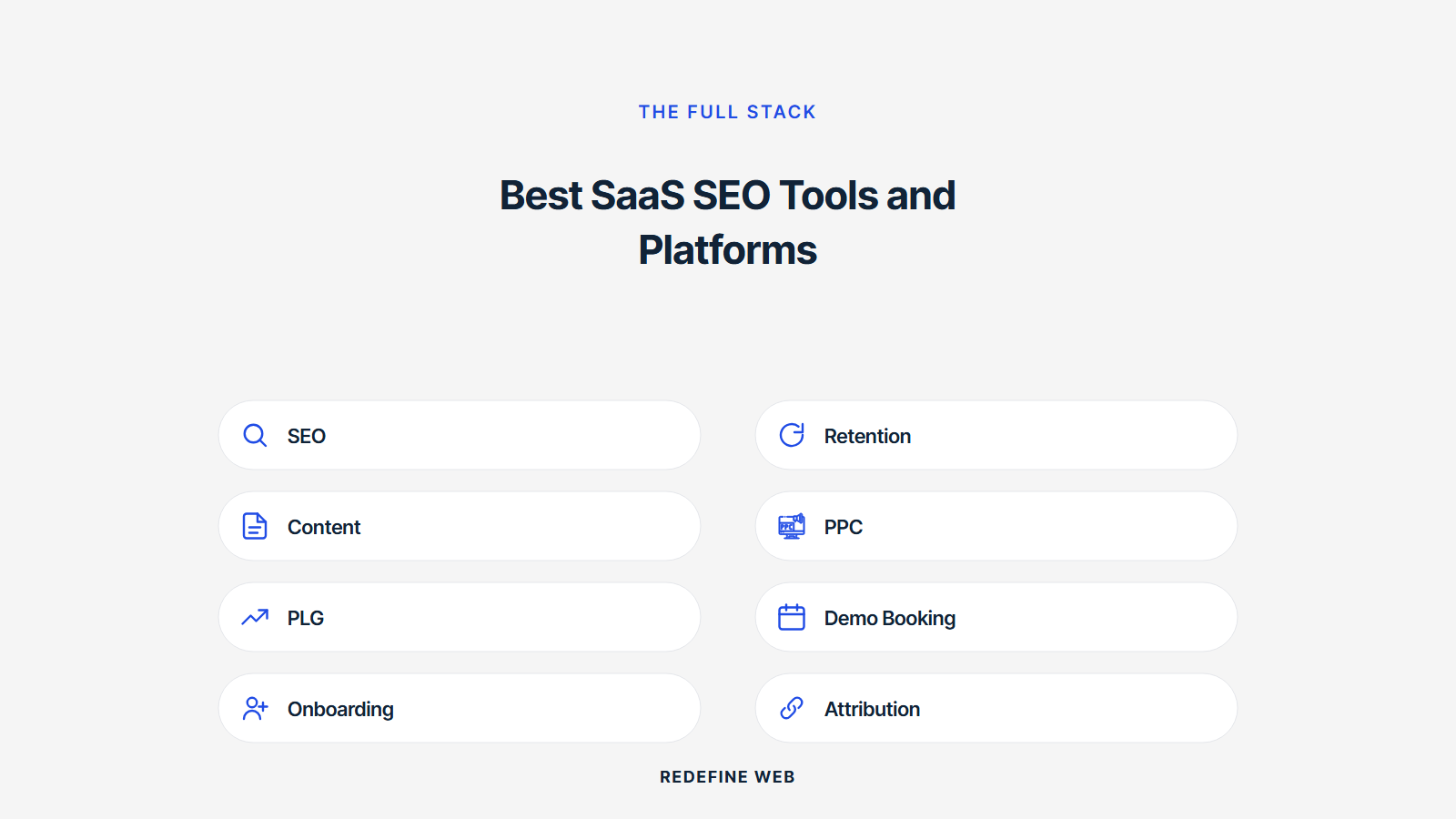
The best SaaS SEO tools mistakes teams keep making cluster around six repeating patterns we see on almost every audit. Fixing all six inside 60 days typically cuts the tool stack budget 20 to 40 percent without losing workflow coverage. The mistakes are cheap to fix and expensive to leave alone across a full year of budget.
- Paying for the everything platform tier: Business or Enterprise tier features the team never opens. Downgrade to Standard or Pro until the team actually hits the seat cap.
- Skipping rank tracking because the all-in-one includes it: bundled rank trackers sample weekly, not daily. Add AccuRanker or SE Ranking’s rank tracker.
- Buying a content brief tool before the team is publishing consistently: expensive briefs go unused. Delay the brief tool until 8+ posts monthly.
- Running two all-in-ones on the same stack: Ahrefs plus Semrush is duplicate spend for teams under 20 people. Pick one.
- Ignoring LLM SEO tracking through 2026: AI answer share of voice matters. Add Semrush AI Overviews or Otterly.
- Paying for enterprise seats when 3 team members log in: seat multiplication is the silent budget killer. Match seats to actual login patterns.
- No tool audit at annual renewal: churn the tools the team never opens. Save the budget for the tools that actually get used.
Order to fix them
Fix the everything platform overspend first because it is the largest single-line savings. Add rank tracking second because the actionable data unlocks better weekly decisions. Add LLM SEO tracking third because the answer surface share is climbing quarter over quarter. Delay the content brief tool until publishing cadence justifies it. Consolidate down to one all-in-one platform once the team is stable. Audit the stack at annual renewal and churn what nobody opens. Teams that batch the six fixes over 60 days rather than trying to shuffle the whole stack in a single week see cleaner analytics on what tool actually moved the numbers.
Best SaaS SEO tools outlook through 2028
The best SaaS SEO tools outlook through 2028 hinges on three shifts. AI SEO features consolidate inside the all-in-one platforms rather than remaining as standalone specialist products, which pressures point-solution tools like Otterly and Peec to consolidate or expand into full platform play. LLM SEO tracking becomes a standard feature bundled inside Semrush and Ahrefs subscriptions rather than a paid add-on. Traditional rank tracking specialists like AccuRanker face pressure as the built-in rank trackers close the daily-sampling gap.
Consolidation pressure on specialists
Consolidation pressure on specialist tools compounds through 2027 and 2028 as the all-in-one platforms bundle more workflows. Screaming Frog and AccuRanker are the two specialists most likely to survive because both cover their specific workflow at a depth the all-in-ones cannot match without engineering investment those companies have not prioritized. Clearscope and Surfer face more pressure as Semrush and Ahrefs bundle AI content brief tools inside their existing subscriptions. B2B SaaS teams building the stack in 2026 should assume specialist tool consolidation is likely and plan renewal cycles with contract flexibility.
AI SEO features and pricing
AI SEO features inside Ahrefs and Semrush follow the same pricing pattern as their traditional feature releases. AI functionality launches as a paid add-on for six to twelve months, then rolls into the standard subscription once adoption plateaus. B2B SaaS teams that wait to buy AI SEO tools until the features consolidate into their existing subscription save 15 to 25 percent on total stack spend across 2026 and 2027 compared to teams that add every AI point solution as it launches. Reference reading on the SEO tool market shift sits at Search Engine Land’s SEO tools library.
Start with the best SaaS SEO tools this quarter
Start with three moves this quarter. Pick one all-in-one platform (Ahrefs Standard for backlink-heavy accounts, Semrush Guru for keyword-heavy accounts, SE Ranking for budget-first accounts) and commit for 6 months to build depth on the workflow. Add AccuRanker or SE Ranking rank tracker with daily sampling on the top 200 target keywords. Track baseline data for 60 days before adding a third tool. That baseline surfaces the real workflow bottleneck rather than the imagined one.
Then plan the 90-day stack build. Month one hits the all-in-one plus rank tracker foundation. Month two adds the technical audit specialist if the team runs monthly audits or a content brief tool if publishing cadence is above 8 posts monthly. Month three adds the LLM SEO tracker to capture AI answer share of voice. Teams that follow the phased ramp avoid the everything-at-once tool overwhelm that kills adoption. The paired SaaS SEO scope where the tools plug into the working operation lives inside our SaaS SEO services retainer, which handles tool selection and workflow integration as part of the standard onboarding scope.
Best SaaS SEO tools decisions come down to matching the stack to how the team actually works, not to the feature matrices on comparison posts. Pick one all-in-one, add rank tracking, layer in specialists only when the workflow depth is real, and audit the stack every 12 months. That is the working framework. Reference reading on the current tool market covers a broader set of workflows at Ahrefs’s SEO tools roundup for teams that want a broader survey before committing.
Frequently asked questions
What are the best SaaS SEO tools for a small B2B SaaS marketing team
The best SaaS SEO tools for a small B2B SaaS marketing team (2 to 5 people) run on a three-tool stack. One all-in-one platform for the core work like Ahrefs or Semrush at $199 to $449 monthly. One specialist tool for whatever the team is weakest at, either Clearscope for content briefs or Screaming Frog for technical audits at $170 to $300 monthly. One rank tracking layer like AccuRanker or SE Ranking at $60 to $150 monthly for daily rank sampling on the top 200 keywords. The three-tool stack sits at $429 to $899 monthly, which is roughly what a mid-market SaaS team should budget for the working SEO software stack. Everything above that budget is usually feature overlap that the team never opens twice.
Which is the best all-in-one SaaS SEO platform, Ahrefs or Semrush
Ahrefs and Semrush trade places on which is the best all-in-one SaaS SEO platform depending on the team's workflow. Ahrefs wins on backlink data depth, content gap analysis, and site audit accuracy. Semrush wins on keyword research breadth, competitor traffic estimation, and PPC integration. B2B SaaS teams that build content around competitor comparisons tend to prefer Ahrefs. Teams that pair SEO with paid media tend to prefer Semrush. Both platforms cover roughly 85 percent of the core SEO workflow. The remaining 15 percent is where the specialist tools earn their spot. Neither platform is the wrong choice for a mid-market SaaS team, and the answer usually comes down to which UI the team lead already knows how to navigate under time pressure.
Do SaaS SEO teams need a separate content brief tool
SaaS SEO teams need a separate content brief tool when the team publishes more than 8 blog posts monthly and does not have a senior editor writing every brief manually. Clearscope, MarketMuse, and Surfer SEO each generate topic-based briefs with target keyword lists, semantic terms to include, and outline structure suggestions. Clearscope wins on content grading accuracy at $170 monthly. Surfer wins on lower price and Google Docs integration at $79 to $219 monthly. MarketMuse wins on strategy-level topic clustering at $150 to $600 monthly. Teams publishing 4 to 8 posts monthly can survive without a dedicated brief tool by using the Ahrefs Content Explorer plus a shared brief template. Teams publishing 12 or more monthly find the brief tool pays for itself inside the first quarter through consistency alone.
How much should a B2B SaaS marketing team budget for SEO tools
A B2B SaaS marketing team should budget $400 to $1,200 monthly for the working SEO tool stack depending on team size and content output. Small teams (2 to 5 people, 4 to 8 posts monthly) sit at $400 to $700 monthly across one all-in-one plus one specialist plus rank tracking. Mid-market teams (6 to 15 people, 8 to 16 posts monthly) sit at $700 to $1,200 monthly adding a content brief tool and a technical audit layer. Enterprise teams (15+ people, 16+ posts monthly) sit at $1,500 to $4,500 monthly adding enterprise Ahrefs or Semrush seats, a rank tracking specialist like AccuRanker enterprise, and an SEO PMS like Airtable or Notion structured for the content operation. Above $4,500 monthly is usually feature overlap disguised as strategic tooling.
What are the biggest SaaS SEO tool selection mistakes
The biggest SaaS SEO tool selection mistakes cluster around three patterns. Paying for everything platforms that carry 60 features the team never opens instead of paying for depth on the 10 tools the team actually uses every week. Skipping rank tracking because the all-in-one platform includes rank tracking as a feature and then losing to daily fluctuations because the all-in-one samples weekly instead of daily. Buying a content brief tool before the team has a working content publishing cadence, which produces expensive briefs that never get written into posts. Fix all three by starting on one all-in-one platform for the first quarter, adding rank tracking as the second buy, and only adding a specialist brief tool once the team is publishing consistently and the brief bottleneck is clearly the blocker.
Should SaaS SEO teams use AI SEO tools in 2026
SaaS SEO teams should use AI SEO tools in 2026 for specific workflows where the AI adds real leverage rather than as replacements for the core stack. Content brief generation through Clearscope AI or Surfer AI saves the team 40 to 60 percent of the brief-writing time on category and buying-decision content. Technical audit prioritization through Screaming Frog's AI insights feature helps the technical SEO lead focus on the highest-impact issues instead of a raw crawl report. LLM SEO tracking through Perplexity API monitoring or Otterly tracks share of voice inside AI answers. What AI tools do not replace is the human editorial judgment on brand voice, the strategic call on which topics to cover, or the analytics interpretation on why rankings moved. Use AI to speed the mechanical work, not to think for the team.
Book your free 30-minute strategy call.
No spam, no sales rep. We use your email to schedule your call with a senior strategist. That is it.
More from the blog
View all articles → SEO
SEO Organic Search Engine Optimization Services That Grow Real Traffic
Read article SEO
SEO SEO for Pet Groomers That Fills the Appointment Book Weekly
Read article SEO
SEO