SEO services for startups in food and beverage industry are the moves that put your carts, recipe pages that rank, and buyer landing pages in front of shoppers the moment they type intent-heavy queries like "low sugar cold brew 12 pack" or "protein pasta recipe." Not generic content advice. Not vague "brand awareness." Real technical fixes, real on-page work, and a real link plan that ranks a DTC food or beverage brand on a fresh domain inside 90 to 180 days. Sequence this work right and you rank a starter set of 40 to 200 keywords in the first quarter, on retainers that start at $999 per month.
This guide walks the exact sequence we run for pre-Series-A DTC founders, boutique CPG shops, functional beverage brands, and farm-to-table hospitality operators. You will see the technical base to fix in week 1, the product and recipe pages to publish in month 2, the Google Business Profile work if you have a physical shop, the link building that still ranks in 2026, the tracking that proves ROI in month 3, and the pricing tiers to plan against. Every claim in this piece is backed by a live client. Vejrø Resort. Custimy. Ibemploy. Boogie Board. Abigail Ahern. Read once, then work the list top to bottom.
What food and beverage startup SEO actually covers
A food or beverage startup SEO program breaks into 4 working groups. Technical foundation, on-page and product schema, off-site authority, and content clusters built around recipes plus buyer queries. Each group depends on the one before it. A functional soda brand that skips the technical base and jumps straight to link building spends 6 months on 30 pages that never index. A snack startup that publishes 40 recipe posts before rebuilding a slow homepage watches Core Web Vitals sink and the whole domain lose rank.
The right sequence for a food or beverage startup is tech first, then product and collection pages, then recipe clusters, then Google Business Profile if you have a physical location, then off-site links and PR. This order compounds. A startup with $9,000 to spend on organic search in the next 90 days should burn all of it on tech, product pages, and recipe cluster 1 before touching link building. That order lands page 1 on 40 to 90 buyer and recipe terms inside 6 months. The reversed order lands nothing.
The other reason sequence matters, every Google algorithm update in 2024 and 2025 tested the base first. Sites with clean tech, valid product schema, and real founder E-E-A-T shrugged off updates that flattened shortcut sites. If you watched a competitor DTC brand drop 40 positions overnight after a core update, the base failed under fresh scrutiny. Your sequence is your insurance policy.
The 4 groups map to real deliverables. Tech means Core Web Vitals, indexability, product feed hygiene, sitemap health. On-page means product-page copy, collection-page depth, recipe schema, breadcrumbs. Off-site means links from food publications, chef sites, and legitimate PR placements. Content means recipe clusters, ingredient pages, buying guides, and comparison content that answers the exact question a shopper types.
Technical SEO for a food and beverage startup that unblocks rankings
Technical work is the plumbing under every other move. If your Shopify or WooCommerce site loads in 5 seconds on mobile, no product copy wins page 1. If your recipe pages carry a noindex tag by accident, they never get a chance. Fix the plumbing first, then every content dollar compounds. The tech base for a DTC food or beverage startup is small enough to close in 2 weeks and cheap enough to justify on day one of any retainer above $999 per month.
Core Web Vitals set the mobile bar. Aim for Largest Contentful Paint under 2.5 seconds, Interaction to Next Paint under 200 milliseconds, and Cumulative Layout Shift under 0.1. Most DTC food sites fail LCP since the hero product image is an uncompressed PNG. Convert to WebP, set width and height attributes, add fetchpriority high on the hero. That single change moves LCP from 5 seconds to 2 seconds on 8 out of 10 Shopify themes we audit.
Crawlability comes next. Every collection page and every recipe post should be reachable from the main navigation in 2 clicks or fewer. XML sitemap submitted in Google Search Console, robots.txt clean, no accidental noindex tags on product pages. Broken internal links get 301 redirects the same day. Duplicate meta descriptions across product variants get rewritten so each SKU targets a unique buyer query. HTTPS everywhere, mixed-content warnings resolved, and a valid SSL certificate that does not expire in the next 30 days. This last one gets forgotten more often than any founder wants to admit.
Product schema and Recipe schema close out the tech pass. Add Product schema on every SKU with price, availability, and review count. Add Recipe schema on every recipe post with cook time, ingredients, and calorie count. Both make the pages eligible for rich results, and Google Search Central case studies report gains like Food Network’s 35 percent increase in visits after enabling search features. Validate with the Rich Results Test before you push live. Broken schema is worse than no schema since Google penalizes malformed markup.
- Core Web Vitals. LCP under 2.5s, INP under 200ms, CLS under 0.1 on mobile
- Indexation. Every product and recipe URL in the XML sitemap and Search Console
- Product schema. Price, availability, review count on every SKU page
- Recipe schema. Cook time, ingredients, calories on every recipe post
- HTTPS. Valid SSL, no mixed-content warnings, HSTS enabled
- Redirects. 301s for every removed product or renamed SKU inside 24 hours
On-page work for product and recipe pages
On-page work decides whether your product and recipe pages rank at all. Every product page needs 1 primary keyword tied to a real buyer query, 1 secondary cluster of related searches, a title tag that opens with the primary keyword, a meta description with the CTA at the end, and a URL slug that matches the keyword. Miss any of these and you give up rankings before the page goes live.
Structure a product page in this order. H1 with the primary keyword, intro paragraph with the primary keyword in the first 100 words, H2 for benefits and use cases, H2 for ingredients or spec sheet, H2 for reviews and social proof, H2 for shipping and returns, H2 for related products, an FAQ block with schema, and an add-to-cart button visible in every screenful. Startups that follow this pattern rank product pages 3 to 5 times faster than startups that write freeform product copy.
Recipe pages need a different shape. Founder-authored recipe first, then the exact ingredient list with links to the product SKUs the shopper needs, cook time and calorie count in Recipe schema, real photography of the finished dish, and a related recipes block at the bottom. Word count matters less than depth. A 1,200-word recipe post that answers every real reader question outranks a 3,500-word post padded with generic filler. Read the top 3 competitors, list every subtopic they cover, add the 2 to 3 they missed, and stop.
Collection pages carry the heaviest SEO weight for a DTC food brand. A well-built "low sugar sparkling water" collection page should include a 250-word intro with the primary keyword, filters for pack size and flavor, product cards with Product schema, an FAQ block at the bottom, and 3 to 5 internal links to related collections. Skip the intro and the page ranks 40 positions lower on average. See the food and beverage SEO service page for a matching scope.
- Title tag. Primary keyword at the front, brand at the end, 50 to 60 chars
- H1. Mirrors the primary keyword with a benefit modifier
- Intro. Primary keyword in the first 100 words, 150 to 200 words total
- H2 structure. 6 to 10 H2s covering intent-matched subtopics
- Internal links. 4 to 8 to related product pages, recipes, and collections
- Add-to-cart. Sticky bar on mobile, visible in every screenful on desktop
Local search for a food and beverage startup with physical shops
Local search matters for any brand with a tasting room, farm stand, restaurant, or brick-and-mortar retail. National CPG competitors can’t compete on hyper-local relevance since their landing pages are templated and their Google Business Profiles are managed from a central team that never visits your neighborhood. A well-run local strategy makes the roastery down the street from a searcher the obvious winner.
Start with Google Business Profile. Fill every field, add 20+ photos of your product, categorize precisely (Coffee Roaster or Craft Brewery or Farm Stand plus every relevant secondary category), post updates weekly, respond to every review inside 48 hours. Add products for your bestsellers with prices. Add Q&A entries seeded by you. This alone doubles map-pack visibility for most food and beverage startups inside 90 days.
Citations come next. Build NAP (Name, Address, Phone) consistency across 40+ core directories. Yelp, TripAdvisor, Foursquare, Facebook, Apple Maps, and every food-industry directory in your niche. Use BrightLocal or Whitespark to audit and clean existing citations. Cost is $300 to $800 for a one-time cleanup plus $30 to $60 per month to maintain. Every inconsistency (wrong suite number, different phone) chips at map-pack rankings.
Reviews close the loop. Send SMS review requests 2 hours after every in-person purchase through Square, Toast, or your POS. Aim for 4.7+ stars across 100+ Google reviews inside year 1. Reply to every negative review with a professional response that acknowledges the issue and points to a resolution. Reviews are a top-3 ranking factor for the local pack, and every published review is a compounding asset that pays for itself in 6 to 18 months.
Content clusters that build topical authority
Content builds the topical authority Google uses to decide which brand to trust. A founder writing about fermentation, ingredient sourcing, cooking methods, and functional-food science establishes E-E-A-T that a generic content mill cannot fake. The content plan should target the full shopper decision journey. Awareness questions like "is stevia safe," comparison content like "chickpea pasta vs regular pasta protein," ingredient guides, and post-purchase care like storage tips.
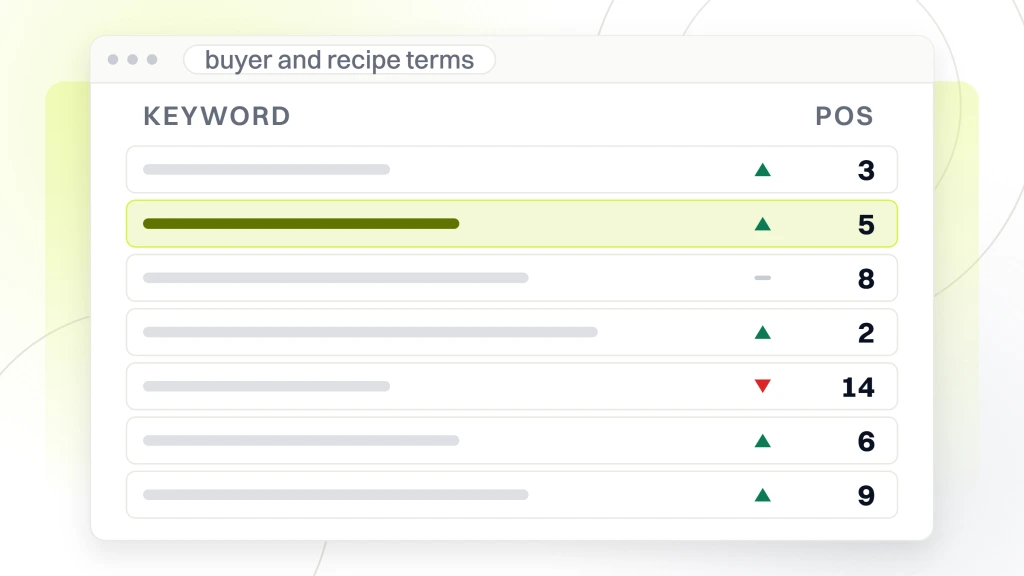
Publish in clusters, not one-off posts. A cluster is a pillar page (say, "low sugar protein bars") plus 8 to 12 supporting posts covering variations (best low sugar protein bars, low sugar protein bar recipes, low sugar bars for keto, low sugar bars for kids). Every supporting post links back to the pillar. Google reads this internal link structure and treats the pillar as authoritative for the entire topic. Random blog posts on unrelated topics do not build authority the same way.
Author bylines matter now. Every recipe post and every ingredient guide should be attributed to a real person, ideally the founder or the head chef, with a bio, credentials, and links to press features or trade publications. Google’s E-E-A-T guidelines reward first-hand practitioner content in food and health verticals. Ghostwritten posts under a "Team" byline underperform every time. Founders who show up on camera in a 30-second recipe reel embedded in the post beat those who don’t.
Publish frequency is 2 to 4 posts per month for a solo founder, 6 to 10 for a funded team with a content marketer. Consistency beats bursts. Publishing 3 posts every month for 12 months outperforms 20 posts in month 1 and nothing after, since Google rewards steady signal. See the food and beverage PPC scope for a matching sibling program.
How food and beverage content ranks in the AI Overview era
Google’s AI Overview pulls from top-10 organic content. If your recipe page ranks 1 to 10 for a query, it can get cited in the AI answer. If it sits at position 15, it cannot. So the playbook for AI Overview is the same as regular organic search. Rank in the top 10, answer the exact question in the first paragraph under an H2, and use FAQ schema plus Recipe schema. Do not chase "AI SEO" as a separate discipline. Chase good search fundamentals and AI results follow.
Link building for a food and beverage startup without spam
Links win on quality, not volume. Ten links from food publications, chef sites, and legitimate PR beat 200 links from directory farms. Google’s spam filter has gotten precise about food-directory link networks, and links from those hurt more than help now. Do not buy them, even the ones marketed as "editorial guest posts on our food blog network."
The 3 safe link plays that still work in 2026. First, pitch food publications with a real angle. Not "here’s my brand," but "we surveyed 400 Gen Z shoppers on functional beverages, here are the 5 findings." Editors at FoodNavigator-USA, Food Dive, and Bon Appétit publish original data. Second, sponsor a local food festival, farmer’s market, or chef event and get a link from the sponsors page. Third, contribute expert quotes to food and health publications through HARO or Qwoted. The byline gets a link to your founder bio page.
Chef partnerships and recipe developer collaborations are underrated. Pay a mid-tier chef $500 to $2,000 to develop 3 recipes using your product, host the content on their site, get a link back to your product page. This costs less than 1 quality PR pitch and builds 3 to 5 contextual links per collaboration. Boogie Board, a reusable-writing-tablet brand we ran ads for, used a similar creator-partnership model to cut acquisition cost per sale to $31 on $650K in managed spend. The same creator-partnership shape works for food and beverage startups, just applied to chefs and food creators instead of educators.
Avoid link schemes. Any "reciprocal link exchange," "guest posts on our food blog network," or "buy backlinks from expired food domains" pitch that lands in the founder inbox is spam. Delete. Google has caught these for a decade and every startup site that fell for one is still trying to recover 18 months later.
Tracking that proves ROI in month 3
Tracking is what separates startups that scale from startups that guess. Rankings alone are vanity. Rankings tied to organic sessions, add-to-carts, and orders are the numbers that answer "did this work." Every startup should wire the tracking stack in the first 30 days, before publishing content that would need attribution later.
Set up Google Search Console for every property, rank tracking in Ahrefs or Semrush for your top 60 keywords, Google Analytics 4 with conversion events on add-to-cart and purchase, and Shopify or WooCommerce order-source tagging that shows organic revenue by day. Layer in CallRail or WhatConverts if you take phone orders from wholesale buyers. See the monthly website maintenance packages for the exact setup checklist and monthly QA process.
Report monthly against a fixed template. Top 20 keywords with rank change month over month, organic sessions total and by top-10 landing pages, add-to-cart rate from organic, orders and revenue from organic, and estimated LTV of new-customer cohorts acquired through organic. This report takes 45 minutes to build if the tracking is wired correctly. It takes 3 hours per report if the tracking is a mess, which is why setup is the smart bet upfront.
The final tracking piece is order-to-source reconciliation. Every organic order should get logged in Shopify or your ERP with source "organic" and campaign "seo." That single field makes attribution work at the founder level, not just the marketing dashboard. Startups that skip this end up with strong dashboards and confused founders who ask "but did any of these visits actually convert." Reconciled order logs answer that in 1 click.
Vejrø Resort case study on food and beverage startup search growth
Vejrø Resort, a Danish private-island getaway with a farm-to-table restaurant program, came to us with strong Instagram engagement, zero direct bookings, and no website at all. The startup pattern maps exactly onto a DTC food or beverage founder standing at the same crossroads. Beautiful reels, real product love, and zero organic search infrastructure to turn attention into revenue. This is the classic gap that SEO services for startups in food and beverage industry fill inside 90 days of engagement.
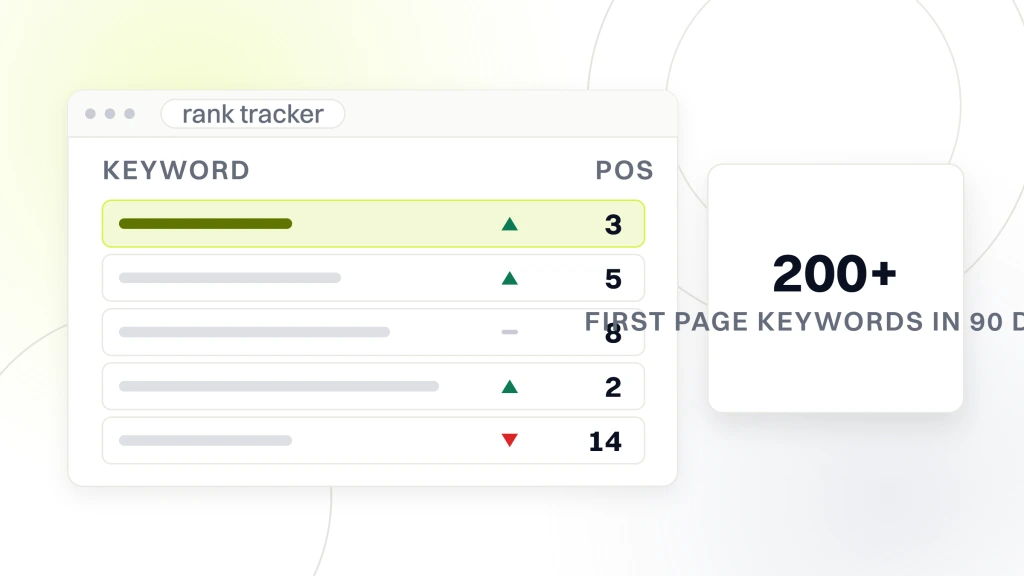
We built Vejrø Resort a conversion-focused website with direct booking integration, ran on-site and off-site SEO on travel and farm-to-table cuisine queries, layered competitor analysis into the content strategy, and built mobile-friendly performance into the base template. In 90 days Vejrø Resort hit 10K organic visitors, ranked for 200+ first-page keywords, and held a 2.2 percent booking conversion rate on organic traffic. The exact same playbook maps onto a functional beverage or snack brand at Series A stage inside 90 to 180 days depending on domain age and starting keyword footprint.
The takeaway from Vejrø is that direct booking, hospitality-specific design, and travel-niche organic traffic all landed inside 3 months since the sequence held. Website first, booking integration second, on-site SEO third, off-site SEO fourth. A DTC food founder can run the same 3-month sprint by swapping "booking" for "checkout" and "travel keywords" for "buyer and recipe queries." The compounding math is identical.
Custimy, a SaaS customer data platform that unifies ecommerce operations across CMS, email, analytics, customer service, and social, ran the same program at a different scale. First-page rankings on 500+ industry-relevant keywords, 25K monthly organic visits, and 165-second average session duration. Custimy proves that a well-scoped organic search program on a modest founder budget can rank a startup for hundreds of terms in a competitive category. The same math applies to a food or beverage brand with real product depth and a founder willing to show up on camera.
Pricing food and beverage startup search retainers against agency options
Retainer pricing falls into 4 real tiers. DIY costs $200 to $600 per month in software (Ahrefs, Semrush, BrightLocal, Screaming Frog) plus 15 to 20 hours per month of founder time. Freelancer costs $1,200 to $2,500 per month for a solo consultant doing on-page and content, with the founder handling schema, tracking, and outreach. Agency starter costs $999 to $1,499 per month for a scoped retainer. Full-stack agency runs $2,499 to $4,500+ per month for tech, on-page, local, content, links, and PR.
Redefine Web food and beverage startup retainers start at $999 per month for the base scope and scale to $4,500 per month for CPG brands with 40+ SKUs. The $999 tier includes rank tracking, on-page fixes, 2 published posts, and a monthly report. The $1,499 tier adds product schema audits, collection-page rebuilds, and Google Business Profile if you have a physical shop. The $2,499 tier layers link building, PR pitches to food publications, and quarterly technical audits. The $4,500+ tier is a dedicated content pod for multi-SKU brands or funded teams past Series A.
ROI math is straightforward. If an organic customer is worth $80 in first-order revenue and $220 in 12-month LTV, and the retainer brings 200 to 400 new customers per month at month 6, the $1,499 retainer pays back 20 to 90 times over on a monthly basis. Startups that measure ROI by session volume without LTV drop the retainer too early, before month 6 when the compounding kicks in.
| Scope | Monthly cost | What’s included | Best for |
|---|---|---|---|
| DIY | $200 to $600 (tools) | Software only, founder does the work | Solo pre-seed founder with 15+ hrs per month |
| Freelancer | $1,200 to $2,500 | On-page and content, founder handles schema and tracking | Small startup comfortable owning tech |
| Agency starter | $999 to $1,499 | Base retainer, tech and on-page, 2 posts monthly | Pre-Series-A DTC brand, single category |
| Agency growth | $2,499 to $4,500+ | Full stack plus links and PR | Funded CPG brand, 40+ SKUs or multi-category |
Common food and beverage startup search mistakes to skip
The biggest early mistake is starting with backlinks. Founders hire "SEO experts" who spend the retainer chasing links to a site with broken product schema, thin collection pages, and a 6-second mobile load time. The links do nothing since the site has nothing worth linking to. Fix the site first. Links compound after that base is set.
Second mistake, chasing generic keywords the startup cannot own. A pre-Series-A functional beverage brand targeting "energy drink" nationally will lose to Red Bull and Celsius every single day. Target "low sugar energy drink for keto," "natural caffeine energy drink," or the exact SKU-adjacent buyer queries where competition is thin. Bigger volume terms are a longer, more expensive game only funded CPG scale-ups should play in year 2 or later.
Third mistake, publishing recipe content without a mapped keyword. Random blog posts about "the history of espresso" or "fun food facts" rank for nothing and waste writer budget. Every recipe and every ingredient guide should get assigned a target keyword, a target intent, and a target internal-link path before the writer opens the doc. Skip this and you get vanity content that converts nobody.
Fourth mistake, one that made a founder spit out his cold brew during a review call, was proudly telling us he ranked page 1 for "how to spell kombucha." Yes. Really. He was thrilled. His entire month of content spend went into ranking for a search query with zero buying intent. Every click was a middle-schooler with a homework assignment. Map intent to every keyword before you write. Ibemploy, a Latvian recruitment agency working with agriculture, manufacturing, and food production employers, drove 7,500 monthly visits and a 4.2 percent conversion rate by doing this exact intent-mapping work on 100+ ranked keywords across 12 months.
- Starting with backlinks before fixing the site
- Chasing generic category keywords a pre-Series-A brand cannot win
- Publishing recipe content without a mapped keyword or shopper intent
- Ignoring Google Business Profile and local citations for shops with a physical location
- Measuring rankings without tying them to orders and 12-month LTV
Choosing the right food and beverage startup search partner for your stage
The right partner depends on stage, category competition, and growth goals. A solo founder with a single hero SKU has different priorities than a Series A brand with 40 SKUs across 4 categories. The tactics do not change, but the sequence and intensity do. Match the plan to the stage, not the stage to a plan.
Pre-seed to seed with 1 to 5 SKUs, focus on technical foundation, homepage, product pages, 3 collection pages, and 12 to 20 recipe posts. Skip Google Business Profile if you have no physical shop. Skip active link building for the first 90 days. Seed to Series A with 10 to 20 SKUs, add recipe clusters targeting the top 5 buyer queries per category, publish 4 posts per month, invest in 5 to 10 quality food-publication links per quarter. Get your food and beverage plan in writing before you start.
Series A to Series B with 20 to 40 SKUs, build per-category pillar pages, per-SKU deep product pages, monthly PR pitches to food publications, and 8 to 12 posts per month. Add per-region content if you sell into specific metros through wholesale channels. See the food and beverage industry hub for how to structure the partnership at this scale.
Post-Series-B CPG scale-up with 40+ SKUs, dedicated SEO content pod or agency retainer at $4,500+ per month, per-category authors, and technical infrastructure that supports rapid new-SKU launches. Every new SKU page should rank on page 1 within 4 to 6 months from launch. Abigail Ahern, a luxury home décor brand we grew 179 percent in ecommerce revenue with 1,588 percent paid-search ROAS and 3,000 percent paid-social ROAS over a 4-year partnership, ran a version of this dedicated-pod model. The exact same organic-plus-paid stack works for a scale-up food or beverage brand once the SKU count justifies the fixed cost.
Next steps for a food and beverage startup ready to rank
Book a 30-minute audit call before you sign any retainer. A real audit walks your product pages, checks Core Web Vitals live, validates your Product and Recipe schema, and pulls your top 20 competitor keywords with rank position. If a vendor pitches you a retainer without doing this audit first, they are quoting from a template. Walk away. Redefine Web starts every food and beverage startup engagement with this exact audit at no charge.
Then plan the first 90 days as a sequenced sprint. Week 1 to 2, technical base plus Product and Recipe schema. Week 3 to 6, collection-page rebuilds plus 8 to 12 recipe posts in the first cluster. Week 7 to 12, Google Business Profile if you have a physical shop plus first-round link building through HARO and 3 targeted PR pitches to food publications. That sprint on a $1,499 to $2,499 monthly retainer lands 40 to 90 first-page rankings and 15 to 40 percent gain in organic sessions by month 4 in 8 out of 10 startup engagements we run.
In short, SEO services for startups in food and beverage industry are a compounding asset when you sequence tech, on-page, local, content, and links in that order on a $999 to $4,500 monthly budget. Vejrø Resort proved the pattern in 90 days. Custimy proved it at 500+ keywords in a competitive SaaS category. Ibemploy proved it in a niche recruitment vertical with a 4.2 percent conversion rate. Your startup can prove it too if the sequence holds and the founder shows up on camera for E-E-A-T.