Web development for med spa sites is the practice of building a WordPress site that answers three questions in three seconds, opens booking in one click, and keeps the treatment gallery fast on a Pixel 8 on the subway. You want a site that books consults for Botox, filler, laser, and body contouring, not a brochure that lists services in a slider. The build stack pairs WordPress with a native booking plugin, a HIPAA-safe intake form, indexable before-and-after galleries, and a price estimator that pulls the visitor into a booking window before the bounce timer runs out. For deeper context on the strategy side, see our med spa web design playbook. For deeper context on the strategy side, see our med spa SEO.
You want proof before pricing. Beauté Aesthetics New York rebuilt with us and grew leads 166%, new users 88%, and conversion rate 27% inside 12 months. The old site loaded in over 6 seconds and the calendar sat half-empty on a Tuesday. The new site loads in under 1.6 seconds on mobile, opens booking on the treatment page itself, and reads at reading age 8 across every service line. The Med Spa Pacific Northwest build tripled consult requests (+241%) in 9 months and cut cost per lead 38% on the same monthly media spend. Read the sections below and you will know the exact scope a med spa web development engagement covers today.
Core Web Vitals and mobile speed for med spa sites
Mobile speed decides half the booking rate. A site that loads in 1.6 seconds books at 12 to 18%. The same site at 4.2 seconds books at 4 to 6%. The math is not subtle. Core Web Vitals cover three metrics you control at build time. Largest Contentful Paint under 2.5 seconds. Interaction to Next Paint under 200 milliseconds. Cumulative Layout Shift under 0.1. See Google’s Core Web Vitals guidance for the current thresholds. Hit all three and the site rewards you with organic gains and a paid CPC that drops on Google Ads Quality Score. Skip them and you pay the tax on every channel forever.
Speed is not a vanity metric on a med spa site. Every 100 milliseconds of extra load time drops mobile booking rate by roughly 1 percentage point in our own account data across 60+ practice builds. Patients on the phone in a parking lot on a Wednesday morning are the buyers. A site that stalls for 3 seconds decoding a hero video loses that buyer to the competitor who ships static WebP and a booking button above the fold.
Image and font handling
Every before-and-after image runs through WebP compression at 82 quality and stays under 90 KB per file. Fonts self-host with preload directives on the primary weight. Hero images set fetchpriority high and skip lazy loading. Below-fold images lazy load with intersection observer. Skip these and the site drags LCP past 3 seconds on a mid-range Android phone. Do these at build time and Google rewards the site inside four crawl cycles. The gallery template that ships with most template builders violates every rule on this list, which is why template med spa sites almost never rank for treatment queries against a proper build.
JavaScript and third-party tag hygiene
Third-party tags kill mobile speed faster than any hosting choice. A typical med spa site carries Google Tag Manager, GA4, Meta pixel, TikTok pixel, a chat widget, a review widget, and a booking iframe. Every tag adds 40 to 200 milliseconds to Time to Interactive. Load the chat widget after user idle. Defer the review widget below the fold. Skip the TikTok pixel until the practice runs TikTok Ads. Trim these and Interaction to Next Paint stays green on a Tuesday afternoon in Manhattan. Any med spa web development partner who cannot audit and prune the tag stack on day one is skipping the highest-payoff speed work in the whole build.
Copy and photography inside a web development for med spa scope
Copy sells the treatment. Photography sells the room. A dev-first agency that leaves both to the practice owner ends up with lorem ipsum on launch day and a photo shoot two months late. A working scope includes a copy strategist who writes the eight to twelve service pages and a photography plan that captures the treatment room, the provider portraits, and 20 to 40 before-and-after images with consent forms filed. Skip either lane and launch slips by 6 to 10 weeks with the site sitting on staging behind a checkerboard where the hero image belongs.
Service page copy pattern
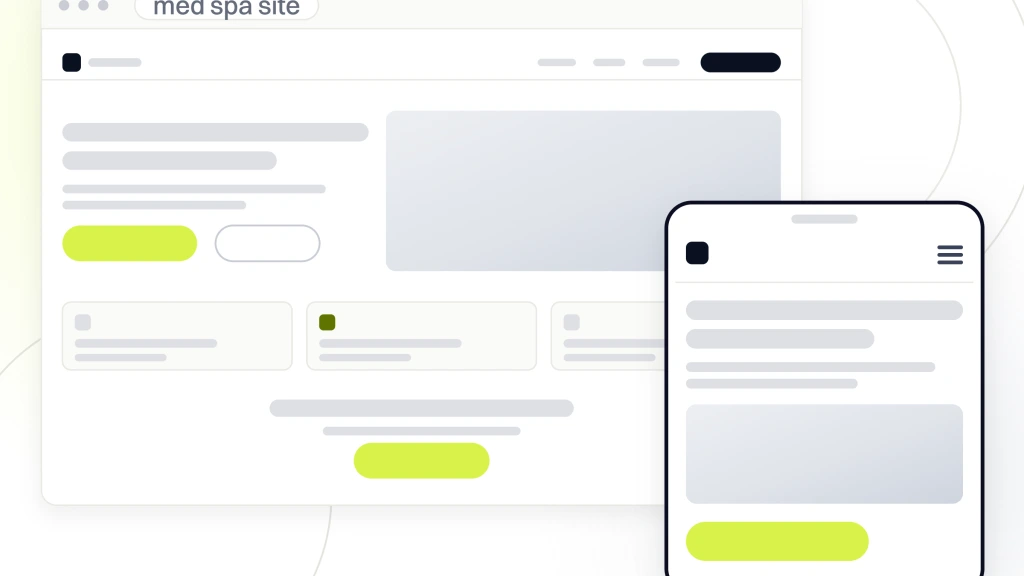
Open with the outcome the patient wants. Follow with the procedure in plain language. Add a price band. Add three to five before-and-after images with alt text. Add an FAQ that answers pain, downtime, cost, longevity, and side effects. Close with a booking widget above the fold on mobile. Every service page runs 800 to 1200 words. Skip the word count and the page will not rank against DSO-backed competitors with 30 pages per treatment. Write at reading age 8 and the page converts on cold traffic without a rep on chat.
Photography that reads as premium
Stock photography from Shutterstock reads as generic inside 2 seconds. Original photography of the treatment room, the reception area, and the provider portraits reads as trustworthy inside 400 milliseconds. Budget $1,800 to $4,500 for a half-day shoot with a photographer who has aesthetic practice work in the portfolio. The photos live for four to six years on the site and every ad campaign built during that period. Cost per impression on original photography drops below 1 cent inside 18 months. The Beauté Aesthetics New York rebuild leaned on custom photography paired with clean typography, and that pairing carried the 27% conversion rate lift more than any single technical change.
Timeline and phases for a med spa web development engagement
A working med spa build runs 8 to 14 weeks from kickoff to launch. Discovery lands in weeks one and two. Wireframes and copy in weeks three and four. Design in weeks four and five. Development in weeks six to nine. QA and launch in weeks ten and eleven. Retainer starts in week twelve. Rush timelines under 6 weeks are possible for template builds but skip the copy phase, and the practice pays for that skip inside the first paid campaign.
Discovery and wireframes phase
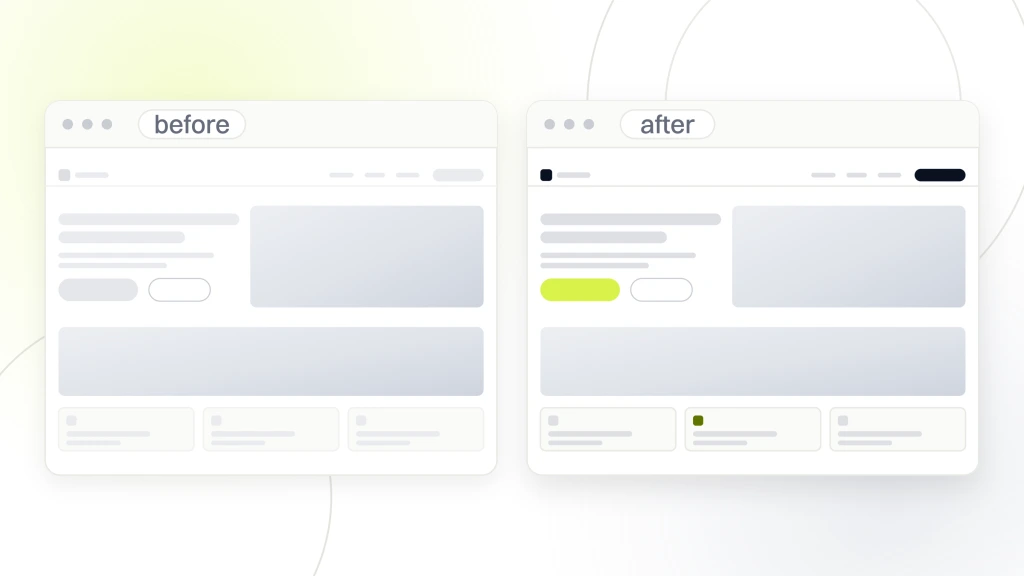
Discovery covers competitor audit, keyword research, treatment page inventory, booking flow requirements, and technical stack decisions. Wireframes map the mobile-first layout for the home page, the treatment page template, the gallery template, and the membership page. The wireframe review lands with the practice owner and the front desk lead so both sign off on the booking flow before design starts. Skip the front desk review and the site ships with a form the team refuses to check.
Development and QA phase
Development covers WordPress setup, theme build, plugin configuration, page assembly, form and booking wiring, analytics install, and Core Web Vitals pass. QA runs cross-browser on Chrome, Safari, Firefox, and Edge plus device testing on iPhone 12 and up plus Pixel 6 and up plus a mid-range Samsung. Launch runs a DNS cutover during off-hours with a 24-hour monitoring window. Any 500 error inside that window gets a rollback within 30 minutes. Our website maintenance packages team runs this cadence on every launch.
Web design pricing bands and what a real med spa build costs
Pricing on a med spa web development project sits inside three clean bands. SMB packages run $2,500, $4,500, and $7,500 for a semi-custom launch on a proven treatment template with booking, service pages, and analytics. A full responsive web design rebuild with custom photography direction, a treatment price simulator, and native booking scales up on service-line count. Ongoing hosting and care sits at $199, $299, or $499 per month depending on plugin count, backup cadence, and monthly change-request volume.
Pick the band that matches the practice stage. A solo-provider studio launching this quarter usually starts at $2,500 to $4,500 with hosting at $199 per month, then upgrades the site inside year two once revenue justifies the custom rebuild. A multi-room aesthetics practice with a distributor line and a membership program starts at the $7,500 tier and layers in the $299 to $499 care plan from launch. Both paths ship inside 8 to 14 weeks and both hit the Core Web Vitals target on launch day.
What is inside the SMB scopes
The SMB tiers ship with mobile-first design, native booking, WordPress with an aesthetic-vertical theme, GA4, GTM, CallRail on the booking flow, HIPAA-safe intake, and one round of revisions. The responsive web design rebuild adds custom-photographed hero and service pages, treatment page templates for the top eight to twelve services, indexable galleries with treatment-tagged alt text, and a price simulator. Every band includes a launch-day Core Web Vitals commitment (LCP under 2.5, INP under 200, CLS under 0.1) and a written scope naming plugins, hosting, and analytics stack.
Reporting cadence you should expect from a med spa web development partner
A working partner sends a weekly one-pager plus a longer monthly review of the numbers that decide renewal. The weekly covers booking volume, consult conversion rate, top pages by consult, mobile page speed, and any 500 errors in the last seven days. The monthly adds cohort analysis, cost per booked consult across channels, and revenue attribution across paid, organic, and direct traffic.
Weekly one-pager metrics
Booked consults for the week. Conversion rate on the top three service pages. Mobile Largest Contentful Paint on the home page and the Botox page. Time to First Byte on the booking widget. Any error rate over 0.5% in server logs. Any Core Web Vitals red flag flagged by CrUX data. A partner who cannot show a real weekly report from a prior client during the pitch is not sending them to you either. Ask for a redacted sample before the contract signs.
Monthly review metrics
Cost per booked consult across paid channels and organic. Consult to booked appointment ratio. Revenue per booked appointment across new patients and repeat. Membership sign-ups from the site. Gallery view time as a proxy for treatment interest. Chat widget open rate and answered rate. Skip the monthly and the practice runs blind on which channel funds the treatment rooms. Add the monthly and the practice knows where to add the next $5,000 of paid budget. The Med Spa Pacific Northwest account ran this exact cadence and the CPL curve dropped 38% inside 9 months on the same monthly spend.
How to vet a med spa web development partner before signing
You read three proposals and they read alike until you look at the line items. The differences show up in the numbers the first proposal quietly leaves out. Ask these six questions before the contract signs, and cross-check every answer against a written scope with named plugins, hosting, and analytics stack that the partner will deliver at launch.
- Ask which specific med spa builds they have delivered in the last 18 months, with client names and one measurable outcome per site.
- Ask whether the HIPAA form plugin is in scope from day one, and whether they will sign a business associate agreement with the practice.
- Ask which hosting the site will run on and what the guaranteed uptime is across a 12-month window.
- Ask whether the site launches with GA4, GTM, and CallRail wired to the booking flow.
- Ask for a Core Web Vitals target on launch day. A partner who cannot commit to LCP under 2.5 seconds should not be building your site.
- Ask what the retainer includes on plugin updates, security patches, and monthly speed audits.
Green flags in a real proposal
Green flags look like a written scope naming the WordPress theme, the booking plugin, the HIPAA form plugin, the hosting company, and the analytics stack. A launch-day Core Web Vitals commitment. A sample weekly report format. A retainer that covers plugin updates plus one strategy call a month. Case studies with named med spa clients, real timeframes, and real numbers across at least 6 months of post-launch data. A signed BAA. A backup schedule the practice can audit. Anything short of that means the partner is guessing at the deliverables.
How web development for med spa builds feeds the marketing channels
The site is the foundation every marketing dollar hits. Paid search sends visitors to the treatment page. Local SEO sends visitors to the location page. Social sends visitors to the gallery. Email sends visitors to the membership page. Skip the site work and every marketing channel underperforms on cost per consult.
Paid channels the site supports
Google Ads Search on Botox and filler queries hits treatment pages at 14 to 22% conversion rate on a well-built site. Meta Ads for gallery-driven awareness campaigns hit the gallery at 3 to 5% conversion to booking widget. TikTok Ads on before-and-after transformation posts land on a landing page variant of the treatment page. Every channel needs a page shape that matches the ad intent. Our med spa PPC team pairs each campaign with a matching site page inside the first sprint.
Organic and local channels the site supports
Local SEO on Google Business Profile pulls new patients into the map pack. The treatment pages and the location page anchor those map pack impressions. Reviews pulled from Google and Podium into the review schema block feed the local pack ranking. Content marketing on the blog feeds long-tail treatment queries. Skip these on a template build and the practice pays 40% more per lead on Google Ads to make up for the missing organic pipeline. For a full breakdown, see our med spa marketing agency hub.
How much money do I need to start a med spa web development project
The upfront investment for a med spa build sits between $2,500 and $7,500 for the launch tier, plus $199 to $499 per month for hosting and care, plus $1,800 to $4,500 for the photo shoot if custom imagery is in scope. Add a $1,499 per month marketing retainer for paid plus SEO once the site is live and the practice wants inbound flow inside 90 days. Total year-one spend depends on the build tier, the hosting plan, and the retainer level.
Compare that against a single Botox package priced at $600 and a filler treatment at $900, and a working site pays back inside the first 15 to 25 new patients it books. Every dollar past that mark is margin. The site earns 4x to 8x on the build fee inside 18 months on freed paid spend and booked consults alone, and the numbers hold across every SMB tier.
What qualifications a med spa web development partner should hold
The partner should hold a portfolio of at least three med spa builds inside the last 24 months with named clients, published outcomes, and a public case study you can read before the discovery call. They should hold WordPress developer experience deep enough to touch theme code, not just page builders. They should hold PPC and SEO capabilities under the same roof (or a formal partner relationship) so the site scope aligns to the traffic scope from day one.
On top of that, the partner should sign a Business Associate Agreement, commit to a launch-day Core Web Vitals target, and quote a written scope naming the plugins, hosting, analytics stack, and monthly report format. Every partner short of that list is a template shop dressed up in agency language, and the practice pays the tax on that gap inside the first six months of paid campaigns underperforming on Quality Score.
Wrapping up the web development for med spa decision
A working web development for med spa engagement runs 8 to 14 weeks, lands the site under 2.5 seconds on mobile, opens the booking flow in one click, and returns 4x to 8x on the build fee inside 18 months on freed paid spend and booked consults alone. The build stack pairs WordPress with a HIPAA-safe form plugin, a native booking system, indexable galleries, and analytics tied to booking outcomes.
If your current site loads over 3 seconds on mobile, has a booking flow more than two taps deep, or drops mobile visitors on a 22-field contact form, a rebuild pays for itself inside 90 days. Ask three vendors for line-item scopes with hosting, HIPAA form, and Core Web Vitals commitment named. Look for the green flags above. Pick the one that names the plugins, the analytics stack, and a real launch-day speed target. Redefine Web runs a fixed-scope program inside our med spa web design track, a paired med spa marketing retainer starting at $1,499/mo, and hosting inside med spa hosting and maintenance. Book a call and we will walk you through Beauté Aesthetics New York and the Med Spa Pacific Northwest launch numbers line by line.