DSO buying dental practices is the loudest story in the industry right now. You get an unsolicited email, a LinkedIn message, and a call from a business development rep who used to sell radiology equipment. Three touches inside two weeks. Your first reaction is to ignore all of them. Your second reaction, after the third practice on your block signs a deal, is to open the next email and ask what a real offer actually looks like on paper.
This guide walks through the real process when a DSO is buying a dental practice in 2026. What the buyer looks for during outreach, what an LOI looks like this year, what the MSA controls after close, what changes in the first 90 days at the office, and what the second bite actually pays. Names are anonymized where they need to be. Numbers pull from real transactions our team watched close between 2023 and 2025. Read every section before you take your first buyer call, so the pitch never catches you flat.
MSA red flags every seller should read before signing
The Management Services Agreement is the document a DSO buying dental practices controls the business through after close. The MSA sets the management fee, the operational scope of the DSO, the good-leaver definition, and the rollover redemption rules. Read the MSA harder than the LOI. The LOI shapes the check at close. The MSA shapes the next 7 years of your working life.
Management fee floor is the biggest trap
Most MSAs charge the DSO a management fee as a percentage of collections, usually 6 to 10%. That part is standard. What is not standard is a fee floor that keeps the DSO whole even when collections dip. If your practice has a payer dispute and collections drop 15%, the fee floor keeps the DSO dollar figure unchanged and squeezes the local P&L. Negotiate the floor out, or negotiate a variable clause tied to collections.
Good-leaver definition matters at year five
The good-leaver definition controls what happens to your unvested rollover if you leave the practice for a legitimate reason before the employment term ends. Standard definitions include death, permanent disability, and non-renewal by the DSO. What most sellers miss is retirement after age 60, which the platform will resist including. Push it into the definition anyway. Health, family, and burnout are all real reasons dentists leave early, and the rollover value in those cases should not evaporate.
Rollover redemption and drag-along rights
Rollover redemption rules control how you cash out equity if you leave before a platform sale. Most DSOs redeem at book value, which is often below fair market value. Negotiate a formula tied to trailing 12-month EBITDA and the platform multiple. Drag-along rights force you to sell alongside the sponsor at the next platform transaction. That is usually fine, but read the fine print on approval thresholds and preferred returns so you know exactly what your slice looks like at exit.
Diligence process when a DSO is buying your dental practice
Diligence runs 45 to 75 days from signed LOI to close. Financial diligence hits first. Legal diligence overlaps. Operational and marketing diligence hits last. A well-prepared seller closes in 45 days. A seller with messy books, mixed personal and business expenses, and no call tracking data closes in 90 days or more, if the deal survives at all. The DSO diligence team walks away from 15 to 20% of practices they signed LOIs on. Preparation is the single biggest lever on close probability.
Quality of earnings sets the baseline
The buyer will hire a dental-focused accountant to run a Quality of Earnings on your practice. That report normalizes owner comp, strips out one-time items, verifies the payer mix, and confirms procedure code trends over the last 3 years. If the QoE lands close to your reported EBITDA, the deal closes fast. If it lands 15% below your reported EBITDA, the buyer either re-cuts the LOI at a lower multiple or pulls the offer. Run your own QoE 6 months before you go to market so you know the number.
Marketing diligence looks at attribution
Marketing diligence is the piece most sellers underestimate. The buyer team wants to see how new patients found the practice over the last 24 months. They ask for call tracking data, form-source reports, and paid ad account access. Practices with clean attribution and 18 months of documented month-over-month new patient growth price a half turn higher. Practices without call tracking installed get discounted since the buyer cannot forecast future new patient volume with confidence. Our team runs the marketing playbook that produces those numbers through our Dental Marketing Retainer starting at $1,499 a month.
Legal diligence and payer credentialing
Legal diligence reviews your corporate structure, employment agreements, and real estate lease. Payer credentialing takes 60 to 90 days after close to move the practice onto the group contracts. That process runs in parallel to the operational integration so the practice never falls out of network with a major payer. Most sellers do not realize how much of the year-one operational noise comes from credentialing transitions, not from the DSO leadership.
Year one after a DSO buys your dental practice
Year one has a predictable shape whenever a DSO is buying dental practices. First 30 days feel quiet. Days 30 to 90 get noisy on payroll, PMS, and marketing. Days 90 to 180 stabilize on payer contracts and central systems. Days 180 to 365 normalize on operations and the seller settles into the new rhythm. Every dentist we have talked to described this same shape.
Days 1 to 30, the quiet phase
The first month is intentionally quiet. The DSO integration team gathers documents, runs an orientation session with your team, and observes the current workflow. No PMS change, no payroll change, no marketing change. This is by design. The DSO wants to see how the practice actually operates before making changes. Your team relaxes since nothing feels different. This is the calm before the operational noise starts.
Days 30 to 90, the operational noise
Days 30 to 90 is when the operational noise kicks in. PMS conversion starts at day 45 or 60. Payroll moves to central. Marketing shifts to central. Supply ordering moves to the group purchasing agreement. The front office team feels every one of these changes. The front-office manager quits somewhere in this window at roughly 40% of practices we watched. That is not a failure of the DSO. That is a predictable pattern you should plan for by identifying a backup manager before close.
Days 90 to 365, the stabilization arc
By day 90 the payer contracts renegotiate to the group schedule. Marketing central spend picks up. Central creative rolls out on the local website. By day 180 the practice runs on a stable operational rhythm. By day 365 the seller has adjusted to weekly regional ops calls, monthly platform updates, and the shift from owner-operator to employed provider with equity. Most sellers describe year two as easier than year one. Year one is the tax you pay for the second bite.
Deal shape by practice profile in 2026
The table below shows how deal shape changes when a DSO is buying dental practices at different profiles. Numbers are field averages across transactions our team watched close between 2023 and 2025. Every deal has unique tax structure and unique add-backs, so treat these as benchmarks, not templates.
| Practice profile | Collections | Multiple | Cash at close | Rollover |
|---|---|---|---|---|
| Solo GP, single office | 1.8M to 2.5M | 4x to 6x | 75 to 85% | 15 to 25% |
| Multi-doctor GP with associates | 2.5M to 4M | 6x to 8x | 70 to 80% | 20 to 30% |
| Ortho specialty, one to two offices | 2.5M to 4M | 7x to 9x | 70 to 80% | 20 to 30% |
| Oral surgery, single office | 3M to 5M | 7x to 9x | 65 to 75% | 25 to 35% |
| Multi-location GP, 4+ offices | 5M to 10M | 8x to 12x | 70 to 80% | 20 to 30% |
Read the table with the range in mind. If your practice sits at the low end of collections, expect the low end of the multiple. If your practice sits at the high end and has clean marketing attribution plus 18 months of documented growth, expect the high end. Specialty multiples run higher since case values, treatment cycles, and payer economics all support higher EBITDA per patient than general dentistry. That premium has held steady across every year we tracked from 2023 forward.
Why multi-location groups get a premium
A three-office group with 4.6M in collections closes as one deal, one integration, and one seller relationship. Three separate 1.5M offices in the same metro require three deals, three integrations, and three closings on separate calendars. Buyers pay a quarter to a half turn extra to consolidate that internal workload into a single acquisition. Group owners should always model that premium into asking price and let bidders compete on it directly.
Named DSO buyers active in 2026
Heartland Dental leads the field at roughly 2,500 offices, backed by KKR and Ontario Teachers’ Pension Plan. Aspen Dental Management runs about 1,000 offices, backed by Leonard Green Partners and Ares Management. Smile Brands operates roughly 900 offices under New Mountain Capital. MB2 Dental runs about 700 offices under Charlesbank Capital Partners on a doctor-owned model. Pacific Dental Services, Dental Care Alliance, 42 North Dental, and Mortenson Dental Partners round out the top tier. Specialty consolidators such as Smile Doctors (orthodontics) and Specialized Dental Partners (endo, perio, oral surgery) buy at premium multiples in their vertical.
Case study inside the DSO model. Smile Design Dentistry
Smile Design Dentistry started in Dade City, Florida in 2004. By 2024 the group ran 50+ locations across Central Florida and Tampa Bay. The offline reputation was strong across cosmetic, emergency, preventive, and specialty care. The digital marketing operation was fragmented. Every office ran its own campaign structure. Ad spend was inflated. Tracking was thin. Paid social was underused. A DSO buying dental practices at that scale needs central operations that actually work, not just central branding.
Our team restructured the PPC accounts by funnel stage and geography, built separate landing pages for every market and service line, and layered full-funnel paid social with awareness, consideration, and conversion campaigns. Cost per call fell 30% across the network within 12 months. PPC conversion rate grew 20% year over year. 50+ offices reported on a single dashboard for the first time. That is what platform-scale marketing looks like when it works, and it is what a DSO promises when the acquisition team makes the pitch to the next practice on the block.
What the platform work delivered on EBITDA
A 30% cost per call reduction, a 20% PPC conversion rate gain, and unified reporting across 50 offices all show up in EBITDA at the platform level. Every dollar cut from acquisition cost falls straight into EBITDA. That EBITDA growth is what the sponsor sells at the next transaction, which is what makes the rollover slice at close appreciate for the sellers who signed early. Practice-level work compounds into platform-level value in exactly this way.
What Smile Design teaches solo owners
The Smile Design story teaches solo owners two lessons. First, a well-run platform delivers marketing scale that a solo practice cannot build alone, which is why our Dental SEO Services team runs the local map pack work at practice level. Second, marketing execution is the fault line where DSO integration succeeds or fails. Ask any DSO buying dental practices in your metro for specific examples of local marketing wins at 5 to 10 of the platforms they acquired last year. Vague answers to that question are the loudest warning sign in the diligence process.
Common seller mistakes when a DSO offers dental practice acquisition
Every seller mistake we have watched falls into the same six buckets. Skimming the MSA. Taking the first offer without a competitive process. Cutting marketing during diligence. Signing a broker deal without checking references. Not modeling year-one cash flow. And believing the pitch deck instead of talking to reference sellers. Fix these six before you sign, and you dodge the majority of the deals that go bad two years post-close.
Skimming the MSA
The LOI gets read by every seller. The MSA gets skimmed by half of them. That is the single largest source of post-close regret. The MSA controls the management fee, the good-leaver definition, and the rollover redemption. All three of those directly affect what your slice looks like at year three, year five, and year seven. Hire a dental transaction attorney who has read at least 20 MSAs and pay them by the hour to redline yours line by line. That fee pays for itself many times over.
Cutting marketing during diligence
Some sellers cut marketing spend after signing the LOI, thinking the deal is done. That is a mistake. The buyer pulls the last 60 days of new patient data before close. A dip signals falling demand and gets punished in the working capital true-up or the final price. Keep marketing running normally through close. Let the buyer see the acquisition engine at its full pace. That decision preserves the multiple you negotiated at LOI and holds the working capital target where you negotiated it.
Believing the pitch deck
The DSO pitch deck reads like a career highlight reel. Central marketing. Group purchasing. HR support. Clinical autonomy. All true, at the best-run platforms. Not all true at every platform. Every DSO will give you three reference sellers. 10 reference conversations is the real number you want. Ask each one what surprised them, what they would negotiate differently, and how year one compared to the pitch. Those three questions produce answers you cannot get from a pitch deck.
Second bite math when a DSO is buying dental practices
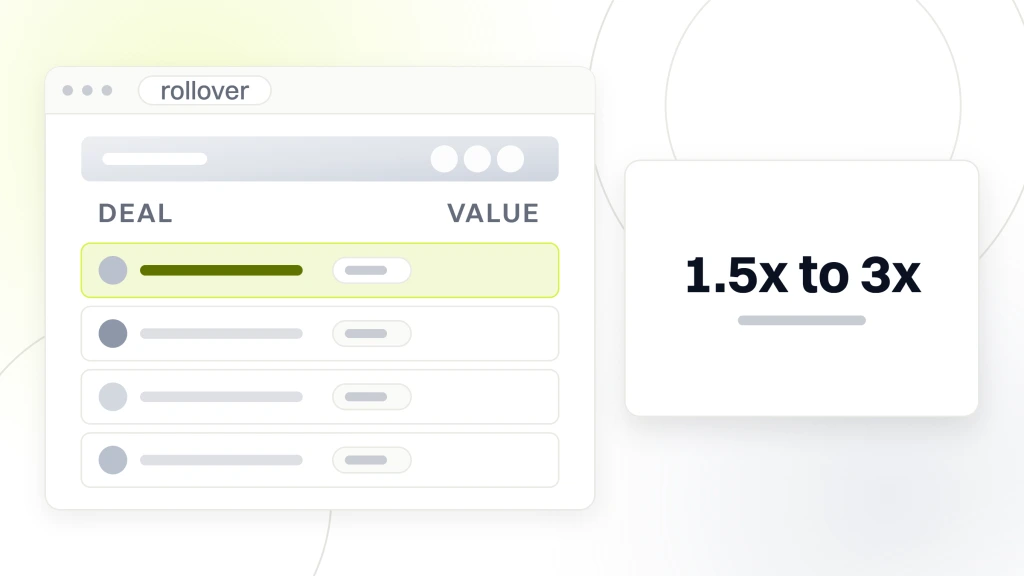
The second bite is the piece of the transaction most sellers underestimate at LOI. Rollover equity looks like a paper number until the sponsor sells the platform to the next sponsor, usually every 4 to 7 years. When that happens, your rollover units reprice at the new platform multiple. Across recent examples, second bites deliver 1.5x to 3x return on rollover equity. About 15 to 20% of platforms underperform and deliver a smaller or zero second bite.
Three drivers of second-bite value
Three drivers move second-bite value. Platform EBITDA growth over the hold period. Sponsor multiple expansion at exit. And your rollover slice at close. If EBITDA grows 2x and the multiple expands from 12x to 14x, your rollover appreciates roughly 2.3x. If EBITDA stays flat and the multiple contracts, the rollover returns less than 1x. Read the sponsor track record on prior dental platforms before you sign. Reputable sponsors will share that data in diligence conversations.
How to evaluate a sponsor
Ask three questions about the sponsor behind the DSO buying dental practices in your metro. What was the hold period on the last two dental platforms they exited? What was the multiple expansion between entry and exit on those platforms? And what percentage of rolled sellers on those prior platforms received returns above 2x on their rollover? If the sponsor cannot answer clearly, treat that as a warning. The ADA Health Policy Institute and Dental Economics also publish sponsor performance context you can use.
Three moves to make before selling dental practice to DSO buyers
Before you take the first buyer call from a DSO buying dental practices in your area, make three moves. Clean your books to standard dental broker specifications. Install call tracking on every marketing channel. And run your own quality of earnings 6 months out. Those three moves cost roughly 8,000 to 15,000 all in and add half a turn to a full turn on the multiple at close. Every buyer values a prepared seller.
Clean the books to broker specs
Broker-standard books separate personal and business expenses cleanly. Owner comp normalizes to a market rate. Family payroll gets called out as an add-back. Real estate rent moves to a fair market rate if you own the building. All of these adjustments will happen in QoE anyway. Doing them in your own P&L six months early makes the buyer see a clean number the first time they look. Dirty books discount the multiple by a half to a full turn every single time.
Install call tracking today
Call tracking on every marketing channel captures new patient source data the buyer will demand in diligence. Practices without call tracking get discounted since the buyer cannot forecast future new patient volume with confidence. Practices with 18 months of documented source data get the top of the multiple range. Our Dental PPC Management program includes call tracking setup as part of the standard scope, and our SEO team layers organic patient acquisition on top of the paid channel.
Run a self-directed QoE
Hire a dental-focused accountant to run a Quality of Earnings on your practice 6 months before you go to market. The report will show you your adjusted EBITDA the way a buyer will see it. If the number surprises you, you have 6 months to fix the drivers. If the number matches your expectations, you can pitch your practice to buyers with confidence backed by a document. Either outcome is worth the 6,000 to 10,000 cost.
Working with a marketing partner across the transaction
A marketing partner earns their fee at the LOI table. A practice with 18 months of documented month-over-month new patient growth prices half a turn higher than a comparable practice without those numbers. On a 2M collections practice, that gap is 300K to 600K in extra sale price at close. The math is the same whether you are selling to the largest DSO buying dental practices in your metro or a mid-tier platform still building the portfolio.
Our team runs both sides of that work. For groups already scaling patient acquisition across a full network, the DSO Dental Marketing for Multi-Location Groups program covers the full playbook end to end. Single-location owners preparing for their first DSO conversation start there and layer on retainer options as the transaction timeline gets clearer over the next 12 months.
What a solo owner should sequence in the 12 months before going to market
Month 12 to 9, run a clean quality of earnings and clean the books. Month 9 to 6, install call tracking and build 18 months of clean patient source data. Month 6 to 3, produce clean segmented reporting your buyer can read in one afternoon. Month 3 to 0, screen brokers or run a broker-run process with your top three preferred platforms and let competition set the multiple.
Where solo owners tend to underinvest
Two areas get underinvested. First, marketing attribution stays informal since the owner has managed vendor relationships by phone for a decade. Second, reporting dashboards live in the practice manager’s head instead of on paper. Both cost multiple at close. A quarter to a half turn each. Buyers pay full multiple for clean data and cut cleanly for anything that reads as guesswork.
A second dental data point on unified marketing
VP Dental, a 20-year practice led by Dr. Valerie Preston, unified fragmented web and SEO vendors under one strategy and doubled new monthly patients, added $8,100 in monthly recurring revenue, and grew search impressions 776% inside 12 months. That kind of documented growth is exactly what a DSO diligence team wants to see in the marketing packet. It’s also the pattern that supports the top of the multiple range for a solo GP practice.
Final read on DSO buying dental practices
Every deal shape is different. Every practice has unique economics. Every DSO buying dental practices runs slightly different MSA terms. The framework above covers the standard cases you will see in the market between now and 2028. Use it to calibrate expectations, not to lock in a specific price or structure for your practice. Your deal will be its own.
If the phone is ringing already, take one call, ask smart questions, and put the IOI in a drawer for two weeks. If the phone is not ringing yet, spend 6 months preparing so when the DSO buying dental practices in your metro calls, your books, your marketing, and your quality of earnings all say the same story. Prepared sellers always win, no matter which buyer eventually signs the deal.