Dental location pages SEO is the discipline of building one ranking-ready page per office that a patient trusts and Google surfaces first. No doorway pages. No thin clones with the address swapped. Real pages with real photos of the office, real doctor bios, real service lists, real neighborhood context, and LocalBusiness schema tied to each office’s own Place ID. Practices that treat dental location pages SEO as real work earn top-three map pack spots for every geo they cover. Practices that skip the discipline stall outside the top ten and wonder why the phone stays quiet.
This guide walks the exact framework we apply for solo practices and multi-office groups. A URL structure that scales without cannibalizing pillar pages. LocalBusiness schema per page. Content sections that pass thin-content review. CRO details that convert local traffic into booked patients. A real example from North County Dental Care in Vista, California, where the local pages helped grow patient volume 1,000% from 2021 to 2024. Read straight through in about 10 minutes and start your own build the next morning.
What a dental location page is supposed to do
A dental location page carries 2 jobs. Rank in the map pack for the local queries tied to that office, and convert the visitors who land on the page into booked patients. Both jobs share the same content requirements. Real per-office copy, real photos, real proof, and a booking path visible in the header on every scroll.
Rank plus convert on the same page
The page ranks when the city name lives in the H1, URL, meta description, and at least 2 H2s. The page converts by putting a sticky Book Online button in the header, an insurance carrier row above the fold, real doctor photos, and a 3-field booking form. Sites that optimize only for ranking bleed conversions. Sites that optimize only for CRO lose ranking to competitors that carry the geo signals correctly. Both jobs matter on every dental location pages SEO build. Neither is optional.
Scale without duplicate content
The pitfall in scaling location pages is duplicate content. Sites that build 20 location pages by copying the first page and swapping the address get flagged as thin content inside 90 days. Dental location pages SEO demands real per-office writing. That means 800 to 1,400 words of unique copy per page, real photos, real bios, and real service specifics. The work is real. The rankings compound. Dental location pages SEO is not a shortcut, and sites that treat it as one always stall.
URL structure for dental city pages SEO
Dental city pages SEO starts with the URL pattern. The pattern that works. /locations/vista-ca/ for the single location page and /locations/vista-ca/dental-implants/ for service plus location combinations. That structure is scannable, keyword-anchored, and consistent across the site. Sites that use /vista-dental/ or /dental-vista/ create sprawl that fragments internal link equity and confuses Google’s parsing of the location hierarchy.
- /locations/ index page listing every office with map and quick contact links
- /locations/vista-ca/ single-office page with full content and booking form
- /locations/vista-ca/dental-implants/ service plus location pages for top revenue services
- /locations/vista-ca/pediatric-dentistry/ service pages for a specific patient segment
- /locations/vista-ca/emergency-dentist/ pages for urgent-search queries
- /locations/vista-ca/insurance/ for the insurance-focused visitor path
- Breadcrumb navigation on every location page reflecting the hierarchy
Location index page anatomy
The /locations/ index page lists every office with the address, phone, hours, and a linked card to the full location page. That page ranks for brand plus locations queries and serves as the internal linking hub for the location pages. Sites that skip the index page fragment the local content signal across disconnected URLs. Sites that build it right centralize authority and give Google a clear structural signal for the location network.
Service plus location combination pages
The service plus location page is the highest-return URL in the local search stack. Dental Implants in Vista, California carries the geo signal, the service signal, and the transactional intent. That single page ranks for a bundle of related queries. Dental implants Vista, implant dentist Vista, cost of dental implants Vista, and dozens of local variations. Build one per high-revenue service per office. Skip services that generate low margins or where the office lacks specific expertise.
Local landing pages for dentists that convert
Every dental location page follows the same repeatable shape. Hero with H1 carrying the city, subhead with trust signals, sticky Book Online CTA. Insurance carrier row above the fold. Services offered at this office with links to service plus location pages. Doctor bios with real photos. Reviews from Google Business Profile matched to this office. Directions with embedded Google Maps iframe. FAQ answering common local questions. Contact form with 3 fields. Footer with LocalBusiness schema.
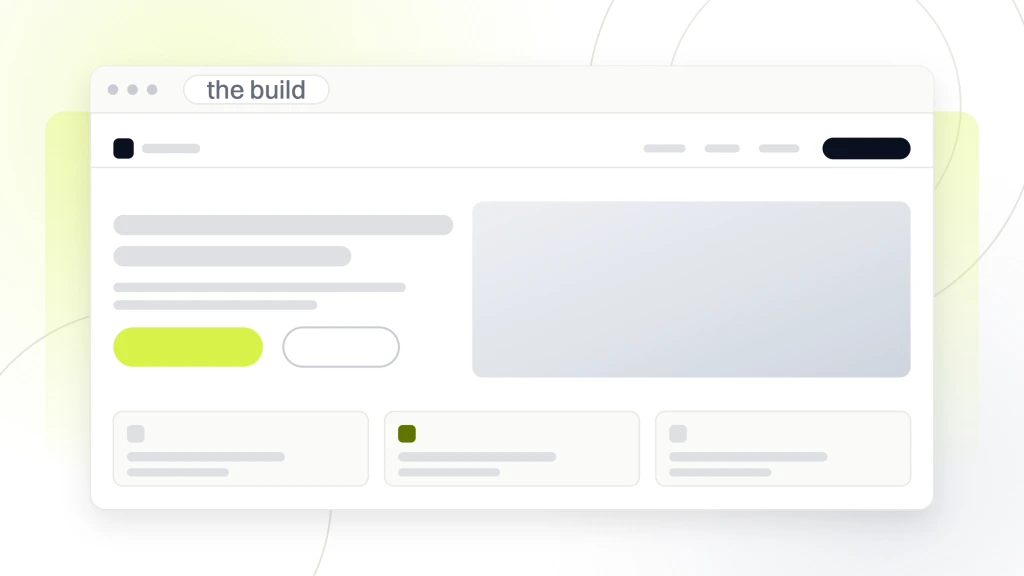
That shape is deliberate. Every section serves a searcher decision. The H1 confirms geography. The insurance row confirms coverage. The services list confirms treatment fit. The doctor bios confirm trust. The reviews confirm reputation. The directions confirm access. The FAQ confirms process. The form captures the booking. Skip any section and the visitor drops at that step. See our full local seo for dentists playbook for how each of these sections feeds the ranking signal on top of conversion.
Hero section with city in the H1
The H1 leads with the city or metro name. Vista Family Dentist. Dental Care in Vista, California. That specific pattern signals relevance to Google and confirms fit to the visitor inside the first second. Weak H1s that read Welcome to Our Practice or About Our Office bleed both signals. The subhead adds the trust bar. 20 years in practice, 340 five-star reviews, insurance accepted. Every H1 needs the geo. Every subhead needs the proof.
Insurance row and service tiles
The insurance row sits directly below the hero. 6 to 10 real carrier logos. VSP, Aetna, Blue Cross, Cigna, Delta Dental, MetLife, UnitedHealthcare, Guardian. Below that, a 3×2 grid of service tiles pointing to the service plus location pages. Sedation Dentistry in Vista. Dental Implants in Vista. Emergency Care in Vista. Each tile is one icon, one service name, one benefit line, one link. Sites that skip either section lose 20 to 40% of the mobile conversion rate to competitors who put both above the fold.
LocalBusiness schema per location page
Every location page carries LocalBusiness schema tied to that office’s Place ID. Latitude and longitude from the Business Profile. Phone number matching the Profile character for character. Opening hours matching the Profile. Address matching the Profile. That level of NAP consistency across the page, the schema, and the Profile signals to Google that the page authoritatively represents the office. Missing schema is the single most common technical gap on multi-office dental sites.
The schema block sits in the head or before the closing body tag. Test every block on the Google Rich Results Test at search.google.com/test/rich-results. Errors show up in Search Console under the rich results report. Fix them inside a week or Google downgrades the schema signal. That is the compounding cost of skipping schema QA on multi-office sites.
Required schema fields
Every LocalBusiness schema block carries type Dentist, name, address, telephone, geo coordinates, opening hours, image, price range, and identifier tied to the Place ID. Optional but recommended. AcceptedInsurance, availableService, hasMap link to Google Maps, review aggregate, and department for multi-doctor practices. Skimping on fields gets the schema flagged but not penalized. Filling them out feeds the entity signal Google uses to link the page to the Business Profile.
Schema validation cadence
Run the Rich Results Test on every location page monthly. Any errors flagged, fix inside a week. Any warnings, review at quarter end. That cadence keeps the schema clean without requiring a full technical audit every month. Sites that skip validation for 6 months tend to find broken schema after a theme update or a plugin change. Monthly monitoring costs 15 minutes per office and catches the drift before ranking impact shows up.
Real content per office avoids duplicate penalties
The content on every dental location page has to be unique to that office. Not lightly edited. Not a template with the address swapped. Real, unique copy that reflects what that office truly offers, who works there, and how the neighborhood context shapes the visit. That is the discipline that separates location pages that rank from location pages that get indexed and then filtered as thin content.
| Content section | Word count | What to include |
|---|---|---|
| Intro paragraph | 80 to 120 | City name, years serving, primary services, one specific detail |
| Doctor bios | 150 to 250 per doctor | Real photo, credentials, years at this office, one clinical passion |
| Services offered | 200 to 400 | What this specific office does, not what the brand offers overall |
| Neighborhood context | 100 to 150 | Parking, nearby landmarks, public transit, driving directions from a mile out |
| Reviews and testimonials | 150 to 250 | Pulled from this office’s Business Profile with names and dates |
| FAQ | 350 to 500 | 5 to 7 questions specific to this office, not generic dental questions |
Doctor bios with real photos
Every doctor at the office gets a bio with a real headshot, credentials, education, years at the practice, and one detail that signals expertise. Board-certified in cosmetic dentistry. Trained on the latest implant systems. 15 years in pediatric care. That specific detail is the trust signal that separates a real bio from a stock template. Practices that skip the bios lose 10 to 20% of the conversion rate to competitors that carry them.
Neighborhood context and directions
Local visitors need practical detail. Where to park, which building, whether public transit works, and how to find the entrance if the office sits in a plaza with 3 others. That paragraph reads as help, not filler. Google reads it as unique local content that reinforces the geographic relevance. Practices that skip it end up with 800-word pages that lack the specifics Google needs to trust the geo signal.
North County Dental Care case study on local landing pages for dentists
North County Dental Care runs a 20-year family practice in Vista, California with a solid offline reputation and a near-zero digital footprint when they first came to us. Zero top-10 search positions. Inconsistent directory listings. A site that did not work on phones, had no HTTPS, and carried thin content spread across unrelated keywords. Monthly new patients from digital sat at 1 to 2.
We rebuilt the site with service pages mapped to the keywords patients search. Cleaned up directory listings so name, address, and phone matched everywhere. Added schema and fixed broken links. Ran targeted Google Business Profile ads and local video. From 2021 to 2024, monthly new patients moved to 12 to 16. Organic traffic climbed 385%. Marketing ROI grew 500%. Total patient volume up 1,000%.
The North County Dental Care numbers
Monthly new patients from 1 to 2 up to 12 to 16. Organic traffic up 385%. Marketing ROI up 500% across the same window. Practice volume up 1,000% from 2021 to 2024. Every number tied back to one local plan. The site rebuild was the multiplier. The Profile work was the volume dial. The service pages were the earning asset.
Lessons from the North County Dental Care rebuild
2 lessons carry over to almost every practice reading this guide. First, the single homepage plus a services list is not enough. Every service worth ranking needs a dedicated URL, and every office needs a dedicated location page. Second, real content wins. Copying a template and swapping the address gets you nothing. Investing the writing hours to build real per-office content compounds for years.
CRO details on the location page
A ranking location page that fails to convert is a wasted marketing asset. The CRO details that separate a 12% converting page from a 3% converting one are the same every time. Sticky header with click-to-call and Book Online. 3-field booking form for name, phone, day preference. Trust signals in the first 200 pixels. Real doctor photos. Reviews with real names and dates. Every one of those details is a design decision, not a plugin purchase.
Mobile CRO deserves extra attention, given 70 to 80% of location-page traffic arrives on a phone. The sticky Book button pinned to the mobile footer. Form fields at 48 pixels tall. Autofill on name and phone. Type=tel on the phone field to trigger the numeric keypad. Insurance carrier row wrapping cleanly on narrow screens. Those 5 details cut mobile form abandonment by 20 to 35% on almost every audit.
3-field booking form
The booking form on a location page asks for 3 fields. Name, phone, and day preference. Anything more kills conversion. 7-field forms asking for insurance carrier, date of birth, and reason for visit convert at 4 to 6%. 3-field forms convert at 12 to 15%. Same traffic, roughly 3x the booked patients. Capture the specifics on the confirmation call, not the form.
Trust signals in the first 200 pixels
Specific numbers win. 4.9 stars on 340 Google reviews beats highly rated every time. 22,600 patients seen since 2004 beats experienced staff every time. VSP, Delta Dental, and Aetna accepted beats most insurance welcome every time. Pull the exact figures from your practice management system, drop them into the hero, and watch first-time visitor conversion move 30 to 50% inside 30 days.
Internal linking across the location page network
Internal linking is what compounds authority across the location page network. The homepage links to /locations/. The /locations/ index links to every single-office page. Each single-office page links to the service plus location pages for that office and back to the pillar service pages that cover the topic at group level. Each service pillar page reverse-links to the location pages where the service is offered. That mesh is what tells Google the location network is a real business with connected services.
The links have to carry descriptive anchor text. Not click here. Not Vista. The anchor text carries the target page’s focus keyword. Dental Implants in Vista, California. Sedation Dentistry in Vista. That anchor text feeds the ranking signal for the target page. Sites that use generic anchors or bare URLs bleed the internal link equity. Sites that write descriptive anchors compound the authority signal across the whole network. See our dental website seo guide for the full internal linking pattern.
Descriptive anchor text throughout
Every internal link from a location page uses a descriptive anchor. Emergency Dentist in Vista California links to the emergency page. Sedation Dentistry in Vista links to the sedation page. Dental Implants in Vista links to the implants page. That specificity carries both the geo signal and the service signal, which is what the target page needs to rank. Generic anchors throw both signals away.
Index page as the linking hub
The /locations/ index page links to every single-office page and receives links from the header nav and footer nav on every page. That structure gives every location page a solid internal link position without requiring cross-links between every pair of location pages. Sites that skip the index page end up with orphaned location pages that rank poorly regardless of the on-page content. The index page is the linking hub. Every strong location network runs one.
Multi-location dental SEO across the group
Multi-location dental SEO scales the same discipline across 5, 15, or 40 offices. Every office runs its own location page, its own service plus location pages, its own LocalBusiness schema, and its own Google Business Profile. Group-level pillar pages cover the service at brand scope. Location pages carry the geo, and pillar pages carry the topical depth. That split keeps every URL distinct in Google’s index and stops cannibalization across the group.
A common failure at scale is templated copy. A group builds 30 location pages using the same intro, the same doctor-bio template with the name swapped, and the same service block. Google spots the duplication inside 90 days and filters most of the pages out. The fix is per-office copy written by someone who has visited the office, or interviewed the office manager, or worked from the office’s own review corpus. That is the only path that scales without duplicate content flags.
Per-office copy ownership
Assign one writer per 5 offices. That writer owns the intake call with each office manager, drafts the location page, drafts the service plus location pages, and hands the file to editing. Splitting 30 pages across 6 writers gets you 30 unique pages inside 8 weeks. Handing all 30 to one writer stretches the timeline and burns them out.
Central reporting across every office
Central reporting rolls up per-office GA4 events, per-office rank positions, per-office review counts, and per-office booked patients into one dashboard the group can act on. Offices that rank strong get less budget. Offices that lag get citation cleanup, review generation, and paid search support. That reallocation is only possible if the per-office data feeds a central view. Skip the reporting mesh and every optimization becomes a guess at the group level.
Tracking whether the location pages are working
Every location page needs a dedicated GA4 goal, conversion tracking on the booking form, a call tracking number, and local rank tracking tied to that page. Without those 4 layers, the central team cannot tell which pages are working and which need help. With them, budget flows to the offices that convert cold traffic into booked patients.
Call tracking with CallRail or CallTrackingMetrics runs $45 to $95 per number per month. Local Falcon runs $24 to $79 per month for geo-grid rank tracking. GA4 is free. Custom conversion goals tied to the booking form take 30 minutes to configure per page. That is the tracking stack. Skip any layer and every optimization becomes a guess. Wire all 4 and every optimization runs off real numbers.
Per page GA4 goals
Each location page carries 3 GA4 event goals. Booking form submit, click-to-call click, and directions click. That triangulation tells the central team how the visitor converted. Sites that track only form submits miss the calls that get routed through the sticky header. Sites that track only calls miss the visitors who submitted a form. All 3 events per page equal accurate attribution.
Per page ranking checks
Local Falcon or BrightLocal geo-grid tracking runs one grid per office. The grid shows the page’s map pack position across a 3, 5, and 8 mile radius. That data drives the citation cleanup priority, the local link outreach targets, and the review generation focus. Sites that skip geo-grid tracking miss the exact zip codes where the page ranks strong and the zip codes where it falls out.
Where to start on dental location pages SEO today
Dental location pages SEO starts with a full inventory of every office and every high-revenue service. Every office gets a dedicated location page. Every high-revenue service at each office gets a dedicated service plus location page. Every URL follows the same clean pattern. Every page carries LocalBusiness schema tied to its own Place ID. Every page carries real per-office content, not a template with the address swapped.
When you are ready to roll out the network, our dental seo services covers the URL structure, the schema, the per-office content, and the CRO details. For the ranking mechanics behind the local pack, see the Google Search Central ranking systems guide. For the full network view, layer on dental marketing across every office.