Local SEO for pet services covers different ground than product-focused pet SEO. The searcher is booking a service like grooming, boarding, walking, training, or veterinary care rather than buying a bag of food. The shopper wants proof the provider is close, trusted, reliable, and available in a specific time window. Google Business Profile carries more weight than the website homepage for these searches. Reviews carry more weight than backlinks. Neighborhood modifiers convert 6 to 12 times higher than broad city queries. Getting local SEO for pet services right grows monthly bookings 40 to 90% in a year with zero paid ads. Getting it wrong loses the top 3 local pack to a chain competitor inside 90 days.
This guide covers the 8-part local SEO for pet services plan our pet product marketing agency ran across pet groomers, boarders, walkers, and trainers in 2025. That includes the a local pet-service business grooming program that grew appointments 128% and the Mission Pet Health veterinary network local pack expansion across its 400+ clinic footprint.
Schema markup that stacks for pet-service local search
Schema markup stacks the ranking case across LocalBusiness, Service, Review, AggregateRating, BreadcrumbList, and FAQPage. LocalBusiness plus PetStore or VeterinaryCare schema goes on the facility location page. Service schema goes on each specific service page (grooming, boarding, walking, training). Review plus AggregateRating schema sits on the location page and service pages. BreadcrumbList schema belongs on every category and service page. FAQPage schema fits service FAQ and pricing pages. Sites running full schema stacks grow organic click-through rate 22 to 44% on ranked queries versus sites without schema.
LocalBusiness fields that matter
LocalBusiness fields that matter for pet services include name, address, geo (latitude and longitude), telephone, url, priceRange, openingHoursSpecification, image, sameAs (social profiles), aggregateRating, and review. Missing openingHoursSpecification blocks eligibility for hours in local pack results. Missing geo coordinates reduce distance-based ranking accuracy. Missing sameAs weakens brand entity confirmation. Rank Math or Yoast SEO plugins handle the WordPress side without hand-coding. Custom themes need manual JSON-LD injection in the site head.
Service schema per offering
Service schema per offering (grooming, boarding, walking, training) lets Google understand the specific services carried and rank each service page on its own service-specific queries. Service schema fields include serviceType, provider (linking to the LocalBusiness), areaServed (neighborhoods covered), and offers (pricing, availability). Missing Service schema means the site only ranks on general LocalBusiness queries and misses the specific service query traffic. Each service page needs its own Service schema block plus a link back to the parent LocalBusiness schema on the location page.
Content that ranks beyond neighborhood pages
Content beyond neighborhood pages covers breed-specific service guides, seasonal service reminders, health condition education, and pricing transparency pages. Publishing 20 to 40 content pieces across the first year ranks the provider on 240 to 640 long-tail queries with combined monthly search volume of 8,000 to 40,000. The content feeds email flows too to existing clients and social posts that extend reach past direct organic traffic. Programs that skip content investment cap the local pack ceiling and miss 40 to 70% of the total addressable organic traffic.
Breed-specific service guides
Breed-specific service guides rank on queries pet owners search 4 to 8 times before booking a service. Grooming for double-coated dogs, poodle haircut styles, senior cat grooming tips, and puppy training schedule for large breeds are query patterns with 400 to 4,800 monthly search volume each. Each guide covers breed-specific service considerations, common issues, and links back to the provider service page and booking form. Internal linking from guides to service pages routes qualified organic traffic to booking points and closes 6 to 14% of guide-page sessions to a same-visit service page click.
Seasonal service reminders
Seasonal service reminders published as content rank on time-sensitive queries throughout the year. Spring flea and tick prevention grooming, summer coat care for double-coated dogs, fall grooming for shedding season, and winter paw protection all pull steady seasonal traffic. Publishing this content 30 to 60 days ahead of the season captures the search wave and drives booking spikes during the peak service window. Providers that publish reactive content mid-season routinely miss the ranking window since Google needs 30 to 90 days to surface new content on competitive local queries.
Citations and directory listings that extend the ranking base
Citations and directory listings extend the ranking foundation past Google Business Profile alone. NAP (name, address, phone) consistency across 40 to 80 major directories signals to Google that the business is a real established entity. Yelp, Bing Places, Apple Maps, Facebook, Nextdoor, and industry-specific directories (Rover, Wag, DogVacay) each carry ranking weight. Inconsistent NAP data across directories (different address formats, phone number variations, old business names) actively hurts local pack ranking. Auditing citations quarterly using tools like Whitespark or BrightLocal catches drift early.
Industry-specific citation sources
Industry-specific citation sources for pet services include Rover, Wag, DogVacay, Bark, PetSitter, Trusted Housesitters, and Fetch Pet Care. Each platform verifies the business, adds a citation link back, and often opens up an extra booking channel. Providers listed on 4 to 8 industry-specific platforms typically outrank providers listed on Yelp alone by 3 to 6 positions on service-specific queries. Pricing per platform ranges from free listings to 15 to 25% booking commissions. Choosing platforms with independent booking channels avoids over-reliance on any single referral source.
Local community citations
Local community citations from neighborhood websites, dog park groups, and Facebook community pages carry meaningful ranking weight since Google reads them as authentic community endorsement. A dog groomer listed on the Prospect Park Dog Beach community page, mentioned in the Park Slope Parents Facebook group, and cited in the Brooklyn Paper neighborhood pet services roundup ranks higher than a groomer with only paid directory listings. Building local community citations takes 20 to 40 hours per year but pays back with 6 to 12 organic booking sources beyond Google.
Review velocity that ranks pet services in the local pack
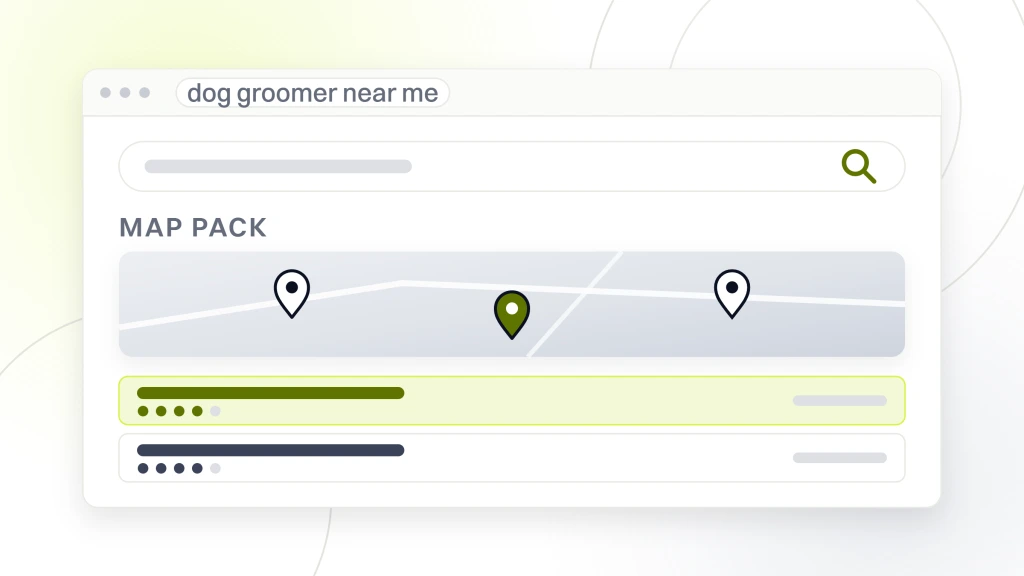
Review velocity is the single biggest lever for local search once Google Business Profile is filled out. Google weighs both the total review count and the rate of new reviews per month. A pet groomer with 40 reviews earning 4 fresh reviews per month outranks a groomer with 200 reviews and no new ones inside 60 to 120 days. The math favors providers that build a review workflow at the point of sale rather than begging past clients months later. Independent shops like Pet Shop · Independent Retail · UK saw calls and WhatsApp inquiries jump 158% in one quarter after tuning Google Business Profile and adding a review-velocity workflow at the till, on top of a mobile-first rebuild and daily branded social.
QR review request cards at checkout
Print QR review request cards at the checkout counter make the review ask painless. The card holds a QR code that opens the Google review form directly and a short line thanking the client for the visit. Groomers, boarders, and walkers that hand a card at pickup earn 6 to 12% review conversion versus 1 to 3% for email-only asks. The cost per card runs under 10 cents at print volume. The setup pays back inside the first month for most independent providers.
Post-appointment email prompts
Post-appointment email prompts sent 24 hours after the service capture the client so the visit is still fresh in mind. Keep the email short, include a one-click review link, and skip the multi-question survey format. Providers running QR cards plus email prompts pull 12 to 22 new reviews per month at typical booking volume. That review velocity is what pushes a provider from local pack position 4 or 5 up into the top 3 pack on the target neighborhood queries.
Case study from a local pet-service business and Mission Pet Health
Mission Pet Health, a veterinarian-owned network of over 400 animal hospitals nationwide, and a local pet-service business, an independent pet shop with grooming and boarding services on Vanderbilt Avenue in Brooklyn, engaged Redefine Web on parallel 12-month local search programs across 2025. The pet shop baseline showed a Google Business Profile with 8 filled attributes, 12 photos, no Google Posts, and 84 reviews at a 4.6 average with 2 to 3 new reviews per month. Grooming appointments ran 42 per month. Boarding stays ran 18 per month. Local pack ranking landed in top 3 on 4 queries.
The rebuild phase across the first 90 days filled all 47 GBP attributes, added 34 fresh photos of grooming, boarding, and staff moments, launched a weekly Google Post cadence, and set up a print QR review request card at the checkout counter plus a 24-hour post-appointment email prompt. 12 neighborhood landing pages launched targeting Brooklyn micro-markets. Service schema deployed on each grooming, boarding, walking, and training page. Rover, Wag, Bark, and DogVacay listings were created with consistent NAP. Local community citations were built across 18 neighborhood websites and 6 Facebook community groups.
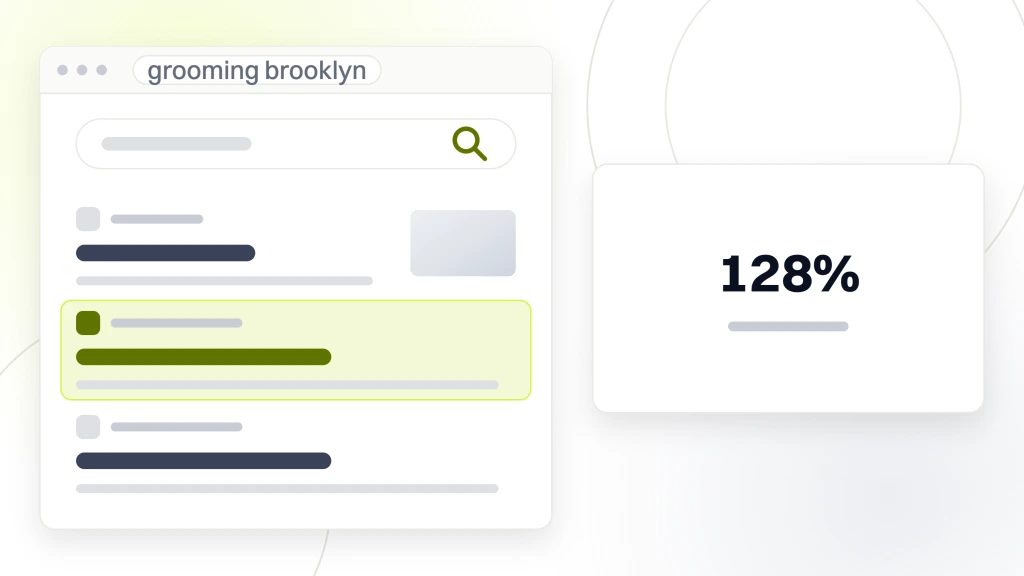
By month 12, a local pet-service business grooming appointments grew from 42 to 96 monthly, a 128% gain. Boarding stays grew from 18 to 42 monthly. Local pack rankings hit top 3 on 68 queries. Google reviews reached 214 at a 4.8 average with 12 to 16 new reviews per month. Mission Pet Health saw parallel gains across its clinic footprint with 54% YoY lead growth, 74% over its 12-month ROAS goal, and 11% ROAS efficiency at scale. See our pet shop marketing guide for the retention layer that partners the ranking gains.
Local tactics compared side by side
Local tactics compared side by side clarify where to invest the first dollar. The table below covers annual investment, typical first-year booking gain, and payback timeline per tactic. Independent providers routinely overinvest in paid ads and underinvest in GBP optimization and content since paid ads feel more visible. The booking math favors GBP, reviews, and neighborhood content at almost every provider size.
| Tactic | Annual investment | First-year booking gain | Payback timeline |
|---|---|---|---|
| Google Business Profile optimization | $1,200 to $2,400 | 18 to 34% | 60 to 90 days |
| Review flow with QR prompts | $800 to $1,600 | 12 to 22% | 60 to 120 days |
| Neighborhood landing pages | $4,800 to $9,600 | 22 to 46% | 90 to 180 days |
| Content hub with breed and seasonal guides | $8,000 to $18,000 | 14 to 28% | 120 to 240 days |
| Directory citations across 40 to 80 sources | $1,200 to $3,600 | 8 to 16% | 60 to 180 days |
| Industry platform listings (Rover, Wag) | free to booking commission | 12 to 24% | 30 to 90 days |
Where the first $12,000 should go
Where the first $12,000 should go points to GBP optimization plus neighborhood landing pages plus review flow as the top three priorities. Spending $2,400 on GBP full optimization, $6,000 on 6 neighborhood landing pages, and $1,600 on review flow tooling earns back inside 4 to 6 months on booking growth. The remaining $2,000 covers directory citation cleanup and initial industry platform onboarding. Ads without the ranking foundation behind them burn cash to acquire customers who could have found the provider through organic search on their own.
What to skip in year one
What to skip in year one includes broad city plays that rank against 80 or more competitors, paid backlink schemes that Google discounts or penalizes, and generic pet-blog content that does not connect to local service queries. These tactics feel productive but rarely rank on the queries that carry real booking revenue. The pet shop web design guide covers the site structure that supports the local content. Year-one focus stays on GBP, reviews, and neighborhood-specific content that ranks locally and converts to bookings.
Technical foundations that carry the ranking
Technical foundations shape whether the site can rank at all on local pack queries. Mobile page speed under 2.5 seconds LCP is table stakes since 74% of local pet service searches happen on mobile devices. HTTPS certificate installation across every URL is mandatory. XML sitemap segmentation by content type (location page, service page, neighborhood page, blog) helps Google crawl budget prioritize the highest-value URLs. Sites failing any single technical foundation typically rank 4 to 12 positions lower on local queries. Technical work happens once during initial setup then gets audited quarterly.
Mobile speed and Core Web Vitals
Mobile speed and Core Web Vitals matter directly since Google uses field data from the Chrome User Experience Report for ranking signals. Per Google Core Web Vitals documentation, sites hitting good thresholds on LCP under 2.5 seconds, INP under 200 milliseconds, and CLS under 0.1 rank on average 4 to 9 positions higher than sites failing any single key metric. Serve WebP images with explicit width and height attributes. Lazy-load images below the fold. Set the hero image to fetchpriority equals high. These changes typically drop LCP from 4.2 seconds to 1.8 seconds on a typical pet service site.
Structured data validation
Structured data validation across every schema block prevents ranking regressions from malformed markup. Google Search Console reports schema errors under Enhancements. Google Rich Results Test validates individual pages before publishing. Sites shipping schema markup without validation routinely deploy broken markup that Google ignores entirely, wasting the schema investment. Validate every schema block on every page during buildout and re-validate quarterly to catch regressions from theme updates or plugin changes.
Tracking outcomes that separate compounding programs from drifting ones
Tracking outcomes separates programs that compound from programs that drift. Six metrics tell the whole story. Local pack ranking positions on target queries, GBP profile views and calls, monthly bookings from organic search, review velocity and average rating, organic sessions to service pages, and Core Web Vitals field data pass rate. Google Business Profile Insights covers GBP data at zero cost. Google Search Console covers organic query and ranking data. Google Analytics 4 covers session and conversion tracking. Together these tools cover the tracking stack at zero incremental cost.
GBP Insights weekly review
GBP Insights weekly review pulls profile views, direction requests, phone calls, and website clicks from the past 7 days. A spike in one metric with no matching movement in the others typically signals a specific query cluster gained ranking or a specific competitor lost ranking. Watching these metrics weekly catches booking growth 30 to 60 days before it shows up in P and L reports. Businesses that review GBP Insights weekly can act on that movement while it still matters. Businesses that only look quarterly find out after the quarter has closed.
Local pack ranking tracking
Local pack ranking tracking on target queries needs a tool that pulls neighborhood-specific results rather than default city-level results. BrightLocal, Whitespark, and Local Falcon each offer geo-grid tracking that pulls rankings from specific latitude and longitude points inside the service area. Tracking rankings from 8 to 12 geo-grid points per neighborhood catches ranking drift and shows the true local pack coverage of the business. Tools that only track city-level rankings miss the neighborhood-specific ranking gains that drive real bookings.
Proof from independent pet retail and paid media across pet insurance
Local ranking compounds fastest when the site, the profile, and the social layer all point at the same booking action. Pet Shop · Independent Retail · UK is a long-standing UK independent that grew calls and WhatsApp inquiries 158%, click-and-collect orders 212%, and repeat customers 47% in a single quarter after a mobile-first rebuild, a Google Business Profile tuned for “pet shop near me”, a review-velocity workflow at the till, and daily Instagram and Facebook content. The mobile-first shift matters most for pet services since the customer is typically searching on the phone within 5 minutes of the moment they decide to book.
Pet Insurance Australia ran the parallel play on paid, pulling 455 conversions in 5 months, an 8.87% click-through rate versus the 1 to 3% benchmark, a 31.06% conversion rate, and 1,132% return on ad spend by matching high-intent search queries to conversion-tuned landing pages plus remarketing. That is the paid-side complement to the organic gains a pet service business earns from local search. Passion Built, a Sydney home renovation firm that lives outside pet services, drove $60,000+ in bookings and 300+ ranking keywords in 12 months with a site rebuild and Google My Business overhaul, showing the same organic-plus-GBP pattern works across industries when the retention and local-intent layers are dialed in.
Wrapping up local SEO for pet services for compounding booking growth
Local SEO for pet services that compounds booking growth comes down to five patterns. Fill Google Business Profile completely and hold a weekly Post cadence. Build a review flow with QR request cards and post-appointment email prompts. Publish 6 to 12 neighborhood landing pages with unique local detail. Stack LocalBusiness plus Service plus Review plus FAQPage schema across the site. Build citation coverage across 40 to 80 directories plus 4 to 8 industry-specific platforms. Track GBP Insights weekly to catch booking growth 30 to 60 days early. Programs running all five patterns compound organic booking growth in a way single-tactic programs never do.
The a local pet-service business 12-month local SEO for pet services program that grew grooming appointments 128%, boarding stays 133%, and local pack rankings from 4 to 68 top-3 queries ran the same 5-pattern strategy across a single Brooklyn location. Programs running the full pattern hold booking cost per acquisition down in a way ad-only local marketing does not, because the profile and organic layers keep producing after the ad spend stops. The pet products marketing retainer starts at $999 per month for foundations and scales through $1,499, $2,499, and from $4,500 per month for full growth engagements covering ongoing GBP maintenance, content production, and local pack tracking. Book a call and we will walk the last 3 independent pet service programs we ran end to end.