
DSO in dental stands for Dental Support Organization, the corporate parent that runs the business side of a dental practice, and the licensed dentist keeps clinical ownership. Roughly 30% of US dental offices already sit inside one of these groups (dental DSO model) in 2026, up from 12% a decade ago, and the acronym now shows up in every recruiter email, trade journal, and private equity healthcare tracker in the country.
This guide gives a practicing dentist the direct read on the model. You get the acronym breakdown, the legal map, the revenue math, the industry heavyweights by size, the cultural signals worth catching early, and the questions every practice owner should ask before a term sheet lands. Read straight through in about ten minutes and keep the reference tab open for your next recruiter call.
What DSO in dental means for practice owners
DSO in dental means Dental Support Organization. Three words that cover the model completely. Dental names the industry. Support names the function. Organization names the entity. In a DSO in dental setup, the corporate parent delivers business services to affiliated practices under a management services agreement (MSA), takes a management fee, and lets the dentist focus on chair time. Marketing, billing, HR, IT, procurement, and compliance all run out of the central office across the network.
The term replaced the older phrase “dental chain” in the mid-2000s. Corporate practice of dentistry laws in most states forced the industry to separate corporate ownership from clinical practice. The Dental Support Organization structure gave everyone a legal path. The parent owns the back office. The dentist owns the clinical entity. The MSA bridges the two. That legal workaround is why the model now dominates every trade publication and every healthcare private equity tracker in the country.
Where the DSO acronym came from
The phrase DSO in dental entered the trade press around 2004 to 2006, as state dental boards pushed back on the old chain model. Heartland, Aspen, and Pacific Dental Services helped define the operating template that other groups still copy. As private equity funding scaled, so did adoption of the term. By 2015 every dental trade conference had a DSO in dental track. By 2020 it showed up in mainstream healthcare business news. Today the phrase is standard terminology in every corner of the industry.
The DSO acronym in day-to-day practice
The DSO in dental phrase dentists hear at recruiter events (weigh the pros and cons) maps to specific operating changes on the ground. Marketing runs from a central team. Billing runs through a shared revenue cycle group. HR handles hiring and benefits. IT patches the practice management software. Procurement gets bulk discounts on supplies. A regional operations manager visits the office on a rotation and sits with the owner on strategy calls. Every one of those changes flows from three words on a business card. Dental. Support. Organization.
ADA Health Policy Institute data adds one more useful frame. About 10% of dentists over age 50 and 20% of dentists under age 34 already worked inside a DSO-supported practice as of 2019, and the mix has only tilted younger since. In short, DSO in dental is no longer a fringe career path. It is one of the two default routes for a dentist joining the workforce this decade.
The legal contracts behind every DSO dental deal
Every affiliation deal names the corporate parent as the support organization and the practice as the professional corporation, or PC. The management services agreement between the two spells out the model in legal terms. The parent provides business services listed in a service exhibit. The PC pays a management fee tied to collections. The parent does not touch clinical decisions. The PC does not touch marketing budget or HR policy. Each side stays in its lane by contract, not by handshake.
The structure carries specific weight in states with strict corporate practice laws. Texas, California, New York, and about 30 other states forbid non-dentists from owning a dental practice. The support organization model keeps the corporate parent out of clinical ownership and keeps the arrangement legal. A dental chain that violated those rules gets shut down. A properly structured group stays operating for decades. Study the ADA News coverage on how state boards enforce these rules.
| Element | DSO parent | Practice PC | Contract layer |
|---|---|---|---|
| Owner | Corporate LLC or Inc | Licensed dentist | Management Services Agreement |
| Handles | Marketing, HR, IT, RCM | Clinical care | Term, fees, exits |
| Legal status | Non-clinical entity | Regulated dental practice | Enforceable both ways |
| Revenue source | Management fee | Patient collections | Fee formula |
If the MSA term runs past 25 years and the noncompete radius covers more than three counties, negotiate both down before you sign. Long term plus wide radius is the single most restrictive combination in DSO in dental deals.
Legal boundary between the entities
The DSO cannot legally direct clinical treatment. The dentist cannot legally reassign marketing or billing without amending the MSA. Both boundaries protect both sides. When a DSO oversteps and tells a dentist which procedure to recommend, the practice board complaint gets filed and the DSO loses on the enforcement action. When a dentist tries to run corporate marketing themselves without notifying the DSO, the MSA gets amended or the affiliation ends. Read the boundary sections of the MSA carefully. That is where the friction lives.
Contract term and renewal mechanics
Most MSAs run 20 to 40 years with automatic renewal options. That length shocks dentists coming from solo practice. The rationale is the long payback horizon on the DSO investment, and above all the equity rollover math. Read the renewal clauses. Read the termination clauses. Read the noncompete radius that applies if the affiliation ends. A 40-year term with a five-county noncompete radius restricts your options if the DSO fails. A 20-year term with a two-county noncompete radius keeps more flexibility open. Term length matters more than most dentists first recognize.
The revenue math behind DSO affiliation
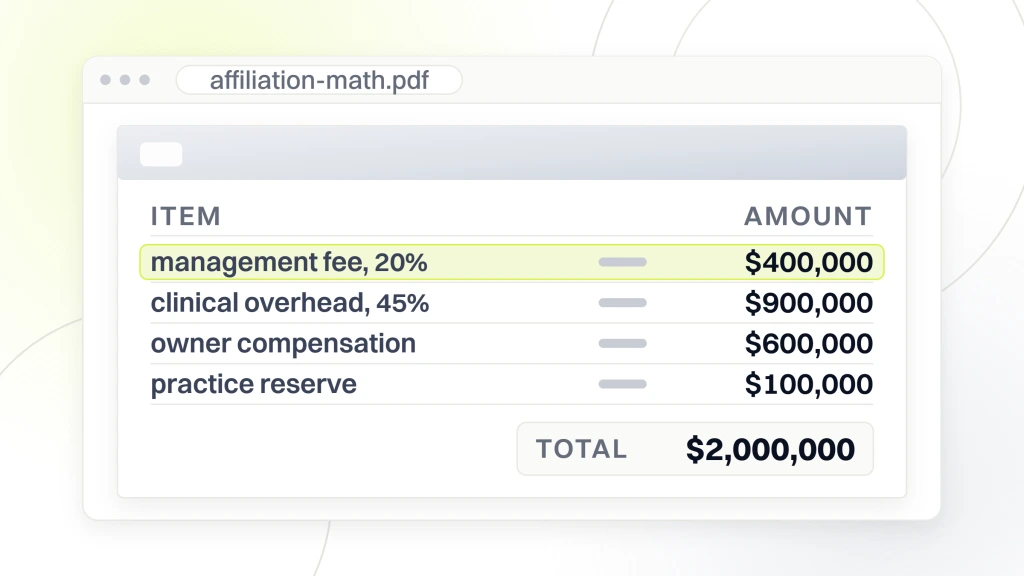
Once the definition is clear, the revenue math becomes the real study. Take a $2 million per year practice affiliating with a mid-tier group. The parent takes a 20% management fee, moving $400,000 up the chain. Clinical overhead runs 45%, or $900,000. Owner dentist compensation, at 30% of collections, lands at $600,000. The remaining $100,000 stays in the practice as reserve cash for equipment replacement and unexpected expenses.
The equity rollover is where the real DSO in dental deal math lives. Most affiliation deals ask the selling dentist to roll 20% to 40% of sale proceeds into parent equity vesting over two to five years. If the group doubles enterprise value and sells to a larger PE firm at a higher EBITDA multiple, that rolled equity often returns 2x to 3x. On a $2 million practice with a $2.5 million transaction value at a 6x multiple, a 30% rollover of $750,000 might return $1.5 million to $2.25 million on the next recap event.
Fee formulas vary more than the headline suggests
Some groups charge a straight percentage on collections. Others structure a lower percentage plus a fixed dollar amount per operatory. Others build a graduated formula that drops the percentage if the practice hits growth targets. A 20% flat fee looks similar to a 15% plus $2,000 per chair formula until you run the year-three math and the numbers diverge by $60,000 annually. Ask for the formula in writing. Model three years forward. Compare across three groups before you name a preferred structure.
Compensation structure worth negotiating
Owner dentists in affiliation deals earn 30% to 35% of collections plus parent equity vesting over the term. Associate dentists earn a base salary of $150,000 to $220,000 plus a production bonus of 25% to 30% above a daily threshold. Some groups cap production comp at a ceiling. Others let it run. The comp structure matters more than the headline number. A high base with a low ceiling caps earnings on a strong year. A lower base with an open ceiling rewards you during peak seasons.
How big the DSO in dental segment has become
DSO in dental scale is the next thing worth knowing. Roughly 400 to 500 support organizations operate in the US in 2026, running about 12,000 to 14,000 dental practices. That is close to 30% of the total practice count. Five years ago the number sat at 18%. Ten years ago it was 12%. The trend line is steep and shows no sign of slowing through the rest of the decade.
Heartland Dental runs about 1,700 offices across 38 states. Aspen Dental Management runs about 1,000. Pacific Dental Services runs about 950. Smile Brands, Great Expressions Dental Centers, MB2 Dental, and Dental Care Alliance each run several hundred. Together the top 10 groups cover about 6,000 practices, close to half of the segment total. The tail sits at about 400 mid-tier groups running 15 to 60 offices each. Most affiliation conversations happen in that mid-tier segment.
- Heartland Dental at about 1,700 offices across 38 states
- Aspen Dental Management at about 1,000 offices
- Pacific Dental Services at about 950 offices
- Smile Brands, Great Expressions, MB2 Dental at several hundred each
- Dental Care Alliance, InterDent, Riccobene at 100 to 300 offices
- Mid-tier tail of 400 groups at 15 to 60 offices each
- Small specialty groups in ortho, pediatric, and oral surgery segments
The top 10 groups run about 6,000 offices, close to half of the segment. Most affiliation offers actually come from the 400 mid-tier groups.
The mid-tier group where most deals close
Mid-tier groups run 15 to 60 offices, usually under private equity ownership, and usually planning to sell to a larger PE firm inside three to five years. That segment is where equity rollover math tends to deliver the strongest returns, since the group still has growth ahead of it. The tradeoff is that mid-tier groups have less operational maturity than the top platforms. Culture varies practice by practice. Regional manager tenure varies. Ask for three named references at practices your size before you sign anything with a mid-tier group.
Specialty groups and their higher multiples
Specialty groups in orthodontics, pediatric dentistry, oral surgery, and endodontics pay higher acquisition multiples than general dentistry groups. Referral flow, case value, and payer mix in those specialties each carry more predictable economics. Smile Doctors runs the largest ortho group with several hundred offices. Pediatric platforms like Smile Design and Chompers run similar rollups. A specialist thinking about affiliation should ask for specialty comparables, not general dentistry data. The multiples differ enough to shift the entire deal math.
Culture signals worth catching early
The definition is the same for every group, but two support organizations can share the same three letters and run completely different operating cultures. One might be dentist-founded with a slow growth model and strong clinical judgment. Another might be PE-backed with aggressive quarterly production targets. Same category, opposite culture. Every affiliation decision hinges on the specific group, not on the general category. Ask affiliated dentists off the record. Ask what happens when a practice misses a monthly production target twice in a row. That answer tells you the whole culture in one sentence.
Look at three signals. First, ownership structure and time since the last recapitalization event. A group one year into a new PE cycle behaves differently than one four years in. Second, regional manager tenure in your area. Regional managers who stay three years build real relationships. Regional managers who cycle every 18 months treat practices like line items. Third, marketing execution across the network. A group whose per-office paid media reports are unavailable or unimpressive is a group whose entire operating model may be equally shallow. See HubSpot on multi-location marketing for the operational tension every group runs into once scale kicks in.
PE-backed vs dentist-led groups
PE-backed groups move fast. Growth targets get set quarterly. Acquisitions happen monthly. Marketing gets funded generously. Regional managers cycle every 18 to 24 months. Dentist-led groups move slower. Growth is deliberate. Regional manager tenure runs longer. The tradeoff for dentist-led groups is less capital and slower operational maturity. Neither model is inherently right or wrong. The correct choice depends on whether you want speed and scale or continuity and slower growth. Match the model to your own five-year plan for your practice.
Production culture reveals the group on day one
The clearest culture signal shows up in how the group talks about production. One that leads with clinical outcomes and patient satisfaction is telling you where the focus sits. One that leads with monthly production targets and quarterly quotas is telling you the same thing from the other side. Neither is inherently wrong. Both cultures work for different dentists. Just make sure the culture you sign into matches how you want to practice for the next five to ten years, not just the next quarter.
The marketing side dentists rarely see
Marketing execution decides a large share of the value delivered inside DSO in dental deals, and it is the piece dentists ask about last. A group with a working marketing stack pulls 20% to 40% more new patients per location than a comparable solo practice. A group with a broken marketing stack costs the affiliated dentist 15% to 25% of the new patient volume they would have generated solo. Marketing is the single largest hidden variable in the economics of DSO in dental deals.
Working stacks share five features. Shared brand equity across locations with per-location subpages that carry local trust cues. Google Business Profile management run by someone who has worked map pack rankings before. Location-specific paid search built at the office level, not the metro level. Awareness and consideration paid social layered across the market. And call tracking that scores every ring by whether it booked. Skip any one and the new patient count underperforms across the network. See our dental SEO services writeup for the full breakdown.
A working marketing stack pulls 20% to 40% more new patients per office. A broken stack costs 15% to 25% of the volume you would have booked solo.
Per-location detail that decides map pack rankings
Map pack rankings live on office-level detail. Named front-office manager on the location page. Real staff photos, not stock. Neighborhood mentions the local search index picks up. Reviews collected office by office with real patient names. Citations in the same NAP format across every directory. Every one of those is per-location work. A group marketing team that treats 40 offices as one program cannot deliver map pack coverage. A team with per-office ownership can deliver it every quarter.
Call tracking as the truth layer
Call tracking is the single feature that separates a real marketing program from a spreadsheet exercise. Every call scored on booked or not booked. Every source tagged. Every campaign judged on cost per booked new patient. A group without call tracking has no way to defend its marketing budget on a board call. A group with call tracking can rebalance spend across offices weekly and push budget to the markets returning the strongest new patient numbers. Non-negotiable at scale.
Real DSO in dental case study at 50 locations
Smile Design Dentistry, a 50-plus location group based in Central Florida and Tampa Bay, showed us what DSO in dental operations look like at scale. The group faced the same problem every mid-size platform runs into. Ad spend up. Patient quality down. PPC campaigns targeting too broadly. Landing pages that could not close a phone-in visitor. Paid social barely used. Tracking thin enough that the executive team could not tell which office pulled the strongest paid media performance in any given month.
We ran a per-location, per-funnel-stage rebuild. Google Ads got restructured by geo and by intent stage. Landing pages got built for each office with local trust cues layered under a national brand system. CallRail integration scored every call by patient quality, not just call volume. Paid social launched with awareness, consideration, and conversion layers built to move a prospect through the funnel with video and demographic precision. PPC conversion rate gained 20%. Cost per call dropped 30%. All 50-plus offices got optimized campaigns instead of a shared template.
Stack detail that moved the numbers
Funnel-stage campaign structure. Geo-modified bid targeting at the office level. Landing pages that named the neighborhood, the front office manager, and the two closest cross streets. Call scoring on every ring. Weekly reporting by office. Ongoing creative testing with capacity-aware budget allocation. Every one of those pieces reinforced the next. Skip the call scoring and the paid media dashboard turns into a vanity report. Skip the landing pages and the paid clicks bounce. Skip the reporting cadence and budget stays trapped in low-return markets for months.
Lessons for any group at scale
The Smile Design playbook translates cleanly to any group running 10-plus offices in a shared media market. Per-location landing pages with local trust cues. Call scoring on every ring. Funnel-stage campaign structure. Weekly per-office reporting. Skip any one of them and the paid media budget grows every quarter without moving new patient counts. Every dentist considering DSO in dental affiliation should ask for three months of per-location paid media reports before signing anything. See our DSO dental marketing for multi-location groups writeup for the full rollout pattern.
Questions to answer before affiliation makes sense
DSO in dental affiliation makes sense only after you answer three questions honestly. First, how long do you plan to keep practicing chairside. If retirement sits inside a decade, the timing matches your exit. Second, do you want to grow past a single location. If yes, group capital moves you faster than solo growth. Third, how much clinical autonomy do you need to stay happy. If losing 15% of operational calls would wreck your Monday, no term sheet is worth signing.
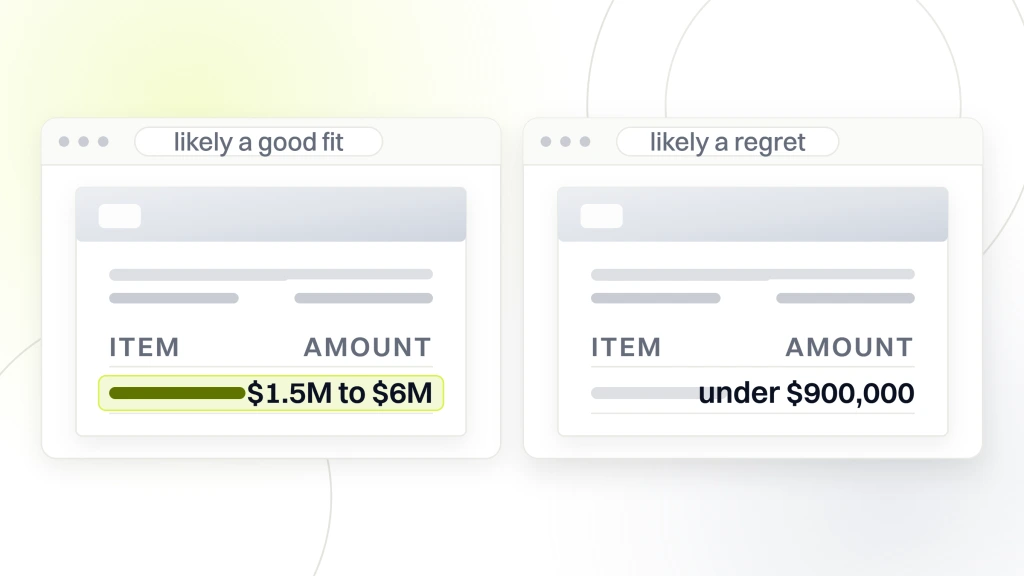
Practices most likely to be happy inside a group are producing $1.5 million to $6 million a year, run three or fewer operatories, want out of operational headaches, and have an owner within ten years of retirement. Practices most likely to regret the deal are producing under $900,000, run heavy specialty procedures the group does not staff for, or have a strong personal-brand owner whose patients would not stay after the sale. The fit question is about the practice, not the parent.
Preparation before the first DSO call
Read your last three years of tax returns before you talk to a group. Know your EBITDA. Know your collections trend. Know your patient count. Know your production per hour. Know your insurance write-off percentage. If you cannot recite those numbers, you are not ready to negotiate. DSO reps are trained to walk you through their preferred multiple. Your preparation is the only counterweight. Get your accountant to run a quality-of-earnings analysis before you sign anything. That report costs about $8,000 and saves ten times that in the negotiation.
What to expect after you sign
The first 90 days after closing are the hardest. The group drops its operating manual on your team. Your practice management software may switch. Your uniforms may change. A regional manager visits every week. Some team members quit. Others rise. Marketing budget moves from your local vendor to the central team. Patient reactions vary. Most patients notice nothing. Some ask why the front desk voicemail changed. Give the transition a full year before you judge the deal. The rough patches usually smooth out. The permanent changes are worth knowing about in advance.
Common DSO in dental myths worth clearing up
Once a dentist studies DSO in dental seriously, a handful of persistent myths deserve a reality check. Myth one, these groups always overwork their dentists. Reality, some do, most run the same production expectations as a healthy solo practice, and the culture varies by group. Myth two, every offer looks the same. Reality, fee formulas, comp structures, and equity terms vary widely across three groups in the same negotiation.
Myth three, the equity rollover is a scam. Reality, strong groups deliver real returns to affiliated dentists on recap events. Weaker groups do not. Myth four, you cannot leave a group once you sign. Reality, MSAs have termination clauses that spell out exit conditions clearly. Myth five, patients notice the affiliation. Reality, most patients notice nothing beyond a possible change in front-desk voicemail. The reality on all five myths is more nuanced than industry Twitter suggests. Study each one before you buy or dismiss it.
Why the myths persist even after the data lands
DSO in dental forums surface strong opinions faster than balanced data. A single bad affiliation experience gets written up in detail. A hundred smooth affiliations stay quiet. The result is a public conversation weighted toward horror stories. That skew is worth remembering when you read online debates. Real data on affiliation outcomes comes from the trade groups and from PE firm quarterly reports, and both sources tell a more balanced story than the loudest forum posts imply.
Taking a balanced view before deciding
A balanced view weighs the specific group in front of you against the specific alternative path you have. Solo growth is a real option. Slower expansion under a group practice partnership is another. Selling to a private buyer instead of a DSO is a third. Each path has math worth running. The DSO in dental decision is one option among several, not the default endpoint for every dentist. Treat it that way and the choice you make sits on better ground.
Where to start if DSO in dental affiliation intrigues you
If affiliation intrigues you enough to explore, start with three specific actions. Pull three years of tax returns and prepare a quality-of-earnings package. Talk to three groups and collect comparable term sheets. Talk to two affiliated dentists inside each one off the record. Those actions cost you nothing but time and set up the negotiation cleanly. Rushing past them costs you 5% to 10% of the sale price on average across the deals we have watched.
Once the term sheets arrive, involve a transaction attorney familiar with DSO in dental deals. Compare fee structures, comp formulas, equity rollover terms, noncompete radii, and exit clauses side by side. If two offers come in inside a 10% band, the deal is fair. If one is 25% above the others, ask why. If one is 25% below, walk. Ready to look at what a real dental marketing program covers as an alternative to affiliation, our dental marketing agency hub covers the full engagement. For the retainer math, our dental marketing retainer writeup covers what a growth practice pays for a working stack. And Google Search Central is the reference for schema markup a group site should carry across every location.
Three-action checklist for the next 30 days
Pull tax returns for the last three years. Prepare a quality-of-earnings package with your accountant. Book intro calls with three groups. Ask each rep the five filter questions on the first call and note answers verbatim. Rank the three groups on culture, execution, and math. Talk to two affiliated dentists inside each of the two finalists off the record. That thirty-day sequence gives you enough information to know whether to move forward or walk. And the same thirty days gives you the pull at the table you would otherwise miss.
Decision check at day 30
At day 30, ask yourself three questions. Does the top offer feel financially fair after seeing three side by side. Do you trust the operating culture based on the affiliated dentist references you spoke with. Can you live with the clinical autonomy tradeoff for the term of the MSA. If all three answers are yes, move forward with letter of intent. If any one is no, walk or take another sixty days to explore. The decision is one of the biggest of your career. Take the time it deserves.