Thirteen percent of dentists nationwide were affiliated with a dental support organization in 2022, up from 8.8% in 2017, per the ADA Health Policy Institute. That growth curve is the reason the pros and cons of joining a dental DSO sit on every founder dentist’s desk at some point. Practice brokers pitch it as a career defining exit that hands the seller a check big enough to change retirement math and a shared services layer that finally absorbs the parts of running a practice nobody trained for in dental school. Dentists a year or two into a signed deal describe it differently. The cash was real. The autonomy trade cost more than expected. The marketing engine started producing new patients on a predictable curve by month four. The corporate reporting cadence started to grind by month nine. This guide walks the honest tradeoffs from the dentist side of the table, drawn from the conversations we run with practice owners in the middle of these decisions every quarter. If you are weighing an offer, staying independent, or launching your own group, read our dental marketing hub alongside this piece so the tradeoff sits in full context.
What joining a dental DSO really means for the dentist
The phrase joining a DSO covers three very different scenarios, and the pros and cons of joining a dental DSO shift depending on which one fits the dentist at the table. The first is a founder dentist selling an established practice into a group buying up dental clinics. That deal blends cash at close, a rollover equity stake in the DSO parent, and a multi year employment agreement that keeps the seller in the chair. The second is an associate dentist joining an existing DSO clinic as a W2 employee, with a bonus structure tied to production. The third is a partner dentist joining a de novo DSO expansion where the group builds a new clinic and hands the equity structure to the founding provider.
The tradeoffs on autonomy, pay, and shared marketing services look different in each case. Most of what dentists read online mixes them together and produces the wrong impression. The bulk of this guide walks the founder sell scenario since it carries the biggest financial and lifestyle stakes. Employed dentists and de novo partners get their own section near the end. The core framing stays constant. Structure first, then math, then culture, then marketing. That is the order deals actually break in when they go wrong.
Founder dentists reading this in the middle of a letter of intent will get the most value from sections 3, 4, and 6. Associate dentists weighing a job offer will find section 8 most direct. Partner dentists building a de novo clinic under a group banner will find section 8 and the FAQ most useful. Read the full piece once, then loop back to the section that fits your specific decision.
The pro column dentists list once the deal closes
When we ask dentists who joined a dental DSO what the real upsides turned out to be, the answers cluster around five themes. The first is capital. Founder dentists selling a mature practice walk away with a payout that runs 5 to 8 times EBITDA, structured as 60 to 75% cash at close and the balance in rollover equity. For a practice producing $500,000 of clean EBITDA, that math lands the seller between $2.5M and $4M at close, with more value in equity that vests at exit. Independent sales to another dentist rarely produce those multiples. The private equity math is what makes the numbers work at that scale.
The second is operational relief. Payroll, benefits, insurance credentialing, PPO negotiation, IT support, and revenue cycle management stop being the dentist’s problem the day the deal closes. Most founder dentists we speak with describe the first six months as a strange kind of relief. The parts of practice ownership that ate evenings and weekends move to a corporate services team, and the dentist gets to focus on the clinical work that pays the bills. A solo owner who was spending 15 hours a week on non clinical work now spends closer to 2, which either returns to family time or to production.
The third is marketing. A well run dental DSO deploys a group level marketing stack that a solo practice cannot justify buying alone. Redefine Web works with dental groups where the shared stack runs paid media, SEO, review generation, and per location websites for the whole footprint. Per clinic cost drops, results improve, and clinic level attribution finally becomes visible. Our dental DSO website rollout program runs the same stack across the whole footprint. See how we structured this for a 50 plus location group in Smile Design Dentistry, where cost per call dropped 30% and paid conversion rate climbed 20% across the network.
- 5 to 8 times EBITDA multiples that beat any solo-to-solo sale.
- Full offload of HR, credentialing, RCM, and IT within 90 days.
- Group marketing stack that beats solo agency spend on cost and result.
- Rollover equity that vests at the next sponsor exit in 4 to 7 years.
- Phased retirement runway instead of a hard cutoff on a Friday.
Equity upside at exit
The fourth pro is the rollover equity. When the dental DSO sells at the next fund cycle, usually 4 to 7 years after the initial deal, the rollover equity of a founder dentist can be worth 2 to 4 times what it was worth at close. That is the private equity math working in the dentist’s favor. It is also the one that gets missed most often when people describe DSO deals as selling your practice. A dentist who rolls 30% of the deal into equity is still an owner, just of a bigger company. When the next exit hits its targets, the second bite of the apple can rival or beat the first check.
That upside is not guaranteed. DSO exits that miss return targets produce equity worth less than the initial rollover, or in the worst cases, zero. Founder dentists who accept larger equity rollovers in exchange for smaller cash at close take that risk directly. The right split depends on the dentist’s runway, appetite for risk, and read on the sponsor’s track record with prior platforms. Ask the sponsor for the outcome of their last two exits, not just the pitch deck story.
Continuity of care after retirement
The fifth pro shows up for dentists nearing retirement. Selling to another local dentist means finding a buyer who wants to take over a lease, hire staff, and inherit a patient base. Retirement aged sellers routinely spend 18 to 30 months looking for a qualified individual buyer. A dental DSO deal closes in 90 to 180 days once the letter of intent is signed. The patients keep the same clinic, the staff keep their jobs and often see a benefits upgrade, and the retiring dentist can transition out over an employment agreement that phases down clinical hours instead of a hard cutoff.
The con column dentists usually underweight before signing
The downsides of joining a dental DSO are real, and they hit hardest at exactly the moments the pros feel their strongest. Autonomy is the big one. Founder dentists who spent 15 years choosing their own lab partners, buying the equipment they trusted, and running the case philosophy they believed in feel the shift within the first six months. Corporate procurement negotiates group contracts with specific labs and vendors. Case philosophy moves to a shared clinical playbook that individual clinicians influence but do not dictate. Some dentists welcome the standardization. Others describe it as watching their practice slowly stop feeling like theirs.
Employment agreement terms are the second con. Post close, the founder dentist is a W2 employee of the PC with a pay structure that blends a base salary and a production bonus. The math tends to land between 25 and 32% of collections for a general dentist, which is a step down from what a solo owner takes home before overhead. The DSO argues, fairly, that the take home comparison should include benefits, retirement contributions, and the elimination of practice risk. That is true. It is still a different number on the paycheck every two weeks.
Non-compete and non-solicit clauses
Every founder sell deal includes a non-compete and a non-solicit. The typical terms restrict the dentist from practicing within a defined radius of 10 to 25 miles for 2 to 5 years after the employment agreement ends, and from soliciting former staff or patients. Some deals include a non-disparagement clause that survives the employment agreement indefinitely. Dentists who plan to keep practicing after their DSO commitment ends have to plan around these terms carefully. A 5 year non-compete after a 5 year employment agreement means 10 years off the local market. That is a real constraint on the next chapter and shapes the value of the deal more than the cash at close does.
Cultural fit and clinical staff churn
The third con is cultural. The DSO’s HR playbook, dress code, scheduling protocols, and internal reporting cadence replaces whatever culture the founder dentist built. Some clinics take that transition well. Others watch experienced hygienists and front desk leaders leave inside the first year because the new operating rhythm does not fit. Replacing that staff costs money, and worse, patient relationships. A practice that ran for a decade with the same treatment coordinator has a real trust asset. Losing her because the DSO’s centralized scheduling model felt impersonal is a hit the model does not always recover from cleanly.
The fourth con is the reporting cadence. Founder dentists who spent 20 years running their own practice without asking anyone’s permission adjust to monthly KPI reviews with a regional operations director. The topics are legitimate. Production per chair hour, case acceptance rate, new patient conversion. The rhythm is new. Some dentists find it clarifying. Others find it exhausting by month nine and describe it as the single most tiring part of the transition.
Pros versus cons at a glance
| Dimension | DSO pro | DSO con |
|---|---|---|
| Compensation | Cash at close plus rollover equity at 5 to 8 times EBITDA. | W2 pay of 25 to 32% of collections. Lower than owner take home. |
| Autonomy | Freed from HR, IT, credentialing, RCM, and lease work. | Lab partners, materials, and case philosophy shift to group standards. |
| Marketing | Group media stack, review engine, and per location websites at scale. | Local brand equity sometimes retired for the group brand. |
| Growth | Capital for equipment upgrades, second location, hygiene bay adds. | Capital allocation decided by the corporate team, not the clinic. |
| Career runway | Phased retirement over the employment agreement. | Non-compete of 2 to 5 years restricts what the dentist can do after. |
| Culture | Staff get benefits and career paths a solo practice cannot fund. | Long tenured staff sometimes leave because the rhythm does not fit. |
The table looks balanced because it is. The pros and cons of joining a dental DSO are not a lopsided score in either direction. They are a tradeoff that fits some dentists cleanly and grinds against others. The honest question is not whether the DSO model is good or bad in general. It is whether it fits the specific dentist in the specific practice at the specific career stage. Our guide on DSO versus independent practice walks the same tradeoff from the independence side of the choice.
What the money really looks like at close
Founder dentists deciding whether to sell to a dental DSO need to model the money three ways. The gross deal value is only the starting point. Cash at close is what the seller receives at signing, typically 60 to 75% of the purchase price. Rollover equity is the balance, held in shares of the DSO parent that vest over the employment agreement or on a defined schedule. Post close pay is the W2 salary and production bonus the seller earns as a working provider for the length of the employment agreement.
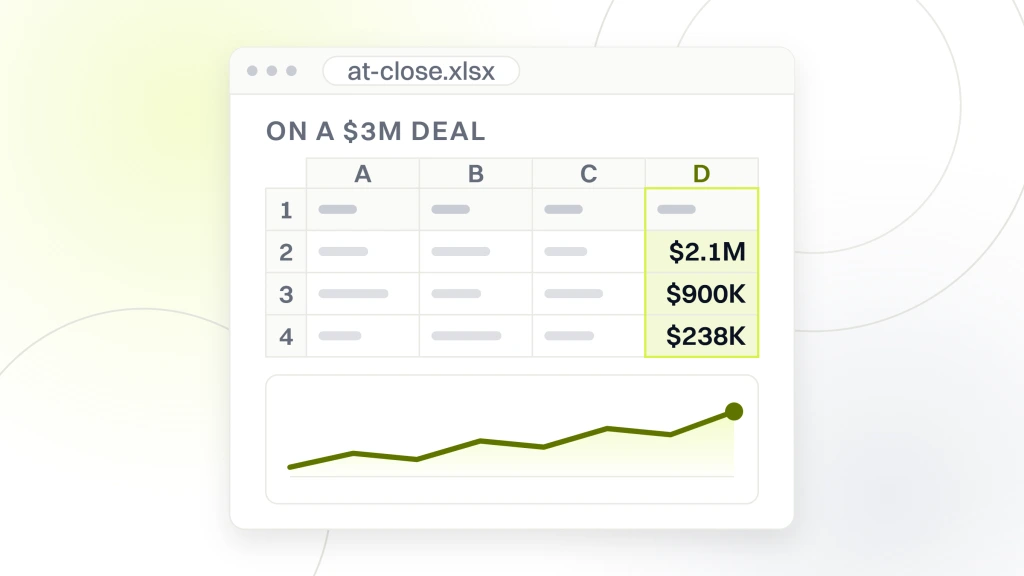
The order of magnitude example most brokers use looks like this. A practice producing $2.5M in yearly collections at a 20% EBITDA margin (clean, adjusted, and defensible) generates $500K in normalized EBITDA. A 6 times multiple lands the deal at $3M. Cash at close of 70% equals $2.1M pre tax to the seller. Rollover equity of $900K vests over 4 years and cashes out at the next DSO exit at whatever multiple the sponsor achieves. Post close W2 pay of 28% on collections of $850K per year (the seller’s personal production) lands at $238K yearly plus benefits. The seller has $2.1M in the bank, $900K vesting, and a $238K salary. That is the math, roughly.
Tax treatment depends on the deal structure. Most dental DSO deals are asset sales, which means the seller pays some ordinary income on personal goodwill and some capital gains on the balance. A stock sale is capital gains treatment across the board but rarer. A good CPA models the after tax numbers, since state tax rates and asset allocation shift the take home meaningfully. Dentists who skip the CPA modeling step regret it. Every seller we know who has been through a dental DSO deal recommends the same 3 line rule. Get a CPA who has seen DSO deals, a dental focused M&A attorney, and a broker whose fee is aligned with the dentist’s outcome rather than the buyer’s.
What the marketing engine looks like on day one
The marketing shift after joining a dental DSO is one of the fastest tangible changes. Most solo practices we talk to before a DSO deal run a fragmented mix. A local web vendor charges $250 a month for hosting and small edits. A Google Ads freelancer runs $1,800 in ad spend plus a $500 management fee. A review request tool sends SMS after appointments. A separate SEO agency handles content, sort of. Total marketing spend runs $2,600 to $3,500 a month, and the results are hard to attribute cleanly to any of it.
Post close, the DSO’s shared marketing stack takes over. The website moves to the group’s location page architecture. The Google Business Profile joins the central management dashboard. Paid media consolidates to the group account with per clinic campaigns. The review engine runs on the group platform. Per clinic spend often drops slightly, results usually improve, and clinic level attribution finally becomes visible. Redefine Web has watched this rollout at multi location groups where the shared stack made the difference between EBITDA per clinic staying flat and EBITDA per clinic climbing 22% in the first year. See how we ran the SEO and web rebuild for North County Dental Care, where patient growth hit 1,000% and monthly patient volume steadied at 12 to 16 new bookings.
The upside is not automatic. DSOs with weak marketing leadership deploy the same fragmented mess at scale, and the clinic sees no gain. Ask a specific question before signing. Show me the last 6 months of new patient volume at 3 clinics of comparable size, split by paid, organic, and referral. If the answer is confident and the numbers hold up, the marketing engine is real. If the answer is vague, the marketing pro of joining that DSO is not what the pitch deck claims. Marketing scale is the single easiest pro to verify with a data request, and the single easiest to fake in a slide deck.
How VP Dental unified web and SEO under one strategy
Not every group scale marketing play requires a full DSO acquisition. Some independent practices run a DSO caliber marketing stack on their own by picking one partner instead of stitching vendors together. VP Dental, led by Dr. Valerie Preston with 20 plus years of clinical experience, is the reference we point founder dentists to when they ask whether independents can compete with the DSO marketing machine. The answer is yes, if the vendor stack collapses to one accountable partner.
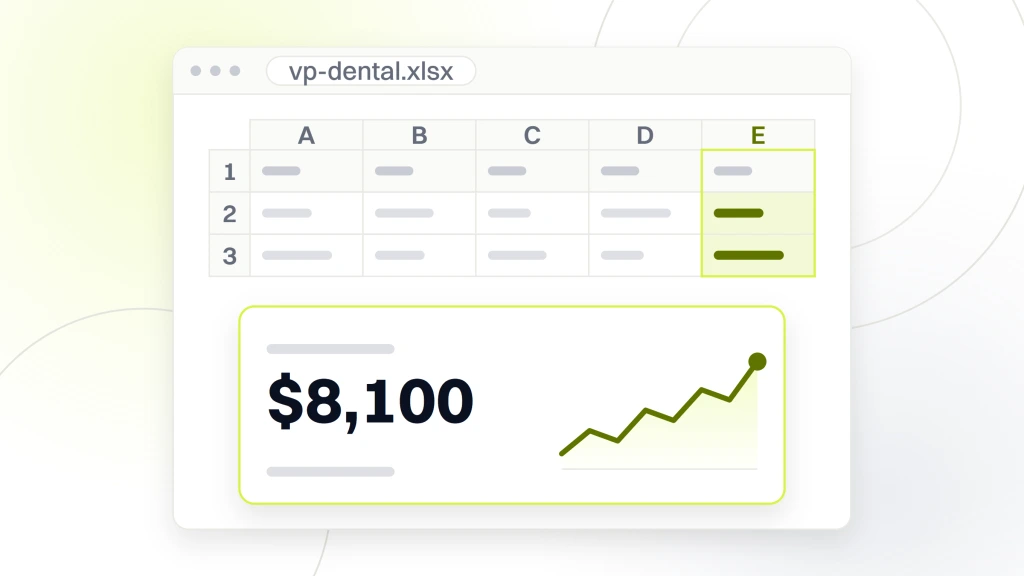
Before the rebuild, VP Dental was working with fragmented vendors splitting web from SEO, which inflated costs and diluted performance. The old website was slow, missing online scheduling, and invisible on Google Maps just a few miles outside the office radius. We rebuilt the site on WordPress with authentic photography, patient friendly navigation, and integrated booking, payments, virtual consults, and digital forms. We ran the Google Maps SEO campaign under the same roof. The result was 100% growth in new monthly patients, $8,100 in added monthly recurring revenue, and a 776% climb in search impressions. One partner, one strategy, real accountability, no finger pointing.
The lesson for a dentist weighing a dental DSO deal is direct. Marketing scale is a real pro of joining a good group, and it is worth a specific dollar figure when comparing the offer to staying independent. Marketing scale is also achievable outside the DSO model when one partner runs web, SEO, paid, and reviews as a single stack. Deduct the marketing pro accordingly. See our dental DSO marketing playbook for the exact one partner setup we run. if you can replicate 80% of it while keeping full ownership and clinical autonomy.
How iSmile Dental Spa rebuilt from broken foundations
Some independent practices come to the DSO decision with digital infrastructure so broken that the DSO shared stack looks like the only way out. iSmile Dental Spa in Carmichael, CA is the counterpoint. A premium practice offering sedation dentistry, periodontal care, and specialty treatments, iSmile had a strong offline reputation and a website that undercut every bit of it. Non mobile friendly, non HTTPS, broken links, no ranked keywords, and 1 to 2 new patients per month from digital.
We rebuilt the site on secure HTTPS with a mobile first design, added specialized service pages for sedation and periodontal treatment, cleaned the NAP citations, ran the Google Business Profile through a full setup, and layered in Google Ads and video production. In 6 months the practice ranked page one for 75 keywords. Organic traffic climbed 800%, patient acquisition grew 900%, and monthly new patient volume steadied at 12 to 14 patients per month. Marketing ROI hit 500%. That is what a full stack rebuild looks like when one partner owns the whole thing. Dentists weighing a DSO deal to escape a broken vendor mix should first ask whether the mix itself is fixable, because the answer is usually yes.
Employed dentists and de novo partners face a different tradeoff
Everything above focuses on the founder sell scenario because it carries the biggest financial and lifestyle stakes. Associate dentists joining an existing dental DSO clinic as W2 employees face a shorter list of pros and cons. On the pro side, they get benefits, retirement contributions, a defined career path, and often mentorship from a regional clinical director. On the con side, they get less production autonomy than a solo associate at an independent practice, and their pay cap is set by the group’s associate schedule rather than negotiated per hire. Recent grads often find the trade worth it. Dentists 5 plus years out with a strong local network usually do not.
De novo partner dentists opening a new clinic under the DSO brand face a hybrid version. The equity structure is friendlier than a straight employment deal, and the clinician gets a real ownership stake in the location. The tradeoff is that the clinic is not independent. Marketing, HR, and IT are still shared services. Vendor and lab decisions still run through corporate. The de novo model works well for dentists who want ownership without wanting to build the operational infrastructure from scratch. It works poorly for dentists who want to define the clinical playbook themselves.
- Associate hire: W2 pay, capped bonus, shared clinical playbook.
- De novo partner: real equity, corporate ops, shared marketing stack.
- Founder sell: cash at close, rollover equity, employment agreement, non-compete.
- Independent alternative: full autonomy, no exit multiple, heavier ops load.
Dentists thinking about which scenario fits their career should read the broader guide on how the dental service organization structure works. The pros and cons flow directly from the structure, and understanding the structure clarifies which scenario is the honest fit.
Who the pros and cons of joining a dental DSO fit best
Based on the conversations we run with dental practice owners each quarter, the dentists who tend to thrive after joining a dental DSO share a small set of traits. They value operational relief over ownership autonomy. They see the practice as a business to grow rather than a personal reputation to protect. They are 5 to 15 years away from retirement and want a defined runway. They already run a modern practice with clean books and defensible EBITDA. And they picked a DSO whose culture, clinical playbook, and marketing infrastructure they genuinely respect after diligence, not just after the pitch.
The dentists who tend to regret joining a dental DSO share a different profile. They built their practice around a personal patient relationship style that the corporate scheduling model dilutes. They have strong opinions on materials and lab partners that the group procurement contract does not accommodate. They value clinical autonomy over financial optimization. Or they signed with a DSO whose diligence process felt rushed and whose regional operations director turned out to be less engaged than the pitch implied. The pros and cons of joining a dental DSO work when the fit is right. When the fit is wrong, no amount of upside repairs it.
Ask the DSO for the phone numbers of 3 founder dentists who sold in the last 24 months. Call them cold. Ask what surprised them, what they wish they had negotiated harder, and whether the marketing engine performed as pitched. If the DSO refuses the introductions, the answer is already clear. If the introductions happen and the sellers speak positively without hedging every sentence, the fit is likely real.
Where independents still win against the DSO model
Not every dental practice belongs in a DSO. Solo practices with strong local reputations, low overhead, and a founding dentist who wants to keep clinical autonomy do well as independents. The valuation multiple at sale is lower than a DSO deal, and the operational load is heavier while the practice is running, but the day to day autonomy is real. Some dentists trade financial optimization for autonomy and never regret it. Some trade autonomy for financial optimization and never regret that either. The pros and cons of joining a dental DSO become the pros and cons of the specific dentist’s specific situation at the specific career stage. Redefine Web supports both paths with a $1,499 per month dental retainer that includes SEO, review generation, and Google Business Profile management for independents that want the group scale marketing effect without the group scale acquisition.
If you want the full picture before deciding, start with what a DSO really is at the structural level. Our guide to what a DSO means in dental covers the two company model, the money flow, and the regulatory frame that shapes every one of the pros and cons above. Understanding the structure before you sit down at the negotiation table protects the value of the practice you spent 20 years building. Independents can and do compete with DSO clinics on new patient acquisition when the marketing stack is unified under one partner and run at the same discipline the DSO groups apply.
For sources on the workforce numbers and regulatory context above, see the ADA Health Policy Institute workforce data, the Pew Charitable Trusts dental industry reports, and the American Academy of Oral Medicine practice management resources.
For a full walk of what a group scale marketing playbook looks like from day one at a de novo clinic, see the Delicate Dental Group case study. Dr. Monica Ponce launched the practice in 2020 with the same shared stack a mature dental DSO would run at 20 clinics, just scaled down to one at launch, and hit 700+ verified Google reviews with 280% Map Pack call growth.