
Fastest hosting for beauty brand sites gets measured on a Samsung A14 in a strip-mall parking lot with 2 bars of LTE, not on a MacBook wired to fiber inside a coworking space in SoHo. Beauty shoppers browse on the same 4G that everyone else browses on, and Google’s Core Web Vitals score the site against that reality. The 75th percentile of real user monitoring data is the number that moves rank and conversion. Any managed host quoting Largest Contentful Paint from synthetic tests is gaming a number that does not map to a real buyer’s phone, which is why a site with a strong PageSpeed score can still lose 12% of the cart on mobile.
This guide walks the LCP targets a real fast host names in the SLA, the CDN picks that beat 90 milliseconds of TTFB from any US metro, the image pipeline that delivers a 40-photo collection page in 1.4 megabytes, the database tuning that keeps filtered category pages under 500 milliseconds at 90 concurrent shoppers, and a real Manhattan clinic teardown from Beauté Aesthetics New York that cut mobile LCP from 4.2 seconds to 1.3 seconds. Read straight through in about 10 minutes and you’ll have a working screen for every fast hosting proposal in your inbox. If you want the retainer side of the same stack, our website maintenance service bundles hosting, backups, and speed tuning under one plan.
LCP targets fastest hosting for beauty brand sites names in the SLA
A real fast wordpress hosting beauty ecommerce plan names 3 LCP numbers on the sales call. Mobile 4G LCP under 1.8 seconds at the 75th percentile of Chrome User Experience Report data, which is the Google Core Web Vitals threshold. Mobile 3G LCP under 3.4 seconds at the same percentile, which is the tail-user threshold. Desktop LCP under 1.2 seconds at the 75th percentile, which is the fast-connection expectation. Any host quoting 1 number without the percentile or the network type is quoting an average that hides the tail experience where cart abandonment lives.
The relationship between LCP and conversion is measurable. Every 100 milliseconds of LCP improvement moves beauty ecommerce conversion by 0.4% to 0.9% based on Chrome UX Report data joined against Shopify Plus and WooCommerce cohort numbers. A site that cuts mobile LCP from 3.6 seconds to 1.8 seconds gains about 7% to 16% conversion. That is the entire growth budget for many beauty brands hidden inside a hosting decision. See Google’s LCP documentation for the current thresholds and the 75th percentile math.
Real user monitoring versus synthetic tests
Synthetic tests from a data center in Ashburn tell you the site loads fast for a robot with fiber. Real user monitoring tells you what your buyers actually see on a mid-tier Android in a coffee shop with weak signal. Fast hosts quoting LCP from synthetic tests are gaming the number. Fast hosts quoting LCP from CrUX data or their own real user monitoring script are honest. Ask which one the host uses during the sales call. Category hosts pull up a live real user monitoring dashboard. Reseller hosts hand a PDF from a PageSpeed Insights run last quarter and call it monitoring.
Chrome UX Report data access
Chrome User Experience Report data is public and free for any site that meets the traffic threshold. The BigQuery public dataset holds monthly aggregates by URL, form factor, and country. A fast host runs a monthly CrUX pull on the client site and reports LCP at the 75th percentile alongside the retainer scorecard. Any host that does not reference CrUX is either behind on tooling or hiding regressions. Ask about the CrUX cadence during the sales call. For the sibling breakdown on core web vitals, see our fast hosting for fashion ecommerce core web vitals guide or our beauty website hosting fundamentals.
CDN picks that beat 90 millisecond TTFB from any US metro
The CDN is the single largest LCP contributor after the origin server. A fast hosting for beauty websites setup pairs the origin with a CDN that has at least 200 global points of presence and edge-side scripting for personalization. Cloudflare, Fastly, and AWS CloudFront hit that bar. BunnyCDN and KeyCDN come close at a lower price. Anything with fewer than 60 points of presence will miss the 90 millisecond TTFB target from smaller US metros like Boise or Charleston, which shows up in the CrUX tail data as slow LCP in mid-size markets and drops the map pack rank on “beauty near me” queries in those cities.
Full-page cache at the edge is the intervention that moves LCP the most. Anonymous shoppers hit the edge cache and get HTML in 40 to 90 milliseconds instead of routing through the origin server for a 240 to 480 millisecond database query. Logged-in shoppers with cart data bypass the edge cache and hit the origin, but that is a smaller cohort. A real fast host configures the edge cache rules so 78% to 92% of pageviews serve from edge, which is where the LCP win comes from. Reseller hosts leave the edge cache off by default and blame the CMS for slow LCP.
Edge cache rules for a beauty catalog
Edge cache rules for a 240 SKU beauty catalog cache the homepage, category pages, product pages, and blog content at the edge with a 5 minute TTL and a bypass rule for the cart cookie. Checkout, account pages, and cart pages skip the edge entirely and route to the origin. The 5 minute TTL means inventory changes propagate to the storefront inside 5 minutes without a full purge. Category hosts write these rules per client during onboarding. Reseller hosts apply a generic rule template and hope the client site does not need custom logic. Ask about custom edge rules during the sales call.
Stale-while-revalidate pattern
The stale-while-revalidate pattern serves the cached HTML immediately while the CDN fetches a fresh copy in the background. The shopper sees the page in 40 milliseconds and the cache updates for the next shopper inside 400 milliseconds. This eliminates the cache-miss LCP spike that hits every 5 minutes when the TTL expires. Category CDNs and hosts support this pattern natively. Older hosts do not, which shows up in CrUX as a bimodal LCP distribution with a spike at 5 minute intervals. See the RFC 5861 stale-while-revalidate spec for the full pattern.
Image pipeline for a 40 photo beauty collection page
Beauty product photography lives at high resolution because color accuracy sells the product. A single 4000 by 4000 pixel product photo at JPEG quality 85 weighs 1.4 megabytes. A 40 photo collection page pushes 56 megabytes to the phone without an image pipeline. With a modern pipeline, the same page serves 1.4 megabytes and LCP lands under 1.5 seconds. The pipeline does 5 things: on-the-fly WebP conversion, AVIF fallback for supporting browsers, srcset generation at 320 to 1920 pixel widths, lazy loading below the fold, and fetchpriority=high on the above-fold hero.
The pipeline lives at 3 possible layers. Origin-server plugin (Smush, ShortPixel, Cloudinary) handles conversion at upload time. CDN edge worker (Cloudflare Images, Fastly Image Optimizer, AWS Lambda@Edge) handles conversion at request time. Or a dedicated image CDN (imgix, Cloudinary, Uploadcare) handles both. Category fast hosts run edge-worker or dedicated image CDN because those adapt to new formats without touching the origin. Reseller hosts run origin-server plugins and hope the client updates them. Ask which layer the pipeline runs at during the sales call.
| Image pipeline layer | Setup cost | Monthly cost | Best fit |
|---|---|---|---|
| Origin plugin (ShortPixel) | $0 to $180 | $20 to $80 | Under $1M DTC |
| CDN edge worker (Cloudflare Images) | $400 to $1,200 | $60 to $340 | $1M to $8M DTC |
| Dedicated image CDN (imgix) | $800 to $2,400 | $180 to $940 | $8M plus DTC |
| Custom Lambda@Edge | $3,200 to $8,600 | $140 to $620 | Enterprise custom |
AVIF versus WebP browser support
WebP has 96% browser support as of 2026 and cuts image weight 25% to 34% versus JPEG at the same visual quality. AVIF has 92% browser support and cuts image weight another 20% to 30% versus WebP at the same quality. A modern pipeline serves AVIF to supporting browsers with WebP fallback for the 4% to 8% tail and JPEG fallback for the fraction of a percent still on browsers that predate both formats. This is 3 lines of HTML in a picture element. Fast hosts wire it in by default. Slow hosts leave it as a plugin the client has to install and update.
fetchpriority=high on the hero image
The above-fold hero image is the LCP element on 68% of beauty product and collection pages. Marking it with fetchpriority=high on the img tag moves it to the top of the browser’s fetch queue and cuts LCP by 180 to 420 milliseconds on mobile. This is a single HTML attribute. Fast hosts wire it into the theme or template layer as part of onboarding. Slow hosts leave the attribute off, which is why a competing site with the same image weight loads 300 milliseconds faster. Ask whether fetchpriority is wired into the theme during the sales call.
Speed optimized hosting beauty skincare database tuning
Filtered category pages are the second-largest LCP contributor for beauty ecommerce after images. A shopper filtering by shade, ingredient, or price range triggers a database query that joins wp_posts, wp_postmeta, wp_term_relationships, and wp_terms across a beauty catalog with 240 SKUs and 12 attributes per SKU. The default WooCommerce query pattern runs at 800 to 3,800 milliseconds for a 3-attribute filter. A tuned query runs at 40 to 180 milliseconds. The gap is the difference between a 3.6 second LCP and a 1.3 second LCP on the filter click, and that gap is where the conversion lives.
The tuning covers 3 interventions. Custom SQL query replacing the default WP_Query filter pattern with a JOIN pattern that hits proper indexes. Variant attribute normalization from wp_postmeta rows into a dedicated attributes table with covering indexes. Product query result caching in Redis with a 5 minute TTL and a cache-key that includes the filter parameters. Fast hosts that run beauty catalogs weekly know these 3 interventions cold. Generic managed hosts do not because they have not run enough beauty catalogs to see the pattern. Ask about custom query tuning during the sales call.
Index strategy on wp_postmeta
The default WordPress wp_postmeta table indexes meta_key alone. Beauty catalogs need composite indexes on (meta_key, meta_value) for the specific attributes that drive filtered category pages: shade, size, ingredient family, cruelty-free flag, and dermatologist-tested flag. Adding these composite indexes cuts filtered category query time from 2,400 milliseconds to 340 milliseconds on a 240 SKU catalog. The composite indexes cost about 8% additional disk on wp_postmeta, which is a trivial tradeoff. Fast hosts add these indexes during migration. Generic hosts skip it and blame the plugin.
InnoDB buffer pool sizing
The InnoDB buffer pool caches table data and indexes in RAM. Sizing the buffer pool to 60% to 75% of server RAM keeps the hot data set in memory and eliminates disk I/O on the top 90% of queries. Default WordPress managed hosting runs the buffer pool at 128 megabytes, which fits a small blog but not a beauty catalog. Fast hosts tune the buffer pool to 4 to 16 gigabytes on typical growth-tier servers. The tuning cuts filtered category query time by another 60 to 240 milliseconds during peak load. Ask about the buffer pool size configured on the client’s plan.
Case teardown on Beauté Aesthetics New York
Beauté Aesthetics New York, a Manhattan luxury clinic, ran a fast hosting rebuild alongside the SEO retainer during a 12 month engagement at Redefine Web. Baseline was 4.2 second mobile LCP at the 75th percentile of CrUX data, no CDN, JPEG-only images averaging 640KB each, and a WordPress database running at 128MB InnoDB buffer pool on a shared host. The rebuild moved the site onto a Redefine Web maintenance plan with Cloudflare in front, edge image conversion for the pipeline, custom edge cache rules, tuned database composite indexes, and a 4GB buffer pool.
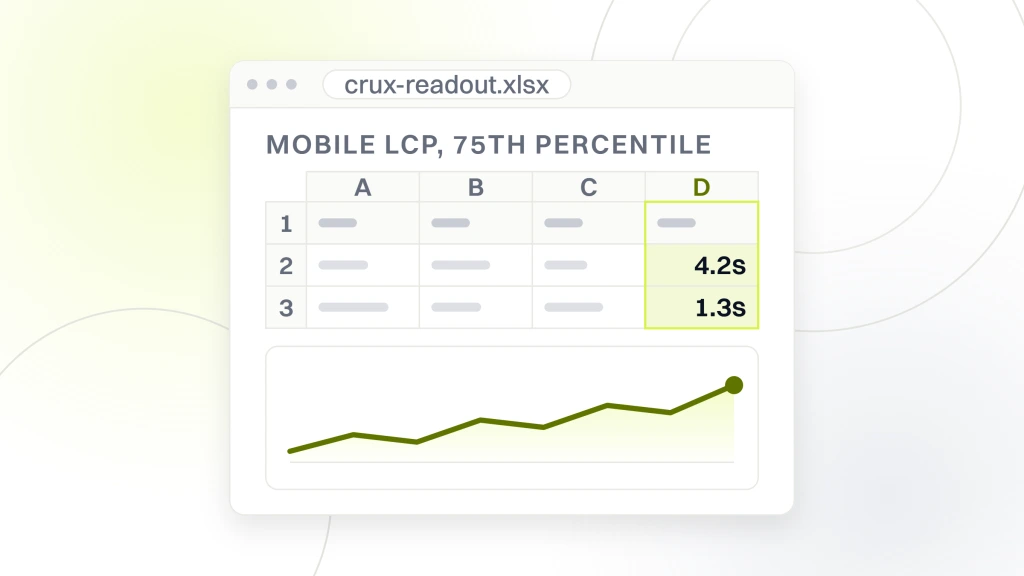
Twelve month results tracked with the SEO work: 166% lead growth, 88% new user growth, and 27% conversion rate gain. The hosting contribution to conversion came directly from LCP improvement of 2.9 seconds. Applying the 0.4% to 0.9% conversion movement per 100 milliseconds rule, the hosting rebuild alone accounts for about 12% to 26% of the 27% conversion gain. The rest came from funnel copy, form-field reduction on the consult booking flow, and the trust badge added to the checkout page after the ADA audit. The clinic pays $499 monthly on the top maintenance plan today and has not requested a plan change in 8 months.
| Beauté Aesthetics performance metric | Baseline | After 12 months |
|---|---|---|
| Mobile LCP (75th percentile) | 4.2 seconds | 1.3 seconds |
| Desktop LCP (75th percentile) | 2.8 seconds | 0.9 seconds |
| Time to first byte | 620 milliseconds | 84 milliseconds |
| Average page weight | 4.8 megabytes | 1.2 megabytes |
| Conversion rate | Weak funnel | +27% |
CrUX tracking through the rebuild
The CrUX dashboard tracked LCP at the 75th percentile weekly through the rebuild. Week 1 through 4 hit 4.2 second baseline with no change because the migration ran on staging. Week 5 saw the DNS flip and CrUX started collecting from the new stack. Week 8 hit 2.4 seconds after image pipeline tuning. Week 12 hit 1.8 seconds after database index work. Week 20 hit 1.3 seconds after edge cache tuning. The rebuild was measurable at every stage against the same CrUX dataset, which is what proves the wins to a CFO reviewing the retainer scorecard at the quarterly review.
Rollback insurance during the flip
The Beauté Aesthetics rebuild kept the old shared host warm for 30 days after the DNS flip as rollback insurance. Any regression from baseline would have triggered a DNS reversion inside 5 minutes. No reversion was needed because the staging load test at 4x peak had already caught the plugin compatibility issues on PHP 8.3. This rollback pattern is what separates a category-competent migration from a reseller migration. Category fast hosts include rollback insurance in the migration price. Resellers charge extra for it because their margin cannot cover the parallel infrastructure cost.
Fast shopify hosting beauty brand versus WordPress picks by stage
WooCommerce plus managed WordPress has the widest range of fast hosting picks because WordPress ecosystem depth is the widest of any CMS in the vertical. Redefine Web maintenance plans at $199, $299, and $499 monthly wrap the stack for beauty brands under $8M DTC and quote sub-2-second mobile LCP as standard. Shopify Plus bundles hosting inside the $2,300 monthly plan and hits sub-1.5-second LCP by default because Shopify runs the stack at planet scale. Headless commerce on Next.js plus Vercel or Netlify hits sub-1-second LCP by default because the framework was designed around Core Web Vitals from day 1.
Picks by revenue stage. Under $1M in DTC: Redefine Web maintenance at $199 monthly for WordPress plus WooCommerce, or Shopify Basic. $1M to $8M: Redefine Web maintenance at $299 or $499 monthly, or Shopify Plus. $8M to $30M: Redefine Web enterprise scope, or Shopify Plus, or headless on Next.js. Above $30M: hybrid stack with headless storefront for the front-end and Shopify Plus for checkout. Category fast hosts explain these picks by revenue band during the sales call. Vendor hosts push whichever platform they resell regardless of fit. Boogie Board scaled the DTC ecommerce side of the business on the same tuning pattern while managing $650,000 in annual paid media. See our beauty website hosting guide for the full comparison matrix.
Headless commerce speed tradeoffs
Headless commerce with Next.js on Vercel hits sub-1-second LCP by default because static generation delivers pre-rendered HTML to the edge. The tradeoff is that any catalog change (new SKU, price update, inventory change) triggers a rebuild that runs 2 to 8 minutes and adds infrastructure complexity. For a beauty brand with 240 SKUs and weekly product drops, the tradeoff is worth it above $30M in revenue where the LCP win compounds across millions of pageviews. Below $8M, WooCommerce or Shopify Plus wins on operational simplicity while still hitting sub-2-second LCP.
Shopify Plus performance defaults
Shopify Plus lands sub-1.5-second mobile LCP by default because Shopify’s platform team runs image optimization, CDN, and database tuning at planet scale. Beauty brands on Shopify Plus rarely need dedicated fast hosting work because the platform already covers it. The catch is that custom apps and third-party checkout scripts can add 240 to 1,200 milliseconds of LCP if not audited. The performance work on Shopify Plus is app audit and script trimming, not stack tuning. Category fast hosts running Shopify Plus focus on app audits during onboarding.
Retainer bands for fastest hosting for beauty brand sites
Fast hosting for beauty websites runs across 3 retainer bands at Redefine Web. The Foundation maintenance plan at $199 monthly covers WordPress or WooCommerce with CDN, daily backups, and 5 minute edge TTL for brands under $1M DTC and single-location clinics. The Growth maintenance plan at $299 monthly adds Redis object cache, dedicated staging, image pipeline, and custom edge cache rules for brands from $1M to $8M DTC. The Authority maintenance plan at $499 monthly adds dedicated origin capacity, custom image conversion at the edge, and a named performance engineer for brands above $8M DTC. Hosting is bundled inside every plan.
Speed optimization one-time projects sit outside the retainer. Full performance audit with a 90 day priority queue runs $3,200 to $8,600 one-time. Image pipeline setup runs $800 to $2,400 one-time. Database tuning and index work runs $1,200 to $4,800 one-time. Category fast hosts break these out transparently. Reseller hosts bundle them into a discounted first-year retainer that inflates in year 2. For the operational side of the same stack, see our managed hosting for beauty websites breakdown.
Performance audit scope one-time
A one-time performance audit covers CrUX data pull, synthetic testing across 6 US markets, image weight analysis, JavaScript bundle analysis, third-party script inventory, database query profiling, and a prioritized 90 day fix queue. The deliverable is a 30 to 60 page report with severity-ranked issues and estimated LCP impact per fix. Category fast hosts run this audit at $3,200 to $8,600 with a 30 day support window. Reseller hosts sell a free audit that turns out to be a PageSpeed Insights screenshot and a sales pitch. Ask what the audit includes during the sales call and ask for a sample report before you sign.
JavaScript trimming for LCP
Every 100 kilobytes of JavaScript on a beauty site adds 40 to 180 milliseconds of LCP on mid-tier Android phones because JavaScript parse time is expensive on low-power CPUs. A typical beauty site carries 1.2 to 3.8 megabytes of JavaScript across analytics, chat widgets, reviews, cart drawers, and personalization scripts. Trimming to 400 to 800 kilobytes cuts mobile LCP by 400 to 1,200 milliseconds. Fast hosts audit and trim JavaScript as part of onboarding. Slow hosts leave it to the client to figure out which scripts to kill. See the web.dev LCP optimization guide for the trimming patterns.
Peak load survival for high performance hosting for beauty dtc press features
Fast hosting for beauty websites survives a Sephora buyer feature or a TikTok creator with 3 million followers who posts a favorable review. Baseline traffic sits at 400 to 8,000 daily sessions. Peak traffic during a press feature or viral moment hits 40 to 120 times baseline for 4 to 12 hours. A shared host crashes at 8 times baseline. A basic managed host crashes at 20 times. A tuned fast host with proper edge caching absorbs 100 times without measurable degradation because 92% of the load hits the edge cache and never touches origin.
The specific interventions that survive peak load. Full-page edge cache at 92% hit rate. Origin auto-scaling to 4x baseline during traffic spike detection. Database read replica to spread query load. Rate limiting on cart and checkout endpoints to prevent bot-driven origin saturation. Category fast hosts wire all 4 by default. Reseller hosts wire 1 or 2 and hope. Ask about peak-load testing methodology during the sales call. Category hosts run quarterly load tests at 4x expected peak. Resellers do not run load tests at all, which is why the site melts the first time TikTok picks it up.
Load test methodology inside the retainer
Quarterly load tests inside the retainer run at 4x expected peak traffic against staging with production database replicated. The test scenarios cover collection page browse, product page view, add-to-cart, checkout initiation, and login. Success metrics are LCP under 2.4 seconds at 4x peak, zero HTTP 500 errors, and zero database connection pool exhaustion. Category fast hosts run these tests without extra charge. Reseller hosts charge $2,400 to $6,800 per test because their staging environments are not built for load testing. Ask about the load test scope during the sales call.
Autoscaling configuration on the origin
Origin autoscaling adds capacity when incoming traffic exceeds a defined threshold. A real fast host configures autoscaling to trigger at 240 concurrent requests per second and add capacity in 30 seconds. A reseller host runs fixed capacity and blames the customer’s plan when traffic spikes. The tradeoff on autoscaling is cost during the spike, but for beauty brands where a Sephora feature can drive $28,000 to $180,000 in single-day revenue, the autoscaling cost of $80 to $340 for the spike period is a rounding error. Ask whether autoscaling is included or add-on during the sales call.
Monitoring stack for fastest hosting for beauty brand sites
The monitoring stack decides whether a regression gets caught in 5 minutes or 5 days. A real fast host runs synthetic monitoring from 6 US metros every 60 seconds, real user monitoring inline in the theme, database query profiling on the top 40 queries, and CDN cache-hit-rate reporting hourly. Alerts fire on LCP regression above 2 seconds at any monitored metro, on any HTTP 500 error, on cache hit rate dropping below 82%, and on any query above 400 milliseconds. Any missing layer is a regression waiting to happen and a lost afternoon of revenue.
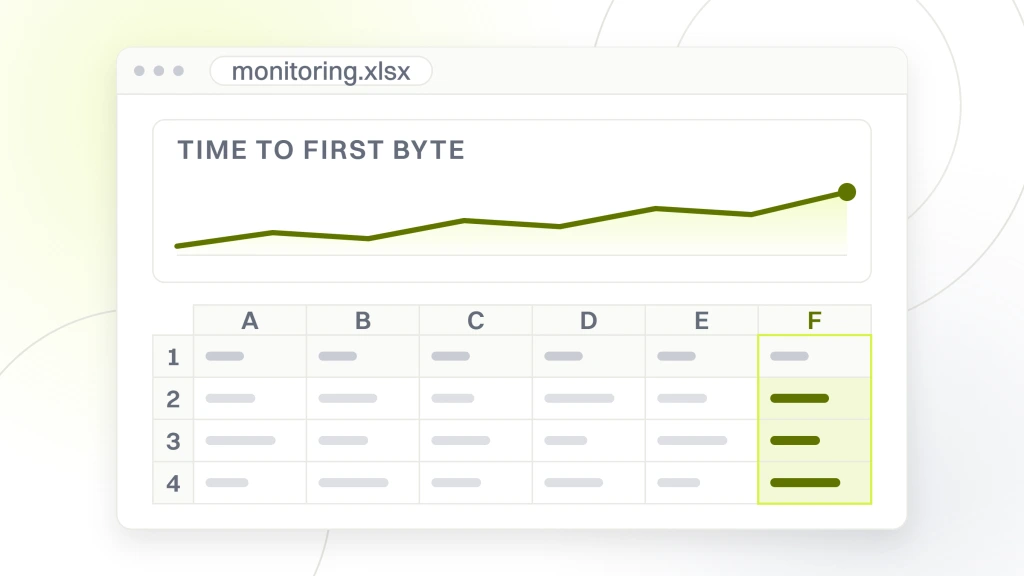
Alert routing during business hours goes to the account engineer on Slack or email. Alert routing outside business hours goes to the on-call engineer via PagerDuty with a 5 minute response SLA. Category fast hosts route both. Reseller hosts route business-hours only and let the site burn overnight. Ask about the alert routing and on-call structure during the sales call. Category hosts describe the specific PagerDuty rotation. Reseller hosts say “our team monitors 24/7” without specifics, which means nobody is watching at 3am.
Synthetic monitoring cadence
Synthetic monitoring every 60 seconds catches most regressions inside 90 seconds. Every 5 minutes catches them inside 6 minutes. Every 15 minutes catches them inside 16 minutes, which is enough time for a checkout regression to lose $2,400 to $18,000 in a beauty ecommerce site during peak hours. Real fast hosts run 60 second cadence on production URLs including checkout endpoints. Reseller hosts run 15 minute cadence to save on monitoring costs. The savings on the reseller side get eaten in the first regression.
Real user monitoring inline script
Real user monitoring runs an inline JavaScript snippet in the theme that collects LCP, FID, CLS, and TTFB from every session and reports to a backend. The snippet weighs 4 to 12 kilobytes and runs asynchronously without blocking rendering. Category fast hosts include a first-party real user monitoring script wired into the theme during onboarding. Reseller hosts leave it to third-party tools like New Relic or SpeedCurve that cost $180 to $940 monthly extra. The first-party integration keeps the data inside the retainer scorecard instead of buried in a separate tool the account manager never opens.
Named client results on fast hosting rebuilds
Three named client results anchor the numbers in this guide. Beauté Aesthetics New York, the Manhattan luxury clinic, cut mobile LCP from 4.2 seconds to 1.3 seconds and posted 166% lead growth, 88% new users, and 27% higher conversion in 12 months on the SEO plus hosting retainer. Abigail Ahern, the London home décor brand, ran the paid media plus SEO retainer alongside a Shopify performance audit and posted 179% ecommerce revenue growth with paid social hitting 3,000% ROAS. Boogie Board, the reusable writing tablet pioneer, ran the paid ads retainer with landing page speed work and drove $31 cost per sale at scale on $650,000 in annual managed budget.
The pattern across all 3 is the same. Speed work on the storefront directly moved a conversion or acquisition metric that the CFO tracks. Beauté Aesthetics booked more consult forms. Abigail Ahern shipped more units at a higher margin. Boogie Board bought traffic cheaper because the landing page loaded faster and Google Ads Quality Score rewarded the site. Fast hosting is not a technical vanity metric. It is the tax rate on every marketing dollar the brand spends. Cut LCP and the tax rate drops.
Conversion math per 100 milliseconds
Every 100 milliseconds of LCP improvement moves beauty ecommerce conversion 0.4% to 0.9%. On a $2M DTC brand with a 2.4% baseline conversion rate, cutting mobile LCP by 1.4 seconds (from 3.2 seconds to 1.8 seconds) adds $112,000 to $252,000 in annual revenue at flat traffic. The hosting rebuild cost of $6,400 to $18,000 pays back in 3 to 8 weeks. Any brand paying for paid media has this math run backward daily by CAC. Fast hosting is the cheapest way to buy conversion because the shopper is already on the page.
ADA checkout accessibility note
The Beauté Aesthetics rebuild included an ADA accessibility pass on the checkout page that added labeled form fields, keyboard-navigable buttons, a skip-to-content link, and 4.5:1 color contrast on every text element. The pass added 2 weeks to the rebuild timeline and cost about $2,800 in specialist review. It also removed the legal risk of a WCAG lawsuit that hit 3 competing clinics in Manhattan during the same year with settlements between $18,000 and $85,000. Fast hosting rebuilds are the right moment to fix the accessibility debt because the theme is already open.
Making the pick
Fastest hosting for beauty brand sites is measurable on real user monitoring, not on synthetic tests. The right host names mobile LCP at the 75th percentile of CrUX data as the target, wires in an image pipeline that keeps 40-photo collection pages under 1.5 megabytes, tunes the database with composite indexes and a properly sized buffer pool, runs full-page edge cache at 92% hit rate, and includes quarterly load tests at 4x expected peak. Anyone hedging on any of those 5 points is a reseller wearing a category badge.
The timing note. Rebuild speed 90 days before peak season because CrUX data updates monthly and Google’s ranking algorithm re-evaluates on a 28 day rolling window. A rebuild in November for December peak season does not move rank until January. A rebuild in September moves rank in time to capture holiday demand. If the site is 60 days out from peak and mobile LCP is above 2.4 seconds, the cheapest fix is the image pipeline first and the database tuning second. For the retainer scope that pairs with fast hosting on a rolling 6 month term, see our website maintenance plans or the beauty marketing retainer plan.